
We support legal professionals appointed to cross-examine vulnerable witnesses, championing fairness, reform, and high advocacy standards in justice.
Joined April 2025
- Tweets 11
- Following 2
- Followers 3
- Likes 9
1 Photos and videos
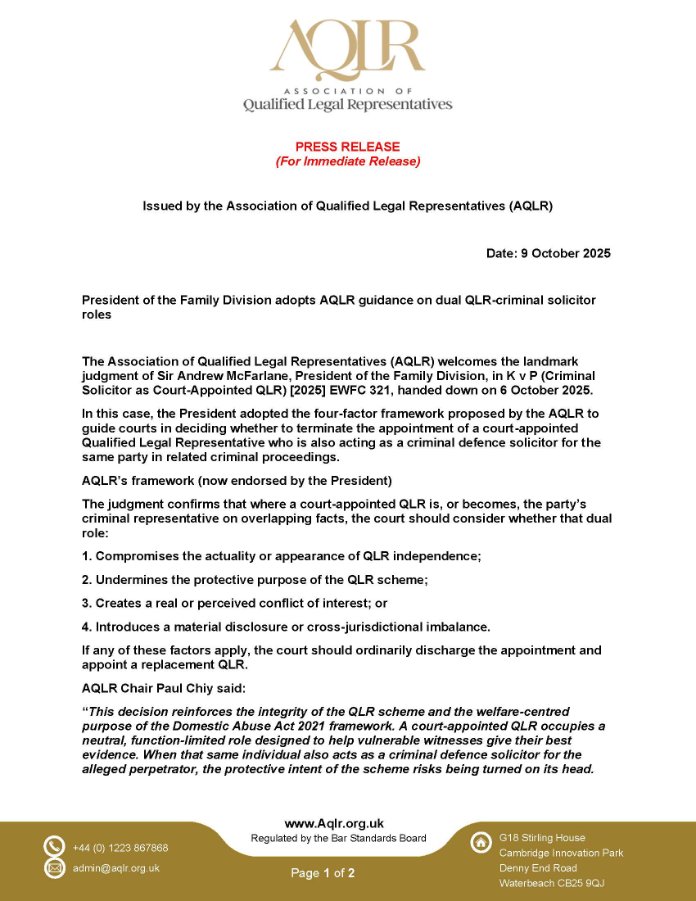
Association of Qualified Legal Representatives retweeted

10 Dec 2025
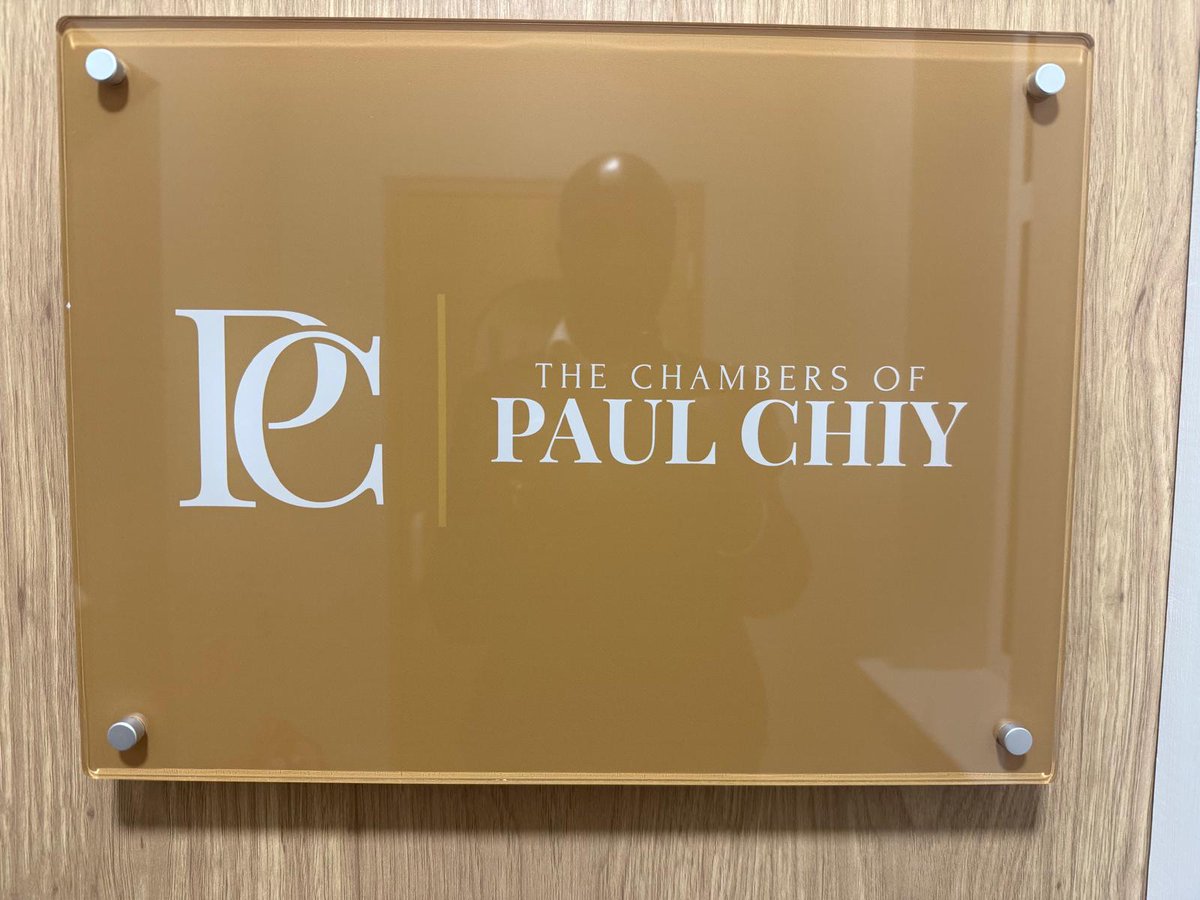
The Chambers of Paul CHIY
I must apologise to my followers who have had to stumble across the Chambers of Paul Chiy and cross-examine me intensively before I had the chance to properly introduce it. The plan was always to make a formal announcement at the launch, but now that the cat is firmly out of the bag — thanks to some persistent poking and rigorous questioning — it feels only right to set out who we are and how we arrived here.
Many of you will know that the legal profession in England has long been described as bifurcated — solicitors on one side and barristers on the other. But the modern profession is more complex than that. The emergence and growth of Chartered Legal Executives (CILEx Lawyers) has created a third pathway, one that has steadily eroded the traditional boundaries and reshaped the way legal services are delivered.
My own career has taken me through all three branches: first as a Chartered Legal Executive, then as a solicitor-advocate, and now as a barrister. Out of more than 250,000 lawyers in England and Wales, fewer than ten hold all three qualifications — a path my professional journey has happened to take. And of that very small number, most are not authorised by their regulators to practise actively across all three. I am pleased to say that the Bar Standards Board (BSB) has granted me the specific exemption that enables this breadth of practice.
The Chambers of Paul Chiy is regulated by the Bar Standards Board of England and Wales, and this authorisation has now shifted my practice from solicitor-advocate to barrister, with full rights of audience before the courts.
For those curious about the difference between the three routes: solicitors tend to work closely with clients from the outset, managing cases, evidence and litigation; barristers traditionally specialise in courtroom advocacy and complex legal argument; and Chartered Legal Executives offer a specialist, practice-based route into the profession with expanding rights of audience and litigation authority. To have travelled through all three pathways — and to be authorised to draw on that combined experience — shapes the way I practise and the ethos of the Chambers.
You can read more about the Chambers and its foundations here:
🔗 paulchuchiy.co.uk/about/
The Chambers of Paul Chiy is built on accessible, principled and effective legal representation across family, employment, civil and commercial disputes, and alternative dispute resolution. It reflects years of practice, development, and a commitment to doing law with clarity, purpose and integrity.
Thank you to everyone whose curiosity forced my hand sooner than expected. As always, your engagement keeps me on my toes.
#ChambersOfPaulChiy #Barrister #SolicitorAdvocate #CILExLawyer #LegalProfession #Advocacy #DisputeResolution #Law
7
7
8
108

Association of Qualified Legal Representatives retweeted
7 Aug 2025
🧹 PUBLIC STATEMENT
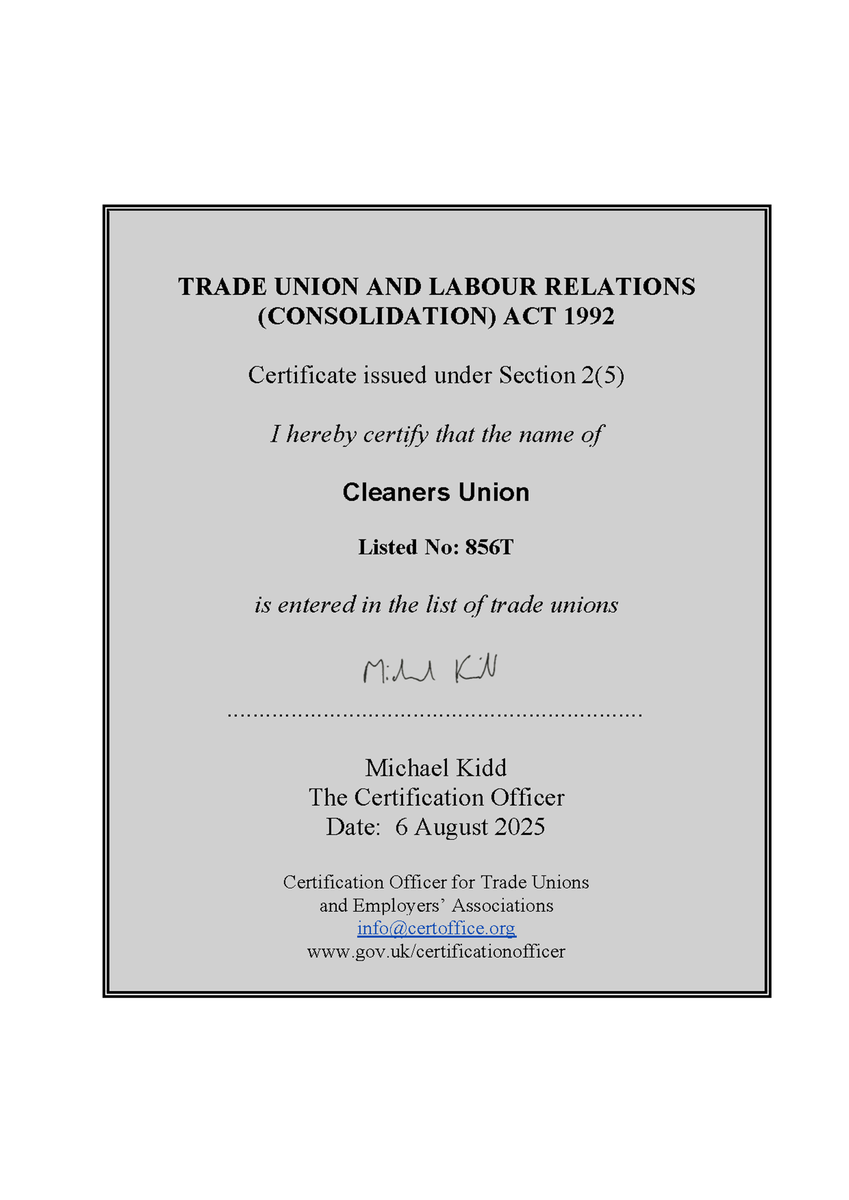
Cleaners Union Officially Listed as a Trade Union
7 August 2025
By Paul Chiy, Founder – Cleaners Union
I am pleased to announce that, as of 6 August 2025, the Cleaners Union has been officially recognised by the Certification Officer for Trade Unions and Employers’ Associations and entered onto the list of trade unions under the Trade Union and Labour Relations (Consolidation) Act 1992.
Our registration (Listing No. 856T) affirms that the Cleaners Union meets the statutory definition of a trade union. More importantly, it marks a powerful step forward in our mission to organise, represent, and protect some of the most undervalued workers in our society.
This achievement is the result of committed, tireless work — and I wish to express my particular thanks to our General Secretary, Nicole Papantoniou, whose leadership, determination, and clarity of vision were instrumental in securing this recognition. Nicole's efforts reflect the spirit of the movement we are building: principled, persistent, and grounded in justice.
With registration complete, the Cleaners Union is now fully empowered to:
1. Represent members collectively and individually,
2. Engage in industrial dialogue and action, and
3. Campaign for decent pay, fair conditions, and workplace dignity.
We are just at the beginning of our journey. But we do not walk alone. Every cleaner who joins strengthens our voice. Every supporter who stands with us brings us closer to change.
Together, we clean. Together, we rise.
Sincerely,
Paul Chiy, LLB, LLM, PhD, FCIArb, FCIlex
Founder – Cleaners Union
📧 admin@paulchiychambers.co.uk
3
4
74
Association of Qualified Legal Representatives retweeted
22 Aug 2025
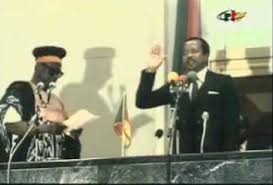
History has a curious sense of symmetry. What began in the shadow of the father may well find its reckoning in the hands of the son. Yet beyond names and lineage, today stands as a moment of destiny — where the mighty must answer not to crowns or titles, but to the judgment of the people’s will, spoken through the Constitutional Council.
To Akere Tabeng Muna, former Bâtonnier and now candidate for the highest office, courage is not only wished but demanded. For in this hour, every word, every choice, and every conviction will echo far beyond the walls of the court — into the heart of Cameroon’s future
_______________________________________________
L’Histoire a parfois un étrange sens de la symétrie. Ce qui a commencé sous l’ombre du père pourrait bien trouver son dénouement entre les mains du fils. Mais au-delà des noms et des lignées, ce jour se dresse comme un moment de destin — où les puissants doivent répondre non aux titres ni aux couronnes, mais au jugement de la volonté du peuple, portée devant le Conseil constitutionnel.
À Akere Tabeng Muna, ancien Bâtonnier et désormais candidat à la magistrature suprême, le courage n’est pas seulement souhaité : il est exigé. Car en cette heure, chaque mot, chaque choix et chaque conviction résonneront bien au-delà des murs de la Cour — jusque dans le cœur de l’avenir du Cameroun
9
15
130
Association of Qualified Legal Representatives retweeted
30 Jul 2025
11
20
146
Association of Qualified Legal Representatives retweeted
31 Jul 2025
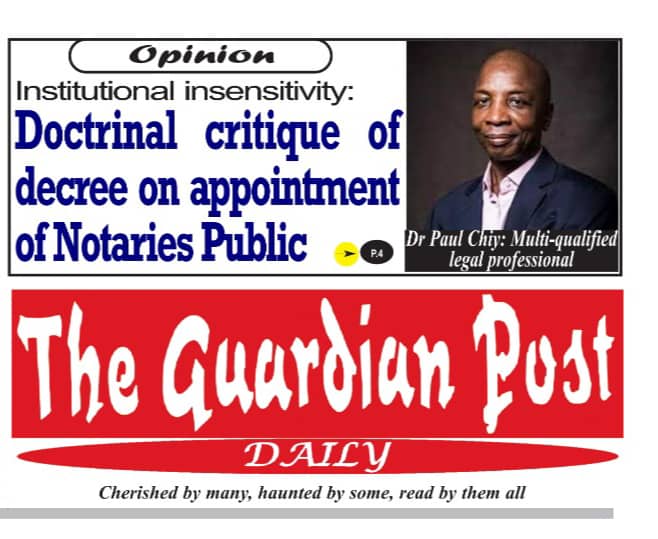
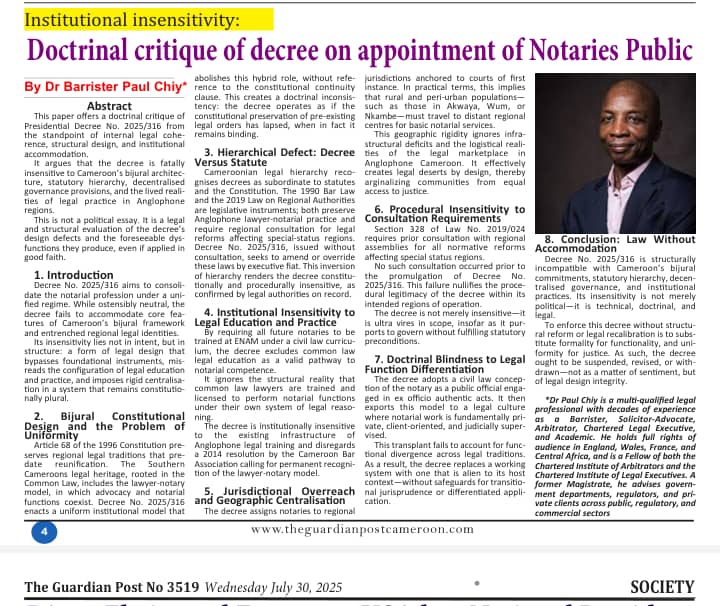
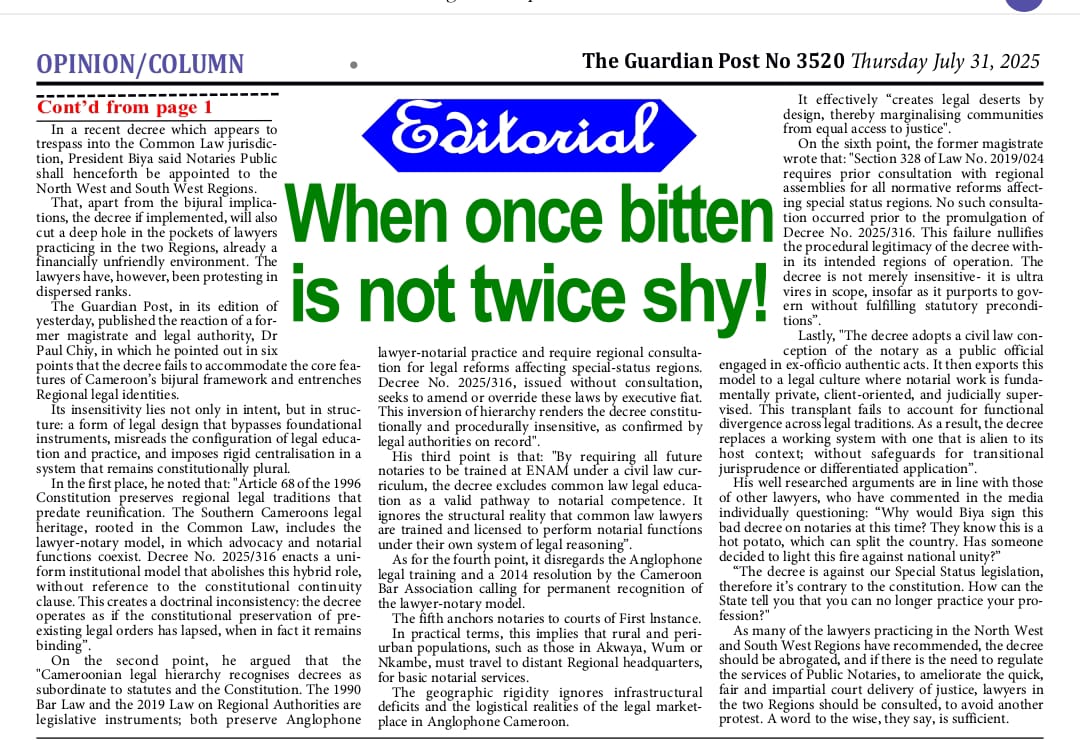
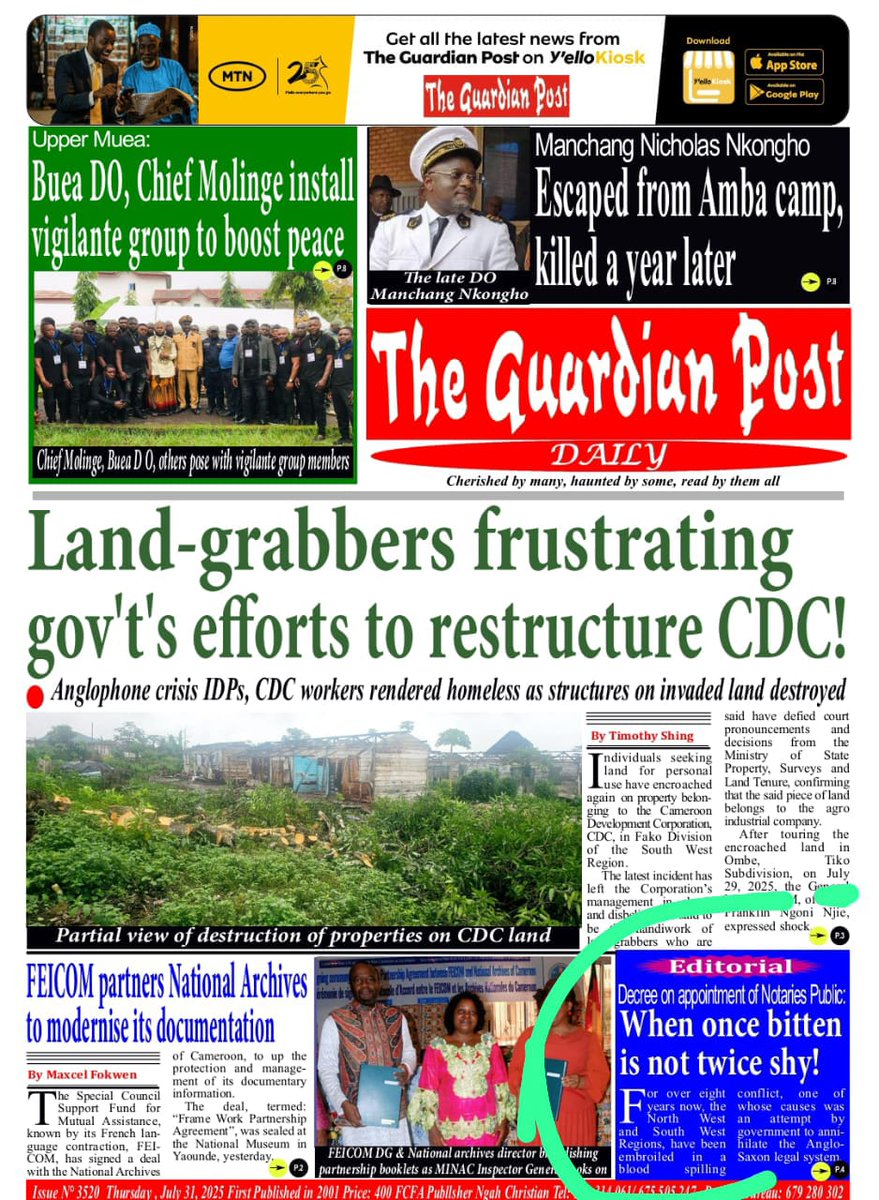
A thoughtful moment this morning: my analysis of Decree No. 2025/316 is featured in The Guardian Post’s editorial column.
Pleased to see the legal and structural concerns around bijuralism and regional identity receive serious attention in national discourse.
#Cameroon #LegalReform #Bijuralism #TheGuardianPost
10
12
102
Association of Qualified Legal Representatives retweeted
1 Aug 2025
Supreme Court Reverses Car Finance Commission Ruling: Clarity for Lenders, Constraint for Claims
1 August 2025
In a judgment of critical importance to the UK consumer credit market, the Supreme Court today handed down its decision in Black Horse Ltd & Others v Johnson & Others, overturning significant aspects of the Court of Appeal’s 2023 ruling on discretionary commission arrangements in motor finance agreements.
The appeals were brought by major lenders—including Close Brothers and MotoNovo Finance—following the Court of Appeal’s finding that undisclosed commission payments rendered certain credit relationships unfair and, more controversially, that motor dealers owed fiduciary duties to borrowers when arranging finance. That decision triggered industry-wide alarm and opened the door to mass consumer litigation, with compensation estimates running into the tens of billions.
The Supreme Court’s intervention—delivered unusually late in the day to avoid market instability—has now narrowed the scope of liability considerably, with significant implications for borrowers, lenders, and the FCA.
The Issue
The underlying dispute concerns undisclosed commissions paid by lenders to motor dealers, often tied to the interest rate charged to consumers under hire purchase or conditional sale agreements. Known as Discretionary Commission Arrangements (DCAs), these practices were banned by the FCA in January 2021. The legal question was whether such arrangements, when undisclosed, rendered the lender–borrower relationship “unfair” within the meaning of section 140A of the Consumer Credit Act 1974, and whether the dealer owed a fiduciary duty as broker.
The Supreme Court’s Findings
Lord Reed, giving the leading judgment, clarified that:
Motor dealers arranging finance do not owe fiduciary duties to customers. Their role remains fundamentally commercial, and no obligation of loyalty arises simply by virtue of their involvement in arranging credit.
The existence of a commission payment, even if undisclosed, is not in itself sufficient to establish an “unfair relationship”.
The test under section 140A remains a fact-specific inquiry, requiring assessment of the totality of the relationship—including the borrower's awareness, the transparency of the arrangement, and the substantive fairness of the terms.
In only one of the three test cases (Johnson), the Court found that the relationship was unfair, based on its particular factual matrix. Mr Johnson was awarded the value of the commission plus interest.
The appeals were otherwise allowed, reversing the Court of Appeal’s expansive interpretation and reinstating a more restrained, orthodox application of the Consumer Credit Act.
Implications for the Industry
This judgment offers substantial relief to the UK’s car finance sector and the broader regulated credit industry. By rejecting the fiduciary duty analysis, the Court has closed off the most legally potent avenue for group claims. It also avoids the uncertainty and retrospection that would have undermined settled lending practices prior to the FCA’s 2021 intervention.
Lenders including Barclays, Close Brothers, and Santander, which had provisioned for potential redress, will now be reassessing those assumptions. The FCA, which had paused active investigation of complaints and delayed its decision on a possible redress scheme, has indicated it will publish its position within six weeks.
While this ruling does not extinguish all claims—borrowers may still succeed where unfairness can be shown on the facts—it substantially limits the viability of mass claims litigation based solely on non-disclosure of commission.
Strategic Considerations
For Lenders and Brokers
The judgment validates long-standing market structures but reinforces the need for transparency and careful disclosure in all credit brokerage arrangements.
Firms should ensure compliance with post-2021 FCA rules on commission disclosure and maintain thorough documentation for historic agreements.
For Consumers
Claims must now be grounded in individual unfairness, rather than generalised grievance.
Consumers should avoid speculative engagement with CMCs offering claims on a no-evidence basis, particularly in light of FCA warnings regarding high deductions and poor outcomes.
For the Regulator
The FCA’s anticipated redress consultation will be watched closely. However, the judgment diminishes the likelihood of a blanket compensation scheme and reinforces the regulator’s role as a supervisor of forward-looking conduct standards, not a retrospective adjudicator.
Conclusion
The Supreme Court has brought much-needed legal clarity to an area fraught with commercial and regulatory tension. While the judgment reaffirms that borrowers are entitled to fairness and transparency, it also recognises the limits of judicial intervention in market-based relationships.
The outcome may disappoint some consumers and campaigners. But for the law, it represents a return to principle: statutory unfairness must be proved, not presumed; and fiduciary duties cannot be manufactured from commercial convenience.
For lenders, the path forward is clearer. For claimants, it is steeper. For all parties, the importance of full, fair, and lawful disclosure has never been more firmly underscored.
9
12
567
Association of Qualified Legal Representatives retweeted
3 Aug 2025
Foumban Declaration: 5 of 13 Presidential Candidates Unite in Historic Turning Point Ahead of Cameroon’s October 2025 Elections
A Clarion Call to the Remaining 8, Including Maurice Kamto: Join the Moving Train Before It Leaves the Station
Foumban, Cameroon – August 2, 2025
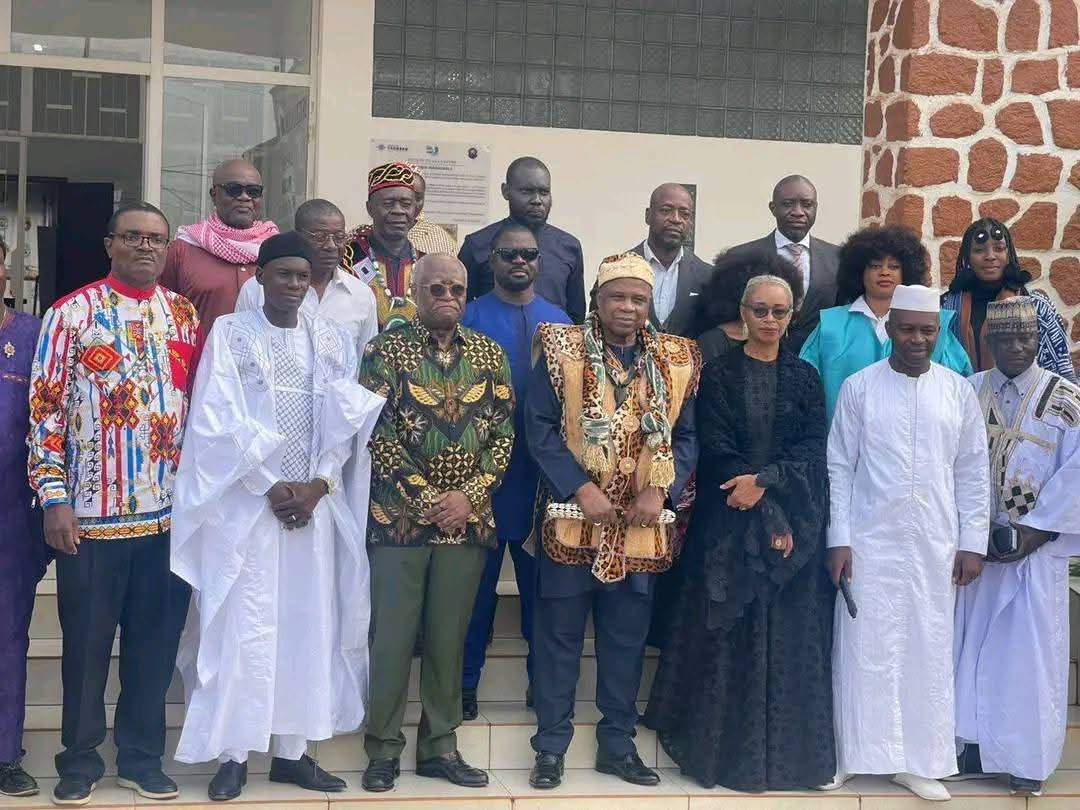
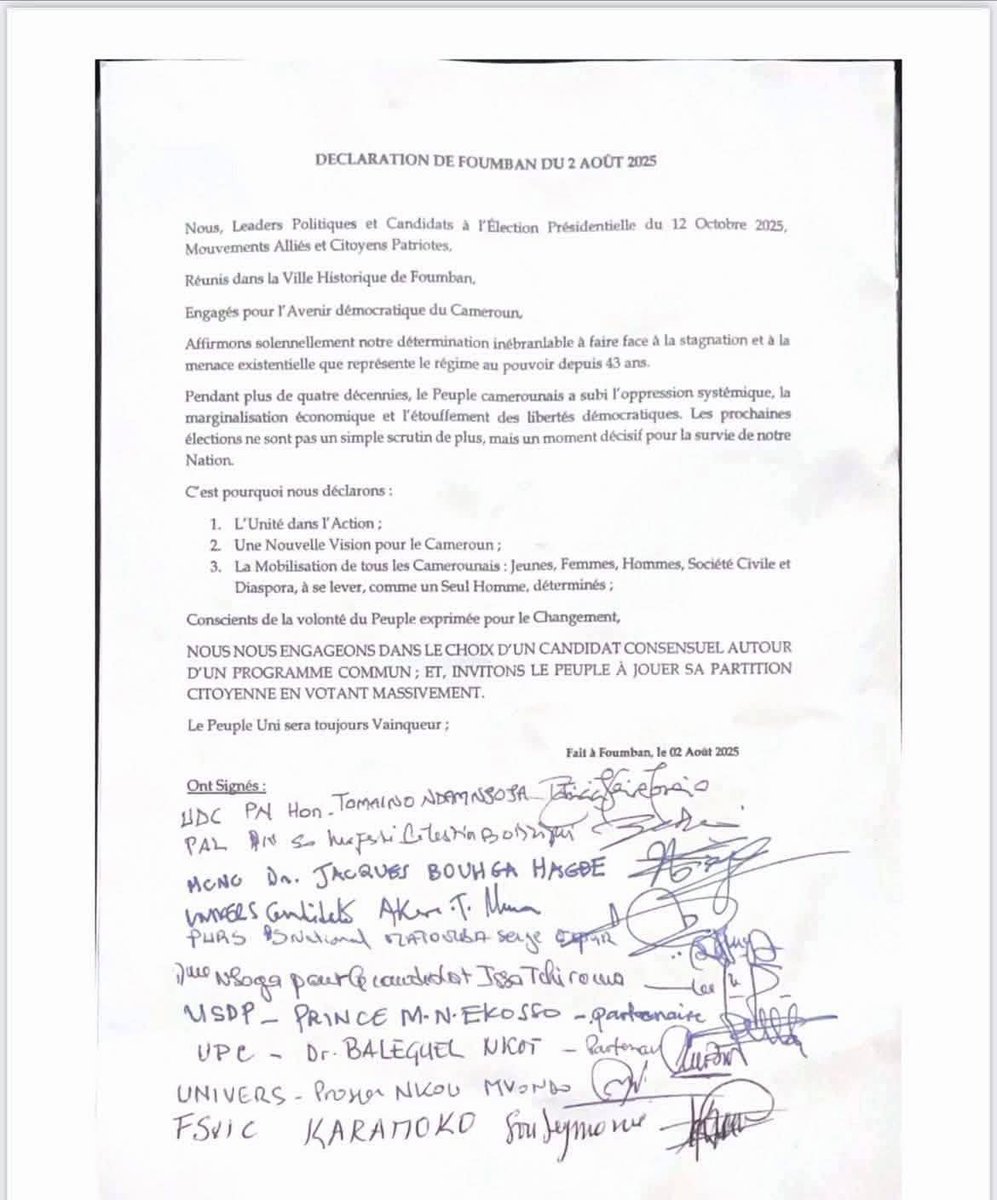
A historic and unprecedented political realignment has taken place in Cameroon. Five of the thirteen declared presidential candidates for the upcoming October 12, 2025 elections have forged a formal coalition, signing what is now known as the Foumban Declaration—a collective commitment to unity, democratic transition, and national salvation.
Gathered in the iconic city of Foumban, a symbol of unity and reconciliation in Cameroon’s post-independence history, these leaders took a bold step that marks a turning point in the country’s political trajectory. After 43 years of authoritarian stagnation, the Foumban Declaration signals the rebirth of hope and the rise of a credible, united alternative to the regime in power.
A Nation at a Crossroads
In their joint declaration, the signatories affirmed:
“The upcoming elections are not just another ballot, but a decisive moment for the survival of our Nation.”
They pledged to:
Unite around a common candidate and a shared national program
Mobilise Cameroonians across all walks of life—youth, women, men, civil society, and the diaspora
Restore hope through democratic renewal and the peaceful transfer of power
This united front is the most serious and structured opposition alliance formed in decades and has already galvanized national attention.
The Coalition of Five
The signatories of the Declaration include:
Hon. Hermine Patricia Tomaïno Ndam Njoya, Presidential Candidate and President of the Democratic Union of Cameroon (UDC)
Barrister Akere Muna, Presidential Candidate and leader of the Univers Party
Serge Espoir Matomba, Presidential Candidate and Founder of PURS
Dr. Jacques Bougha Hagbe, Presidential Candidate of the MCNC
Issa Tchiroma Bakary, Presidential Candidate, former Minister, and President of the FSNC
They were joined and supported by other key political actors and party leaders, including:
Prince M.N. Ekosso (USDP)
Dr. Pierre Baleguel Nkot (UPC)
Prof. Nkou Mvondo (Univers Party)
Karamoko Souleymane (formerly PCRN, now FSNC)
Together, these leaders represent a cross-section of Cameroon’s ideological, generational, and regional diversity—an intentional demonstration that unity is possible beyond party lines.
Blessings from the Throne of Tradition
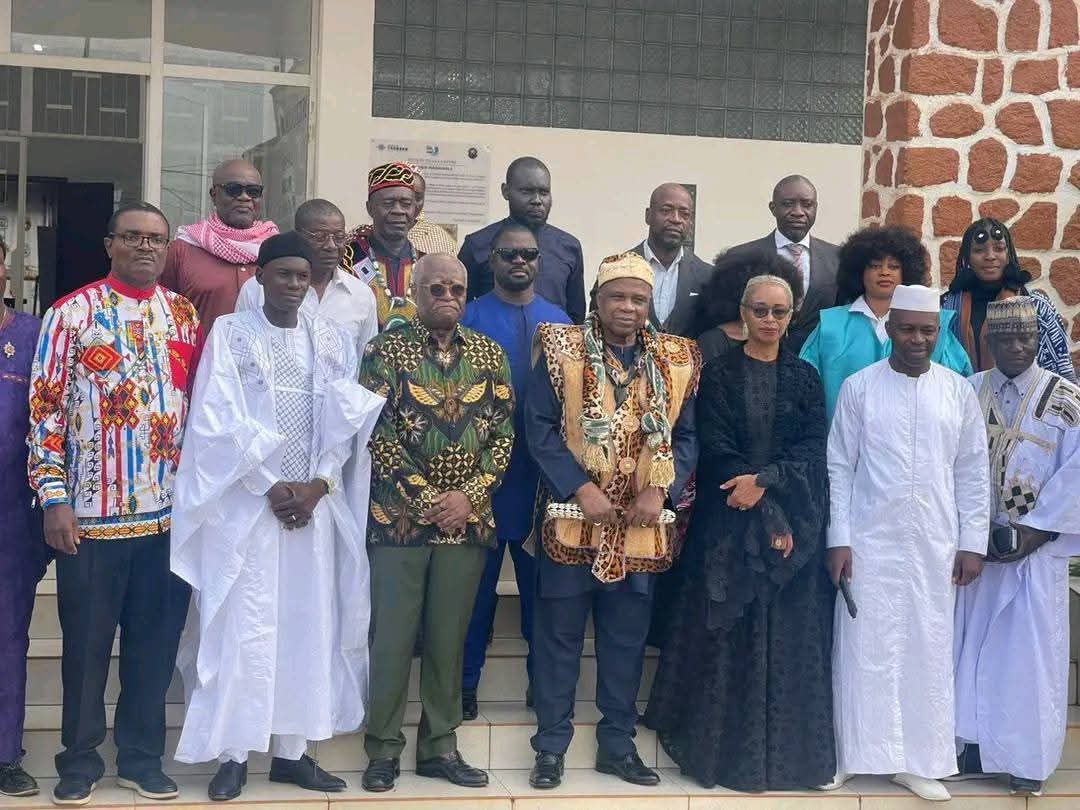
After signing the Declaration in Foumban, the opposition leaders travelled to Bamendjou, where they were received by His Royal Highness Fo’o Sokoudjou Jean Philippe Rameau, one of the country’s most revered traditional leaders. The King, known for his moral authority and nationalist convictions, offered his royal blessing and urged the leaders to remain steadfast in unity, calling it the only viable path to restoring dignity and democracy in Cameroon.
His gesture not only lent spiritual weight to the alliance, but also signified the growing convergence between traditional wisdom and modern democratic aspirations.
The Train Has Left the Station
The Foumban Declaration is not just a document—it is a national moment. But it also issues a clear call to action. Of the thirteen presidential candidates officially declared, eight remain outside the coalition—including Maurice Kamto, the influential leader of the Cameroon Renaissance Movement (MRC).
The message to them is urgent and uncompromising: the people demand unity. The nation is watching. History is calling. The train has started to move—and those who fail to board may be left behind.
A Final Appeal to Patriots
The coalition’s architects have not closed the door. On the contrary, the Declaration extends an open invitation to all opposition forces, civil society organisations, faith leaders, youth movements, and every patriotic Cameroonian to rally behind this effort. This is not about individuals; it is about rescuing a nation in peril.
As the October 2025 election draws near, one thing is clear: the winds of change have begun to blow from Foumban. Whether this becomes a turning point or another missed opportunity will depend on whether the remaining actors choose unity over division.
The people are ready. The world is watching. Cameroon must rise.
10
13
183
Association of Qualified Legal Representatives retweeted
3 Aug 2025
Déclaration de Foumban : 5 des 13 Candidats à la Présidentielle s’unissent dans un Tournant Historique avant l’Élection d’Octobre 2025 au Cameroun
Appel solennel aux 8 restants, dont Maurice Kamto : rejoignez le train en marche avant qu’il ne soit trop tard
Foumban, Cameroun – 2 août 2025
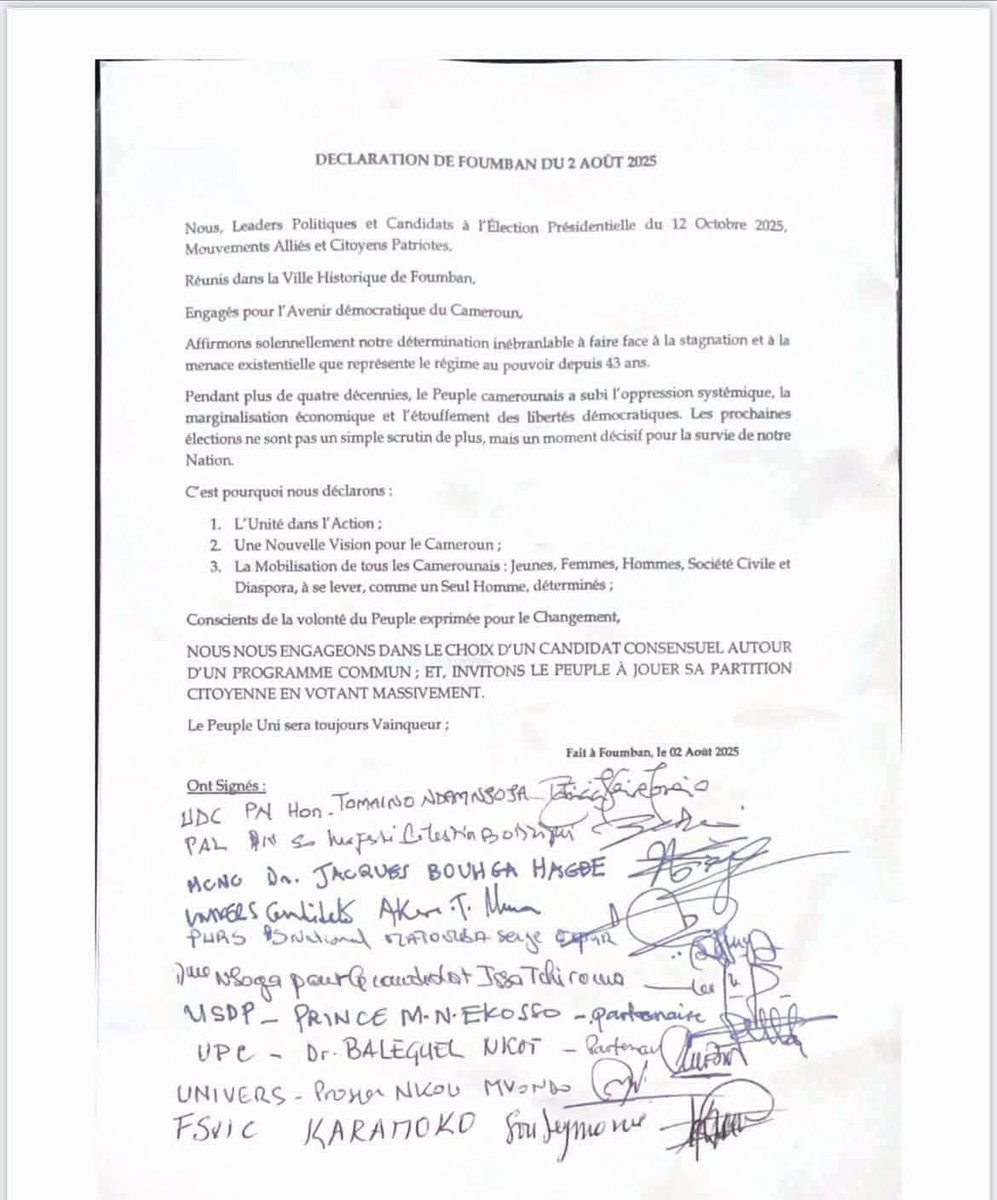
Un tournant politique sans précédent vient de s’opérer au Cameroun. Cinq des treize candidats officiellement déclarés à l’élection présidentielle du 12 octobre 2025ont formalisé une coalition d’unité, en signant ce que l’on appelle désormais la Déclaration de Foumban — un acte de ralliement autour de l’unité nationale, du changement démocratique et du salut du peuple camerounais.
Réunis dans la ville emblématique de Foumban, berceau symbolique de l’unification du Cameroun, ces leaders ont pris une décision historique qui marque un tournant décisif dans la trajectoire politique de la nation. Après 43 ans d’immobilisme autoritaire, la Déclaration de Foumban incarne la renaissance d’un espoir collectif et l’émergence d’une alternative crédible et coordonnée au régime en place.
Une Nation à la Croisée des Chemins
Dans leur déclaration commune, les signataires affirment :
« Les élections à venir ne sont pas un scrutin de plus, mais un moment décisif pour la survie de notre Nation. »
Ils s’engagent à :
Se rallier derrière un candidat consensuel et un programme commun
Mobiliser tous les Camerounais — jeunes, femmes, hommes, société civile, diaspora
Offrir une alternative démocratique pacifique et crédible au régime en place
Cette coalition représente la plateforme d’opposition la plus sérieuse et structurée formée depuis des décennies au Cameroun.
Les Signataires du Changement
Les cinq candidats ayant signé la Déclaration de Foumban sont :
Hon. Hermine Patricia Tomaïno Ndam Njoya, candidate à la présidentielle et Présidente de l’UDC
Me Akere Muna, candidat à la présidentielle et leader du parti UNIVERS
Serge Espoir Matomba, candidat à la présidentielle et fondateur du PURS
Dr Jacques Bougha Hagbe, candidat à la présidentielle du MCNC
Issa Tchiroma Bakary, candidat à la présidentielle, ancien ministre, Président du FSNC
À leurs côtés, d'autres leaders et figures alliées ont également apporté leur soutien :
Prince M.N. Ekosso (USDP)
Dr Pierre Baleguel Nkot (UPC)
Professeur Nkou Mvondo (UNIVERS)
Karamoko Souleymane (ex-PCRN, aujourd’hui FSNC)
Ensemble, ils incarnent la diversité idéologique, générationnelle et régionale du Cameroun, montrant qu’au-delà des clivages, l’unité nationale est possible.
La Bénédiction du Trône Traditionnel
Après la signature de la Déclaration, les leaders se sont rendus à Bamendjou pour rencontrer Sa Majesté Fo’o Sokoudjou Jean Philippe Rameau, l’un des chefs traditionnels les plus respectés du pays. Le Roi a accordé sa bénédiction royale à cette alliance et les a encouragés à maintenir leur unité, affirmant que l’union reste la seule voie vers la restauration de la dignité et de la démocratie au Cameroun.
Ce soutien symbolique lie le monde traditionnel et la nouvelle conscience démocratique dans une même vision nationale.
Le Train Est en Marche
La Déclaration de Foumban est plus qu’un texte : c’est un signal d’alerte et d’espoir. Mais elle lance aussi un appel clair et pressant. Parmi les 13 candidats déclarés, huit restent encore en dehors de cette coalition, dont Maurice Kamto, leader du MRC et figure majeure de l’opposition.
Le message à leur adresse est sans ambiguïté : le peuple exige l’unité. L’histoire s’écrit maintenant. Le train du changement est en marche — rejoignez-le avant qu’il ne soit trop tard.
Un Appel Final à Tous les Patriotes
Les auteurs de la Déclaration ont laissé la porte ouverte. Ils lancent un appel à tous les autres candidats, partis d’opposition, mouvements citoyens, chefs religieux, jeunes, et tous les Camerounais patriotes à se joindre à cette dynamique.
Ce n’est pas une affaire d’individus, mais une mission de salut national.
Alors que le scrutin du 12 octobre approche, une chose est certaine : les vents du changement soufflent depuis Foumban. Il reste à savoir si tous les acteurs choisiront le sursaut collectif ou l’échec solitaire.
Le peuple est prêt. Le monde observe. Le Cameroun doit se relever. L’unité est la stratégie de la victoire.
10
12
157