
Bracket's platform infrastructure provides key services to securely scale both on and off-chain yield vaults. Backed By Binance Labs.
Joined May 2022
- Tweets 6,563
- Following 923
- Followers 51,597
- Likes 4,704
2,873 Photos and videos
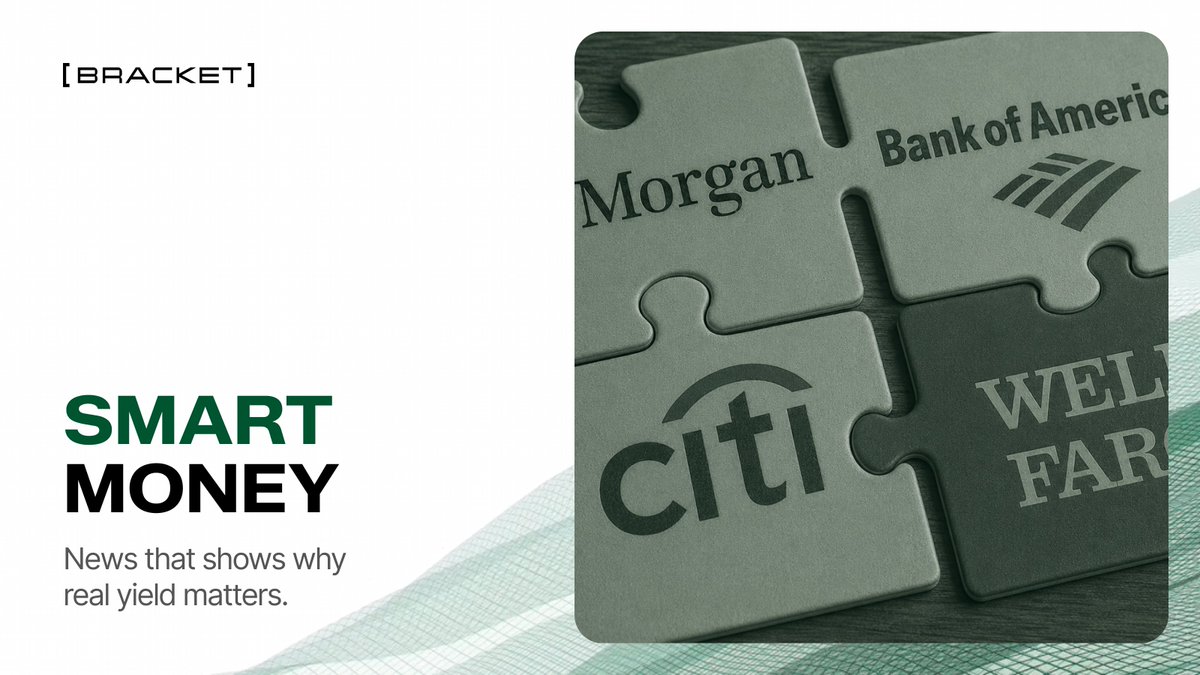

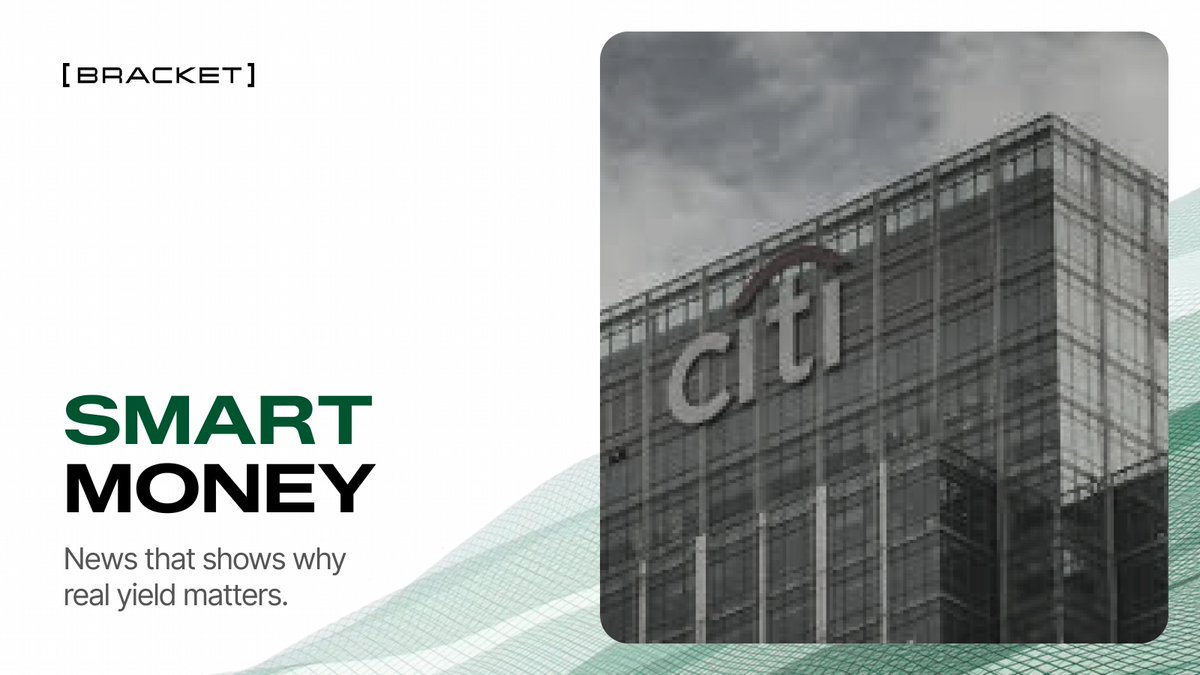


. @JPMorgan, @Citi, @BankofAmerica, and @WellsFargo are building a shared blockchain together. The reason is defensive.
The four largest banks in America are developing a Tokenized Deposit Network, operated through The Clearing House, targeting a launch in the first half of 2027.
The goal is to keep deposits from leaving the banking system for stablecoins.
> Tokenized deposits issued directly by banks as digital versions of customer deposits, inside the existing regulatory framework with consumer protections intact.
> JPMorgan already runs Kinexys, processing institutional payments via JPM Coin, and launched a tokenized deposit token on Base earlier in 2026.
> The pitch to clients: instant 24/7 settlement, programmable payments, blockchain-speed money movement.
> The audience that matters most is the Federal Reserve. . .
For two years, the question was whether incumbent banks would adopt tokenization at all.
When the four institutions that anchor the US banking system commit to building blockchain settlement rails, that debate is settled.
The motivation is what stands out. The banks aren't doing this out of conviction about crypto.
They're responding to capital that was already moving. Treasury teams running cross-border settlements in USDC care that stablecoin rails run on Sunday at 2 AM and bank wires don't.
The banks watched that gap turn into an exit and started building to close it.
Once deposits are tokenized and programmable, money stops sitting in an account and starts executing.
Settlement, collateral, and yield all become functions of what the infrastructure layer can do with capital that now moves at blockchain speed.
The banks are solving for retention. Turning programmable capital into productive capital through managed strategies is a different problem, and it's the one that compounds.
Smart money read this signal when JPMorgan put a deposit token on a public chain. The Tokenized Deposit Network confirms that tokenized money is becoming the default, and the infrastructure that deploys it is where the next decade of value accrues.
Source in 🧵
1
209

Jun 12
[WEEKLY RECAP]
In case you missed it . . .
A recap of the most important events of the week! 🧵
1
399
Jun 12
Bracket is available to users outside the US and non-sanctioned jurisdictions.
For full details, see our Terms of Service:
bracket.fi/terms-of-service
7/8👇
1
88
Jun 12
This is the final tweet in this thread.
Be wary of accounts trying to impersonate Bracket.
The official X/Twitter is @bracket_fi.
[Stay Safe]
8/8 🏁
82
Jun 11
> Tokenized assets: $28.9B ATH in May:
coindesk.com/research/stable…
> JPM, BofA, Citi, WF: tokenized deposit network:
pymnts.com/news/banking/2026…
> NY DFS: first GENIUS Act alignment:
pymnts.com/cryptocurrency/20…
> @Binance: tokenized RWAs 589%, stocks 422%:
crypto.news/binance-spotligh…
@Visa Brale: private stablecoin settlement:
investor.visa.com/news/news-…
Jun 8

.@Citi just put a number on where tokenization ends up.
The base case is $5.5 trillion by 2030. The bull case is $8.2 trillion. Today's market sits at $17 billion.
That's a 323x growth window in four years, and for the first time, the timeline is anchored to infrastructure moves that are already on the calendar.
> DTCC, which custodies $114 trillion in assets and processes virtually every securities trade in the US, begins limited production of tokenized securities in July 2026.
> NYSE, ICE, and Nasdaq already approved for tokenized equity platforms.
> Stablecoins projected to generate up to $1 trillion in new on-chain Treasury demand.
> Citi rates tokenization at 1.5 out of 10 on its adoption curve. Most of the growth is still ahead. . .
What separates this report from earlier tokenization forecasts is the specificity of the infrastructure commitments, grounded in signed announcements from the entities that run American capital markets, rather than assumptions about institutional interest.
The @The_DTCC, going live in July, is the post-trade settlement backbone of US equities, beginning to process tokenized trades in production.
When that happens, tokenized securities stop being an alternative format and start being part of the same settlement stack that handles every stock trade in the country.
Citi's report identifies the winners as "structural orchestrators", institutions that control both the asset and the payment rail. Whoever controls the combination of tokenized asset issuance and on-chain settlement infrastructure captures the compounding value of both.
Smart money has been positioned around this convergence for two years. The $17 billion market today sits at 1.5 on Citi's adoption curve; the infrastructure is committed, the regulatory clearances are in place, and, for the first time, the timeline is specific enough to build around.
Source in 🧵
1
307
Jun 8
.@Citi just put a number on where tokenization ends up.
The base case is $5.5 trillion by 2030. The bull case is $8.2 trillion. Today's market sits at $17 billion.
That's a 323x growth window in four years, and for the first time, the timeline is anchored to infrastructure moves that are already on the calendar.
> DTCC, which custodies $114 trillion in assets and processes virtually every securities trade in the US, begins limited production of tokenized securities in July 2026.
> NYSE, ICE, and Nasdaq already approved for tokenized equity platforms.
> Stablecoins projected to generate up to $1 trillion in new on-chain Treasury demand.
> Citi rates tokenization at 1.5 out of 10 on its adoption curve. Most of the growth is still ahead. . .
What separates this report from earlier tokenization forecasts is the specificity of the infrastructure commitments, grounded in signed announcements from the entities that run American capital markets, rather than assumptions about institutional interest.
The @The_DTCC, going live in July, is the post-trade settlement backbone of US equities, beginning to process tokenized trades in production.
When that happens, tokenized securities stop being an alternative format and start being part of the same settlement stack that handles every stock trade in the country.
Citi's report identifies the winners as "structural orchestrators", institutions that control both the asset and the payment rail. Whoever controls the combination of tokenized asset issuance and on-chain settlement infrastructure captures the compounding value of both.
Smart money has been positioned around this convergence for two years. The $17 billion market today sits at 1.5 on Citi's adoption curve; the infrastructure is committed, the regulatory clearances are in place, and, for the first time, the timeline is specific enough to build around.
Source in 🧵
1
1
976
Jun 8
298
Jun 5
[WEEKLY RECAP]
In case you missed it . . .
A recap of the most important events of the week! 🧵
2
1
2
416
Jun 5
Bracket is available to users outside the US and non-sanctioned jurisdictions.
For full details, see our Terms of Service:
bracket.fi/terms-of-service
7/8👇
1
138
Jun 5
This is the final tweet in this thread.
Be wary of accounts trying to impersonate Bracket.
The official X/Twitter is @bracket_fi.
[Stay Safe]
8/8 🏁
78