A podcast on banking, fintech, and the future of financial services. Hosted by @jasonhenrichs, @jpnicols, and founder @brettking
Joined October 2013
- Tweets 14,407
- Following 2,282
- Followers 12,177
- Likes 15,763
4,982 Photos and videos
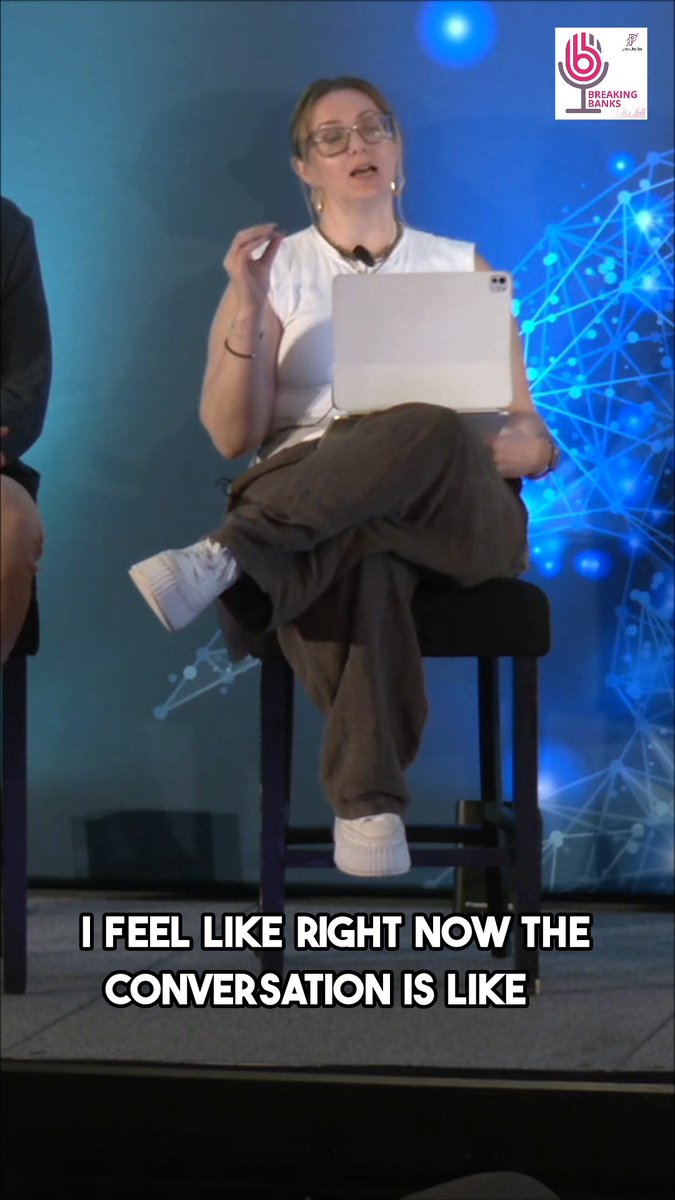



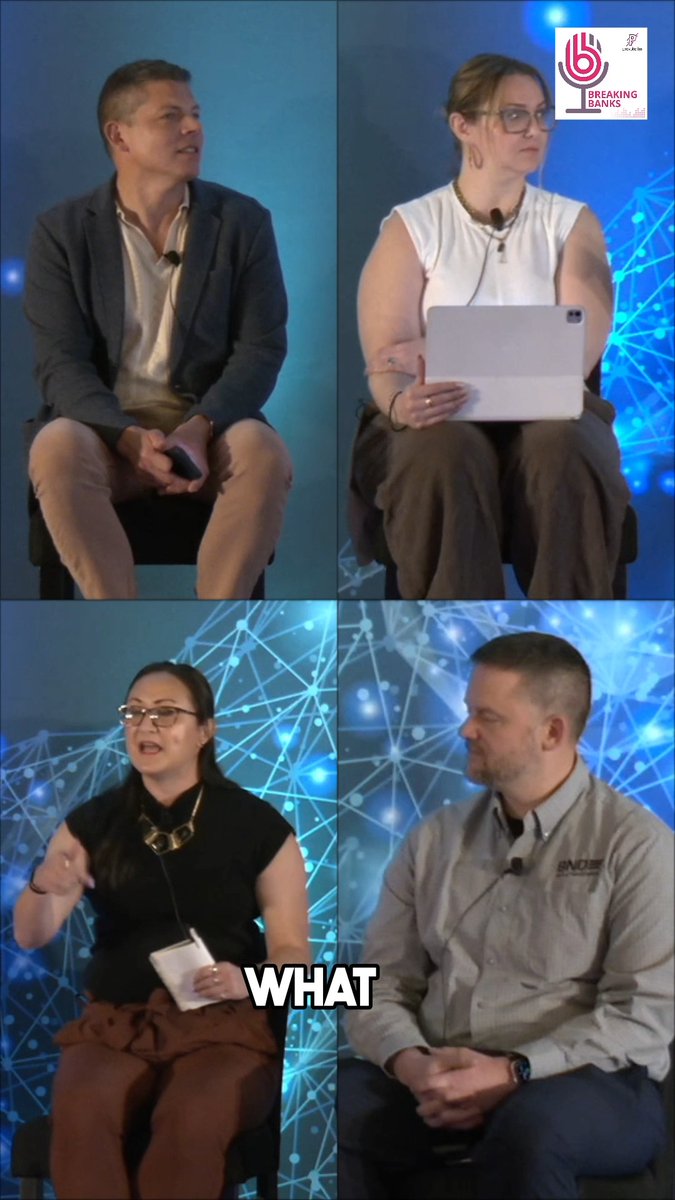
Risk is never zero.
Even when you set the dial to zero, it is not zero.
That was Dara Tarkowski’s practical pushback during our Hot Takes session at the Alloy Labs annual member meeting.
Dara brought it back to the room every bank leader actually sits in:
Should we do this? Should we not?
And if we do, how do we manage the risk without pretending we eliminated it?
If you are offering a new product, launching a new service, or adopting new technology, the question is not just whether compliance is comfortable.
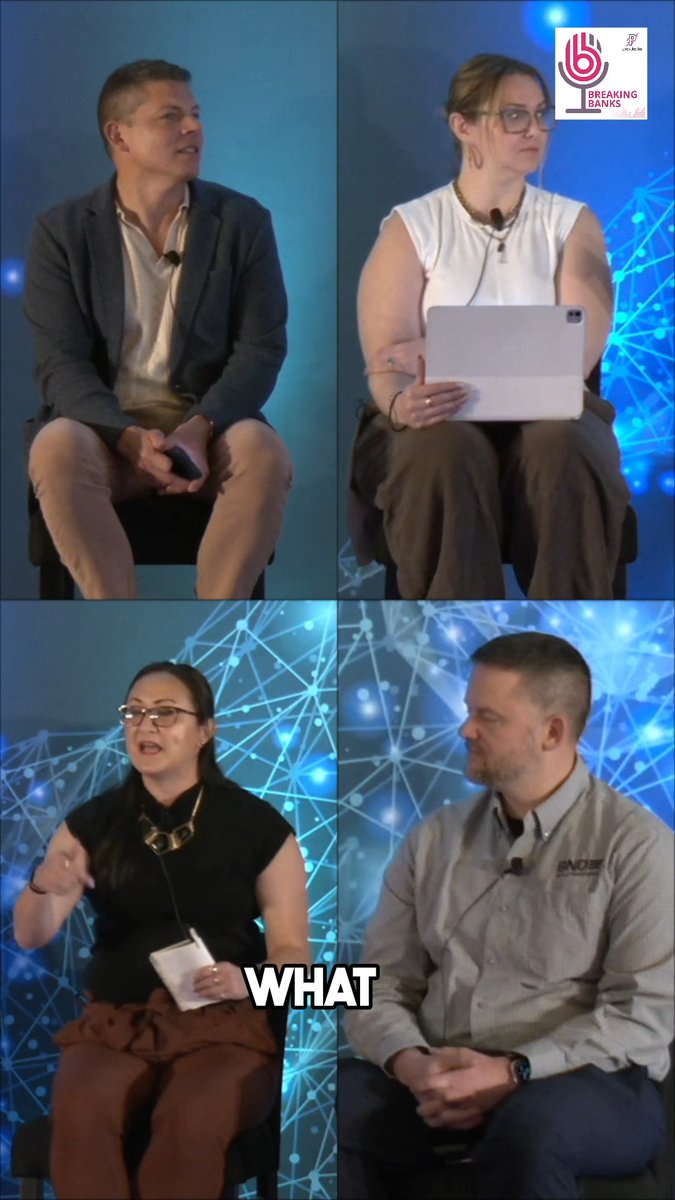
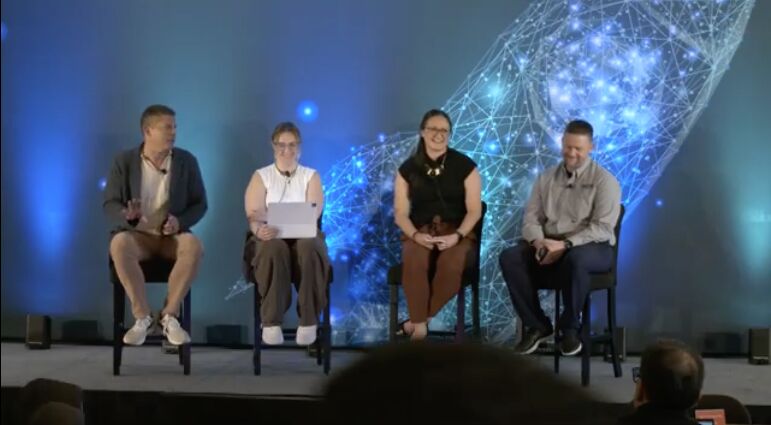
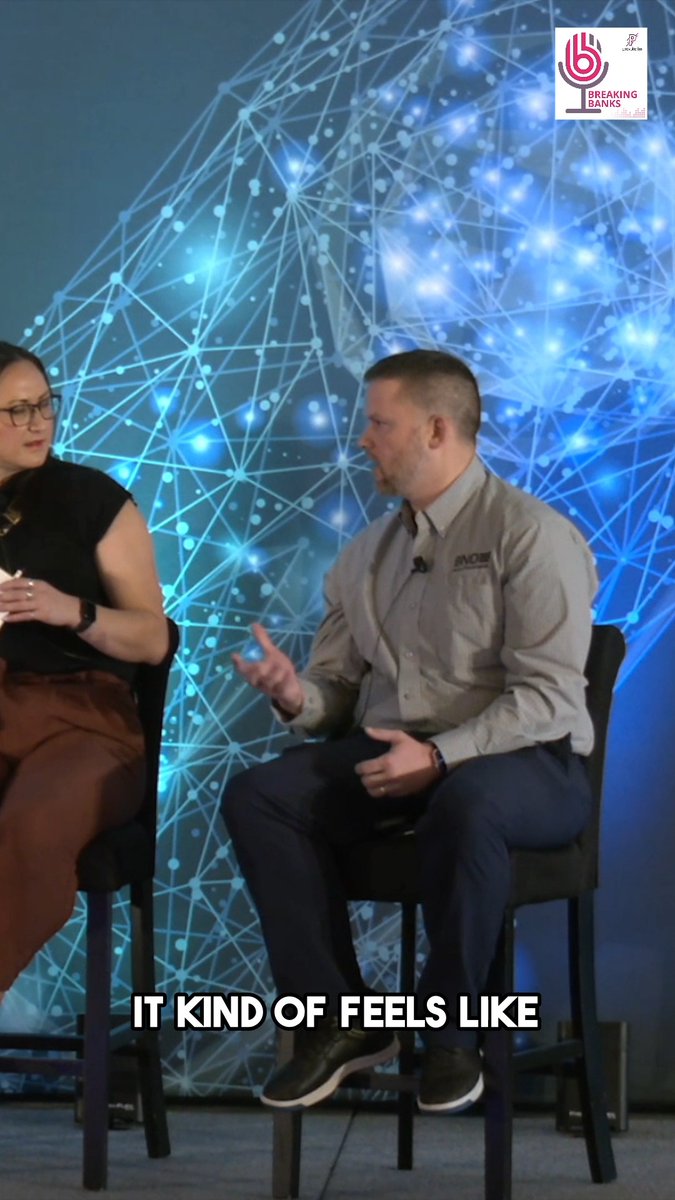
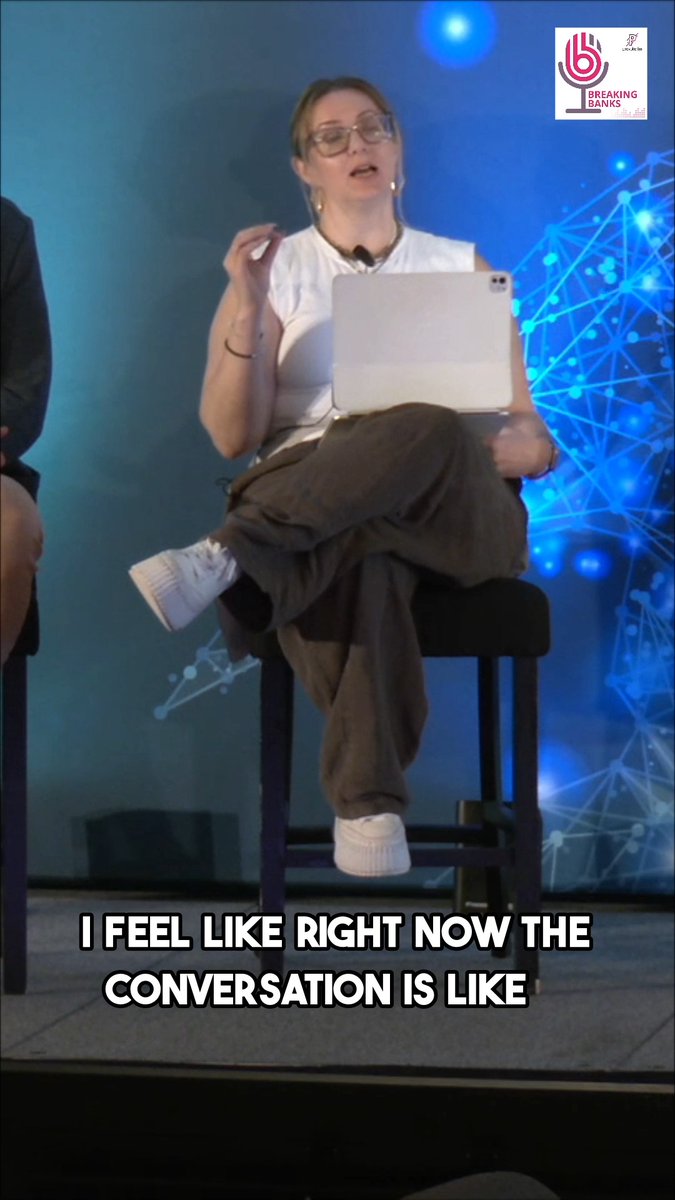
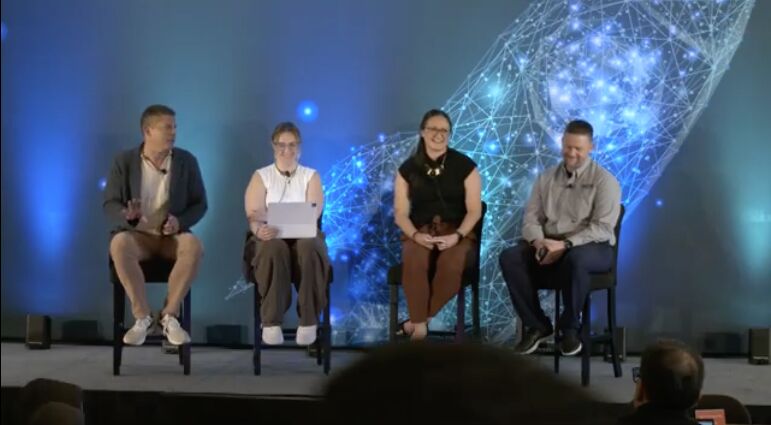
Jason Henrichs is joined by Kiah Haslett of Fintech Takes Banking, Dara Tarkowski of Much Shelist, P.C., and Rick Geloff of Bank of North Dakota for a conversation on regulatory tolerance, risk mitigation, and what practical leadership looks like when clarity is not coming.
Watch on YouTube: youtube.com/watch?v=1HT4WRHa…
Listen to the podcast: provoke.fm/is-just-a-little-…
1
52

Jun 15
What if crime pays?
That was Kiah Haslett’s premise walking into our Hot Takes session at the Alloy Labs annual member meeting.
Because in a lighter-touch regulatory environment, the market can start to reward behavior that looks very different from what banks are built to tolerate.
What gets funded.
What gets scaled.
What regulators appear willing to accept.
What consumers keep using.
What makes money.
At some point, the question becomes unavoidable:
Are we being honest?
Jason Henrichs is joined by Kiah Haslett of Fintech Takes Banking, Dara Tarkowski of Much Shelist, P.C., and Rick Geloff of Bank of North Dakota for a conversation on regulatory tolerance, strategic temptation, and what bank leaders do when the rules feel less clear than the risks.
Watch on YouTube: youtube.com/watch?v=1HT4WRHa…
Listen to the podcast: provoke.fm/is-just-a-little-…
71
Jun 13
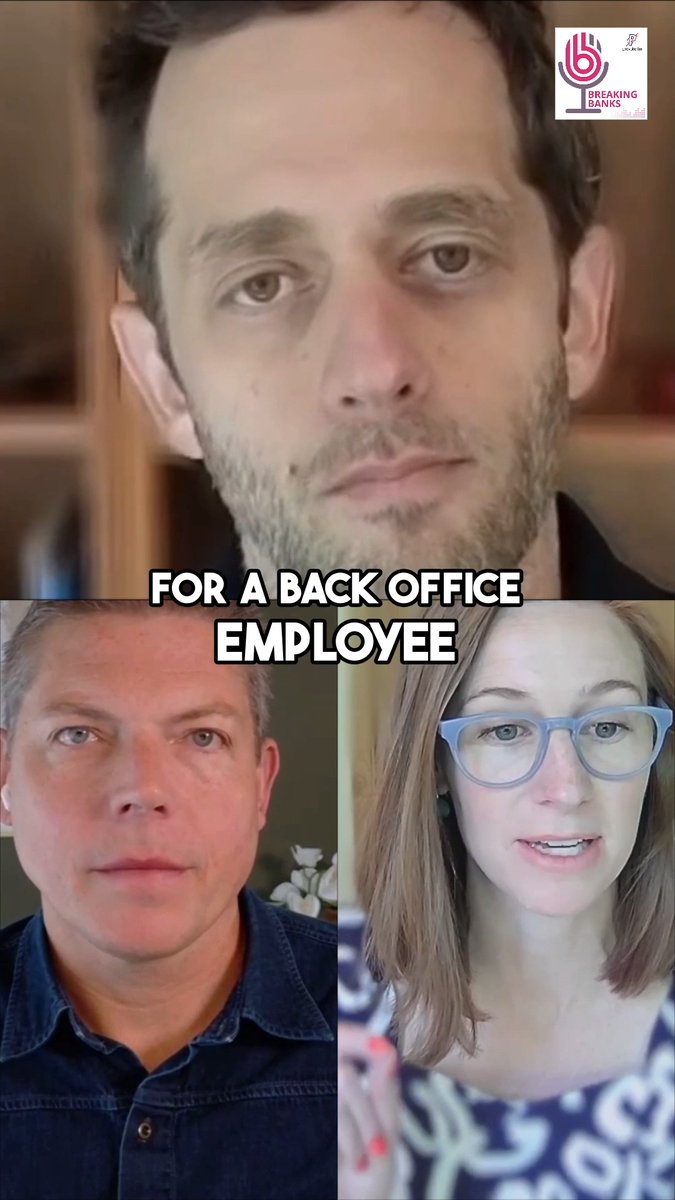
What happens when AI gives a back-office employee 20 hours back?
That may be one of the biggest cultural challenges facing community banks.
If processing wires used to fill a 40-hour week, and AI reduces that work to 15 hours, the question becomes what to do with the 25?
Can that employee become more cross-functional?
Can teams move from narrow task execution to broader ownership?
Can banks build cultures where AI expands capacity instead of simply cutting cost?
In this episode of Breaking Banks, Jason Henrichs talks with Daniel Michaeli of Glia and Madeline Fredin of Alloy Labs about what AI really changes inside financial institutions.
The future of banking work may not be fewer people doing the same jobs.
It may be people doing more valuable work across the organization.
Listen here or wherever you get your podcasts: provoke.fm/winning-the-multi…
1
1
145
Jun 12
“What AI has done is it has made intelligence abundant and cheap.” - Madeline Fredin, Alloy Labs
That changes the competitive map for banking.
If your institution’s strategy depended on access to information, analysis, or expertise as a moat, that moat is now under pressure.
But that does not mean the advantage has disappeared.
The advantage now belongs to institutions that can operationalize intelligence faster, apply it more effectively, and use it to unlock decisions they could not make before.
In this episode of Breaking Banks, Jason Henrichs talks with Daniel Michaeli of Glia and Madeline Fredin of Alloy Labs about how AI is reshaping what banks can compete on.
Listen here or wherever you get your podcasts: provoke.fm/winning-the-multi…
1
128
Jun 11
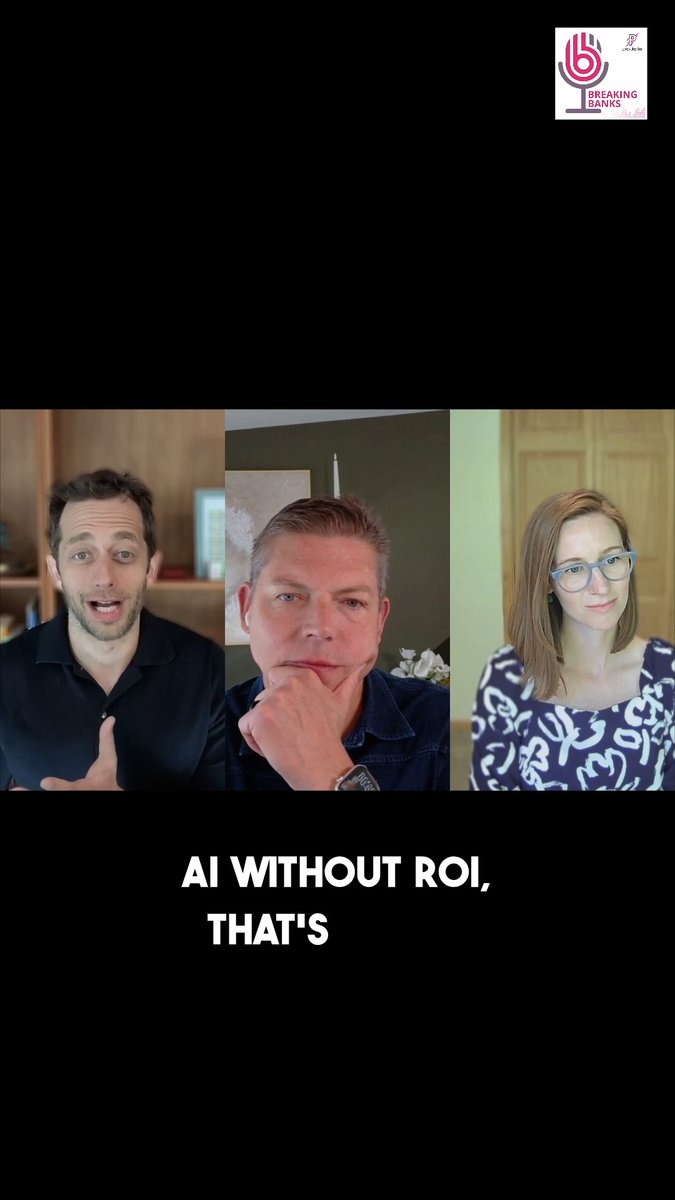
At the end of the day, AI without ROI, is a toy.
AI that does not change outcomes is simply theater.
The point of AI in banking is having impact.
Can it help grow deposits?
Can it expand lending relationships?
Can it strengthen the frontline?
Can it make the universal banker model more than a long-running aspiration?
In this episode of Breaking Banks, Jason Henrichs talks with Daniel Michaeli of Glia and Madeline Fredin of Alloy Labs about what separates AI pilots from AI transformation.
The difference starts with knowing the end state.
Where is this actually supposed to take the institution?
Listen here or wherever you get your podcasts: provoke.fm/winning-the-multi…
1
172
Jun 10
Winning the Multi-Front War: AI-Powered Intelligence for Modern Banking
Financial institutions are fighting on multiple fronts.
Economic pressure.
Regulatory complexity.
Rising customer expectations.
Megabanks with massive technology budgets.
Is your institution building intelligence into the operating model, or just running another pilot?
In this episode of Breaking Banks, Jason Henrichs is joined by Dan Michaeli, CEO & Co-Founder of Glia, and Madeline Fredin, SVP of Growth & AI Transformation at Alloy Labs, to explore what it takes for banks to move beyond “pilot purgatory.”
AI as a self-learning institutional brain.
Not just for service.
For growth, decision-making, and the next operating model of banking.
Listen here or wherever you get your podcasts: provoke.fm/winning-the-multi…
50
What happens when AI gives a back-office employee 20 hours back?
That may be one of the biggest cultural challenges facing community banks.
If processing wires used to fill a 40-hour week, and AI reduces that work to 15 hours, the question becomes what to do with the 25?
Can that employee become more cross-functional?
Can teams move from narrow task execution to broader ownership?
Can banks build cultures where AI expands capacity instead of simply cutting cost?
In this episode of Breaking Banks, Jason Henrichs talks with Daniel Michaeli of Glia and Madeline Fredin of Alloy Labs about what AI really changes inside financial institutions.
The future of banking work may not be fewer people doing the same jobs.
It may be people doing more valuable work across the organization.
Listen here or wherever you get your podcasts: provoke.fm/winning-the-multi…
1
1
184
“What AI has done is it has made intelligence abundant and cheap.” - Madeline Fredin, Alloy Labs
That changes the competitive map for banking.
If your institution’s strategy depended on access to information, analysis, or expertise as a moat, that moat is now under pressure.
But that does not mean the advantage has disappeared.
The advantage now belongs to institutions that can operationalize intelligence faster, apply it more effectively, and use it to unlock decisions they could not make before.
In this episode of Breaking Banks, Jason Henrichs talks with Daniel Michaeli of Glia and Madeline Fredin of Alloy Labs about how AI is reshaping what banks can compete on.
Listen here or wherever you get your podcasts: provoke.fm/winning-the-multi…
1
171
At the end of the day, AI without ROI, is a toy.
AI that does not change outcomes is simply theater.
The point of AI in banking is having impact.
Can it help grow deposits?
Can it expand lending relationships?
Can it strengthen the frontline?
Can it make the universal banker model more than a long-running aspiration?
In this episode of Breaking Banks, Jason Henrichs talks with Daniel Michaeli of Glia and Madeline Fredin of Alloy Labs about what separates AI pilots from AI transformation.
The difference starts with knowing the end state.
Where is this actually supposed to take the institution?
Listen here or wherever you get your podcasts: provoke.fm/winning-the-multi…
103
Winning the Multi-Front War: AI-Powered Intelligence for Modern Banking
Financial institutions are fighting on multiple fronts.
Economic pressure.
Regulatory complexity.
Rising customer expectations.
Megabanks with massive technology budgets.
Is your institution building intelligence into the operating model, or just running another pilot?
In this episode of Breaking Banks, Jason Henrichs is joined by Dan Michaeli, CEO & Co-Founder of Glia, and Madeline Fredin, SVP of Growth & AI Transformation at Alloy Labs, to explore what it takes for banks to move beyond “pilot purgatory.”
AI as a self-learning institutional brain.
Not just for service.
For growth, decision-making, and the next operating model of banking.
Listen here or wherever you get your podcasts: provoke.fm/winning-the-multi…
1
77
Is just a little crime OK now or what?
Kiah Haslett walked into our Hot Takes session at the Alloy Labs annual member meeting with a provocative thesis: in a lighter-touch regulatory environment, the prisoner’s dilemma rewards whoever moves first.
The strategically correct move, she argued, might also be the morally bankrupt one. And she’s not sure that changes the math.
Dara Tarkowski pushed back — not on the logic, but on the assumption that the rules disappeared. The statutes are still there and the switch can still be flipped.
If banks operate with a debt mindset — protect the downside, don’t lose, get your principal back — what opportunities are they missing? And what is the cost of waiting for clarity that may never come?
Jason Henrichs is joined by Kiah Haslett (Fintech Takes Banking), Dara Tarkowski (Much Shelist, P.C.), and Rick Geloff (Bank of North Dakota).
Watch on YouTube: youtube.com/watch?v=1HT4WRHa…
Listen to the podcast: provoke.fm/is-just-a-little-…
91
Go forward. Conquer. Break something.
That mindset may work in some corners of tech, but in financial services, the thing that breaks is usually attached to a real person.
That was Rick Geloff’s concern during our Hot Takes session at the Alloy Labs annual member meeting.
As he points out, the practical problem is not just that something might break.
It is that people get harmed when it does.
It is how to move without pretending the downside is theoretical.
Jason Henrichs is joined by Kiah Haslett of Fintech Takes Banking, Dara Tarkowski of Much Shelist, P.C., and Rick Geloff of Bank of North Dakota for a conversation on regulatory tolerance, risk, and what responsible forward motion actually looks like.
Watch on YouTube: youtube.com/watch?v=1HT4WRHa…
Listen to the podcast: provoke.fm/is-just-a-little-…
1
2
118
Is just a little crime OK now or what?
Kiah Haslett walked into our Hot Takes session at the Alloy Labs annual member meeting with a thesis she’d been sitting on:
In a lighter-touch regulatory environment, the prisoner’s dilemma rewards whoever moves first.
The strategically correct move might also be the morally bankrupt one. And she’s not sure that changes the math.
Dara Tarkowski pushed back. Not on the logic, but on the premise.
The statutes didn’t go anywhere. The switch can still be flipped, and underneath it all is the question every bank leader has to wrestle with:
If your entire strategy is built around protecting the downside, what are you leaving on the table?
And what does it actually cost to keep waiting for clarity that isn’t coming?
Jason Henrichs is joined by Kiah Haslett of Fintech Takes Banking, Dara Tarkowski of Much Shelist, P.C., and Rick Geloff of Bank of North Dakota.
Watch on YouTube: youtube.com/watch?v=1HT4WRHa…
Listen to the podcast: provoke.fm/is-just-a-little-…
72
Risk is never zero.
Even when you set the dial to zero, it is not zero.
That was Dara Tarkowski’s practical pushback during our Hot Takes session at the Alloy Labs annual member meeting.
Dara brought it back to the room every bank leader actually sits in:
Should we do this? Should we not?
And if we do, how do we manage the risk without pretending we eliminated it?
If you are offering a new product, launching a new service, or adopting new technology, the question is not just whether compliance is comfortable.
@jasonhenrichs is joined by Kiah Haslett of Fintech Takes Banking, Dara Tarkowski of Much Shelist, P.C., and Rick Geloff of Bank of North Dakota for a conversation on regulatory tolerance, risk mitigation, and what practical leadership looks like when clarity is not coming.
Watch on YouTube: youtube.com/watch?v=1HT4WRHa…
Listen to the podcast: provoke.fm/is-just-a-little-…
91
May 31
What if crime pays?
That was Kiah Haslett’s premise walking into our Hot Takes session at the Alloy Labs annual member meeting.
Because in a lighter-touch regulatory environment, the market can start to reward behavior that looks very different from what banks are built to tolerate.
What gets funded.
What gets scaled.
What regulators appear willing to accept.
What consumers keep using.
What makes money.
At some point, the question becomes unavoidable:
Are we being honest?
@jasonhenrichs is joined by Kiah Haslett of Fintech Takes Banking, Dara Tarkowski of Much Shelist, P.C., and Rick Geloff of Bank of North Dakota for a conversation on regulatory tolerance, strategic temptation, and what bank leaders do when the rules feel less clear than the risks.
Watch on YouTube: youtube.com/watch?v=1HT4WRHa…
Listen to the podcast: provoke.fm/is-just-a-little-…
1
128
May 29
Is just a little crime OK now or what?
Kiah Haslett walked into our Hot Takes session at the Alloy Labs annual member meeting with a provocative thesis: in a lighter-touch regulatory environment, the prisoner’s dilemma rewards whoever moves first.
The strategically correct move, she argued, might also be the morally bankrupt one. And she’s not sure that changes the math.
Dara Tarkowski pushed back — not on the logic, but on the assumption that the rules disappeared. The statutes are still there and the switch can still be flipped.
If banks operate with a debt mindset — protect the downside, don’t lose, get your principal back — what opportunities are they missing? And what is the cost of waiting for clarity that may never come?
Jason Henrichs is joined by Kiah Haslett (Fintech Takes Banking), Dara Tarkowski (Much Shelist, P.C.), and Rick Geloff (Bank of North Dakota).
Watch on YouTube: youtube.com/watch?v=1HT4WRHa…
Listen to the podcast: provoke.fm/is-just-a-little-…
77
May 28
Go forward. Conquer. Break something.
That mindset may work in some corners of tech, but in financial services, the thing that breaks is usually attached to a real person.
That was Rick Geloff’s concern during our Hot Takes session at the Alloy Labs annual member meeting.
As he points out, the practical problem is not just that something might break.
It is that people get harmed when it does.
It is how to move without pretending the downside is theoretical.
Jason Henrichs is joined by Kiah Haslett of Fintech Takes Banking, Dara Tarkowski of Much Shelist, P.C., and Rick Geloff of Bank of North Dakota for a conversation on regulatory tolerance, risk, and what responsible forward motion actually looks like.
Watch on YouTube: youtube.com/watch?v=1HT4WRHa…
Listen to the podcast: provoke.fm/is-just-a-little-…
59
May 27
Is just a little crime OK now or what?
Kiah Haslett walked into our Hot Takes session at the Alloy Labs annual member meeting with a thesis she’d been sitting on:
In a lighter-touch regulatory environment, the prisoner’s dilemma rewards whoever moves first.
The strategically correct move might also be the morally bankrupt one. And she’s not sure that changes the math.
Dara Tarkowski pushed back. Not on the logic, but on the premise.
The statutes didn’t go anywhere. The switch can still be flipped, and underneath it all is the question every bank leader has to wrestle with:
If your entire strategy is built around protecting the downside, what are you leaving on the table?
And what does it actually cost to keep waiting for clarity that isn’t coming?
Jason Henrichs is joined by Kiah Haslett of Fintech Takes Banking, Dara Tarkowski of Much Shelist, P.C., and Rick Geloff of Bank of North Dakota.
Watch on YouTube: youtube.com/watch?v=1HT4WRHa…
Listen to the podcast: provoke.fm/is-just-a-little-…

70
May 26
Risk is never zero.
Even when you set the dial to zero, it is not zero.
That was Dara Tarkowski’s practical pushback during our Hot Takes session at the Alloy Labs annual member meeting.
Dara brought it back to the room every bank leader actually sits in:
Should we do this? Should we not?
And if we do, how do we manage the risk without pretending we eliminated it?
If you are offering a new product, launching a new service, or adopting new technology, the question is not just whether compliance is comfortable.
@jasonhenrichs is joined by Kiah Haslett of Fintech Takes Banking, Dara Tarkowski of Much Shelist, P.C., and Rick Geloff of Bank of North Dakota for a conversation on regulatory tolerance, risk mitigation, and what practical leadership looks like when clarity is not coming.
Watch on YouTube: youtube.com/watch?v=1HT4WRHa…
Listen to the podcast: provoke.fm/is-just-a-little-…
1
137
May 25
What if crime pays?
That was Kiah Haslett’s premise walking into our Hot Takes session at the Alloy Labs annual member meeting.
Because in a lighter-touch regulatory environment, the market can start to reward behavior that looks very different from what banks are built to tolerate.
What gets funded.
What gets scaled.
What regulators appear willing to accept.
What consumers keep using.
What makes money.
At some point, the question becomes unavoidable:
Are we being honest?
@jasonhenrichs is joined by Kiah Haslett of Fintech Takes Banking, Dara Tarkowski of Much Shelist, P.C., and Rick Geloff of Bank of North Dakota for a conversation on regulatory tolerance, strategic temptation, and what bank leaders do when the rules feel less clear than the risks.
Watch on YouTube: youtube.com/watch?v=1HT4WRHa…
Listen to the podcast: provoke.fm/is-just-a-little-…
141