
Senior Counsel @adflegal. Tweets are mine alone.
Joined September 2022
- Tweets 2,548
- Following 650
- Followers 601
- Likes 2,495
157 Photos and videos












Brian Knight retweeted

Jun 11
The Journal of Financial Economic Policy published my paper called "Bank Capital Regulation, ABS-CDO Exposures and the Cost of Restoring Solvency" (papers.ssrn.com/sol3/papers.…). It revises (and shortens) an earlier working paper called "Regulation, CDO Exposures, and Debt Guarantees through the Financial Crisis."
To understand the motivation, I've long been skeptical of "deregulation caused the crisis" claims. It's because people making this claim tend to overlook the lengthy regulatory notices that permitted the activities at the heart of the crisis in the first place. These regulatory notices reflect banker preferences to fund assets with debt rather than equity capital. The 1996 Market Risk Amendment (govinfo.gov/content/pkg/FR-1…) gave large commercial bank holding companies (BHCs) incentives to hold ABS-CDO tranches in their trading book as it lowered required capital to almost zero. The 2001 Recourse Rule (govinfo.gov/content/pkg/FR-2…) created incentives to hold the collateral for ABS-CDO deals by reducing capital requirements on the highest rated tranches in their banking book. In simpler economic terms, the Market Risk Amendment directly affected demand to hold ABS-CDO tranches. The Recourse Rule indirectly affected demand, through what Erel et al. (papers.ssrn.com/sol3/papers.…) called the "Securitization Byproduct" effect, as ABS-CDO issuers had incentives to hold parts of their own and other banks' deals.
The market for ABS-CDOs emerged in 1998, after the finalized Market Risk Amendment but before the finalized Recourse Rule. In the paper, after constructing my own total global, US BHC and US investment bank ABS-CDO issuance series from Green Street's deal-level data, I find a structural break near the finalized Recourse Rule's public release date for US BHCs and globally, but not for US investment banks. That's not proof. But it's consistent with evidence from an earlier paper (papers.ssrn.com/sol3/papers.…), in which I showed that BHCs with subsidiaries that commented on the 2001 Recourse Rule, on average increased holdings of the highest-rated tranches that could be used as collateral in ABS-CDO deals; those BHCs substituted away from holdings of lower-rated tranches. The control group on average kept holdings of the highest-rated tranches low and constant. In this paper, I also find that large BHCs with subsidiaries that commented on the Recourse Rule had spikes in estimated debt guarantees, used as a measure of the cost of restoring solvency, during the crisis, not before. The control group shows no changes in the cost of restoring solvency. Lastly, I find that the cost of restoring solvency has a large association with CDO tranche holdings; the associations with the original 2013 and revised 2019 measures of Volcker Rule trading asset measures and other control variables are relatively small.
I still conclude that the role of the ABS-CDO market in that crisis remains under-examined and under-appreciated in policy debates. Early on, popular writings such as Michael Osinski's 2009 New York Magazine piece (nymag.com/news/business/5568…), the Afterword in Frank Partnoy's 2009 re-release of his book F.I.A.S.C.O. (wwnorton.com/books/978039333…) and Michael Lewis's The End (www-stat.wharton.upenn.edu/~…) clearly laid out why they mattered. Larry Cordell and coauthors (papers.ssrn.com/sol3/papers.… and papers.ssrn.com/sol3/papers.…) did fantastic technical work to reconstruct the deals to show why they lay at the heart of the crisis. While Cordell et al. touch on the regulatory angle, the link to regulation has been downplayed in policy debates.
After the crisis, the Financial Crisis Inquiry Commission Report (govinfo.gov/content/pkg/GPO-…) devoted about a page each to the Market Risk Amendment and the Recourse Rule. Among many other things, Dodd-Frank called for changes to bank securitization activities, without acknowledging the regulatory changes that incentivized them in the first place - agencies could have just rolled back the parts of the Market Risk Amendment and Recourse Rule that lowered capital requirements. Rather than eliminating risk-weighting after the crisis, the Basel III regulatory framework became even more complex, as Jim Barth and I showed (papers.ssrn.com/sol3/papers.…). We also showed (papers.ssrn.com/sol3/papers.…) that a simpler regulatory capital framework has benefits that outweigh the costs. Risk-based capital regulation remains in place because the industry and rulemakers want it that way, but that comes with a high cost of doing business from all of the required compliance staff (e.g., accountants, lawyers and quants) and plenty of unintended consequences.
1
1
3
339
Brian Knight retweeted

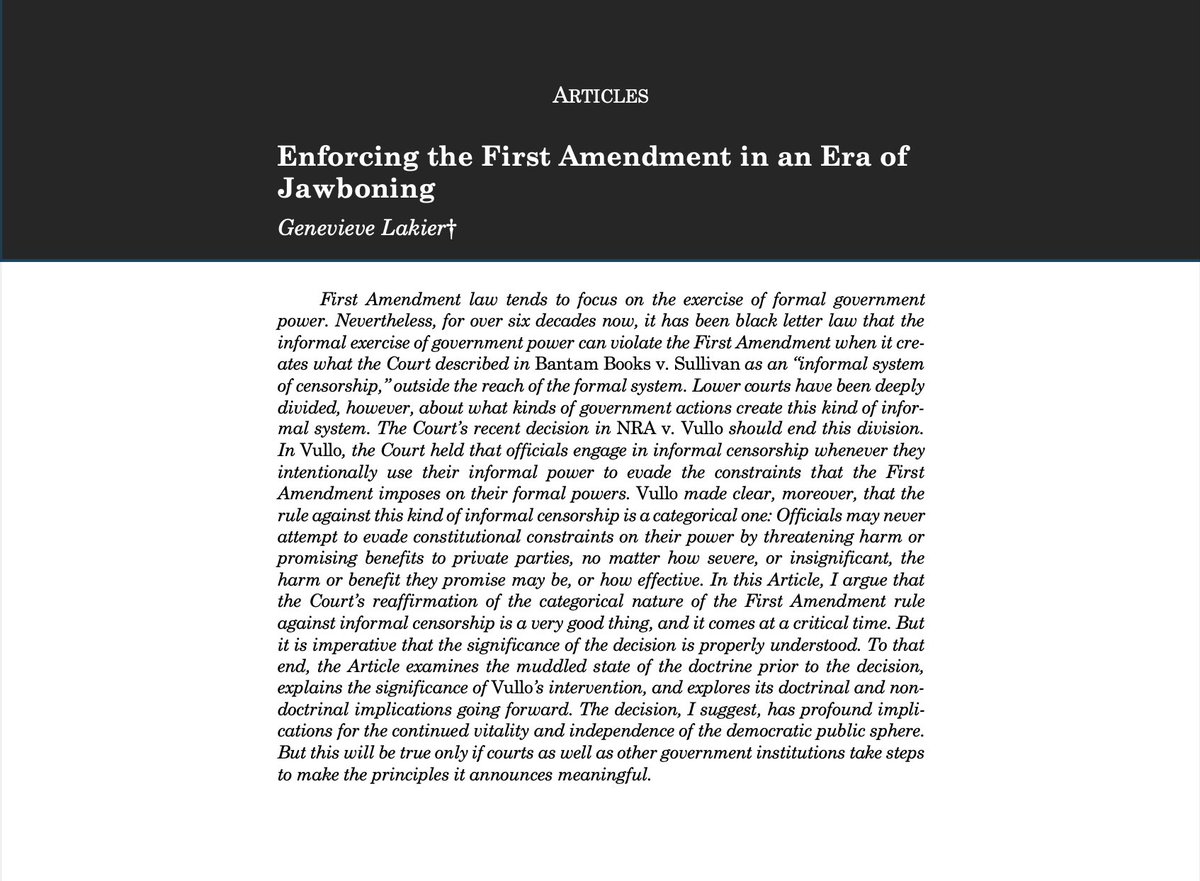
Professor Lakier lauds NRA v. Vullo's embrace of a categorical First Amendment rule against informal censorship, exploring the muddled landscape from which the decision emerged, the significance of its intervention, and its profound implications.
1
3
2
1,072

May 29
(I’m sure there is a catch, but for now)

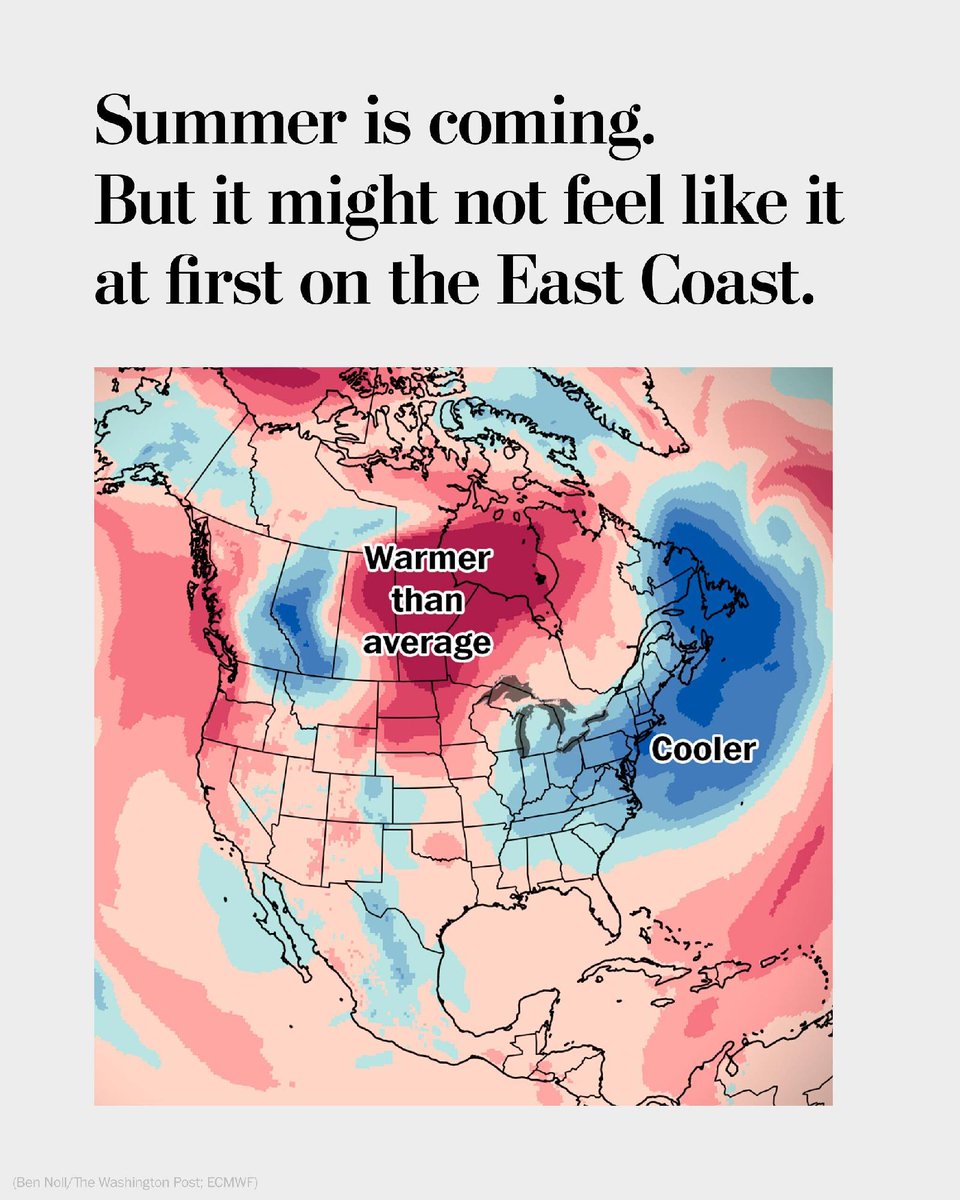
As the calendar soon turns from May to June — marking the start of meteorological summer — it won’t feel particularly summerlike in the East.
An extensive marine heat wave and potential super El Niño will bring unseasonably mild temperatures. wapo.st/4uDryNQ
70
May 21
Congratulations to @RegentLaw on the hiring of @HesterPeirce! (And vice versa!) Hester is one of the smartest, kindest, and most thoughtful people I know, a fantastic boss, and a devoted servant of Christ. This is a wonderful match.
May 20

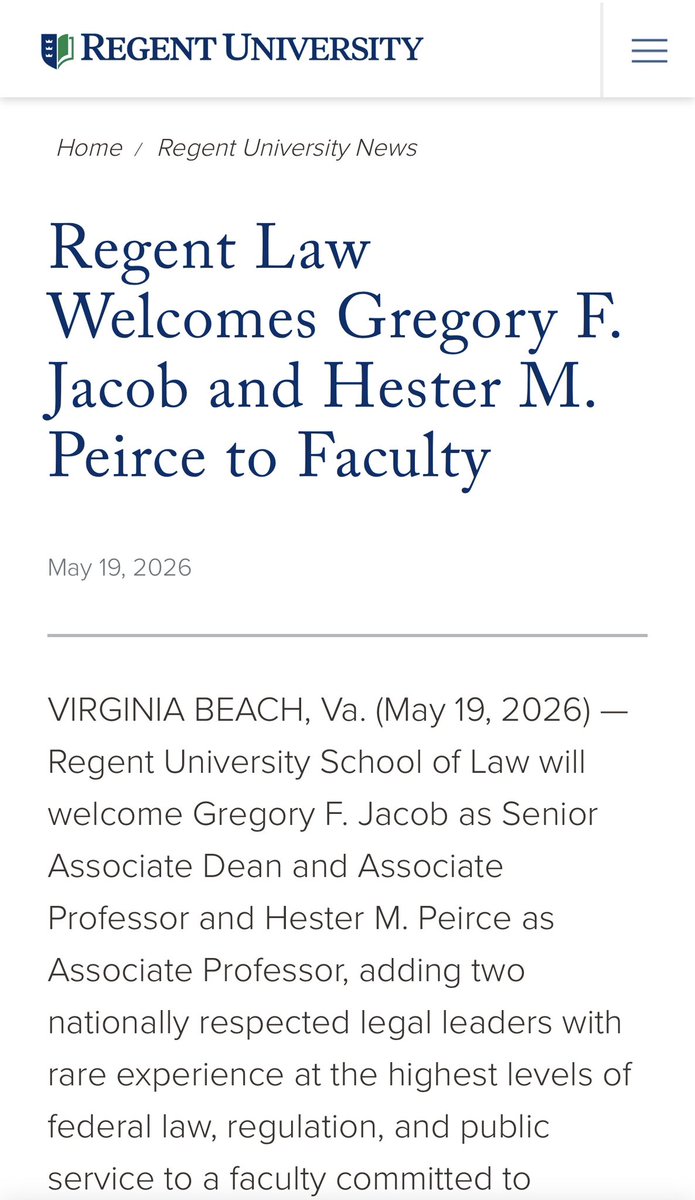
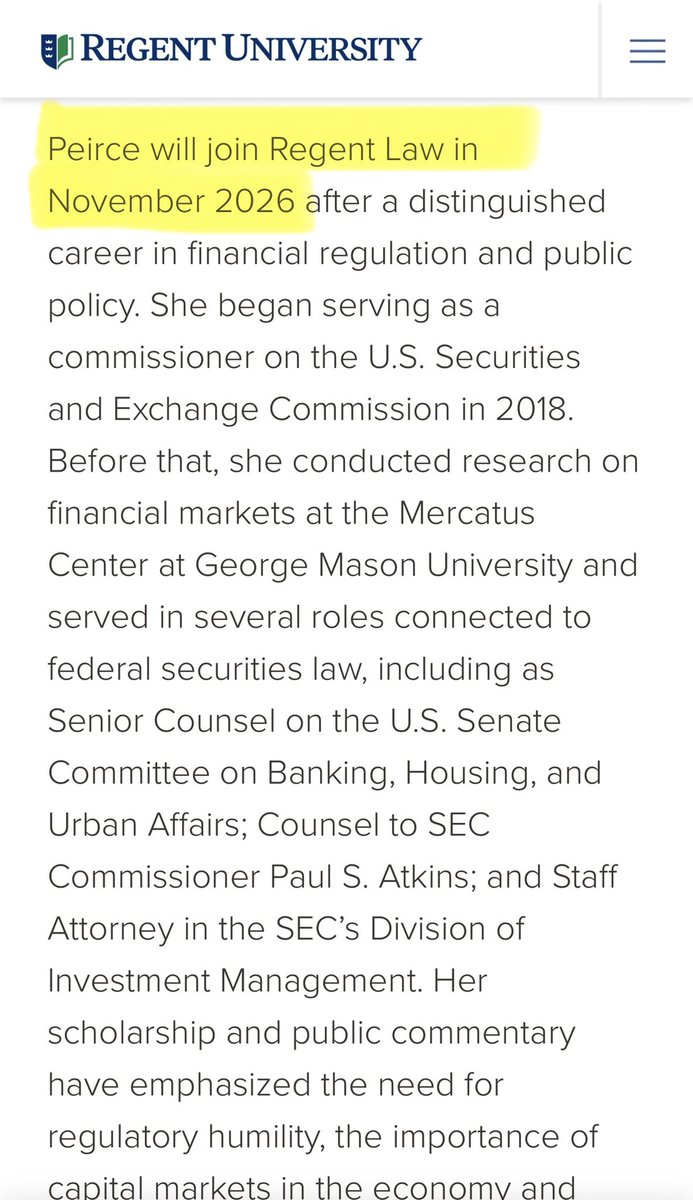
🚨NEW: SEC Commissioner and head of the Crypto Task Force @HesterPeirce will join Virginia’s Regent University Law School as an Associate Professor in November, according to a university press release circulated today, signaling her tenure at the agency is nearing an end.
In the new role, Peirce, also known as “Crypto Mom,” will teach subjects including securities regulation, financial markets, digital assets and public policy.
4
2
16
4,531
May 20
Coke Zero is what you drink if you like Coke. Diet Coke is what you drink if you like Diet Coke.
May 20

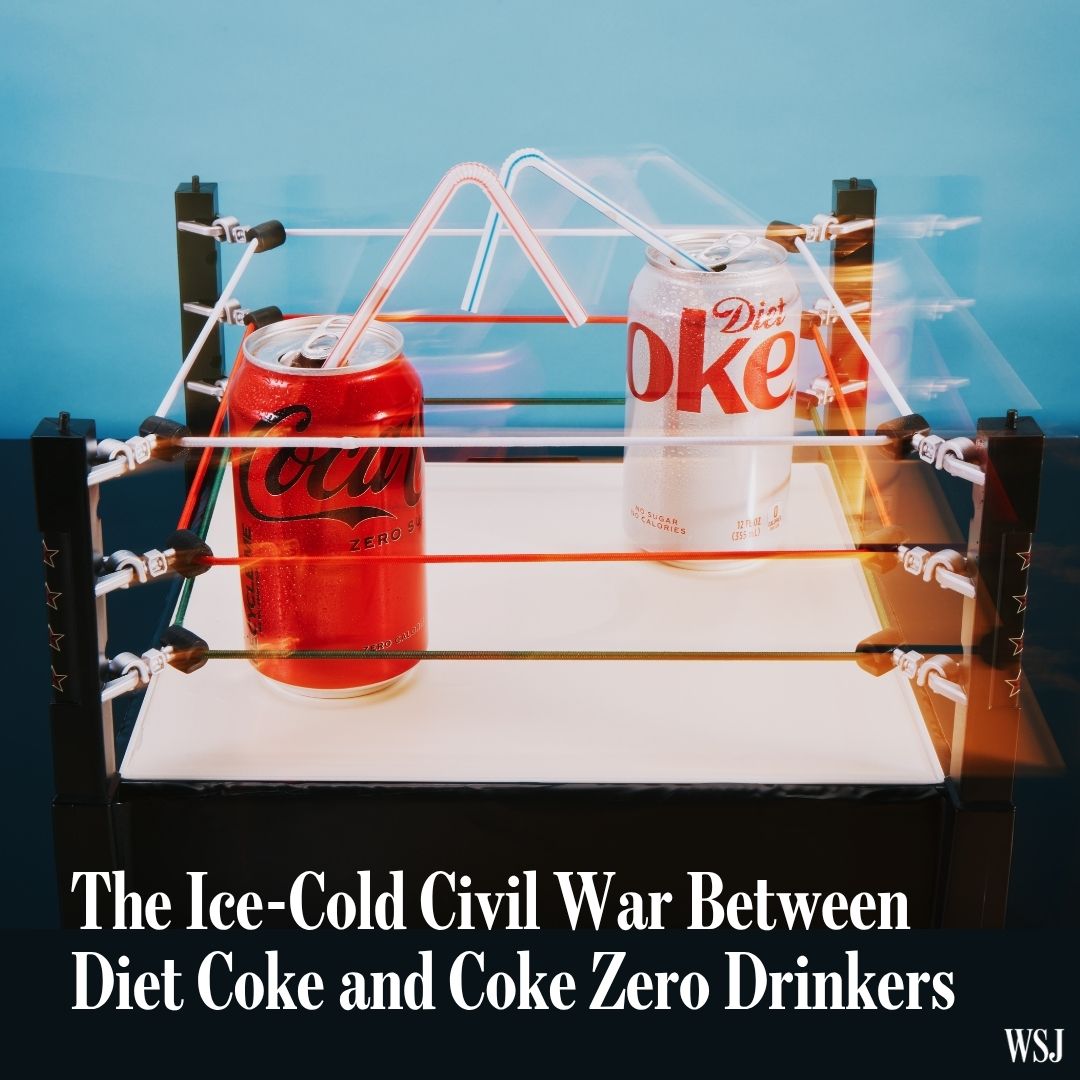
Coke vs. Pepsi was once the big soda debate. Now there’s a Coca-Cola civil war. 🔗 on.wsj.com/4eYLEx6
73
May 4
Is assuming Rousseau was wrong about everything a useful heuristic?
54
Brian Knight retweeted

May 2
missed this earlier. dear @patio11 with a characteristically-excellent reported history of SPLC's advocacy to shut its enemies out of public commercial life
somehow nothing here surprised me but it's still breathtaking seeing the 2016-2022 behind-the-scenes laid bare
do read it
May 1

This week in Bits about Money: bitsaboutmoney.com/archive/n…
25
49
767
42,987
May 2
I don't remember who (Will Durant?) argued that Greek philosophy shifted after the Macedonian and then Roman conquest away from a focus on the external, especially how to govern a polis, to the internal because self governance was stripped away.
Feb 25

Stoicism is popular because apathy is the sickness of our age and stoicism glorifies it. Stoicism is cope for living in a dying society. Stoicism is managed decline. You need to become anti-stoic. You need to become so passionate it’s self-destructive.
100
Apr 30
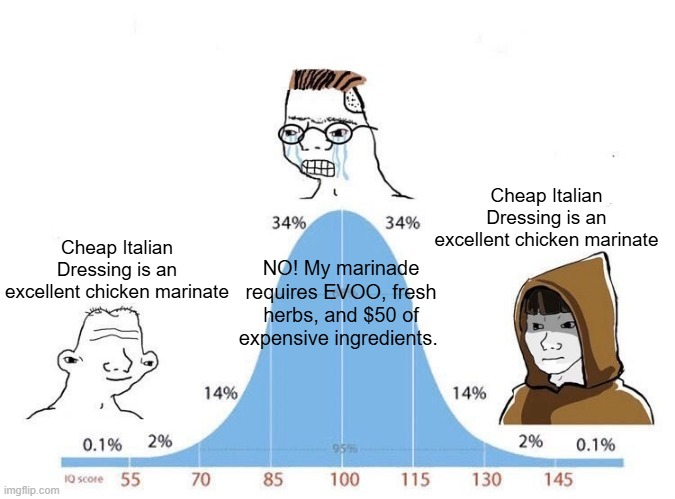
Sometimes there is no substitute for old school barbecue chicken
7
131
Apr 30
In the center of Nahwa there is an apartment building that is loyal to Oman, but Apartment 3C is loyal to the UAE, except the room of a teenage son who is feeling rebellious and is loyal to Oman.
Apr 30

🇴🇲 🇦🇪 Madha and Nahwa: A "Border Within a Border" (Oman - UAE)
💡 In the very heart of Madha, an Omani territory completely surrounded by United Arab Emirates land, lies a tiny village called Nahwa, which belongs to the UAE. In other words, you leave the UAE to enter Oman, only to step back into UAE territory while still inside Oman. The origin of this strange situation dates back to tribal loyalties in the 1930s; while the people of Madha chose to remain loyal to the Sultan of Oman, the village of Nahwa within Madha decided to stay with the Emirate of Sharjah, resulting in this 'border within a border' map. Today, it is possible to pass freely between these matryoshka borders without any passport control.

76
Brian Knight retweeted

WATCH: "We've won 17 cases at the Supreme Court since 2011. The SPLC slings mud. You decide who the serious organization is here."
ADF's @Jeremy_Tedesco spoke with @FoxNews this morning discussing the SPLC indictment.
5
46
165
9,623
Apr 19
Live footage of me parking my truck at the airport this morning.
3
67
Apr 18
Has any conservative group done serious work on what the Bill of Rights would look like if the scope and aim was the same as the Framers’ but written to reflect modern context?
Claude says no. If not, it would be a worthy intellectual exercise.
1
119
Apr 16
I really enjoyed the @TheRestHistory series on the Samurai but have a question for @holland_tom and @dcsandbrook:
1
83
Apr 16
Is it a religious difference? Did Christianity provide an honorable path for a warrior to spare a beaten foe that did not exist in Samurai culture?
Is it economics? Was ransom not really a viable option in medieval Japan due to who owned (and owed) what?
1
55
Apr 16
Was it politics? Did a Samurai's duty to their master preclude sparing enemies whereas European nobility had more independence?
Something else? Multiple reasons? Inquiring minds want to know!
38