@CSIS's Project on Nuclear Issues hopes to sustain a community of next-gen nuclear experts & generate new ideas & debate on nuclear issues. RT≠endorsement
Joined August 2009
- Tweets 11,344
- Following 858
- Followers 11,095
- Likes 1,924
943 Photos and videos

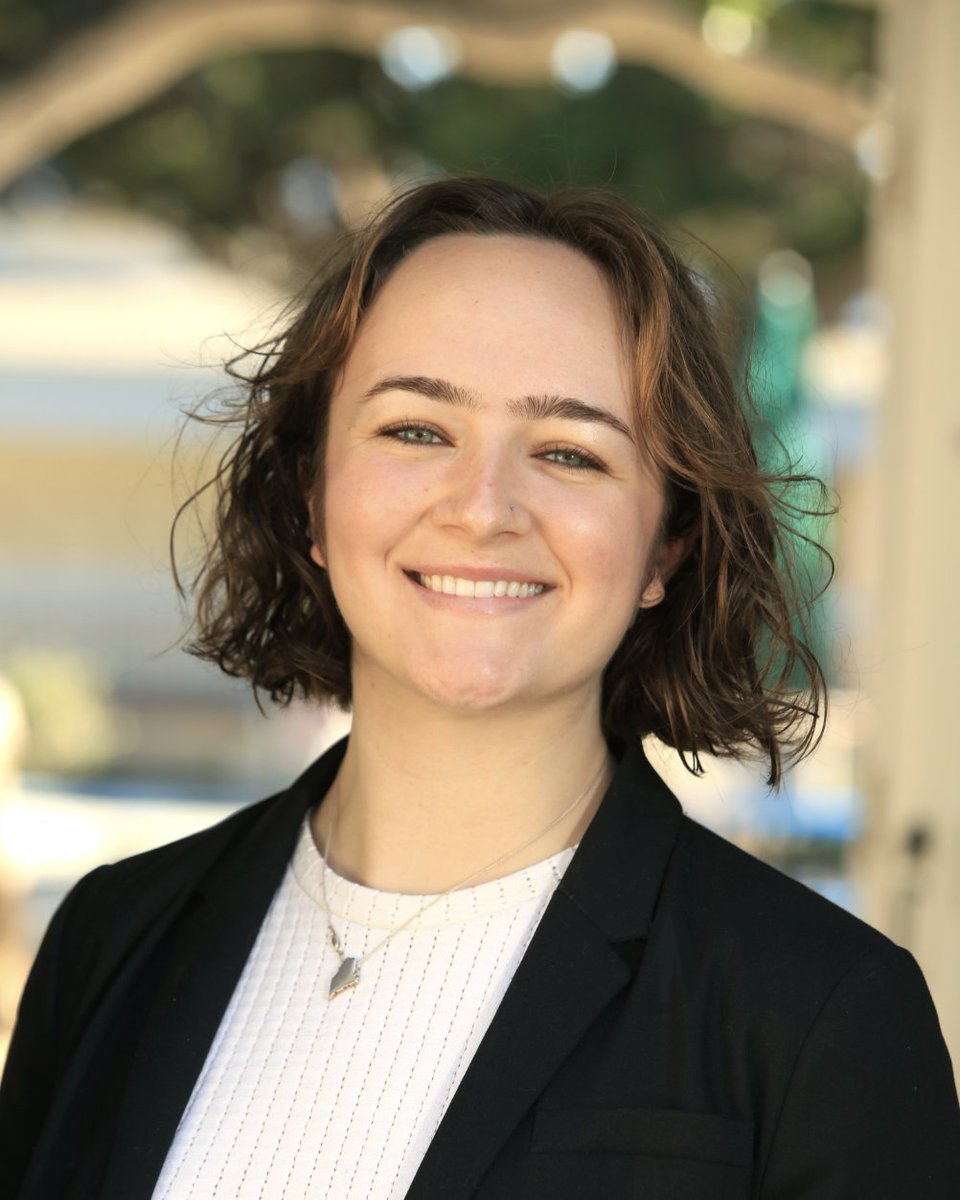
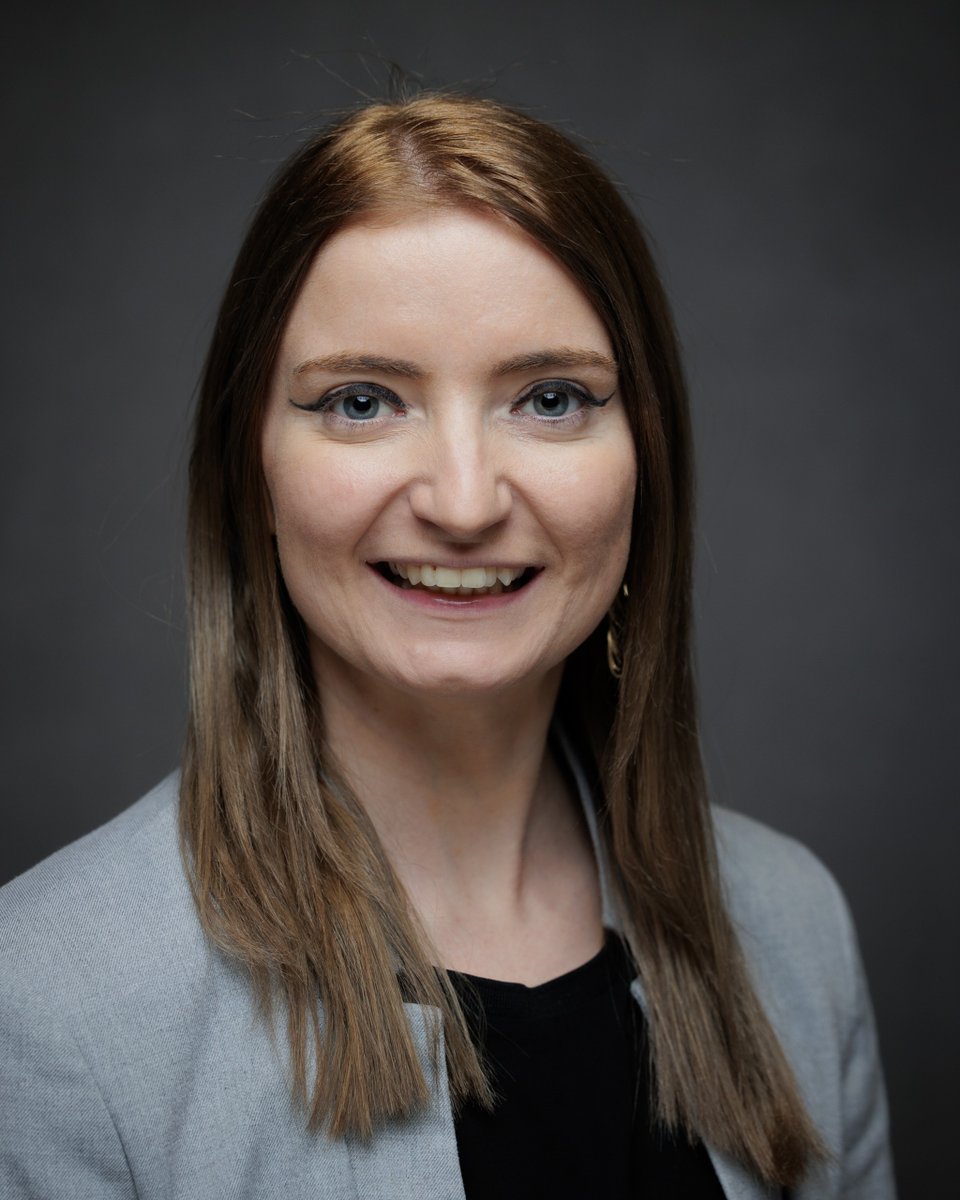
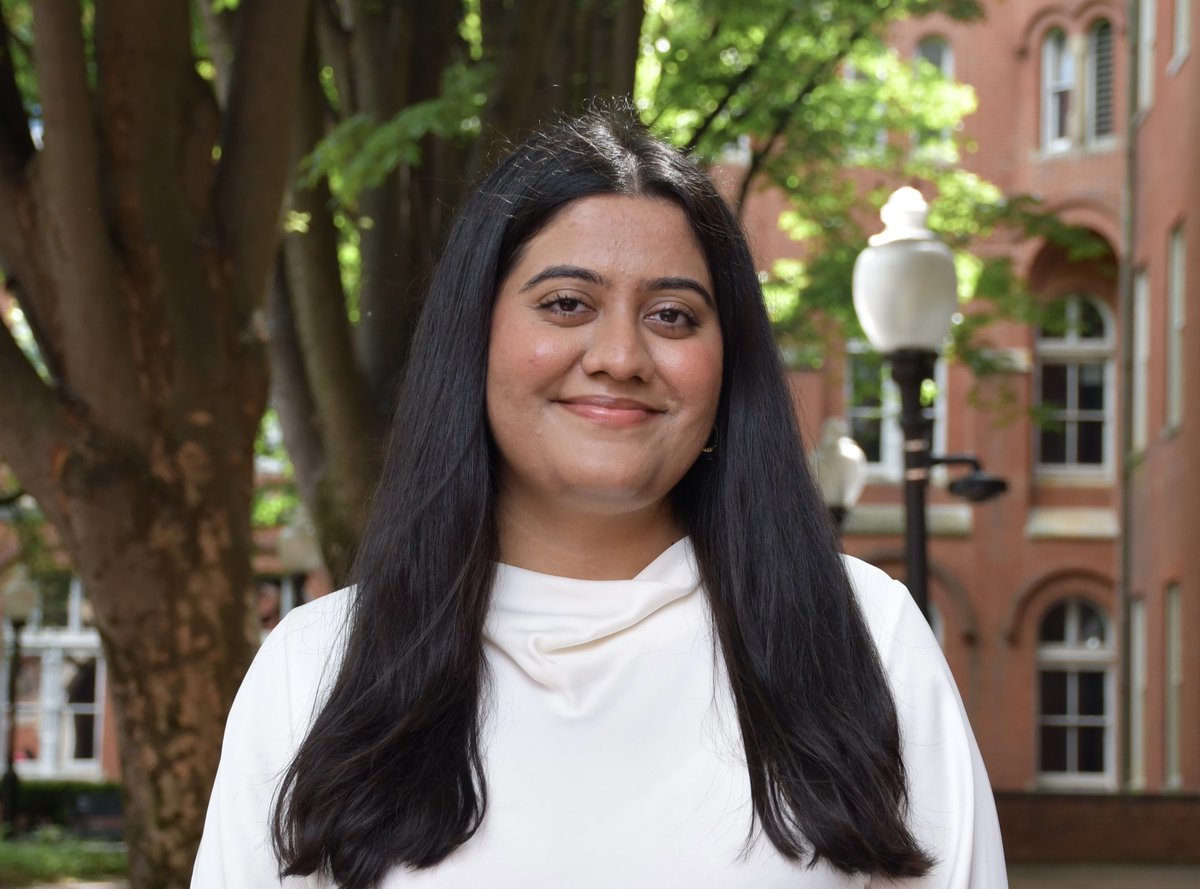





What are hypersonic delivery systems, and what makes them strategically and technologically distinct from other missiles? What makes hypersonic flight a militarily desirable capability, and how can the United States and its allies defend against these threats? Should the United States policy community debate the merits of nuclear armed hypersonic missiles?
To discuss these questions and more, please join the CSIS Defense and Security Department’s HTK Series for a conversation featuring Heather Williams, director of the CSIS Project on Nuclear Issues, Tom Karako, director of the CSIS Missile Defense Project, and Kari Bingen, director of the CSIS Aerospace Security Project.
Register for the event here: csis.org/events/nuclear-arme…
@Missile_Defense @CSISAerospace @CSISDefense
1
1
181
Please join the CSIS Project on Nuclear Issues on Tuesday, June 17th at 1:30 pm for a virtual discussion with Astrid Chevreuil, Visiting Fellow, Europe, Russia, and Eurasia Program at CSIS, on her report, Friendly Proliferation: Assessing U.S. Perceptions on Proliferation Among Allies and Partners.
Friendly Proliferation examines how the long-standing U.S. consensus against nuclear proliferation among allies is coming under new pressure. The discussion, moderated by Dr. Heather Williams, will map the evolving debate in which a growing subset of the U.S. nuclear community is open to considering allied nuclearization, even as the majority of experts remain opposed to it.
Register for the event here: csis.org/events/report-launc…
1
1
2
710
✨Nuclear Scholars Initiative Spotlight ✨
William “Max” Mayo is a General Engineer in the Department of Energy (DOE) National Nuclear Security Administration’s (NNSA) Office of Defense Programs. He oversees programmatic efforts to establish a reliable supply of enriched uranium for NNSA defense mission requirements. Prior to federal service, Max worked as a professional engineer at the international engineering firm Bechtel, Inc. for 8 years, most recently on the DOE/NNSA’s Uranium Processing Facility project. He holds an M.A. in International Affairs from Columbia University and a B.S. in Mechanical Engineering from Southern Methodist University
Learn more about the 2026 Nuclear Scholars Initiative: nuclearnetwork.csis.org/prog…
166
North Korea has increased tensions on the Korean Peninsula not only by conducting weapons tests but also by taking policy measures to challenge the status quo, adopting a more aggressive nuclear posture, and pushing the development of tactical nuclear weapons (TNWs). Raising the debate should the US redeploy TNW's to South Korea for extended deterrence? In On The Horizon Vol 8, 2025, CSIS Project on Nuclear Issues (PONI) Nuclear Scholar Jaclyn Schmitt explores both sides of the argument.
Read the full analysis here: csis.org/analysis/horizon-vo…
149
Arms Control 101 Module 2 is now live!
youtube.com/watch?v=3bUnGpjn…
The second module of Arms Control 101 explores the link between arms control and deterrence through providing a historical and theoretical overview of strategic stability. The module then explains the practical underpinnings of strategic arms control agreements between the United States and Russia (formerly the Soviet Union), including the Anti-Ballistic Missile (ABM) Treaty and START I. The episode concludes by reflecting on the future of arms control and deterrence in the new era of strategic competition.
Arms Control 101 is a three-part video series that explores foundational ideas in arms control as well as specific arms control agreements, and the role of arms control in international security. It also describes how arms control is related to other theories in nuclear policy, including deterrence, extended deterrence, and strategic stability.
1
290
✨Nuclear Scholars Initiative Spotlight ✨
Paige MacKinnon is a MA candidate at the Middlebury Institute of International Studies in Monterey, California, and graduate research assistant at the James Martin Center for Nonproliferation Studies where she works on the open-source intelligence team. Her research largely centers on nuclear nonproliferation and defense policy with a specific focus on North Korea, China, and Russia. Paige is a fellow of the IAEA’s Marie Skłodowska-Curie Fellowship Programme. Previously, she was a Fulbright English Teaching Assistant in Semey, Kazakhstan. Paige graduated with honors from Smith College with a B.A. in Russian, Eastern European and Eurasian studies, and government.
Learn more about the 2026 Nuclear Scholars Initiative: nuclearnetwork.csis.org/prog…
2
1
6
423
In On The Horizon Vol 8, 2025, CSIS Project on Nuclear Issues (PONI) Nuclear Scholar Artur Honich explores why the core logic of damage limitation could be relevant to the European theater and what key changes would be required to adapt the concept to the strategic needs of European NATO allies.
Read the full analysis here: Scoping a European Approach to Damage Limitation csis.org/analysis/horizon-vo…
2
194
Can America maintain credible nuclear deterrence against two nuclear peers at once?
A new analysis by Alexander Richter examines whether re-MIRVing U.S. ICBMs could provide a near-term answer to growing Russian and Chinese nuclear capabilities.
Read his analysis here: nuclearnetwork.csis.org/the-…
5
13
2,958

WATCH NOW: @csisponi, @Missile_Defense, and @CSISAerospace experts discuss the future of space warfare and how the United States can prepare for a future in which space weapons are central to military planning.
Tune in: csis.org/events/warfighting-…
1
5
19
2,843
Delve into Baltic countries’ views on the United Kingdom’s commitment to their defense within NATO against the Russia threat in The United Kingdom’s Contribution to the Reassurance of Baltic Allies, On The Horizon Vol 8, 2025, with CSIS Project on Nuclear Issues (PONI) Nuclear Scholar Mar Casas Cachinero
Read the full analysis here: csis.org/analysis/horizon-vo…
200
To offset quantitative increases in adversary arsenals in a two-peer nuclear environment, U.S. policymakers should re-deploy multiple-independently targetable reentry vehicles (MIRVs) on the Minuteman III intercontinental ballistic missile (ICBM). New Analysis by Alexander Richter on The Case for Re-MIRVing America’s ICBMs
Read his full analysis here:
nuclearnetwork.csis.org/the-…
1
6
504
✨Nuclear Scholars Initiative Spotlight ✨
@Laura_m_Luca is a PhD candidate in Political Science at UCLA, a Hans J. Morgenthau Predoctoral Fellow at the O'Brien Notre Dame International Security Center, and an incoming postdoc at Harvard's Managing the Atom project and Los Alamos National Laboratory’s Center for National Security and International Studies (CNSIS). Her research examines how states use strategic communication to manage the core trade-offs of international security: inducing burden-sharing from allies without weakening deterrence, regulating new weapons while preserving strategic advantage, and advancing technologically without triggering arms races. Her three-paper dissertation combines formal game-theoretic modeling, archival research, and computational text analysis including machine learning and large language models.
Previously, Laura worked at the European External Action Service in Brussels on multilateral affairs, served as a diplomat at the European Union Delegation to Iceland, and covered disarmament affairs at Romania's Mission to the UN Office in Geneva, including the Conference on Disarmament (CD) and the CCW’s Group of Governmental Experts (GGE) on Lethal Autonomous Weapons Systems (LAWS).
Laura holds a master’s in International Relations/Political Science from the Geneva Graduate Institute of International and Development Studies (IHEID) and a bachelor’s in Economics and Political Science from UCLA. Her policy writing includes a co-authored Foreign Policy commentary on autonomous weapons regulation.
Learn more about the 2026 Nuclear Scholars Initiative: nuclearnetwork.csis.org/prog…
3
674
✨Nuclear Scholars Initiative Spotlight ✨
@shafaqhkhan is an analyst supporting the Deputy Assistant Secretary of War for Nuclear Deterrence and Countering Weapons of Mass Destruction Policy and an incoming U.S. Foreign Service Officer. She is also a graduate student in the Security Studies Program at Georgetown University. In summer 2025, she served as a Political Fellow at the U.S Mission to NATO. Previously, she was the Roger L. Hale Fellow at Ploughshares and a Herbert Scoville Jr. Peace Fellow at the Stimson Center. She has presented her research and spoken about her career on panels hosted by the Senate Foreign Relations Committee, the CSIS Project on Nuclear Issues, Princeton University, and the Leonard D. Schaeffer Fellows Program. Shafaq received her bachelor’s degree from Princeton University’s School of Public and International Affairs.
Learn more about the 2026 Nuclear Scholars Initiative: nuclearnetwork.csis.org/prog…
5
546
How are Tabletop Exercises are filling the gap in nuclear sufficiency?
In On The Horizon Vol 8, 2025, @CSIS Project on Nuclear Issues (PONI) Nuclear Scholar Sarah Stevenson examines how U.S. planners might respond to limited Chinese nuclear use in a Taiwan contingency through a tabletop exercise on theater nuclear capabilities and escalation management.
Read the full analysis here: csis.org/analysis/horizon-vo…
1
253
How Russia Signals Nuclear Resolve with Civilian Nuclear Energy Infrastructure. New analysis by CSIS Project on Nuclear Issues (PONI) Scoville Fellow Elena Tiedens for @BulletinAtomic
Read the full analysis here: thebulletin.org/2026/05/how-…
1
3
249
✨Nuclear Scholars Initiative Spotlight ✨
Caitlin Listek is a Treaty Analyst with the U.S. Navy’s Strategic Systems Programs, where she supports arms control notifications under the New START treaty. She previously served as a contractor for both the Navy and the U.S. Department of State, specializing in submarine direct commercial sales and nuclear energy export control. Caitlin holds a B.A. in International Affairs (Europe and Eurasia) from George Washington University and a Master’s degree in Security Policy, Science and Technology Policy, with a focus on nuclear security.
Learn more about the 2026 Nuclear Scholars Initiative: nuclearnetwork.csis.org/prog…
1
385
We are now accepting applications for the Mid-Career Cadre Class of 2027. The Mid-Career Cadre is a select group of nuclear professionals that have been in the field for 7 or more years and demonstrate promise for moving into leadership positions or bringing new ideas and perspectives to the field. Cadre members come from technical, policy, academic, and military backgrounds. Applications are due by 11:59 PM EST on June 30, 2026.
Learn More Here!
nuclearnetwork.csis.org/prog…
5
290
In On The Horizon Vol 8, 2025, @CSIS Project on Nuclear Issues (PONI) Nuclear Scholar Clara Sherwood explores what a crisis with a Nuclear capable Iran would look like and Saudi Arabia’s Courses of Action and U.S. Response Strategies.
Read the full analysis here: csis.org/analysis/horizon-vo…
154