#LearnWithoutLimits on Coursera. Access online courses and degrees from world-class universities and companies.
Joined August 2011
- Tweets 13,397
- Following 602
- Followers 485,108
- Likes 12,560
2,352 Photos and videos






3️⃣ If you get rejected, it means you weren't qualified.
"It's an incredibly competitive job market. Being rejected is not personal —we are looking for the best match for the company. There will always be other candidates that have equally relevant skills."
— Gareth Mullan, Director of Talent Acquisition
1
2
980
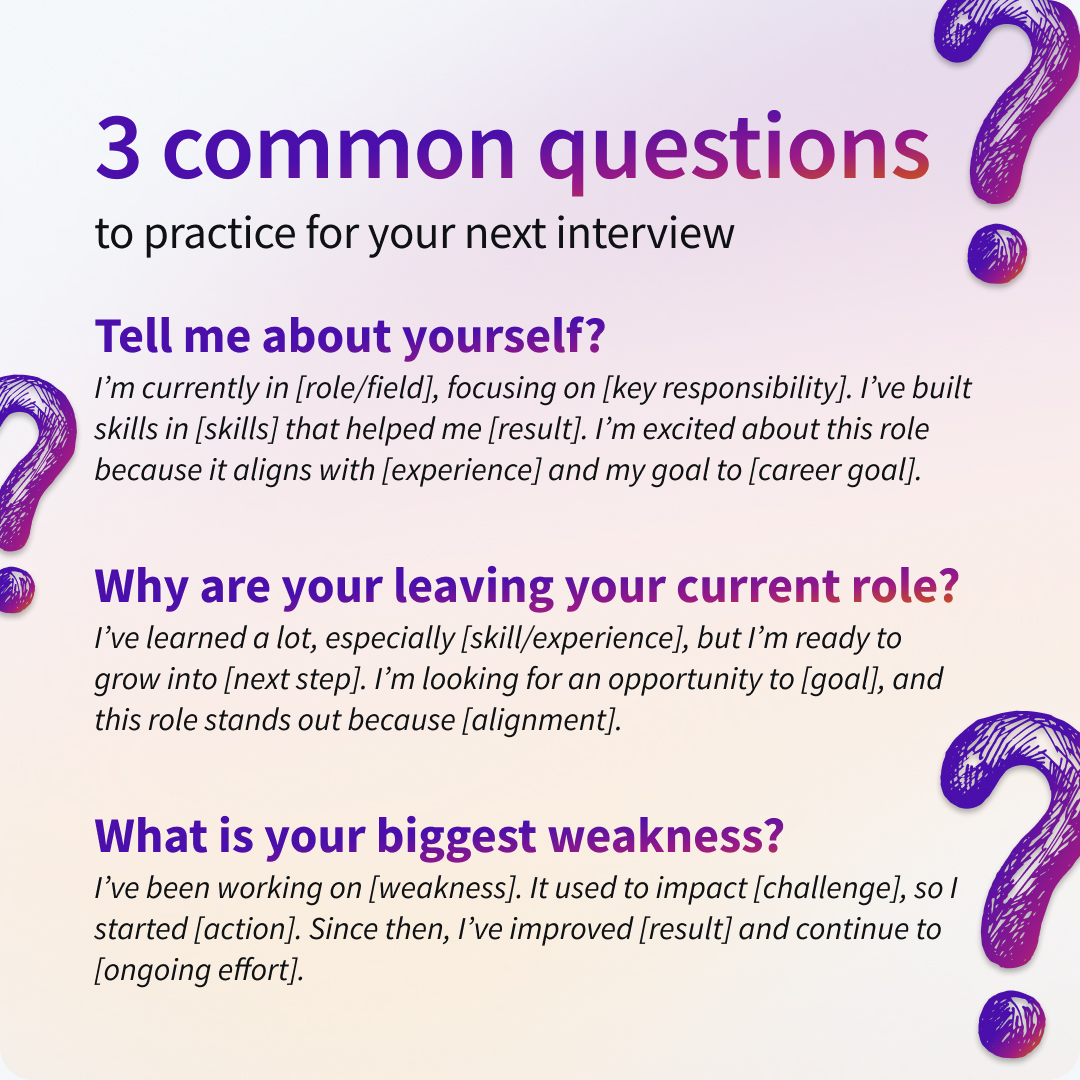
If you want to take it one step further, you can practice answering interview questions with the STAR method: bit.ly/4fPju8j
5
1,663
Meet Mariha, an epidemiologist, learning from Richmond, Virginia.
She turned to Coursera “to refresh and expand my epidemiology and data skills… and prepare for doctoral study and applied research that drives health equity.”
Her career path from clinical roles to COVID-19 response and now to cross-border surveillance “wasn’t linear,” but strengthened her commitment to improving population health through data.
As she continued her learning journey, Coursera’s flexibility made it work. “I could learn when it fit my schedule… and still make steady progress,” even alongside her personal and professional responsibilities.
That learning quickly translated into real-world impact at work. “I learned to structure surveys thoughtfully… The survey was cleaner, easier to complete, and engagement noticeably improved.” She also “streamlined case investigation steps” to deliver faster, more actionable insights during outbreaks.
Now preparing for a Doctorate of Public Health, Mariha continues to learn and seize opportunities to apply her knowledge.
✨ Her advice to others: "Don't wait for a perfect moment to start. Set realistic goals, reflect on what works, and treat setbacks as useful information rather than failure."
1
5
1,499
Most people think AI is the problem; it’s usually the prompt.
Small changes in how you ask can completely improve the clarity and quality of the answers you get. Start with these:
❌ Instead of: “Write a slogan.”
✅ Try: “Act as a senior brand strategist launching a new product for [audience]. Write a compelling slogan.”
💡 Why it works: You’re telling AI who to be, not just what to do.
❌ Instead of: “Respond to this email.”
✅ Try: “Write a friendly, professional follow-up email to a client who hasn’t responded in two weeks. Here is the previous exchange: [insert]”
💡 Why it works: Clear goals = clearer outputs.
❌ Instead of: “Improve this resume bullet.”
✅ Try: “Rewrite this resume bullet: [paste]. Make it results-focused, ATS-optimized, under 20 words, and include metrics.”
💡 Why it works: Constraints guide the final result.
Save this for the next time AI misses the mark, or share it with someone who wants better results.
Want to learn how to use AI more effectively across your work? Here are some options for getting started: bit.ly/4vcU0Wu
1
9
3,361
When learning feels easy, it can feel productive.
But research shows something surprising: Learning that feels harder often leads to better long-term results.
This idea is called desirable difficulties. When your brain has to work harder, it builds stronger connections—and you remember more.
Here’s what that can look like:
1️⃣ Testing yourself instead of re-reading: Trying to recall information forces your brain to strengthen memory.
2️⃣ Spacing your learning: Coming back later feels harder—but improves retention.
3️⃣ Mixing practice types: Switching topics challenges your brain and improves understanding.
4️⃣ Struggling before seeing the answer: Even if you get it wrong, your brain learns more deeply.
Learning that feels smooth isn’t always learning that lasts. A little difficulty now often leads to stronger learning later.
✨ Save this post—especially for moments when learning feels harder than expected.
Interested in building skills you can retain and apply with confidence? Explore flexible learning paths with Coursera Plus.
3
5
26
2,769
🌅 Bigger savings on Coursera Plus start now with 50% off for early birds.
Whether you're building new skills, preparing for your next role, or exploring a new career path, you'll have access to programs from leading organizations like IBM, Microsoft, Google, and Meta.
Save 50% when you join by June 18. After that, the price increases. bit.ly/4xd6j79
ALT Coursera Plus ad: 'Save more on skills that stand out.' Features a sunny sky graphic with an orange sun, clouds, and blue water. Text reads 'Early Bird Sale' and '50% off'. Logos for IBM, Microsoft, Google, and Meta are at the bottom.
3
1
6
1,925
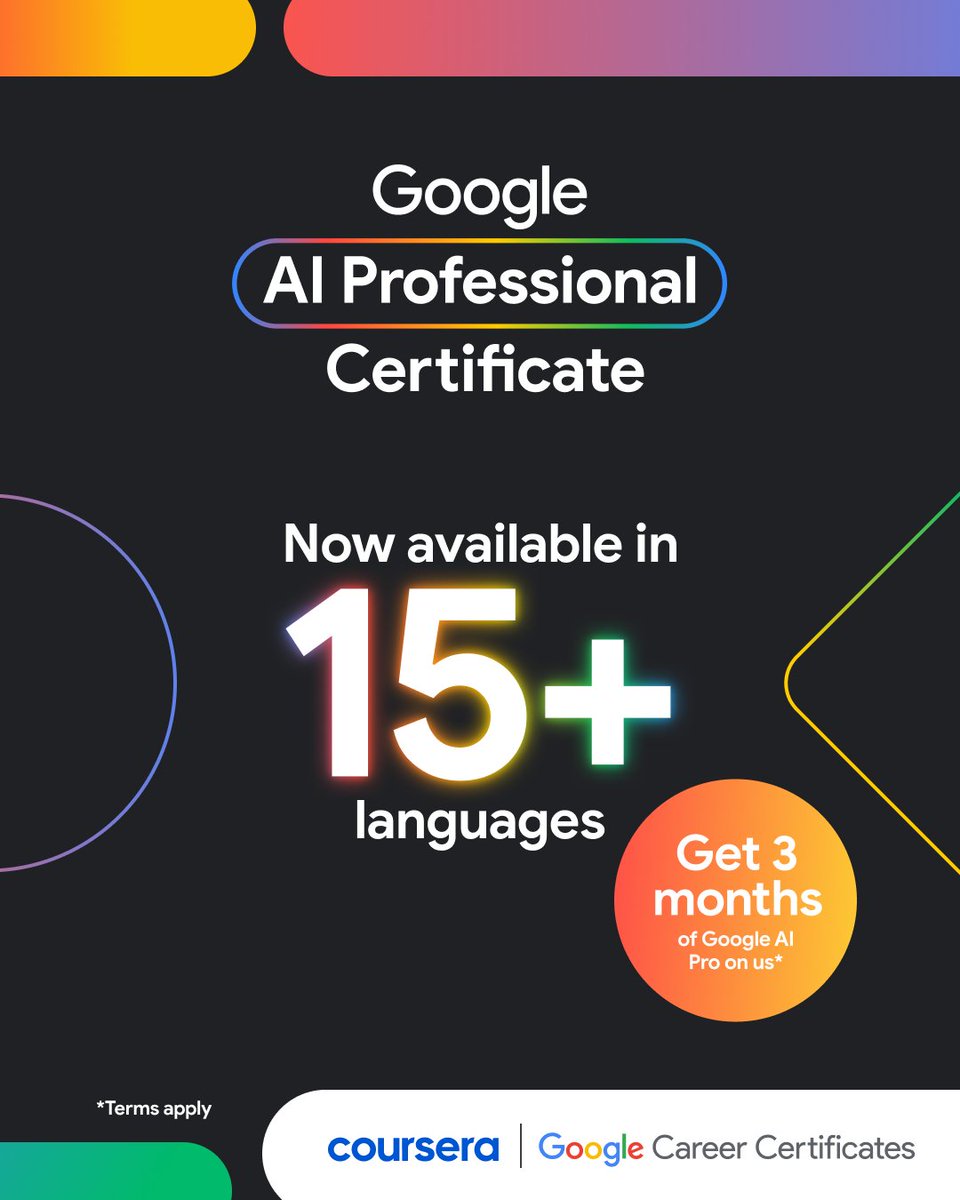
The Google AI Professional Certificate is now available in 15 languages on Coursera. 🌍
Learn practical AI skills in the language you know best, including Español, Français, and Português (Brasil).
Build hands-on experience with AI to:
🎨 Create images, videos, presentations
📅 Plan projects and timelines
🔍 Turn data into insights
💻 Build a custom app
Start learning today: bit.ly/4nNK0kk
ALT Google AI Professional Certificate is now available in 15 languages. Get 3 months of Google AI Pro on us. *Terms apply. coursera | Google Career Certificates.
4
3
22
2,938
Me: “I’ll just take one class to try it out.”
Also me: halfway to a degree 🎓
Explore degree programs on Coursera and keep building toward what’s next: bit.ly/3SkKEtG
2
9
2,112
You probably have great ideas, but to successfully achieve them, you'll need more than just thinking; you'll need to execute.
The good news? Execution is a skill you can build.
Here’s what strong executors do differently:
1️⃣ They break ideas into next steps. Not “launch the project.” But “draft the outline.” Momentum starts small.
2️⃣ They lower the barrier to starting. Perfection slows progress. Starting creates clarity.
3️⃣ They focus on progress, not perfection. Execution improves through iteration—not waiting.
4️⃣ They create accountability. Deadlines, check-ins, and visible progress help ideas move forward. Execution turns potential into outcomes.
And over time, people start to trust the person who consistently gets things done.
✨ Save this post—execution compounds faster than ideas.
1
4
11
2,116
Why do we think the way we do?
Why are habits so hard to change?
Why do people behave differently in groups?
Learn psychology and human behavior to better understand your thinking, behavior, relationships, and routines:
• Social Psychology
• The science of mind and decision making Specialization
• Managing Emotions in Times of Uncertainty & Stress
• Understanding child development: from synapse to society
• Introduction to Abnormal Psychology
• Psychological First Aid
Thought-provoking, practical, and designed for curious learners. Start here: bit.ly/4tZHQze
1
15
10,447