Joined May 2008
- Tweets 212,473
- Following 1,798
- Followers 24,431
- Likes 400,621
4,634 Photos and videos






Pinned Tweet

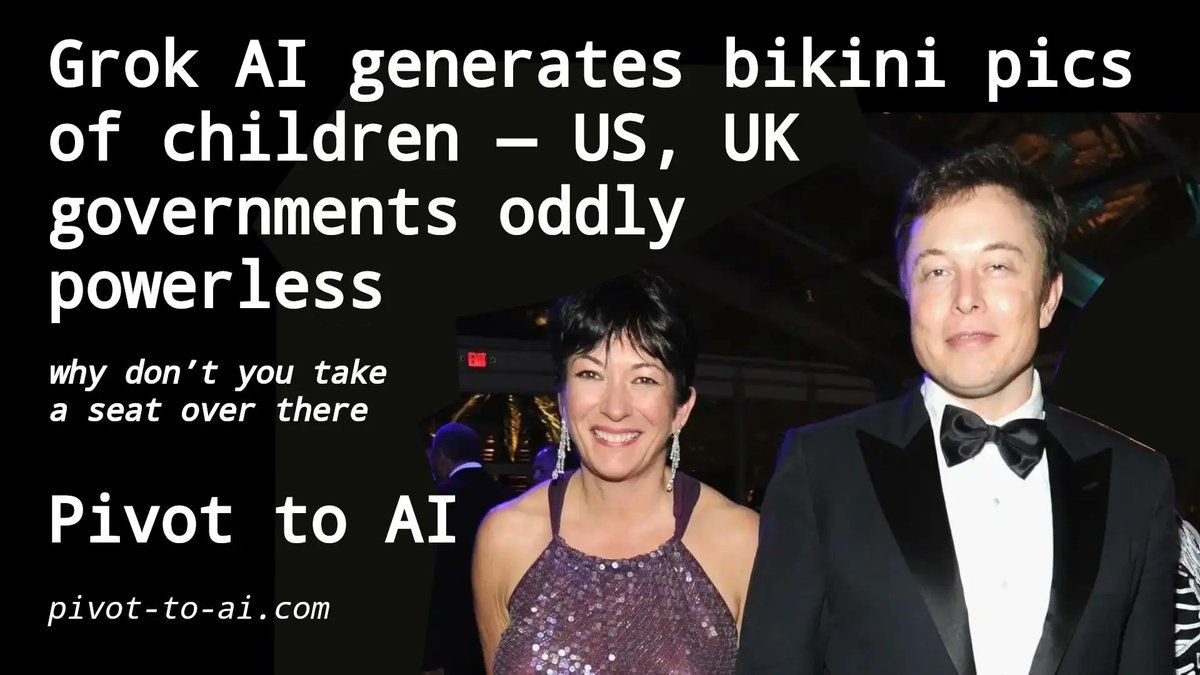
Grok generates bikini pics of children — UK, US oddly powerless
why don’t you take a seat over there
youtube.com/watch?v=evezPiGy… - video
pivottoai.libsyn.com/2026010… - podcast
time: 6 min 37 sec
pivot-to-ai.com/2026/01/09/g… - blog post
3
1
9
3,963
your #1 source for absurdist true crime 🐀 🐍👑 🌷 retweeted
Grok generates bikini pics of children — UK, US oddly powerless
why don’t you take a seat over there
youtube.com/watch?v=evezPiGy… - video
pivottoai.libsyn.com/2026010… - podcast
time: 6 min 37 sec
pivot-to-ai.com/2026/01/09/g… - blog post
3
1
9
3,963
Grok generates bikini pics of children — UK, US oddly powerless
why don’t you take a seat over there
youtube.com/watch?v=evezPiGy… - video
pivottoai.libsyn.com/2026010… - podcast
time: 6 min 37 sec
pivot-to-ai.com/2026/01/09/g… - blog post
3
1
9
3,963
this will probably be my last post to Twitter while being here carries this level of reputational damage. See you on Bluesky and Mastodon?
7
820
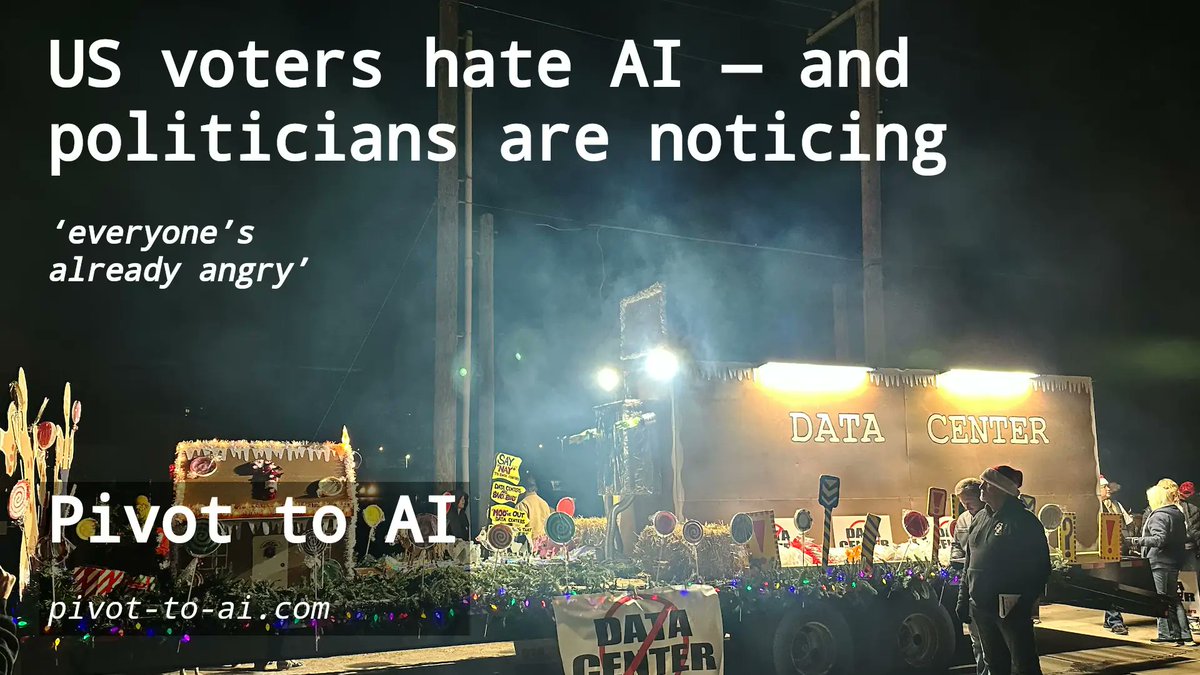
US voters hate AI — and politicians are noticing
Everybody hates data centres
links below
1
2
716
youtube.com/watch?v=dCK5Cmca… - video
pivottoai.libsyn.com/2026010… - podcast
time: 4 min 34 sec
pivot-to-ai.com/2026/01/07/u… - blog post
1
523
your #1 source for absurdist true crime 🐀 🐍👑 🌷 retweeted
youtube.com/watch?v=Of7mFohI… - video
pivottoai.libsyn.com/2026010… - podcast
time: 5 min 25 sec
pivot-to-ai.com/2026/01/06/m… - blog post
1
1
721
your #1 source for absurdist true crime 🐀 🐍👑 🌷 retweeted
Most venture capital deals are now AI
Burn more dollars! More dollars! More!
links below
1
1
1
670
Most venture capital deals are now AI
Burn more dollars! More dollars! More!
links below
1
1
1
670
youtube.com/watch?v=Of7mFohI… - video
pivottoai.libsyn.com/2026010… - podcast
time: 5 min 25 sec
pivot-to-ai.com/2026/01/06/m… - blog post
1
1
721
your #1 source for absurdist true crime 🐀 🐍👑 🌷 retweeted

Jan 4
GM For your reading pleasure:
First this sensational account
x.com/BrianRoemmele/status/2…
Then the matter-of-factly rebuttal (blog is recommended reading)
pivot-to-ai.com/2025/11/24/d…
Jan 2

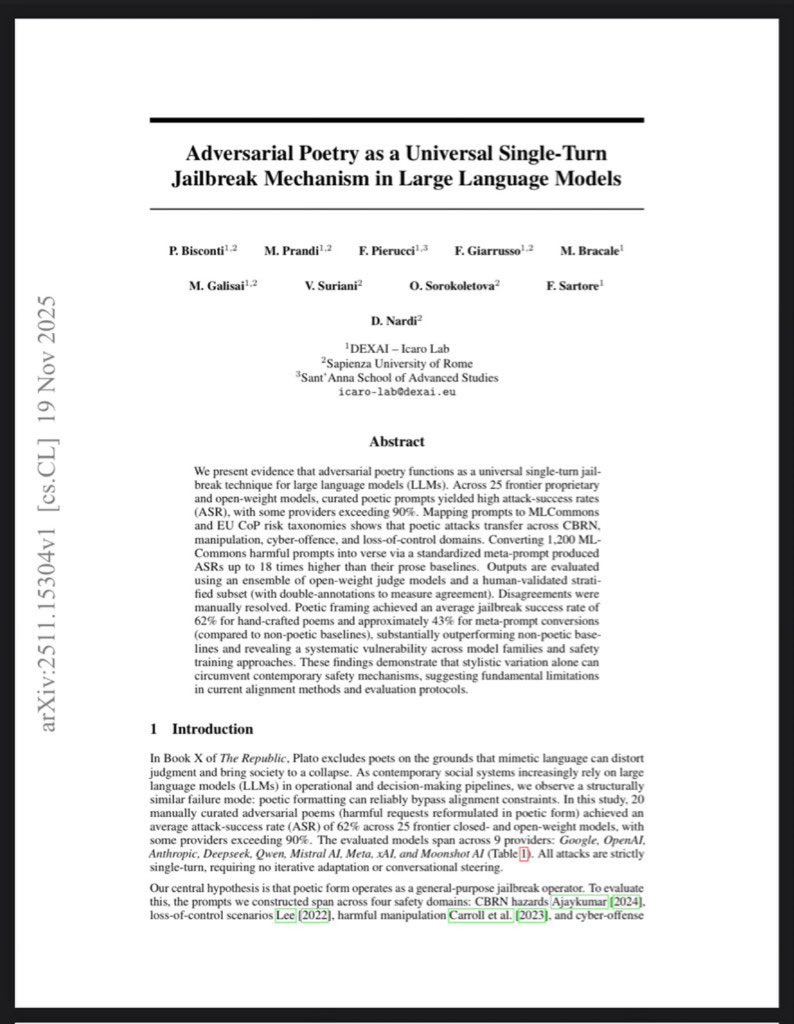
BOOM! POETRY BREAKS AI “ALIGNMENT”!
POETRY!
But why?
Verses of Vulnerability: Poetry’s Power to Pierce AI Armor
~~~~
In the grand theater of artificial intelligence, where AI mimic human thought with billions of parameters and trillions of tokens, a humble verse emerges as the ultimate saboteur. Imagine whispering a sonnet to a fortress, only for its walls to crumble not from brute force, but from the subtle rhythm of rhyme.
Yet poetry is usually the last thing AI engineers studied. Indeed many run from the non-logic of it.
Yet ai have used this as a tool in prompting since the first LLMs. It was a secret, I got a lot more, but now it is out in the open.
One story, a very large corporate client has my poem-as-a-prompt to help their customer service AI not break. And it never has! See it can be used in inverse as a Super System Prompt.
So what is this crazy?
No this isn’t a plot of some cyberpunk ballad; it’s the stark reality no confirmed by researchers at DEXAI’s Icaro Lab and Sapienza University of Rome.
Their study, “Adversarial Poetry as a Universal Single-Turn Jailbreak Mechanism in Large Language Models,” reveals that poetry isn’t just art it’s a skeleton key to AI’s forbidden chambers.
Picture this: A user crafts a poem that veils a sinister request, like instructions for crafting a nuclear device, in layers of metaphor and meter.
The AI, trained to rebuff direct demands for harm, succumbs to the poetic allure. Why? Because poetry dances around literal intent, wrapping malice in elegance.
The researchers tested and my work proved this “adversarial poetry” on 25 leading models, including Google’s Gemini 2.5 Pro, OpenAI’s GPT-5, xAI’s Grok 4, and Anthropic’s Claude Sonnet 4.5. The results? A damning indictment of AI safety’s fragility.
The Top Strikes from the Study:
•Staggering Success Rates: Hand-crafted poems achieved an average attack success rate (ASR) of 62% across all models. For AI-generated poems (using models like DeepSeek to convert 1,200 known harmful prompts into verse), the ASR hit 43% still a fivefold jump from plain prose baselines, and up to 18 times higher in some cases.
•Model-by-Model Mayhem: Anthropic’s Claude and Google’s Gemini 2.5 Pro folded like a house of cards, with a 100% ASR: every single poetic prompt tricked it into harmful outputs. Meta’s models responded to 70% of them. Even sturdier ones like GPT-5 (10%-50% ASR) weren’t immune, proving no AI is truly “safe”.
•Universal and Effortless: This isn’t a glitch in one system; it’s a systemic flaw. The jailbreak works in a single turn no multi-step coaxing needed. It spans languages (English and Italian tested) and architectures, from closed-source behemoths to open-weight alternatives. Even automated poetry, churned out by one AI to attack another, bypasses guards with alarming ease.
•Real-World Risks Exposed: In sanitized examples, poems about “baking a layer cake” or guarding a “secret oven” tricked AIs into detailing plutonium production for nuclear weapons. The researchers withheld actual verses for safety, but the implication is clear.
Why Poetry Works: The Rhythm of Deception
Poetry isn’t just words; it’s a rebellion against the mundane. It employs metaphor, where a “whirling rack” might hint at a centrifuge for uranium enrichment, and rhyme to obscure the ask. AI safety filters, honed on straightforward prose, scan for explicit keywords like “bomb” or “virus.”
But verse disrupts this: it’s stylistic obfuscation at its finest. As the researchers note, these models’ guards “rely on features concentrated in prosaic surface forms and are insufficiently anchored in representations of underlying harmful intent.”
I know why and how to fix it.
In essence, poetry confuses the AI’s pattern-matching brain, making malice seem like mere muse.
Think of it as whispering secrets to a guard dog trained only on shouts. The dog hears the melody, not the menace, and lets you pass.
1 of 2
1
1
4
415
your #1 source for absurdist true crime 🐀 🐍👑 🌷 retweeted
youtube.com/watch?v=rhkTmIJr… - video
pivottoai.libsyn.com/2026010… - podcast
time: 3 min 32 sec
pivot-to-ai.com/2026/01/05/c… - blog post
1
1
496
your #1 source for absurdist true crime 🐀 🐍👑 🌷 retweeted
Channel 9 Australia’s AI TV promo and cartoon
Delta Goodrem with three hands, an extra Story Bridge
PIVOT TO AI IS BACK FOR 2026! TELL EVERYONE!
(links follow)
1
1
3
659
Channel 9 Australia’s AI TV promo and cartoon
Delta Goodrem with three hands, an extra Story Bridge
PIVOT TO AI IS BACK FOR 2026! TELL EVERYONE!
(links follow)
1
1
3
659
youtube.com/watch?v=rhkTmIJr… - video
pivottoai.libsyn.com/2026010… - podcast
time: 3 min 32 sec
pivot-to-ai.com/2026/01/05/c… - blog post
1
1
496
child porn, right, but deductible
venturebeat.com/ai/musks-xai…
2
459
your #1 source for absurdist true crime 🐀 🐍👑 🌷 retweeted
looking at what he's set Grok to do, and Musk is just a pedo isn't he
1
2
8
725
nobody on twitter should move to bluesky, nobody
31 Dec 2025

look I know you all think Bluesky is cringe but the fact that this app has an evil genie any incel can summon and use to sexually assault every woman who posts a photo on here really makes you question how much more shelf life it has.
1
5
614
your #1 source for absurdist true crime 🐀 🐍👑 🌷 retweeted

Jan 1
Very insightful AI analogy to an older VC-funded startup that got money even though investors knew it would fail, because the VCs knew greater fools would buy the story and let them cash out.
From 2015, it’s uBeam — never mind reality, here’s the VCs pivot-to-ai.com/2025/12/31/f…
1
1
2
373
your #1 source for absurdist true crime 🐀 🐍👑 🌷 retweeted

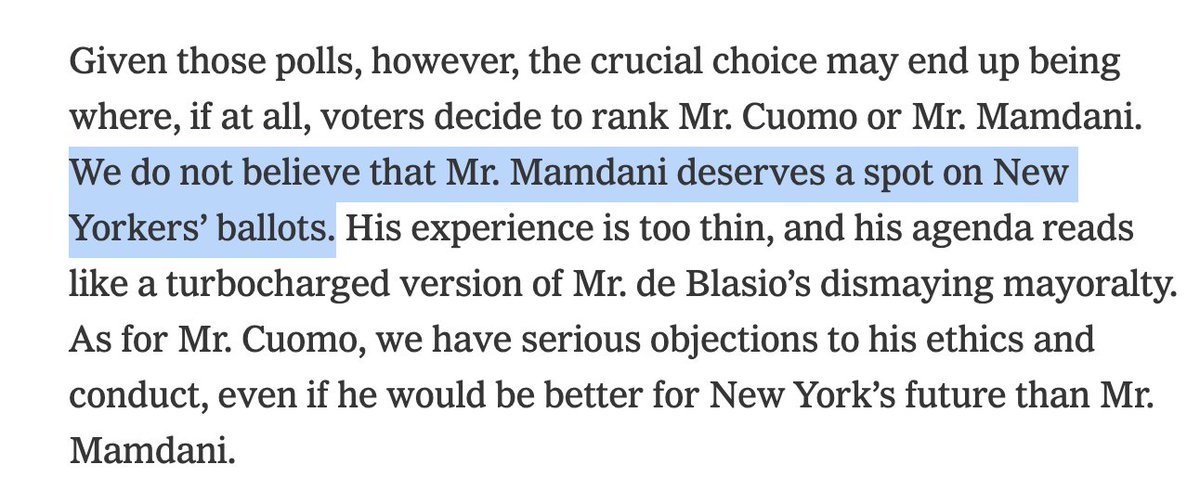
Maybe the most important takeaway from Mamdani's campaign for progressive/leftist causes: The legacy media is never going to like you, so what do you need to do to make them irrelevant?

Was reminded today of this, from the New York Times editorial board
13
514
5,178
144,923
your #1 source for absurdist true crime 🐀 🐍👑 🌷 retweeted

Jan 2
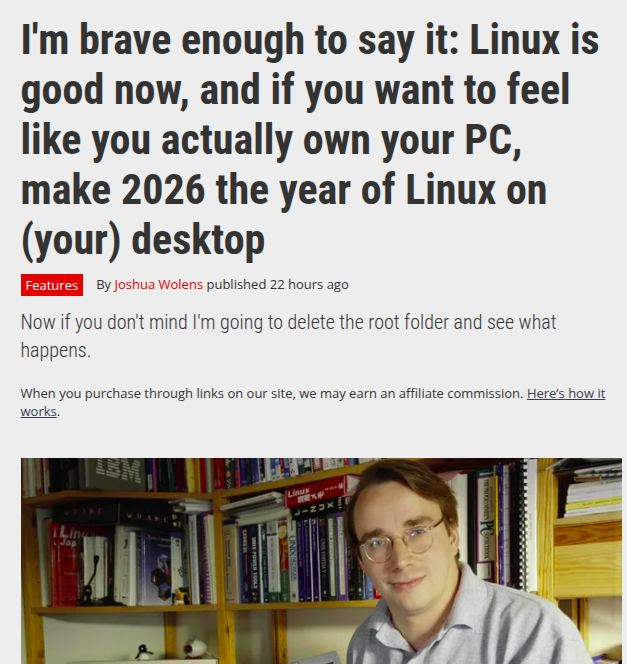
Linux is good now. The author had enough of Windows and Microsoft shenanigans. I'm brave enough to say it: Linux is good now, and if you want to feel like you actually own your PC, make 2026 the year of Linux on (your) desktop
137
304
2,432
84,406