
Joined September 2018
- Tweets 2,824
- Following 370
- Followers 1,946
- Likes 1,755
882 Photos and videos













Pinned Tweet

23 Apr 2025
Thinking about forming an MSO for your practice? Start it with Ease. Flat rate, 50-state, 100% compliant.
733
Jun 2
We agree 🐶
May 31

hey, @UseCorgi
i have zero problems with your ceo working 7 days a week, it is up to him, but as a designer i can't stand bad design.
long story short - i fixed your logo.
now it's your turn.
if you need i can send you svg. just use it.

135
Mar 27
To kickoff the launch of our new FinancialOS, Ease is taking part in his first Corgi race at the annual Kirby Ice House event hosted by @BARCHouston.
We invite you to support this incredible initiative by making a donation directly to Barc and naming Ease in your pledge. 🐶

1
1
189
Mar 27
Here’s the direct link 🔗 (thank you so much for your support) licensepet.com/wl3/don/hstnw…
1
40
Ease 🐶 retweeted

A Message to Our Customers, Vendors, and Partners
Today we received several messages from customers and vendors expressing confusion about recent company announcements in the market. We want to be clear: these announcements were not made by Ease.
1
2
2
327
Ease 🐶 retweeted

We took a blended approach at @easepractice with our MSO-PC stack, which is a mix of AI-native legal compliance services human professional services.
It can costs a practice >$200k to form a 50 state MSO-PC with nearly $500k-$1MM in ongoing maintenance costs annually. 😬
26 Jun 2025

The global professional services market (law, consulting, accounting, marketing, etc.) is worth over $6 trillion annually. It’s a massive white-collar sector, and AI-native firms are emerging to replace or radically reshape it.
The end state is relatively clear: companies will interface directly with intelligent agents to get work done. But the path there is still uncertain, since the underlying tech isn’t yet robust enough to handle complex workflows end to end.
Three main strategies to attacking this huge market are emerging:
⸻
1. Sell to existing service firms (e.g., Harvey)
Pro: Highest distribution; large firms already own the customer relationships
Con: End customers will eventually prefer working directly with in-house agents instead of outside entities
Harvey provides AI tools for major law firms, augmenting workflows like contract analysis, drafting, and legal research.
⸻
2. Build an AI-native service firm (e.g., Crosby)
Pro: Best long-term product experience, fully designed around AI-first delivery
Con: Tough distribution; starting from zero without the brand or pipeline of traditional firms
Crosby is rebuilding management consulting from the ground up as an AI-native firm, handling research, synthesis, and strategy work with a human-in-the-loop model that prioritizes speed and quality over headcount.
⸻
3. Roll up legacy firms and augment with AI (e.g., Crete)
Pro: Medium distribution; you get trusted client relationships plus the ability to embed AI deeply
Con: Capital-intensive and operationally complex; requires transforming legacy systems while scaling new ones
Crete is acquiring accounting firms across the United States and embedding OpenAI-powered tools into their workflows, streamlining tasks like audit prep, memo drafting, and data reconciliation at scale.
⸻
The winning strategy will depend on:
• How quickly AI capabilities improve
• Whether clients prioritize quality or familiarity
• Who solves distribution without diluting the agent-first experience
1
1
3
512
24 Apr 2024
Throughout the years, we have met thousands of physicians who wanted to start private practices in their communities but were unable to do so due to non-compete agreements with current and former employers.
The @FTC's final rule is a major victory for physicians and patients, and we are thrilled to be able to support physicians make their transition to independent practice.
23 Apr 2024

1. Today @FTC issued a final rule banning noncompetes for workers across the country.
The rule will ensure that Americans have the freedom to pursue a new job, start a new business, or bring a new idea to market.
ftc.gov/legal-library/browse…
1
3
1,312
Ease 🐶 retweeted

6 Apr 2024
I said a long time ago it’s about the doctors not the platform. Medicine is most successful for both physician and patient when there is a real doctor patient relationship not an Uber driver relationship. You need a platform that understands that. @easepractice does
1
2
4
885
30 Mar 2024
Happy #DoctorsDay2024. It’s your day. Thank yourself for being you. You deserve all of the thanks .
1
11
514
Ease 🐶 retweeted
Give AI to help doctors build and run their practice. Make it easy for them to access capital to grow it.
That’s @easepractice.
Cc @adam_nessim

If the average non-technical person can build an AI app using AI tools what makes us believe that doctors won't or can't do the same?
Creating the environment for this to exist is the biggest opportunity in healthcare right now.
Hi, I'm Ease🐶... What would you like to build?
1
1
1,113
Ease 🐶 retweeted

19 Oct 2023
I recently submitted an application for a special business certification & I would definitely not have had things in order had it not been for all the support @easepractice has provided
So grateful!
To help the next generation of doctors build net new private practices, here are 5 things that @easepractice is working on.
1
3
9
1,755
5 Oct 2023
What’s the first thing you do if you want to start a private practice?
Wrong answers only! 👀
1
1
601
21 Sep 2023
Are you familiar with psychedelic integration therapy for deep healing and transformation?
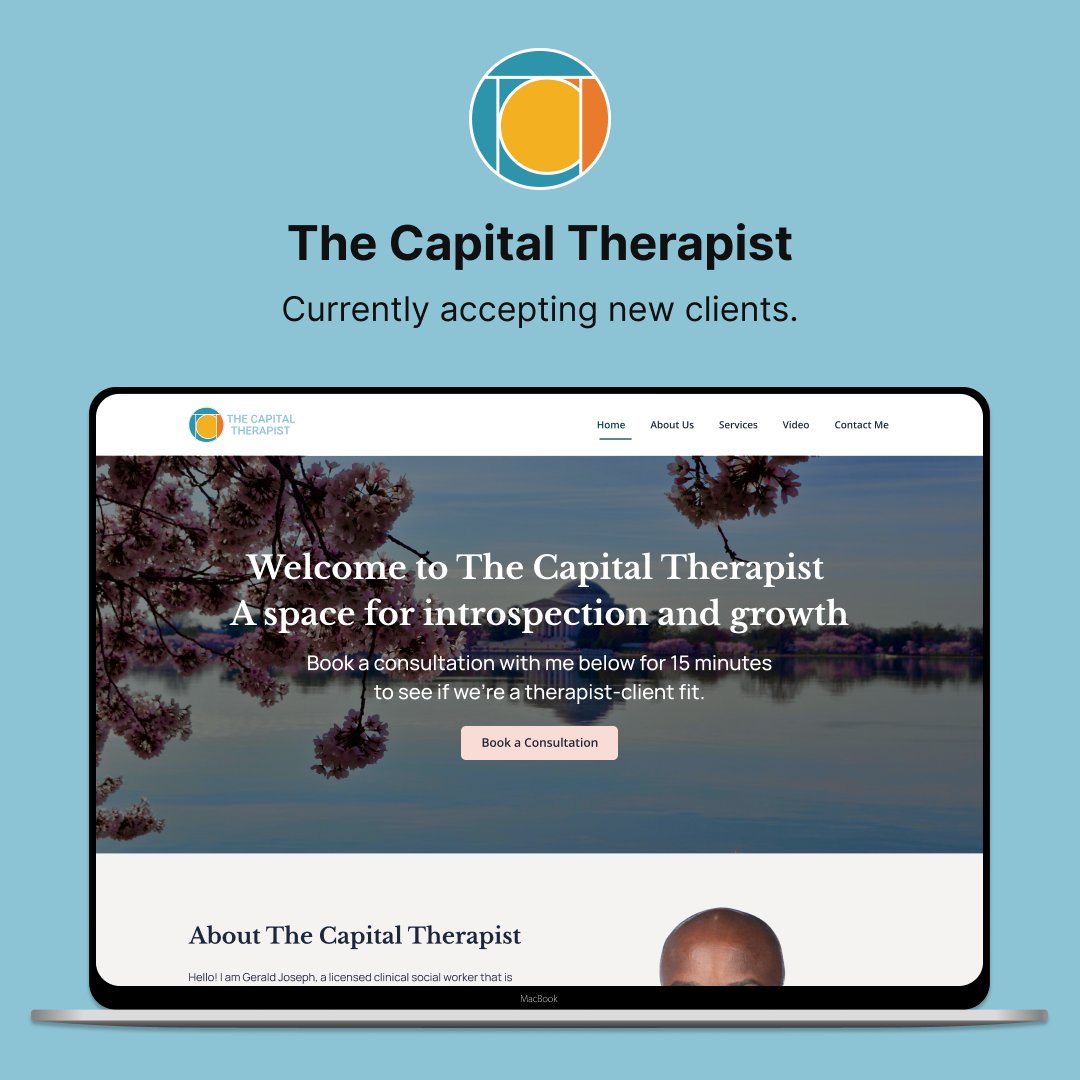
The Capital Therapist, founded and operated by Gerald Joseph, LCSW, offers this type of therapy, and they're currently accepting new patients.


1
1
5
797
21 Sep 2023
You can learn more about #PsychedelicTherapy and Gerald Joseph, LCSW, psychedelic assisted therapy provider here. linktr.ee/thecapitaltherapis…

3
245
Ease 🐶 retweeted

15 Sep 2023
Today marks the start of #HispanicHeritageMonth, and AWS Startups is excited to celebrate Latino founders, visionaries, innovators, and dreamers who have enriched our world and prove what's possible. 🚀⭐️
Who's your favorite Latino founder or startup? Tag them below. #LatinoPride
4
6
51
5,190
13 Sep 2023
229
29 Aug 2023
The Capital Therapist is Here.
Congratulations @gerald_joseph90 on launching the practice of your dreams!!
1
4
3,010