
Email intelligence engineered to optimize deliverability at scale.
Joined February 2017
- Tweets 711
- Following 267
- Followers 221
- Likes 1,707
297 Photos and videos






Emailable retweeted

Jun 13
“Mom, how did you get so rich?”
“Your father uprooted our entire life and moved us to LA for HIS dream. I took a job at a tiny unprofitable company recruiting welders for $28 an hour. The welders built reusable rockets."

2
4
9
992

Jun 12
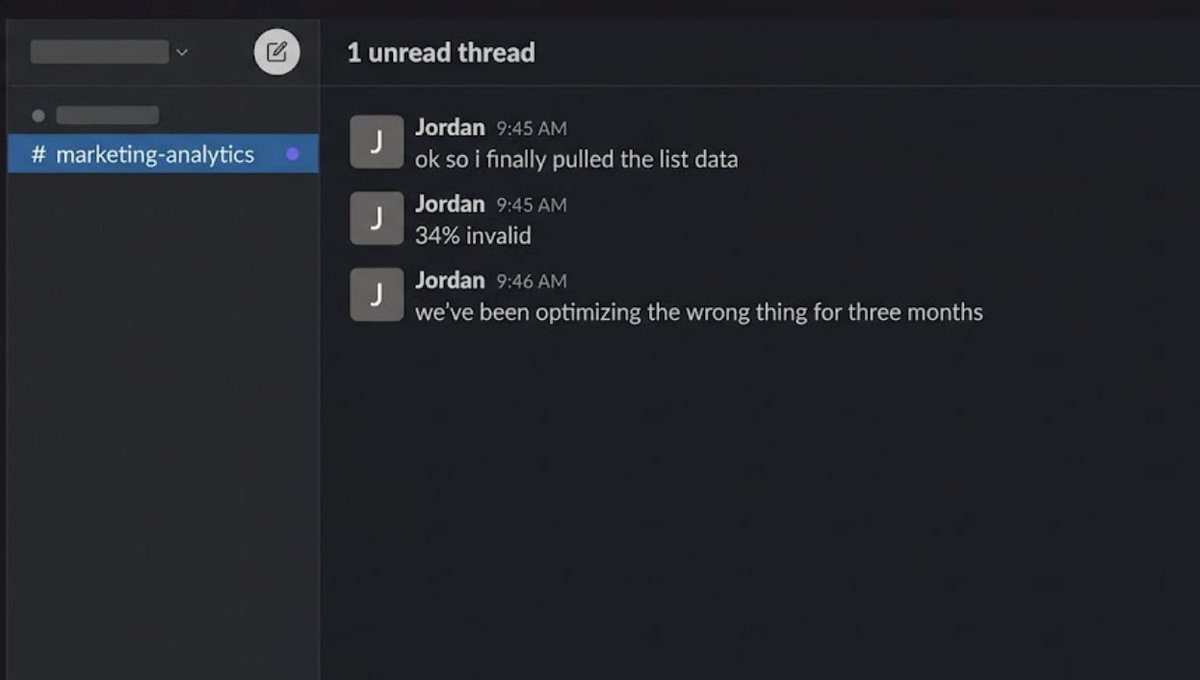
spent three months wondering why open rates were tanking.
new subject lines. new send times. new templates. brought someone in to look at the copy.
copy was fine.
list had 34% invalid addresses. unlooked at since the rebrand.
the copy was never the patient.
4
Jun 11
nobody panic.
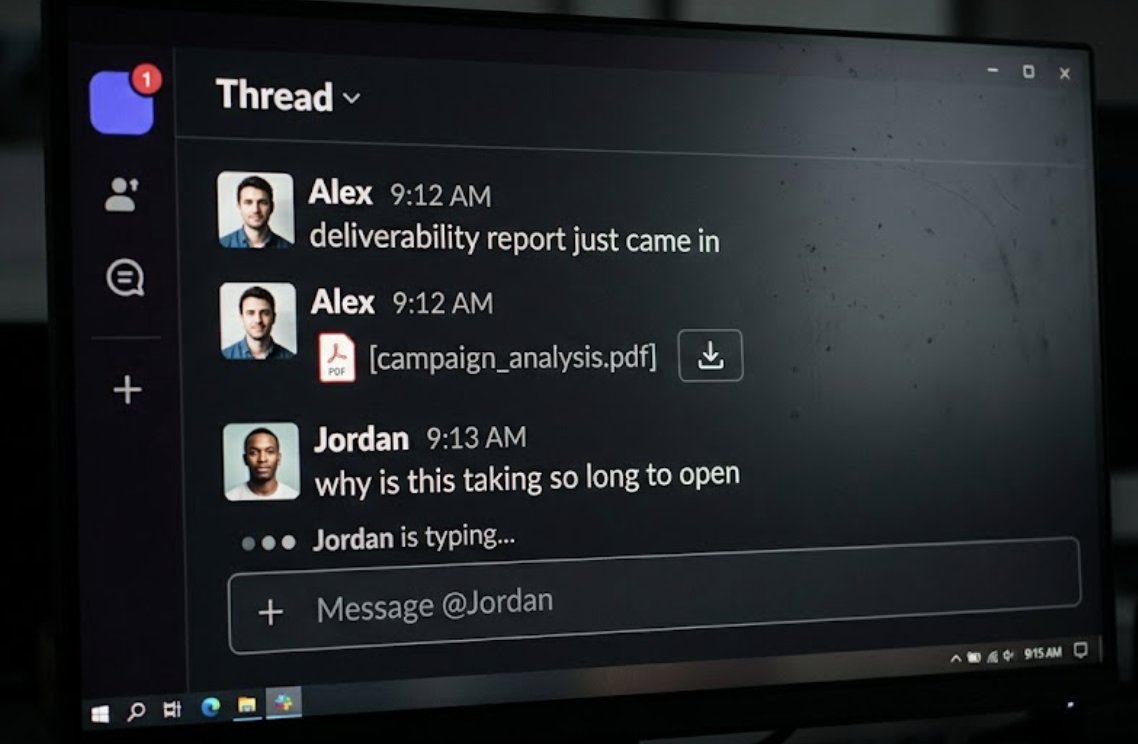
the campaign just went to 80,000 people.
deliverability report just came back.
31,000 of them were real.
4
Jun 9
q1: new subject lines, new templates, three a/b tests, outside consultant
q2: same numbers
q3 week one: someone pulls the list data
bounce rate above threshold since november. sender reputation flagged across two providers. list unverified for fourteen months.
the consultant's recommendations were fine.
they just never had a chance.
Jun 8
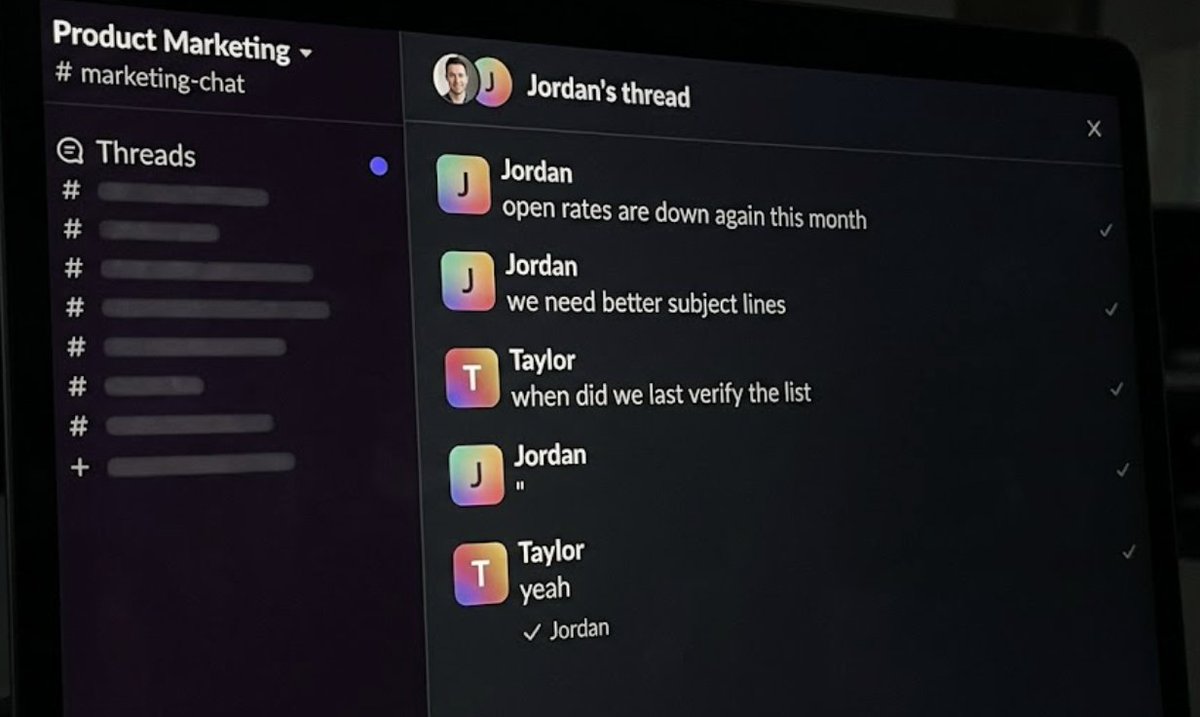
"our emails aren't landing like they used to"
cool. when did you last clean your list.
"we've been focused on the creative"
yeah that tracks.
2
Jun 5
We audited an email program last week.
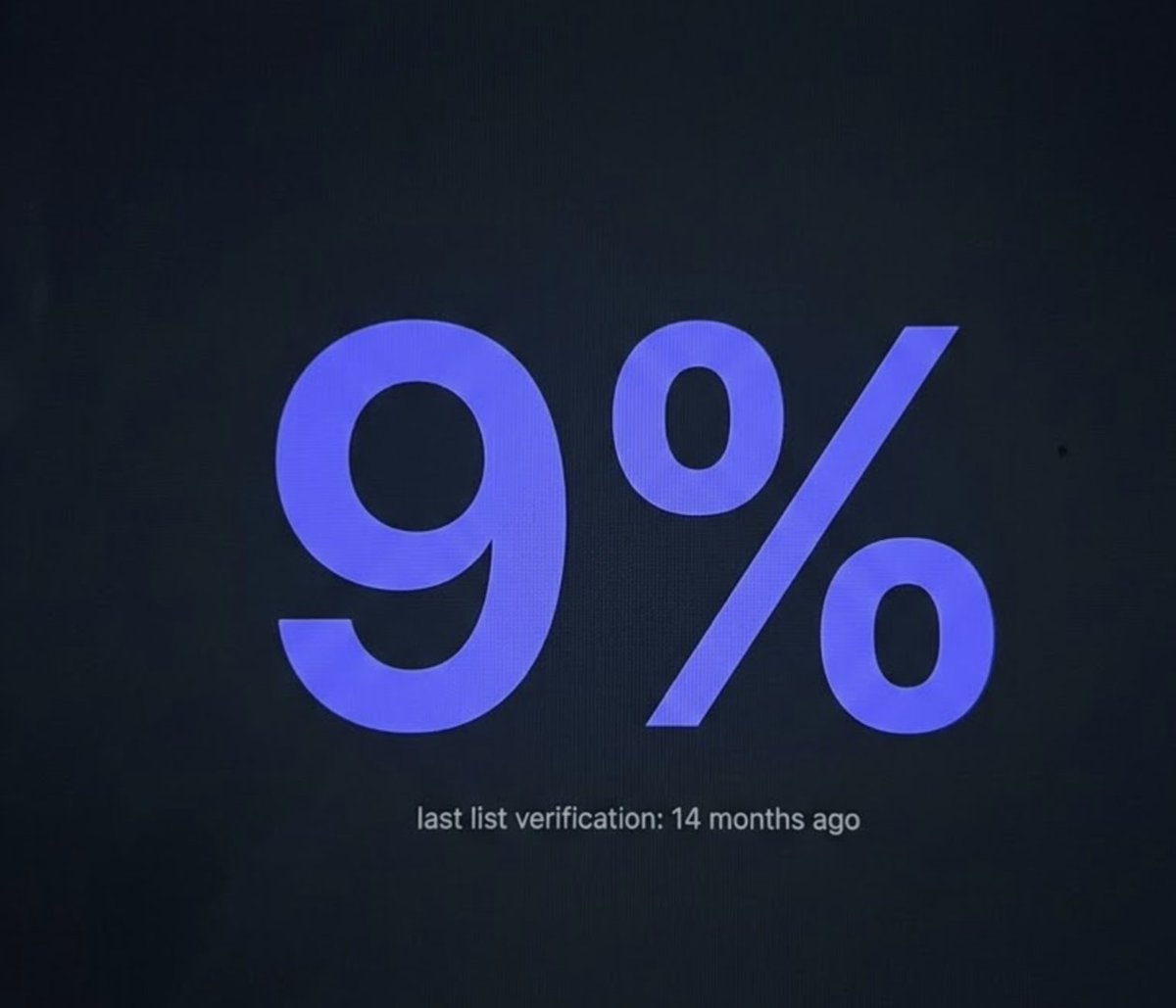
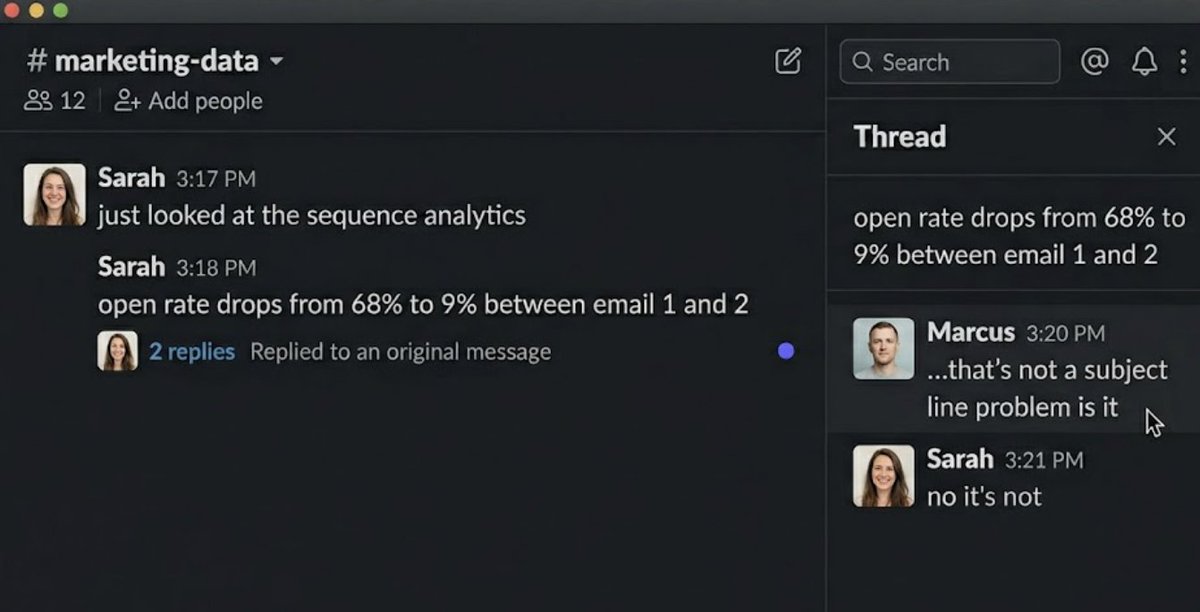
68% open rate on email one.
9% on email two.
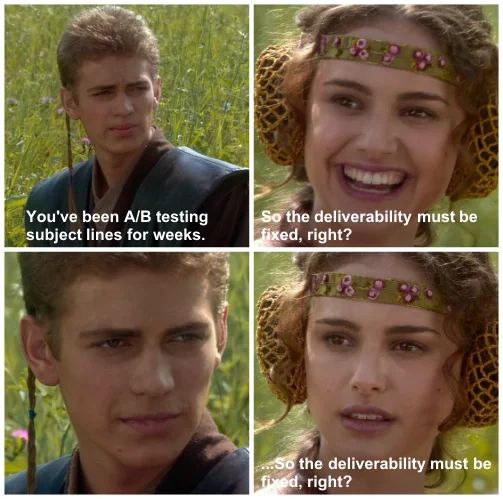
They'd been A/B testing subject lines for three months.
4
Jun 4
Your subject line isn't the problem. That's the hardest thing to accept when you've spent three hours testing variations and the numbers still won't move.
The subject line is visible. It's fixable. It gives you something to do that feels like progress. So that's where the time goes. The meetings. The consultant's recommendations. Everyone's attention. While the real problem sits three layers underneath not saying anything.
Here's what inbox providers see before they ever get to your subject line.
Your bounce rate. How many addresses don't exist, have been abandoned, or belong to spam traps flagging your domain every time you send. Whether your authentication is properly configured or just technically present while real problems compound underneath.
Your sending behavior, your volume patterns, the signals that tell them whether you're a sender worth delivering for.
By the time someone decides whether to open your email your subject line has already been outweighed by months of sending history you probably haven't looked at directly.
The subject line is the last thing to fix. It's almost always the first place teams spend their time.
Flip the order. Fix the foundation. Then optimize the surface.
When's the last time you looked underneath the subject line at what's actually determining your results?
4
Jun 4
List built. Sequences written. Subject lines tested. Everything done right.
And every month slightly less back for everything going in. Not dramatically less. Just enough to keep tweaking things that aren't the problem.
The problem is older than the last campaign. It's been accumulating since the last time anyone looked at the actual health of what they were sending to. For most email programs that's somewhere between a long time ago and never.
You set the table perfectly. Some of your guests never got the invitation.
Email lists decay at 28% annually. That's not worst case.
That's the average. If you haven't verified recently the math is already working against you whether you can see it yet or not.
4
Jun 3
Most email marketers are one bad send away from a problem that takes six months to fix. They have no idea.
Not because they're doing anything wrong today. Because the thing that causes deliverability crises almost never happens today.
It happened three months ago when the list started decaying and nobody looked. Two months ago when the bounce rate crept past the threshold inbox providers care about. Six weeks ago when a spam trap got hit for the third time and the sender reputation quietly dropped below the line that changes how Gmail treats everything that follows.
By the time the numbers show it you're already inside the problem. Adjusting subject lines. Briefing a copy refresh. The issue was never the copy. It was what you were sending it to.
The marketers who never deal with deliverability emergencies aren't better at email. They're just more disciplined about the one thing that keeps everything else working.
Verify your list before the send. Not after the results.
12
Jun 3
Most email marketers are operating with a list that's quietly falling apart and have no idea.
Not because they're doing anything wrong. Because email lists decay at 28% annually. Build your list two years ago and never cleaned it? More than half of what you're sending to could be compromised right now.
And the consequences are real. Roughly one in six emails never reaches the inbox globally. That's the average. A decaying unverified list pushes you well below it.
The worst part is the decay doesn't announce itself. Your open rate slides a little. You adjust the copy, test a new subject line. You're optimizing the thing that isn't broken while the thing that is keeps compounding quietly in the background.
Gmail and Yahoo's deliverability crackdowns are intensifying through 2026. The window to get ahead of this is closing.
A verified list isn't a one time project. It's the habit that keeps everything else working.
When's the last time you verified yours?
5
Jun 2
A founder spent eight months building an email list the right way.
Slow, organic, genuinely earned. Then she launched her biggest campaign of the year and the results were so far below projection she spent the first week convinced the offer was wrong and rewrote it twice.
The offer wasn't wrong.
When she finally dug into the deliverability data the picture became clearer. She'd been so focused on growing and sending that she'd never once cleaned the list. Over eight months a significant percentage had quietly become a liability. Abandoned addresses.
Expired domains converted into spam traps. Hard bounces she'd been resending to without realizing it.
Inbox providers had been keeping score the whole time.
By the time her biggest campaign went out her sender reputation had already been quietly damaged for months. The campaign didn't fail because the offer was wrong. It failed because a meaningful percentage of it never reached an inbox at all.
One verification pass. A cleaned list. Three weeks of careful resending to rebuild trust with inbox providers. Her next campaign performed closer to what her list size should have always been capable of.
Eight months of good work undermined by one thing she didn't know she needed to do.
17
Jun 2
Most people treat their email list like a database. The ones winning at email treat it like a garden.
A database you build and forget about. You add to it, send to it, and assume that because it exists it's working.
A garden requires something different. Consistent attention. The understanding that what's in it is alive and that living things change whether you're tending to them or not. Something healthy six months ago might be quietly dying right now and the only way to know is to actually look.
Email lists decay whether you're paying attention or not.
Addresses get abandoned. Domains expire. Spam traps get seeded into lists that haven't been cleaned. Every month you're not maintaining what you've built the percentage working against you quietly grows.
The marketers consistently outperforming on deliverability aren't doing something more sophisticated. They're doing something more consistent. They tend to their list the way you tend to something you actually value. Regularly, deliberately, before there's a visible problem that forces them to.
A clean list isn't a project you do once. It's a practice you maintain always.
6
Jun 1
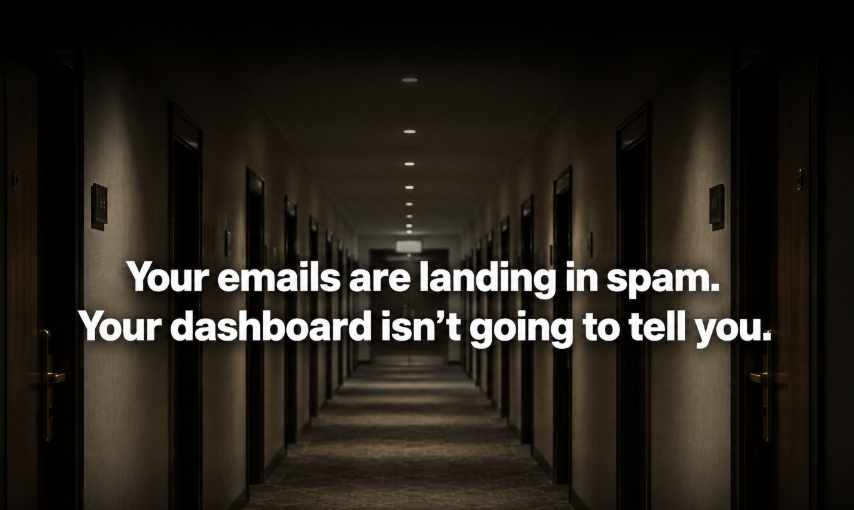
Your emails are landing in spam and your dashboard isn't going to tell you.
There's no alert, no notification, no moment where the platform tells you inbox providers have started treating your sends with suspicion. You just keep sending, the numbers look roughly normal, and somewhere in the background a reputation that took months to build is
being spent down send by send.
By the time most marketers realize something is wrong the recovery is slow and unglamorous. Open rates soft in ways that are hard to explain. Campaigns underperforming without a clear reason.
It almost always started with the list.
Not the copy. Not the template. Not the subject line formula. The list. The percentage of it that was never real, or used to be real and hasn't been for a long time, or belongs to a spam trap that's been quietly flagging your domain every time you hit send.
Verification isn't a one time fix. It's the habit that keeps everything else working.
8
Jun 1
The most expensive email you'll ever send isn't the one with the wrong offer or the weak subject line.
It's the one that lands in spam and teaches inbox providers that you can't be trusted.
Most marketers think about email cost in terms of what they put in. Hours writing copy, months building the sequence. What they almost never account for is the cost of sending to a list that shouldn't be sent to.
That cost doesn't show up as a line item. It shows up six months later when your best campaign gets a fraction of the reach it deserved and nobody can figure out why.
Inbox providers have a long memory. Every hard bounce, every spam trap hit, every send to a dead address is a small withdrawal from a reputation account you can't see the balance of until it's already overdrawn.
The marketers who never deal with deliverability crises aren't lucky. They're disciplined about one thing most people treat as optional.
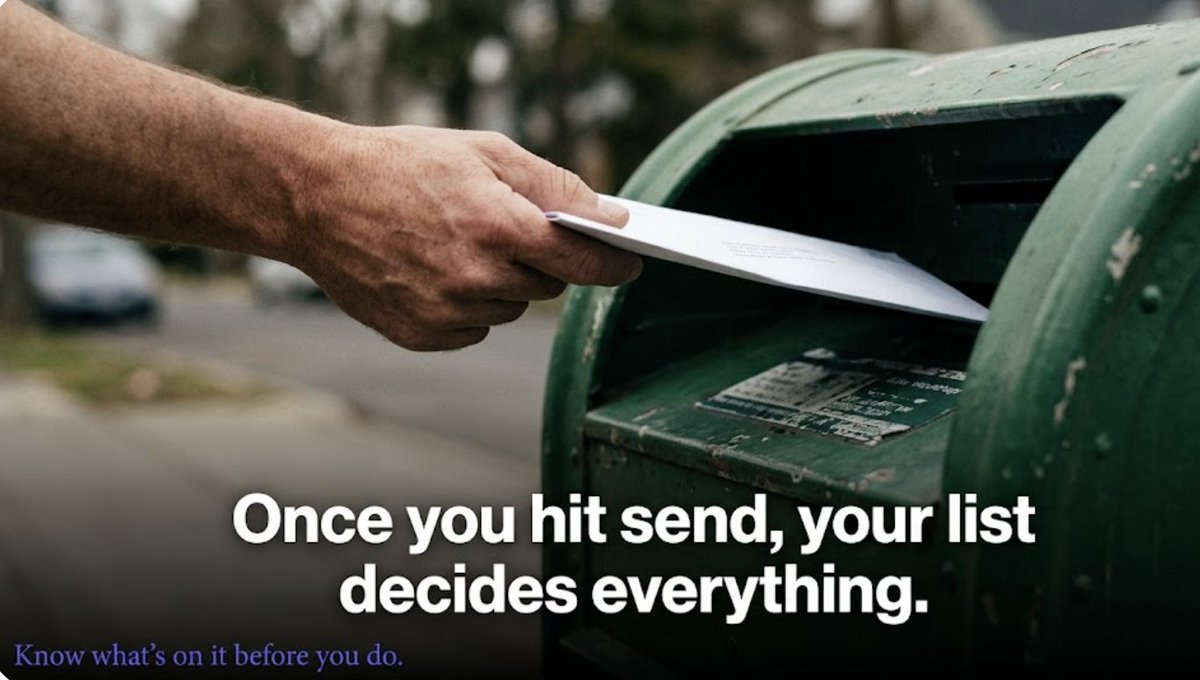
They know what's on their list before they send to it.
5
May 31
There's a number sitting in your email platform right now that most marketers have never looked at directly.
Not open rate. Not click rate. Your hard bounce rate. And if you haven't cleaned your list recently it's quietly doing more damage than any other metric on the dashboard.
Inbox providers aren't just delivering your emails.
They're scoring you as a sender in real time. Bounce rates, spam complaints, engagement patterns. All of it feeds a reputation score that determines whether your emails land where they're supposed to or disappear
before anyone sees them.
That score doesn't reset between campaigns. It
accumulates.
A high hard bounce rate sends one clear signal. This sender doesn't know who they're sending to. And senders who don't know who they're sending to get treated accordingly. Quietly. Gradually. Until one day a campaign that should have been your best performer goes mostly to spam.
Nothing changed. It just finally caught up.
11
May 31
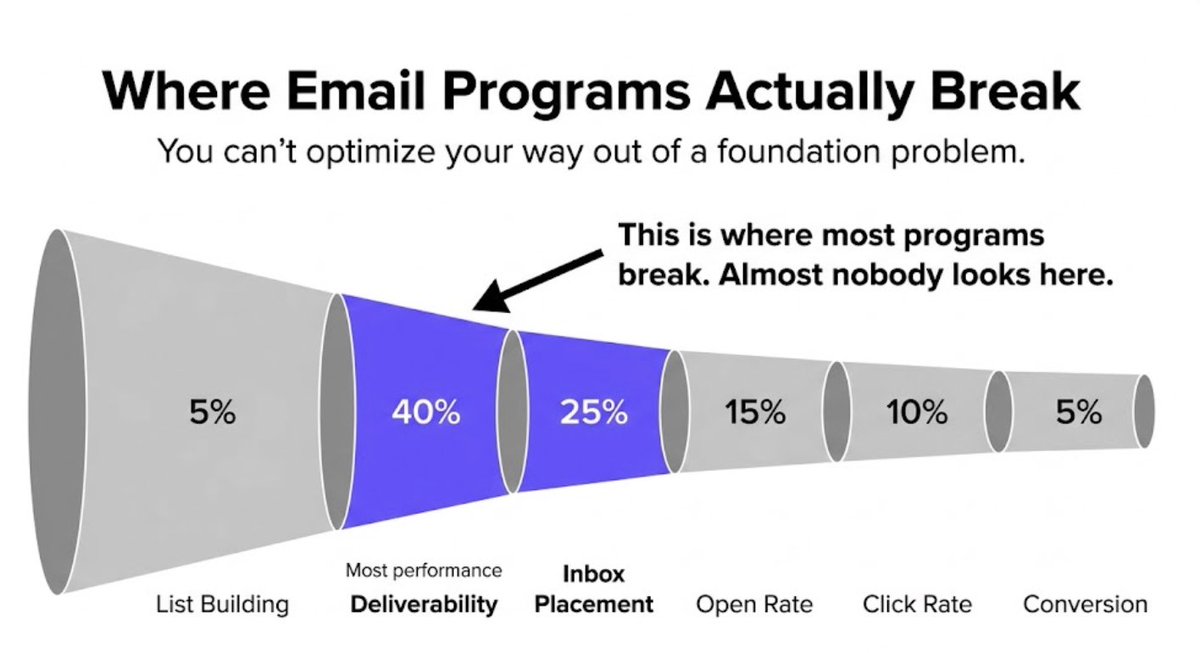
Most email marketers are optimizing the last ten percent of their program while ignoring the first ninety.
Split testing subject lines when their bounce rate is quietly signaling that a third of their list shouldn't be there. Obsessing over send time when their sender reputation has already been flagged by inbox providers watching their engagement for months.
It's not that those things don't matter. They do. But only once the foundation is solid.
List hygiene isn't exciting. Verification doesn't make it into conference keynotes. But it's the single variable that determines whether everything else you're doing actually reaches the people it was built for.
The marketers who consistently outperform their benchmarks aren't doing more sophisticated things at the top of the funnel. They're doing more disciplined things at the bottom.
Fix the foundation. Then optimize everything else.
When's the last time you treated your list health like it actually mattered?
10
May 30
Imagine spending hours writing the perfect letter. Every word chosen carefully. The stamp placed just right.
It never arrives.
Not because it wasn't good enough. Not because the person didn't want to hear from you. But because something went wrong that had nothing to do with what was inside.
That's what's happening to your emails right now.
You're writing better copy, testing subject lines, optimizing everything the playbooks tell you to. And a percentage of every campaign is disappearing before it ever reaches the person it was meant for. Bouncing off dead addresses. Flagged by inbox providers who've been quietly keeping score.
The letter was perfect. It just never got inside.
A verified list isn't an extra step. It's the thing that makes every other step worth taking.
Your emails deserve to arrive. Make sure they do.
6
May 30
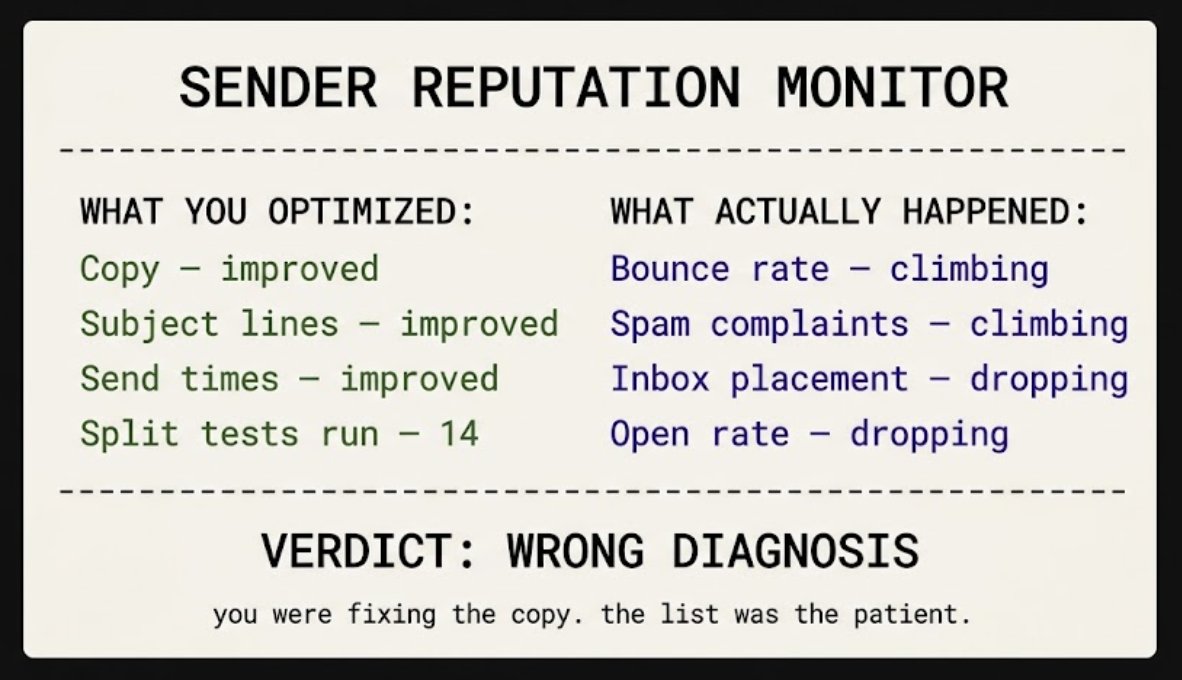
We read every comment and one question comes up more than almost any other.
Why are open rates dropping when the copy is getting better?
Most of the time it has nothing to do with the audience. It's the list. Every send to an invalid address, abandoned inbox, or spam trap builds a picture of you as a sender.
That picture determines whether your next campaign lands in the inbox or disappears.
A damaged sender reputation doesn't announce itself. It just quietly makes everything harder. Your best subject line underperforms. Your most valuable segment stops engaging. You keep optimizing the thing that isn't broken while the thing that is keeps getting worse.
A verified list recovers faster than most people expect. But you have to know that's what you're dealing with first.
If your open rates are sliding and you can't figure out why, your list is the first place to look. Not your copy.
8
May 29
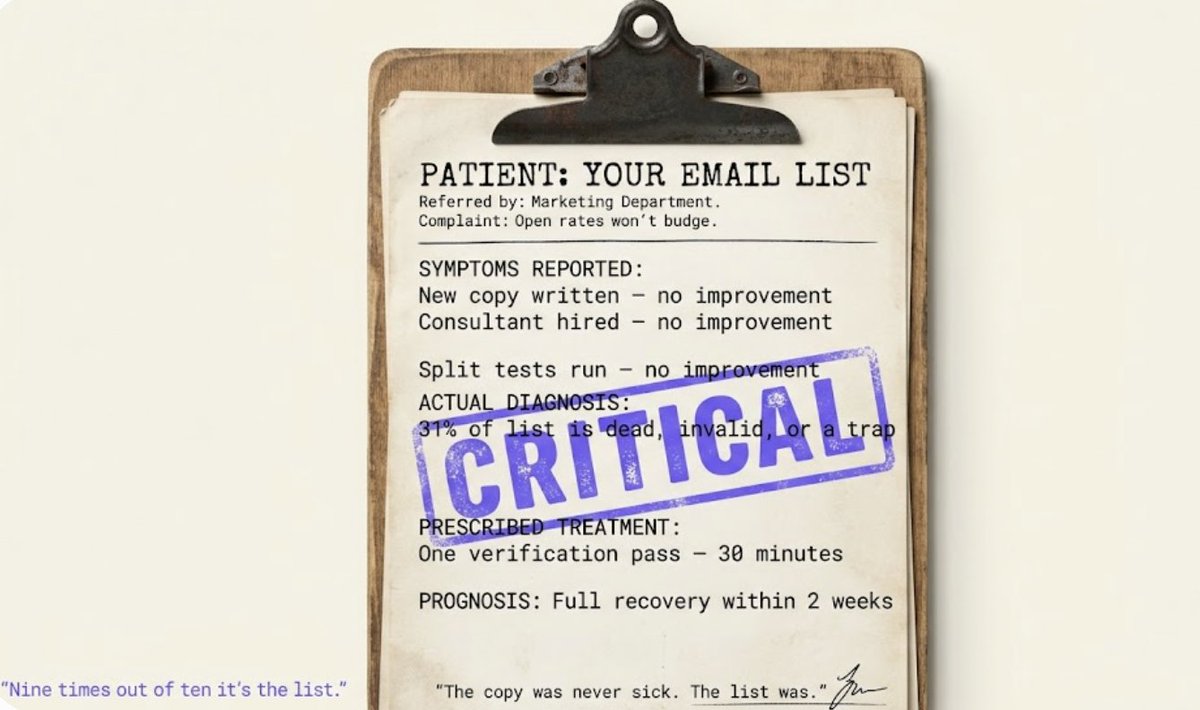
Someone spent three months rewriting their entire email sequence. New copy, new subject lines, new send times.
Hired a consultant. Split tested everything.
Open rates barely moved.
Then someone finally asked the right question. How clean is your list?
31% of their addresses were invalid, abandoned, or spam traps. Every send was quietly training inbox providers to treat them as junk. Didn't matter how good the copy was because the emails weren't landing in inboxes. They were disappearing and taking their sender reputation with them.
One verification pass. Thirty minutes. Deliverability recovered within two weeks and open rates jumped without changing a single word of copy.
You can have the best subject line in the world and it means nothing if your sender reputation is damaged.
And it's damaged a little more every time you send to an address that shouldn't be on your list.
Most people blame their copy when emails stop performing. Nine times out of ten it's the list.
12
May 29
Your email open rate is a report card. Most people just don't want to read their grades.
A founder in our community thought their product wasn't resonating. Churn climbing, demos flat, they were already talking about pivoting.
Then they looked at their email data.
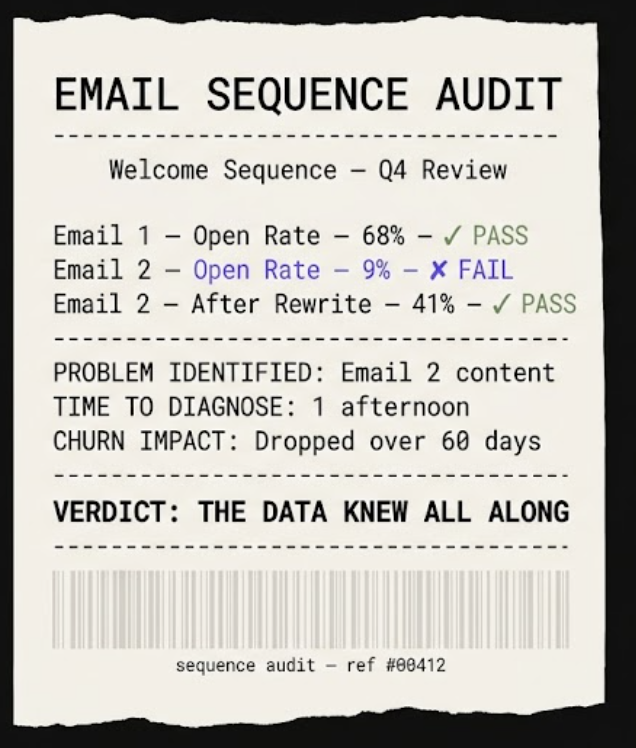
Welcome sequence had a 68% open rate on email one and 9% on email two. They weren't losing people to bad positioning. They were losing them in a single 24 hour window because email two was the most boring thing they'd ever sent.
One rewrite. Open rate jumped to 41%. Churn dropped over the next 60 days.
They didn't need a new product. They needed to stop treating email like a checkbox and start treating it like a conversation that either earns the next click or doesn't.
Your list already has the answers. The data's been sitting there the whole time.
5