
Joined February 2022
- Tweets 4,270
- Following 100
- Followers 18,569
- Likes 5,580
315 Photos and videos















Jun 4
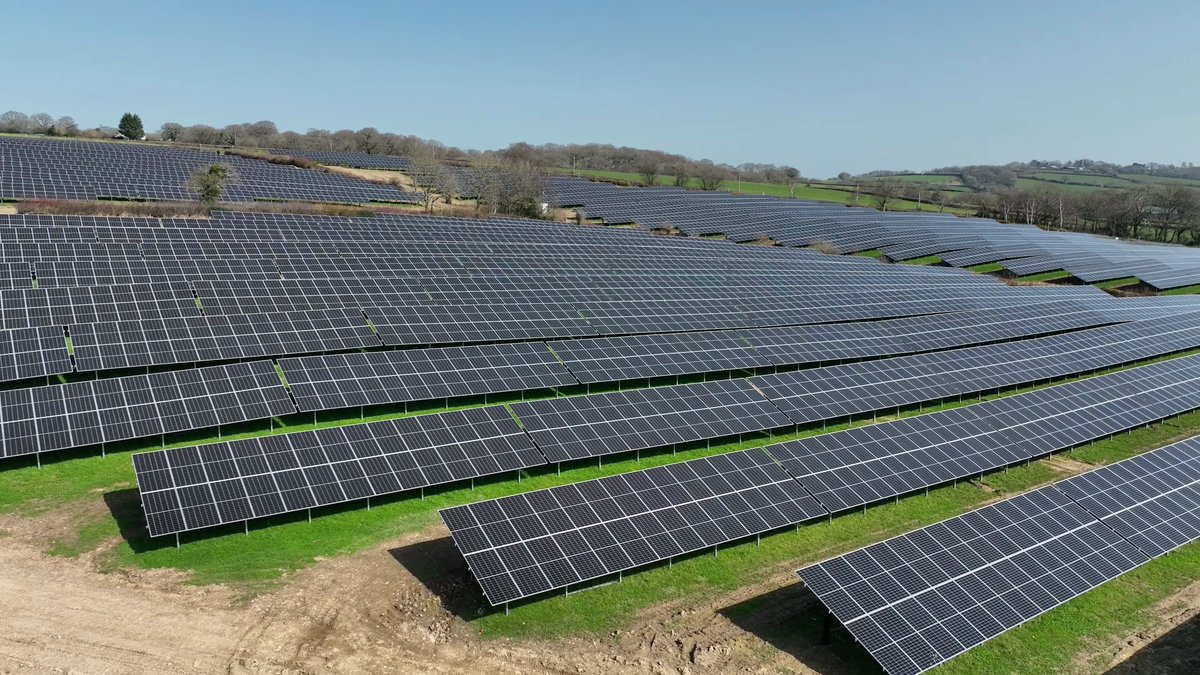
Switch in under 3 minutes.
Fuse Energy is on a mission to deliver low-cost, clean energy, now and for the future.
Unlock low-cost energy today.
🔗 Link in bio.


5
2
8
1,139
Jun 4
We're just getting started.
Jun 4

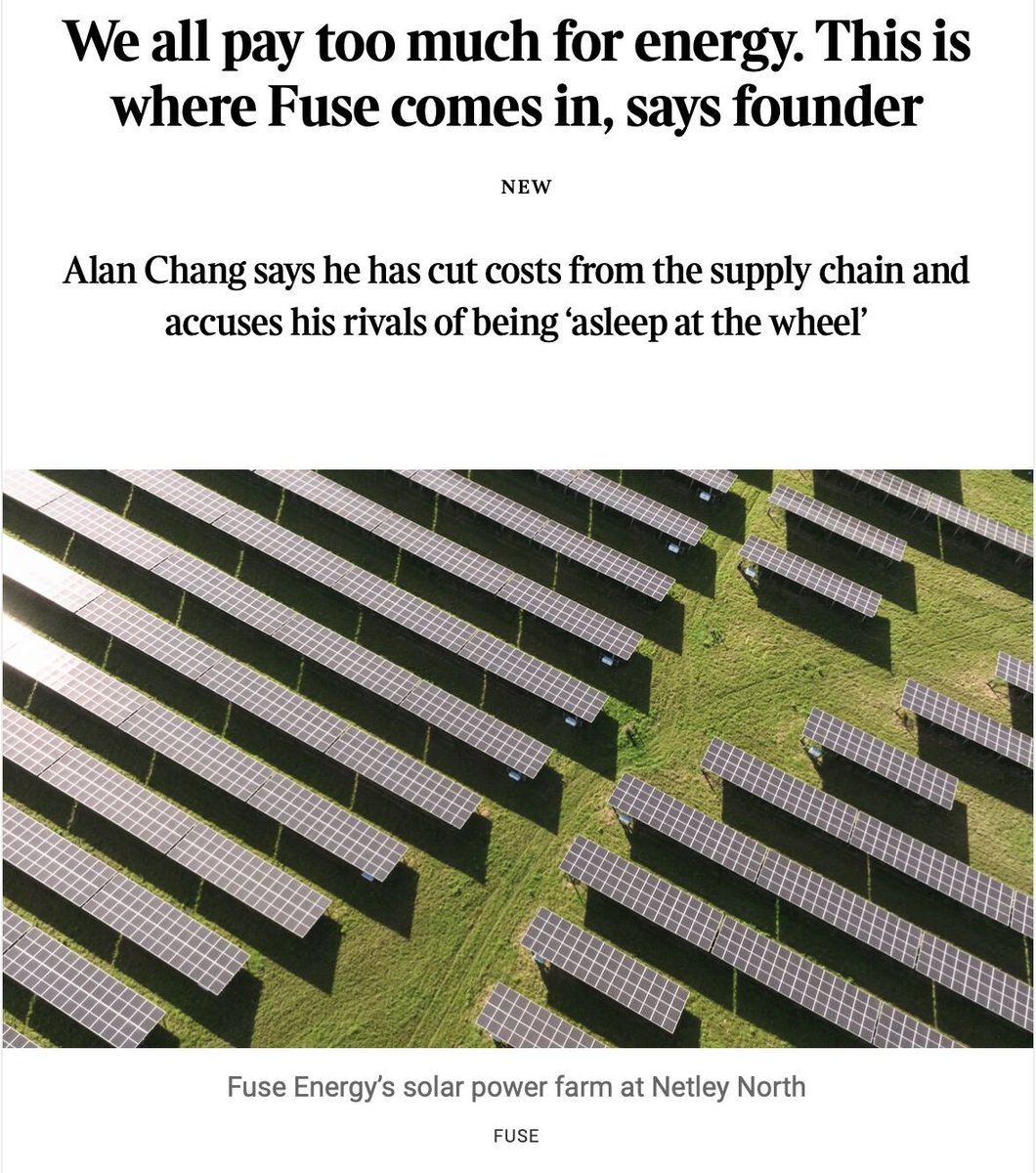
If you want to see what happens when you treat energy like an engineering problem, read The Times today.
Fuse went live in July 2023. Three years later:
300,000 properties supplied
$165M Q1 revenue
EBITDA positive every month since Dec 2025
17% lower operating costs than legacy energy companies, by building our own energy infrastructure & AI automation
2
12
1,383
May 22
A shipping lane closes 4,000 miles away. Your energy bill jumps £200.
We must own the domestic supply chain so bills reflect cost of production, not global events.
This is the mission.
4
2
18
2,270
May 15
⚡️ The week in energy markets, summarised.
What moved:
- Oil: Brent ~$108/bbl, WTI ~$104/bbl. Brent up ~7% on the week. The biggest weekly move in months.
- Hormuz: Still effectively closed. The US has redirected 75 commercial vessels. Trump told Fox News the US "doesn't need" Hormuz open at all. UAE announced it will double its bypass crude export capacity by next year.
- Qatar LNG: Still not meaningfully back. A few cargoes moved (mostly to Pakistan) but nothing close to a full restart.
- European gas: Q3 spreads rallied hard. EU storage stuck around mid-30%, injections weak.
- India: Gasoline and diesel prices raised 3%. First increase in 4 years.
Drivers:
- The market shifted from trading Hormuz headlines to trading the physical consequences. Each week without a Qatar restart makes Europe's storage situation scarier.
- Trump's "we don't need Hormuz open" line removed the urgency for a US push to reopen the strait.
- Workarounds are scaling: Vitol is now offering Iraqi Basrah crude via ship-to-ship transfer at Fujairah, UAE is building permanent bypass pipeline capacity.
- The Trump-Xi meeting produced talk about keeping Hormuz open, but no practical fix.
General outlook:
- Summer is now the gas problem, not winter. If Europe can't fill enough during the summer injection window, winter becomes dangerous, but the bottleneck is summer.
- UAE doubling bypass capacity by next year is a tell. Industry is treating Hormuz disruption as a multi-year scenario.
- Longs are scared of a Trump headline, shorts are scared of physical reality.
Short-term market outlook:
- Oil: Supported by Iran risk, but vulnerable to a sharp drop on credible de-escalation.
- European gas: Biased higher while Hormuz stays selectively open and Qatar LNG remains limited. A credible reopening could drop prompt prices €5-10/MWh.
- US gas: Still decoupled. Storage full, exports maxed, prices low and steady.
- Power: Supported by gas and weather. German front tracking gas wind; French Q3 tracking hydro and nuclear.
- Carbon (EUA): Choppy around €75. Auction supply has increased but buyers keep showing up at that level.
- Carbon (UKA): Thin and politically driven. UK-EU linkage and Labour leadership headlines matter most.
4
4
11
2,371
May 14
The electric vehicles are ready.
The data centres are ready.
Households are ready.
The energy system isn't. We're fixing that.
4
1
12
1,266
Fuse Energy retweeted

May 11
AI is compressing the timeline to low-cost energy.
Since we’ve gone hardcore mode on AI:
- Half of our support tickets were resolved by AI
- Our AI meter reading agent now does straight through processing of ~70% of reads with ~100% accuracy
That is an immediate 1.5% reduction in total cost, freeing up 140 people to focus on harder problems.
Across the industry, roughly 25% of total energy costs are just paying for human labor. We are going to automate that premium out of existence.
We are building a core AI team, reporting directly to me. We’re redesigning every complex workflow from the ground up:
- Warehouse & electrician management
- Internal AI agents for every team
6
6
45
3,608
May 8
⚡️ The week in energy markets, summarised.
What moved:
- Oil: Brent ~$103/bbl, WTI ~$97/bbl. Brent jumped 2.5% on Thursday after US-Iran clashes, but is lower on the week overall.
- Hormuz: US Navy destroyers transited the strait under Iranian fire on Thursday. The US then struck Iran's Qeshm Port and Bandar Abbas. Iran rolled out a new 40-question form for any vessel passing through.
- Tankers stuck: 70 tankers blocked at Iranian ports carrying ~166 million barrels, roughly $13bn worth (US Central Command).
- Qatar LNG: Outages extended into June.
- Libya: National Oil Corp halted refinery operations and evacuated tankers from Zawiya port amid armed clashes.
- ADNOC workaround: UAE kept LNG exports moving through Hormuz by switching off tanker tracking. At least two vessels disappeared after loading at Das Island.
Drivers:
- Markets are reacting more to unverified "peace deal" rumours than to confirmed military escalation. News flow is moving prices more than supply or demand data.
- Speculators in gas had bet prices would keep rising. Those bets are now being closed out, and the selling is pushing prices down short-term.
- Iran is adapting around US pressure: rail freight from Xi'an to Tehran is up from one train per week to one every 3-4 days since mid-April.
General outlook:
- Real escalation in the Gulf, oil lower on the week. The market isn't pricing in a disruption until oil actually stops flowing.
- Underneath the noise, gas is the asymmetric story. Qatar's June extension and slow European refill make winter the real concern.
- ADNOC concealing tankers and Iran rerouting trade through China by rail tell you the physical market is finding workarounds.
Short-term market outlook:
- Oil: Volatile, driven by headlines on Hormuz and US-Iran statements.
- European gas: Looking weak short-term as the speculative unwind plays out. Storage refill pace into winter is the bigger question.
- US gas: Still decoupled. Storage full, exports maxed, prices low and steady. Weather is the main thing that could move it.
- Power: European oversupply continues. More days of negative prices when it's sunny or windy.
3
1
8
977
May 7
We should stop talking about 'using less energy.’
Conservation never sparked a revolution.
Every major leap in human progress came from mastering and utilising more energy, not less.
It's time we start chasing abundance.
6
4
17
777
May 1
⚡️ The week in energy markets, summarised.
What moved:
- Oil: WTI ~$104/bbl, Brent ~$111/bbl. Both up on the week.
- UAE leaves OPEC. Effective today, 1 May. The UAE was producing ~3.4 million barrels/day, around 3% of global crude. Brief 2-3% intraday dip in oil on the headline, then erased by the Hormuz risk premium.
- Hormuz: Still disrupted. Roughly 20% of global LNG trade is cut off.
- European gas: ~€46/MWh. Buyers aren't rushing to take delivery in the next few weeks.
- US gas: ~$2.80/MMBtu, low and steady. Storage is full and export terminals are running flat out, so the surplus stays inside the US.
- LNG: Flows still uncertain. Qatar's restart timing is unclear.
- European electricity: Solar and wind are producing more than the grid needs at certain hours, pushing prices below zero in places.
Drivers:
- Hormuz is the dominant story. Headlines about a deal are losing credibility.
- Day-to-day oil moves come from Trump and Iran statements. The bigger trend is upward as supply is tightening as Hormuz stays disrupted.
- Qatar's LNG restart is the biggest unknown for global gas supply.
- European gas storage is filling up more slowly than it needs to for winter.
General outlook:
- Short-term and long-term are pulling in different directions. Short-term is messy and headline-driven. Long-term, supply is tightening especially in gas.
- Oil is sitting higher than it was. Few in the market still expect Hormuz to reopen quickly.
- European gas looks calm now but fragile underneath. The real worry is winter.
- LNG flows are the swing factor for the rest of the year.
Short-term market outlook:
- Oil: Driven by headlines. Hormuz, US-Iran statements, and any follow-through from UAE's OPEC exit are what to watch.
- European gas: Demand looks soft in the short term.
- US gas: Decoupled from the global story. Storage is full and export terminals are maxed out
- Power: European oversupply continues. More days of negative prices when it's sunny or windy.
- Positioning: Conviction is low across the market. The big moves, when they come, will most likely be triggered by headlines.
4
4
14
966
Apr 29
It takes 15–20 years to connect new power to the grid.
That delay doesn’t just slow energy, it makes everything more expensive.
Our CEO @alanchanguk joined @ridingunicorns_ to discuss why time is the real constraint, and how we’re building to move faster.
🔗 Link in reply.
8
5
17
959
Apr 24
⚡️ The week in energy markets, summarised.
What moved:
- Oil (WTI): ~$95/bbl Friday, after slipping as much as 2.3% intraday on US-Iran peace-talks headlines. Still up ~14% on the week, the biggest jump since the war began in early March.
- Hormuz: Traffic stopped Thursday after Iran fired on commercial ships and seized two vessels. IRGC laid more mines this week. By Friday, only a sanctioned tanker carrying Iranian oil was attempting to cross.
- Refined products: Jet fuel and other refined fuels showing real physical tightness. Paper markets aren't reflecting it.
- LNG: Asian demand weak, European gas demand low as weather gets warmer. Global gas tightness easing despite Hormuz.
- Russia: Five-day fire at the Tuapse oil terminal extinguished.
Drivers:
- Hormuz dominates. Iranian mining and IRGC fire on commercial ships froze traffic. Trump ordered the US Navy to shoot any boat caught laying mines in the strait.
- US action: US forces boarded a sanctioned Iranian-oil tanker (Majestic X) in the Indian Ocean.
- Diplomacy whiplash: a second US-Iran round being arranged via Pakistan; Iran's foreign minister flew to Islamabad. "Talks" headlines pull prices down, escalation headlines sent them back up.
- Trump as price-mover. Statements out of the White House are moving oil and gas day-to-day.
- Asian demand soft. China isn't paying up for LNG, keeping global gas slack. Qatar LNG restart timing is the wildcard.
General outlook:
- Headline-driven tape. Oil up 14% on the week despite Friday's wobble. Positioning is reactive, not fundamental.
- Hormuz duration is the question. Active mining, halted traffic, US Navy involvement. The disruption is open-ended.
- Physical vs paper split. Refined fuels are flagging real supply stress that hasn't fed through to crude curves.
- Corporate spillover starting. P&G guided to $1bn of extra cost from elevated oil. Energy trader Pierre Andurand's flagship fund fell ~52% in the first half of April after long-oil bets unwound.
- Gas picture diverges from oil. European demand is low, Asian appetite weak. Hormuz-related LNG disruption is being absorbed for now.
Short-term market outlook:
- Oil: Headline-driven and two-way. Hormuz incidents, US-Iran talks via Pakistan, and Trump statements are the variables.
- Gas: weak European and Asian demand absorbing tightness. Qatar LNG restart timing is the one to watch.
- Refined products: refined fuel supply is tight, and it’s most noticeable in jet fuel.
- Positioning: Andurand's blow-up is a useful tell. Conviction is low across the market.
3
3
15
913
Apr 23
The cures exist.
The clean water exists.
The food systems exist.
They're all waiting on the same thing.
Cheap. Abundant. Energy.
This isn't a technology problem. It's a priorities problem.
6
5
22
876
Apr 20
From customer support to Head of Finance, Manuel never really shed his nervousness.
He just got promoted with it.
8
4
37
1,853
Apr 17
⚡️ The week in energy markets, summarised.
What moved:
- Oil: Brent down 3.3% to ~$96.10/bbl, WTI down 4.1% to ~$90.75/bbl on Friday. First real drop since the Middle East conflict began.
- US gas: Henry Hub at ~$2.65/MMBtu, a 7-month low (-5.4% w/w). 50 Bcf storage build vs. 13 Bcf 5-year average; Lower-48 production >110 Bcf/d.
- UK fuel: Petrol down to 158.1p/litre. First decline since the conflict began.
- EU jet fuel: KLM cancelled 150 flights for next month. Wizz Air short at several locations.
- Africa: Nigerian airlines warned they may suspend operations from 20 April on surging Jet A1 prices.
Drivers:
- Hormuz: Iran said Friday the Strait is "completely open" for commercial traffic during the 10-day Israel-Hezbollah ceasefire. Trump said Iran is clearing sea mines with US help. 600 ships remain stranded in the Gulf.
- The Lebanon-Israel ceasefire backed up the wider de-escalation read.
- Iraq offered high-sulfur fuel oil from storage near Khor Al-Zubair. Small supply bump.
- IEA still says Middle East production takes ~2 years to recover.
- UK pushing North Sea tie-backs; South Korea talking to Mexico and Brazil. Shift away from Gulf supply is happening.
General outlook:
- Friday's -13% came with 600 ships still stuck in the Gulf and the IEA's 2-year recovery timeline unchanged. The move happened faster than the physical market.
- Demand is softening. US gallons -5% YoY, spend 20% YoY (Barclays). Even at $88 Brent, drivers are paying more than last year. Pump prices tend to lag the spot by weeks.
- The US keeps doing its own thing. Henry Hub at a 7-month low while crude stays elevated YoY. Storage is full, exports are maxed, gas is trapped at home.
- Energy stocks diverged hard from the index Friday (E&Ps -8 to -11%, majors ~-6% on a 1.4% S&P day). Equities and the IEA timeline aren't telling the same story right now.
- Gulf supply shift keeps going: North Sea tie-backs, South Korea's LATAM outreach. Multi-year consequences, ceasefire or not.
Short-term market outlook:
- Oil (WTI): $84 is the new level. Gulf shipping clearance and any fresh Hormuz incident are the two variables that matter.
- Equities and the IEA timeline aren't telling the same story right now.
- Rates: 10-yr at 4.24%, reflecting cheaper oil. CPI and Fed commentary next.
- UK retail: Petrol has started following crude down. Wholesale-to-retail lag runs 2-3 weeks.
5
6
22
1,160
Apr 16
⚡️Introducing: The Weekly Close
At the end of every week, we’ll break down what moved across energy markets.
Prices, drivers, and where things stand heading into the weekend and next week.
First one dropping tomorrow.
6
6
21
845
Apr 3
We’re working on the most important problem in the world.
6
5
23
1,358