
The no-code blockchain for Web3 automation, dApps & AI 👾 | GraphLinq Hub: hub.graphlinq.io/ | deploy instantly in a few clicks app.graphlinq.io
Joined February 2021
- Tweets 3,829
- Following 177
- Followers 35,355
- Likes 692
580 Photos and videos
Pinned Tweet

20 Jan 2025
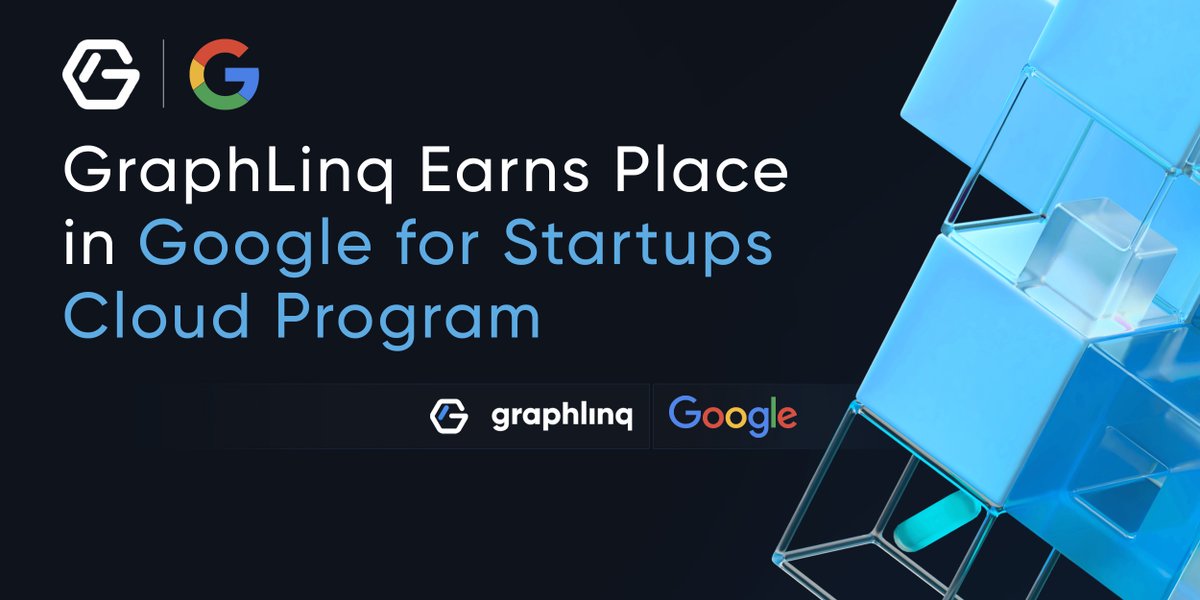
Excitement is in the air at GraphLinq as we unveil some big news—we’ve officially joined the @googlecloud Startups Program!
That's right, we've teamed up with one of the biggest names in tech to elevate our no-code tools to the next level 🤯
Make Utility Great Again!
Stay tuned, bombshells 💣 are coming!
104
231
772
117,811
Jun 12
Crypto research team wanted instant alerts whenever a whale moved funds to Binance.
Normally this means:
blockchain node
wallet monitoring scripts
Telegram bot
server maintenance
With GraphLinq:
Ethereum Wallet Event → Condition Block → Telegram Alert
The whole workflow was built visually and deployed in hours instead of days.
Sometimes the biggest advantage isn't better code.
It's removing the need to write it in the first place.
ide.graphlinq.io/
3
9
60
856
Jun 10
Staking isn't just about earning yield.
It's about choosing which ecosystems you want exposure to.
With $GLQ, you're not just staking a token. You're staking on a future where AI, automation, and on-chain execution become easier to build and deploy.
The rewards are nice. The long-term thesis is more interesting.
app.graphlinq.io/app/staking
3
21
80
1,103
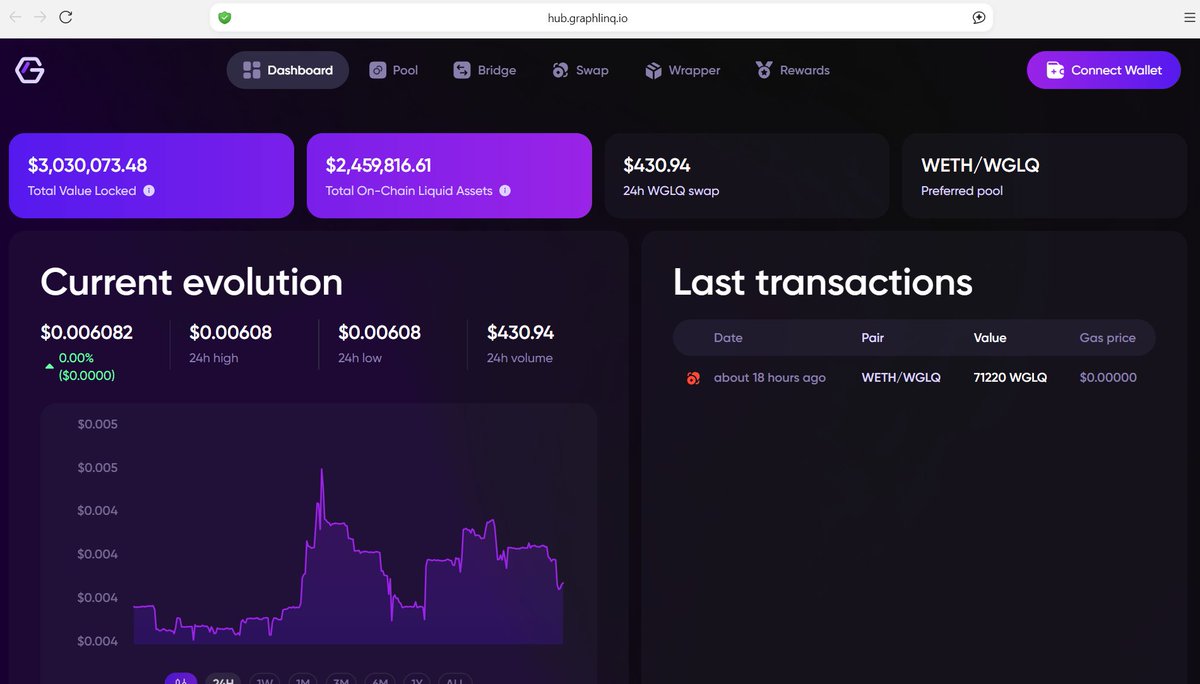
Most DEXs are just places to swap tokens.
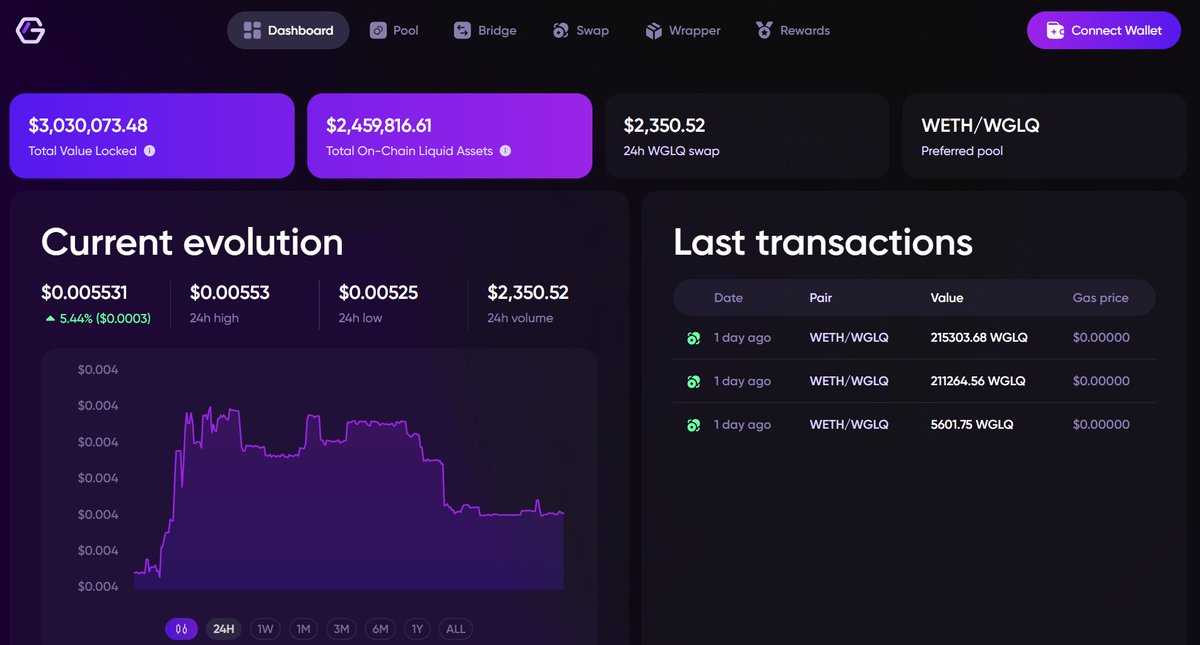
GraphLinq Hub feels more interesting because it's becoming the liquidity layer for an ecosystem where people are also building bots, AI workflows, trading systems, and on-chain automations.
Provide liquidity.
Farm rewards.
Use the same ecosystem to build what comes next.
That's a much stronger loop than most projects have.
hub.graphlinq.io/
3
17
79
1,205
Every Web3 niche seems to be missing the same thing:
Prediction markets need automation.
Trading bots need execution infrastructure.
NFT projects need monitoring and engagement tools.
Gaming needs real-time on-chain actions.
Oracles need data consumers.
Everyone talks about the application layer.
GraphLinq quietly sits underneath all of them as the layer that connects data, logic, AI, and execution into working systems.
graphlinq.io/
4
18
70
1,035
The easiest way to understand GraphLinq IDE is this:
Instead of spending days wiring together APIs, databases, bots, exchanges, AI models, and blockchain connections...
you drag blocks onto a canvas and connect them visually.
A wallet tracker, trading alert system, AI agent, or Telegram bot can go from idea to working automation in hours instead of weeks.
That's what 300 blocks unlock.
ide.graphlinq.io/
4
17
83
1,307
What makes GraphLinq ecosystem interesting isn't any single product. It's how everything connects.
Need liquidity? Hub.
hub.graphlinq.io/
Need low-cost execution? GraphLinq Chain.
Need to build an automation, trading bot, or AI workflow? IDE.
ide.graphlinq.io/
Most projects launch products. GraphLinq is quietly building a stack where data, AI, automation, liquidity, and execution all live in the same ecosystem.
5
16
86
1,260
May 29
Many builders underestimate how much infra costs compound over time.
Even after fees dropped massively in 2026 in most popular L1s, avg transaction still sits around ~$0.10–$0.20, while more complex contract interactions and swaps can cost significantly more.
Now imagine running:
high-frequency rebalancing
yield farming rotations
arbitrage execution
AI agents making constant on-chain actions
That’s where GraphLinq starts getting interesting.
graphlinq-protocol:native fees are low enough that builders can design around execution speed and strategy logic instead of constantly optimizing around gas costs.
For smaller dapps and automation-heavy systems, the operating cost difference becomes very real very quickly.
hub.graphlinq.io/
4
22
81
1,576
May 25
Ethereum is still the best ecosystem for security and liquidity.
But if you’re a solo builder trying to launch automated product, the reality is that smart contracts alone don’t solve the operational side. You still need infrastructure, automation layers, monitoring, APIs, execution logic, and glue between Web2 and Web3.
GraphLinq compresses a lot of that into one stack.
Best use case:
Automation-heavy apps, AI agents, no-code workflows, cross-platform execution.
graphlinq.io/
6
19
96
1,476
May 22
Feels like prediction markets are slowly turning into something much bigger than “betting apps.”
Once you combine real-time probabilities with AI, automation, and on-chain execution, they start looking more like live information infrastructure than speculation platforms.
That’s why GraphLinq feels like such a natural fit for where this space is going.
📖graphlinq.io/blog-posts/pred…
13
18
90
1,367
May 20
Most “automation” tools still stop at:
“If this happens → send notification.”
Then you look at what people are building on GraphLinq and it’s stuff like:
wallet trackers
arbitrage alerts
AI-powered workflows
bots reacting to on-chain activity in real time
All running inside one graph without managing backend. Feels much closer to building actual systems than just automating tasks.
6
16
81
1,268
May 18
GLQ is one of the few tokens where the utility actually clicks once you start using the ecosystem instead of just reading a roadmap.
You bridge over to Hub, provide liquidity, farm rewards, stake your $GLQ … and you’re not doing it in a vacuum. It’s the same environment where people are actively building and deploying trading bots, wallet trackers, AI-driven workflows, and on-chain automations with GraphLinq—stuff that runs 24/7, reacts to real events, and can be iterated fast without reinventing the wheel.
The more you explore the stack, the more the value proposition feels practical, not hypothetical.
app.graphlinq.io/app/staking
21
22
106
1,766
May 15
Most chains talk about low fees. You only really understand what that means when you start running strategies that depend on constant execution.
On GraphLinq Hub, gas is so low that things like:
high-frequency rebalancing
yield farming rotations
small arbitrage spreads
Actually become viable without fees eating the edge.
That changes how you build.
Instead of optimizing around transaction costs, you can optimize around execution itself.
hub.graphlinq.io/
7
26
105
1,624
May 13
Most automation tools are still built around the same idea: connect app A to app B and trigger something when a condition happens.
GraphLinq feels different because it starts from a different assumption entirely.
Not: “How do we connect tools?”
More like: “How do we connect data, logic, and execution in one system that reacts in real time?”
That changes what you can actually build. Graph can:
- listen to on-chain activity
- pull exchange data
- process conditions
- trigger actions instantly
without stitching together servers, scripts, APIs, and monitoring layers.
That’s why it feels less like “workflow automation”
and more like infrastructure for autonomous systems.
graphlinq.io/
3
16
95
1,468
May 11
AI agent projects still rely on:
🤖 rented GPUs
🧑💻 VPS setups
🫣fragile backend scripts
GraphLinq is taking different direction.
The interesting part of $GLQ isn’t speculation — it’s that the token sits underneath systems that actually execute: alerts, workflows, on-chain automation, AI-triggered actions.
Feels closer to infrastructure than narrative.
explorer.graphlinq.io/coin-i…
4
22
107
1,706
Clear shift is underway: with the right tools, one person can outbuild a small team.
Not because they’re better—but because they’re not fighting the usual friction.
No setup. No handoffs. No waiting on deployment cycles.
GraphLinq is built for exactly that workflow.
14
21
98
1,842
Running bots used to mean dealing with servers, uptime issues, random crashes, and constant monitoring.
Even simple systems came with a lot of overhead.
What’s changing now is that you can treat these workflows more like products and less like infrastructure.
That shift alone removes a lot of friction.
github.com/GraphLinq
7
24
102
1,544
Many teams don’t realize how much of their budget goes into maintaining things that shouldn’t even exist anymore.
Backend glue, cron jobs, basic automation, DevOps overhead — it adds up fast. With GraphLinq, most of that becomes a visual workflow you can build and run without engineers babysitting it.
It’s not just faster. It’s structurally cheaper.
ide.graphlinq.io/
11
16
99
1,625
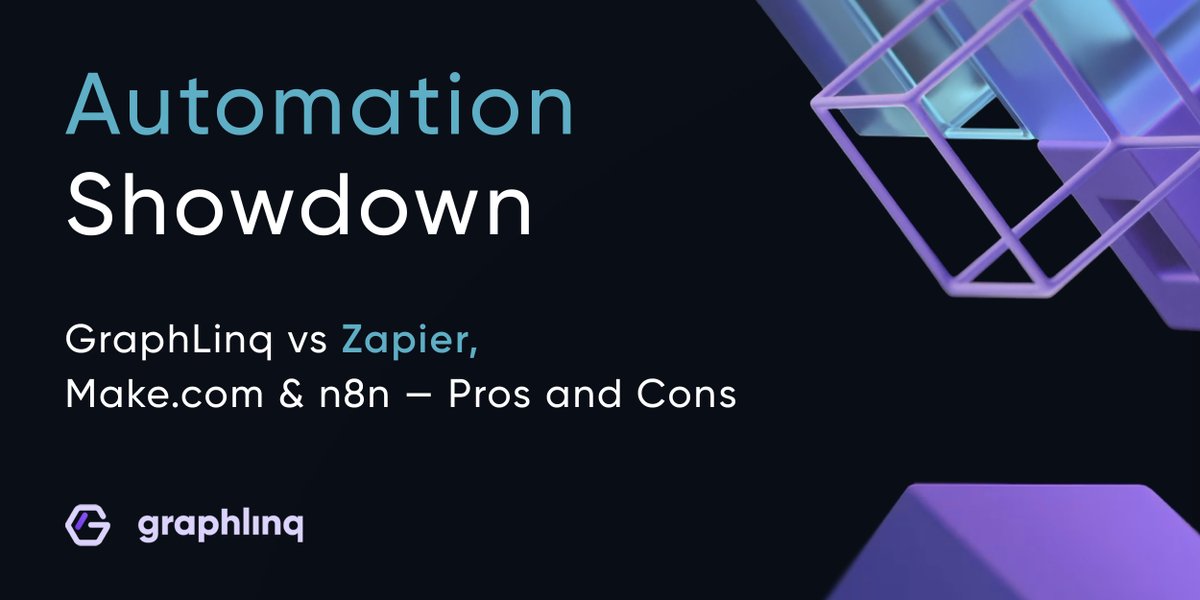
Automation tools all look the same until you actually try to build something real.
n8n is great when you’re moving data between tools.
GraphLinq starts to make more sense when you need the system to react — to markets, to on-chain events, to anything that doesn’t wait.
That’s the real difference.
📖graphlinq.io/blog-posts/grap…
9
24
103
1,484
Apr 29
Running bots used to mean:
- renting a VPS
- wrangling Docker images
- alerts, logs, uptime monitoring
- patching, restarts, constant babysitting
Terminal will change that.
Your agent runs like software: deploy, update, and iterate in minutes — not like infrastructure you babysit.
graphlinq.io/
3
16
88
1,274
Apr 27
Imagine this:
⚽ Pull ESPN odds
📉 Compare with Polymarket/Kalshi prices
🧑💻 Detect inefficiencies
✔️ Auto-enter trades
You just built a quant strategy without writing code
ide.graphlinq.io/
5
27
96
1,411