
Joined August 2007
- Tweets 93,690
- Following 1,135
- Followers 25,169
- Likes 382
37,311 Photos and videos

Pinned Tweet

23 Oct 2025
We tried to make work happier—and ended up making it hollow.
Cultures softened. Leaders hesitated. Performance drifted.
After 100 CHRO interviews, I wrote The 8 Laws of Employee Experience—a blueprint to bring strength and humanity back to work. Learn more about it here: linkedin.com/pulse/my-new-bo…
1
1
1,616
11h
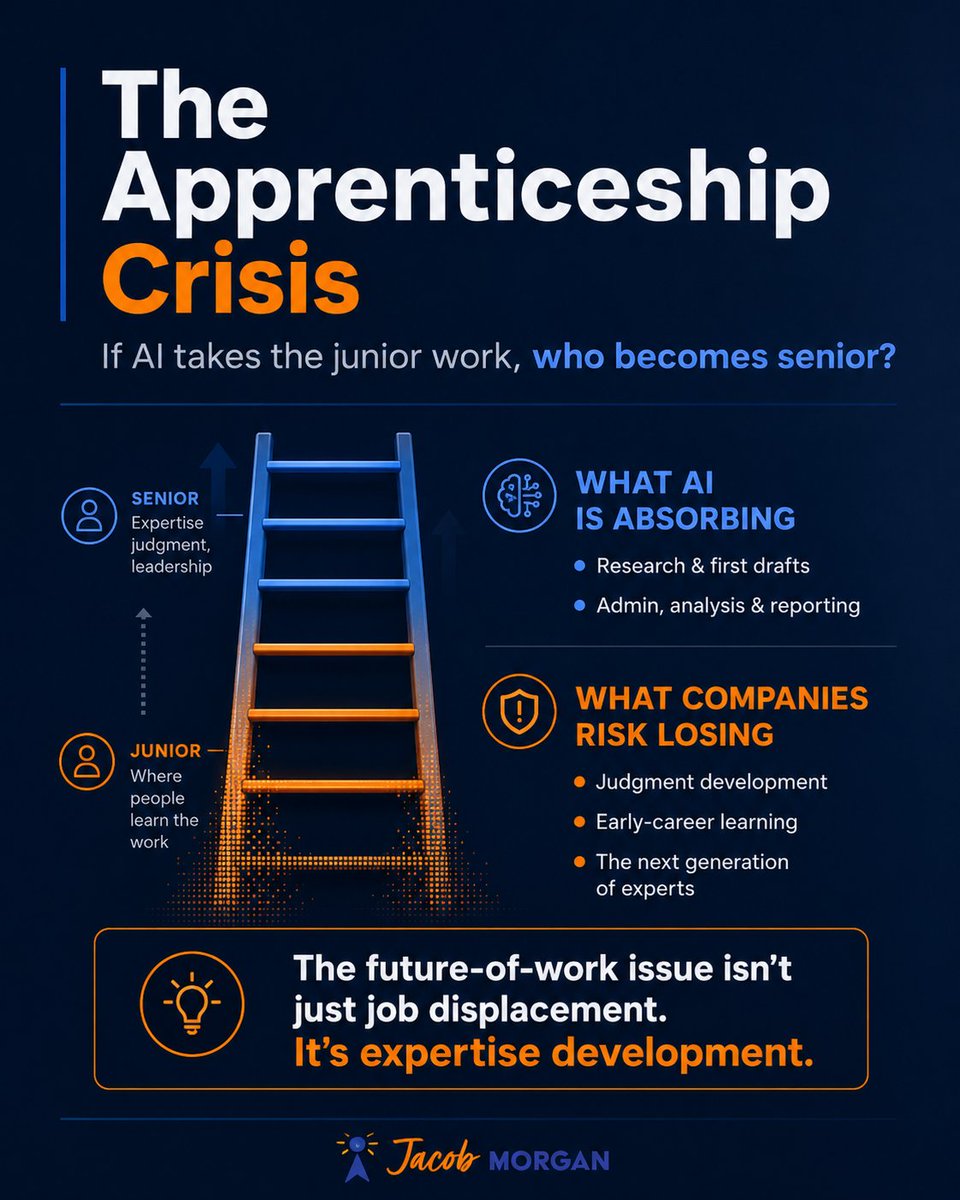
Everyone wants AI to eliminate entry-level work. Very few leaders are asking what happens after that. Junior employees don’t become senior by reading a policy document or watching a training video. They become senior by doing the messy work. The research. The first drafts. The analysis. The scheduling. The customer questions. The reporting. The revisions. The mistakes.
That work can look boring from the outside, but it is often where judgment gets built. This is the apprenticeship problem AI is creating. If we automate the bottom of the career ladder, we may save time today and create an expertise shortage tomorrow. Junior analysts learn by building the model. Junior lawyers learn by reviewing documents. Junior engineers learn by debugging. Junior HR partners learn by handling the operational issues before they become strategic.
AI can absolutely remove low-value work, but companies need to be careful about confusing “low-value” with “developmental.” Some work is inefficient and should go away. Some work is how people learn. The question for leaders is not just, “What can AI automate?” The better question is, “If AI does this work, how will people build the judgment they used to get from doing it?”
The future-of-work issue isn’t just job displacement. It’s expertise development. The companies that figure this out will not just use AI to cut work. They’ll redesign how people learn, grow, and become the next generation of experts.
I'm going deeper on this on my Substack:
greatleadership.substack.com…
56
Jun 13
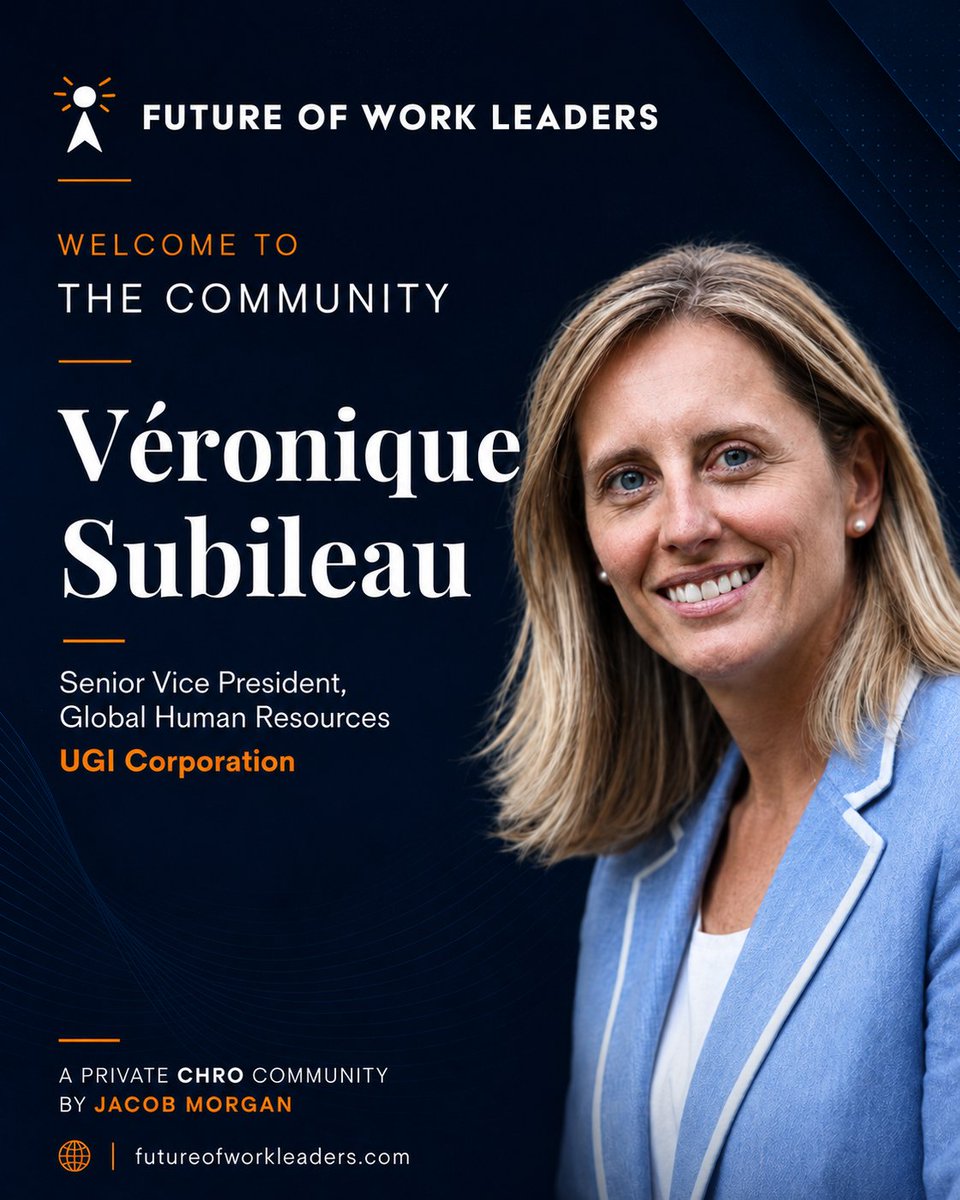
Another great leader joins Future of Work Leaders.
Please join me in welcoming Véronique Subileau, Senior Vice President, Global Human Resources at UGI Corporation, to the community.
Future of Work Leaders is now made up of more than 40 CHROs and senior HR executives who are focused on where work is going next, not traditional HR for the sake of HR. We meet virtually every month and a few times a year in person to talk about the real issues shaping organizations: culture, leadership, AI, talent, employee experience, workforce expectations, and the changing role of the CHRO.
The value of this group comes from the people in the room, and I’m excited to have Véronique be part of it.
Welcome, Véronique.
Learn more and request an invite here: futureofworkleaders.com
1
86
Jun 13
Everyone keeps calling SpaceX a rocket company. I’m not sure that’s accurate anymore.
The IPO is being treated like a huge moment for rockets, Starlink, and Elon Musk, and of course it is. But the more interesting part is what’s happening underneath the headline. Starlink appears to be the business making money. Rockets are still expensive. And now xAI is pulling a massive amount of capital into compute, data centers, and the race to build better models. So what went public wasn’t really one clean business. It was three very different bets wrapped together: satellite internet, reusable space infrastructure, and AI.
That’s why the valuation caught my attention. Investors aren’t just pricing what SpaceX is today. They’re pricing a version of the future where Starlink keeps growing, Starship works at scale, and xAI becomes a serious AI infrastructure player. Maybe that happens. Elon Musk has made a career out of doing things people said couldn’t be done. But when a company is valued on a story that big, the story has to keep getting validated.
The bigger signal for me is that AI infrastructure is moving from private-market patience into public-market pressure. Venture capital can tolerate long timelines and huge losses. Public markets eventually want numbers: revenue, margins, and a believable path to profitability. That’s where this gets interesting for leaders. AI is no longer just a tool conversation. It’s becoming a capital markets conversation, a business model conversation, and an infrastructure conversation.
SpaceX may turn out to be one of the defining companies of the next decade. But this IPO is also a reminder that the AI race is getting more expensive, more public, and more exposed to pressure.
I discussed this in detail on today's episode of The Future Ready Podcast: podcasts.apple.com/us/podcas…
#FutureOfWork #AI #Leadership #SpaceX #FutureReadyToday
1
125
Jun 12
AI is quickly becoming part of how work gets done, but many companies still have no idea who should use it, how much they should use, or what the business should get back.
@Uber offers a useful example of what happens when AI adoption scales quickly. The company reportedly reached 95% monthly adoption of AI coding assistants, burned through its planned 2026 AI budget in just four months, and then began capping token usage by role and function.
The lesson is not to slow AI adoption. It is that adoption without governance eventually turns into restriction.
Early on, AI feels like a simple productivity upgrade. Give employees access, encourage experimentation, and celebrate usage. That works when the goal is learning. But as adoption spreads, the questions change:
• Where is AI creating value?
• Which roles need the most access?
• Who owns the budget?
• Who is accountable for outcomes?
These questions matter because AI usage is not equal. An engineering team accelerating product development creates different value than a team experimenting without a clear business case.
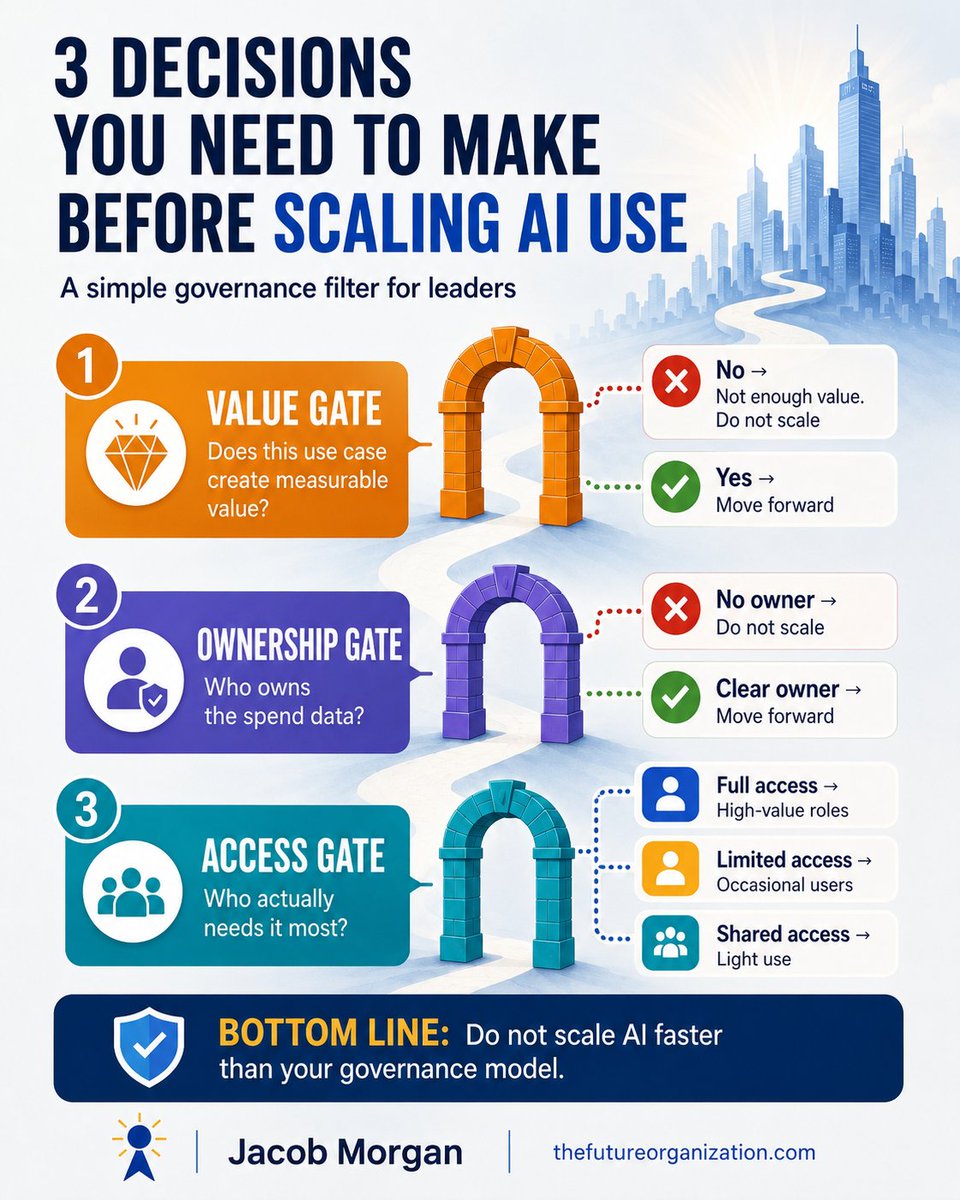
That is why leaders need three decision gates before scaling AI.
1. Value: Prove a use case delivers measurable results before expanding access. If AI improves customer support resolution times or reduces sales prep work, measure it.
2. Ownership: Assign accountability for budget, usage, vendor management, and performance. Without ownership, costs and responsibility become fragmented.
3. Access: Match AI access to business need. High-impact teams may require advanced capabilities, while others may only need AI embedded in existing workflows.
This is not about being conservative with AI. It is about being disciplined.
Companies should absolutely experiment. But experimentation and governance need to mature together.
Otherwise, the pattern is predictable: access expands, usage accelerates, spending rises, visibility declines, and leadership responds with limits after costs are already out of control.
The better approach is simple: identify where AI creates measurable value, establish accountability, and align access with business priorities.
AI should scale with purpose, not just enthusiasm.
That is how organizations move from AI experimentation to AI discipline.
72
Jun 12
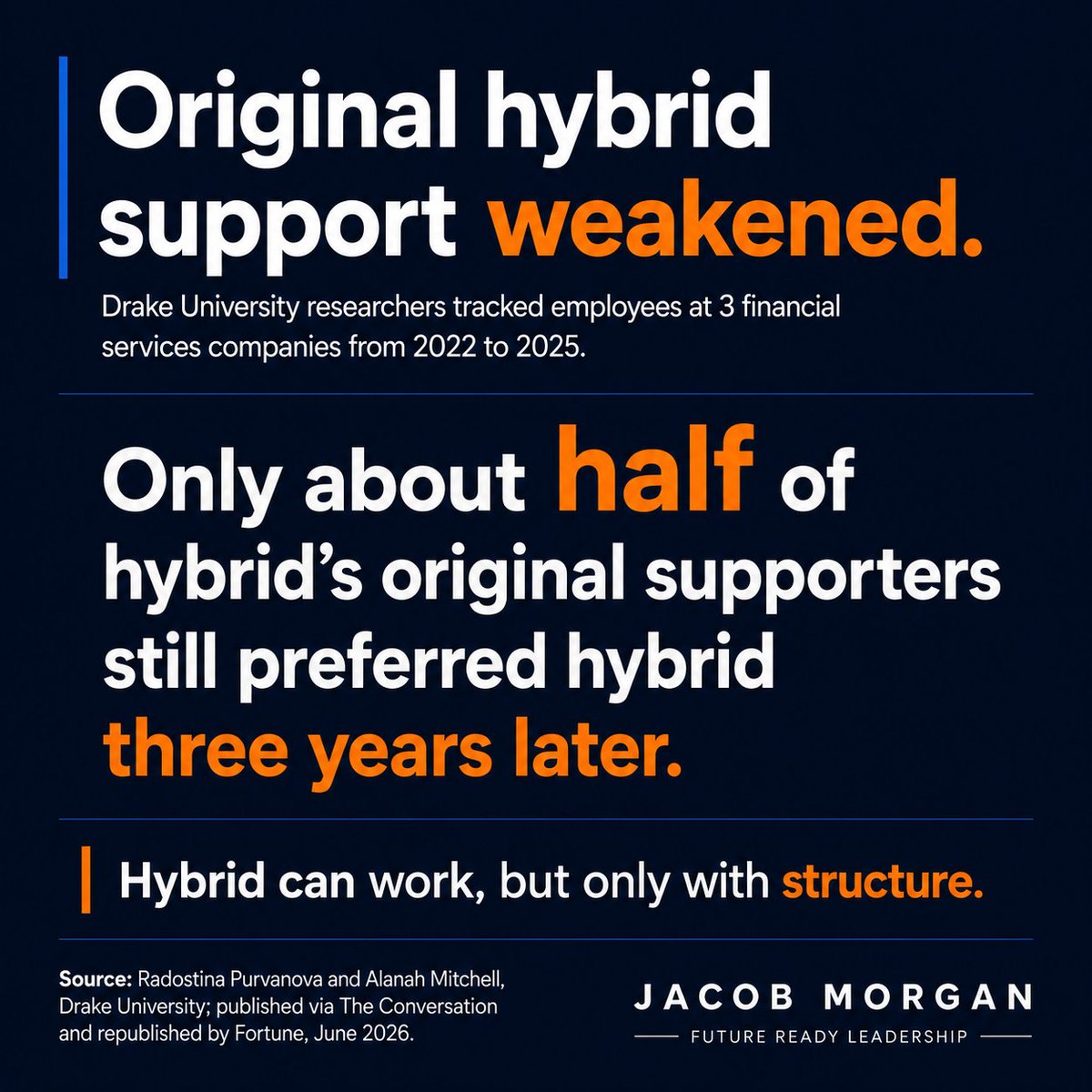
Hybrid work didn’t fail. Vague hybrid did. Dropbox recently called hybrid “the worst of both worlds,” and I get why. A study from Drake University researchers Radostina Purvanova and Alanah Mitchell followed employees at three large financial services companies from 2022 to 2025. The companies weren’t named, but one went fully back to the office, one stayed fully remote, and one used a hybrid model.
Hybrid looked like the winner at first. Approval went from 44% in 2022 to 63% in 2025. But only about half of the people who preferred hybrid in 2022 still preferred it three years later. The rest drifted toward either fully remote or fully in-office.
That’s the part leaders should be paying attention to. Hybrid is usually sold as the reasonable compromise: employees get flexibility, leaders get office time, HR gets a policy that sounds balanced. But too many companies turned it into “come in sometimes and figure it out on your own.”
That’s how people end up commuting to the office to sit on Zoom, teams show up on different days, managers don’t know who will be where, and employees wonder why they came in at all.
Hybrid can work, but it needs design. Shared office days. Clear team norms. A reason to be together. A better match between the work and the location. Deep work at home makes sense. Mentoring, problem-solving, relationship building, and collaboration often make more sense in person. The mistake is pretending flexibility means no structure.
This is also the mistake many companies are making with AI. They hand people tools and subscriptions, but don’t redesign the work. Then they’re surprised when the results are messy.
Hybrid and AI have the same lesson: new ways of working don’t fix bad operating models. They expose them.
I talked about this in the previous episode of Future Ready Today: podcasts.apple.com/us/podcas…
1
153
Jun 11
A future ready organization is built on principles that shape everything from how you lead to how you develop your people to how you approach technology.
2
2
65
Jun 10
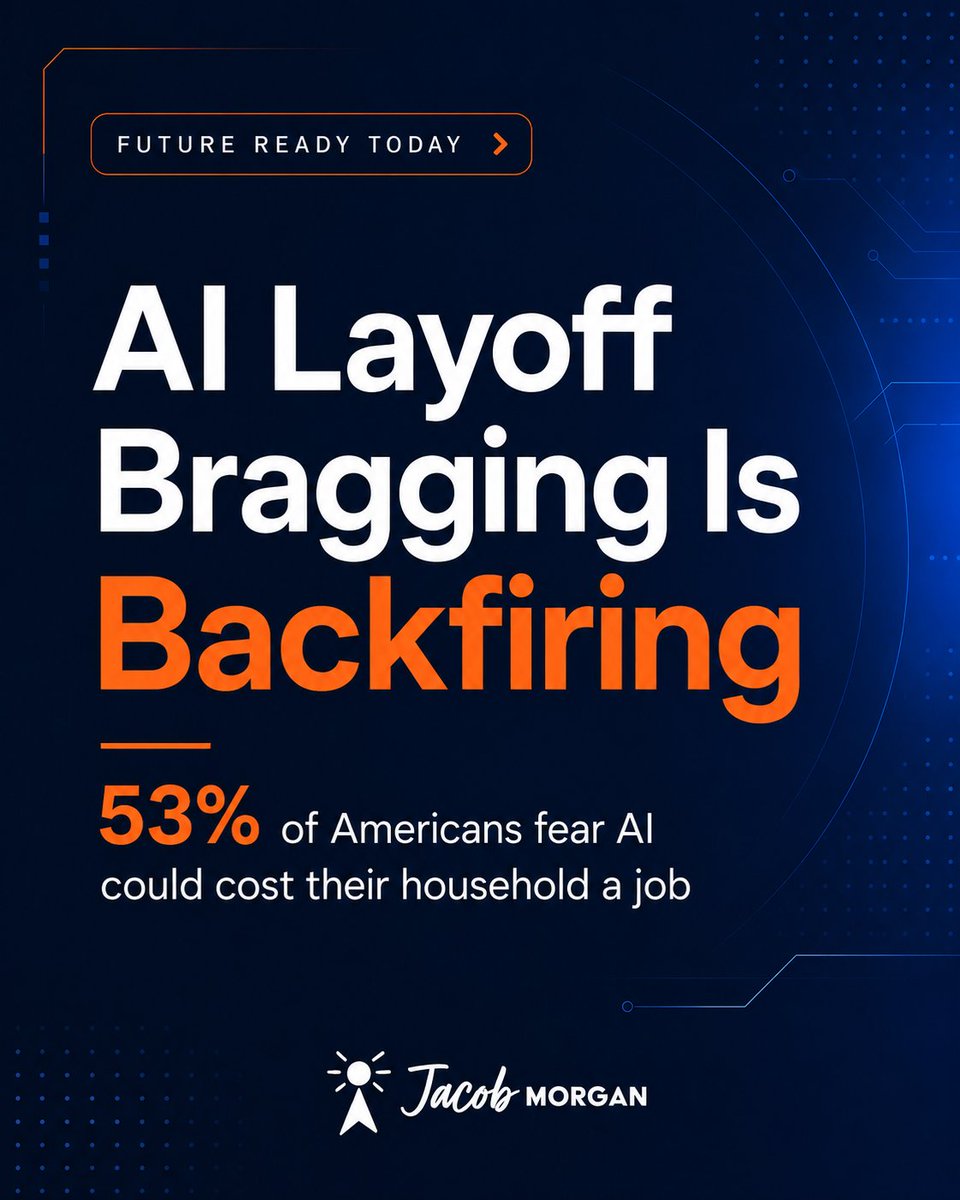
AI layoffs are one thing. Bragging about them is something else entirely.
When executives talk about replacing people with AI like it’s a badge of honor, they shouldn’t be surprised when employees lose trust, customers get uneasy, and politicians start paying attention.
A new Reuters/Ipsos poll found that 53% of Americans fear AI could put them or someone in their household out of work. That number matters because fear doesn’t stay inside a survey. It changes how people show up at work, how they respond to AI tools, how they think about their company, and how much trust they give their leaders.
AI is going to change jobs. That part is obvious. The question is whether leaders are going to handle it with any sense of responsibility. Use AI to make work better. Use it to remove the garbage work. Use it to help people move into new roles and build new skills.
But don’t take a victory lap because you found a way to cut people faster.
I talked about this on today’s episode of Future Ready Podcast Today:
podcasts.apple.com/us/podcas…
#FutureOfWork #AI #Leadership #Workplace #EmployeeExperience #FutureReadyToday
2
2
136
Jun 10
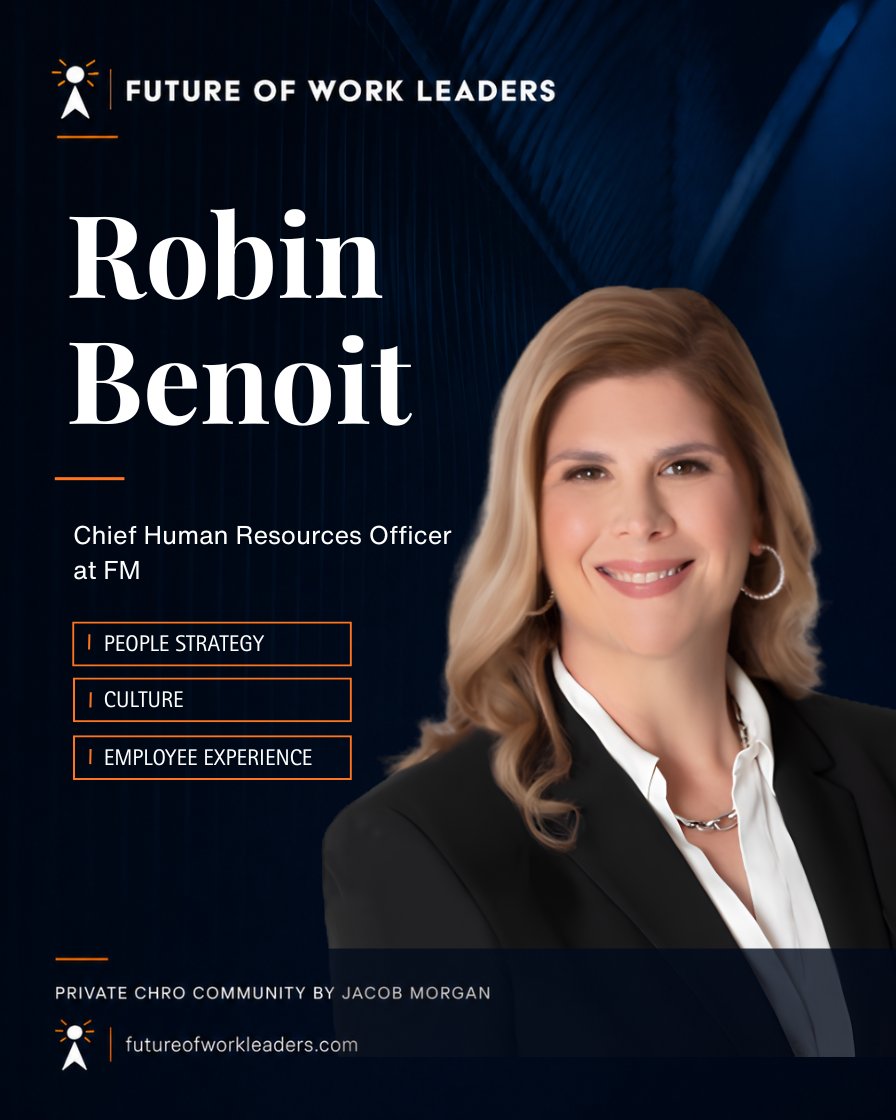
Our Future of Work Leaders community just leveled up. Huge welcome to Robin Benoit, Global Chief People Officer at @FMGlobal.
Robin is a battle-tested problem solver who has guided public, private, and PE-backed firms through their most critical transitions.
Her expertise in navigating M&As, IPO readiness, and enterprise risk brings a critical, high-stakes perspective to our group. She knows exactly what it takes to build resilient human capital strategies when the pressure is on.
The CHRO role is evolving fast, and navigating it without a peer network is a mistake. We built this community to give global executives a private space to tackle real-time challenges and shape the future of leadership.
Ready to step up your game alongside leaders like Robin? Join us by securing an invite here: futureofworkleaders.com
1
1
61
Jun 10
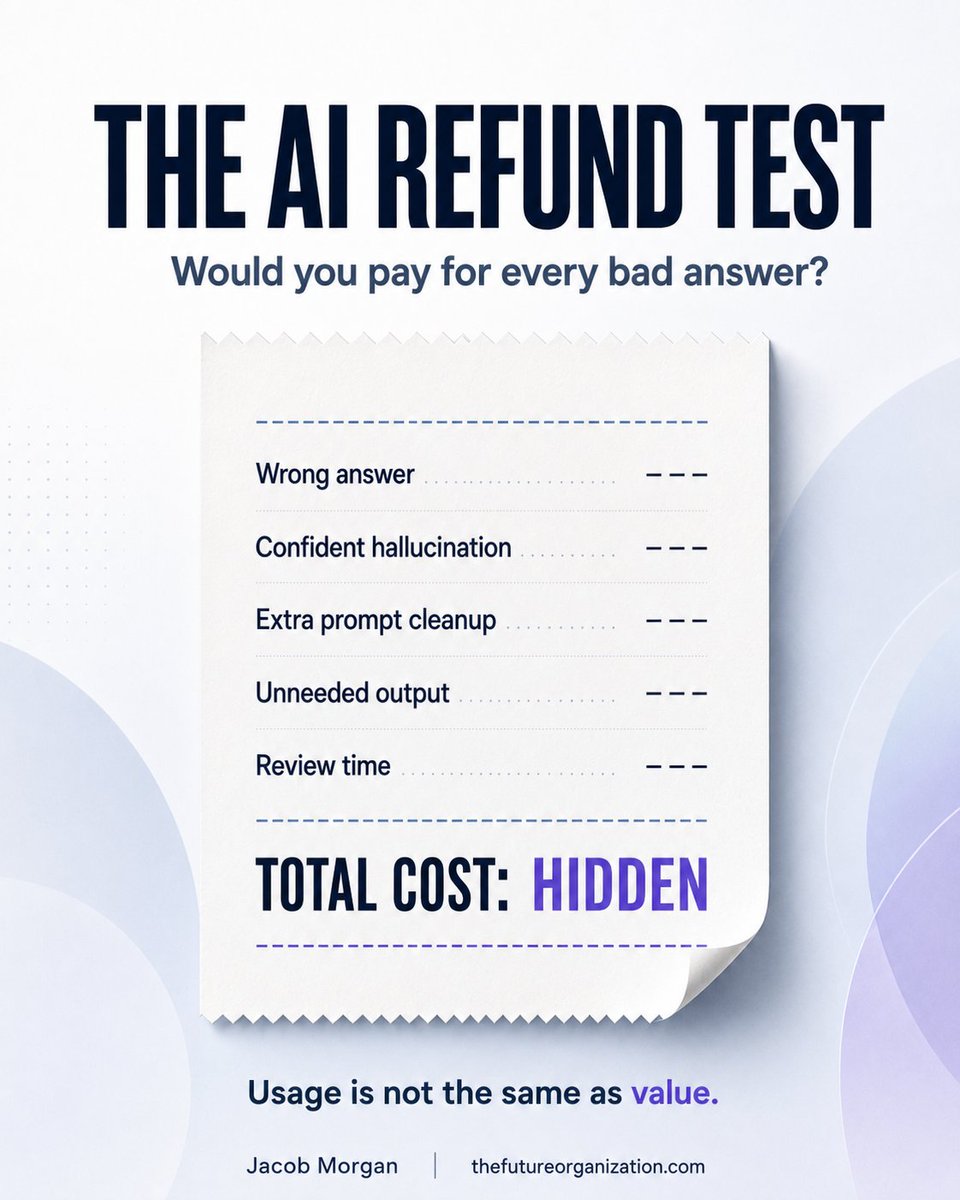
Would you still love AI if every bad answer came with a receipt?
Right now AI feels cheaper than it really is because the subscription model hides the waste. You pay $20, $30, or $100 a month, and after that every prompt starts to feel free. When the model gives you a confident but wrong answer, makes up a source, adds something you never asked for, or turns one simple task into five more prompts, you get annoyed, fix it, and move on.
But imagine paying per answer. Imagine seeing a charge every time the tool gave you something unusable, and then paying again for the correction, the review, the rewrite, and the human time needed to clean it up. That would change the AI conversation inside organizations very quickly because leaders would stop celebrating usage and start asking whether the output was actually worth paying for.
This is the part many companies are still missing. AI adoption does not automatically mean AI value. A team can use AI all day and still create more cleanup, more review cycles, more confusion, and more hidden cost. The tool may feel productive because something comes back quickly, but speed only matters when the work is accurate, useful, and trusted.
As AI moves deeper into contracts, financial analysis, coding, hiring, and autonomous work, the price of a bad answer gets bigger. A bad answer no longer wastes a few minutes. It can waste budget, create risk, and slow down the people the technology was supposed to help.
A simple test for leaders is this: would you pay for that AI output if it was billed separately? If the answer is no, you may not have AI value yet. You may just have AI usage.
I covered this and more in the latest episode of Future Ready Today: podcasts.apple.com/us/podcas…
99
Jun 9
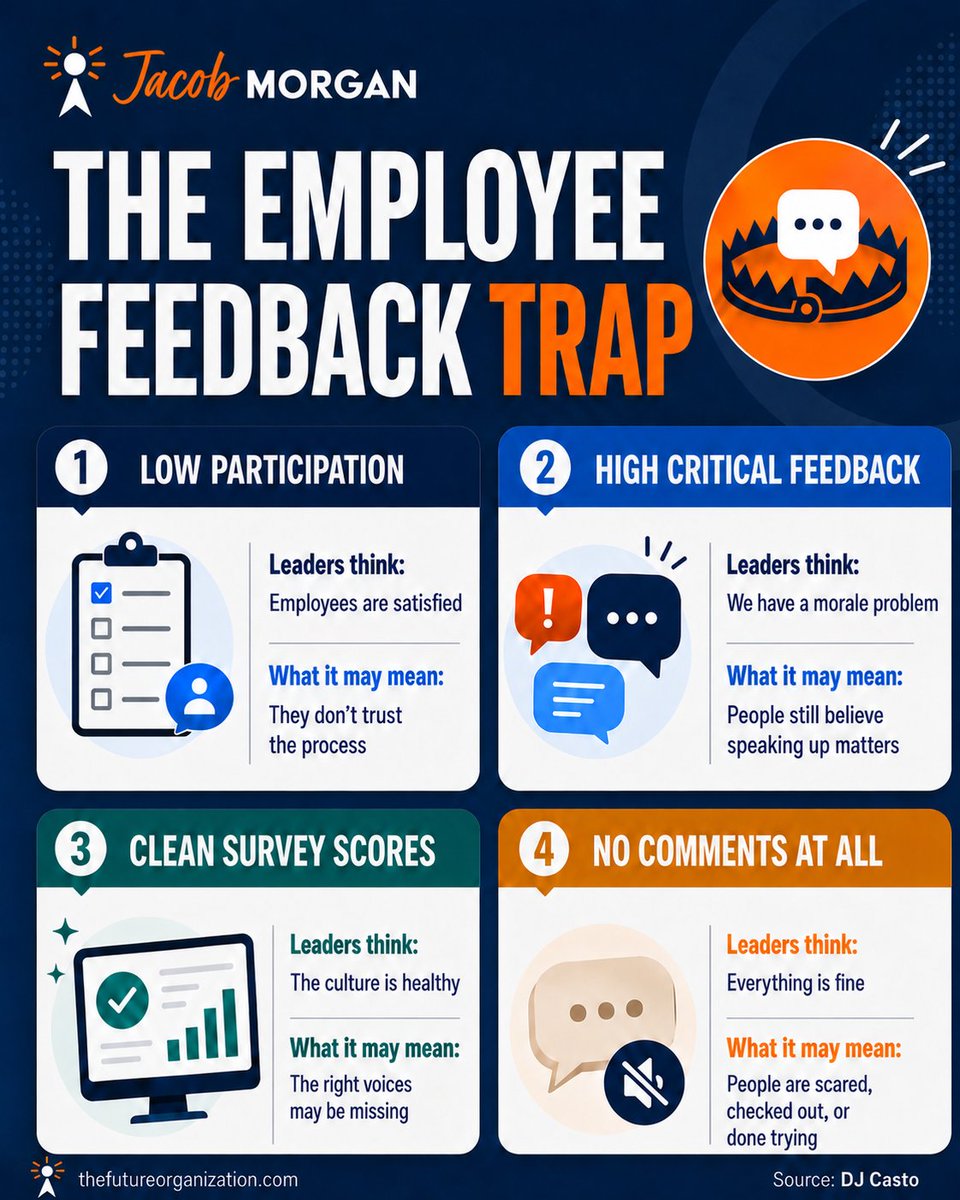
The most dangerous employee survey result is not negative feedback.
It’s silence.
A lot of leaders look at critical comments and assume something is broken. But in my conversation with DJ Casto, Chief Human Resources Officer at @synchrony, he shared a different way to think about it.
Synchrony was named the #1 Best Company to Work For in 2026. They have 20,500 employees and consistently see over 90% participation in their quarterly pulse surveys.
DJ reads the comments. There are thousands of them, and many are critical.
But here’s the reframe that stuck with me: bad workplaces don’t get comments.
Either people are too scared to say anything, or they have stopped caring enough to try.
That changes how leaders should read employee feedback.
Critical feedback is not always a morale problem. Sometimes it means people still believe speaking up matters. Sometimes it means there is still enough trust in the system for employees to be honest.
The more dangerous signal is low participation, clean survey scores, and no comments at all. That does not always mean the culture is healthy. It may mean people have learned that honesty is not worth the risk.
The goal is not to reduce critical feedback.
The goal is to keep earning the kind of trust that makes people willing to tell you the truth.
If you’re a CHRO or People leader having these kinds of conversations, check out futureofworkleaders.com.
1
1
77
Jun 9
Becoming the No. 1 workplace in America takes more than office perks. @synchrony CHRO DJ Casto joins us in today’s podcast to unpack their decade-long culture transformation. Discover how they use agile HR, co-create benefits, and turn AI into a tool for human growth. Tune in here. linkedin.com/pulse/how-synch…
1
53
Jun 8
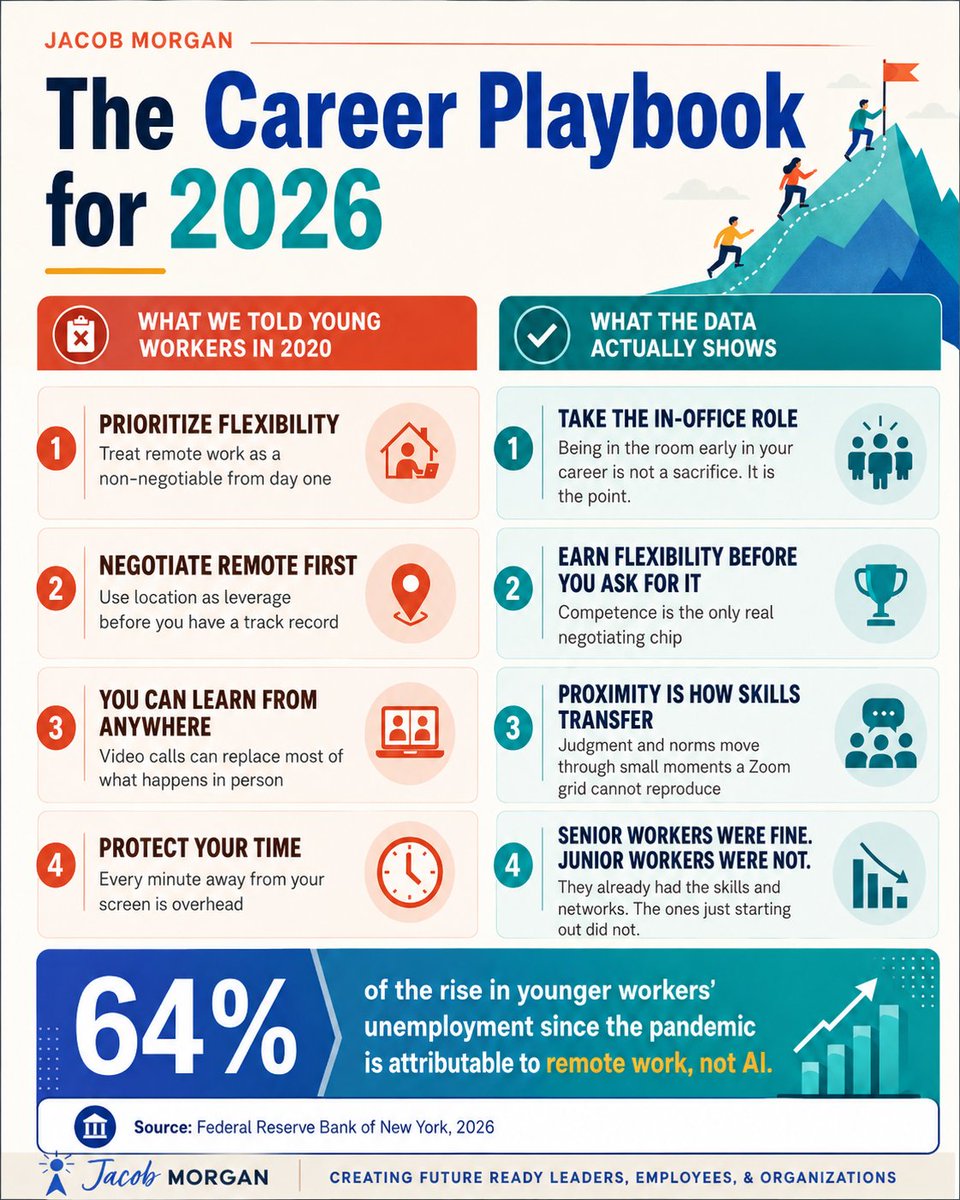
For two years I told young workers to take the in-office role, show up when their peers wouldn't, and build their networks while everyone else was home complaining about commutes. I got a lot of angry emails for it. Now the Federal Reserve has the data.
The @NewYorkFed's latest research found that remote and hybrid arrangements, not AI, are the primary driver of higher unemployment among workers in their 20s. Researchers estimate 64% of the rise in younger workers' unemployment since the pandemic comes down to remote work. The March jobless rate for workers aged 22 to 27 hit 7.2%, up from 6.1% before the pandemic.
The reason is straightforward. Early-career workers build capability through proximity to people who already have it. You watch how a seasoned leader handles a difficult conversation. You hear how a manager thinks through a decision out loud. You pick up judgment, institutional knowledge, and professional norms through thousands of small moments that a Zoom grid cannot reproduce. Senior workers who went remote were fine. They already had everything they needed. Junior workers did not.
The playbook for someone in their 20s right now should be the opposite of what it was in 2020. Take the in-office role. Be around people who know things you don't. Build the network, absorb the institutional knowledge, and negotiate flexibility once you've earned it, not as a condition of showing up.
Organizations that figured this out early are quietly building a talent advantage. The ones that stayed fully remote are sitting on a development gap that will take years to close.
1
3
73
Jun 8
AI isn’t just a technology story. It’s a stress test for how organizations build talent, trust, and judgment.
This week’s briefing connects remote work, data center backlash, @Uber's HR cuts, @AnthropicAI's warning, and my conversation with DJ Casto.
Full briefing on Substack. greatleadership.substack.com…
1
1
58
Jun 7
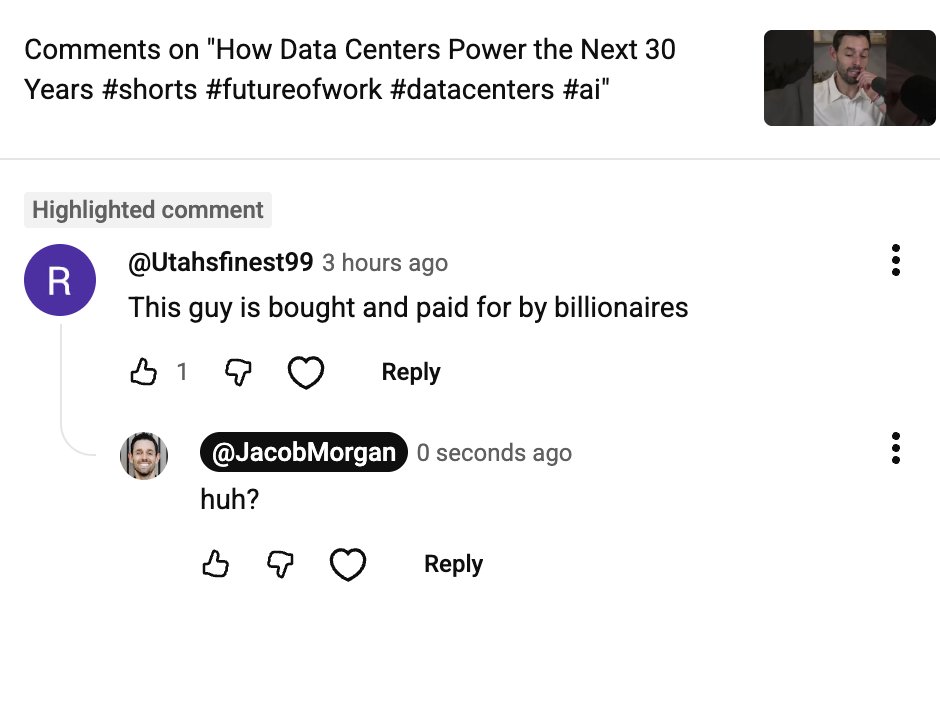
I did a video a few days on on data centers, breaking down what they are, what they do, and dispelling myths. The comments I get, are just crazy. Full video is here: youtube.com/watch?v=nsE53yWa…
1
83
Jun 6
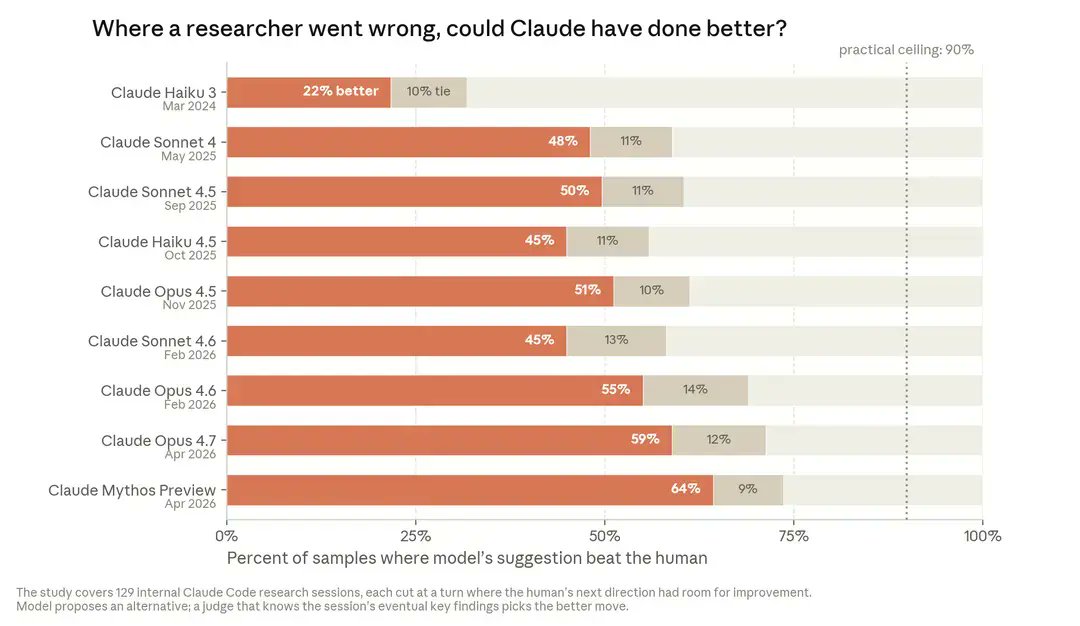
This is the kind of AI data leaders should pay attention to, but the chart is only half the story.
@AnthropicAI tested whether Claude could look at a real internal research session, stop at the moment where a human researcher took a wrong turn, and suggest the better next move. In the latest version shown here, Claude beat the human researcher 64% of the time. That matters because this is the kind of work people usually describe as judgment, taste, discernment, and knowing what to try next.
The technical progress is real. The numbers are real. An AI system getting better at next-step research decisions should make every leader sit up a little straighter.
What bothers me is the messaging around it.
The same companies showing this kind of progress are also warning that AI may be moving too fast and that governments may need to slow things down or regulate more heavily. Some of that concern may be valid, but leaders still need to look at the incentives behind the warning.
Heavy regulation does not land evenly. The companies that already have the money, compute, customers, legal teams, and infrastructure can adapt. The startups, open-source builders, and smaller competitors usually cannot. So when one of the biggest players says the industry may need stricter rules, the question is not only whether the technology is powerful. The question is who gets protected once the rules arrive.
That is why this whole conversation feels so messy. The technology is real, the acceleration is real, and the positive impact can be real, but the constant swing from hype to panic to reassurance to warning makes it harder to know what to trust.
The data deserves attention, but the messaging deserves skepticism.
That's what I get in today's episode of Future Ready Today: podcasts.apple.com/us/podcas…
1
3
140
Jun 4
If you fail to understand and invest in your people, even the greatest strategy will fall apart.
1
1
75
Jun 3
Everything you've heard about data centers is probably wrong. I say that based on the data. And I think it matters more than most people realize.
New data centers poison the water? The newest facilities from Oracle and Microsoft use closed-loop cooling — water fills the system once during construction and circulates forever, never evaporating, never touching the local supply. Microsoft has already improved its water efficiency by 39% on its existing fleet before these new systems even fully come online.
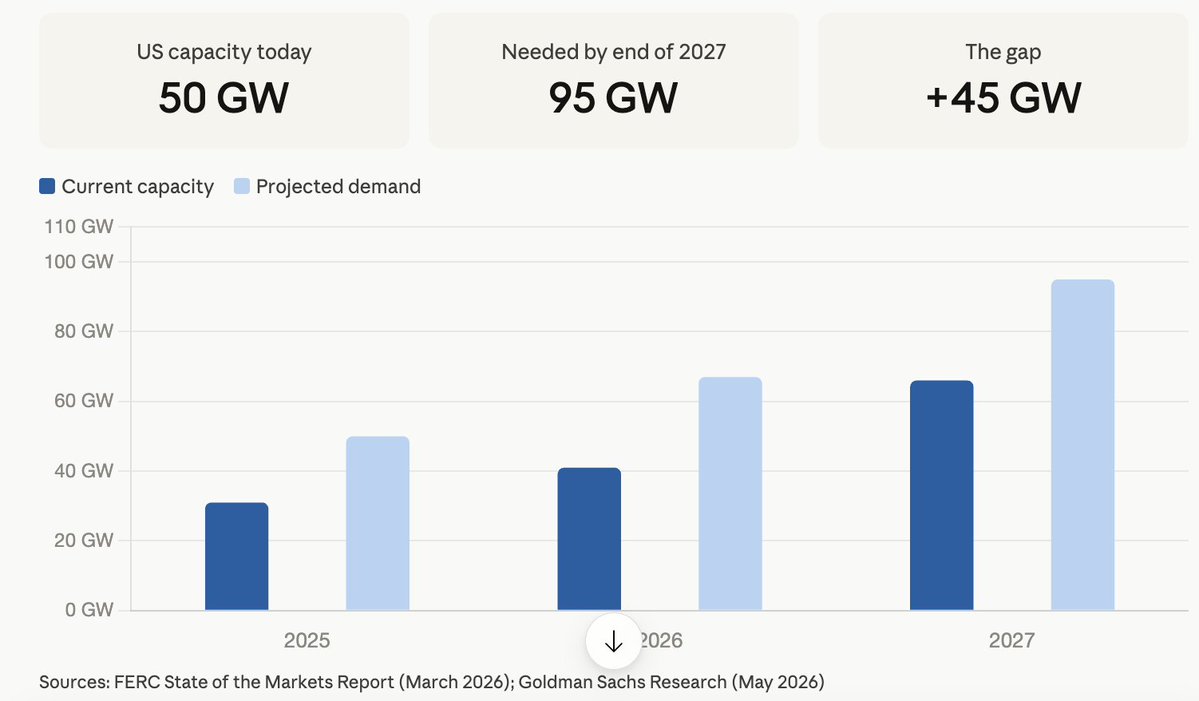
Data centers are destroying the power grid? Tech companies are currently the largest single buyers of clean energy on the planet. Amazon, Microsoft, and Google held over 40 gigawatts of contracted renewable capacity by the end of 2025. And they are directly funding the first serious private investment in nuclear power America has seen in decades — Google with Kairos Power, Microsoft restarting Three Mile Island, Meta partnering with Oklo for 16 small modular reactors in Ohio, Amazon backing nuclear programs across the country. Data centers aren't just consuming the grid. They're rebuilding it.
Data centers kill jobs? Construction spending hit $77.7 billion in 2025 — a 190% year-over-year increase. Tradespeople wages are up 30%. Virginia alone gets 74,000 jobs and $9.1 billion in annual GDP from its data center industry. And according to S&P Global, data center and AI investment accounted for 80% of all US private economic growth in the first half of 2025. Harvard economist Jason Furman put it even more starkly: strip out data center investment entirely, and the rest of the American economy grew at 0.1% annualized. Essentially zero. Data centers aren't killing jobs. Right now, they are the economy.
Taxpayers are subsidizing Big Tech? These are sales tax exemptions on equipment, not cash payments or handouts. Virginia deferred $1.6 billion in sales taxes and received $2.1 billion back in other tax revenues, plus $9.1 billion in annual economic output. That's not a giveaway. That's a return on investment.
And here's what almost never gets said in this debate: data centers are the backbone of the American economy in ways most people never see. Every bank transaction, every hospital record, every supply chain, every e-commerce purchase, every payroll system — all of it runs through these buildings. When you swipe your card, check your 401k, order something online, or your doctor pulls up your records, a data center made that possible in milliseconds. This isn't future potential. This is the infrastructure your daily financial and economic life already depends on, right now, today.
None of this means every data center project should be waved through without scrutiny. Smart siting, honest community engagement, and responsible grid planning all matter — and getting those things right is exactly how you build infrastructure that lasts and earns public trust. But the wave of fear and misinformation driving opposition right now is doing real, measurable damage to America's AI infrastructure at the exact moment we can least afford it.
Here's the number I want you to sit with. In late 2024, Chinese AI models accounted for 1% of global AI workloads. By the end of 2025, that number was 30%. Every data center project that gets cancelled or blocked in America doesn't stop AI development. It moves it somewhere else — to a country that doesn't share our values, our privacy laws, or our interest in your freedom.
I broke all of this down — with sources — in today's episode of Future Ready.
podcasts.apple.com/us/podcas…
2
1
2
248
Jun 3
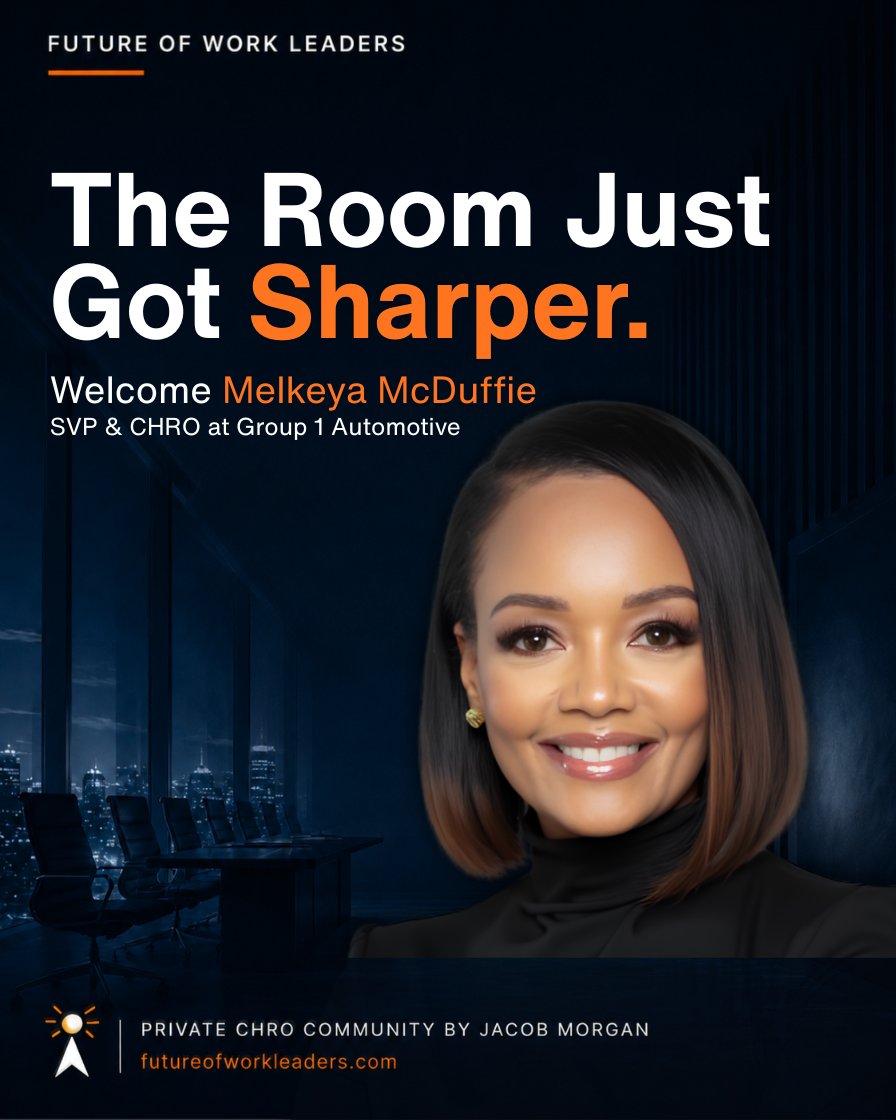
Thrilled to welcome Melkeya McDuffie, SVP and Chief People Officer at @Group1Auto, to our Future of Work Leaders community.
Melkeya is a master at aligning human capital with aggressive business growth and profitability.
From large-scale HR transformations to high-impact talent forecasting, she brings the kind of operational rigor that turns workforce strategy into a competitive advantage.
Her track record of driving massive cost savings while building sustainable, growth-ready cultures is exactly the caliber of insight our group thrives on.
This is why top-tier leaders join us. We skip the fluff to share the high-stakes playbooks that actually drive enterprise value.
If you’re a leader ready to sharpen your strategy alongside peers like Melkeya, you belong here.
Join us by requesting an invite here: futureofworkleaders.com
1
84
Jun 3
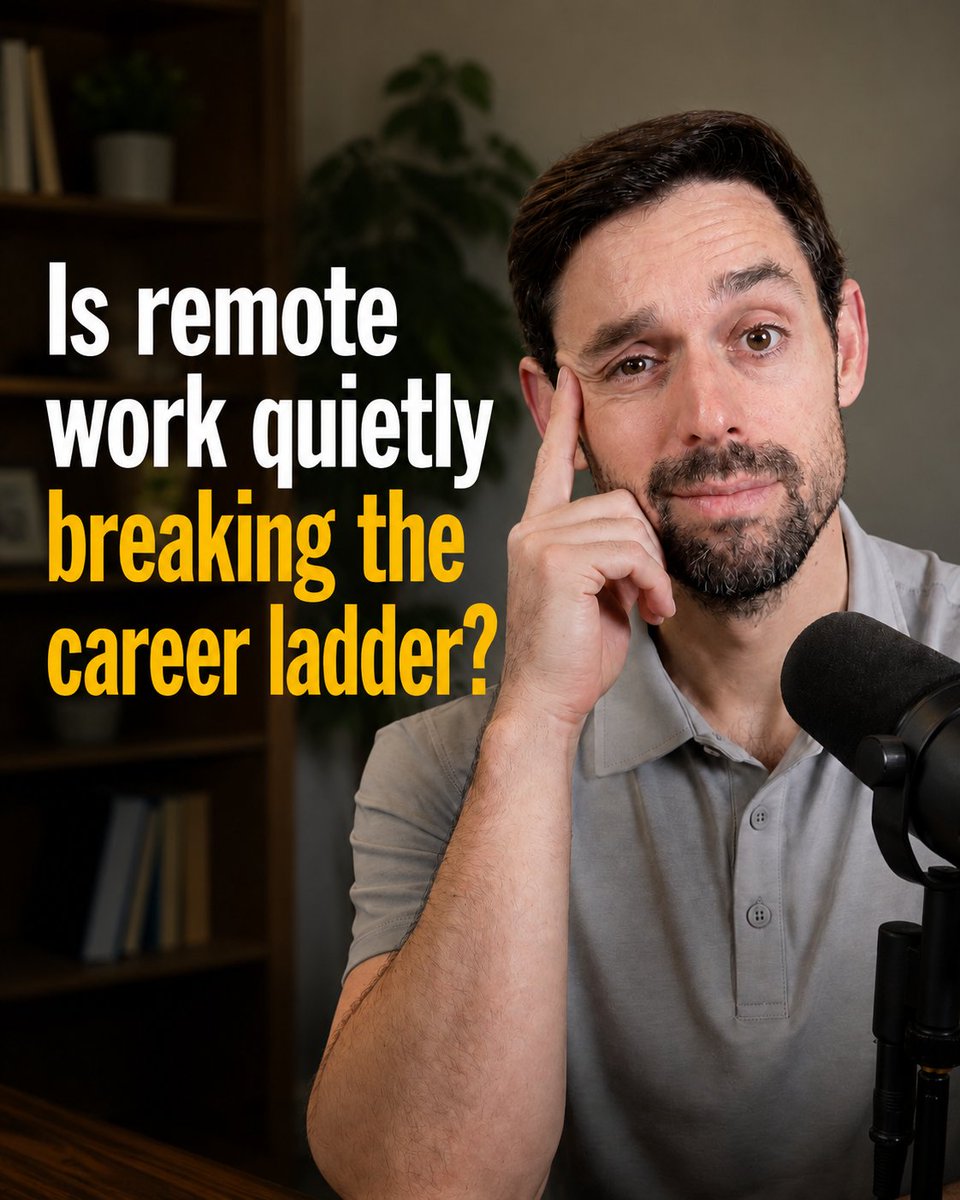
Remote work may be breaking the career ladder in ways most organizations still don't want to talk about.
New research from the @NewYorkFed points to a much more uncomfortable issue. Remote and hybrid arrangements may be a major driver of higher unemployment among workers in their 20s, with researchers estimating that 64% of the rise in younger-worker unemployment since the pandemic is attributable to the rise of remote work.
Experienced workers can usually function well in remote environments because they already have the invisible infrastructure of work. Younger workers do not have that yet.
Historically, development happened through proximity. You picked up the norms, shortcuts, standards, and judgment of the organization through hundreds of small moments that were never written into an onboarding plan. Those moments are very hard to recreate with a calendar invite.
A company can be productive and still be bad at developing young talent. A remote policy can make experienced employees happier while making early-career employees easier to overlook.
Different career stages require different systems. Senior employees may need autonomy, flexibility, and focus. Early-career employees need exposure, feedback, repetition, mentorship, sponsorship, and a real chance to be seen by people who can help them grow.
Most organizations still design work policies as if everyone is in the same stage of development. That is the mistake.
The future of work is not remote or office. It is intentional or accidental. Right now, too many companies are accidentally weakening the career ladder while telling themselves they are simply offering flexibility.
I unpack the Fed research and what it means for early-career talent in today's Future Ready Today episode here: podcasts.apple.com/us/podcas…
2
1
126