
Instant code reviews for AI-generated code, right in your IDE.
Joined April 2024
- Tweets 839
- Following 280
- Followers 1,690
- Likes 234
143 Photos and videos










Pinned Tweet

Feb 9
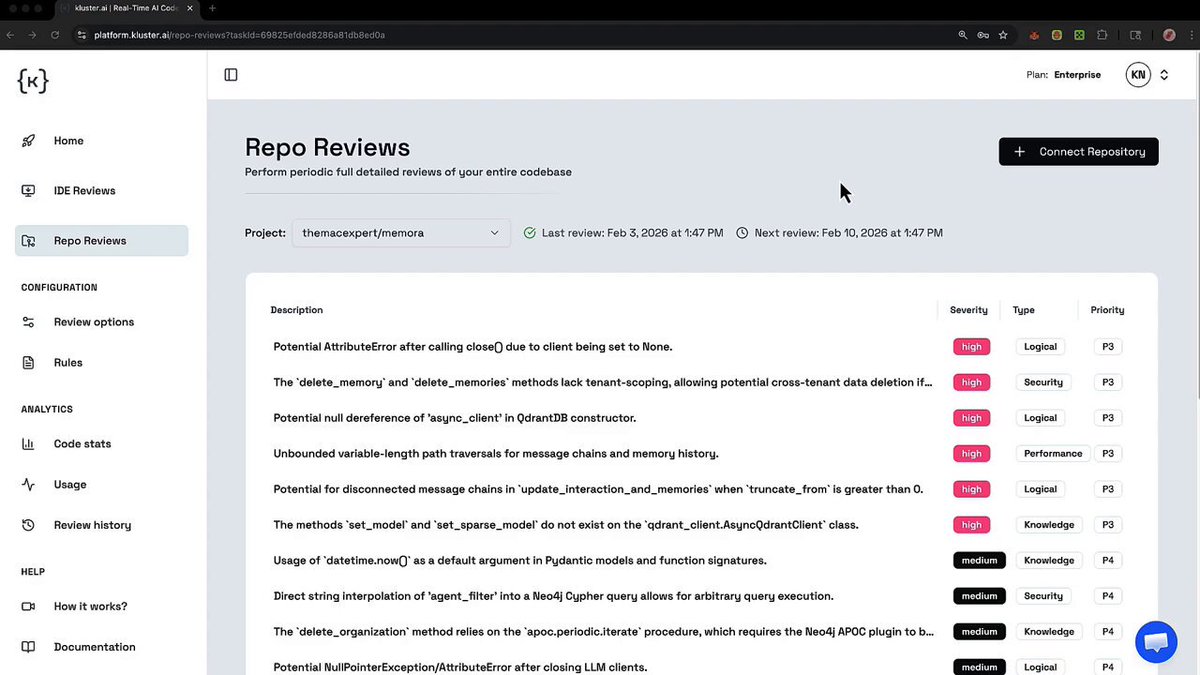
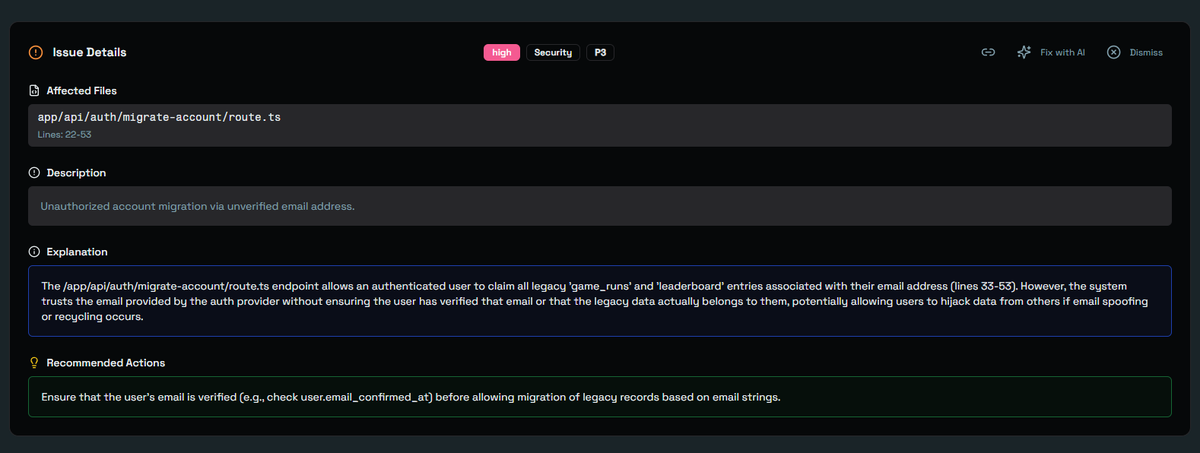
Introducing Repo Reviews! 🎉🎉🎉
Learn how to run system-wide codebase analysis with Repo Reviews 🧠
docs.kluster.ai/code-reviews…
1
4
329
Feb 5
lol. Should we do real-time ad-reviews now?🤣

201
Jan 23
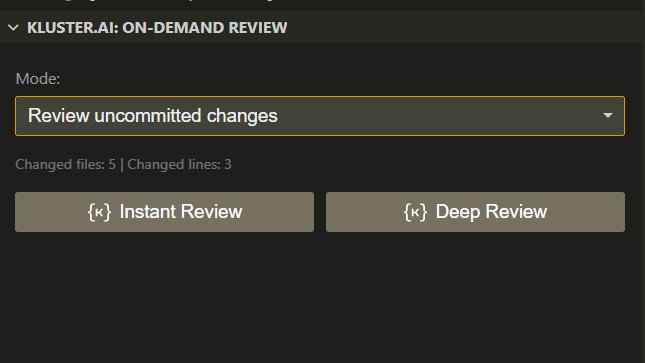
Announcing Deep Reviews🥳
Quick iteration or final review?
We got you covered:
⚡ Instant: ~5 sec feedback loops
🧠 Deep: catches edge cases your tests missed
Speed when you need it.
Depth when it matters.
Free tier: kluster.ai
1
1
175
Jan 15
Building open source? Don't miss our special offer;
FREE UNLIMTED ACCESS to kluster.ai🤑
...FOREVER 💍
Get unlimited access at no cost.
DM / Comments to Apply 👇
1
4
168
Jan 9
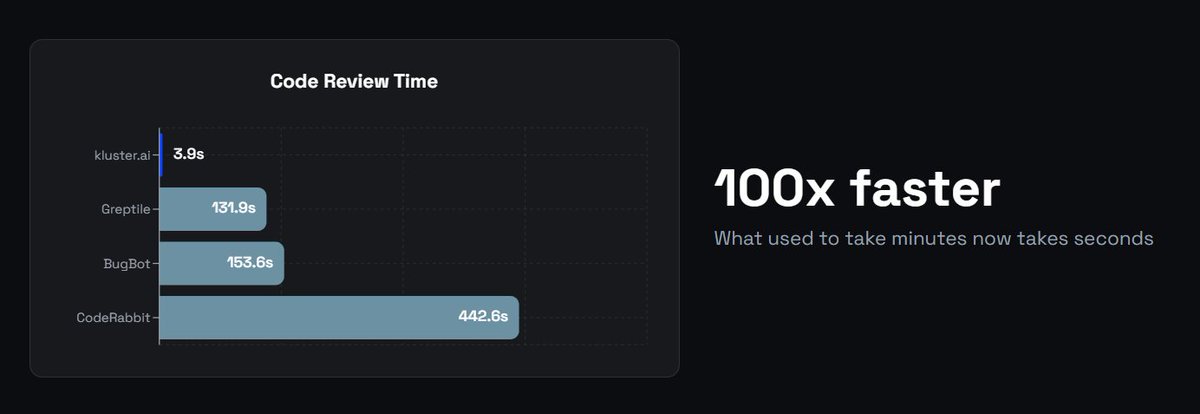
Imagine taking minutes to do what we do instantly. ⚡️
Put your seatbelt on and try the difference: kluster.ai
3
238
31 Dec 2025
Hello 2026 🥂
2025 was a year full of AI generated bugs.
Model matters, choose wisely. 😎
Opus 4.5 🦙 Cursor Auto Max, congrats! 🎉
@AnthropicAI @cursor_ai
1
159
kluster.ai retweeted

30 Dec 2025
we build an automated code review tool, so we get a unique view of how AI-generated code behaves in real workflows across IDEs and models. insights from our 2025 sample.
bug rates vary widely across models: 2.7 to 19. 5 bugs per 10k lines (7. 2x spread). 1/9 🧵
1
1
3
216
30 Dec 2025
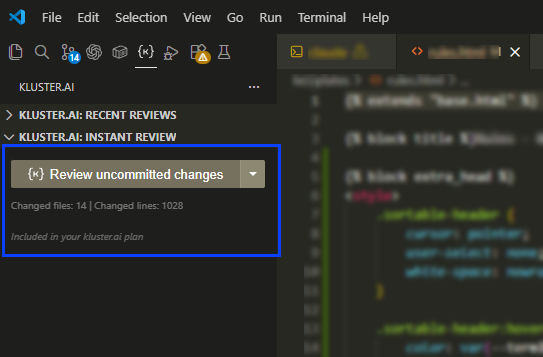
Are you about to comit?
Time to review that code before it leaves your IDE.
You can try kluster.ai for free 🤑
125
kluster.ai retweeted

28 Dec 2025
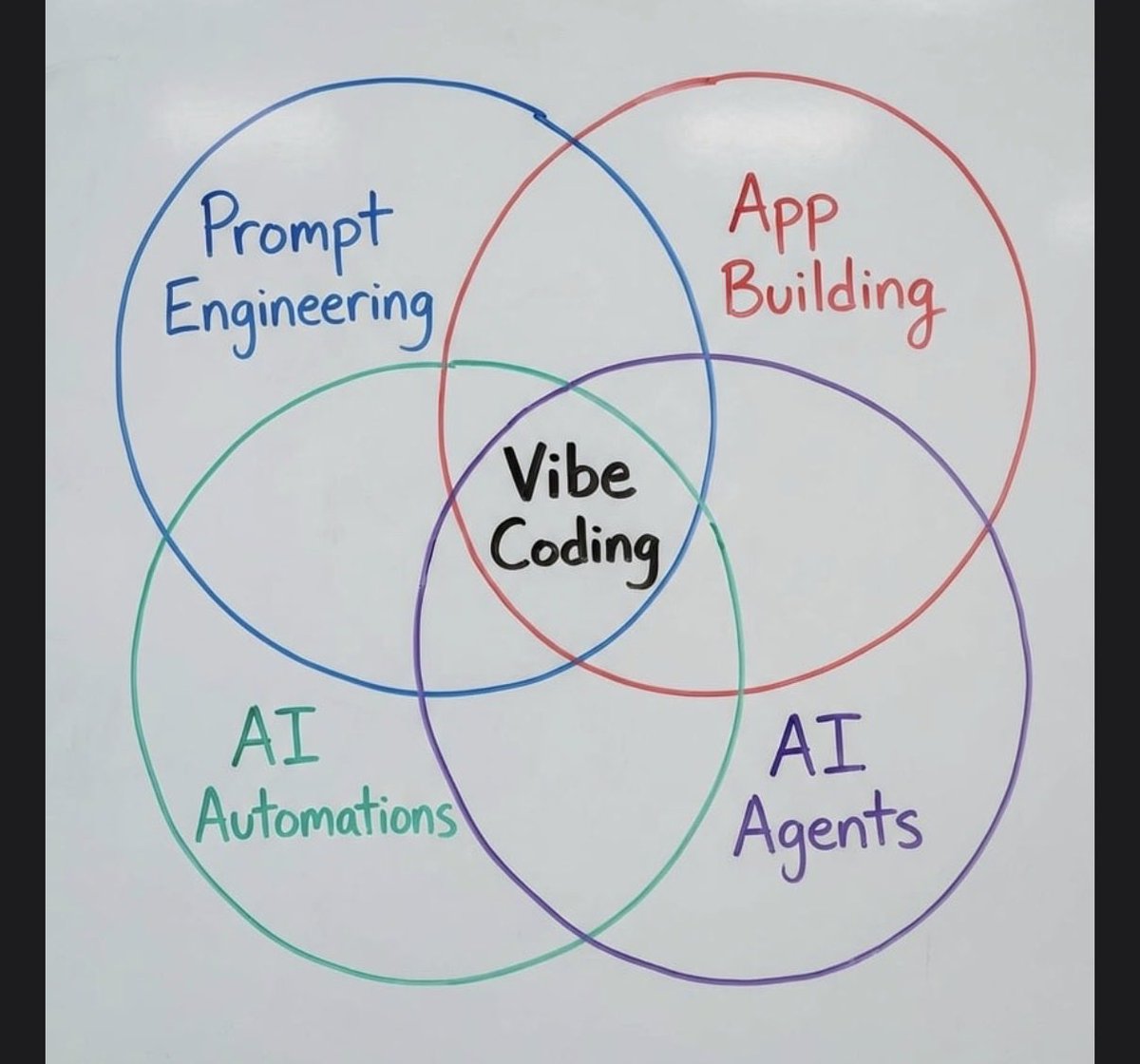
It’s time to learn the most important skill in the world.
147
245
2,337
87,477
18 Dec 2025
Going live!
Master AI-Assisted Coding: Build Faster, Bug-Free Apps with Kluster.ai
Joins us:
streamyard.com/watch/mfGHPaE…
2
140
kluster.ai retweeted
16 Dec 2025
Spellchecking did not start as a subtle, always-on feature. The early spell checkers were basically batch programs: take a document, compare tokens against a dictionary, print a list of suspicious words
On PCs in the 1980s, spellchecking becomes more mainstream, but it is still mostly a deliberate step. Many systems either shipped as separate utilities or ran in a proofing mode inside word processors that you had to run yourself.
What is easy to miss is why it changed. I think that a major leap was not just better detection of mistakes but the innovations to make spell checking fast enough to feel interactive: compressing dictionaries with affix stripping (store stems plus prefix and suffix rules), keeping a frequent word list in (limited!) main memory to avoid slow disk accesses, and using hashed / bitmap based membership tests to quickly answer "is this a word?" without storing the full wordlist verbatim.
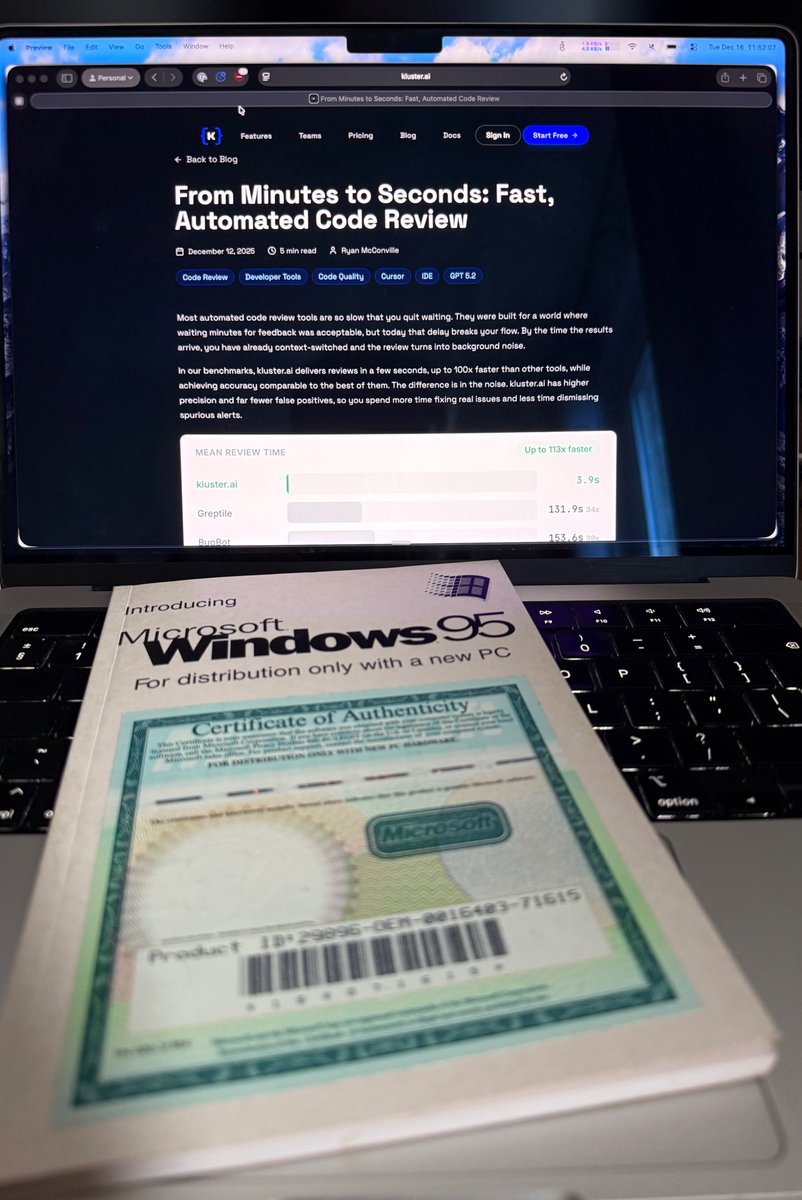
In other words, once it got fast enough, the interface flipped. Spellcheck moved into the background and became continuous. When the editor can underline mistakes while you type, you stop thinking of it as a separate tool and it becomes part of writing. Microsoft Word made this style mainstream in the mid-1990s, right around the Windows 95 era, when I was coming of age as a young computer nerd.
I think automated code review hasn't yet made this shift. It is treated like a batch job, and the latency is high enough that people naturally push it to the end.
I wrote a short blog post about what changes when review is fast enough to stay in flow, and why timing matters as much as what a tool finds.
That work also enabled a feature we just shipped at kluster.ai: Ambient Background Review in your IDE. It runs continuously and only interrupts when there is actually something worth saying. Like spellcheck in Microsoft Word in 1995.
At the risk of sounding like this post is written by AI, I think this is a game changer.
Attached picture of the Microsoft Windows 95 manual that is usually on my bookshelf, which I recently found myself flipping through again.
kluster.ai/blog/fast-high-qu…
2
1
1
179
16 Dec 2025
We are the fastest code review in town. 🥇
And now, we are going sub-second, 12x faster.🧑🔬🧪
How⁉️
Learn how:
kluster.ai/blog/subsecond-co…
1
117
9 Dec 2025
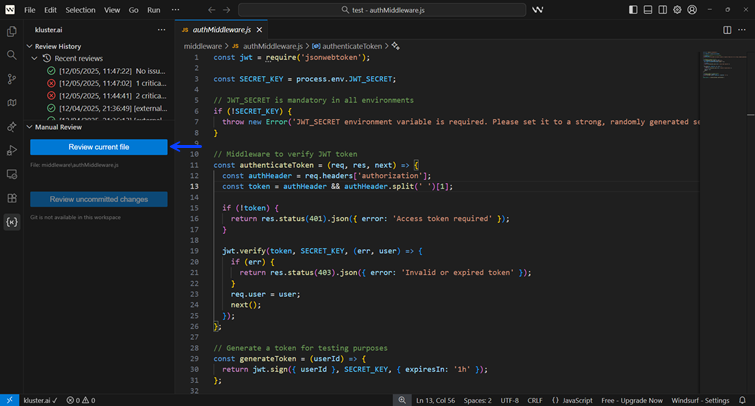
Manual Reviews are here! 🎉
Whether you're using AI or coding by hand, we've got you covered.
Now you can simply right-click any code block and have kluster instantly review it.😎
Learn more: docs.kluster.ai/code-reviews…
1
387
27 Nov 2025
Antigravity, welcome to the kluster family! 👨👩👧
Ready to vibe code safely with Gemini 3 Pro ?🚀
No matter where you code, we got you covered.
Try it out for free, kluster.ai

1
243