
Joined July 2022
- Tweets 133
- Following 16
- Followers 4
- Likes 7
76 Photos and videos














Apr 27
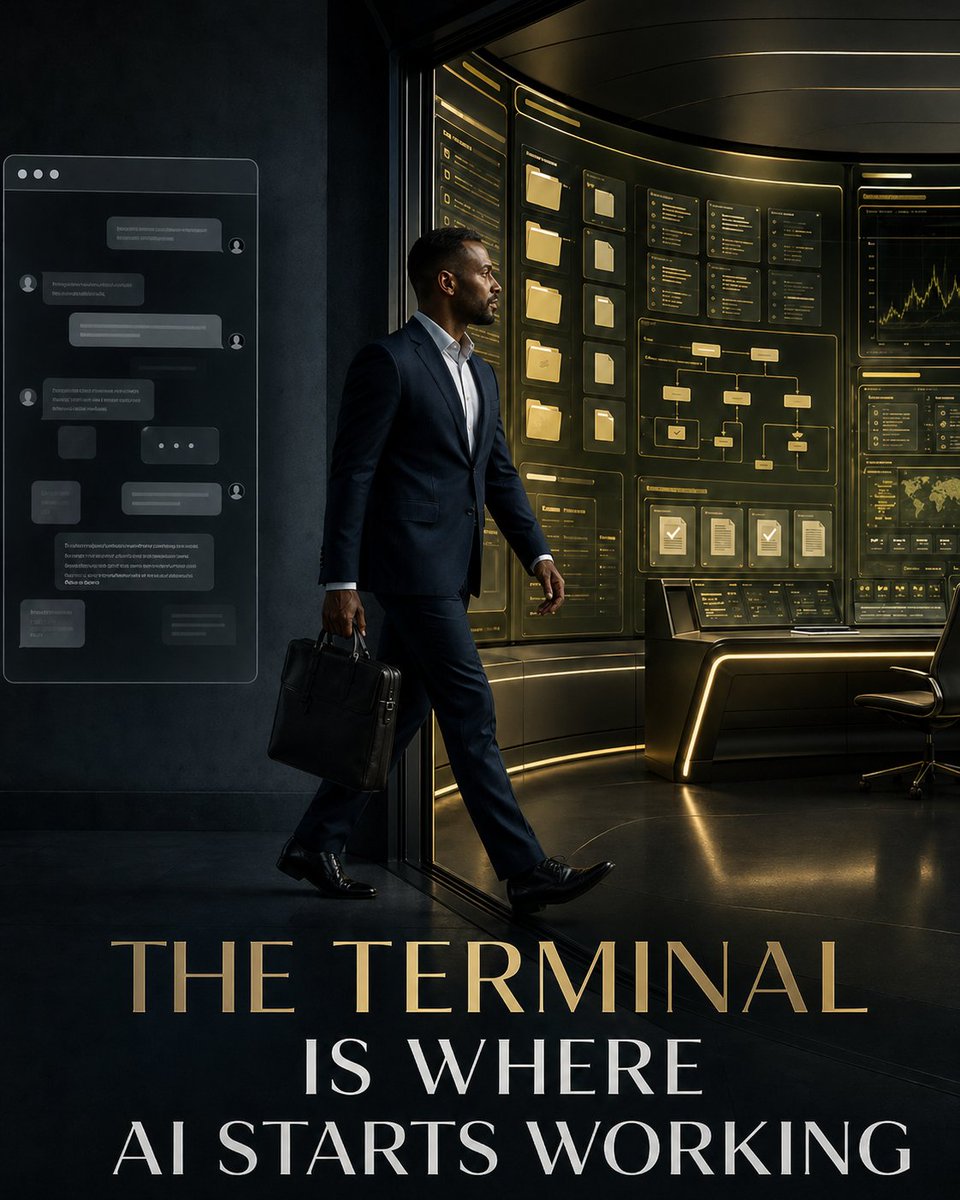
Most people use AI in the weakest environment possible:
a chat box.
Ask. Answer. Copy. Paste. Start over tomorrow.
No files.
No folders.
No saved workflow.
No environment.
The terminal changes that.
It gives AI a place to work.
That is where leverage starts.
Comment TERMINAL and I’ll send the guide.
6
Apr 26
“I use ChatGPT” will not be enough for your career in 2026.
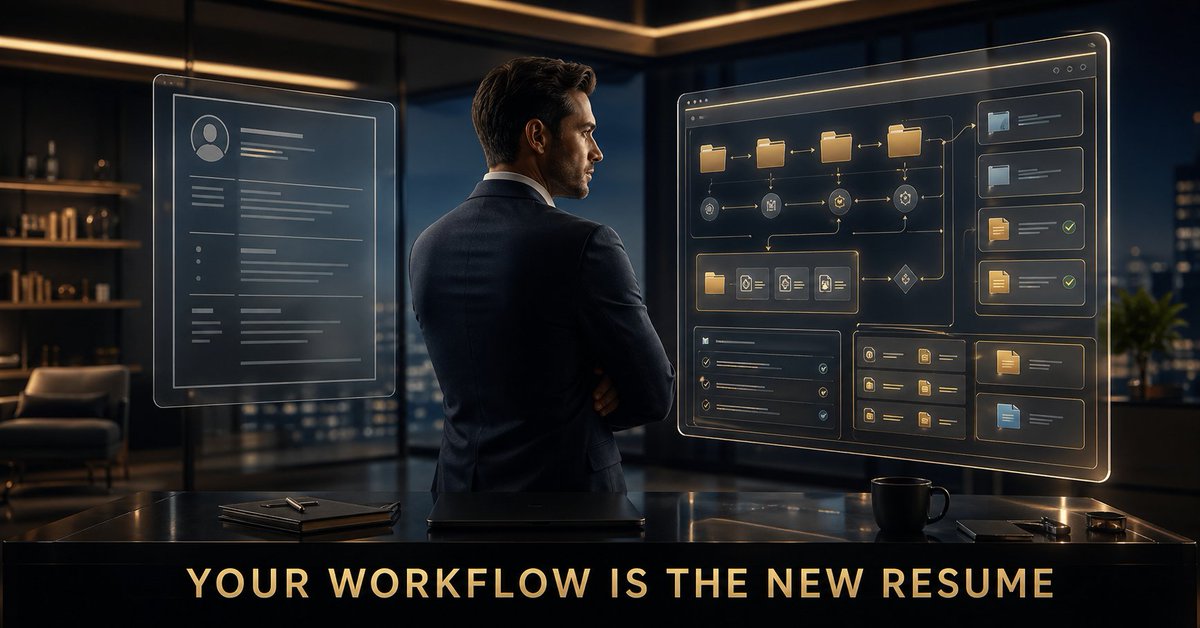
The stronger signal is your workflow.
What gets saved.
What gets reused.
What gets reviewed.
Where AI helps.
Where human judgment stays in control.
What leaves visible proof.
Your resume says what you know.
Your workflow shows how you work.
Comment ARSENAL and I’ll send the system.
1
12
Apr 22
Codex is ahead of Claude Code for the time being.
Much more reliable at the moment but I remember the days when Claude held me down, so I’ll keep both Max plans until the next major update lol!
1
108
Apr 19
Anthropic just made it possible for AI to work for you 24/7.
Or Better Yet Your Ai Agents Will Run For You 24/7.
Claude Code Routines: scheduled agents that run on Anthropic's cloud. Hourly, daily, weekly. Your laptop can be closed.
But most people who install it will never use it.
Because they've never mapped a single workflow they own.
And that’s the function that separates professionals with Ai career leverage, from those with none!
1
53
Apr 19
The tool is not the constraint.
Knowing what to automate is the constraint.
That's what's going to stop 95% of people from realizing the benefit, not the feature, their own lack of workflow architecture.
2
18
Apr 19
The Architect's Build Guide shows you how to map these workflows before you point AI at them.
Which task to automate. Why. What the quality gate looks like.
build.marcusjcarter.com
14
Apr 19
The move:
Pick one recurring task that eats hours of your week.
Define the input.
Define the output.
Define the review step.
Then automate it.
One workflow done properly compounds. Ten is a system. Zero is staring at the feature.
12
Apr 17
55% of CEOs who fired people for AI already regret it.
HBR: 60% of companies cut headcount betting AI would fill the gap.
Only 2% of those cuts were actually tied to AI.
Klarna replaced 700. Quality collapsed. They rehired.
AI doesn't replace work. It changes how work moves.
26
Apr 15
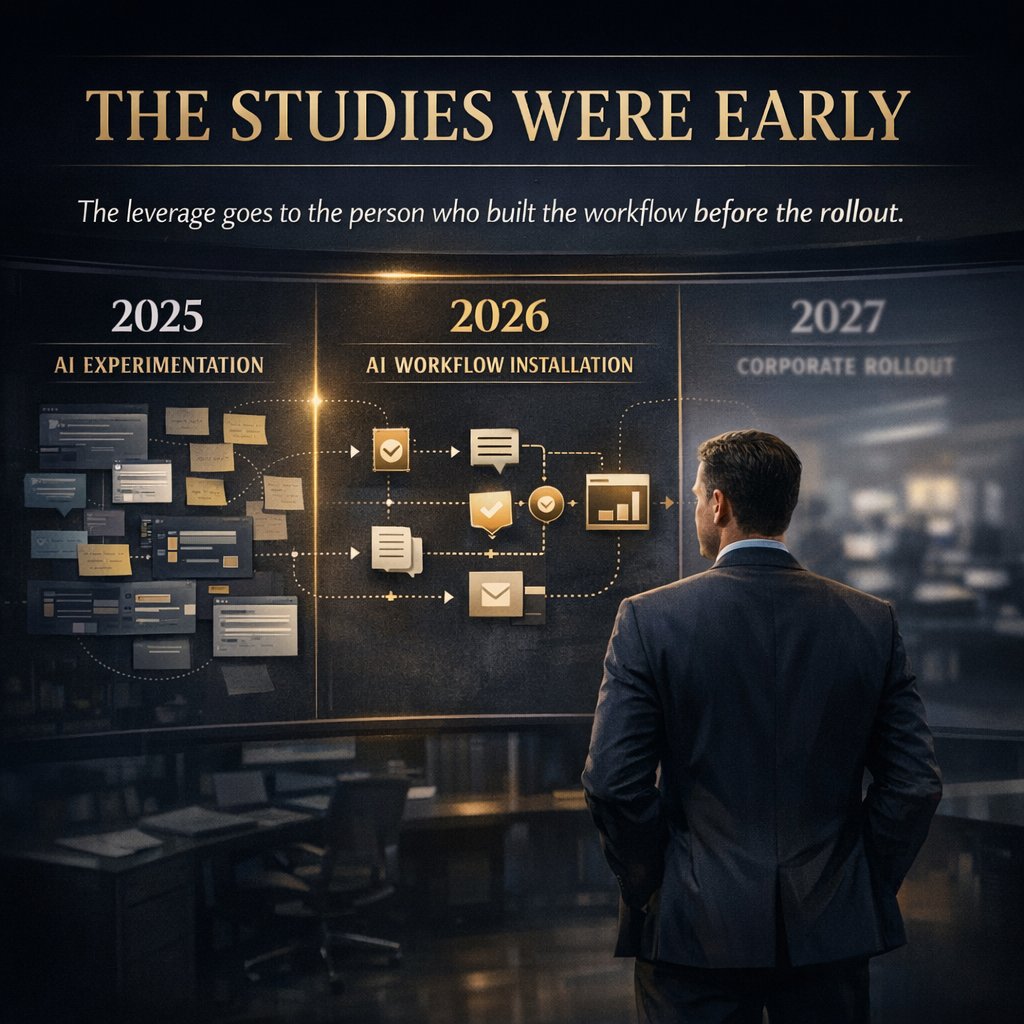
The studies saying AI had little impact at work were not necessarily wrong.
They were early.
Most of 2025 measured a workplace before agentic tools had actually entered
normal workflows.
That matters.
In 2025, a lot of people were experimenting.
ChatGPT tabs.
Random prompts.
Private productivity gains.
A few better emails.
A few faster summaries.
Useful, but not always visible.
Most workflows did not actually change.
That is why a lot of leaders looked around and said:
“AI has not really changed how we work yet.”
And in many companies, they were right.
But they confused a slow rollout with a weak technology.
2026 is different.
Agents are moving into the tools people already use.
Documents.
Task boards.
CRMs.
Dashboards.
Meeting notes.
Research workflows.
Internal operations.
This is no longer just “use AI on the side.”
The question is shifting from:
“Can AI help me?”
to:
“Who defines what the agents do?”
Because agents can run tasks.
They still need someone to define the workflow, set review points, judge
outputs, and own the outcome.
That person becomes more valuable.
Not because they “use AI.”
Because they can turn recurring work into a system.
One workflow.
One review layer.
One repeatable output.
One visible improvement.
You do not need to predict exactly what 2027 looks like.
You need workflows built in 2026 that show you were paying attention.
Not a pitch deck about AI strategy.
A real system you own.
That is what separates the person who gets asked to help lead the AI rollout
from the person who is simply handed a tool.
The leverage goes to the person who defines the workflow.
I built a 14-day system for installing real AI workflows into your actual job.
Not theories.
Systems you can control, review, and point to.
Comment ARSENAL and I’ll send it to you.
29
Apr 12
AI agents just showed up at your job.
Not in some distant future.
Inside the tools already on your desktop.
Anthropic just launched a way for companies to deploy Claude agents in days.
Notion, Box, and Asana are already moving this into real workflows.
1
43
Apr 12
The part most people are missing:
Yesterday, Anthropic said its latest model was too powerful for public release.
Today, it gave companies the infrastructure to deploy agents at scale.
Those are not separate stories.
1
24
Apr 12
The models are getting more powerful.
The deployment window is collapsing from years to months to days.
So the career question changes.
It is no longer:
“Will AI affect my work?”
It is:
“Who defines what the agents do?”
15
24 Apr 2024
1
82