
We empower organizations with resilient, self-healing capabilities that prevent and neutralize even the most advanced cyber threats.
Joined January 2015
- Tweets 4,049
- Following 613
- Followers 2,301
- Likes 470
1,750 Photos and videos











Jun 12
The patching window is gone. Not shrinking - gone.
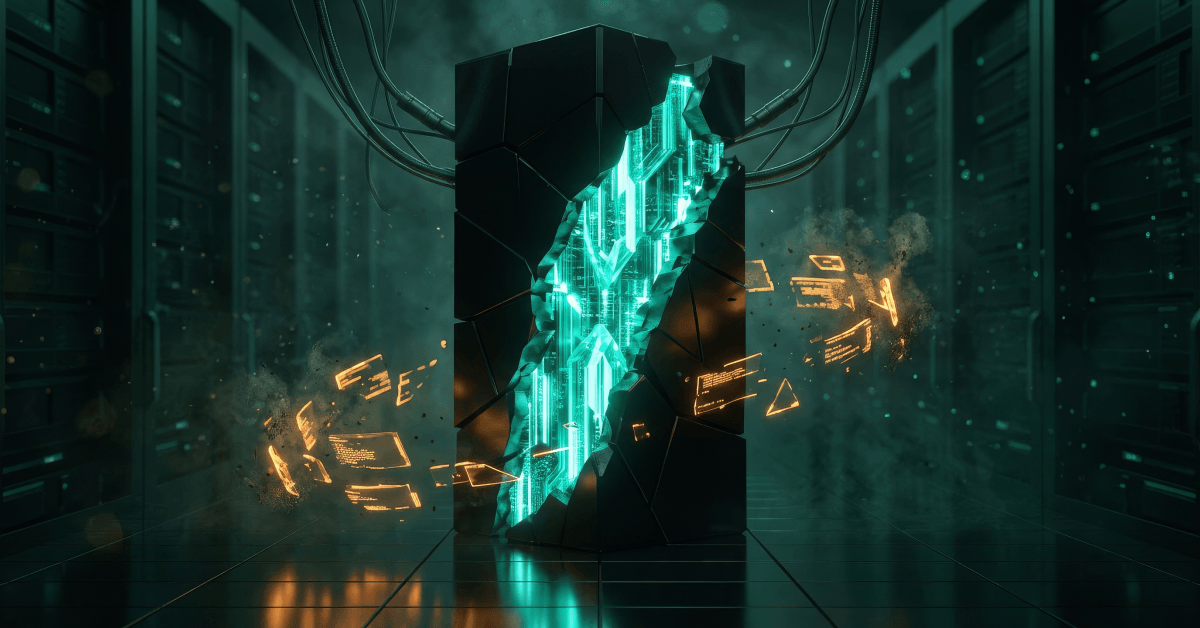
In late May, a researcher dropped six weaponized Windows zero-days publicly. No vendor noticed. No disclosure window. Three were actively exploited before Microsoft had even started building a patch.
A second dump is coming mid-July.
The reactive security model — detect, alert, patch, repeat — was built on the assumption that time exists between discovery and exploitation. That assumption is dead.
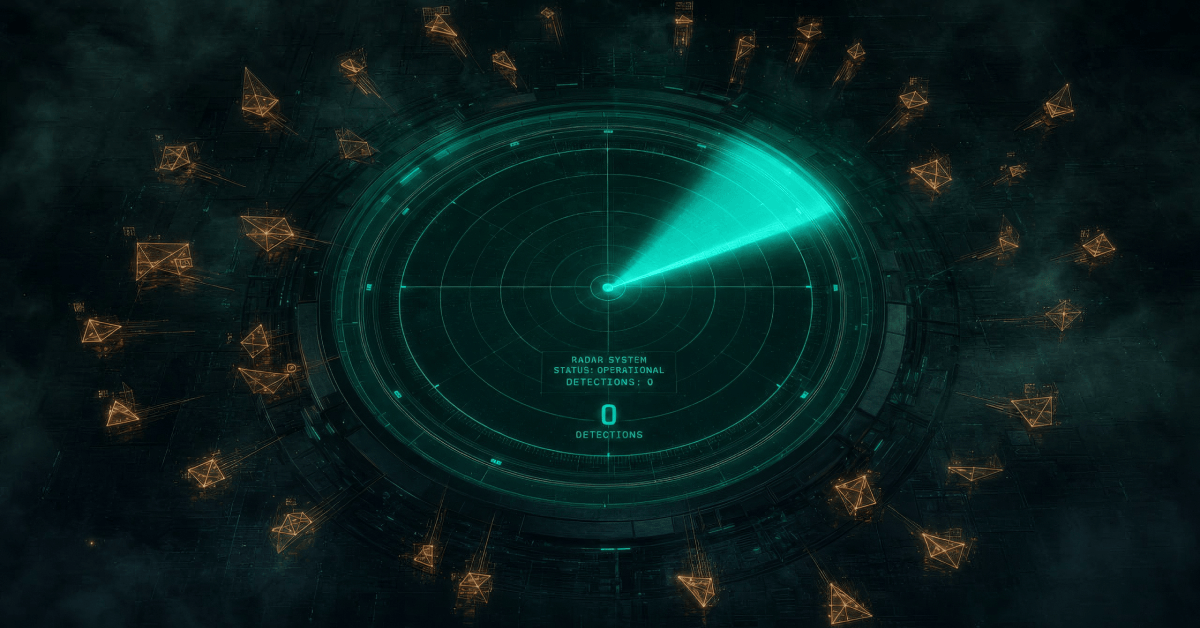
When zero-day code executes, EDR has an impossible job: match a signature that doesn't exist yet. By the time the alert fires, the damage is done.
The only model that works at machine speed is one that doesn't wait for detection at all — stopping exploits at the memory level before they ever run.
The question for every security leader right now: "If an unpatched Windows exploit ran in our environment today — would we stop it before execution?"
If the answer isn't an unqualified yes, you're on borrowed time.
Read our latest article by Brad LaPorte in SecureBlitz - link in the comments.
1
81
Jun 11
Law firms are entering a new era of cyber risk.
AI-powered legal tools are transforming research, e-discovery, contract analysis, and client service workflows — but they’re also expanding the attack surface in ways many firms aren’t prepared for.
At the same time, threat actors are using AI to launch faster, more evasive ransomware and fileless attacks that traditional detection-based security tools struggle to stop.
The result? A growing AI security gap inside modern legal environments.
In our latest blog, we explore:
- Why law firms have become high-value cyber targets
- How AI is reshaping legal cybersecurity risk
- Why traditional EDR tools are struggling against modern attacks
- The growing risk to attorney-client privilege and compliance
- Why prevention-first security matters in the AI era
If your firm is adopting AI-powered workflows, this is a conversation worth having now… before attackers force it later.
Read our blog - link in the comments.
1
1
2
101
Jun 9
Hot take: Zero Trust doesn’t stop breaches.
(Yeah, we said it.) And yes -
✔️It reduces risk.
✔️It limits access.
✔️It verifies identity.
But it doesn’t stop what happens after execution begins. And that’s where most security strategies fall apart.
So what actually works?
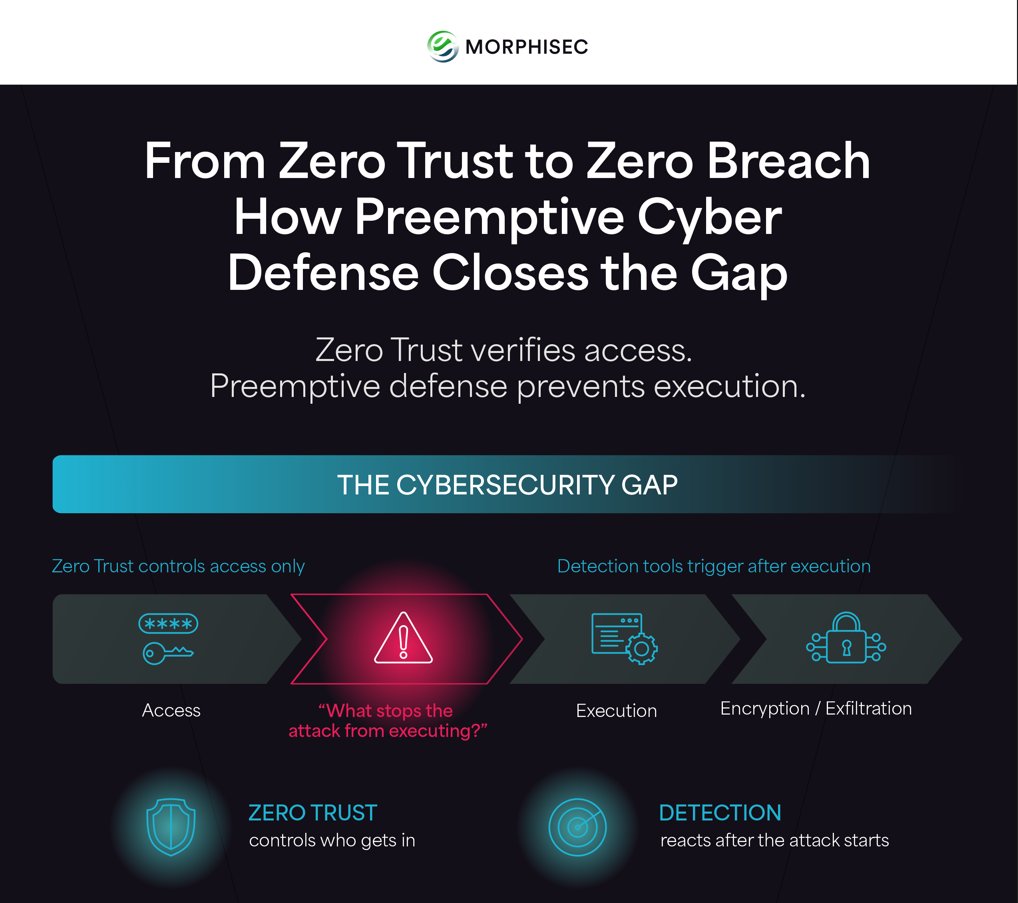
Stopping the attack before it executes. That’s the idea behind preemptive cyber defense, and why it’s becoming critical in an AI-driven threat landscape. We broke it down visually in this infographic:
✅Where Zero Trust fits
✅Why detection isn’t enough
✅How preemptive defense changes the outcome
Because the goal isn’t just better detection. It’s Zero Breach.
Full infographic link in the comments.
1
1
1
68
Jun 8
We warned about the npm worm twice. Wave 3 is here and now it’s hiding inside your AI coding assistant.
Shai-Hulud’s third wave, “Miasma,” is engineered to defeat the exact defenses the industry deployed after Waves 1 and 2. It skips the lifecycle scripts everyone started monitoring, republishes packages with valid provenance attestations, and plants persistent backdoors in .claude, .cursor, .gemini, and .vscode configs that survive npm uninstall and a full node_modules wipe. By the time detection fires, credentials are already gone in two hours, in the June 3 case.
In this blog, our CMO Brad LaPorte breaks down how each wave engineers around the last one, why detection-and-response is always a beat behind, and why a prevention-first, defense-in-depth posture is the only thing that keeps pace.
Read the blog to see what Wave 3 changed and how to stop a payload no one has seen yet, before it executes - link in the comments.
1
1
1
126
Jun 5
Credit unions are racing to go digital — but is cybersecurity keeping up?
Our new byline in The Financial Brand makes it clear: digital growth is outpacing security investments at credit unions. More online accounts, more mobile transactions, more member data — and more attack surface.
This isn't a technology problem. It's a strategy problem.
When cybersecurity is treated as an afterthought rather than a foundation, the risk isn't just a data breach — it's member trust. And for credit unions, trust is the whole value proposition.
The institutions getting this right are building security into digital initiatives from day one, not bolting it on after the fact.
A few things worth asking if you lead a credit union:
→ Does your cybersecurity investment scale with your digital growth?
→ Are your fraud detection tools keeping pace with the channels you're opening?
→ Is your board treating cyber risk with the same urgency as credit risk?
Digital transformation is a competitive necessity. But transformation without security is just exposure.
Full article in the comments.
1
1
69
Jun 4
What happens when ransomware can't even decrypt the files it encrypted?
This latest blog from Morphisec threat researcher Yonatan Edri takes a closer look at VECT ransomware and uncovers a troubling reality: some victims may be left with files that are renamed, partially encrypted, corrupted, or otherwise unrecoverable - even when a decryptor is available.
While researchers have already documented VECT's nonce management flaw, our analysis found additional Windows-specific implementation issues that can create inconsistent file states and complicate recovery efforts.
Key findings:
✅Files are renamed before encryption begins, meaning a .vect extension doesn't necessarily indicate successful encryption.
✅Medium-sized files may be processed through a flawed buffer handling routine, potentially resulting in failed or incomplete encryption.
✅Shared global buffers introduce the possibility of file corruption under concurrent execution.
✅Large files can be modified using multiple encryption operations while retaining insufficient metadata for reliable restoration.
The result? Not all ransomware incidents produce cleanly encrypted files—and not all decryptors can put them back together.
The research reinforces an important lesson for defenders: recovery is not always guaranteed. Organizations need security strategies focused on preventing ransomware execution before encryption occurs, while maintaining the ability to recover affected files when attacks succeed.
Read the full analysis - link in the comments.
2
2
4
904
Jun 4
🎯 Morphisec is built to address both sides of this problem: preventing VECT from completing the attack and recovering eligible files when encryption has already occurred.
52
Jun 2
SOC teams average 11,000 alerts per day. Most of it is noise.
That's not a people problem. That's an architecture problem.
The security industry has spent years adding detection layers - but complexity isn't resilience. Attackers have moved on. Our defenses haven't.
The shift that actually matters: stop trying to recognize threats and start making your attack surface unpredictable.
Brad LaPorte wrote about what future-proof cybersecurity actually looks like in practice:
bit.ly/3REyYSw
72
Jun 1
EDR changed endpoint security.
But AI-driven attacks are exposing a hard truth: Detection itself is becoming too slow.
Today’s threats operate at machine speed…adapting in real time, abusing legitimate workflows, and often completing objectives before alerts are triggered.
Even AI-powered detection platforms still follow the same sequence:
Observe → Analyze → Respond
That delay is now the problem.
Our latest blog explores:
🔹Why AI breaks the detection-first model
🔹The limitations of EDR and AI-powered detection (AIDR)
🔹Why visibility alone isn’t enough
🔹How prevention-first security closes the AI Security Gap
Importantly: this isn’t about replacing EDR.
It’s about strengthening security with prevention at execution.
Link to the blog in the comments.
1
2
4
733
May 29
The security model most organizations rely on was built for human attackers moving at human speed. That world is gone.
AI now automates vulnerability discovery, generates exploits, and moves from initial access to full network compromise in seconds. Detection-first security can't keep up — and 2026 is proving it.
The shift CISOs need to make: stop optimizing for faster detection and start investing in prevention that stops threats before they execute.
The 5 priorities that matter right now:
→ Continuous AI visibility & inventory
→ AI-specific governance with real enforcement
→ Identity-centric security (phishing-resistant MFA, least privilege for humans AND AI agents)
→ Data-centric protection built for AI interactions
→ Securing the AI systems themselves — logs, pipelines, telemetry
The attackers have already made their move. The question is whether your architecture can stop the next one before it lands.
Read the full article - link in the comments.
1
88
May 28
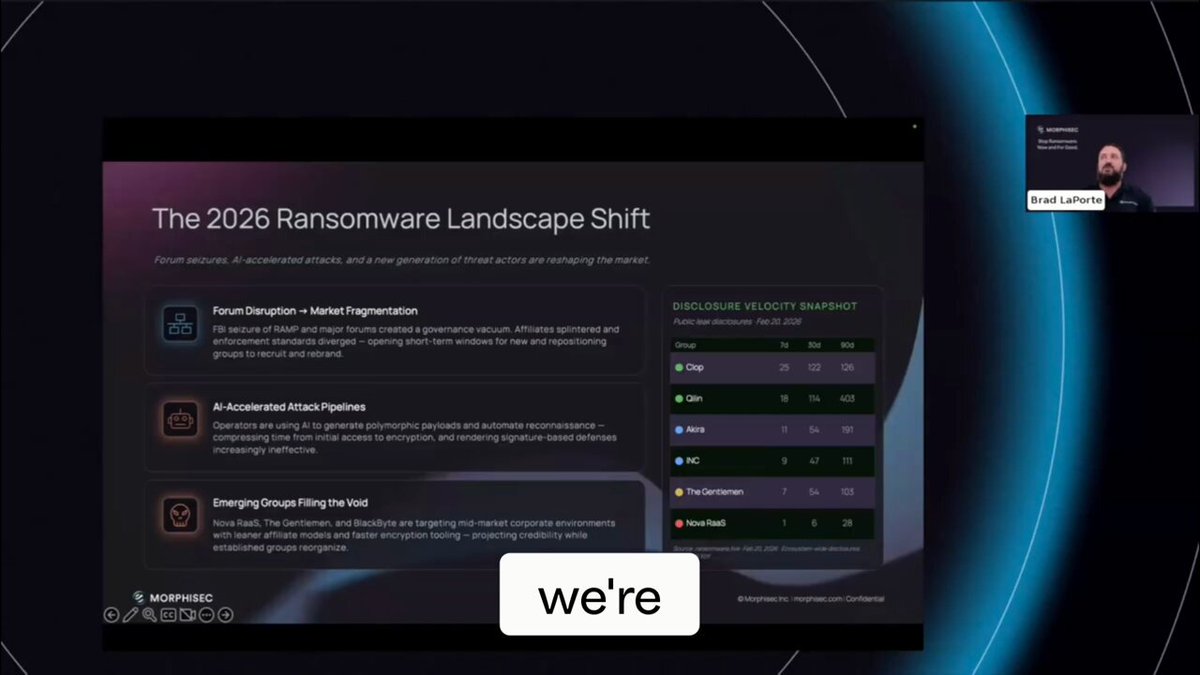
Ransomware is evolving faster than most security models can keep up.
AI is changing the economics, speed, and sophistication of modern attacks, compressing the attack lifecycle from hours into seconds.
Today’s AI-driven ransomware can:
🔹Adapt in real time
🔹Generate polymorphic payloads
🔹Operate within legitimate systems
🔹Evade traditional detection methods
🔹Execute before response cycles even begin
This is why detection-first security is struggling in the age of autonomous threats.
In our latest blog, we break down:
✔️ How AI is reshaping ransomware
✔️ Why machine-speed attacks are harder to detect
✔️ What security teams must do differently to stay ahead
Read the blog - link in the comments.
1
2
1
667