This is the NASA History Office's official X account. We're happy that you share our passion for aerospace history.
- Tweets 25,255
- Following 167
- Followers 1,160,480
- Likes 11,104

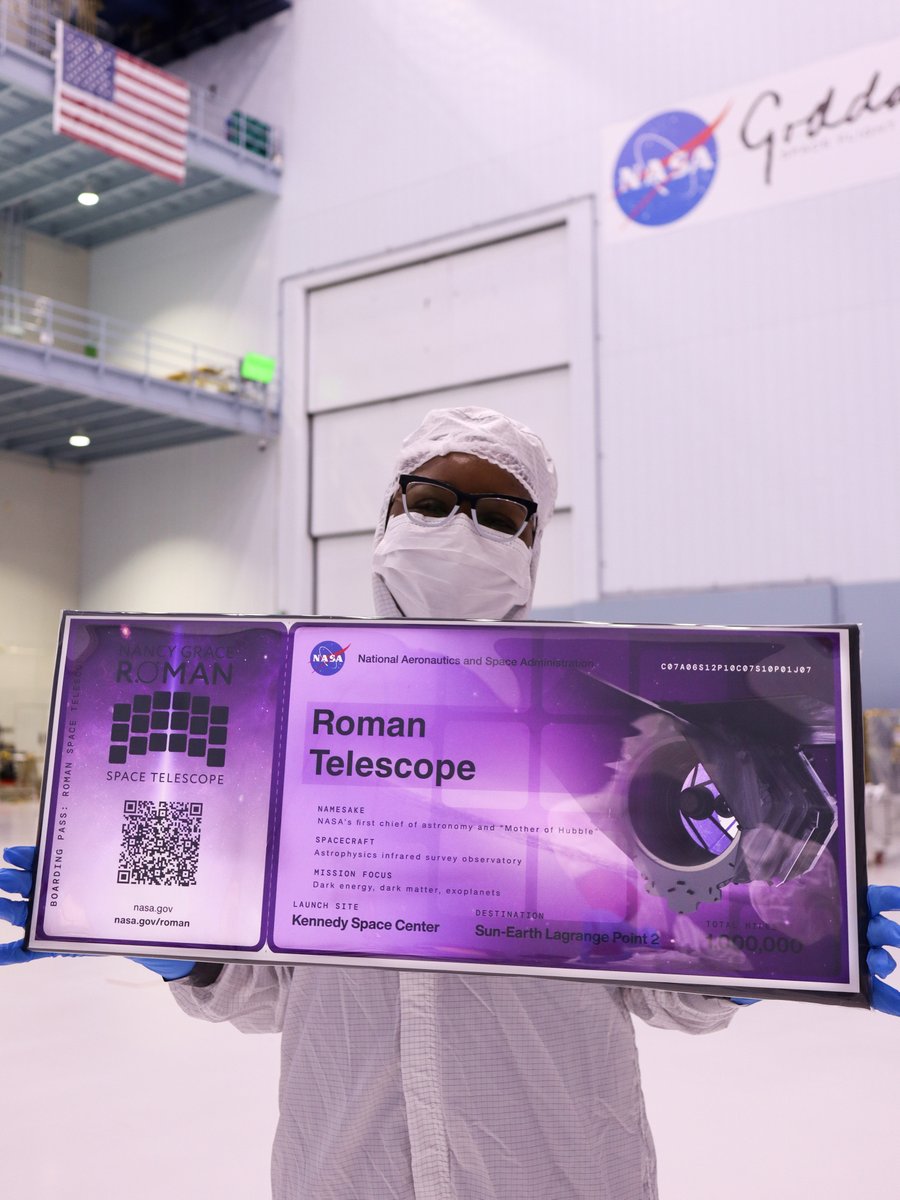
ALT A person in a head-to-toe white clean room suit holds a large purple "boarding pass" for NASA's Nancy Grace Roman Space Telescope in Goddard's large cleanroom. The boarding pass includes an image of the 18 detectors, an artist concept image of the telescope, a QR code, and the NASA logo. "Roman Telescope" is written where the name would go.
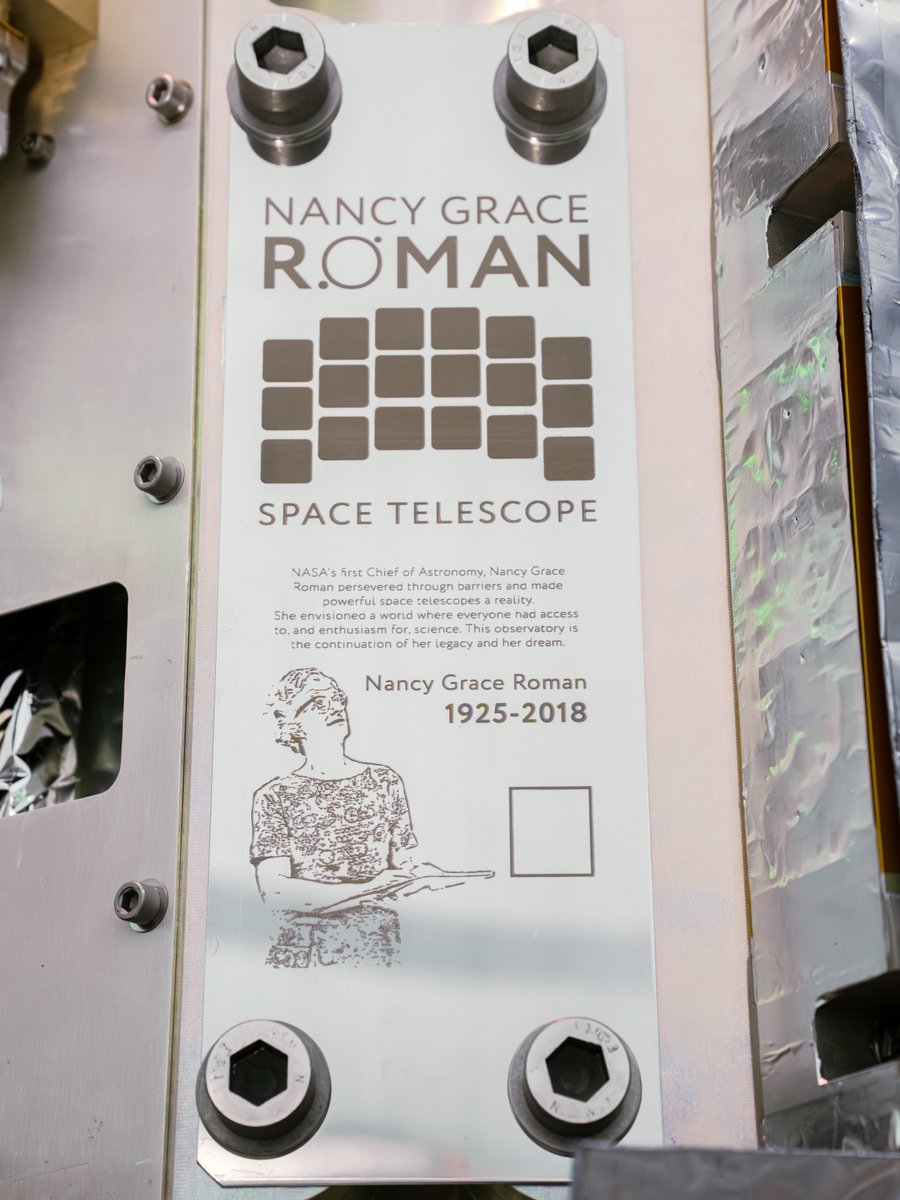
ALT The plate attached to the Roman telescope, where a memory card containing names will be attached. It's a tall, thin, rectangular silver plate. At the top of the plate is the stylized Nancy Grace Roman name logo. Below is the silhouette of Roman's 18-square detectors in their iconic arch shape. Text below that reads "NASA's first chief astronomer, Nancy Grace Roman, persevered through barriers and made powerful space telescopes a reality. She envisioned a world where everyone had access to, and enthusiasm for, science. This observatory is the continuation of her legacy and dream." Below the text is an illustration of Dr. Roman looking up, next to her name and the years 1925-2018. Below the years is a small box where the memory card will be affixed. The plate is held down with two large bolts at the top and bottom.
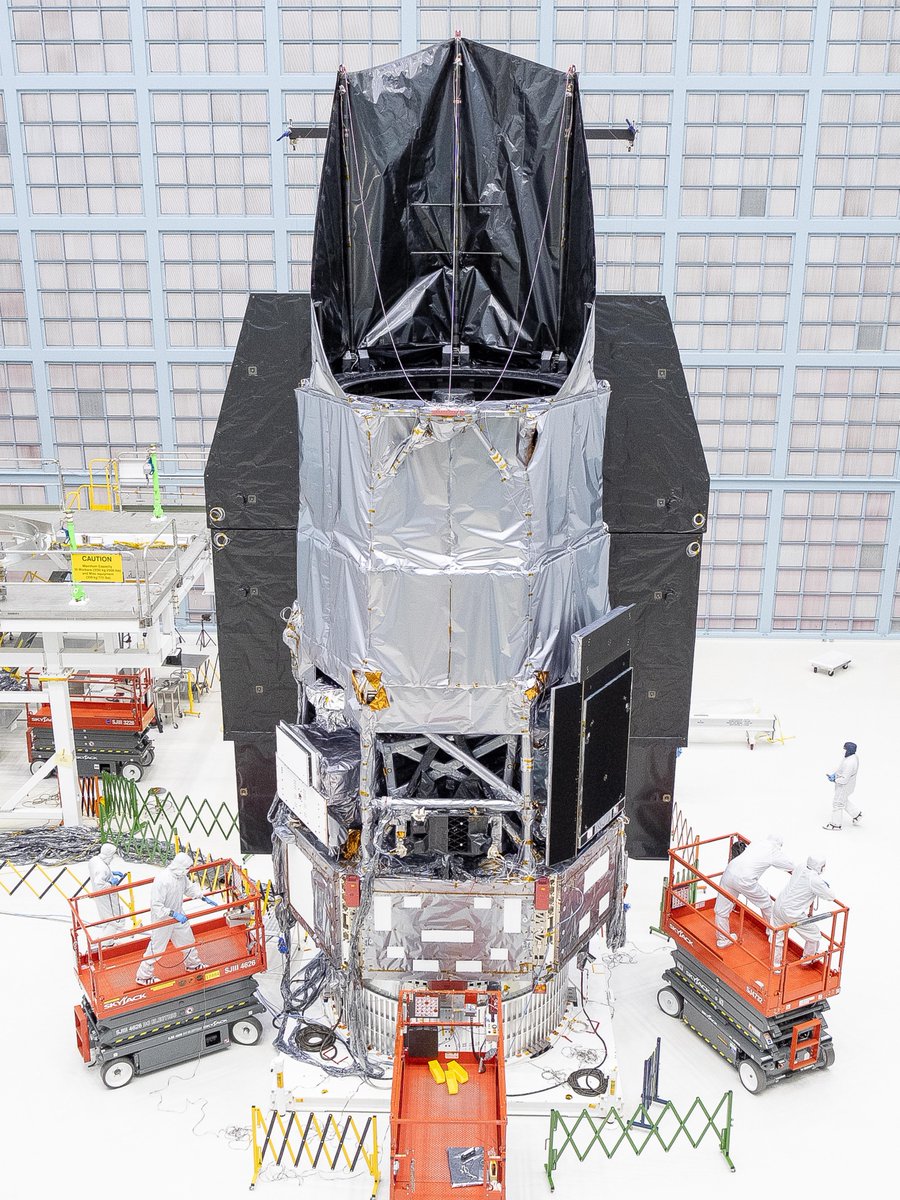
ALT The fully assembled Roman telescope in the clean room, standing upright. It's a silver cylinder with solar panels peeking out from behind both sides like wings. The hood is deployed, like a black sun visor on a baseball cap. Orange lifts and people in white cleanroom suits surrounded the telescope, highlighting how large it is. The unfolded lifts only reach about one-quarter of the way up the telescope's body. Instrumentation and cables are visible in a section about one-third of the way up the body. Thousands of tiny squares on the wall behind the telescope are air filters for the clean room.

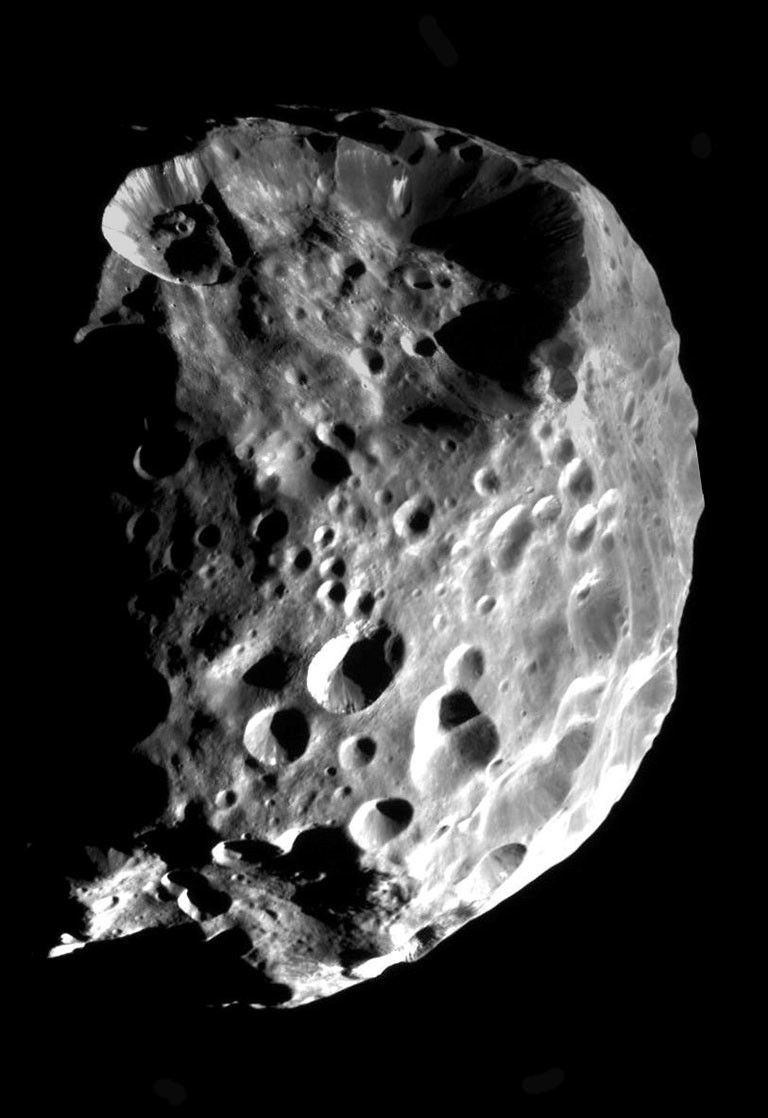
ALT Phoebe appears as a crater-pocked body in the blackness of space in this image taken on June 11, 2004. Credit: NASA/JPL
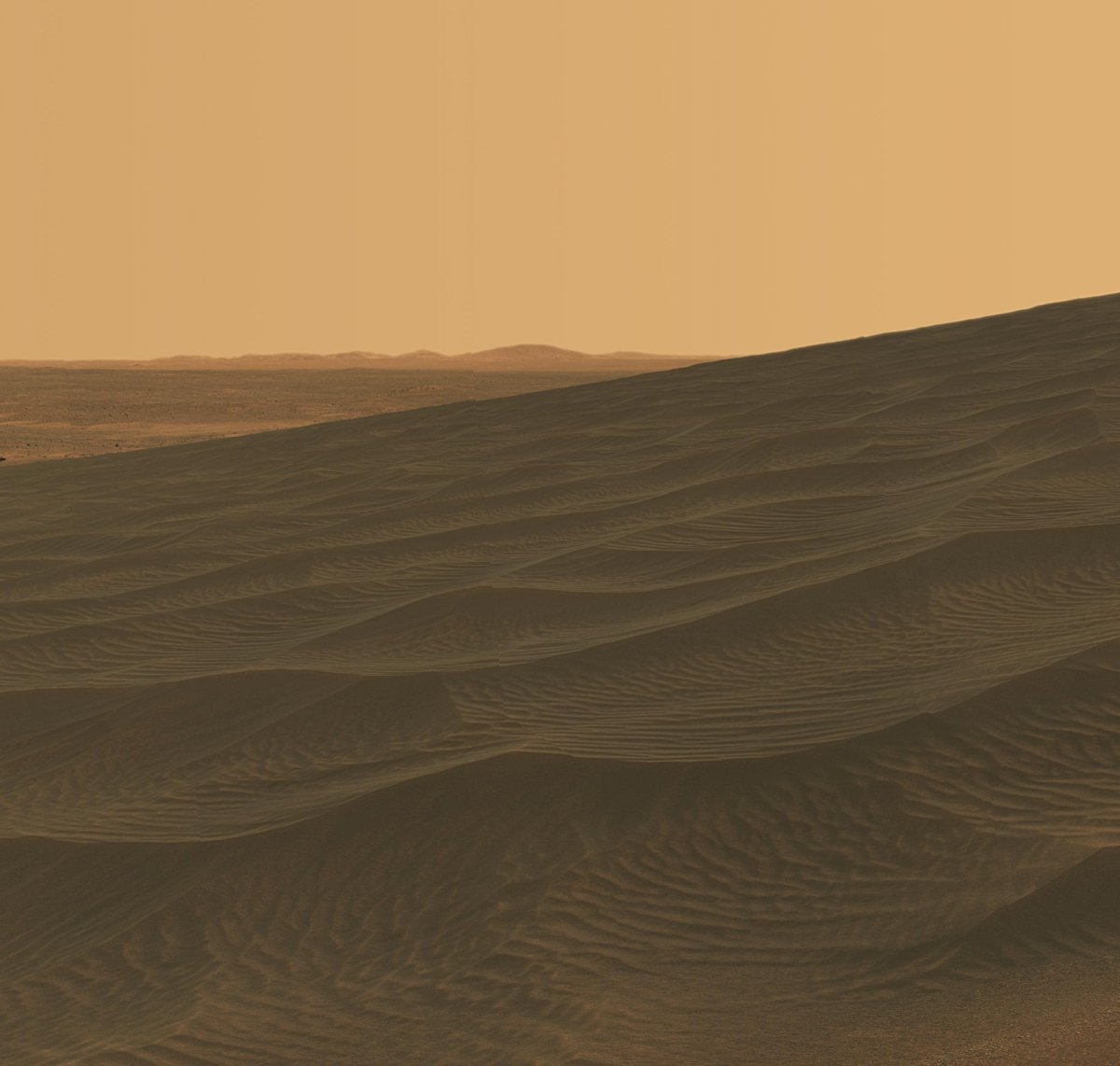
ALT NASA's Mars Exploration Rover Spirit welcomed the beginning of 2006 on Earth by taking a striking panorama of intricately rippled sand deposits in Gusev Crater on Mars. This is an approximate true-color rendering of the "El Dorado" ripple field provided by Spirit. Spirit used the Pancam's 750-nanometer, 530-nanometer and 430-nanometer filters to capture the colors on Mars. Scientists eliminated seams between individual frames in the peachy sky portion of the mosaic to better simulate the vista a person standing on Mars would see. Hills are visible in the far distance. Credit: NASA/JPL-Caltech/Cornell

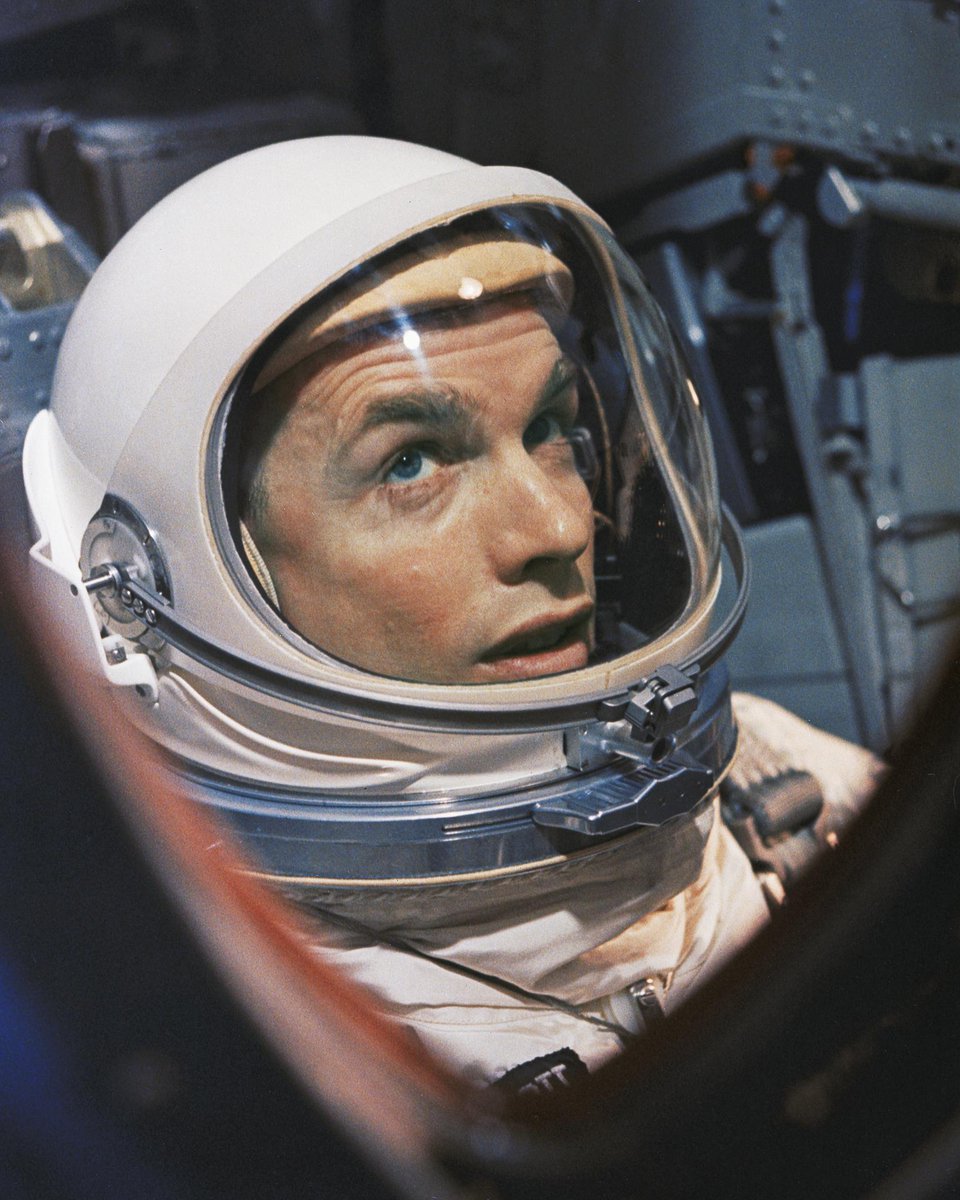
ALT View of David R. Scott through the window of the Gemini spacecraft before its launch in March 1966. Credit: NASA
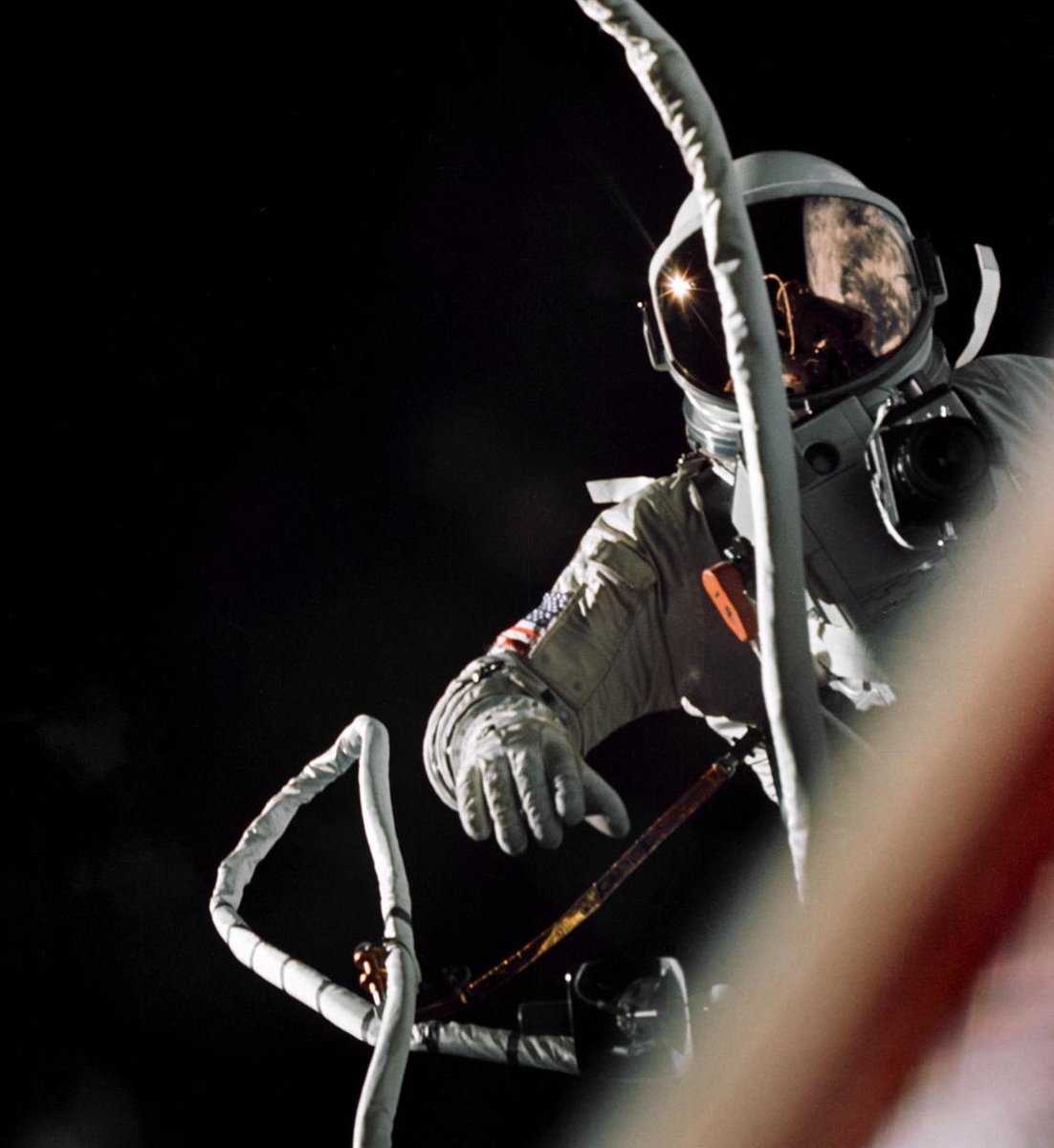
ALT Gemini IX-A astronaut Gene Cernan is backdropped by the blackness of space during America’s second spacewalk on June 5, 1966. His umbilical floats in the foreground, partially obscuring the view of the astronaut. Credit: NASA/Tom Stafford
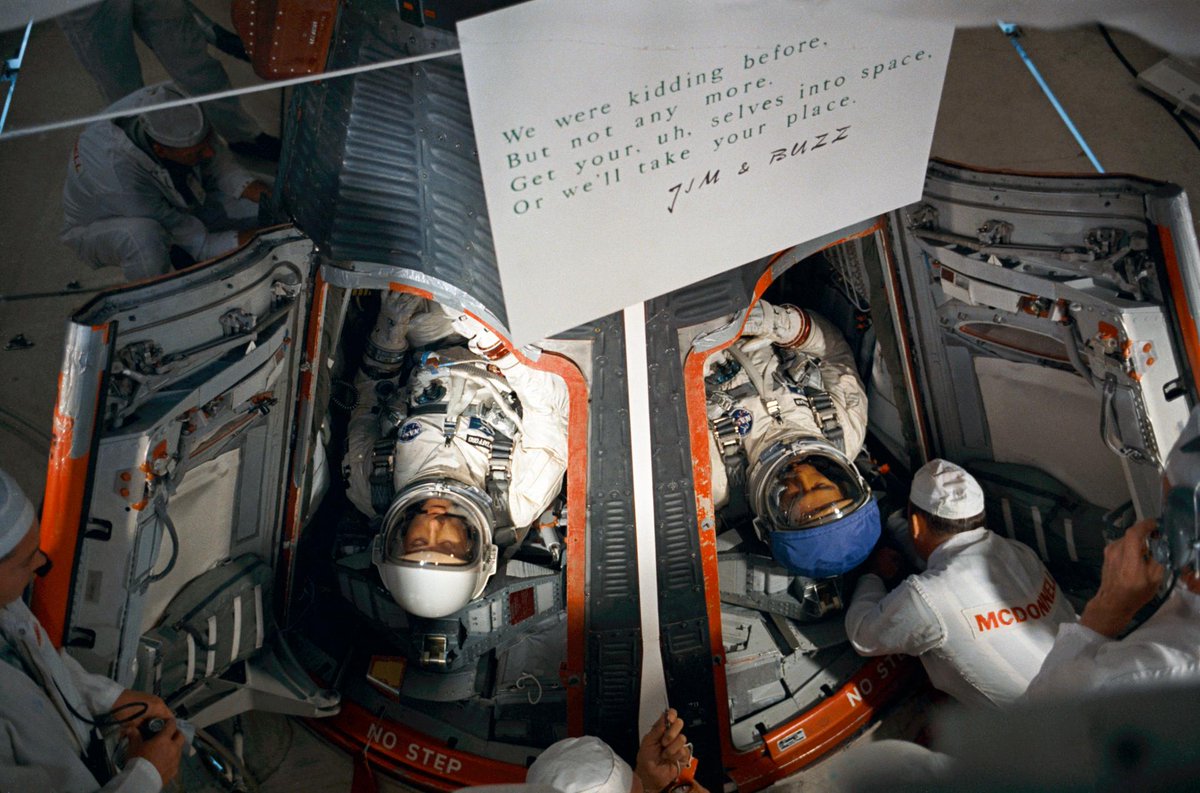
ALT Technicians prepare to close the hatches on the Gemini-9A spacecraft in the White Room atop Pad 19 after insertion of astronauts Thomas P. Stafford (left) and Eugene A. Cernan. Liftoff was at 8:39 a.m., June 3, 1966. A note from the backup crew, Jim Lovell and Buzz Aldrin, is seen in the foreground. It reads "We were kidding before, But not any more. Get your, uh, selves into space, Or we'll take your place." Photo credit: NASA
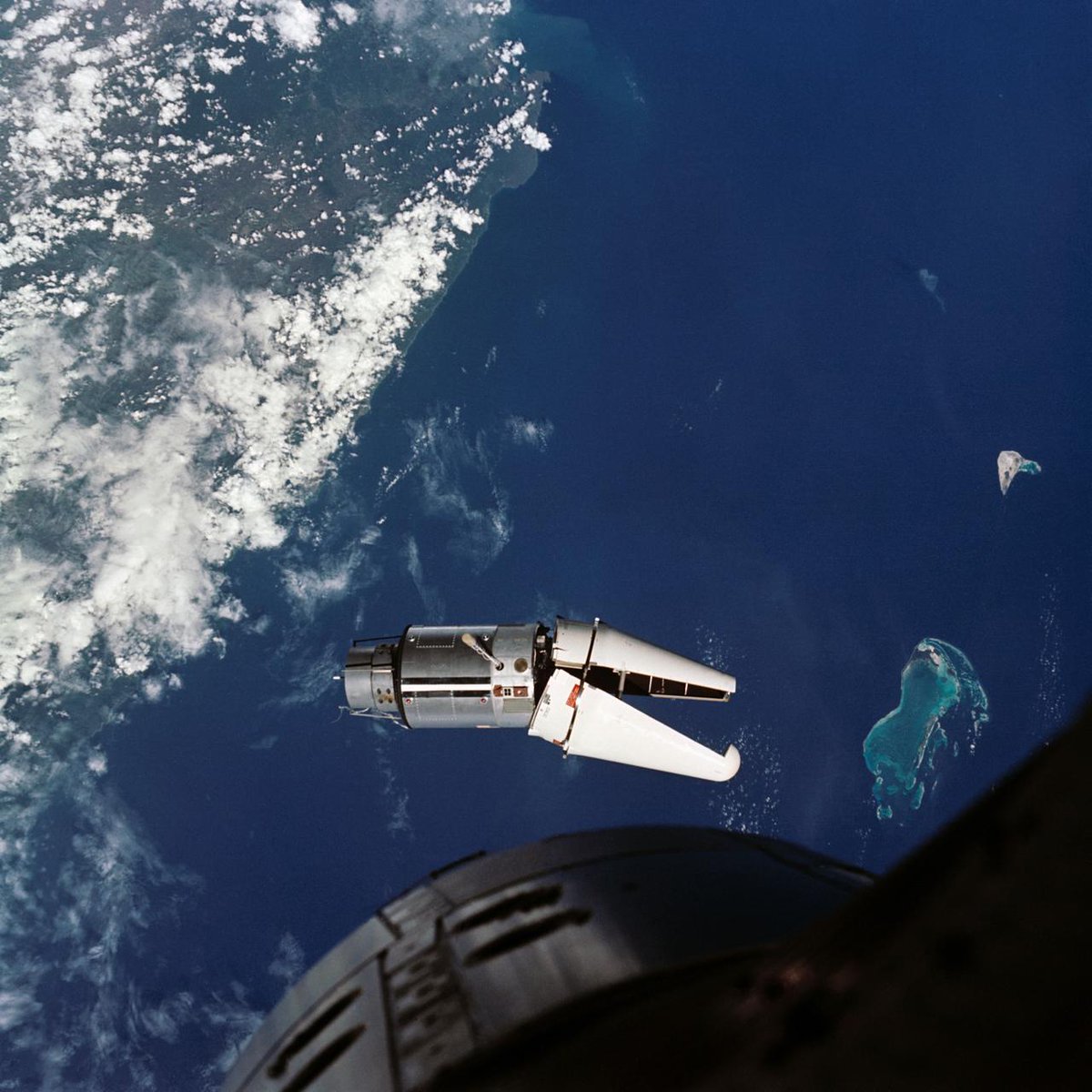
ALT The Augmented Target Docking Adapter (ATDA) as seen from the Gemini-9 spacecraft during one of their three rendezvous in space. The ATDA and Gemini-9 spacecraft are 66.5 feet apart. Failure of the docking adapter protective cover to fully separate on the ATDA prevented the docking of the two spacecraft. The ATDA was described by the Gemini-9 crew as an "angry alligator." Photo credit: NASA
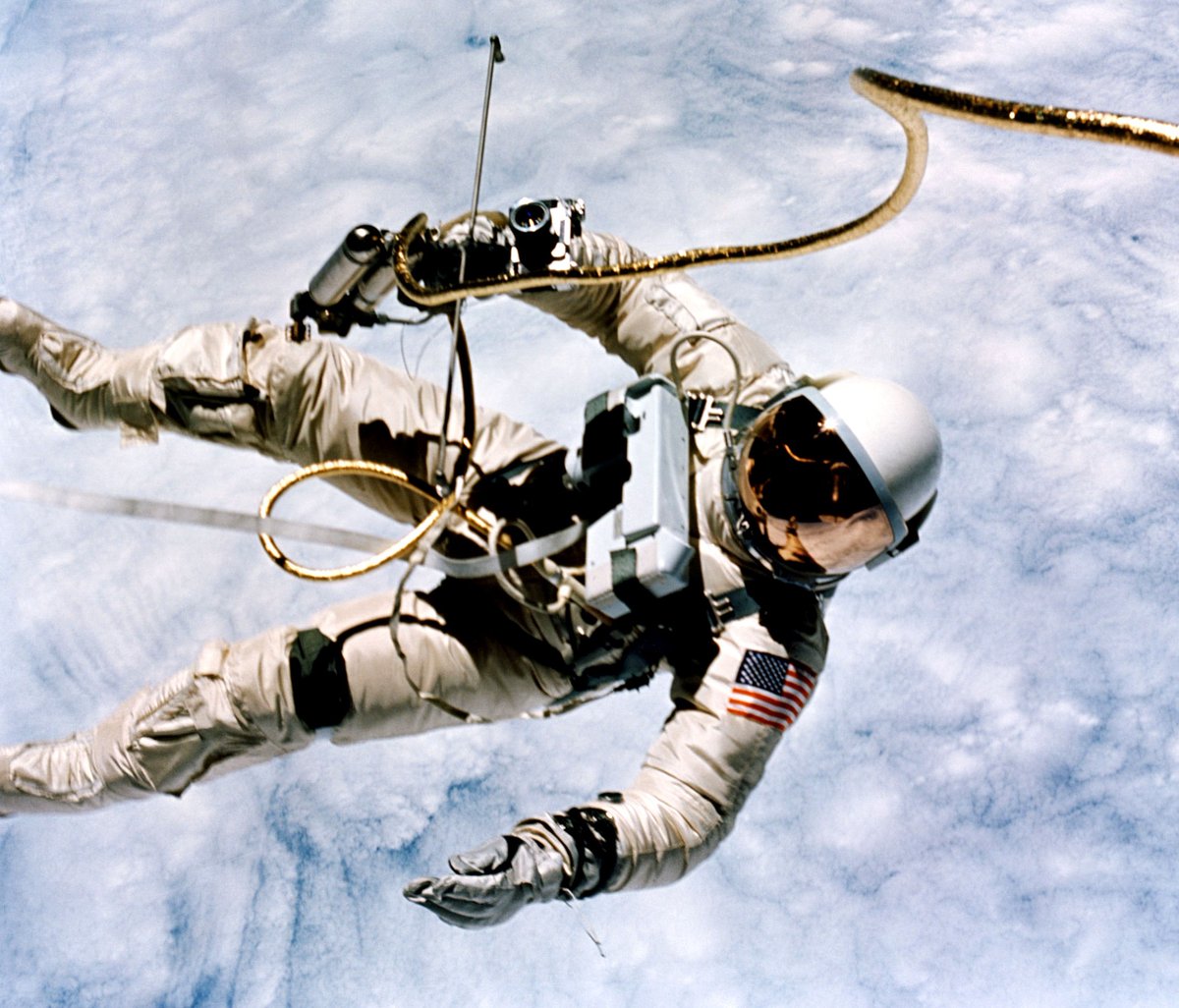
ALT Backdropped by the clouds of Earth far below, astronaut Ed White wears a white spacesuit attached to the Gemini IV spacecraft (out of frame) by a gold umbilical. On June 3, 1965, he became the second human to perform an extravehicular activity, and the first American to do so. Credit: NASA/Jim McDivitt
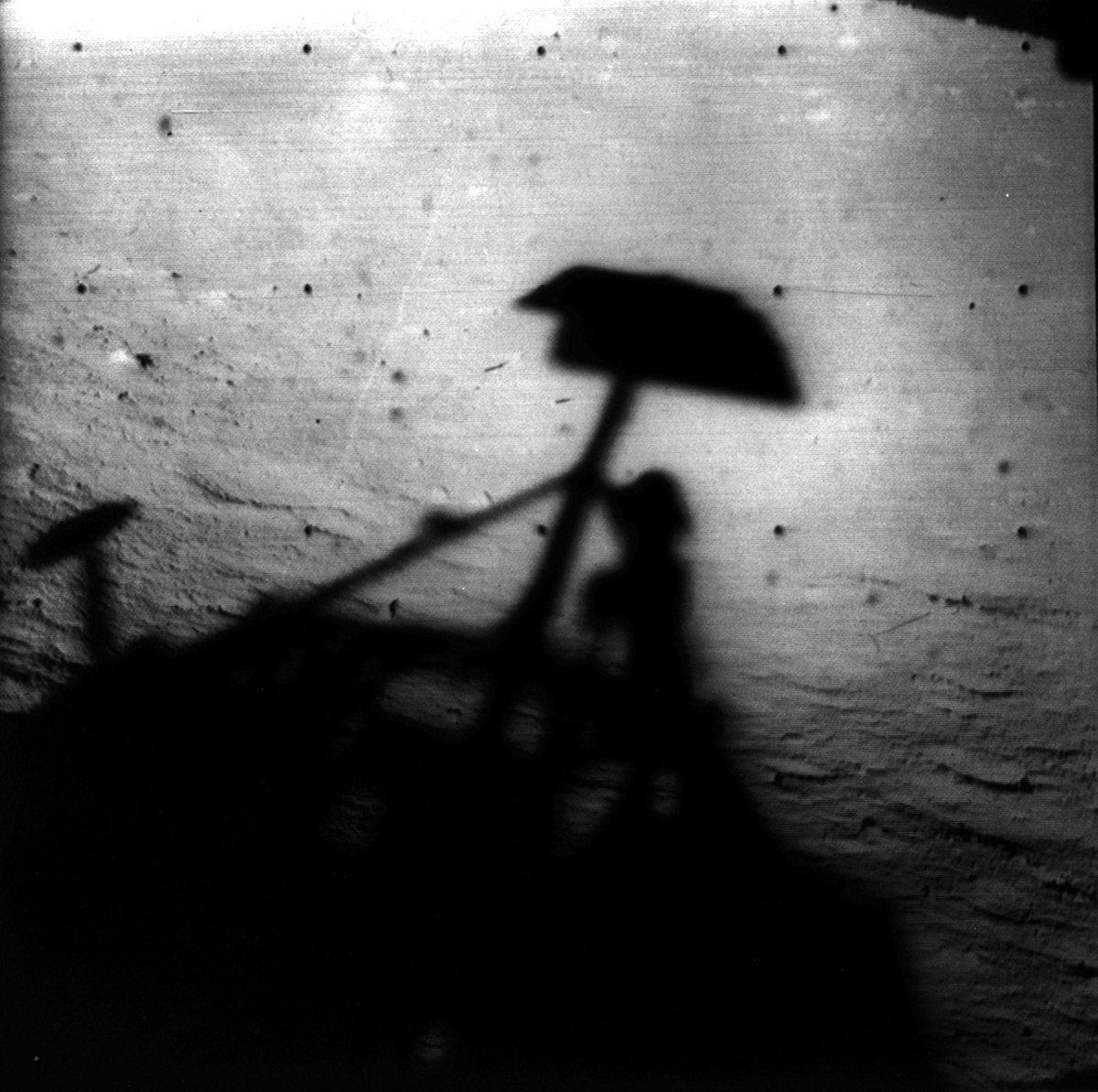
ALT Black and white image of the surface of the Moon showing the shadow of the Surveyor I spacecraft that took it in the late lunar afternoon. The horizon is at the upper right.
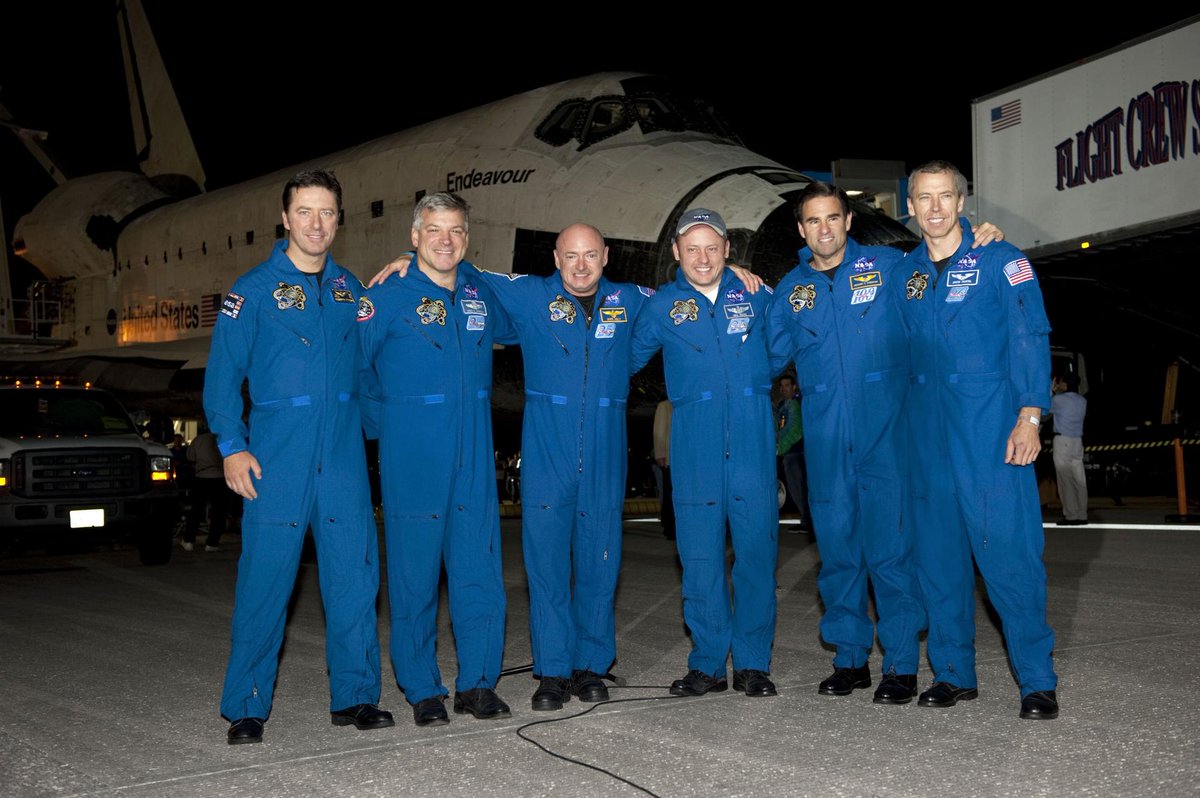
ALT In this photo of the STS-134 crew are (left to right) ESA astronaut Roberto Vittori, mission specialist; NASA astronauts Greg H. Johnson, pilot; Mark Kelly, commander; Michael Fincke, Greg Chamitoff and Andrew Feustel, all mission specialists. Behind them is Space Shuttle Endeavour.
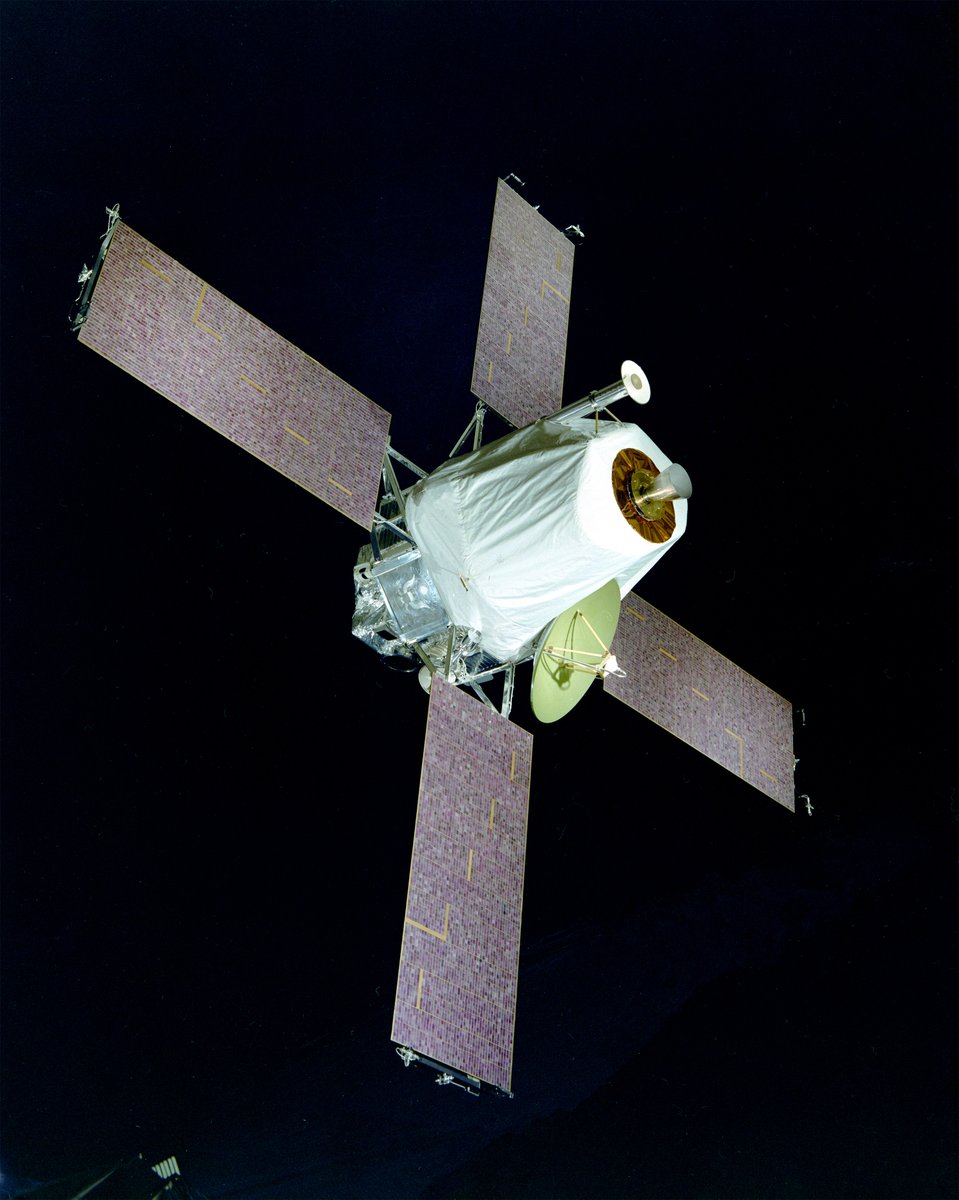
ALT Full scale model of the Mariner 9 spacecraft with four solar arrays giving it the appearance of a ceiling fan. Credit: NASA/JPL-Caltech
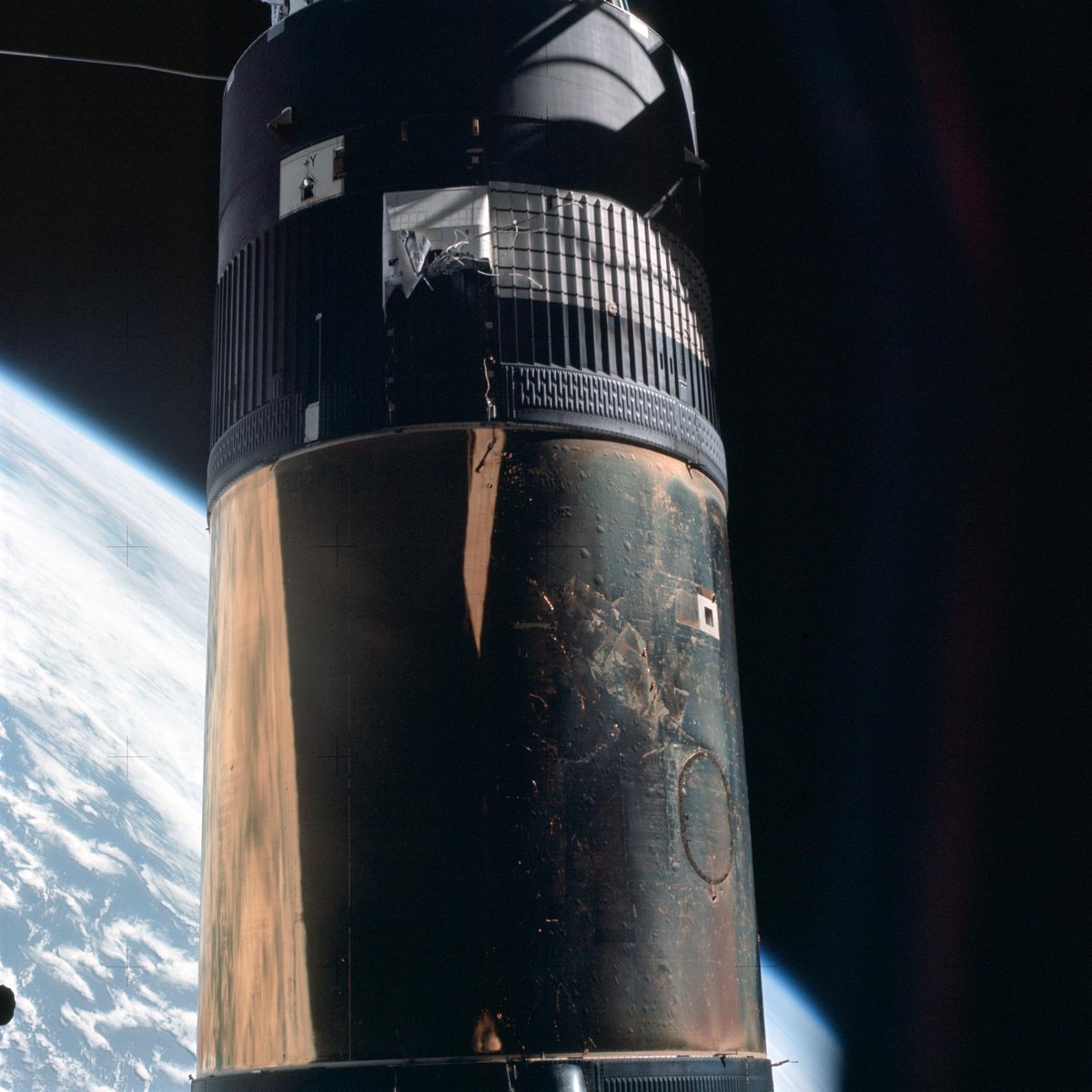
ALT View of Skylab's Orbital Workshop on May 25, 1973 as seen by the Skylab 2 crew. One of its shiny shields is missing from its right side. Earth's limb is visible in the background.
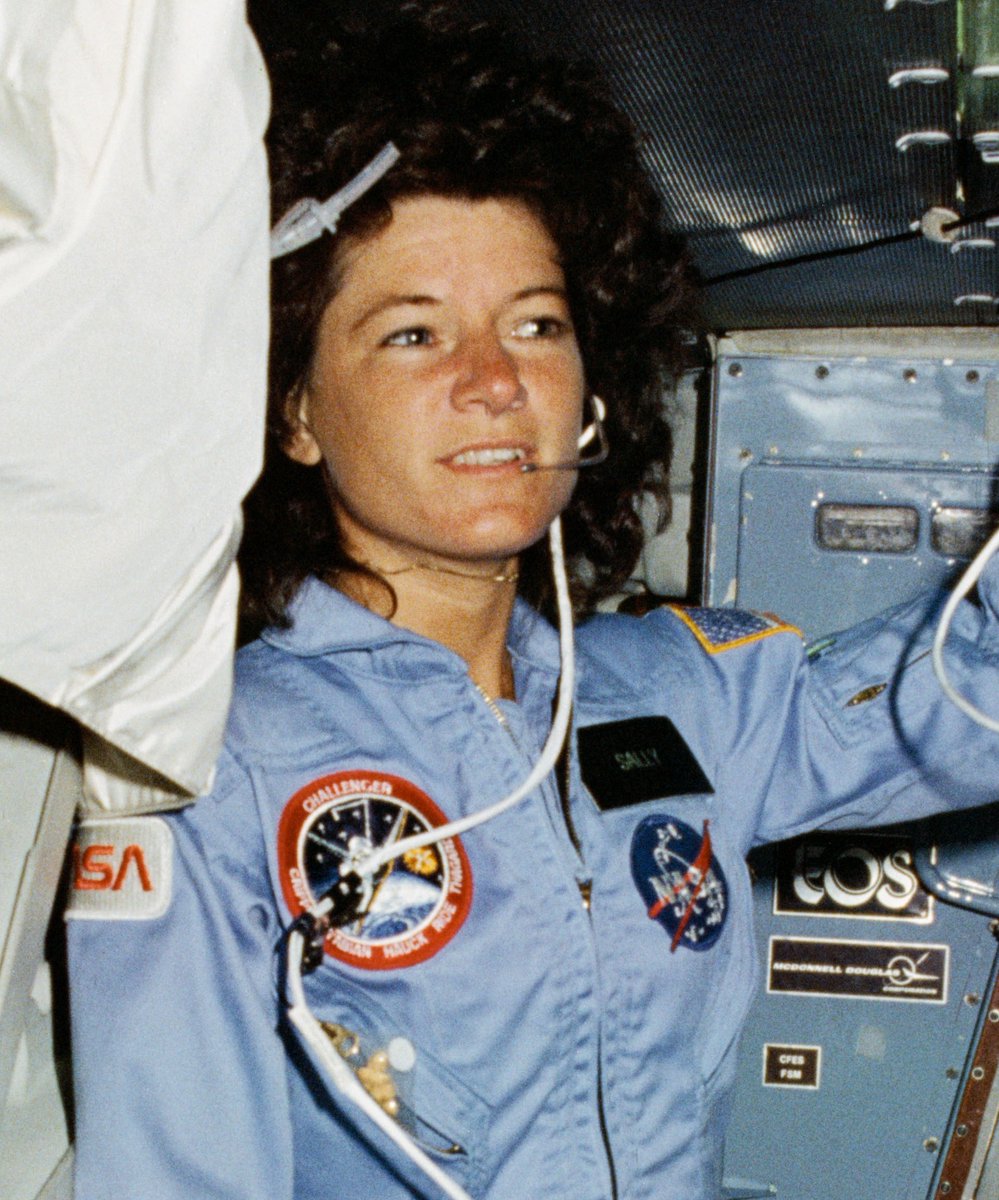
ALT STS-7 mission specialist Sally Ride wears a light blue flight suit and a communications headset while aboard Challenger in June 1983.
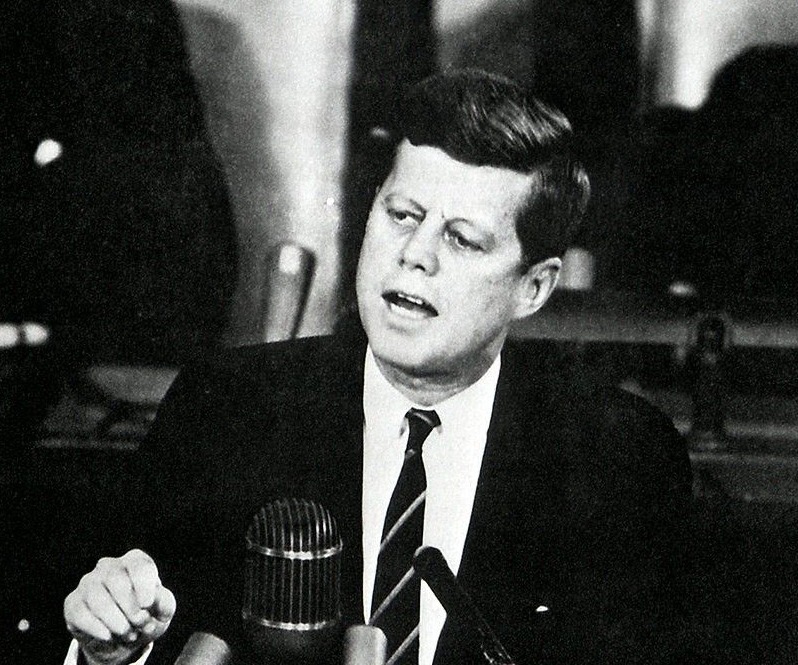
ALT Black and white photograph taken on May 24, 1961 of President John F. Kennedy speaking in front of a joint session of Congress.
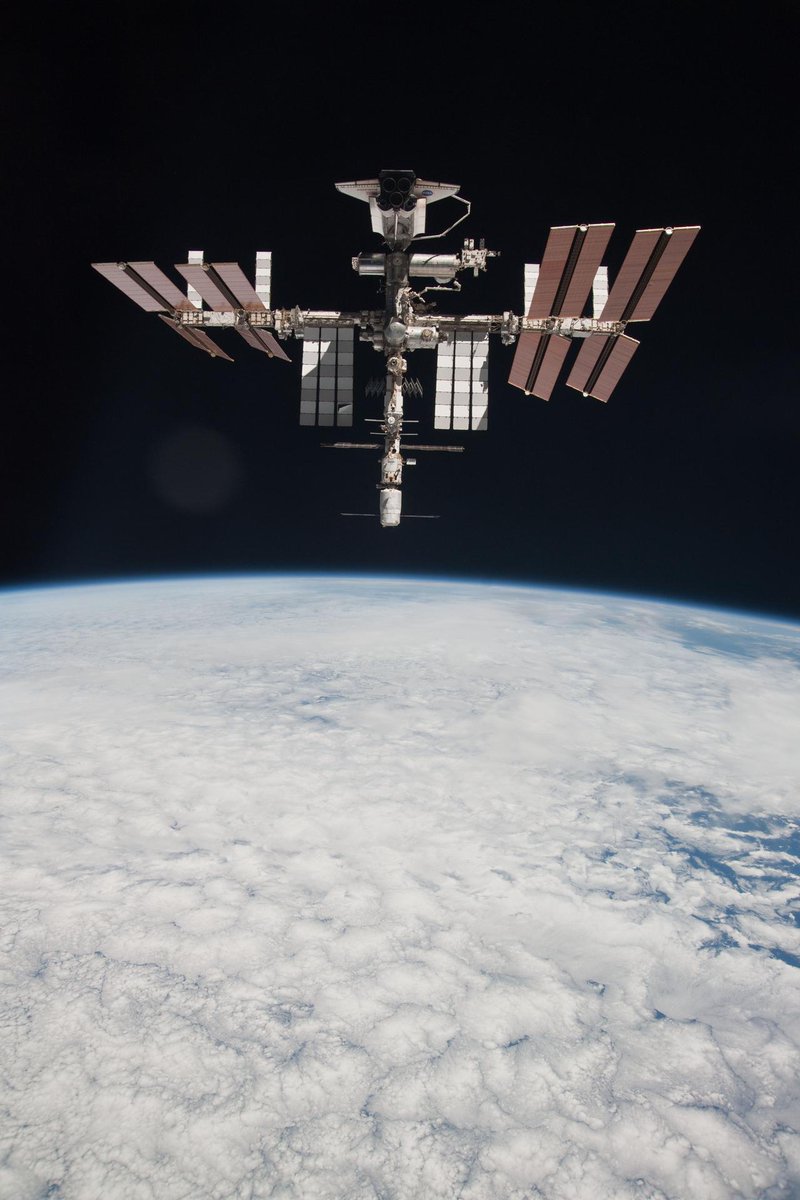
ALT The International Space Station with the Endeavour orbiter docked is backdropped by the blackness of space in the top half of this photo. A portion of the Earth, covered in clouds, makes up the lower half of the photo.
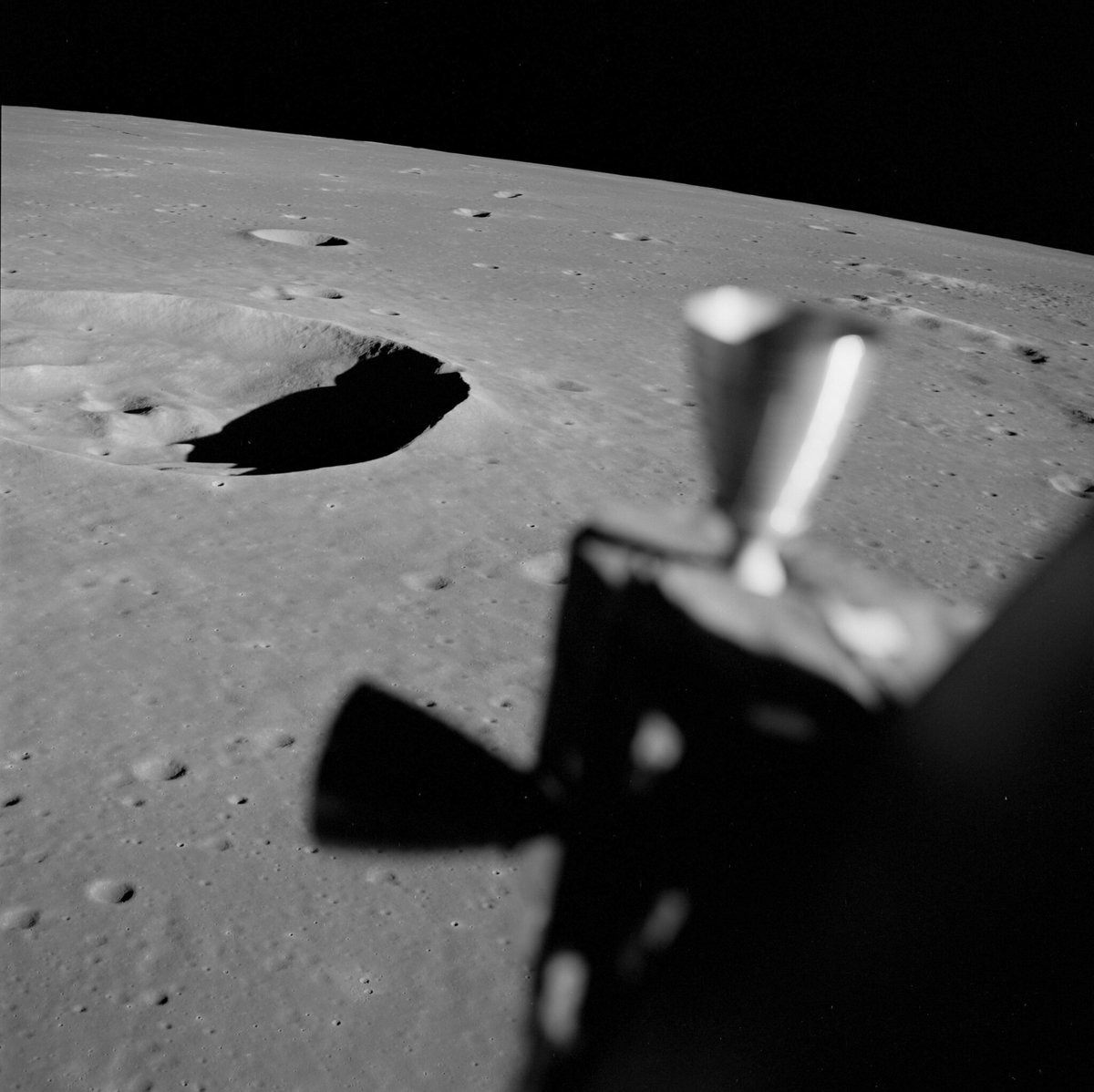
ALT In the foreground, thrusters of the Apollo 10 lunar module (LM) are seen in this view out the module's window. In the distance, we see an oblique view of the Moon with Maskelyne crater, 22 km in diameter, a prominent feature on the left side of the frame. Tom Stafford or Gene Cernan took this photo during their maneuvers in the LM on May 22, 1969.
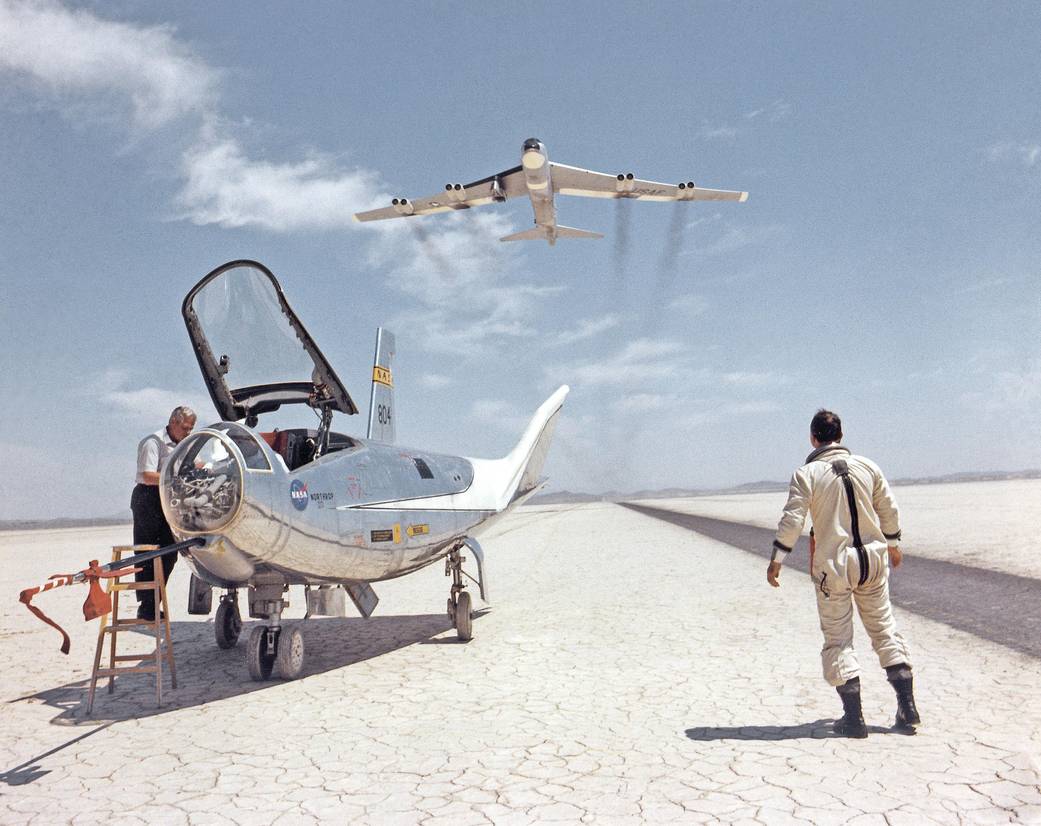
ALT NASA research pilot Bill Dana takes a moment to watch NASA's NB-52B cruise overhead after a research flight in the HL-10. On the left, John Reeves can be seen at the cockpit of the lifting body. The dry lake bed at NASA Armstrong shines brightly in the sun.
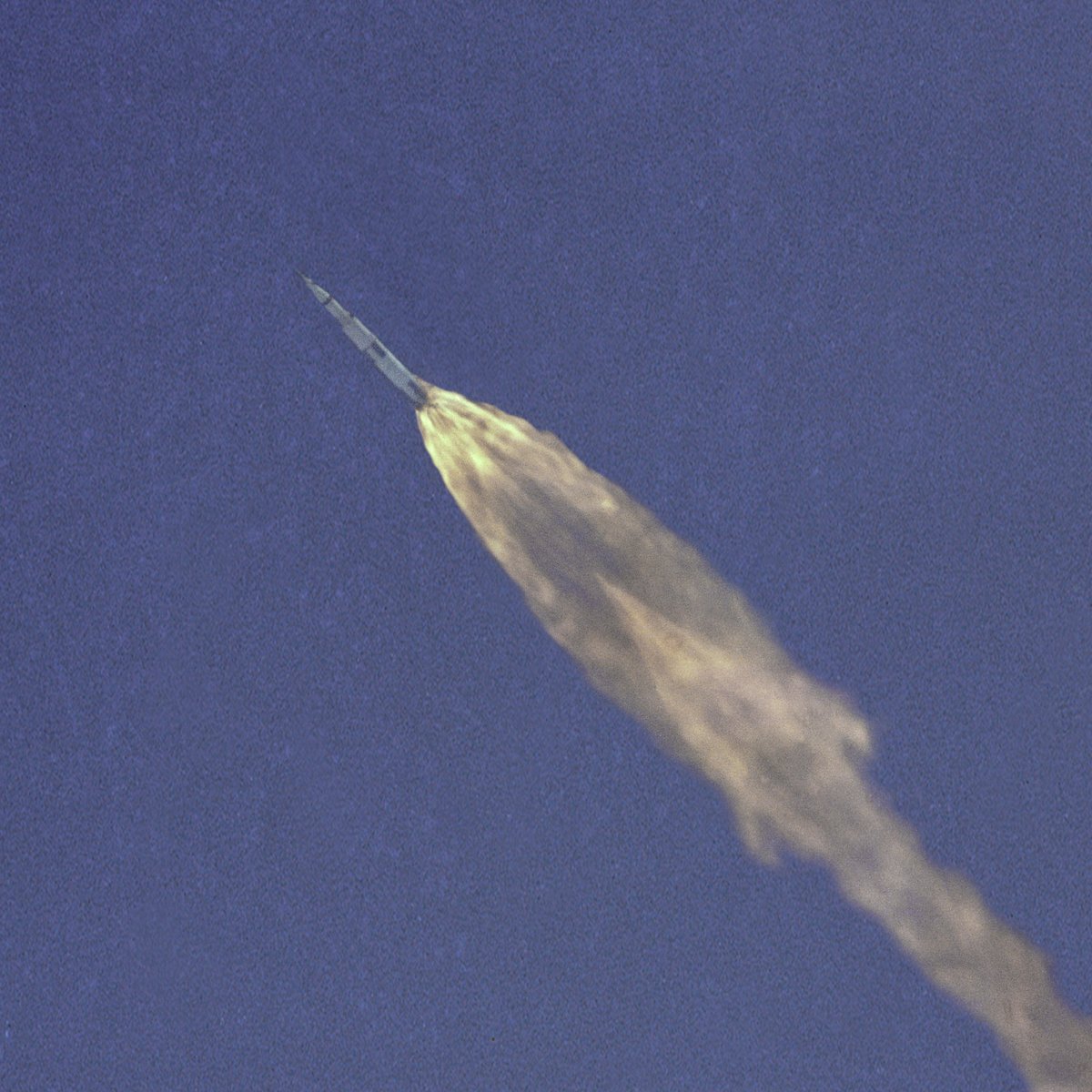
ALT View from a distance of the Apollo 10 space vehicle high in Earth's atmosphere on May 18, 1969. Behind it is a trail of flame and exhaust.
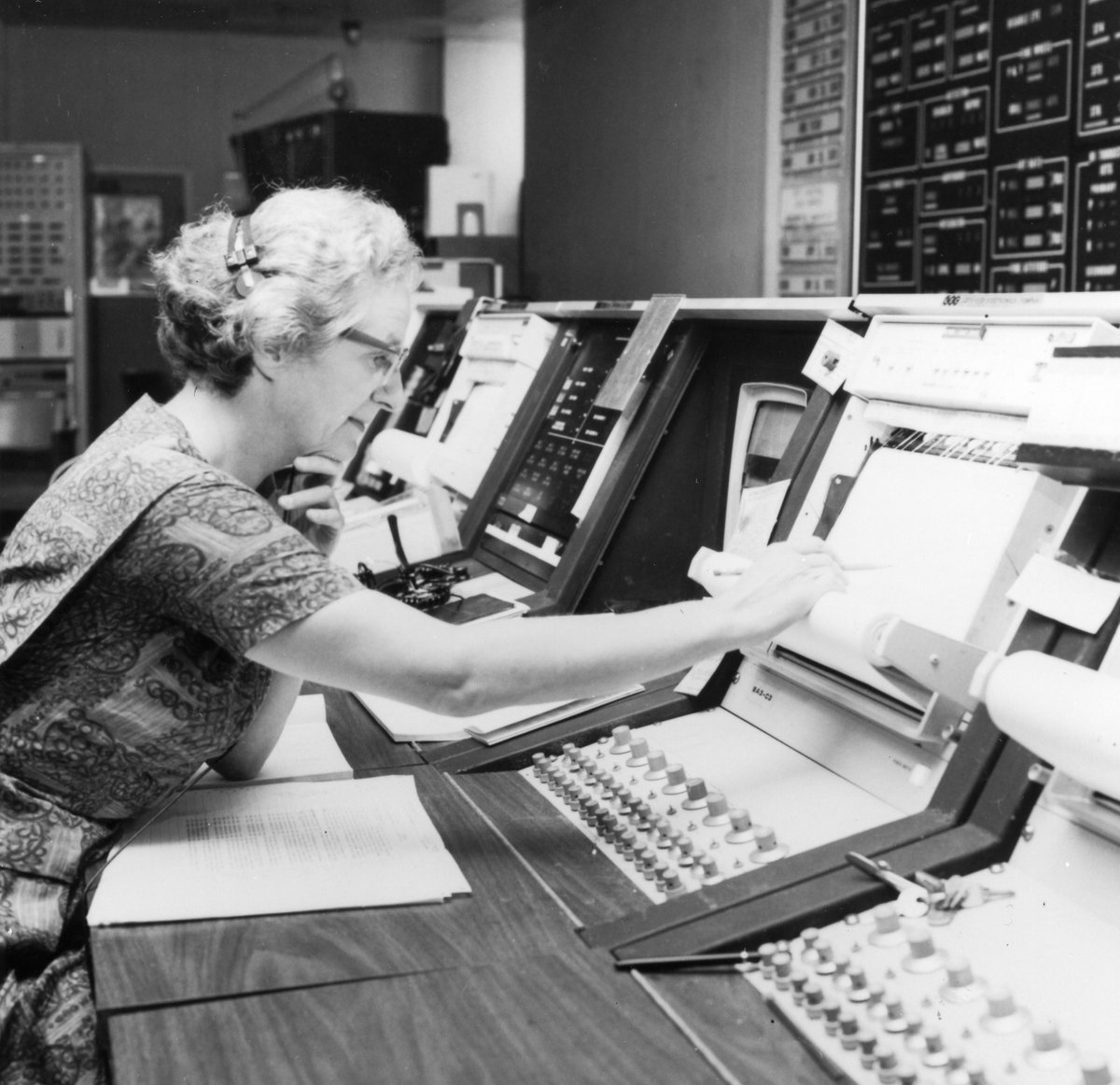
ALT A black and white photo of Dr. Nancy Grace Roman sitting at a booth in a control console at NASA\u2019s Goddard Space Flight Center. She has her right arm extended over the desk in front of her, pointing at some data on the console. The angled top of the desk is covered in instrumentation and buttons.