Patients Rising was formed to provide the support, training, and tools #patients and caregivers need to access the treatment they deserve.
Joined August 2015
- Tweets 10,219
- Following 2,657
- Followers 6,123
- Likes 1,949
4,262 Photos and videos
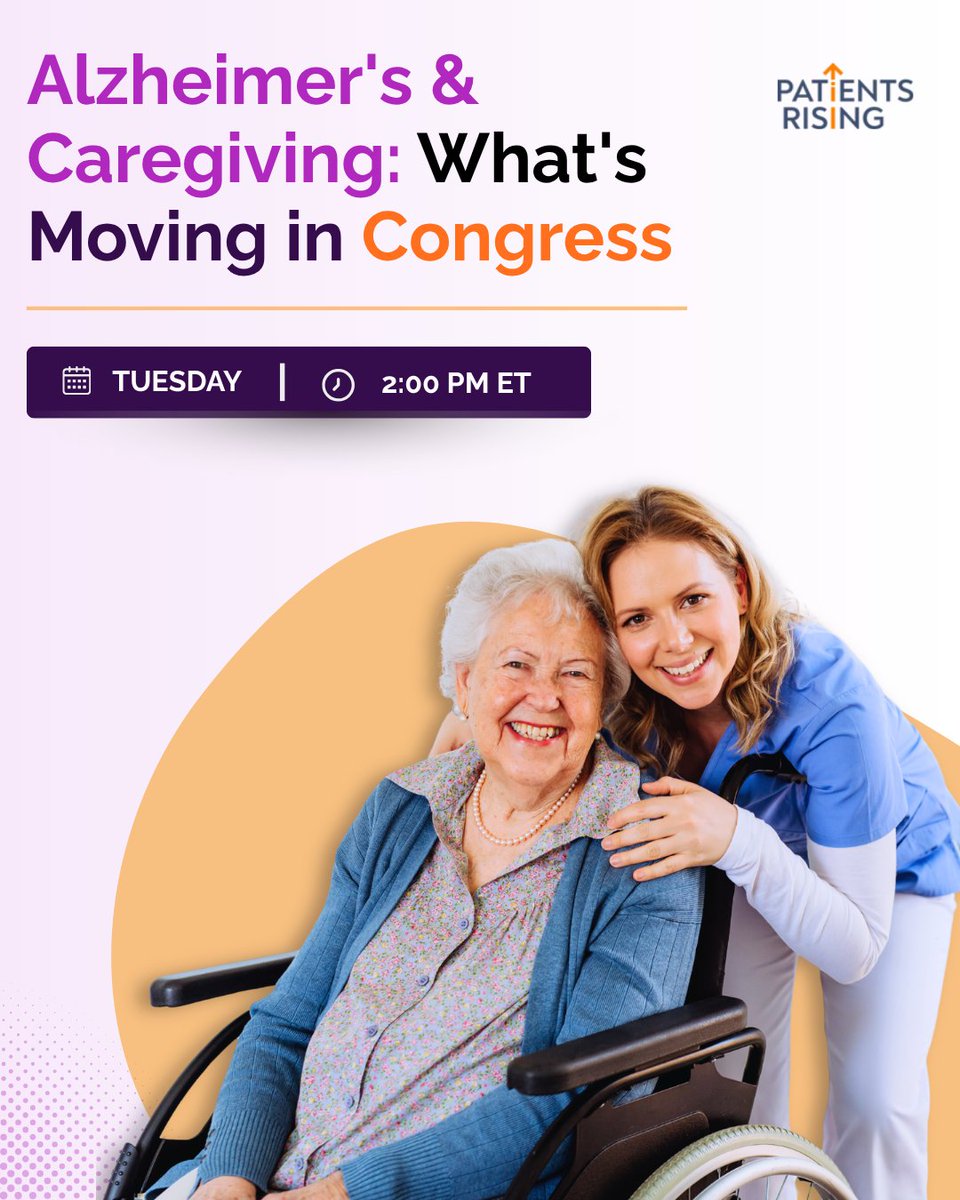

For families facing Alzheimer's disease, the path to a diagnosis can be long, confusing and costly. At the same time, caregivers often shoulder significant financial and personal responsibilities while supporting a loved one through the disease.
Join us Tuesday, June 16 at 2:00 pm ET for a virtual Town Hall focused on two bipartisan bills that aim to address these challenges: the Alzheimer's Screening and Prevention (ASAP) Act and the Lowering Costs for Caregivers Act.
We'll be joined by Alexandra Paulett from Congressman Vern Buchanan's office and Michelle Paucar from Congressman Paul Tonko's office for a discussion about how these proposals could improve access to screening, support earlier intervention and help ease the burden on caregivers. Both offices have been instrumental in advancing the Alzheimer's Screening and Prevention Act, while Congressman Buchanan serves as a lead sponsor of the Lowering Costs for Caregivers Act and Congressman Tonko is a co-sponsor.
This is an opportunity to hear directly from the people helping shape these policies and to learn what they could mean for patients, caregivers and families across the country.
Come join us here: hubs.ly/Q04l5Dlx0
29

Jun 14
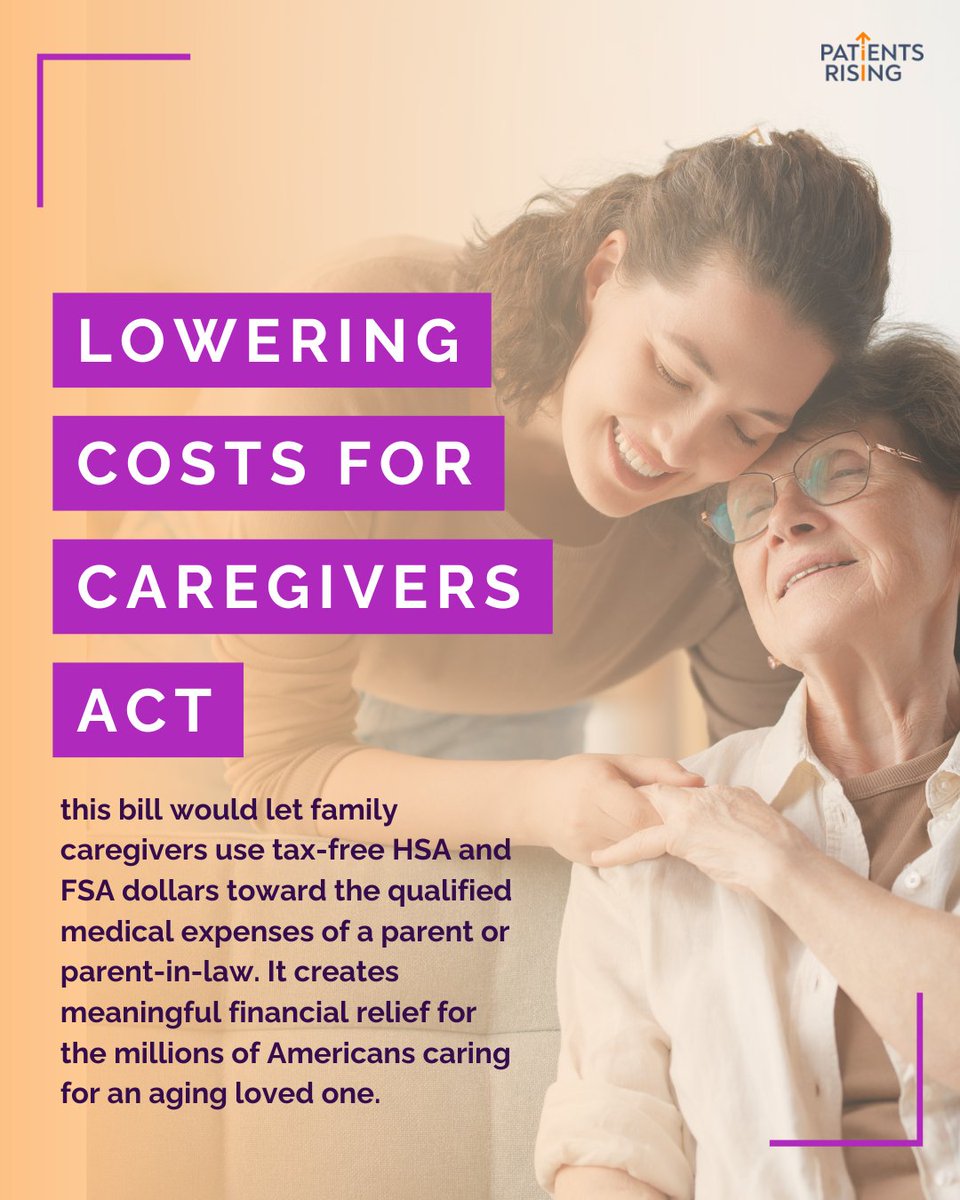
The Lowering Costs for Caregivers Act — http://H.R. 138 Led by Rep. Vern Buchanan (R-FL) with Rep. Mike Thompson (D-CA), and co-sponsored by Rep. Paul Tonko (D-NY), would let family caregivers use tax-free HSA and FSA dollars toward the qualified medical expenses of a parent or parent-in-law — creating meaningful financial relief for the millions of Americans caring for an aging loved one.
We invite you to join Patients Rising on Tuesday at 2 p.m. ET for our online workshop, Alzheimer's & Caregiving: What's Moving in Congress to discuss this piece of legislation and ask questions. Register here: hubs.ly/Q04l08Bb0
58
Jun 12
On Tuesday, Patients Rising is hosting a webinar where we'll be discussing 2 bipartisan bills that are important to the Alzheimer's and caregiving community.
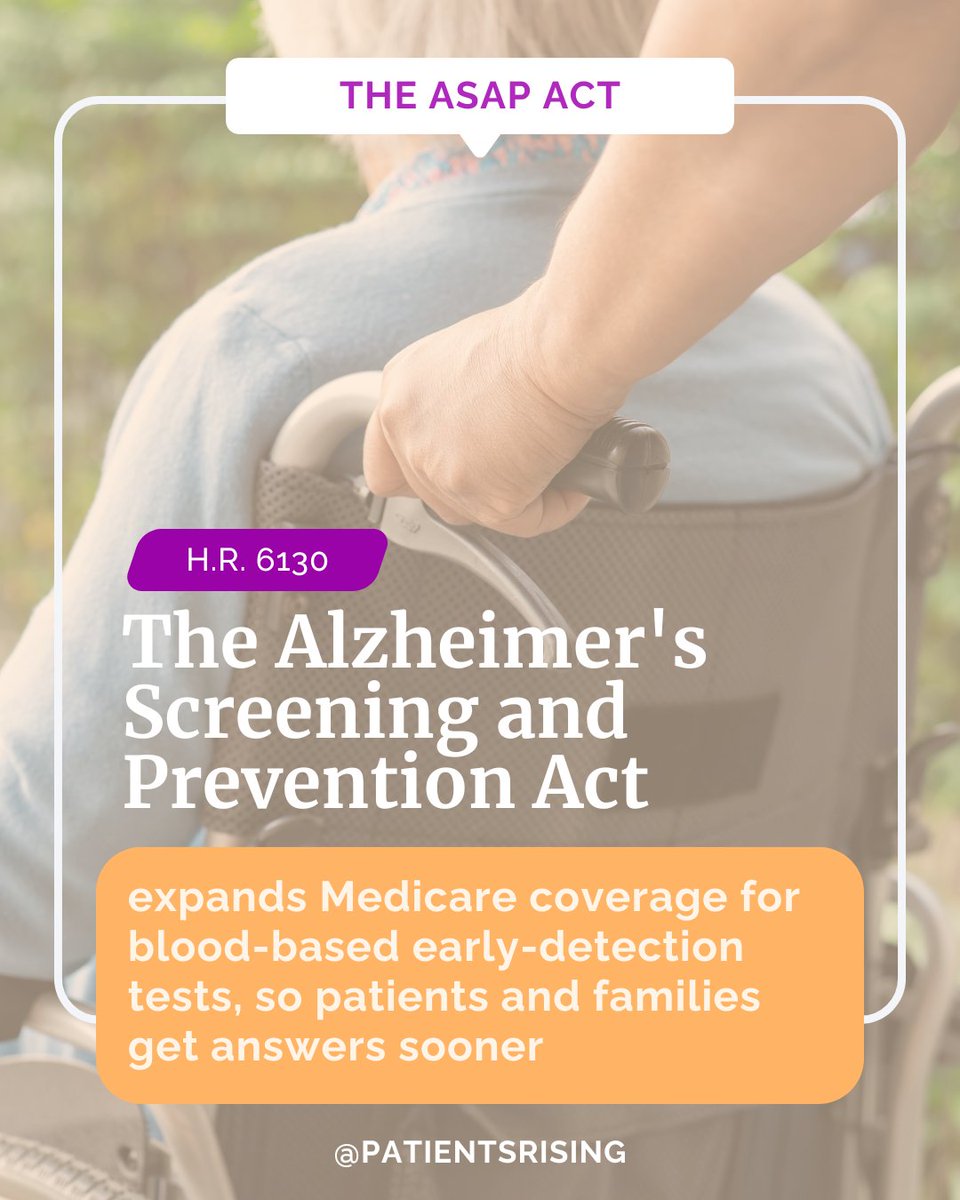
One of them, the Alzheimer's Screening and Prevention (ASAP) Act, is designed to expand Medicare coverage for blood-based early detection tests so that patients and families will get answers sooner.
We invite you to join us at 2 p.m. ET June 16 for Alzheimer's & Caregiving: What's Moving in Congress. Come ready with all your questions, and register here to be part of the conversation: hubs.ly/Q04k_yxQ0
33
Jun 11
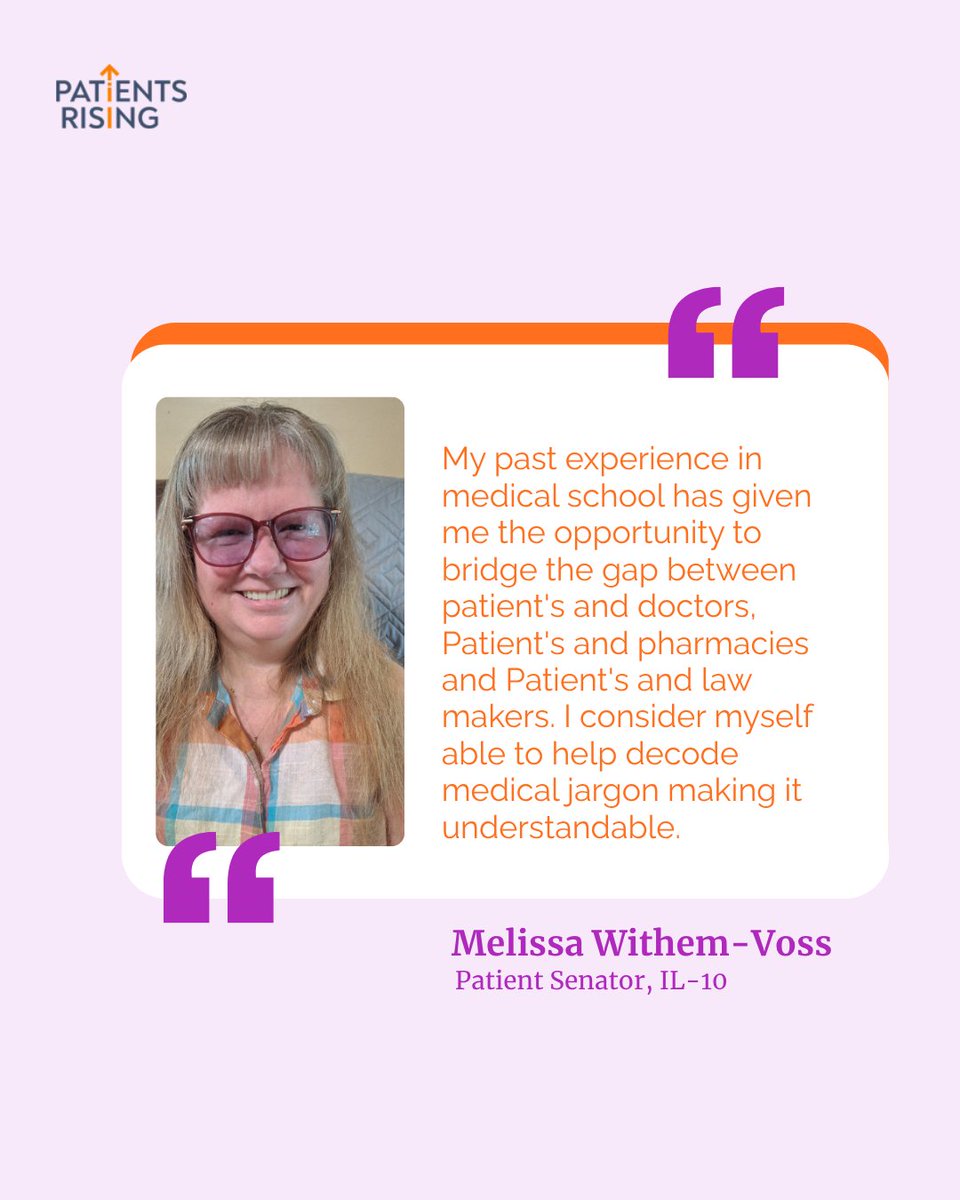
Melissa Withem-Voss is a longtime patient advocate, community leader and educator whose healthcare journey began more than 30 years ago following diagnoses of psoriatic arthritis and psoriasis. Drawing from decades of lived experience, she has dedicated her career to helping patients navigate complex healthcare systems, understand their treatment options and become more effective advocates for their own care.
Melissa began her advocacy work as a Patient Leader and Support Group Director serving the North Shore suburbs of Chicago before expanding her efforts throughout the Midwest. She has written extensively on chronic illness, patient empowerment and healthcare navigation, with articles published through Health Union that continue to serve patients and caregivers today.
Patients Rising would like to thank Melissa for her service on the Patients Rising Patient Senate. Her perspective, experience and willingness to speak up on behalf of patients have helped inform important conversations about healthcare access and patient-centered policy.
Learn more about our Patient Senate here: hubs.ly/Q04kpvQG0
1
1
51
Jun 10
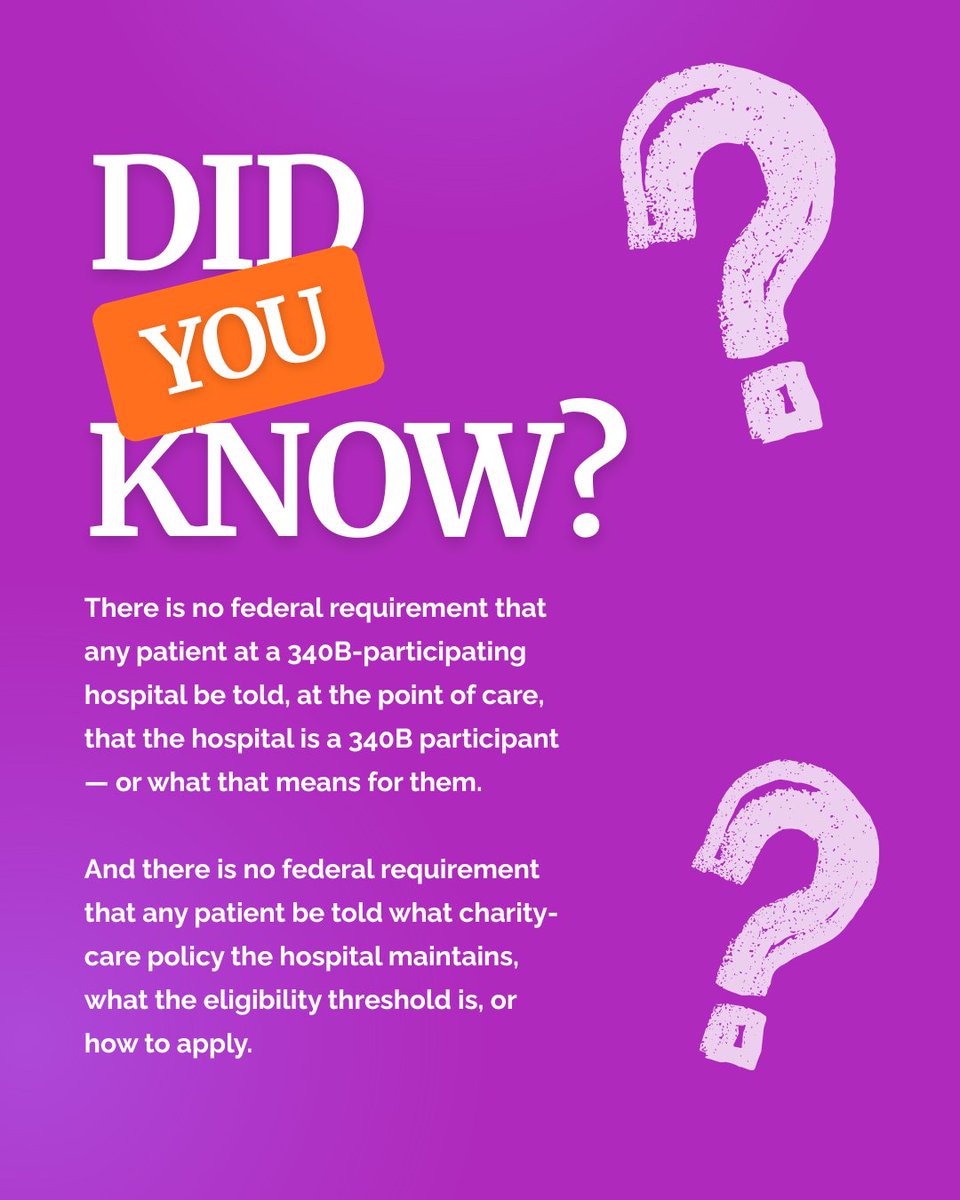
The patients on the bankruptcy schedules in our investigation series may have been 340B patients at their treating hospitals. They were never told. They were never told what the hospital's charity-care policy was. They were never told they might have qualified. The bill came. Then the collections letters. Then the bankruptcy.
The hospital will write the balance off when the bankruptcy discharge enters.
The hospital may count the write-off toward "community benefit."
The patient gets seven to ten years of credit damage and the federal court record of having filed.
This is the program as it currently operates.
1
1
70
Patients Rising reviewed 187 bankruptcy filings across Colorado and uncovered a troubling connection between medical debt and hospitals participating in the federal 340B drug discount program. More than half of the filings included debt owed to a 340B hospital system, accounting for nearly $http://1.5 million in verified balances. The cases revealed a recurring pattern of patients carrying overwhelming debt from a single hospital system, fragmented billing that turned one medical event into multiple financial obligations and rural families facing additional costs tied to long-distance care and emergency transport.
As hospitals receive federal discounts intended to strengthen care for vulnerable patients, the Colorado findings raise important questions about affordability, transparency and whether those resources are translating into meaningful financial relief for the people the program was designed to serve.
Read more about our investigation into Colorado here: hubs.ly/Q04kpwjs0
59
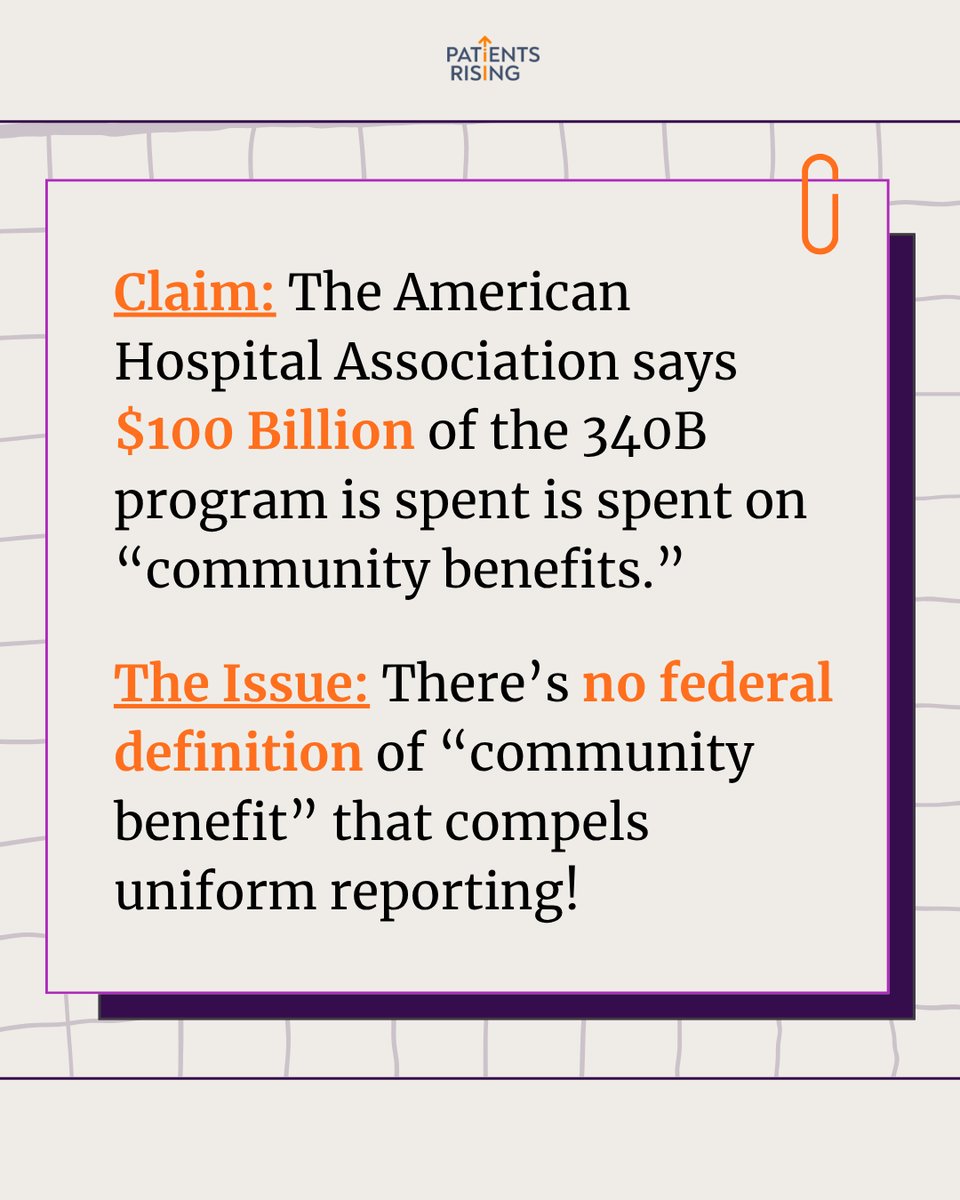
The American Hospital Association's September 2025 community benefit report, the source of the often-cited "$100 billion" figure, is based on IRS Form 990 Schedule H data submitted by 340B hospitals themselves.
Hospitals report the data. The AHA collects it. The AHA, which represents and advocates for hospitals, then publishes a report highlighting the community benefits those hospitals say they provide.
What is often overlooked is that the underlying numbers are not independently verified. There is no federal auditor reviewing how each hospital categorized its spending, and there is no consistent enforcement mechanism to ensure expenses are classified the same way from one hospital to the next. Hospitals report the information, and the AHA reports what hospitals reported.
There is also no single federal definition of "community benefit" that requires uniform reporting. Two hospitals serving similar patients can, and often do, categorize similar expenses differently. The IRS provides guidance on what hospitals may report, but it does not require every hospital to classify expenses the same way.
As a result, the AHA's $100 billion figure is an aggregate of self-reported data that may be categorized differently from hospital to hospital. The number reflects what hospitals reported, not a standardized accounting of community benefit spending.
5
9
652
Patients Rising reviewed 130 bankruptcy filings across Louisiana and found a pattern that is difficult to ignore. More than one-third of the cases involved medical debt owed to nonprofit hospitals participating in the federal 340B drug discount program, with nearly $1 million in verified debt identified. Two major health systems alone accounted for 84% of the total, and among the filings was a family surviving on just $1,800 per month while carrying more than $386,000 in hospital debt, the largest single hospital balance uncovered in Patients Rising's six-state investigation.
Read more about our investigation here: hubs.ly/Q04kpmKs0
2
2
114
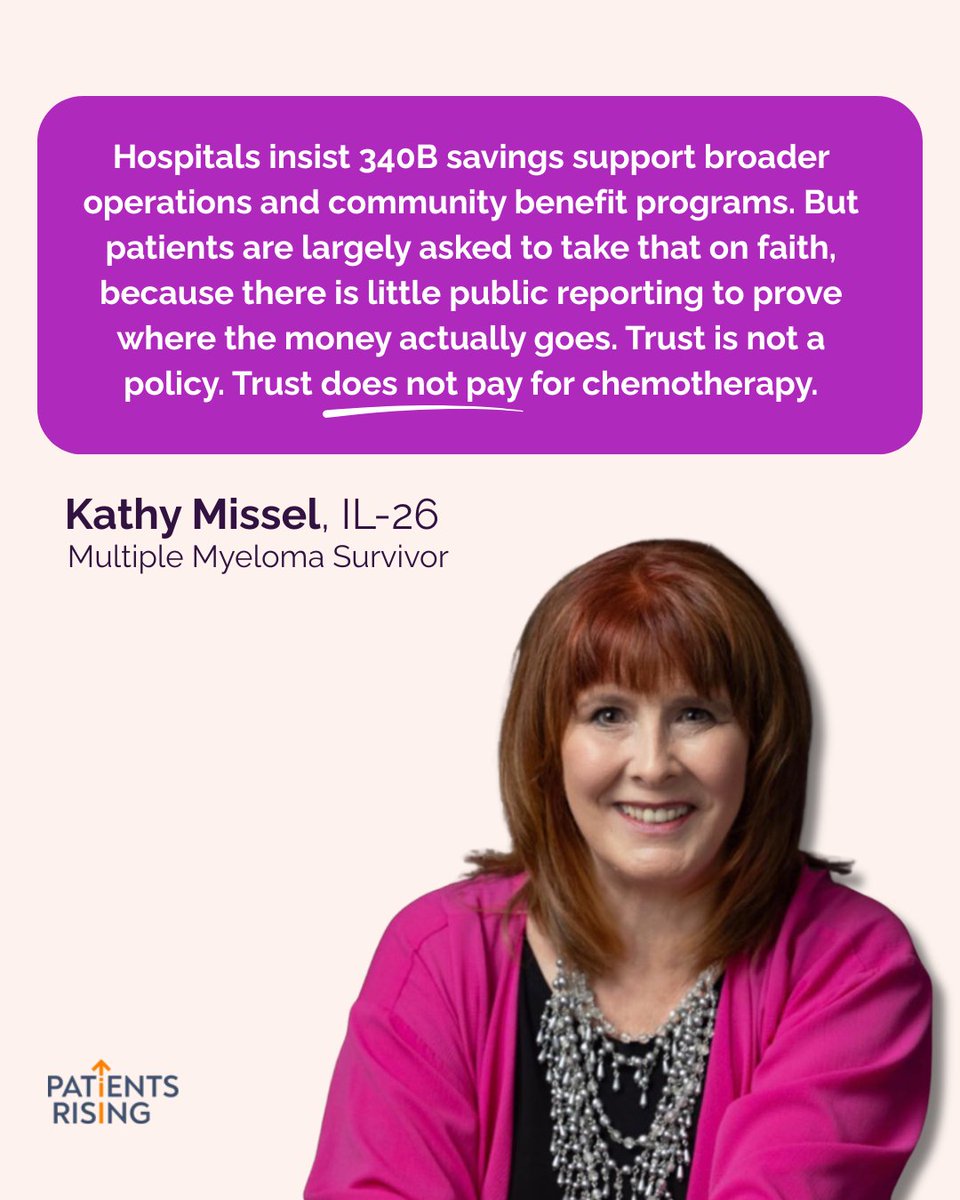
Illinois 340B hospitals now generate roughly 2.7 times more in program profits than they spend on charity care. Statewide, these hospitals provide charity care equal to just 1.74% of their costs — below the national average — and nearly 69% provide less charity care than comparable non-340B hospitals. One Illinois hospital alone, the University of Chicago Medical Center, is estimated to generate more than $200 million annually through the program.
Where is that money going?
Kathy Missel is asking the questions that patients deserve to have the answers to. In case you missed it earlier this week, take a look at her guest column for Patients Rising: hubs.ly/Q04jtdv30
1
51
Wisconsin presents the most concentrated medical-bankruptcy pattern in our six-state series. Across 104 individual Chapter 7 and Chapter 13 filings from the Eastern and Western Districts of Wisconsin in January and February 2024 — just two months — the data shows the highest 340B exposure rate, the highest medical-debt rate, the densest verified-340B dollar accumulation per unit of time, and the most concentrated single-system dominance of any state we have examined.
Read our report here: hubs.ly/Q04jtcgr0
1
61
Healthcare debates are often fought at 30,000 feet. Patients live them on the ground.
From the industry's perspective, there are contracts, formularies, utilization management programs and cost controls. From the patient's perspective, there is a prescription that was approved yesterday and denied today. There is a treatment delayed. There is another form to complete while symptoms continue.
The healthcare system is full of competing priorities. Patients only have one.
PCMA is coming to the table. Patients Rising is here to listen, and we're bringing the patient perspective into the room.
Sign up here and be part of the conversation: hubs.ly/Q04jsmSq0
2
47
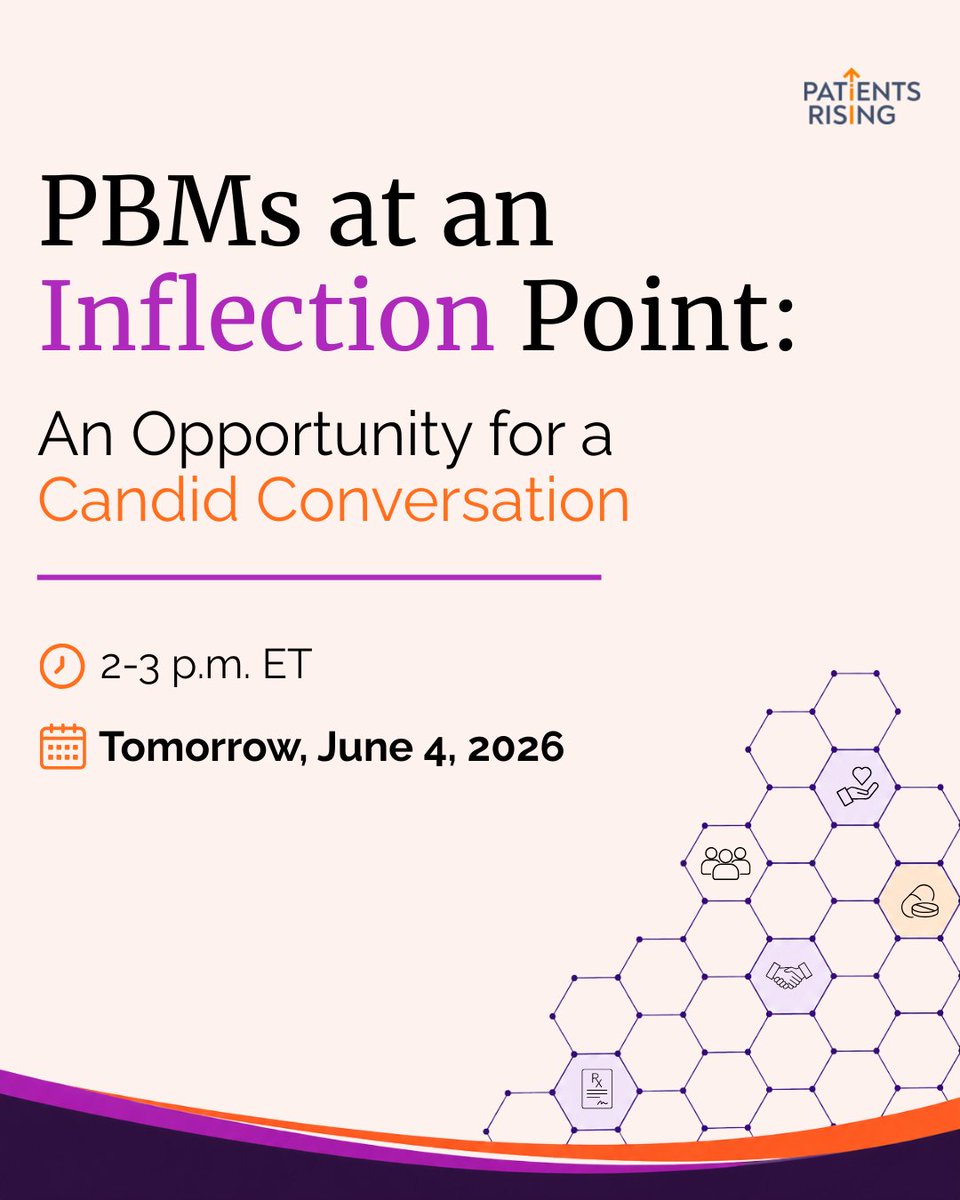
PBMs have become one of the most debated parts of the healthcare system.
Supporters point to their role in negotiating costs and managing prescription drug benefits. Patients often point to experiences with prior authorizations, step therapy, formulary changes and coverage decisions that can create barriers to care.
On June 4, Patients Rising and PCMA are coming together for a conversation about where those perspectives meet.
What do PBMs actually do? What changes are being discussed? What concerns are patients raising, and how should the industry respond?
Join Terry Wilcox and senior leaders from PCMA for a live virtual town hall. Half of the program will be devoted to questions from patients, caregivers and advocates.
We'd love to have you join us! Register here: hubs.ly/Q04jNplR0
1
43
Most people assume medical bankruptcy happens because someone didn't have insurance.
What if that's not the whole story?
Patients Rising reviewed 146 bankruptcy filings from Washington state and found more than $1 million in verified medical debt owed to hospitals participating in the federal 340B program. The largest share of that debt was concentrated within a single nonprofit hospital system.
In fact, 81% of the bankruptcy cases reviewed included medical debt, and more than one-third included verified debt owed to a 340B-participating hospital.
Read more here: hubs.ly/Q04jsnD50
47
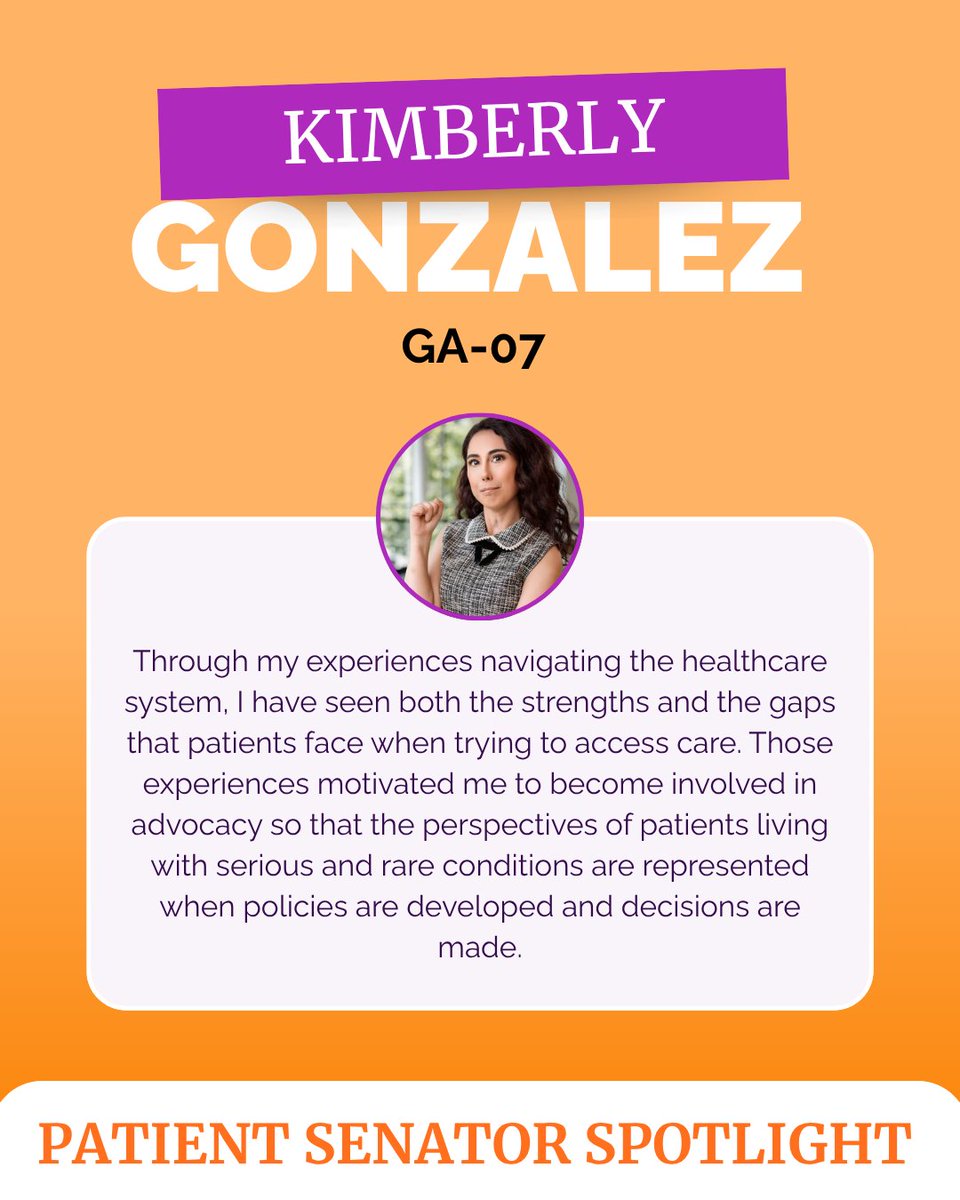
"It's a bad day, not a bad life."
It's the mantra that you can see on Kimberly Gonzalez's social media profiles as she passionately tells her story and advocates for the rare disease community.
Living with scleroderma, Raynaud’s, and antiphospholipid syndrome, Kim knows firsthand the challenges patients face navigating complex care. But what stands out even more than her diagnosis is her determination to turn adversity into action.
Patients Rising is proud to have Kim as part of the Patients Rising Patient Senate.
Learn more about our Patient Senators here: hubs.ly/Q04js04T0
1
38
May 31
Kathy Missel is raising questions about whether the billions generated through the 340B program are truly reaching the vulnerable patients the program was originally designed to help. In her guest column, she examines how some Illinois hospitals now generate far more in 340B profits than they spend on charity care, while patients continue facing high medical bills and barriers to care.
As lawmakers consider expanding protections for the program, she talks about the growing debate around transparency, accountability and whether the financial benefits of 340B are making a measurable difference for the people it was created to serve.
Read her story here: hubs.ly/Q04jsDDD0
1
72
May 30
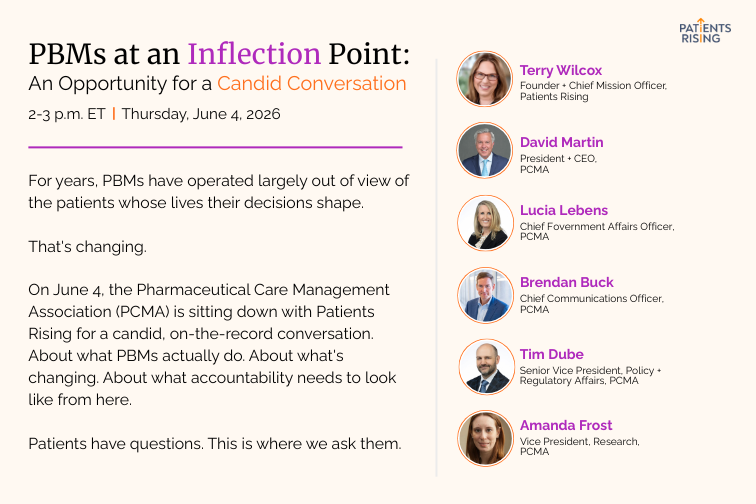
For years, PBMs have operated largely out of view of the patients whose lives their decisions shape. Denials. Prior authorizations. Step therapy. Formulary changes. Lost records. For the sickest patients, the consequences have been serious — and in some cases, devastating.
On June 4, PCMA is sitting down with Patients Rising. About what PBMs actually do. About what's changing. About what accountability needs to look like from here.
Patients have questions. This is where we ask them.
Join host Terry Wilcox for a 60-minute virtual town hall with senior leaders from the Pharmaceutical Care Management Association. Half the hour is audience Q&A.
Sign up here: hubs.ly/Q04jslzW0
2
40
May 28
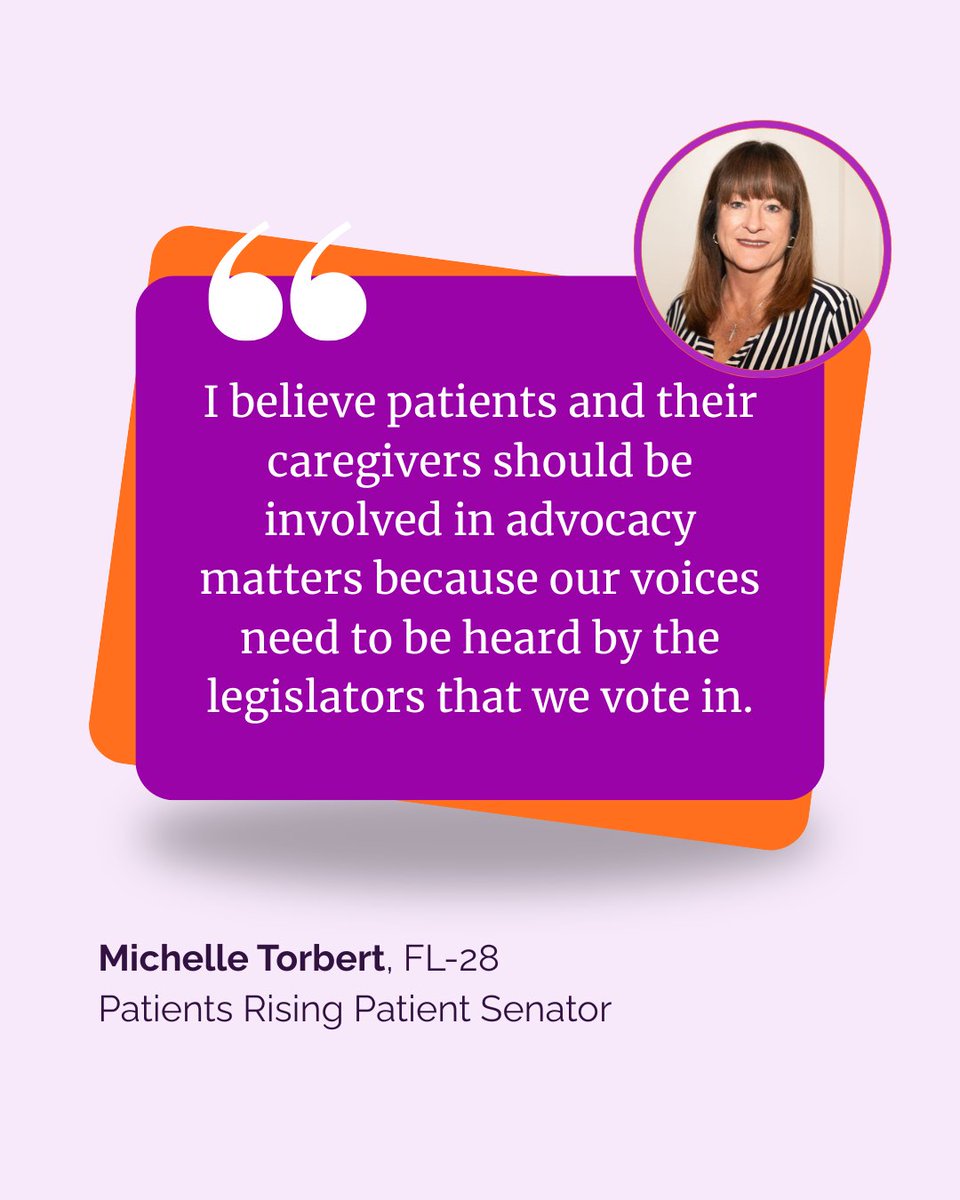
Michelle knows what it means to fight for care that should never have been difficult to access in the first place.
After her daughter Leslie was diagnosed with Prader-Willi syndrome nearly 28 years ago, Michelle found herself battling insurance companies for therapies, medications and support services that directly impact quality of life.
Instead of stepping back, she stepped further into advocacy.
Michelle went on to serve as a board member and Board Chair of PWSA/USA, later expanding her work into government-level advocacy because she believes real change happens when lawmakers hear directly from patients and caregivers living these issues every day.
As part of the Patients Rising Patient Senate, Michelle brings a perspective shaped by decades of experience navigating Medicaid, insurance barriers and the long-term realities families face when care systems fail to communicate across state lines. She is passionate about improving Medicaid portability for adults with disabilities, reforming the role of PBMs and ensuring patient voices are part of policy conversations from the beginning, not as an afterthought.
We appreciate your advocacy, Michelle!
1
198
May 27
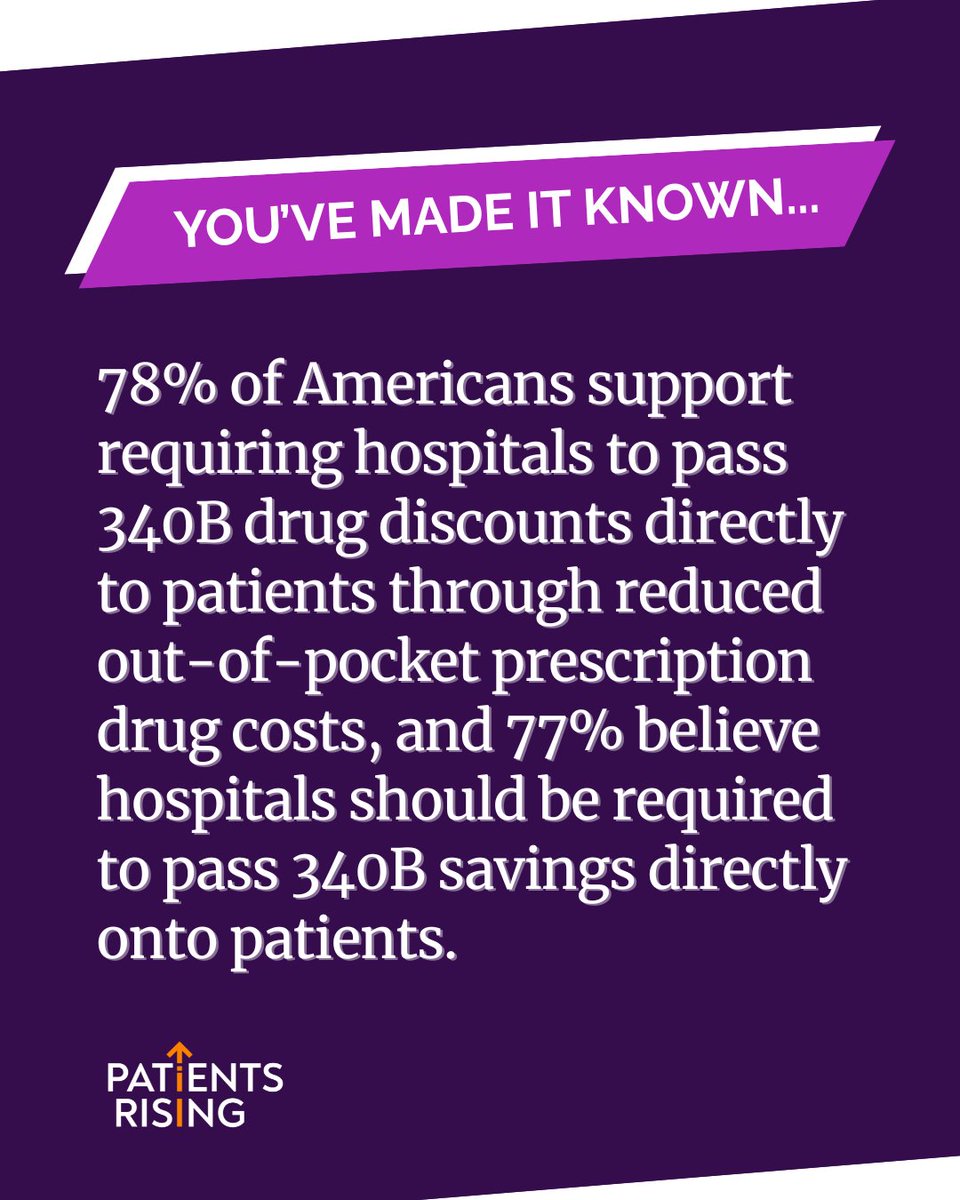
A study published from last year from the National Consumers League released results of a poll taken from 20,000 adults with an overwhelming concern about the burden of medical debt and strong public demand for comprehensive reforms of the 340B Drug Pricing program.
Nearly four in five surveyed adults (78%) support establishing requirements to ensure that qualifying patients directly benefit from 340B drug discounts through reduced out-of-pocket prescription drug costs. More than three in four surveyed adults (77%) believe hospitals should be required to pass 340B savings directly onto patients.
1
63
May 26
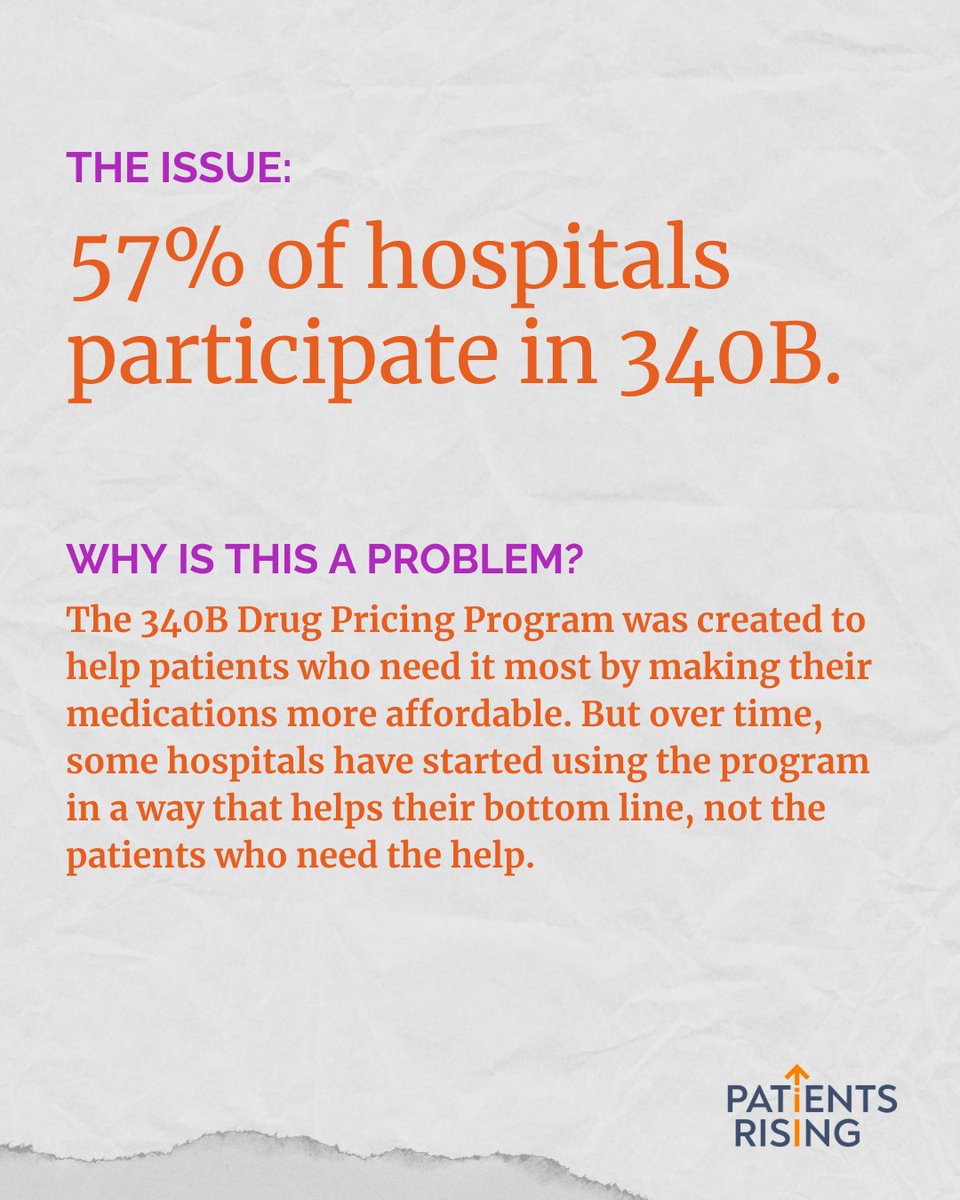
Who's really benefitting from 340B in Illinois?
Illinois 340B hospitals now earn roughly 2.7 times more in program profits than they spend on charity care. Statewide, these hospitals provide charity care at just 1.74% of their costs — below the national average. Nearly 69% of Illinois 340B hospitals fall short on charity care benchmarks compared to hospitals not participating in the program at all.
Read more here: hubs.ly/Q04hLDtX0
65
May 24
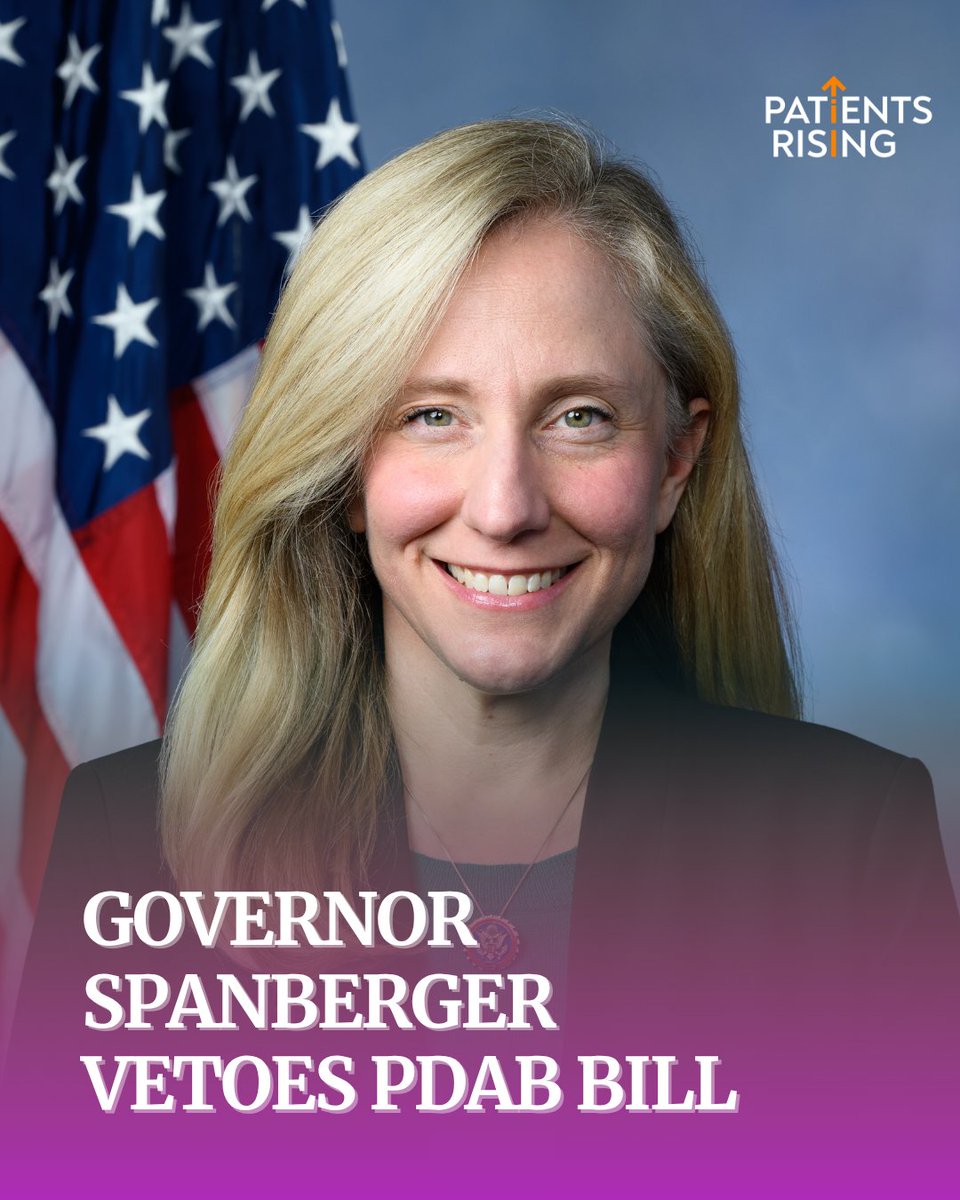
This week Governor Abigail Spanberger for vetoed HB483 and SB271, legislation that would have established a Prescription Drug Affordability Advisory Panel (PDAAP) in Virginia.
We applaud her decision for putting Virginia patients first! Thank you, Gov. Spanberger!
Read more here: hubs.ly/Q04hLDdF0
82