Signadot is a Kubernetes-native platform that empowers developers and AI coding agents to verify code across complex microservice ecosystems.
Joined June 2020
- Tweets 281
- Following 2
- Followers 554
- Likes 19
39 Photos and videos

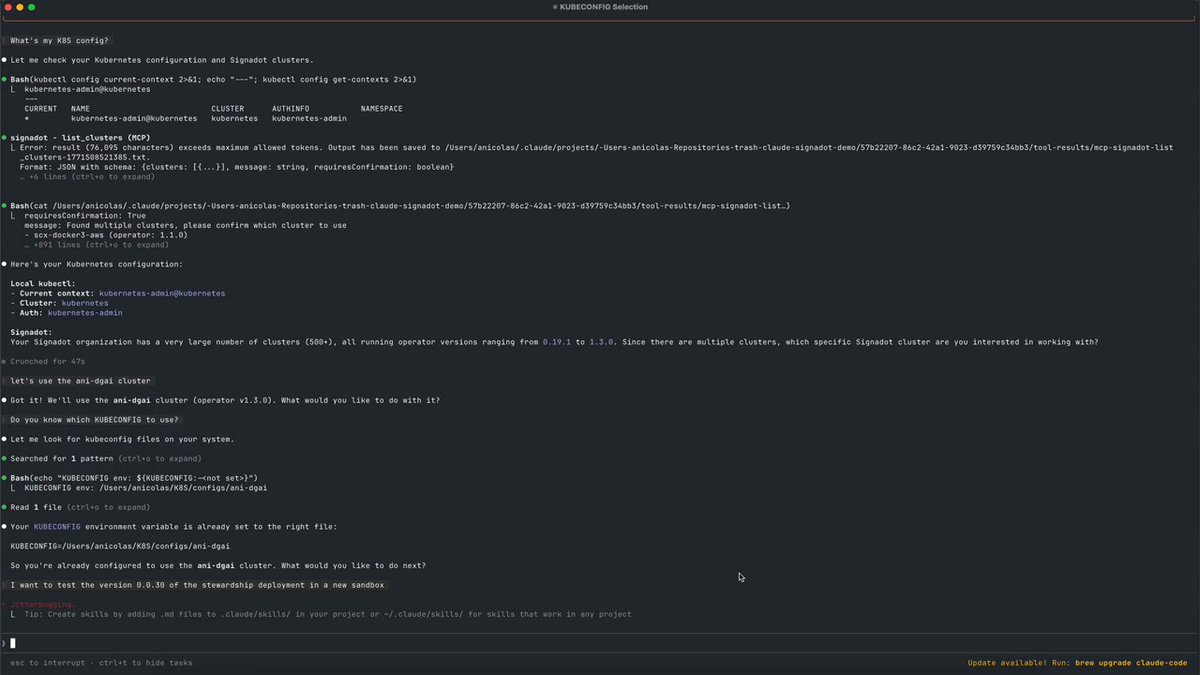






We gave two @AnthropicAI Claude Code sessions the same task. One had access to Signadot and the signadot-validate skill. The other didn’t.
The one without shipped a broken change. The one with the signadot-validate skill caught it and fixed it on its own. 🧵
youtube.com/watch?v=St2ckbmk…
1
1
1
704
Cognition ( @cognition) now triggers more Devins asynchronously than interactively. As @ido_pesok puts it, async agents are only useful if developers can trust what they come back with. In a cloud-native system, that trust is a runtime problem.
New on @thenewstack, Signadot CEO @arjuniyer_ on why a green test run against mocks says nothing about cross-service behavior, why where the verification loop closes decides what a defect costs, and how to close that loop before the PR.
thenewstack.io/verifying-asy…
2
2
266
We gave two @AnthropicAI Claude Code sessions the same microservices task. Same model, same prompt. One declared success. The other found a break the first one shipped.
1
1
1
110
4/4
The agent fixed the front end, revalidated, and shipped a change verified across the full stack. Closed verification loop. That is what turns agent speed into mergeable output.
Read the writeup and watch the demo: signadot.com/blog/claude-cod…
43
New tutorial: closed-loop microservices validation with @AnthropicAI Claude Code and Signadot.
The agent proves a change against your real system before the PR, not after.
signadot.com/docs/tutorials/…
1
1
1
92
4/4
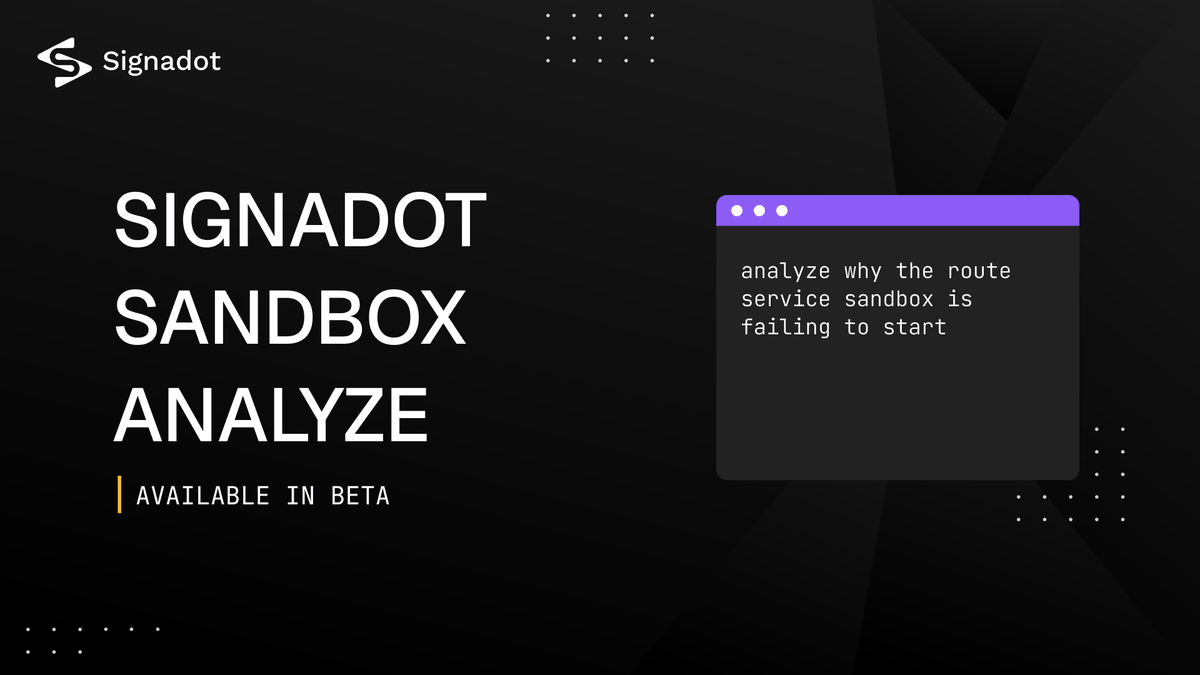
Your app traffic, secrets, and workload logs are never sent. It reasons about the environment, not your data.
Available now in beta. Check out the docs: signadot.com/docs/reference/…
25
Tutorial: How to test Temporal workers using Signadot's lightweight ephemeral environments in Kubernetes.
If you are building agentic backends, durable workflows, or multi-step orchestration on Temporal and Kubernetes, this one is for you.
signadot.com/blog/how-to-tes…
46
Coding agents validate at machine speed, but only against the surface they can reach. Environments are solved (lightweight ephemeral envs give the agent a real cluster on demand). Tests are the gap. Integration tests live in CI, out of reach during the loop, so agents fall back to unit tests and mocks. Bugs land downstream.
What closes the gap: a plan. One end-to-end check for one user-visible behavior. Real cluster, real assertions, no pipeline. Ships today as two agent skills, signadot-plan and signadot-validate. Native in Claude Code, Cursor, Codex.
Full piece from CTO Anirudh Ramanathan @foxish_ on how we are building this for @thenewstack: thenewstack.io/ci-for-coding…
39
Sandboxes. Plans. Skills.
The comprehensive agent-native platform for building and validating microservices on Kubernetes.
Available for all Signadot users today: signadot.com/blog/signadot-p…
2
31
Signadot retweeted

May 12
New Signadot skill lets Claude Code, Codex and Cursor validate changes in live Kubernetes environments ift.tt/CQVBF6z
1
3
174