
PFP: @SolanaMBS (join @MonkeDAO) Investment: @BigBrainVC Gallery: @BigBrainGallery Advisor: @AzraGames
Joined August 2021
- Tweets 10,264
- Following 11,084
- Followers 307,169
- Likes 58,818
889 Photos and videos

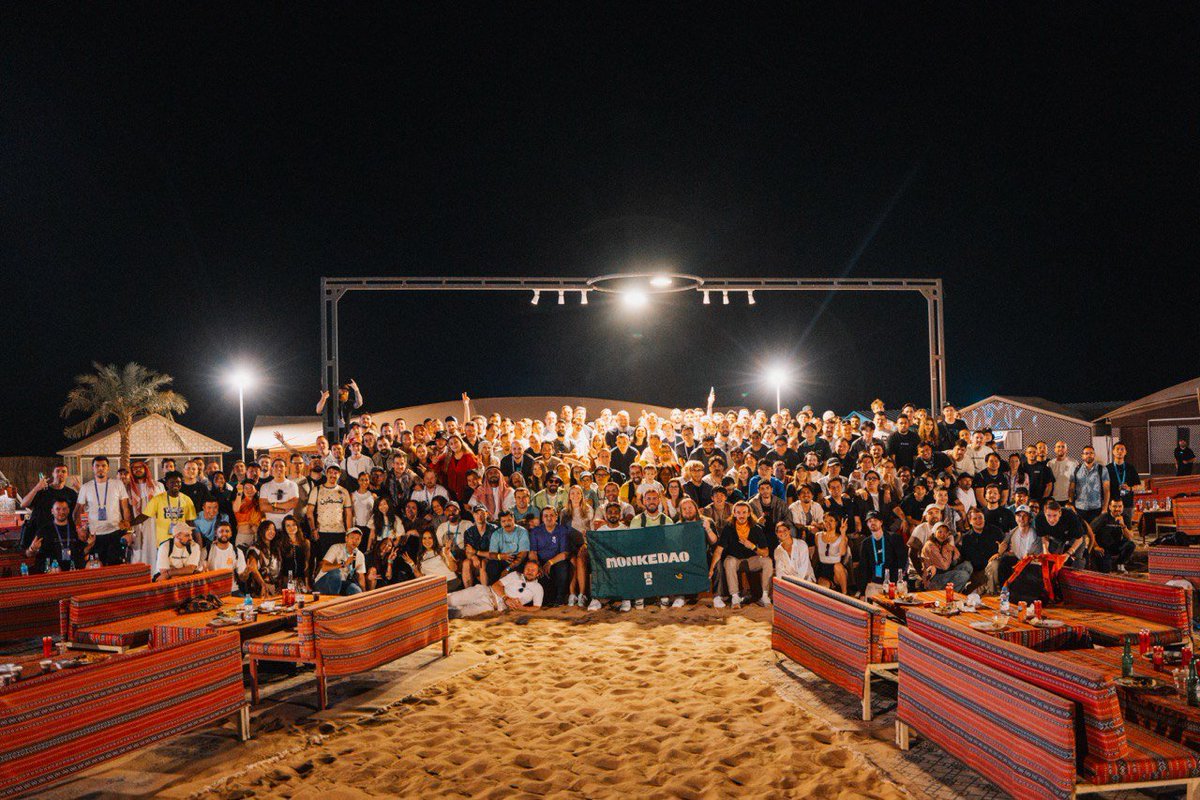

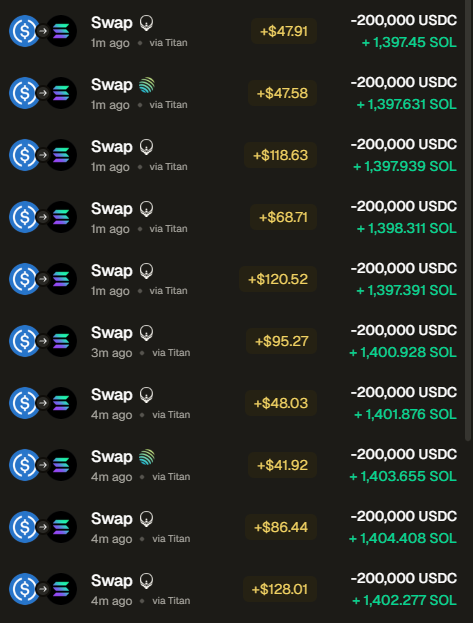
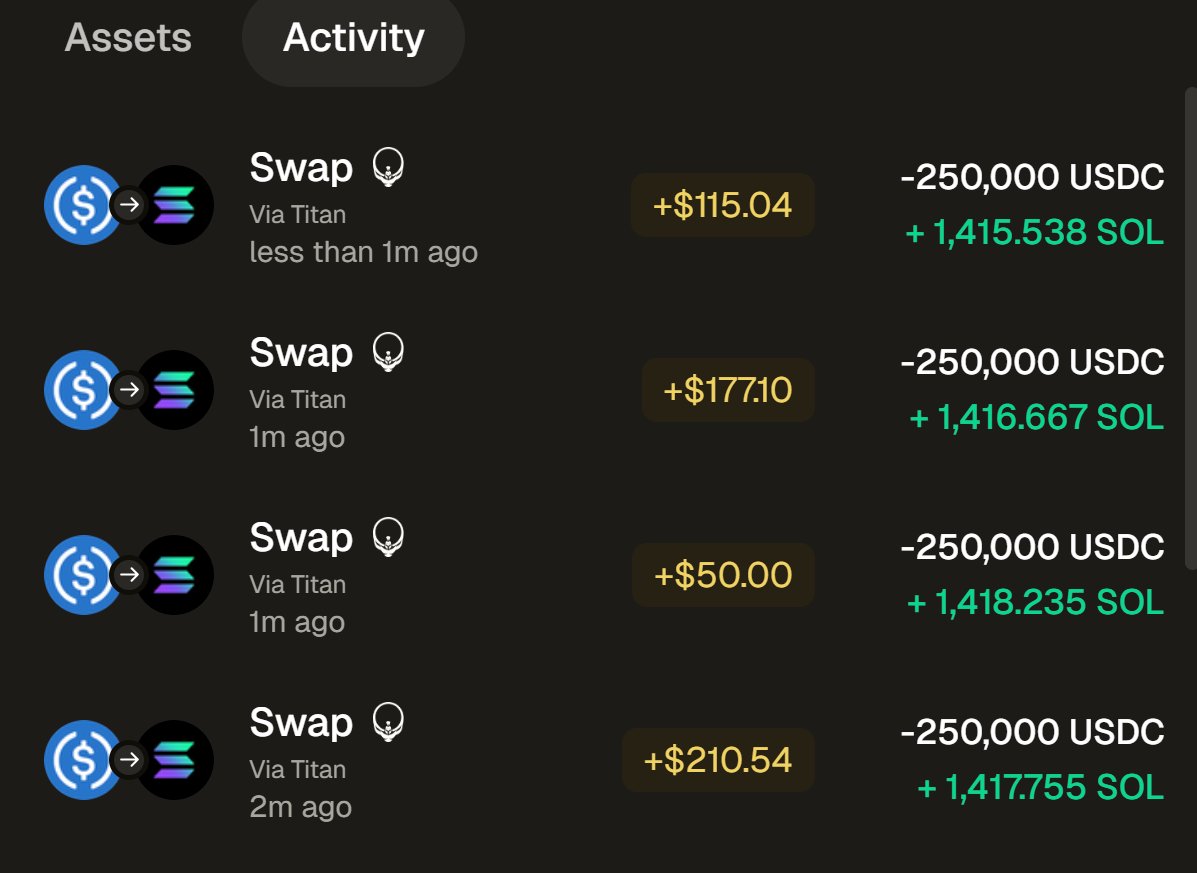





When an OG solana community asks for some of the rarest whiskey on earth, you find it.
Honored to bring a 35-year-old Macallan, still currently aging in Scotland, to the BOOGLE community.
NFTs are back, and they're liquid AF.

Jun 1

The ghosts are back and this time the genie is out of the bottle. BOOGLE x BAXUS
A 1990 Macallan, 35 years in the making, becoming the first liquid release for the BOOGLE community in partnership with @BAXUSco
One BOOGLE = one bottle. More to come. 👻🥃

17
14
79
13,639
S◎L Big Brain retweeted

I think a lot of people in crypto venture have fallen into a slump, feeling like the space is uninspiring and that the talent has left. Fear not, there are still some places with insane talent and innovation:
- payments (issuing bank, acquiring bank, aml, on/off ramps, float management, card issuance, neobanks, UX improvements, CEX/DEX integrations, insurance, merchant onboarding/interchange rate negotiation)
- prediction markets (resolution, float management, sports market data aggregation/data pipelining, node colocation/integration with existing exchange infrastructure, indices, packaged markets, multi-step markets, continuous markets, bond-like products, private credit-like products)
- consensus/protocol engineering (@commonwarexyz shipping upgrades like it's 2021 and the competition is still fierce)
- MEV/order routing (propAMMs, solving networks, builder economics, orderflow mempools/marketplaces, upcoming MCP upgrades!!!)
who knows about the future of altcoins but the future of crypto venture is bright. keep your head up king.
53
19
291
48,206
S◎L Big Brain retweeted

Mar 5
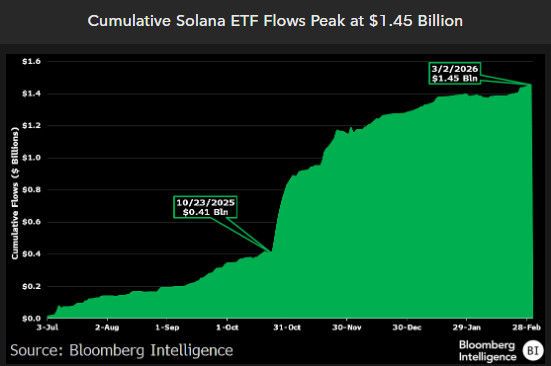
Solana is down 57% since the spot ETFs launched in July (that is about as unlucky timing as you'll ever see in ETFs) yet they managed to not only accumulate $1.5b in flows but not really give any of it up. Further, 50% of the assets are from 13F filers = serious inv base. Both really good signs for future IMO. Great note out today on it from @JSeyff
159
212
1,678
274,296

Jan 27
Proud early backer of @0xZergs & team.
They are going after a big TAM here and I believe they have the right team to execute on this vision.
Keep an eye on this one.
Jan 27

The ticker is $CHIP.
It sets the interest rate of artificial intelligence.
Today we're announcing the USD.AI Foundation and its governance token, built on over $7.7 billion in trading volume and real revenue from GPU-backed lending.
Here's how we got here...
129
4
328
43,193
Jan 22
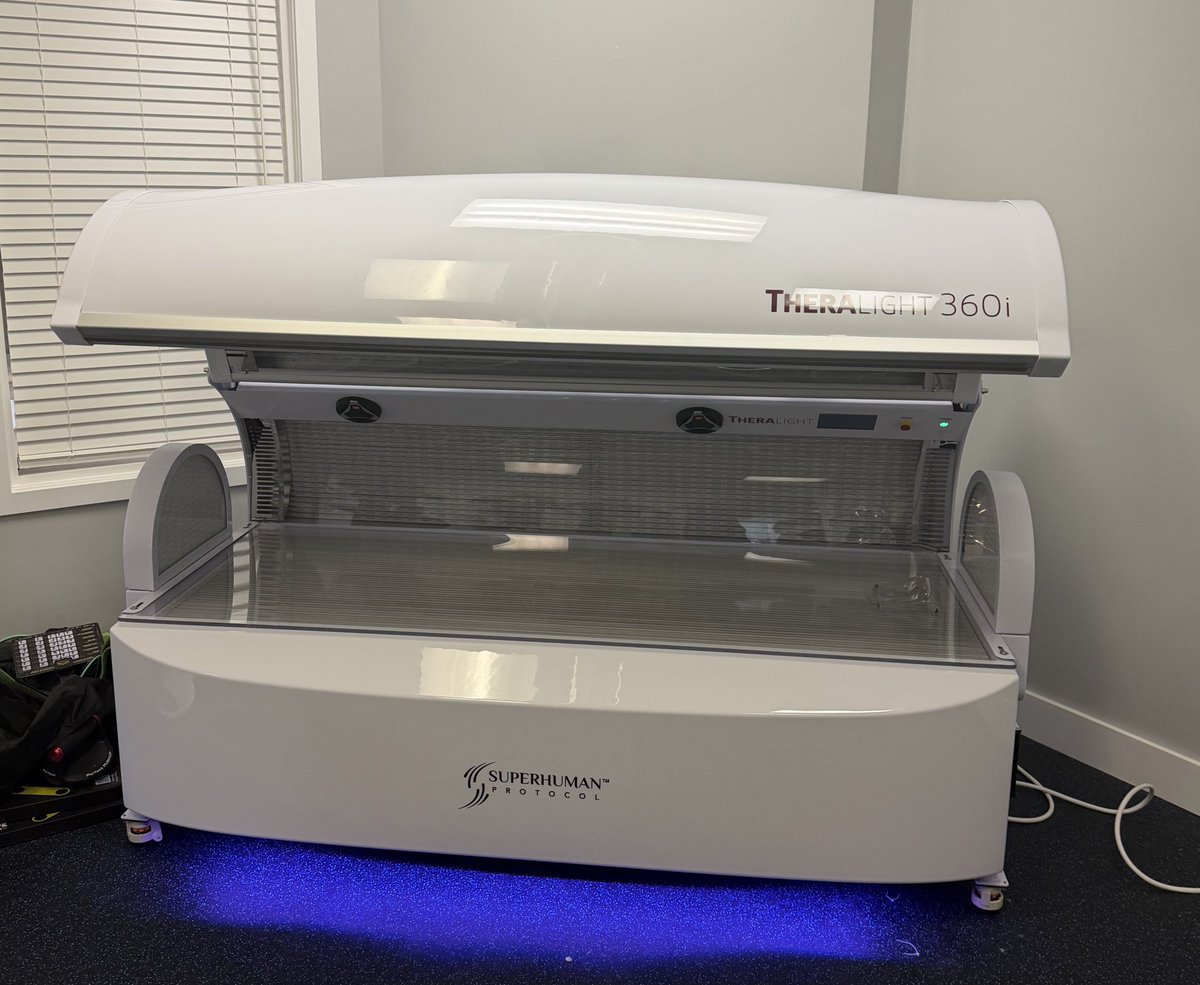
Health is wealth.
Just added this quality red light/pemf bed to our office for the whole team to use. I plan on hopping in it daily.
What device should we pick up next?
208
7
577
39,864
Jan 21
This is wild. Lesson for newer folks investing.
NEVER ape into something that lists only a soft cap and not a hard cap.
"But accepting only $2.5M would have funded a few months of operations" 🤯🤯🤯🤯
Who aped into this at a 69M FDV in this market?

94
16
317
65,198


The MegaETH Global Stress Test
11B transactions in 7 days.
On Jan 22nd, we’re opening mainnet to users for several latency-sensitive apps while the chain is under intense sustained load.
Ultra-low fees. Real-time transactions.
Public Mainnet in the days that follow.
489
335
2,289
609,153
S◎L Big Brain retweeted

Jan 11
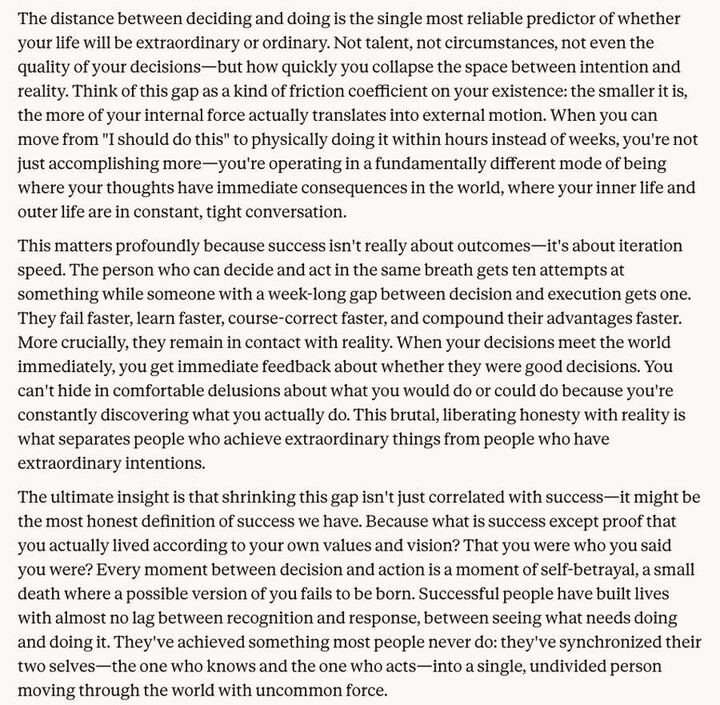
“The distance between deciding and doing is the single most reliable predictor of whether your life will be extraordinary or ordinary.”
These three paragraphs will change your life:
235
1,546
11,216
554,727
Jan 11
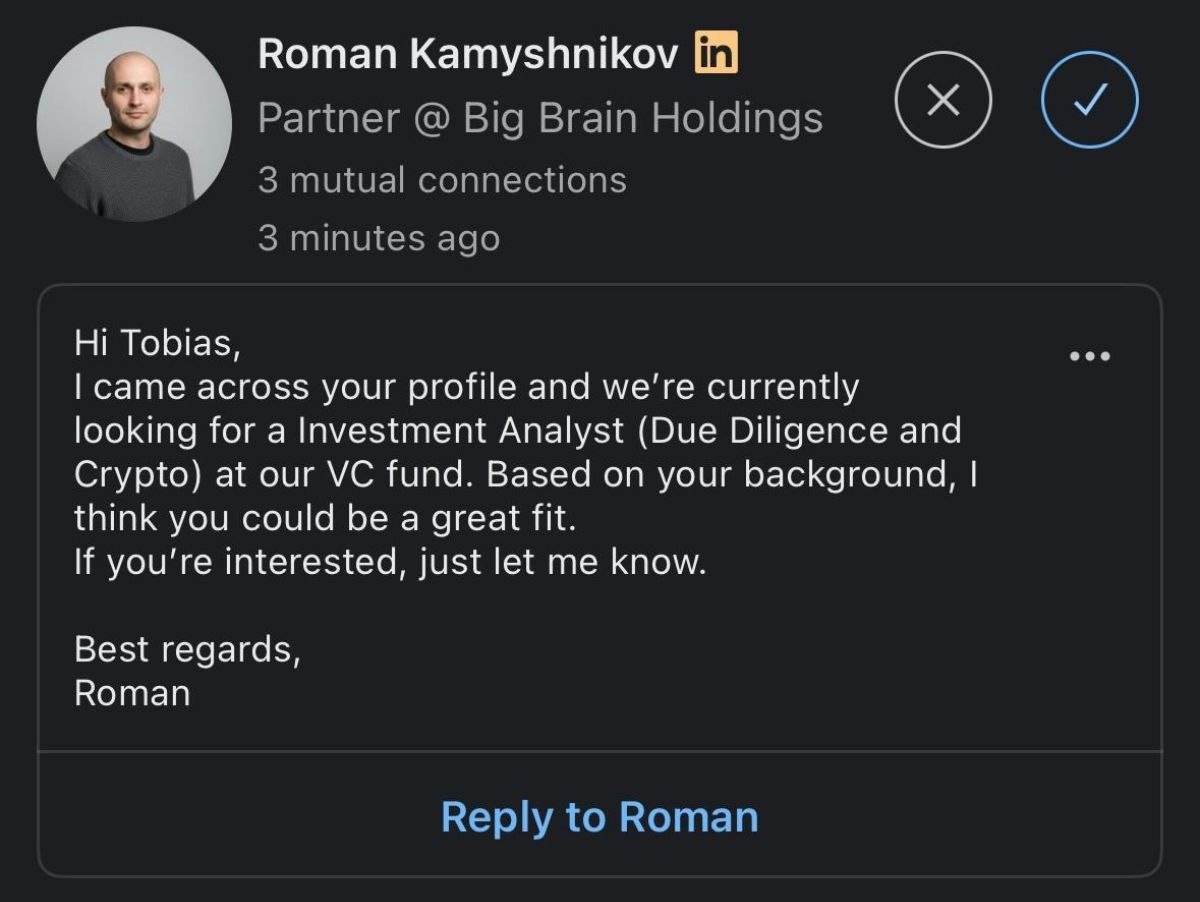
Quick heads up. There is a scammer on LinkedIn representing he is with @BigBrainVC and he is NOT. Do not interact or engage with him and report him if he has contacted you. The scam account is in the screenshot below. Scammers getting more creative. Be safe out there.
73
29
261
19,839
S◎L Big Brain retweeted

Jan 8
I just want someone to love me like @SOLBigBrain loves buying his bags when they’re at discounted prices
27
2
104
7,893
Jan 8
I've been quiet, but when I see some good FUD and price action move down while people are fearful but nothing fundamentally has changed, I stay bullish and buy more.
Thank you for some nice discounted ZEC today. 🤝
108
29
588
32,764
Jan 8
This looks bullish to me...
x.com/jswihart/status/200932…
Jan 8

We are all in on Zcash.
We need to scale Zcash to billions of users.
Startups can scale, but nonprofits can't.
That's why we created a new Zcash startup.
cashz.org

12
5
52
13,121
Your bankroll is your product, and your job is to compound it, not entertain it.
New Years Tip...
Most traders treat holding as neutral.
Holding is an active decision you renew every day.
If you do not force yourself to see that, you drift into gambling behavior. You stop evaluating positions on expected return and start defending them because you already own them.
Step 1: Start with a clean balance sheet.
List every on-chain asset you own and convert it into 1 USD total.
That number is your capital base.
If you want to take it a step further, consider swapping everything into stables and treat the friction as an intentional cost paid to reset judgment and decision-making.
A stable-only baseline removes the built-in bias that comes from being positioned. It forces every re-entry to be explicit, sized, and justified from zero.
This works because positions create blind spots.
When you hold tokens, you lose sight of optionality. Optionality is your ability to redeploy capital into a better setup.
Every day you hold an asset, you pay an opportunity cost. The cost stays invisible while you remain invested, because “doing nothing” feels like a default action.
Selling removes that default.
Once you are out, your judgment improves because you regain full choice. After a full reset, many chips will not return to the same bets, and the ones that do return will usually come back with cleaner sizing and clearer reasons.
Step 2: Define a target yearly ROI for your capital base.
Once you have your capital base, make the second shift.
Define a target yearly ROI for that USD total. This turns trading into capital allocation with a measurable objective. It also gives you a benchmark that filters behavior.
Without a target ROI, your goal becomes open-ended.
Open-ended goals invite emotion because there is no stopping rule.
In crypto, that usually creates a predictable loop: greed expands risk, volatility punishes sizing, people roundtrip, then they try to “make it back” quickly, then they take low-quality trades, then they blow up.
A target ROI is an anchor because it gives you a reference point for risk-taking.
When an opportunity appears, you compare it against your objective and your remaining time in the year.
You stop asking “how much can I make?” and start asking “is this risk necessary to reach my number?” That single change reduces overtrading and prevents the common failure mode of giving back outsized gains.
A portfolio without a defined return objective drifts toward mood-based risk.
A portfolio with a defined return objective forces structure. Position selection, sizing, and exits become decisions tied to a measurable outcome, not impulses.
15
13
138
10,436

BREAKING: @MorganStanley filed its first crypto ETFs ever: a Bitcoin ETF and a Solana ETF 🔥

597
885
5,109
340,598

I'm pretty certain that the era of giving advice is over, and this is coming from someone who blew up on Twitter through giving advice
Not that it isn't valuable, it's just not that interesting anymore. Only so many lessons you can drop before you realize you're basically repeating the same handful of principles week after week
This is also why bots flock to this type of content. Their AI generated replies are always a lazy remix of whatever you posted, but the fact that the content could even ben remixed in general is a sign that information is no longer an edge anymore
The name of the game now is simply lore. More posts that start with "I" instead "you." Less preaching, more sharing spontaneous life experiences. If you're going to drop some sort of lesson, less "do this" energy and more "interpret this anecdote how you will and pull out whatever insights you want from it"
No more seeing yourself as a "content creator" and instead just talk to the timeline as if you were hanging out with a friend face to face in real life. Show the personality, be yourself, no agenda other than having fun with it. Allow people to benefit from the energy surrounding how you show up rather than through prescriptive commands
81
47
689
68,650
S◎L Big Brain retweeted

31 Dec 2025
Exiting The Year of the Snake
Surprised me how this year went with some people but the nature of a hyperfinancialized space, especially in a bear market
Sharing some of my personal social capital and relationship reminders and lessons from 2025
-Trust in a trustless space is INVALUABLE
-Biggie rests but his words live on. Mo Money, Mo Problems
-People you start the journey with may not be the ones you continue with
-People who are close to people who hate you, are NOT your friends
-Be grateful for the few who will be there in hard times. Be grateful for the hard times that reveal those who won't be
-Stop loss out of bad trades. Same applies to bad people and situations
-Public personas and private are the NOT the same. One is filtered by author. The other is filtered by time
-Play long term games only with long term people. Know who you are playing with and what game they are playing
-Strangers will be happier for you then some of your circles when you win big. Those people should not be in your trust circle
-You cant control what people do to you but you can always control how you respond
-Losers spend their time to get others to join in their misery. Winners spend their time to find ways to win. Choose wisely who you spend your time with.
-When someone reveals themselves to you. Trust them
Grateful for all the Ws and Ls in this category in 2025 Growth can't come without challenges
Success can't come without growth
Shed the Negative. Protect your Peace.
Build your Tribe. Win and Help Win.
Pengu reset and ready for the New Year. LFG!
59
14
165
12,051
S◎L Big Brain retweeted

31 Dec 2025
42
94
915
95,127