
CEO @marqueeinsights. Founder @ContinuousLogic. Helping enterprises move from AI curiosity to executed work. Microsoft Data & AI MVP. Cajun technologist.
Joined January 2009
- Tweets 11,899
- Following 1,951
- Followers 1,669
- Likes 2,493
1,425 Photos and videos









Jun 7
Just paid my GitHub actions bill. Best money spent, in my view. Our PRs are triple-checked by Claude, Codex, and GitHub Copilot. The subtle bugs they’ve found in our agentic developed code has been amazing. Slight misalignments lead to big issues if you don’t catch it early. It’s also uncovered a few “Hail Hydra” situations where we fix one bug, several more appear.
2
100
Jun 2
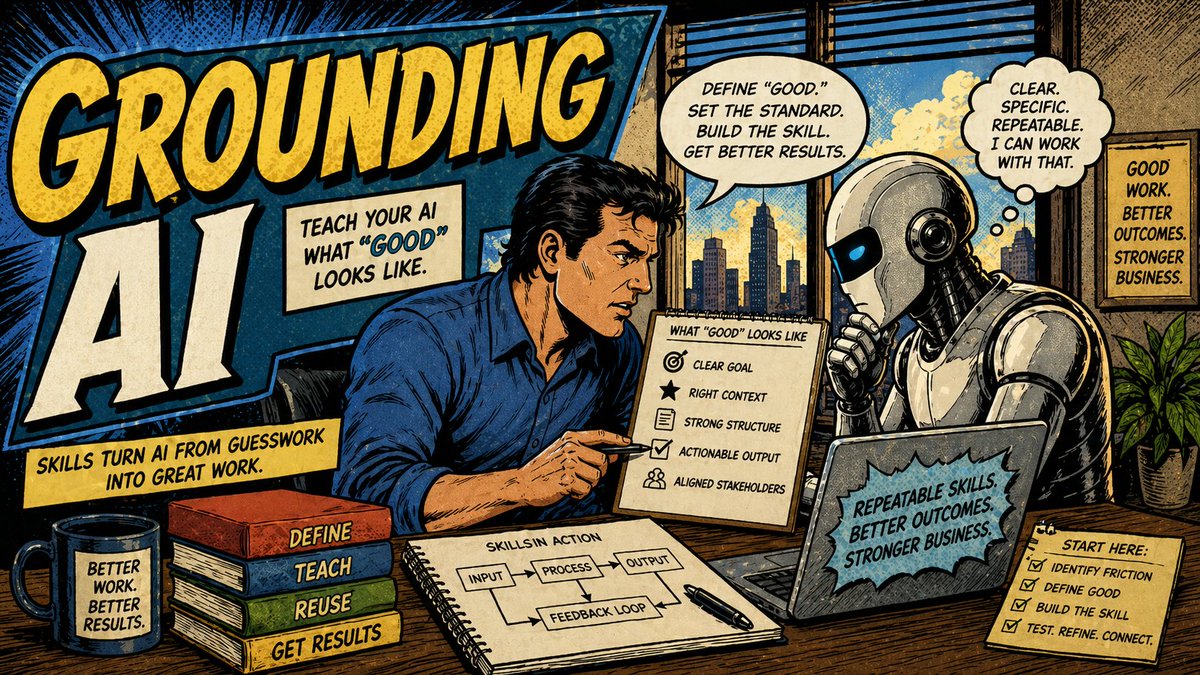
The fastest way to waste money on AI is to solve every problem the same way.
You find a prompt that works, so everything becomes a prompt. You discover skills, so everything becomes a skill. You connect a few tools, and now you are trying to automate the whole company. Then you wonder why the results disappoint.
Here is what took me a while to learn. Scheduled prompts, skills, and tools are not competing options. They solve different problems.
A scheduled prompt tells your AI when to do something.
A skill tells your AI how to do something.
A tool gives your AI the ability to act on something.
SCHEDULED PROMPTS: WHEN TIMING MATTERS
Every Monday you spend fifteen minutes scanning news, competitor moves, and pipeline signals. The work repeats. Only the information is new. That is a scheduled prompt. You write the question once, and it runs before your day starts. The intelligence lives in the prompt. The schedule just means you never have to remember.
Anytime the information changes but your question stays the same, you have a candidate.
SKILLS: WHEN EXPERTISE MATTERS
Now you are reviewing requirements before they hit development. Same scan every time: completeness, missing assumptions, stakeholder impact, compliance gaps, risk. You could write a fresh prompt each time. But the process itself is repeatable.
That is a skill. You package the method once: the instructions, the criteria, the bar for “good.” Think of it as onboarding a new hire. You are not teaching them when to work. You are teaching them how to think. The payoff is consistency. Same expertise, every run.
TOOLS: WHEN ACTION MATTERS
Your AI spots a billing error, decides the customer is owed a credit, drafts the response, and then stops. Understanding a problem is not the same as acting on it.
A tool lets your AI reach outside the conversation. Read the CRM record. Update the database. Send the email. Without tools, your AI can think. With tools, it can do. Otherwise you get a brilliant observer. A client said it best: it is like hiring a consultant who writes great reports but refuses to touch the keyboard.
WHERE IT GETS GOOD
The schedule decides when. The skill decides how. The tools decide what gets done. Pull out any one piece and the system loses most of its value.
So when someone asks us how to build their AI solution, we skip the technology question and start here:
Recurring? You need a scheduled prompt.
Same expertise every time? You need a skill.
Has to act on real systems? You need tools.
The teams getting the most from AI are not running better models. They are matching the right capability to the right problem. That matters far more than the model you choose.
32
May 29
Unsolicited happy customer review. I bought the ruby Ergo Sleeve from Meine Studios for my new MacBook Pro. The sleeve is fantastic at protecting it, a critical need as I carry multiple machines. The ergo setup is also excellent for Claude Code sessions. It also works well with my Surface Laptop 7. I just ordered another for my son who does a lot of media creation.
If you are in the market, check out the link below. Disclosure: I’m not compensated in any way for this rec. meine-studios.com/products/e…
77
May 23
Why do we still have bank holidays? Why are we still processing money like it’s 2006? Zelle is the closest we have to 24/7 banking but it’s limited. It’s still harder than it should be to pay others. I’m not willing to pay 2.9% on major payments to contractors using PayPal/Venmo. There’s got to be a better way.
2
1
62
May 13
I’m thinking about yesterday's post, and something keeps nagging at me. I think the framing about "teaching people to yearn for the sea" is right, but it skips over something uglier. Some people will not yearn no matter how attractive you make it. Instead, they will fight.
They fight, not because they are stubborn or anti-technology, but rather because their power in the organization comes from the thing the AI is about to make less scarce.
Think about it.
· The director who’s the only one who understands the comp model.
· The VP whose status comes from twenty years of relationships.
· The manager whose value is knowing where the bodies are buried in the legacy system.
These are talented people that the org rewarded for this expertise. Bonuses, titles, headcount, board visibility. Now an AI rollout is quietly threatening to redistribute the thing the org said mattered most. Until those rewards change, "your expertise will translate" is a promise the org has not actually made.
Notice where this hits hardest. Not the C-suite, which sponsors AI. Not the frontline, which often wants the tools. It’s the middle managers whose value is coordination and information brokering. These are the two things AI most directly attacks. This is also where rollouts stall, mysteriously, between approval and adoption.
Quiet resistance comes in many forms. One form it avoids though, is open opposition. Those who have followed me for some time know about raving fans and vocal detractors. There’s a new category of non-vocal detractors. Instead, they ask thoughtful questions in steering committees. They raise legitimate concerns about data quality. They volunteer to lead the governance workstream and then slow it to a crawl.
The rollout dies of a thousand reasonable objections.
The answer isn’t to route around these people. They have power for a reason and routing around them usually fails anyway.
Instead, I think the answer is to figure out what their new power looks like before you ask them to give up the old one. You should also ensure the reward system follows as well. The director becomes the person who designs the comp model the AI runs. The VP's relationships become the distribution channel for what AI produces. The manager becomes the one who teaches the system what the bodies meant. As an old professor once mentioned, “everyone acts in their own self-interest.”
Their power must translate in the new world and the org has to actually pay them for it or it’s still viewed as a loss, from their point of view. By aligning your AI rollout and their self-interest, these roles can add momentum to the effort.
I don’t think most AI strategies account for this. They may account for change management but that is not the same thing as what we are discussing here.
I’m still thinking this through. Has anyone else seen this pattern?
1
37
May 12
Last month a VP told me their Copilot rollout hit 74% license uptake and 8% real usage.
He wanted to know what training to add. I told him training was not the problem.
Antoine de Saint-Exupéry saw this almost a century ago. “If you want to build a ship, don’t drum up the men to gather wood, divide the work, and give orders. Instead, teach them to yearn for the vast and endless sea.”
Most AI strategies are gathering wood.
There is a harder truth underneath. Every explorer who reached a new world had to leave a safe harbor. The skills that earned their reputation at port were not the skills that crossed the ocean.
AI adoption asks the same of your people.
The finance analyst who built a career on perfect reconciliations has to trust an agent to close the books in minutes.
The HR partner whose value was knowing every policy by heart has to become the person who designs the questions.
The sales leader who built their number on pipeline reviews has to trust an agent to flag the deals that matter before the review happens.
That is hard. It feels like losing something. Because it is. We avoid loss more than we seek rewards. This is how our brains work.
This is why training mandates fail. You cannot mandate someone into letting go of what made them valuable. You can only show them a better horizon worth sailing toward.
Stop asking your team how to use the tool. Start asking them what if.
- What if the books closed themselves?
- What if the policy answered itself?
- What if the pipeline updated itself?
That is the sea, so show them the sea.
If your AI rollout looks more like gathering wood than crossing an ocean, that is the conversation I have with leaders every week. I’m happy to have it with you too.
1
105
May 6
Last night, the process saved us again as it uncovered a well hidden bug that was causing silent ciphertext corruption. This would in turn have corrupted getvestal.com backups, making them unrestorable.

1
119
May 3
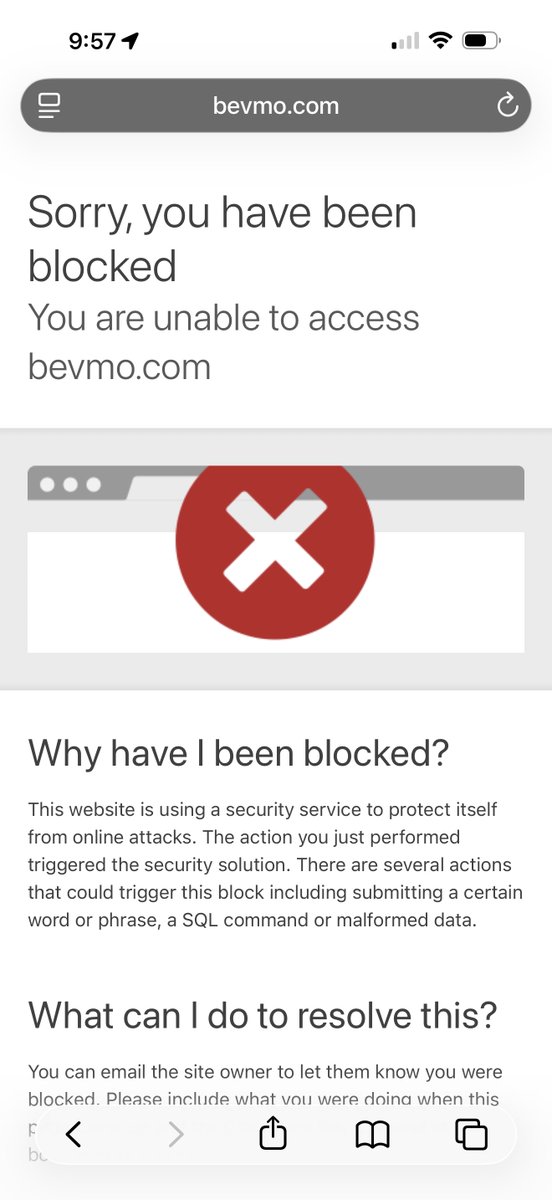
Hey @BevMo what’s the deal? All I did was search for @Stranahans at my local store and boom, I get this.
62
Apr 30
Dear @Starbucks, if you really want people to return to the third place to chat and work, turn down the music! I feel like this trying to work.
32
Apr 28
Microsoft @Copilot Cowork lets you build 20 custom skills. Most orgs cannot fill 5 with confidence. That gap is an entire AI conversation in Enterprises right now.
Learn how skills work across Claude, ChatGPT, and Copilot: linkedin.com/pulse/teach-you…
1
4
117
Apr 26
I think agentic coding requires more rigor, not less, especially if you want production ready outcomes.
I’ve developed and implemented a proprietary product governance framework that wraps around Spec Kit, to produce high quality code with thorough test support and less drift.
The resulting workflow is similar to McConnell’s Evolutionary Delivery model. Claude Code works really well within this approach.
1
53
Treb Gatte retweeted
Apr 23
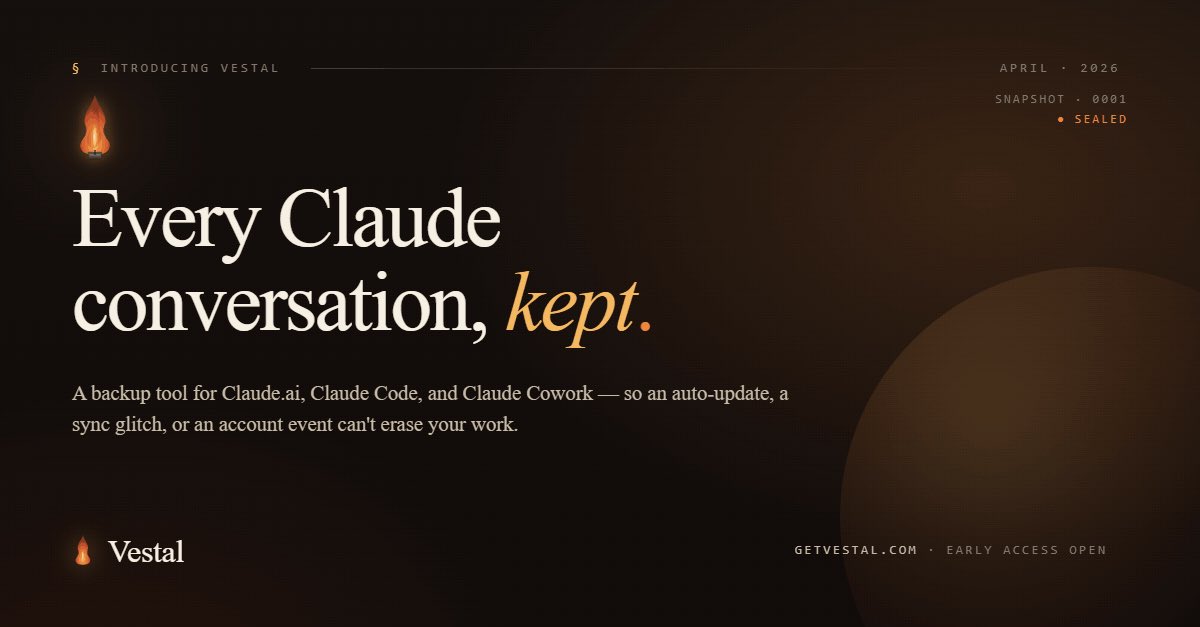
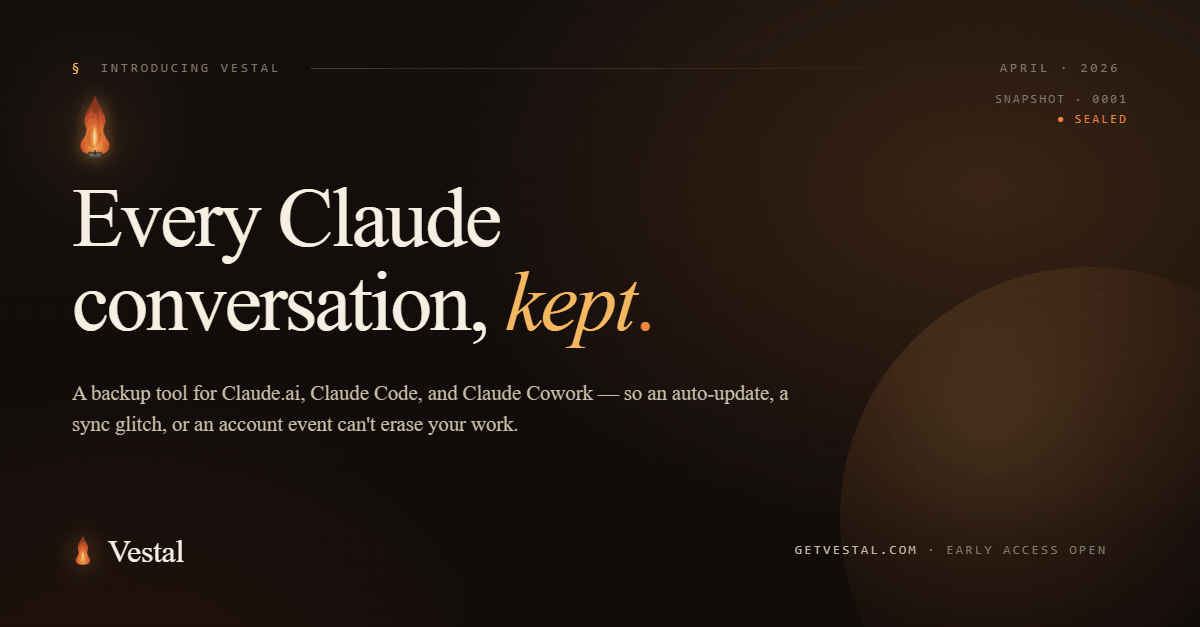
Imagine, you’ve filled Claude with your ideas, watching magic come out. Then one morning, it’s all gone. This happened to me.
So I built Vestal, a backup app that automatically backs up Claude Chat, Cowork and Code. I never want to feel that loss again. Neither should you.
I’m opening up a beta shortly. Sign up here to get access: getvestal.com
1
1
110
Apr 24
Geez @FedExHelp, what was the point of paying for First Overnight if you are going to deliver by end of day, instead of the by 8am I wanted?
6
1
118
Apr 23
Working at the speed of thought with Coding agents is fantastic, exhausting, and problematic all at once.
It’s fantastic because you can built solutions quickly. I’ve gone from concept to release on a 4 hour flight.
It’s also exhausting. You are in that creative zone much longer than you would normally be. You “just one more thing” yourself into mental exhaustion. You try to sleep while in this overstimulated tired-wired state.
After a few days of that, you need serious downtime. Downtime creates this odd guilty feeling because you know what you could be creating.
Lastly, I wonder how addictive this process becomes, as you definitely get rewarded quickly for your efforts. This too would make it harder to step away.
Anyone else feeling this way?
1
68
Apr 21
"WTF!" I exclaimed.
I looked at my open Claude app and saw nothing. Every chat, analyses, code sessions, and wild idea I'd had, that I had poured weeks and months into, was gone.
I went through a mix of emotions looking at that empty space, where magic had once existed.
I was lucky that a Claude update brought it all back. Now I had trust issues. I started looking around and found a large number of people had had more permanent losses.
So, I built Vestal, a backup solution for Claude Chat / Cowork / Code for both Windows and Mac users. I'm opening a preview for the personal version soon if you want to try it out. Sign up at getvestal.com
1
139