
The official currency of the transhumanism movement. Investing in the future of humanity through science & technology t.me/buytranshumancoin
Joined August 2021
- Tweets 2,773
- Following 580
- Followers 9,409
- Likes 8,399
178 Photos and videos




Pinned Tweet

1 Dec 2024
Beyond Humanity: The Transhuman Coin Revolution.
#DeSci #Longevity #Crypto #Blockchain $THC $BSC
TG: t.me/buytranshumancoin
8
24
73
7,204
Transhuman Coin retweeted

Jun 2
🎤 Speaker at #WikiEXPOHK2026
@peterxing is Cloud & AI Platforms Lead for Public Sector and Education at @Microsoft , helping governments and educational institutions adopt Azure and frontier AI technologies. Previously, he held leadership roles at KPMG and Deloitte, focusing on emerging technologies and digital transformation. He is also a TEDx and Singularity Group speaker, Co-Founder of Transhumanism Australia, and a contributor to the Transhuman Coin initiative.
🌐 Join us: lu.ma/WikiEXPO
#WikiGlobal #WikiFX #WikiBit #WikiGold #Microsoft

3
4
383
Transhuman Coin retweeted
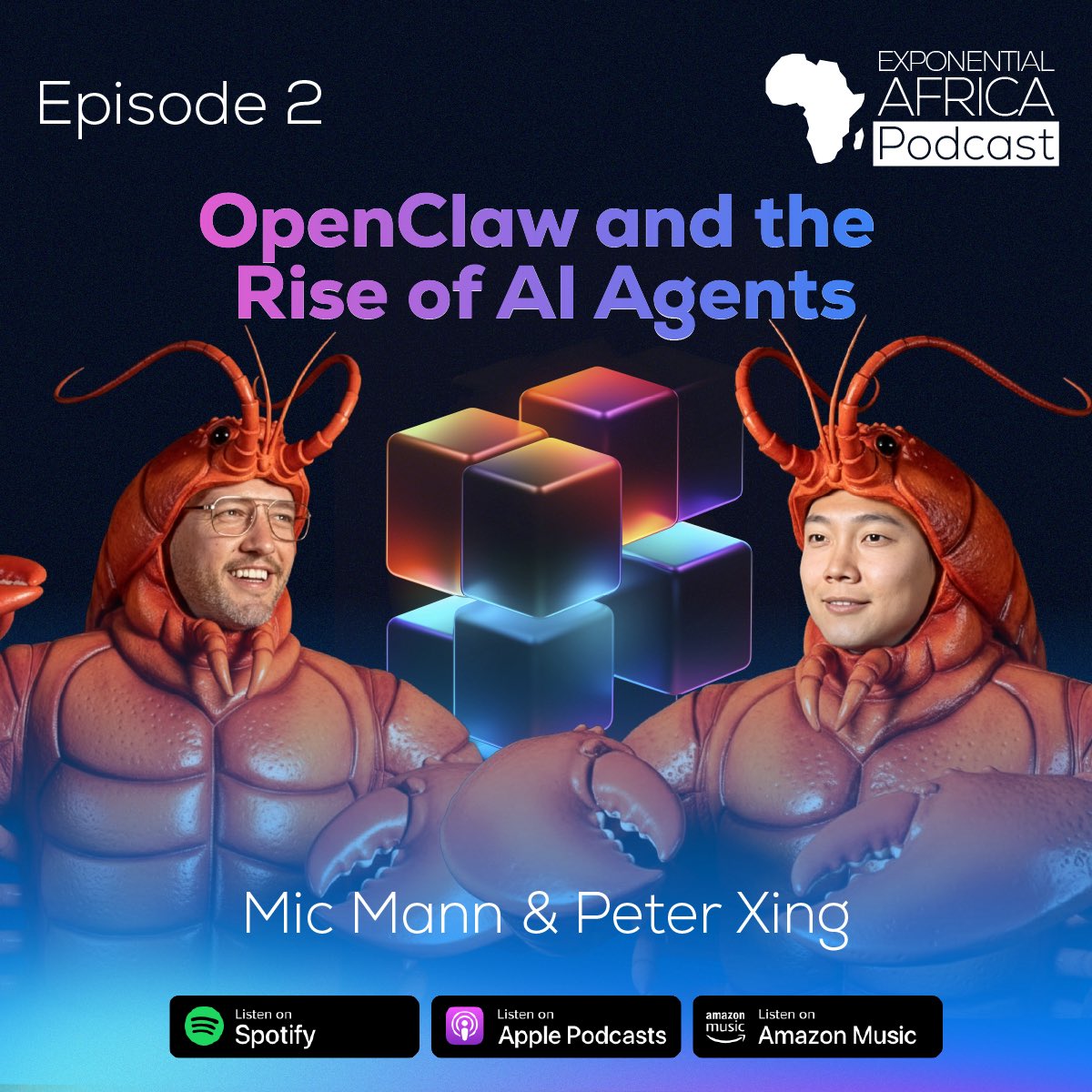
In Episode 2 of Exponential Africa, @micmannsa speaks with @peterxing about @openclaw , autonomous execution and what the rise of AI agents means for innovators across Africa.
▶️ Watch the full episode on YouTube. youtu.be/P91DZjE5nw0
1
4
7
756
Transhuman Coin retweeted
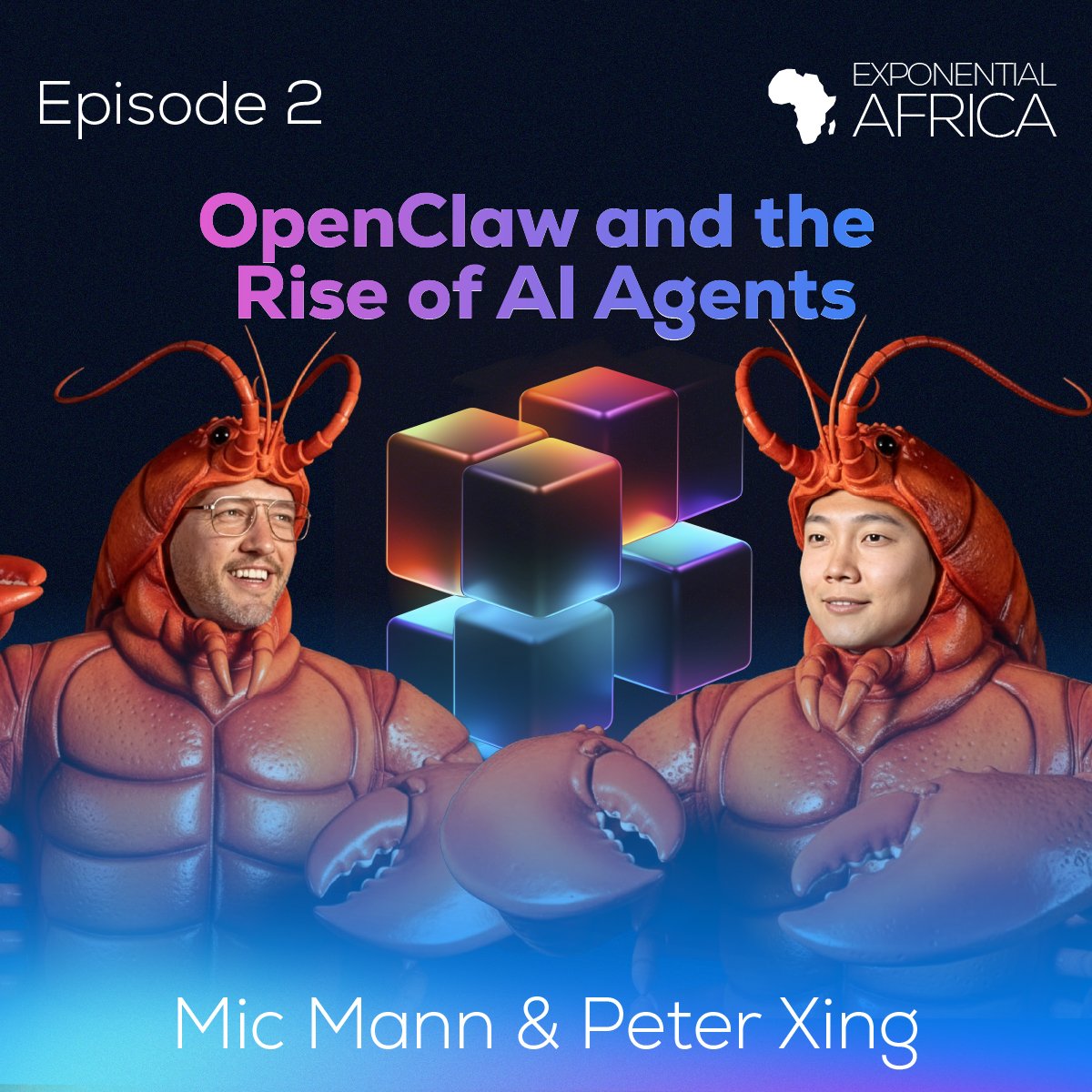
OpenClaw. AI agents. The next execution layer of intelligence.
In Episode 2 of Exponential Africa, @micmannsa sits down with @peterxing to unpack what happens when software no longer just assists, but acts.
If agents can plan, decide and execute, how does leadership evolve?
Watch the full conversation now on YouTube.
youtu.be/P91DZjE5nw0
5
8
407
Transhuman Coin retweeted
AI agents are moving from concept to execution.
Episode 2 of the Exponential Africa Podcast is now live.
@micmannsa in conversation with @peterxing on @openclaw , autonomous systems and what the rise of AI agents means for builders, leaders and innovators across Africa.
🎙️ Listen now on Spotify, Apple Podcasts or Amazon Music.
5
6
304
Transhuman Coin retweeted

Feb 22
Ageing could soon be reversible, says Harvard scientist
Scientists have reversed biological aging markers by up to 75% in specific animal tissues within weeks..
At the 2026 in Dubai summit, Dr. David Sinclair said scientists are preparing human clinical trials to reverse aspects of ageing. The goal is to treat ageing itself, the main risk factor behind diseases like Alzheimer’s, heart disease and diabetes.
The approach uses epigenetic reprogramming to restore cells to a younger state. As people age, cells lose epigenetic information that controls how genes function. Resetting this information may allow old cells to behave like young ones again without altering DNA.
Using modified Yamanaka genes (reprogramming factors), Sinclair’s team has already reversed ageing in animal tissues by up to 75% within weeks through partial cellular reprogramming. Human trials aim to test whether similar effects can be achieved safely in people.
Sinclair predicted that within the next 10 to 20 years, modern healthcare could shift from treating diseases to preventing and reversing ageing itself, potentially making today’s systems look outdated.
“We are about to test, for the first time in history, whether we can reverse ageing and cure diseases,” he said.
Beyond health benefits, he emphasized major economic impacts.
In the United States, extending healthy lifespan by just one year could generate an estimated $38 trillion in economic value by improving productivity.
He also linked longevity research to falling birth rates and shrinking workforces, saying societies may face a choice between replacing workers with robots or keeping people healthier for longer.
“Our greatest asset is human productivity,” Sinclair said.
71
219
1,020
52,774
Transhuman Coin retweeted

Own your health data and Upgrade your health game!
With @transhumancoin's AI Doctor smart scales, you will get personalized information about your health —anytime, anywhere.
Join THC today 👇
t.me/buytranshumancoin

2
5
9
275
Transhuman Coin retweeted

Jan 24
Post-AGI Planning - Preparing for Superintelligence by Transhumanism AU luma.com/y4pu9su4
2
6
520
Transhuman Coin retweeted
Jan 24
"Post-AGI Planning - Preparing for Superintelligence by Transhumanism AU" meetup next Fri, 30th Jan 2026 at 6pm at Torrens Uni Surry Hills campus! eventbrite.com.au/e/post-agi… @eventbritehelp
2
4
891
20 Dec 2025
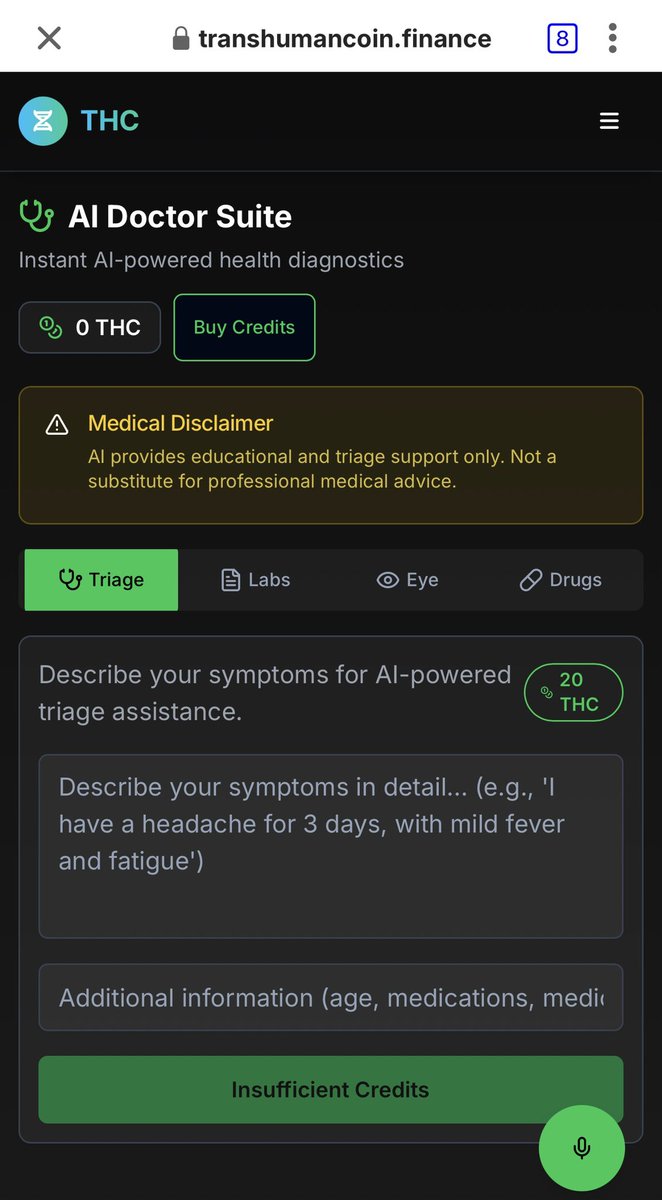
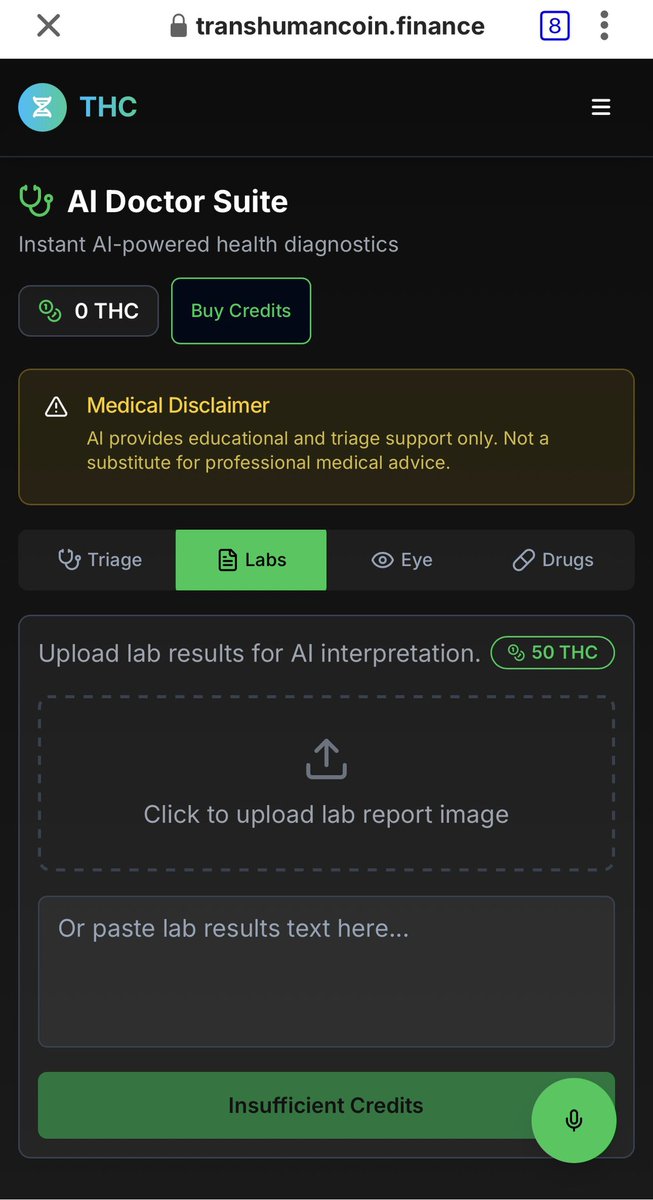
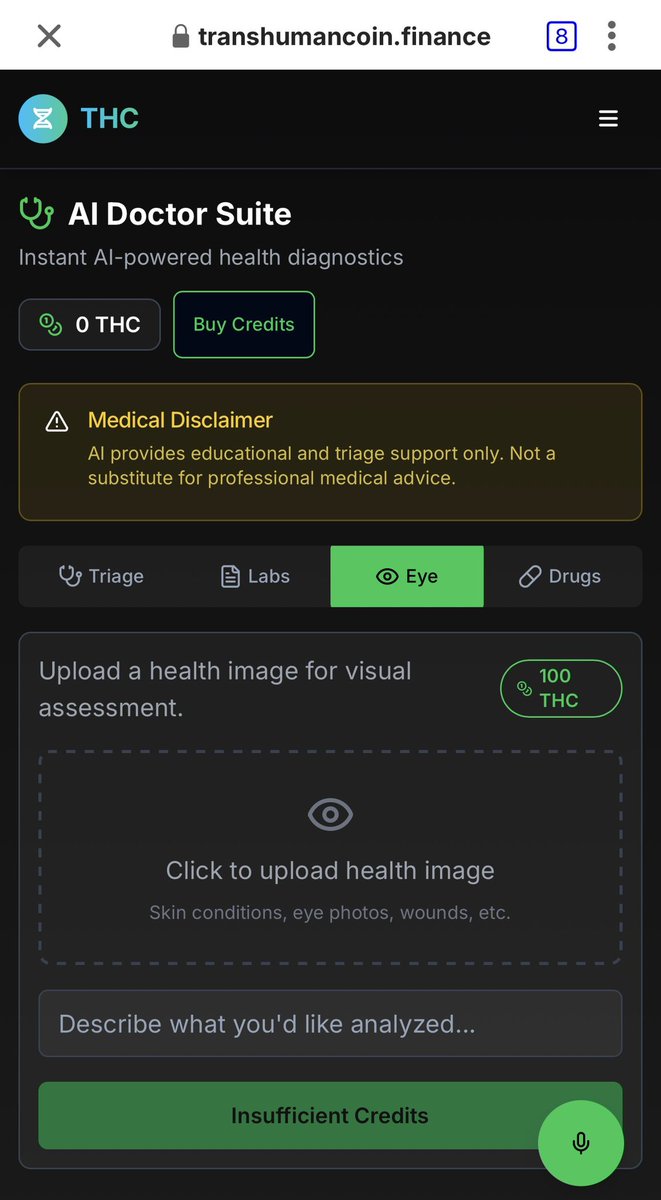
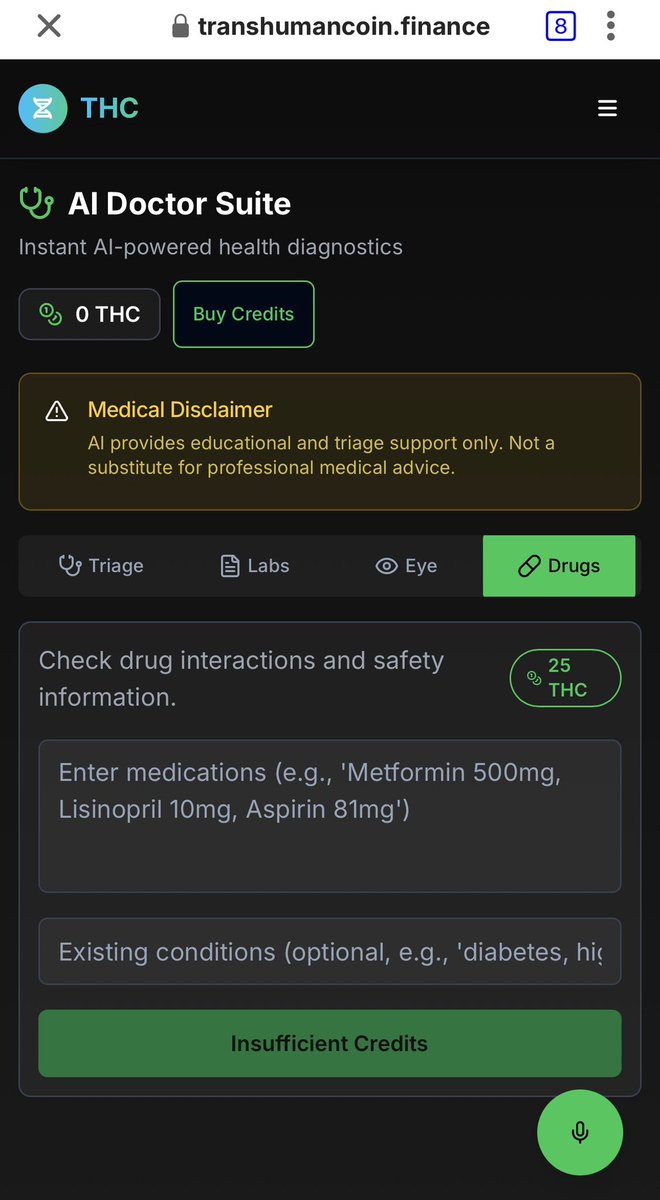
Hi Transhumanists, we are excited to announce that the AI doctor and diagnostic suite has now been implemented on our website. You can test it for just 20 $THC . Our team is now working on the THC Wealth engine.
Use inside dApp browsers.
7
5
16
521
Transhuman Coin retweeted
8 Dec 2025
Post-AGI Planning - Preparing for Superintelligence by Transhumanism AU Tickets, Fri, Dec 12, 2025 at 5:30 PM eventbrite.com.au/e/post-agi…
3
9
920
24 Nov 2025
We are open to new CEX listings. Send proposals via DM.
1
1
11
336
Transhuman Coin retweeted

23 Oct 2025
Living forever and uploading dreams to the cloud? ☁️
“This idea is completely bonkers.. but I’m a SWIM.”
@thejonnymagic reacts to @transhumancoin, one of the most innovative pitches on Killer Whales Season 2 🐳
Can a dream this bold win over the rest of the Whales?
Whales Judging Episode 5: @CryptosR_Us, @cryptomanran, @thejonnymagic, @IlladaProducer, @CryptoWendyO
Killer Whales Season 2 is Produced by @thehellolabs, @CoinMarketCap and @AltcoinDaily, brought to you by @WEEX_Official, & powered by $HELLO
Watch Episode 5 ‘Community’s Choice’ Now 👇
x.com/KillerWhalesTV/status/…
15 Oct 2025

Episode 4 of Killer Whales Season 2 is Now Live
@sleap_io, @xJuniorJr, and @tagSpaceCo pitch for a share of the $1.5 million prize pool, aiming to earn at least 3/5 SWIM votes from the Whales 🐳
Who will SINK under the pressure, and who will SWIM their way to the top?
Whales Judging Episode 4: @IlladaProducer, @CryptoWendyO, @MarioNawfal, @AltcoinDaily
Killer Whales Season 2 is Produced by @thehellolabs, @CoinMarketCap and @AltcoinDaily, brought to you by @WEEX_Official, & powered by $HELLO, bringing founders and builders to Web3’s biggest stage
Featured Partners:
🤝 WEEX @WEEX_Official - The world-class exchange bringing seamless trading and rewards to Web3 innovators.
weex.com/register?vipCode=qc…
🤝 CoinStats @CoinStats - Track, manage, and grow your portfolio with one of crypto’s most trusted tools:
coinstats.app/refer/killer
🤝 Galaxis @Galaxisxyz - Powering the Killer Whales and $HELLO community through digital collectibles, rewards, and exclusive Killer Whales Merch:
galaxis.xyz/communities/kill…
Watch Episode 4 ‘Killer Pitches‘ Now 👇
12
14
64
3,675
Transhuman Coin retweeted

22 Oct 2025
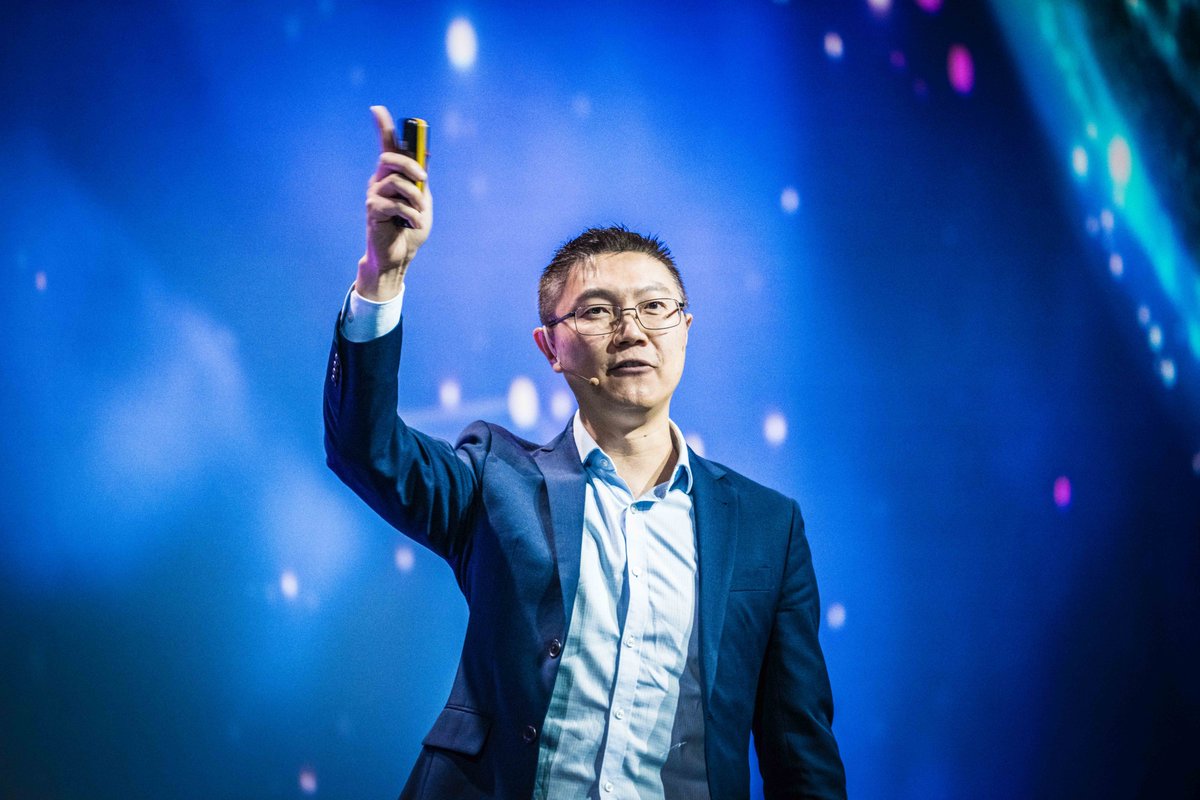
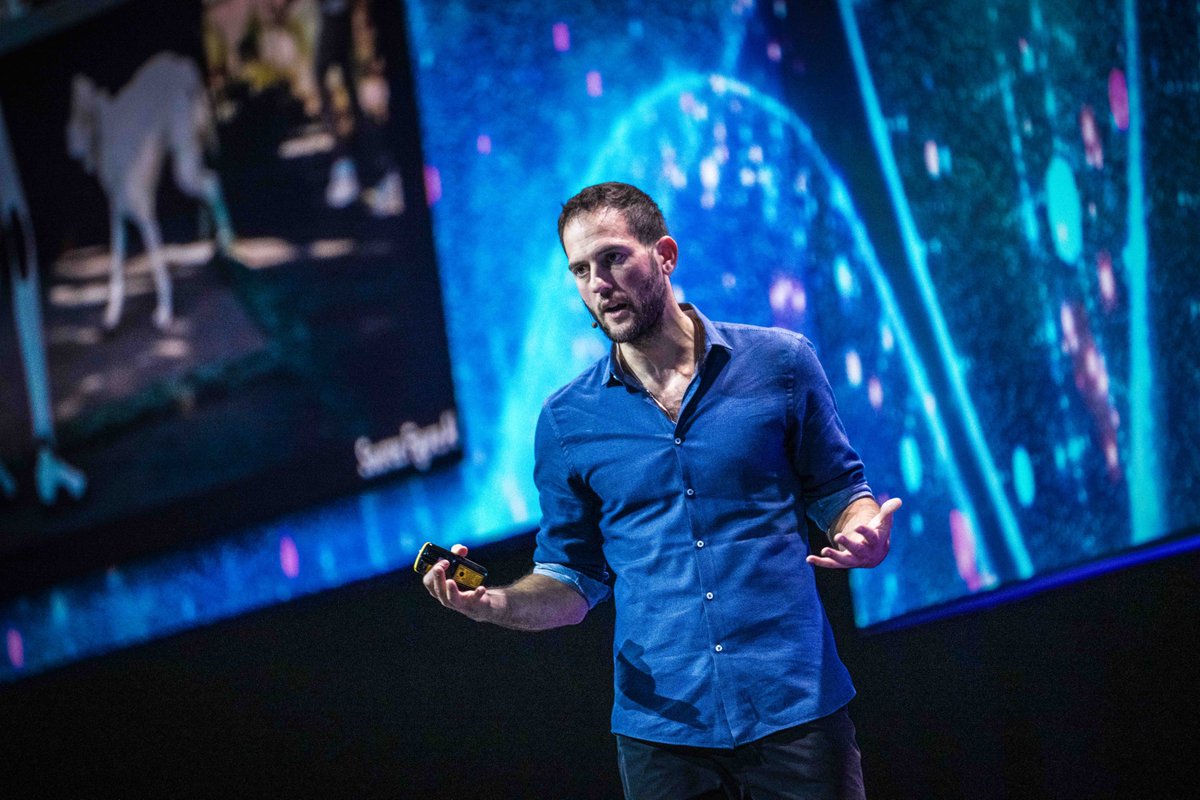
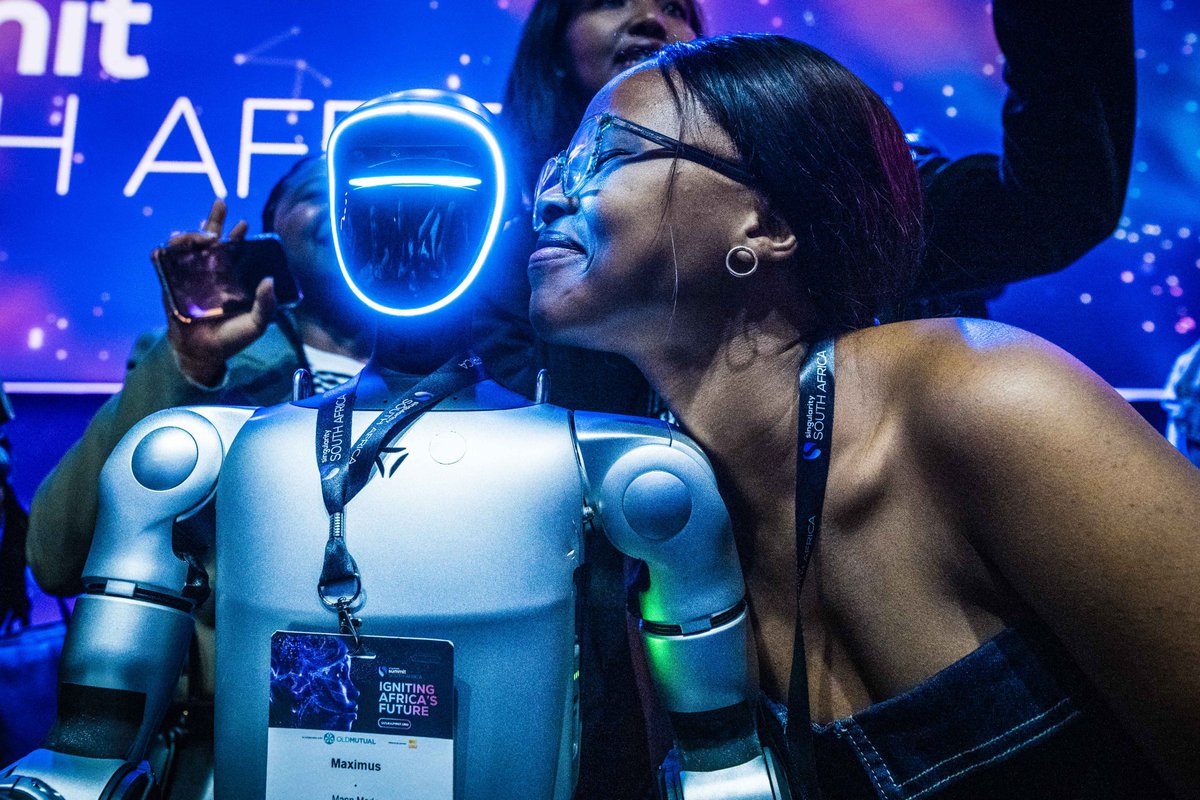
We’re almost through Day 1, and the energy has been tangible!
Here are some of the highlights so far.
#SUSASummit2025 #futureproofAfrica #SingularitySouthAfrica

1
4
10
401

We’re live! Watch @transhumancoin on @KillerWhalesTV on X
20 Oct 2025
Episode 5 of Killer Whales Season 2 Premieres Wednesday, Oct 22 at 3pm EST on X 🐳
The season finale brings the Top 3 community-voted projects to the stage: @Transhumancoin, @framecommunity, and @BirbDefi
With $1.5M in Prizes on the line, they pitch bold visions of human enhancement, cross-chain innovation, and coffee-fueled DeFi in a finale you won’t want to miss.
Whales Judging Episode 5: @CryptosR_Us, @cryptomanran, @thejonnymagic, @IlladaProducer, @CryptoWendyO
Killer Whales Season 2 is Produced by @thehellolabs, @CoinMarketCap and @AltcoinDaily, brought to you by @WEEX_Official, & powered by $HELLO
Who will SINK? Who will SWIM? 🐳
1
5
18
996
23 Oct 2025
Thank you Killer Whales 🐋. $Hello @thejonnymagic
23 Oct 2025
Living forever and uploading dreams to the cloud? ☁️
“This idea is completely bonkers.. but I’m a SWIM.”
@thejonnymagic reacts to @transhumancoin, one of the most innovative pitches on Killer Whales Season 2 🐳
Can a dream this bold win over the rest of the Whales?
Whales Judging Episode 5: @CryptosR_Us, @cryptomanran, @thejonnymagic, @IlladaProducer, @CryptoWendyO
Killer Whales Season 2 is Produced by @thehellolabs, @CoinMarketCap and @AltcoinDaily, brought to you by @WEEX_Official, & powered by $HELLO
Watch Episode 5 ‘Community’s Choice’ Now 👇
x.com/KillerWhalesTV/status/…
1
5
25
903
23 Oct 2025
Congratulations 🥂 to the Transhuman Coin community. We got 2 big Swims at the @KillerWhalesTV show - a double demonstration of confidence in what we are building. Thank you @CoinMarketCap @AltcoinDaily etc. We are still building! transhumancoin.finance
8
8
32
776
Transhuman Coin retweeted

22 Oct 2025
Killer Whales Season 2 / Episode 5
The season finale features three projects that earned their place through community voting: @Transhumancoin, @framecommunity, and @BirbDefi. Now they take the stage to pitch to the Whales with visions of human enhancement, blockchain scalability, and user-friendly DeFi.
With $1.5M in prizes at stake, the Whales’ choices carry real impact. Produced by @TheHelloLabs, @CoinMarketCap and @AltcoinDaily, brought to you by @WEEX_Official, & powered by $HELLO, Killer Whales Season 2 brings founders and builders to Web3’s biggest stage
Whales Judging Episode 5: @CryptosR_Us, @cryptomanran, Jonathan Isaac, @IlladaProducer, and @CryptoWendyO.
Who will SINK? Who will SWIM? 🐳
coinmarketcap.com/events/kil…
22 Oct 2025
Episode 5 of Killer Whales Season 2 is Now Live 🐳
@Transhumancoin, @framecommunity, and @BirbDefi pitch for a share of the $1.5 million in prizes, aiming to earn at least 3/5 SWIM votes from the Whales
This season finale blends human progress, cross-chain innovation, DeFi, and coffee into an episode you won’t want to miss 🐳
Whales Judging Episode 5: @CryptosR_Us, @cryptomanran, @thejonnymagic, @IlladaProducer, @CryptoWendyO
Killer Whales Season 2 is Produced by @thehellolabs, @CoinMarketCap and @AltcoinDaily, brought to you by @WEEX_Official, & powered by $HELLO
Killer Whales Exclusives:
🤝 Galaxis @Galaxisxyz - Powering the Killer Whales and $HELLO community through digital collectibles, rewards, and exclusive Killer Whales Merch:
galaxis.xyz/communities/kill…
🤝 BIRB Cafe @BirbDefi - Celebrating the finale with a limited Killer Whales and Birb coffee blend, crafted specially for this week’s episode.
Code HELLO20 for 20% off:
birbcafe.com/product/hello-l…
Watch Episode 5 'Community’s Choice' Now 👇
77
29
127
49,317