WebAIM's mission is to expand the potential of the web for people with disabilities. Based at the Institute for Disability Research, Policy & Practice at USU.
Accessible presentations are not just about compliance. They help your message reach everyone. This practical guide from @Intopia covers clear structure, readable text, meaningful visuals, inclusive language, and accessible delivery: intopia.digital/articles/how…
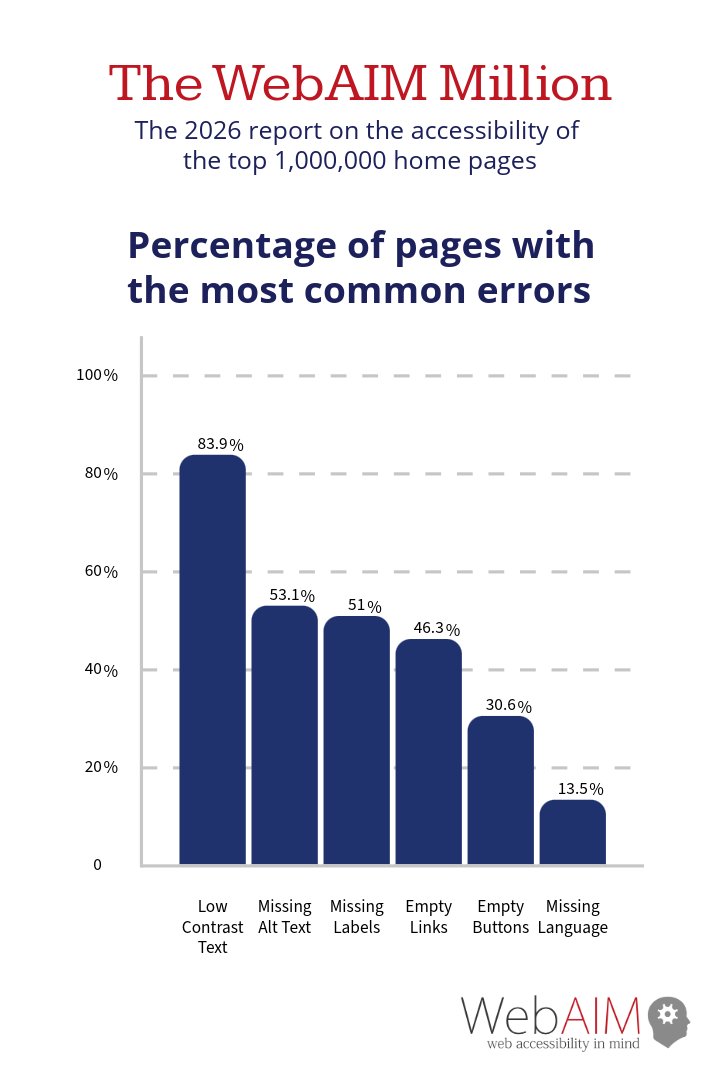
The WebAIM Million 2026 Report found that 96% of detected #accessibility errors still fall into just 6 categories, such as low-contrast text, missing alt text, and unlabeled form inputs. These basics matter. Fixing them helps millions. Full findings: webaim.org/projects/million
ALT The WebAIM (Web Accessibility In Mind) Million: The 2026 report on the accessibility of the top 1,000,000 home pages. Bar chart showing low contrast text (83.9%), missing alt text (53.1%), missing labels (51%), empty links (46.3%), empty buttons (30.6%), and missing language (13.5%) as the percentage of pages with the most common errors.
Building effective #accessibility skills takes more than a single workshop. Our latest article shares practical steps for creating training programs that are sustainable, role‑specific, and action‑focused. Read more: webaim.org/articles/training…#a11y
ALT Web Accessibility in Mind, Building Accessibility Training Programs that Work. Photo of colorful people-shaped blocks.
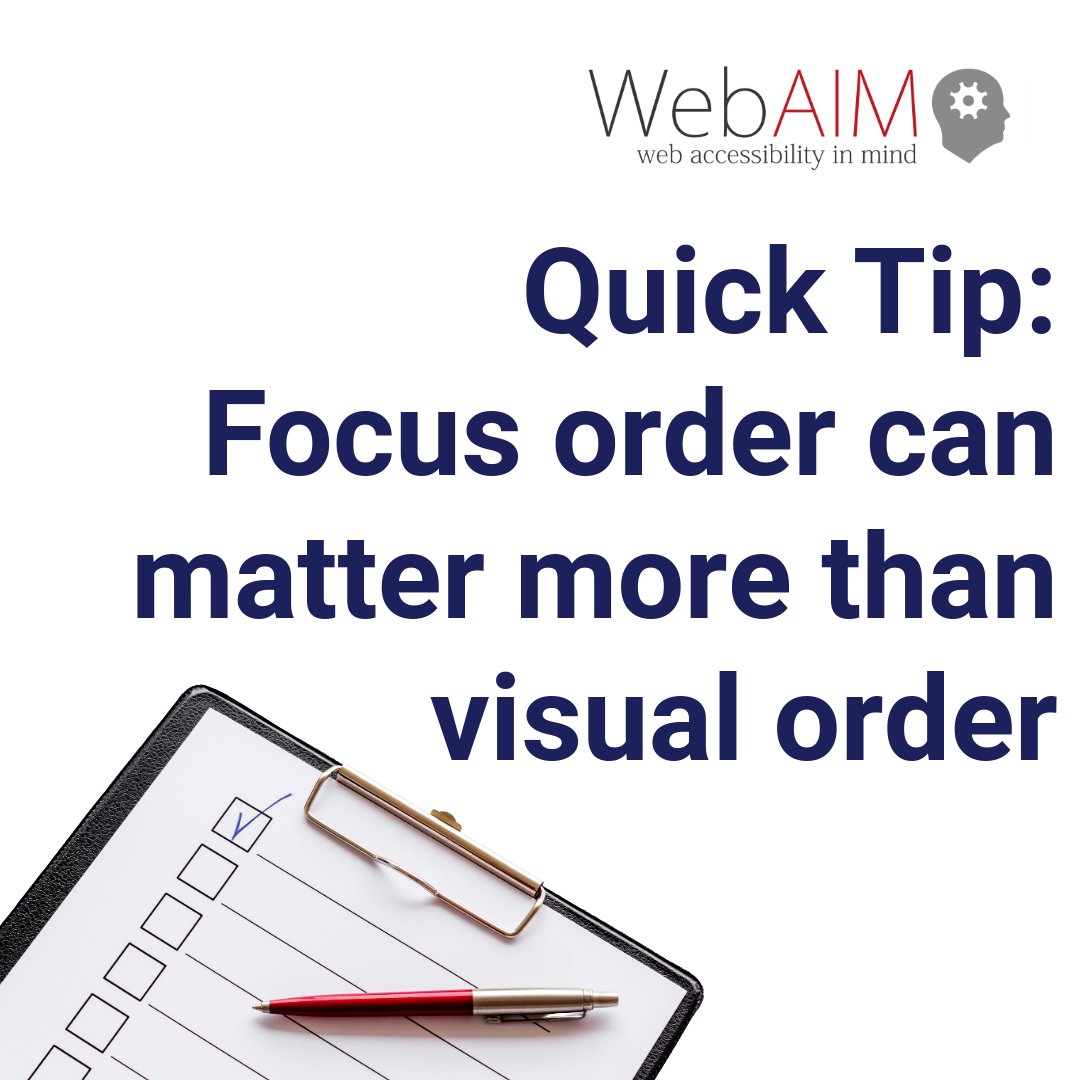
Screen readers and keyboard users follow DOM order, not visual layout. If CSS Grid/Flexbox reorders content visually, make sure the HTML order still makes sense. Learn more about keyboard #accessibility: webaim.org/techniques/keyboa…
ALT WebAIM (Web Accessibility In Mind) logo. Quick Tip: Focus order can matter more than visual order. Photo of paper checklist on a clipboard with a pen.
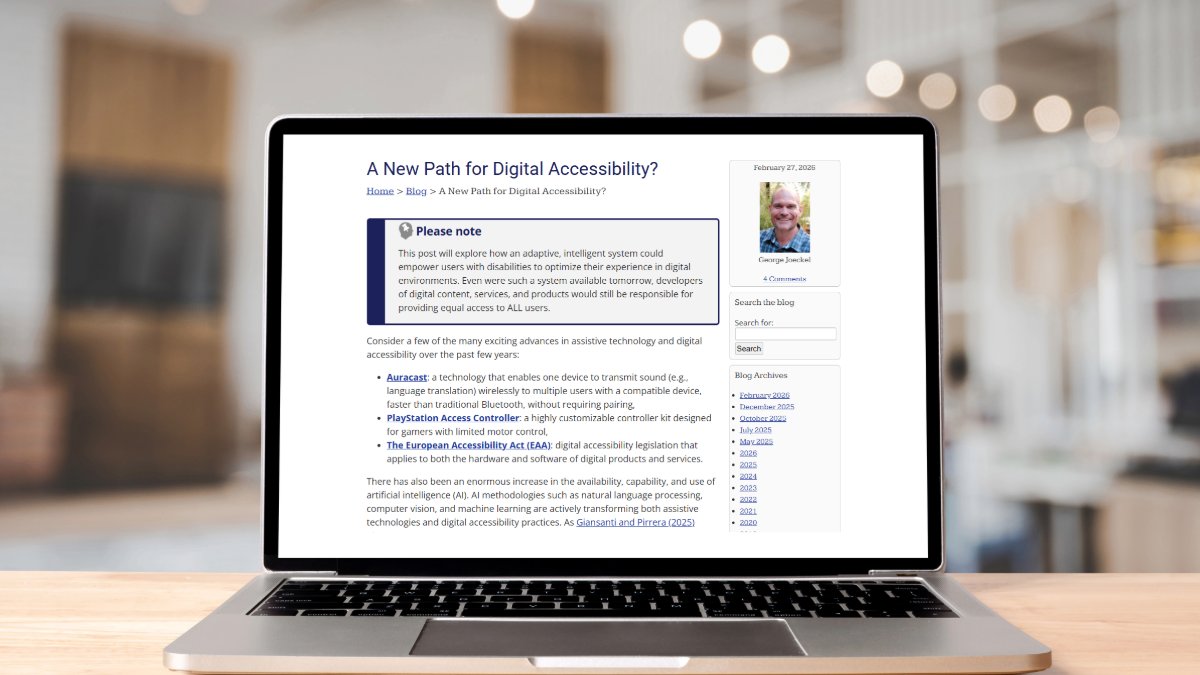
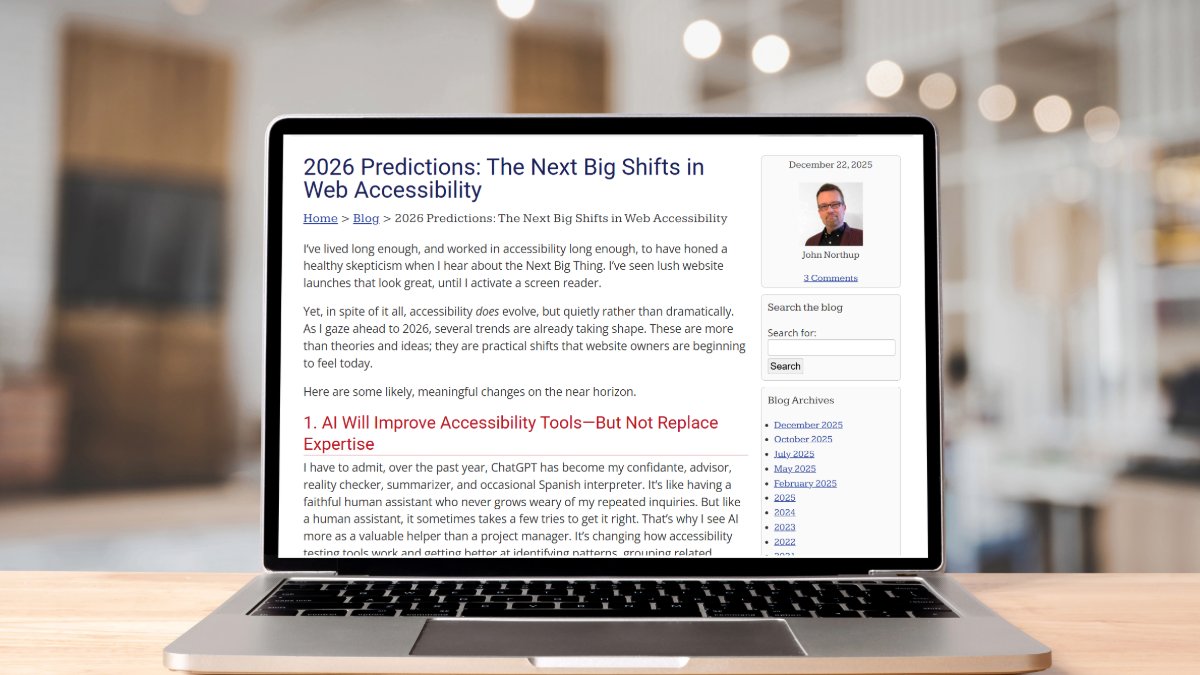
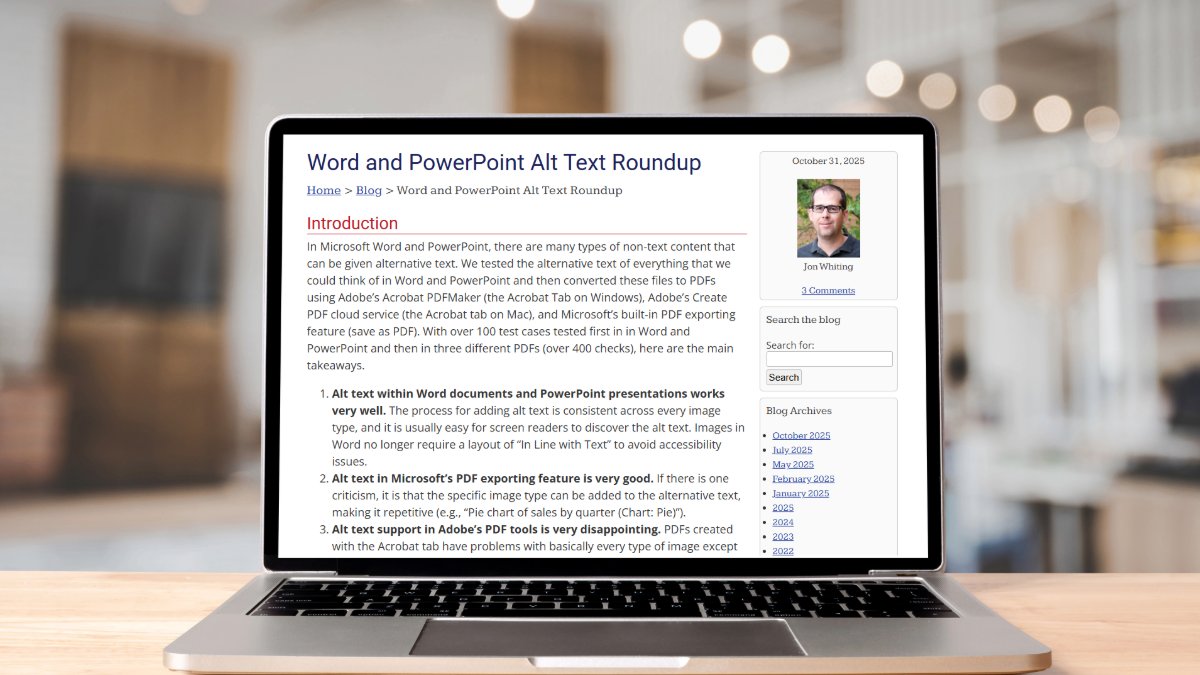
Accessibility keeps evolving—and so does the work required to support it. Our post, “A New Path for Digital Accessibility?,” reflects on 25 years of progress and the practical steps that still matter most. A thoughtful look at where the field is headed: webaim.org/blog/a-new-path/
ALT Photo of a laptop on a desk with the article showing on the screen.
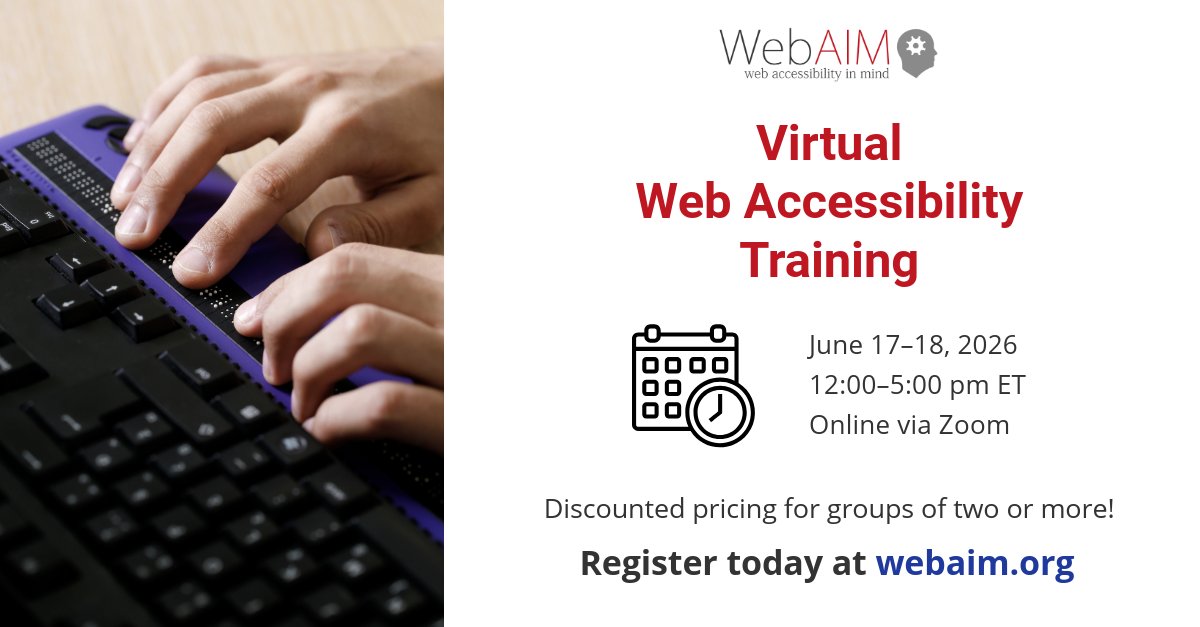
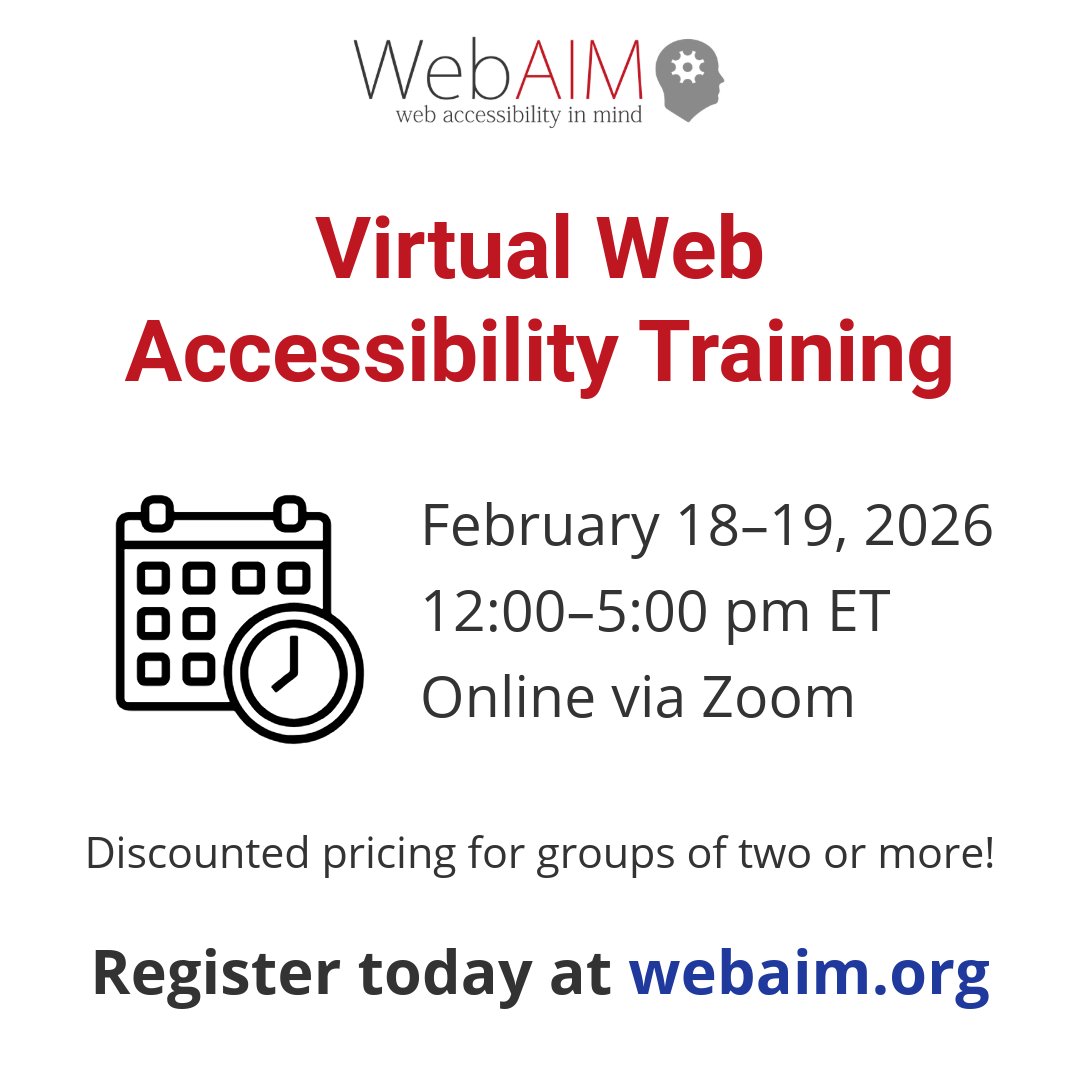
Want to build more accessible websites and digital content? Our virtual #accessibility training (June 17–18, 2026) covers practical skills like spotting accessibility issues and applying WCAG in real‑world work. Group discounts available. webaim.org/training/virtual/#WebDev#a11y
ALT WebAIM (Web Accessibility in Mind) Virtual Web Accessibility Training. June 17–18, 2026, 12:00–5:00 pm ET, Online via Zoom. Discounted pricing for groups of two or more! Register today at webaim.org. Photo of a person using a refreshable braille display.
#Accessibility testing works best when it’s ongoing and shared across teams, not saved for the end. This article from @TetraLogical explains why automated tools aren’t enough and why combining them with manual testing leads to better outcomes. tetralogical.com/blog/2026/0…#a11y
Auto‑dismiss messages, session timeouts, and rotating content can create #accessibility barriers—even without animation. Many users need more time to read or respond. Provide ways to pause, extend, or control time‑based changes. Learn more: webaim.org/articles/cognitiv…#a11y
ALT WebAIM (web accessibility in mind) logo. Quick Tip: Timing isn’t just about animations. Photo of an hourglass with half of the sand on top and half already through to the bottom.
Audio description (AD) helps make video accessible for people who are blind or have low vision. This article from @3playmedia explains how to add AD to @YouTube videos using multi‑audio tracks, so viewers can toggle descriptions on or off as needed. 3playmedia.com/blog/how-to-a…#a11y
Have #accessibility questions? Ask AIMee. WebAIM’s new AI-powered chatbot provides quick guidance on #WCAG, accessibility concepts, testing ideas, and more, designed to be accessible and used responsibly. Learn more: webaim.org/blog/ask-aimee/#a11y
ALT Do you have questions about accessibility? Ask AIMee. AIMee logo: a silhouette of a person's head with a speech bubble as the brain.
The Call for Proposals is open for Accessing Higher Ground 2026 (Nov 16–20, Denver). Sessions cover accessible media, web, AI, universal design, policy, and more. Deadline April 29. Learn more: accessinghigherground.org/
New WebAIM Million Report: webaim.org/projects/million/#A11y errors & #WCAG failures are up as pages grow in size/complexity, driven by increased use of ARIA, reliance on 3rd-party frameworks/libraries, and "vibe coding." Way forward: simpler systems, strong fundamentals.
The results of WebAIM and @gaadfdn’s Global Digital Accessibility Salary Survey 2 are now available, offering insight into compensation, roles, experience, and workplace trends across the #accessibility field. Explore the full results: webaim.org/projects/salary2/
CAPTCHAs and other authentication methods can create #accessibility barriers. This @smashingmag article explains how common human verification techniques exclude people with disabilities—and why balancing security with inclusive design matters. smashingmagazine.com/2025/11…
Hidden CSS content (like opacity: 0 or off‑screen positioning) can still be read by screen readers. This may help with labels, but can also cause duplicate or outdated content to be announced. Always test what assistive tech reads, not just what’s visible. webaim.org/techniques/css/in…
ALT WebAIM (web accessibility in mind) logo. Quick Tip: “Invisible” text can still be announced. Photo of a partially visible cat peeking over a table.
Animated elements excel at capturing and directing user attention. They also excel at distracting and frustrating users when used incorrectly. Learn the most accessible ways to implement animated elements and when you shouldn’t use them at all: webaim.org/techniques/carous…#a11y
Sometimes HTML alone is not enough to convey meaning to an assistive technology user. That’s where ARIA steps in. But #ARIA should be used with precision, not as a blanket fix for everything. Read more in this article from Dennis Deacon: dennisdeacon.com/web/accessi…#WebDevelopment
#Accessibility testing works best when automation and manual review go hand in hand.
Our partners at @PopeTech share how to use WAVE to find accessibility issues, understand page structure, and build a more sustainable testing process.
Read more: blog.pope.tech/2022/12/02/wa…
CSS includes the prefers-reduced-motion media query, which honors a user’s system setting to limit #animation. It lets us reduce or eliminate motion without affecting others, and improves #accessibility for people who find movement distracting. Learn more: webaim.org/techniques/carous…
ALT WebAIM (web accessibility in mind) logo. Quick Tip: Use prefers-reduced-motion Media Queries. Photo of a baseball with motion trails and blur as if it’s actively being thrown.
We're hiring!
The National Center on Accessible Digital Educational Materials and Instruction (NCADEMI) & WebAIM are hiring a Technical Assistance Specialist to provide digital #accessibility support for both projects, as assigned.
Learn more and apply: careers-usu.icims.com/jobs/9…