
Alaska's earthquake monitoring agency, headquartered at the University of Alaska Fairbanks Geophysical Institute.
Joined October 2013
- Tweets 4,244
- Following 285
- Followers 28,729
- Likes 586
1,120 Photos and videos
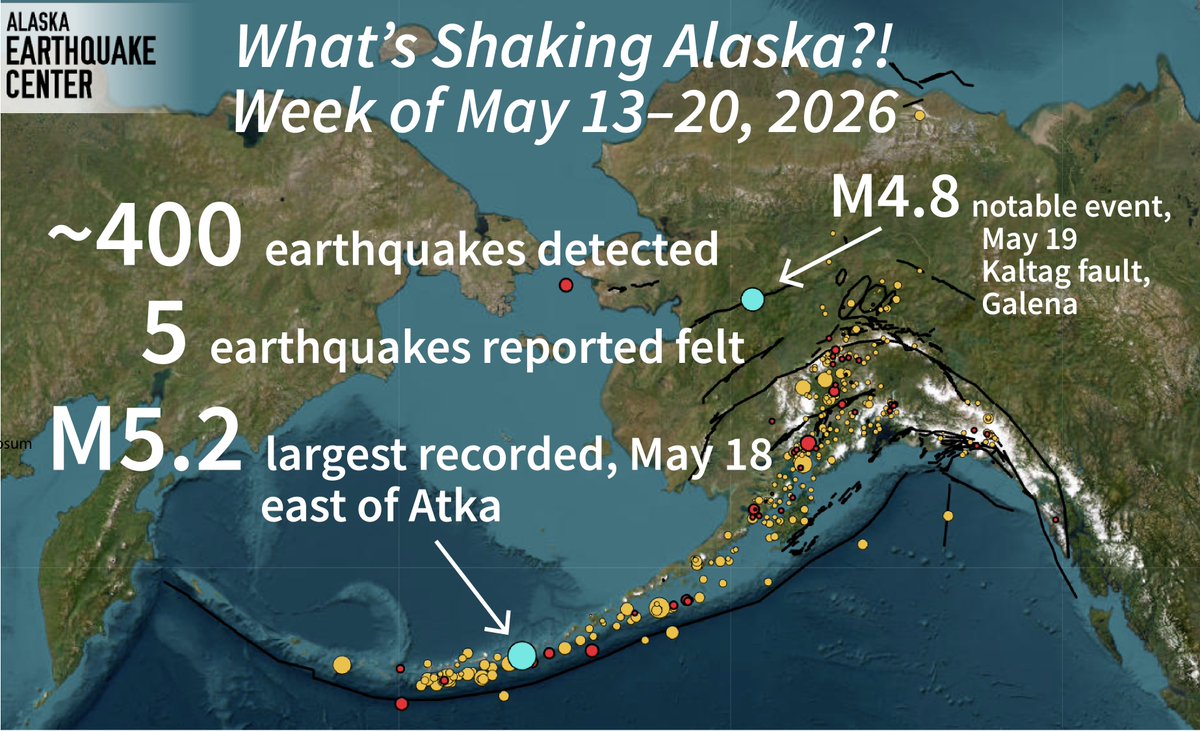
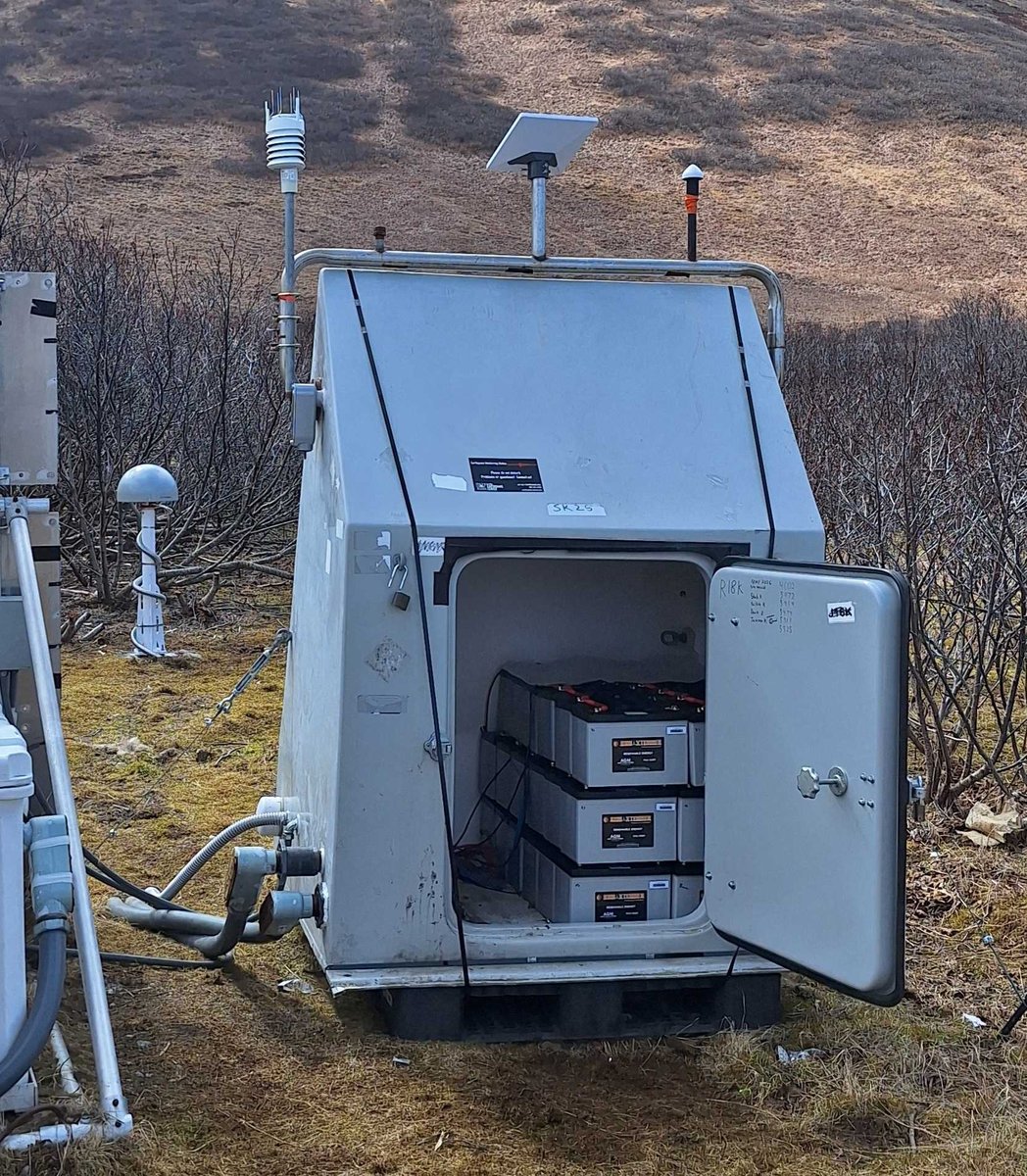
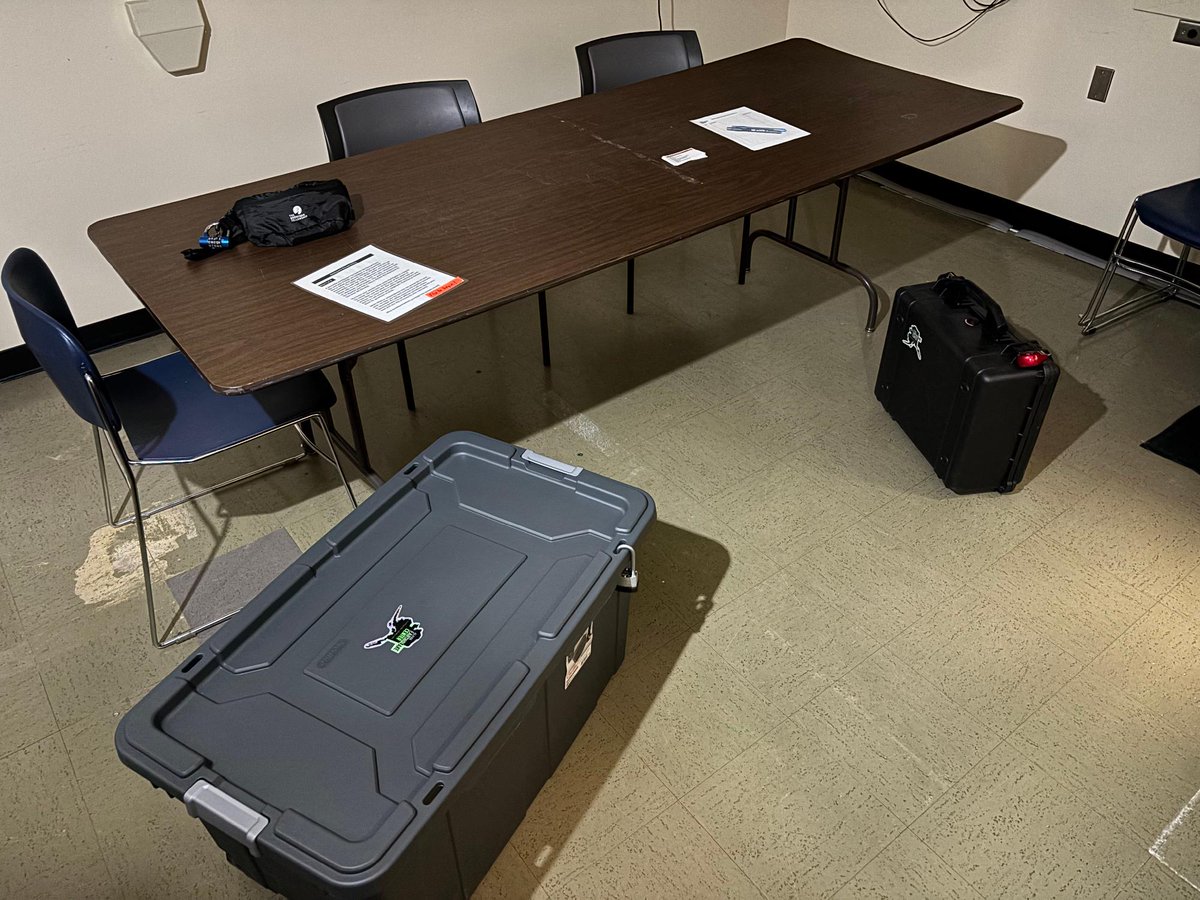
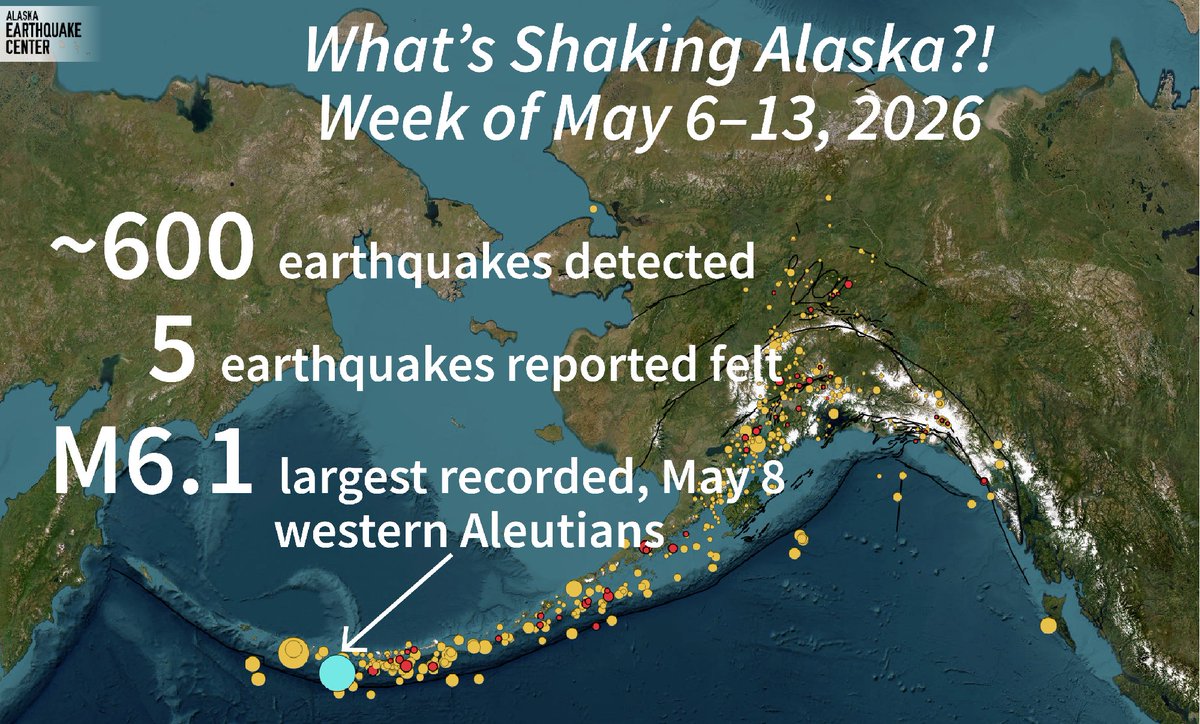

Good morning! We have reviewed a M5.1 earthquake in the Andreanof Islands that occurred at 5:58 AK time. This event was located 132 miles WSW of Adak & 17 miles deep. No felt reports have been received at this time. For more info, or to submit a “Did You Feel It” report, please go to earthquake.alaska.edu/event/…
1
3
330
What’s Shaking Alaska?!
The Earthquake Center has our own testing vault tucked away on the University of Alaska Fairbanks campus, an insulated enclosure where we store and test sensitive seismic instruments. It’s nicknamed CIGO—an acronym for the Jack Townshend College International Geophysical Observatory.
The testing building looks like a small, wooden house. You enter into a room with shelves of equipment — some items need testing, and some are ready for the field.
The real action happens in the basement, inside the seismic testing vault.
This specially designed room is temperature controlled, so it’s about 40 degrees year-round.
There is a knee-high concrete slab anchored 10 feet deep in the ground.
On top of it are a dozen olive-green domes about the size of a soccer ball. These are the seismometers we’re testing. We leave them in place for a month to gather seismic data, which we compare to a benchmark seismic station outside the building. This helps us filter out any sensors needing repairs so that we only install properly calibrated instruments in our remote Alaska sites.
Learn more on the Network tab at earthquake.alaska.edu.
4
366
Good afternoon! We have reviewed a M3.9 earthquake that occurred at 3:57 pm AK time. This event was located 45 miles NNW of Elim and 3 miles deep. No felt reports have been received at this time, so if you felt it, go to earthquake.alaska.edu/event/… and click the “Did You Feel It” button to submit a report.
1
1
9
608
How do glacier quakes help track the movement of the giant Columbia Glacier? Recent PhD graduate Sebin John took a closer look... bit.ly/4gmgS1B
2
495
We have reviewed a magnitude 5.2 event that occurred at 02:38 AM AK time. This event was located 58 miles SSW of Unalaska and 3 miles deep.
This event was reported as felt in Unalaska.
For more information, please visit
earthquake.alaska.edu/event/…
5
545
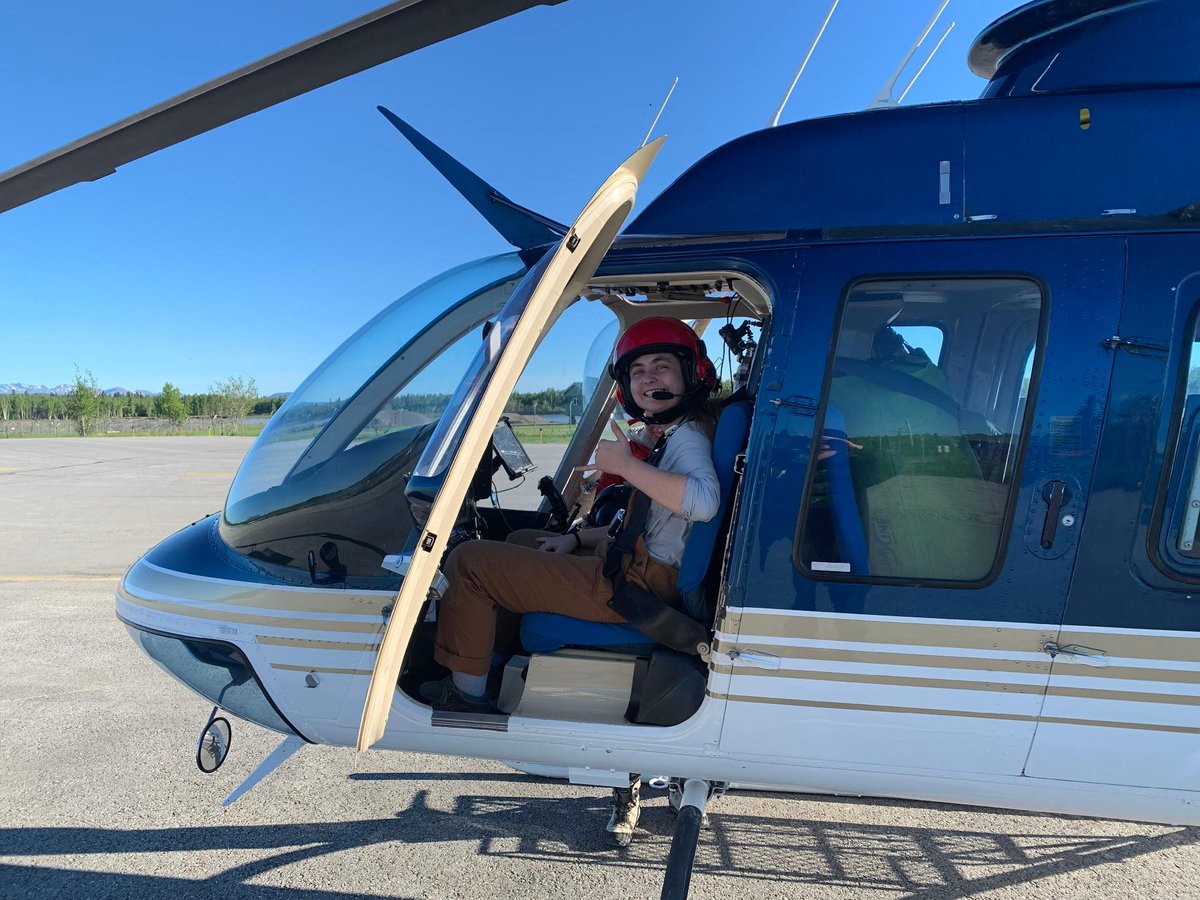
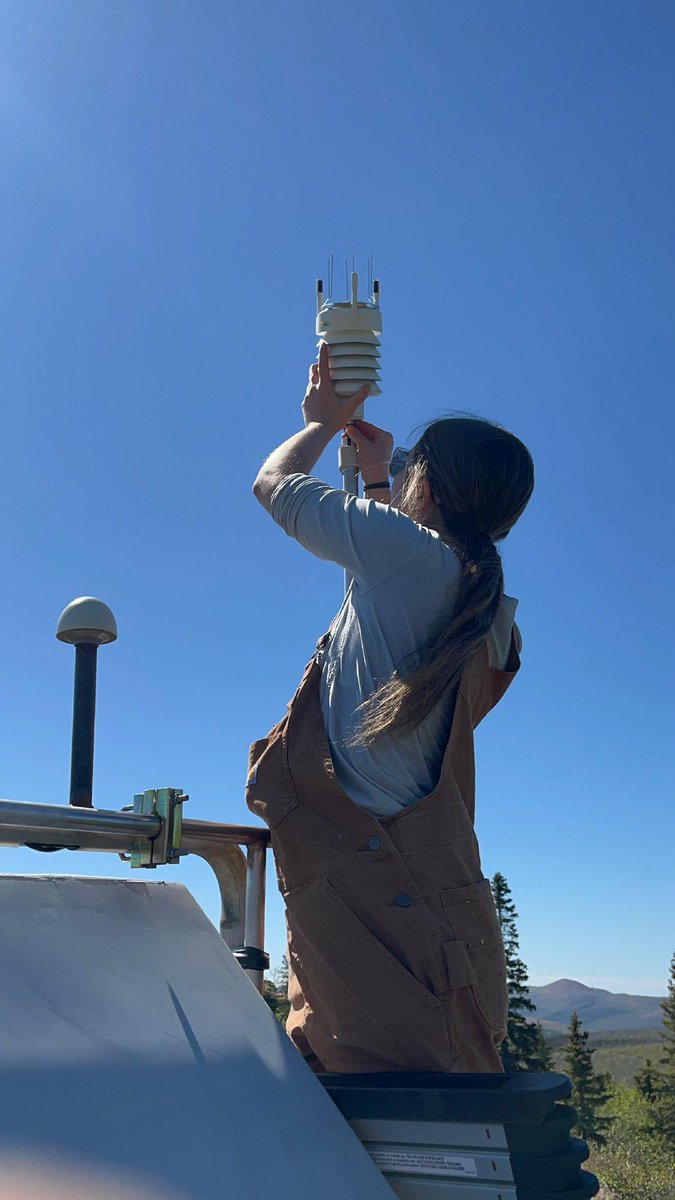
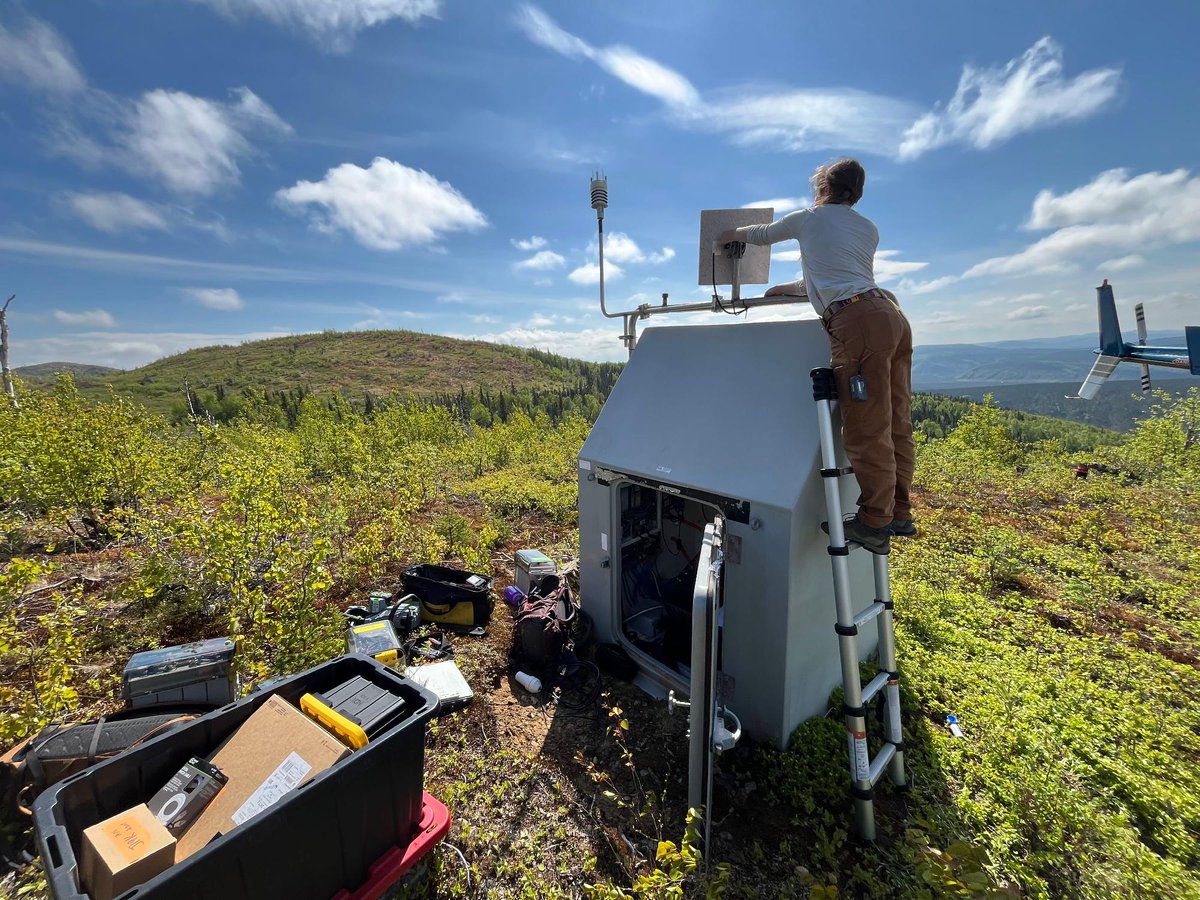
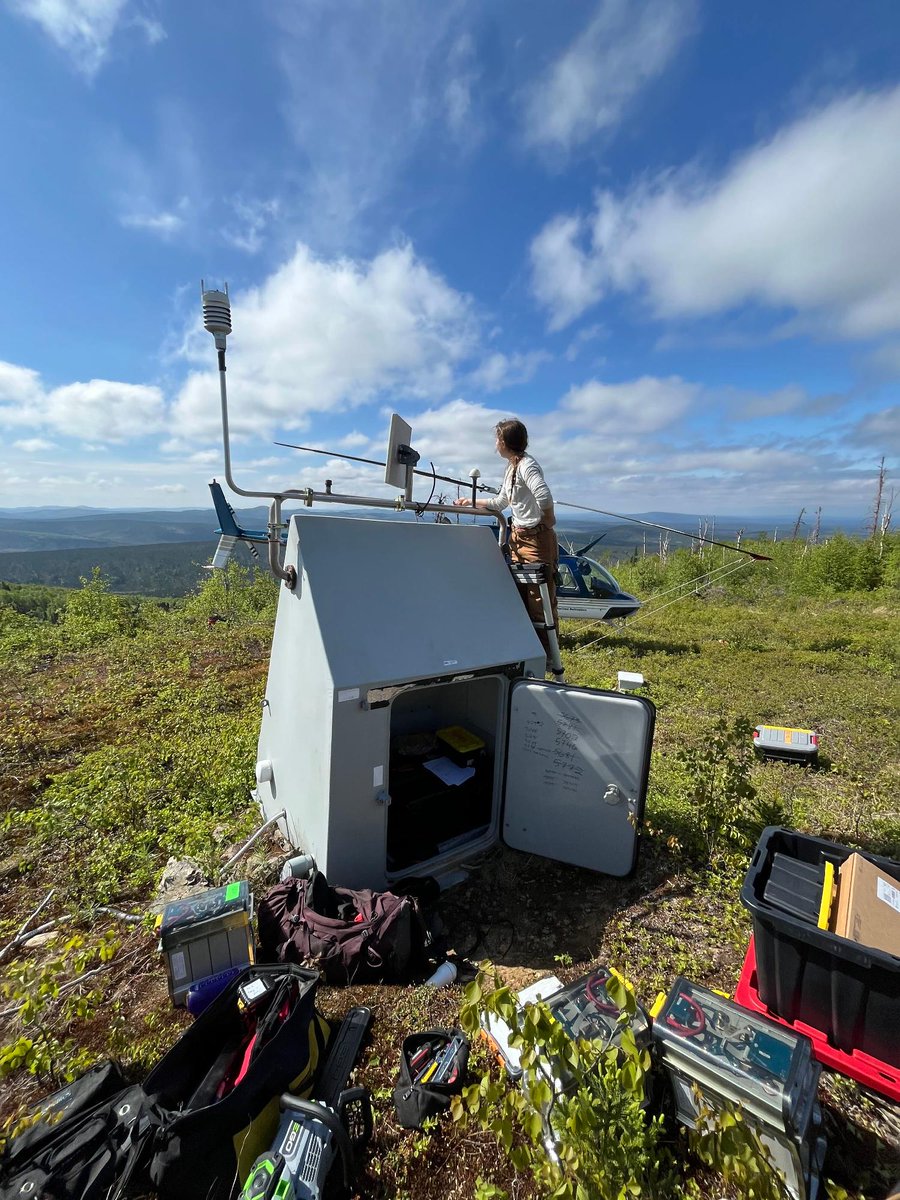
Sites J19K and L17K got some TLC this week, thanks to efforts of our seasoned field operations manager, Carolyn Parcheta, and undergrad intern Chloe Crossen. The effort to get to these sites in a short time frame, with equipment, and resolve technical issues, is not small! #FieldworkFriday!
4
425
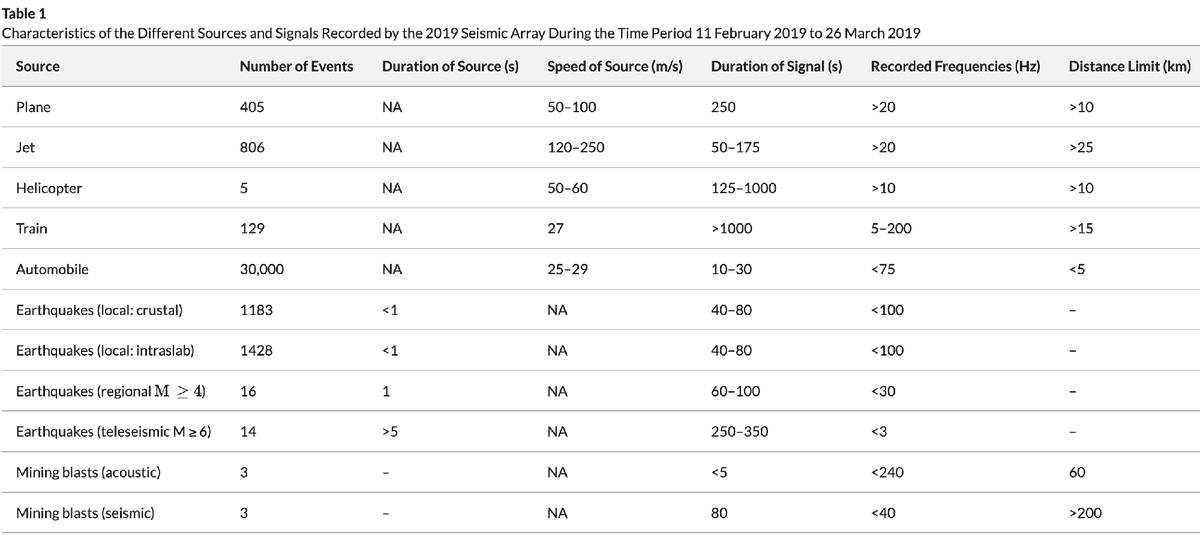
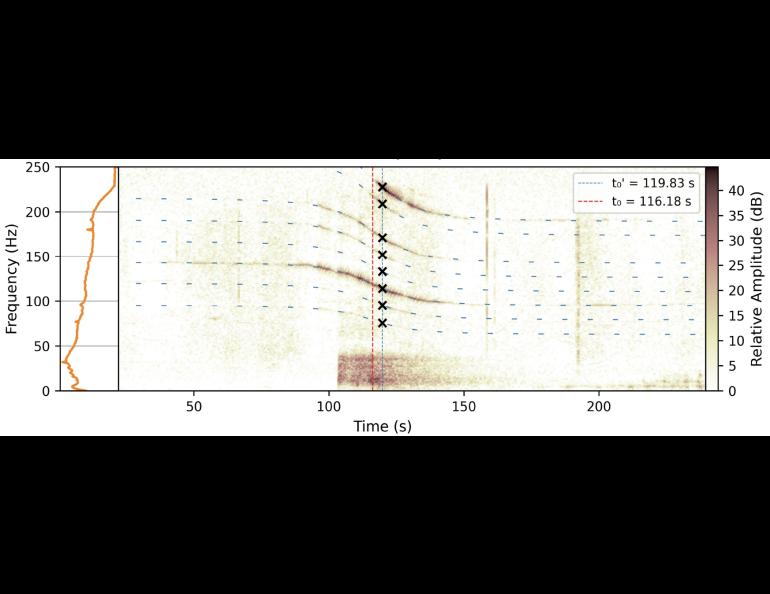
Seismic signals come from everywhere! This recently published study reveals the winter soundscape of Alaska's Parks Highway corridor. Planes, trains, and automobiles. And yes, earthquakes. The 2nd image shows signals of mining blasts (t=15 & 87 sec) and cars (t= 65 & 135 sec). bit.ly/4v4520C

1
5
415
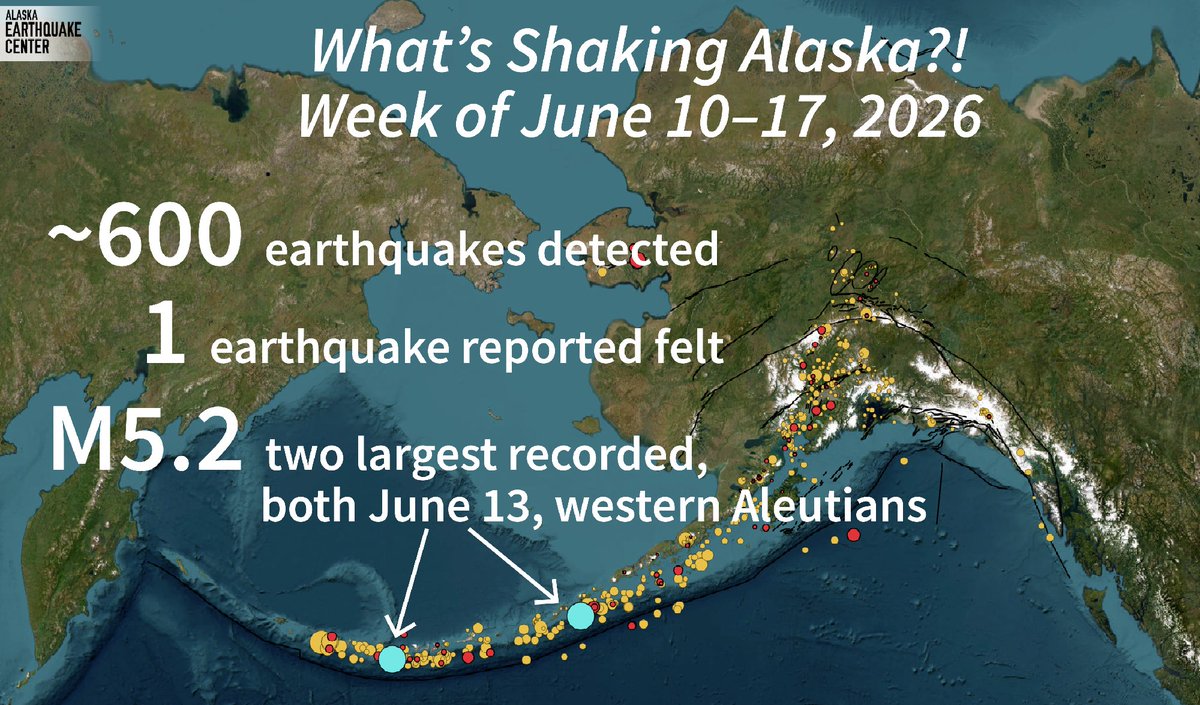
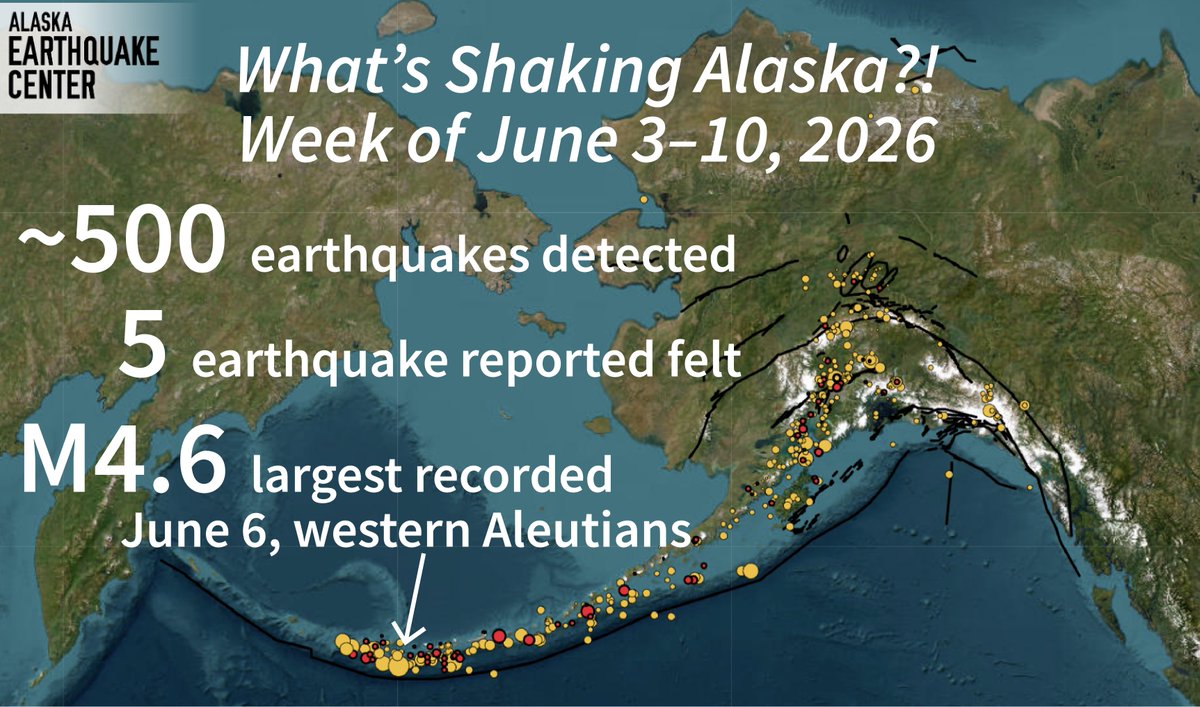
Over the past week, we recorded about 500 earthquakes. The largest was a magnitude 4.6 on June 6th in the western Aleutian islands. Five earthquakes were reported felt.
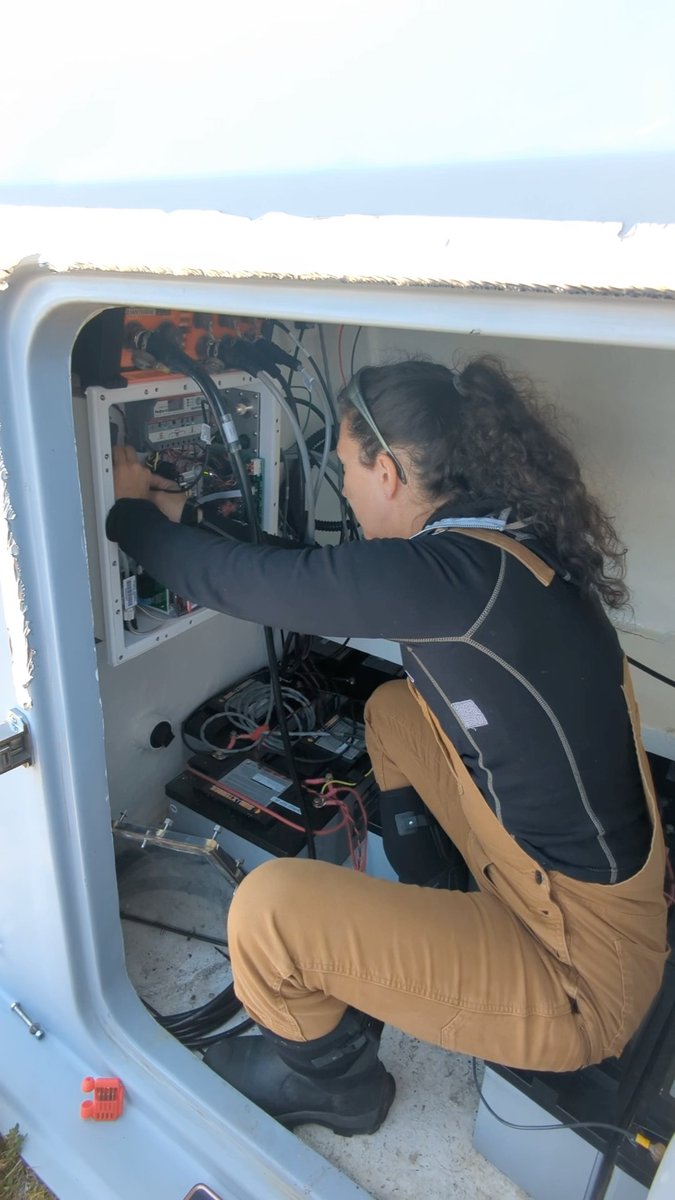
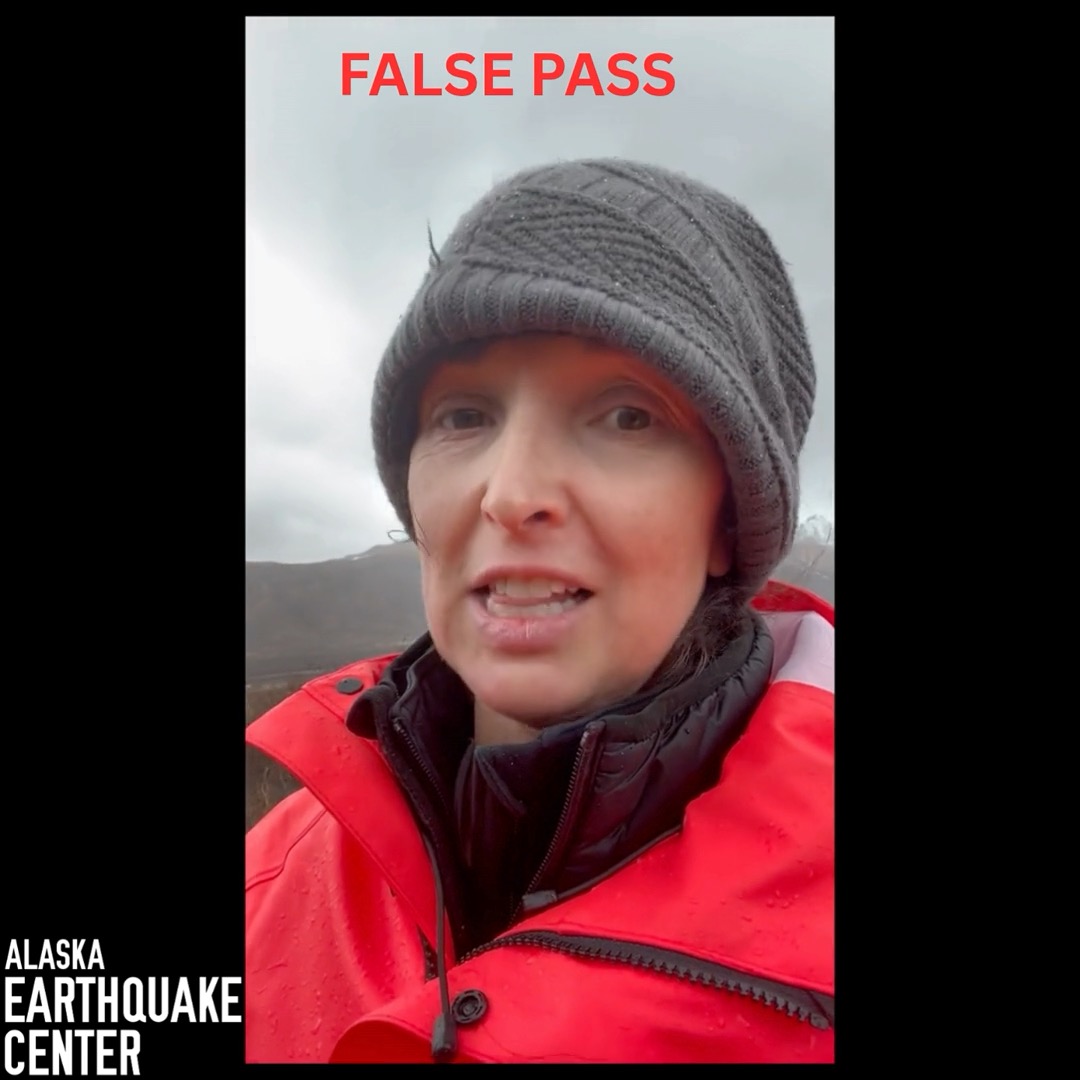
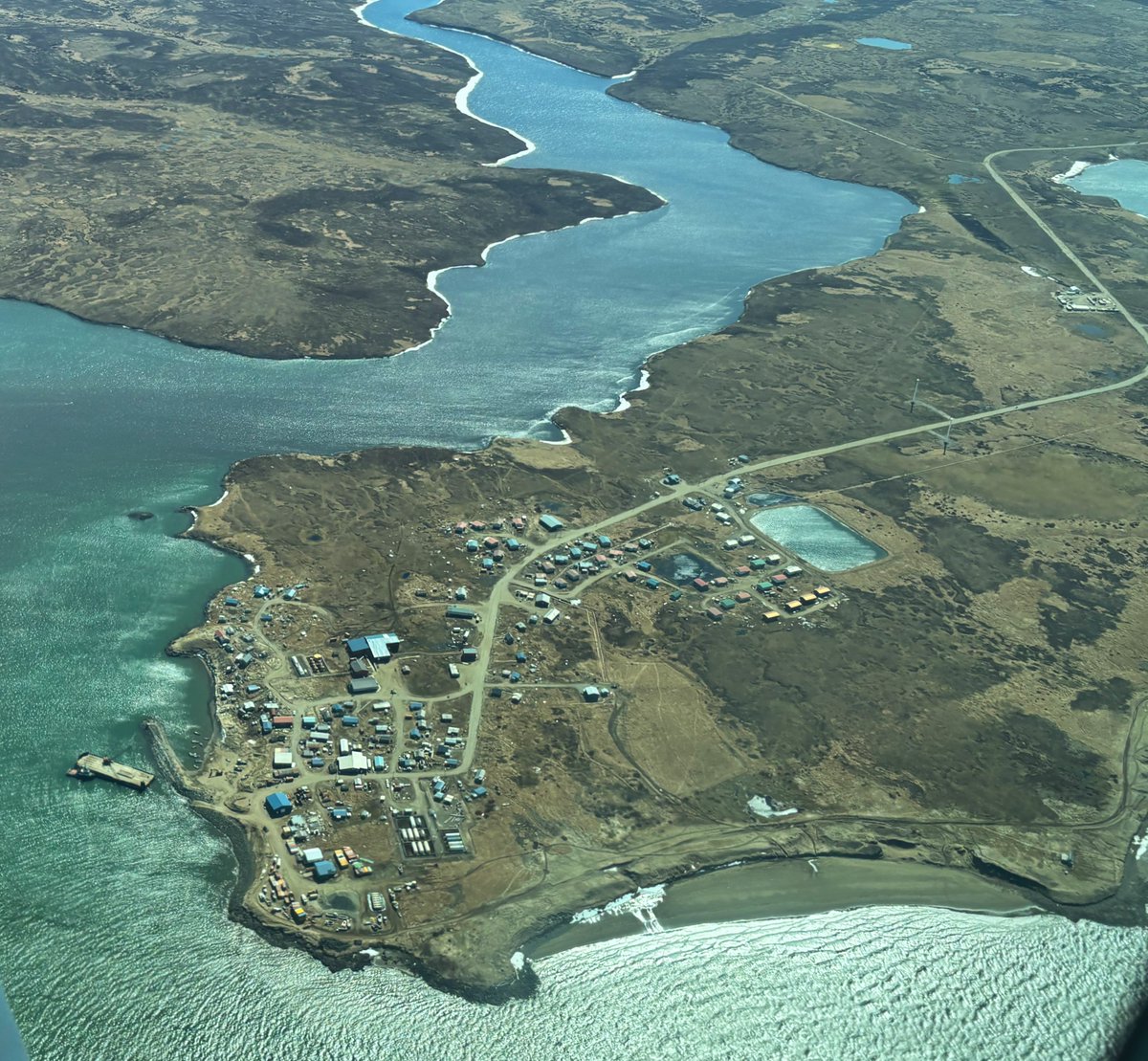
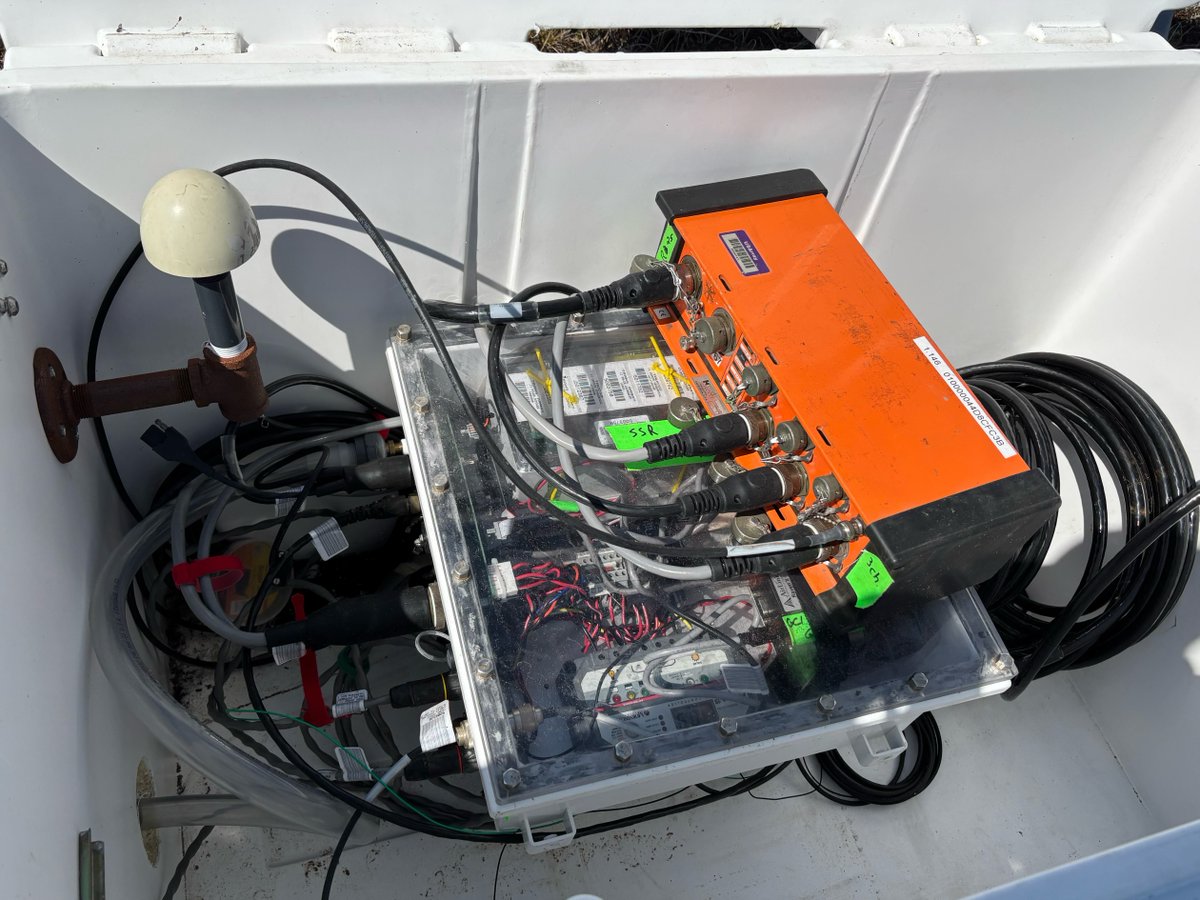
It’s summertime, so the field team has swung into high gear. About half of the 254 sites that the Alaska Earthquake Center maintains are in hard-to-reach locations throughout the state. We headed out last week with field operations manager Carolyn Parcheta to offer you a glimpse into what it’s like to troubleshoot one of these remote stations.
Site M11K is not quite our westernmost station, but it’s close. The hardest part of this work is getting to the station, situated just outside the village of Mekoryuk on Nunivak Island. The area is persistently overcast, with frequent fog, dampness, and strong winds, and temperatures never top 60 degrees.
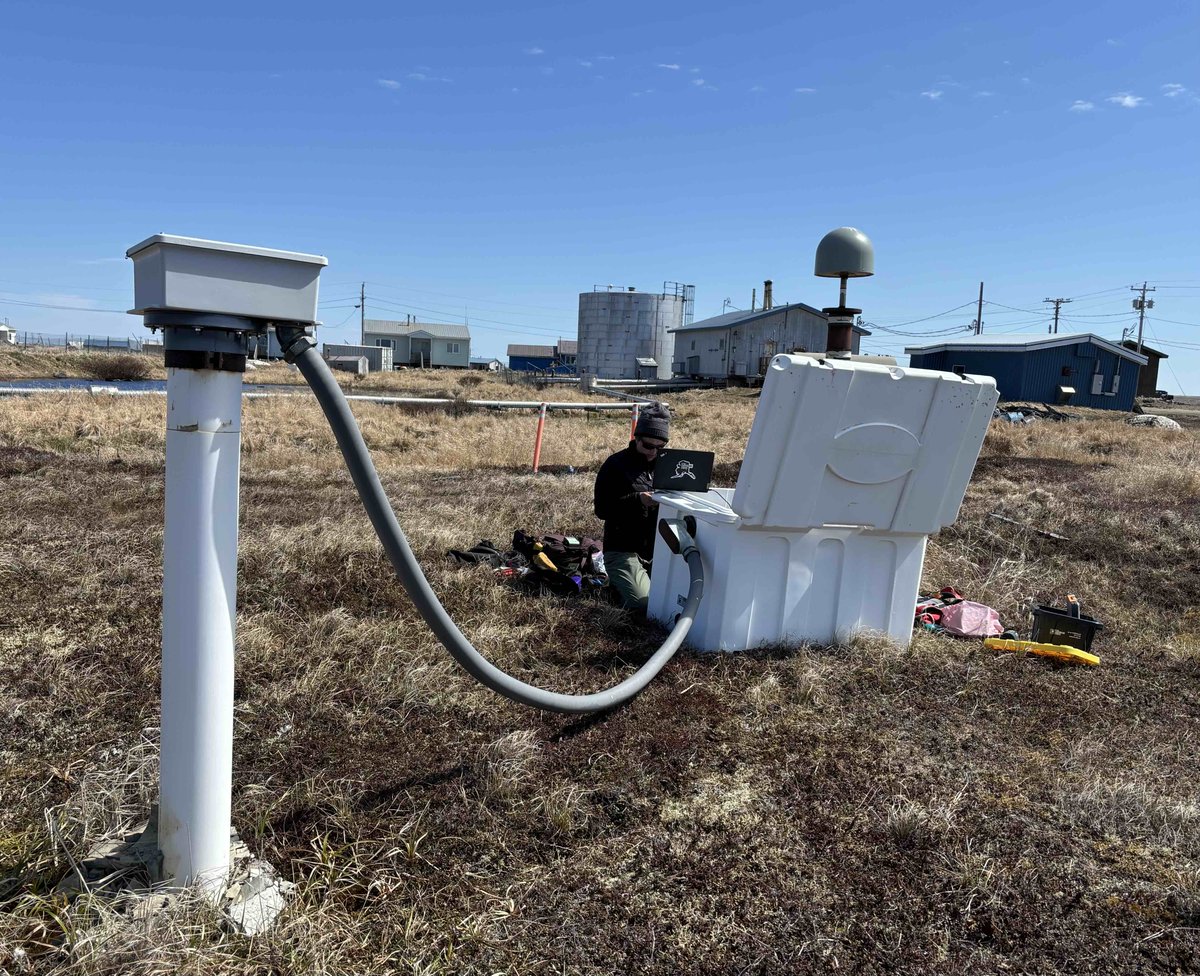
Seismic data reaches the Earthquake Center in Fairbanks via cellular modem that connects to the town’s cell network. On this visit, we swapped out the station’s modem. On first try, the power light blinks green, but the signal and strength are red. After reconfiguring the network settings, we test the signal again. We ping the cell modem, and—success!
This site has literally weathered the seasons, and the borehole seismometer has been frost-jacked 6 feet out of the ground. In a future year, it may need a major overhaul to continue relaying reliable data from this far-flung outpost.
You can “visit” any of our seismic stations through the Network Map page earthquake.alaska.edu/networ… on our website. Each site page has a 24-hour and 4-day view of seismic signals from that spot.
1
6
439
We have reviewed a magnitude 3.0 event that occurred last night at 12:25 AM AK time. This event was located 18 miles NW of Anchorage and 28 miles deep.
This event was reported felt in Wasilla and Anchorage.
For more information, please visit
earthquake.alaska.edu/event/…
1
6
499
We have reviewed a magnitude 3.8 event that occurred at 02:12 PM AK time. This event was located 31 miles SE of Skwentna and 18 miles deep.
This event was reported felt throughout Southcentral Alaska.
For more information, please visit
earthquake.alaska.edu/event/…
12
851
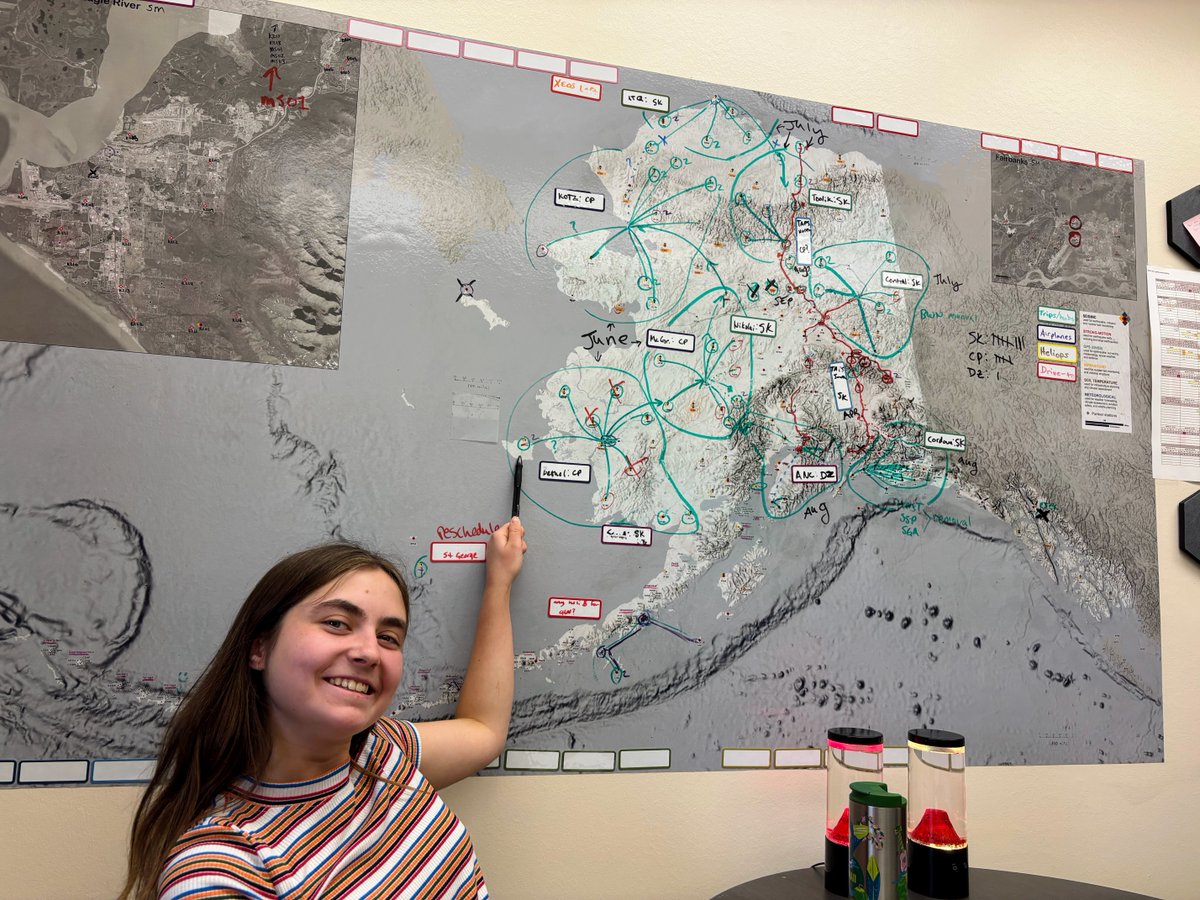
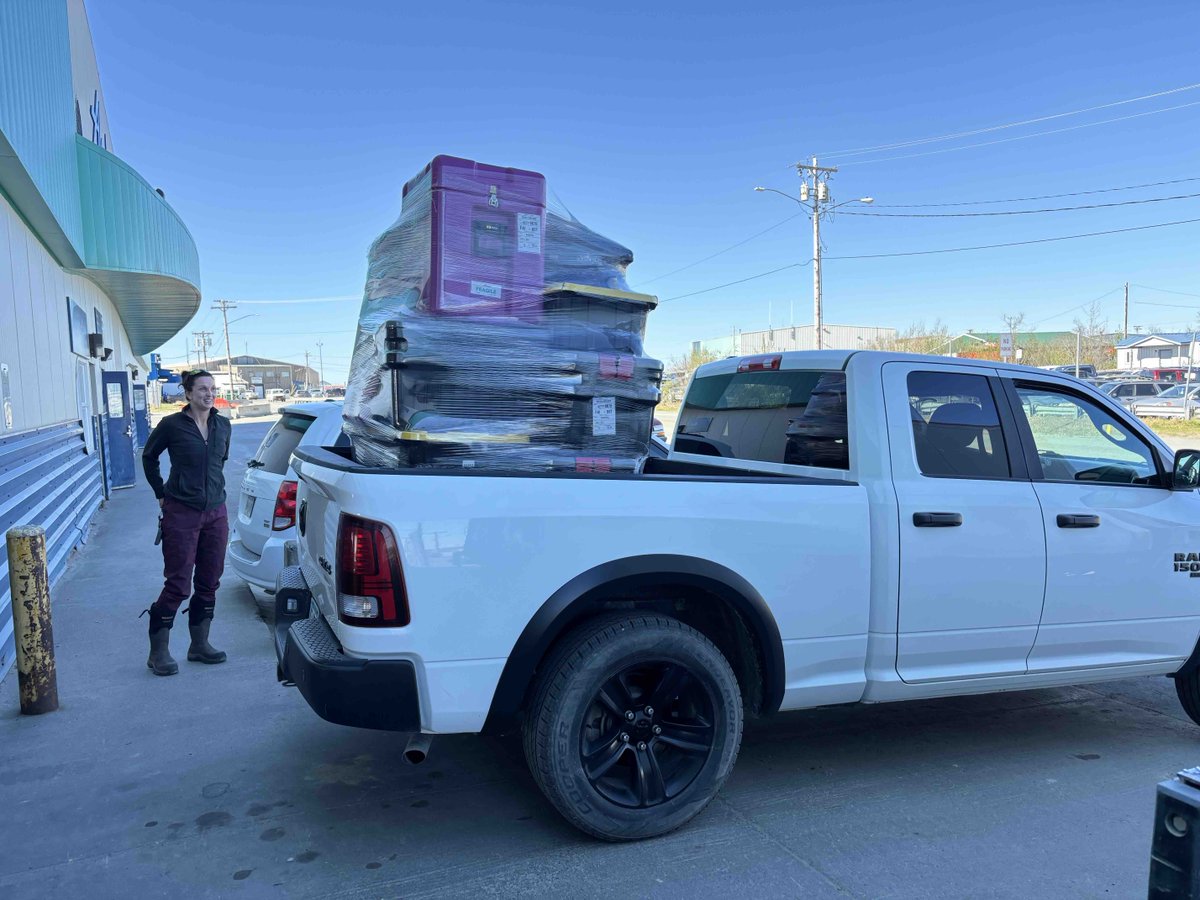
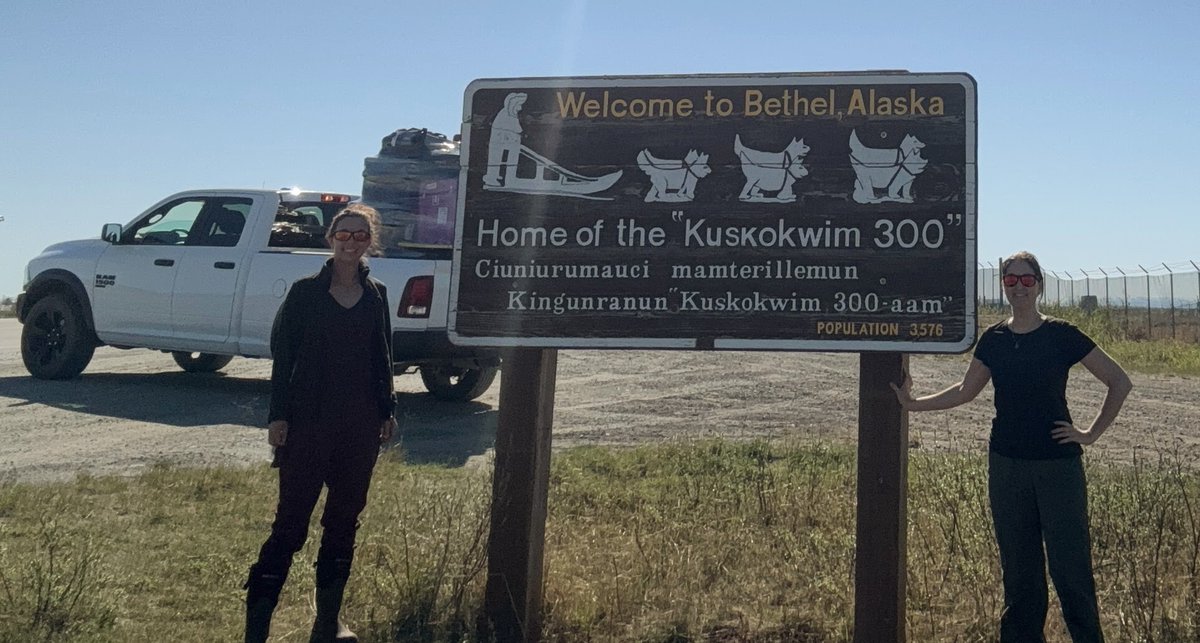
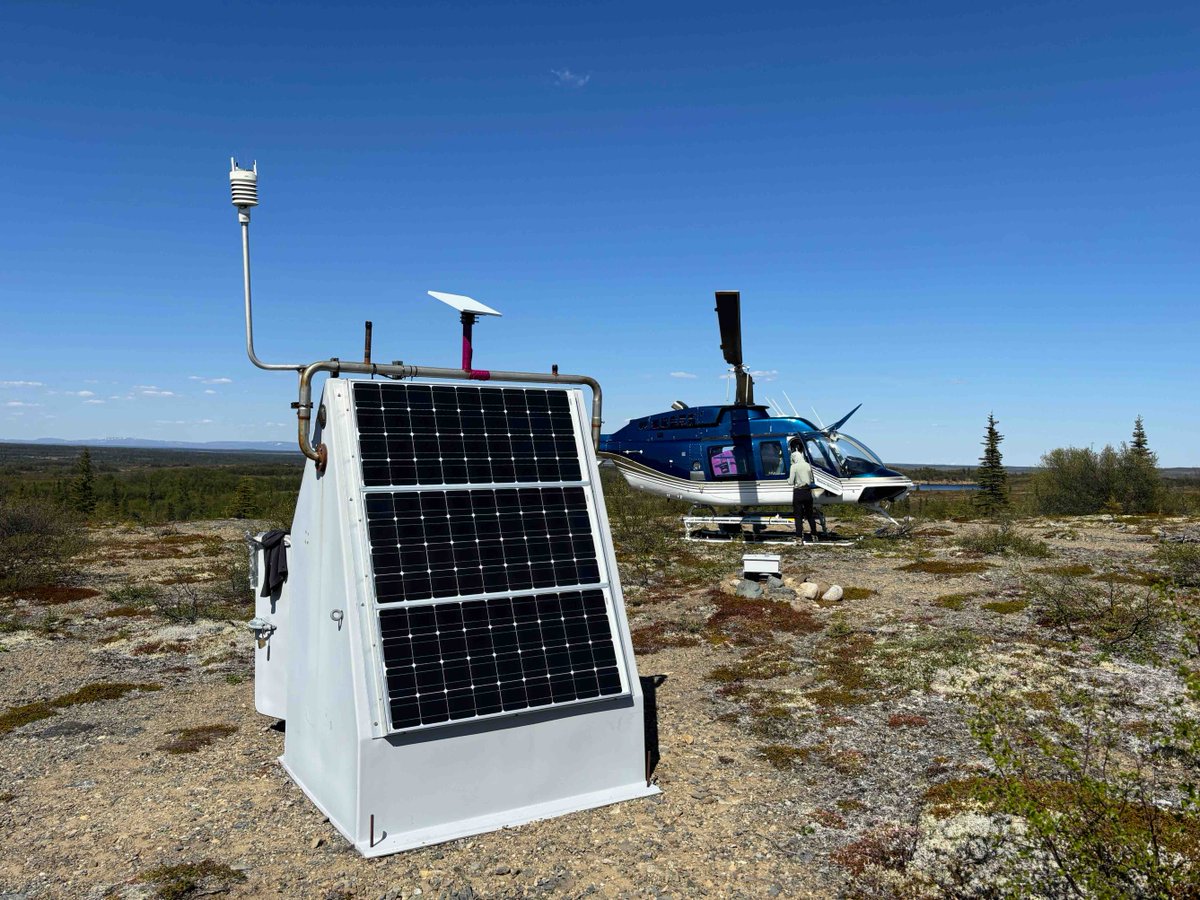
#FieldWorkFriday! What does it take to service 6 stations around Bethel in 6 days? It starts with planning, then flying to Bethel. Picking up and loading a lot of gear. The first remote site on our list was P17K, by the Kvichak River not far from Dillingham. We swapped out the pressure-temperature unit in the weather sensor. Then came the comms upgrade -- when a new cell modem received no signal, a Starlink mini became the newest gadget at this station. Signal is loud and clear!
11
558

Check out this @SeattleMet profile of ShakeAlert system coordinator Natalia Ruppert, one of the USGS Earthquake Science Center staff at the Seattle Field Office. They work alongside us at PNSN HQ, so we benefit from their expertise—and enjoy their company!
seattlemet.com/news-and-city…
3
13
1,759
We know it was a few hours ago, but if you felt a slight shaking near Homer this morning around 11am, it's not your imagination..
This magnitude 3.4 event occurred at 10:50 AM AK time. It was 22 miles SE of Homer and 23 miles deep.
More info here:
earthquake.alaska.edu/event/…
1
3
672
We prioritize reviewing events over magnitude 3.5, so there may be a slight delay on smaller events. But we still review them all!👀
1
405
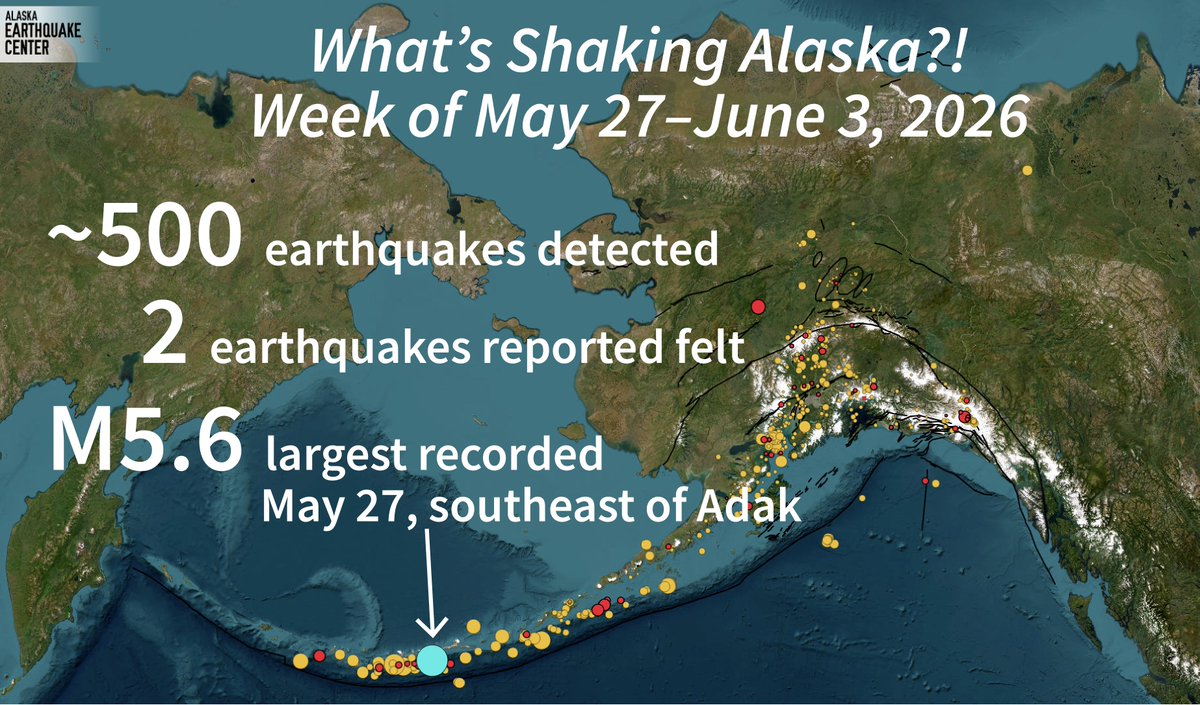
What’s Shaking Alaska?! Welcome to your seismic update from across the state, brought to you by the Alaska Earthquake Center.
In 2016, colleagues in the Engineering department approached the Earthquake Center with an intriguing idea: adding seismometers for structural monitoring in the Usibelli Engineering Learning and Innovation Building. We installed seismometers in 2017, from the basement to the fifth story, as the building was being completed.
While instrumenting tall buildings isn’t a new practice, the engineering building is the only structure in Interior Alaska with seismometers at several levels. Other instrumented buildings in Alaska include the 20-story Atwood Building in Anchorage, and the Anchorage Museum.
The sensors measure how much shaking occurs on different floors. Typical of tall buildings, sensors on the lower floors detect the motion of the earth itself. Sensors higher up record the additional side-to-side swaying of the building caused by earthquakes.
During a magnitude 5.3 earthquake in 2024, the earthquake “kicked” the engineering building into resonating, like kicking a signpost.
The basement sensor showed a strong pulse lasting a few seconds. As the oscillation traveled up the building, it created swaying felt for many seconds. The fifth floor had the strongest and longest shaking, consistent with what people often report in tall buildings.
Learn more on earthquake.alaska.edu.
4
427
Happy #FieldworkFriday! This week we look at the receiving end of the field operations: When our field team installs a new seismometer or repairs broken equipment 🏚️, how do they know it’s working before they hop back into the helicopter 🚁 ? Whether it's through sat-phone 🛰️, cell phone📱, or email from a field laptop 💻, our office-bound systems (IT) team makes sure that seismic data from point A arrives at point B🔄. As long as there’s some type of connection with the station, the systems superstars can streamline the repairs in the field. The last step is actually a jump—the field crew does a stomp test to see if our office crew sees the wiggles come through loud and clear. Then, on to the next site👉 !
1
6
585
We have reviewed a magnitude 5.6 event that occurred at 04:25 PM AK time. This event was located 41 miles SE of Adak and 14 miles deep.
No reports of the event being felt have been received at this time.
For more information, please visit
earthquake.alaska.edu/event/…
4
809
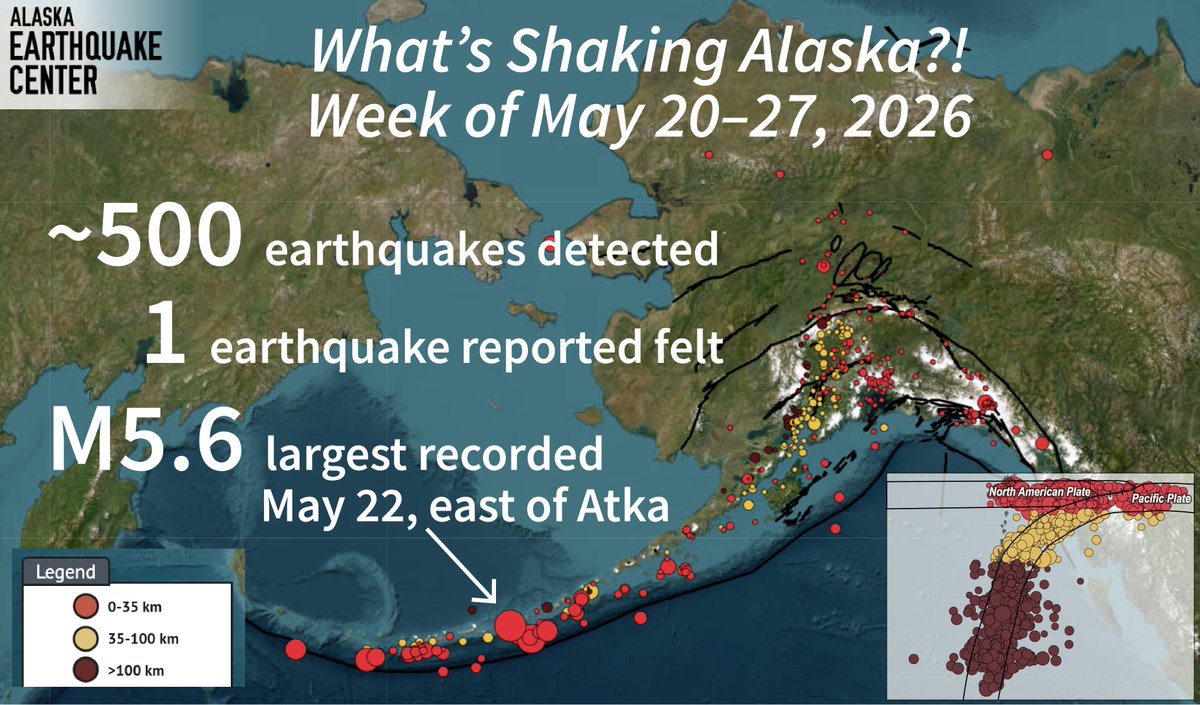
The southern coast of Alaska and the Aleutian islands follow the longest and one of the most active subduction zones on Earth. What exactly is a subduction zone, and how do earthquakes help us identify them?
Subduction zones consume Earth’s outer layer, the crust, by pulling it into the mantle. Denser oceanic plate material, initially created far from subduction zones, moves away from spreading ridges, cooling as it goes. Eventually, this cool, dense, oceanic plate converges with other tectonic plates, and the denser material moves into the deep Earth. The tremendous stresses built by plates converging is released as earthquakes. The largest earthquakes on the planet are at subduction zones, which is also where magma is generated that feeds volcanoes at the surface.
Since subduction-zone processes start underwater and continue many miles below the earth’s surface, we can’t directly observe them. Instead, we track the descending path of the subducting plate by the earthquakes created along the boundary and inside of the subducting plate.
Check out the inset box of today’s weekly summary graphic—we chose this week to color the earthquakes by depth instead of date, so you can see how the depths of earthquakes reveals the subducting plate’s path into the mantle.
To track Alaska’s subduction-zone earthquakes, explore our interactive map tools at earthquake.alaska.edu.
4
460
Good afternoon!
We have reviewed a magnitude 5.3 event that occurred at 01:49 PM AK time. This event was located 103 miles SW of Nikolski and 3 miles deep.
No reports of the event being felt have been received at this time.
For more information, please visit
earthquake.alaska.edu/event/…
1
2
709
It's #FieldworkFriday time! Station SII on Sitkinak Island near Kodiak is back on track 🥳 after our field team fixed a power issue and upgraded the digitizer (the gizmo that converts the data into digital format so it can be transmitted to us). It's not often they luck out and have such great weather at this site! ☀️
1
4
689