Nigeria's civic tech organisation, raising the standards of transparency, citizen engagement & accountability most especially in public finance. #AskQuestions
Joined March 2011
- Tweets 78,953
- Following 2,866
- Followers 276,635
- Likes 6,206
12,401 Photos and videos

Pinned Tweet

May 14
🗣️ Fellow Nigerians,
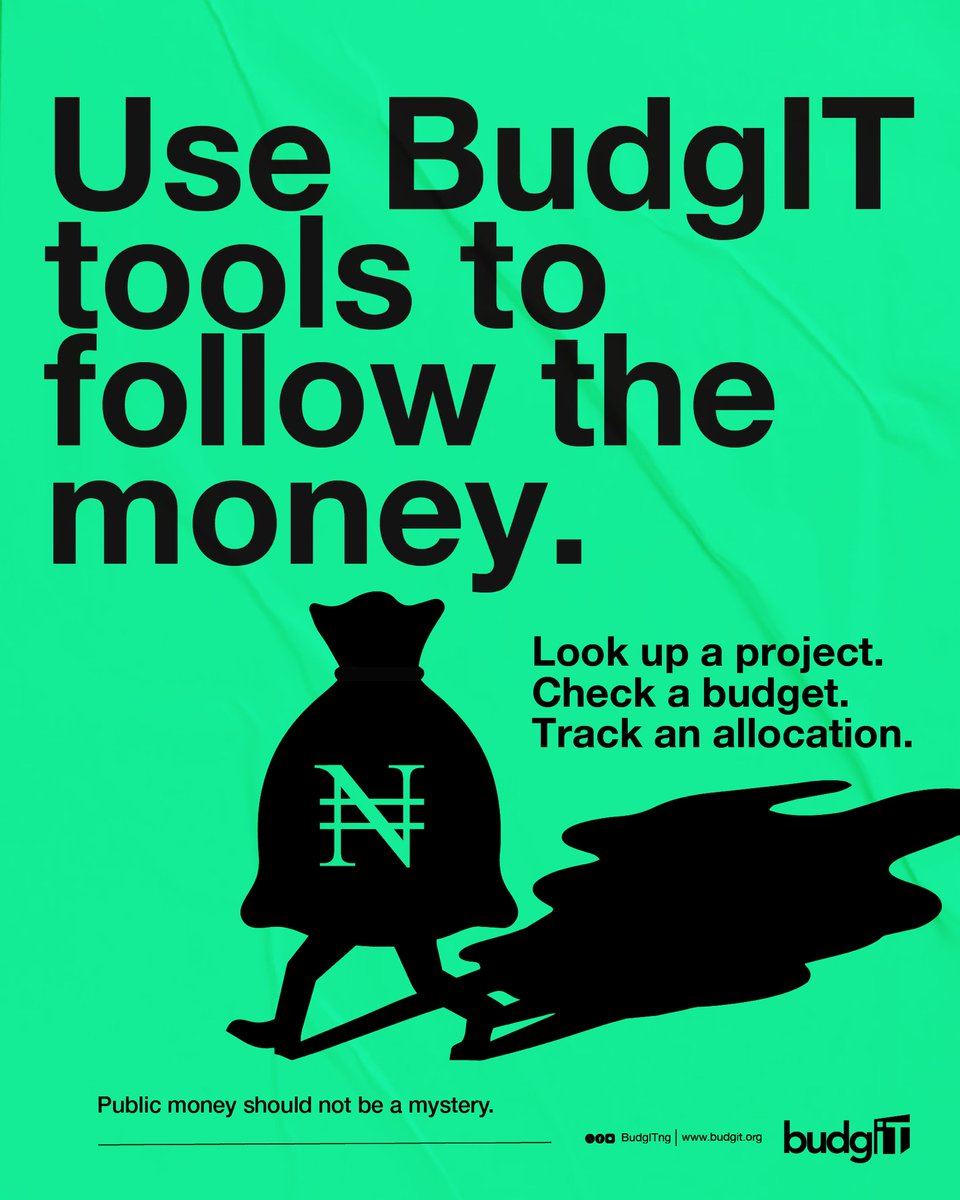
If there’s one thing you should pay attention to today, it’s the 2026 budget.
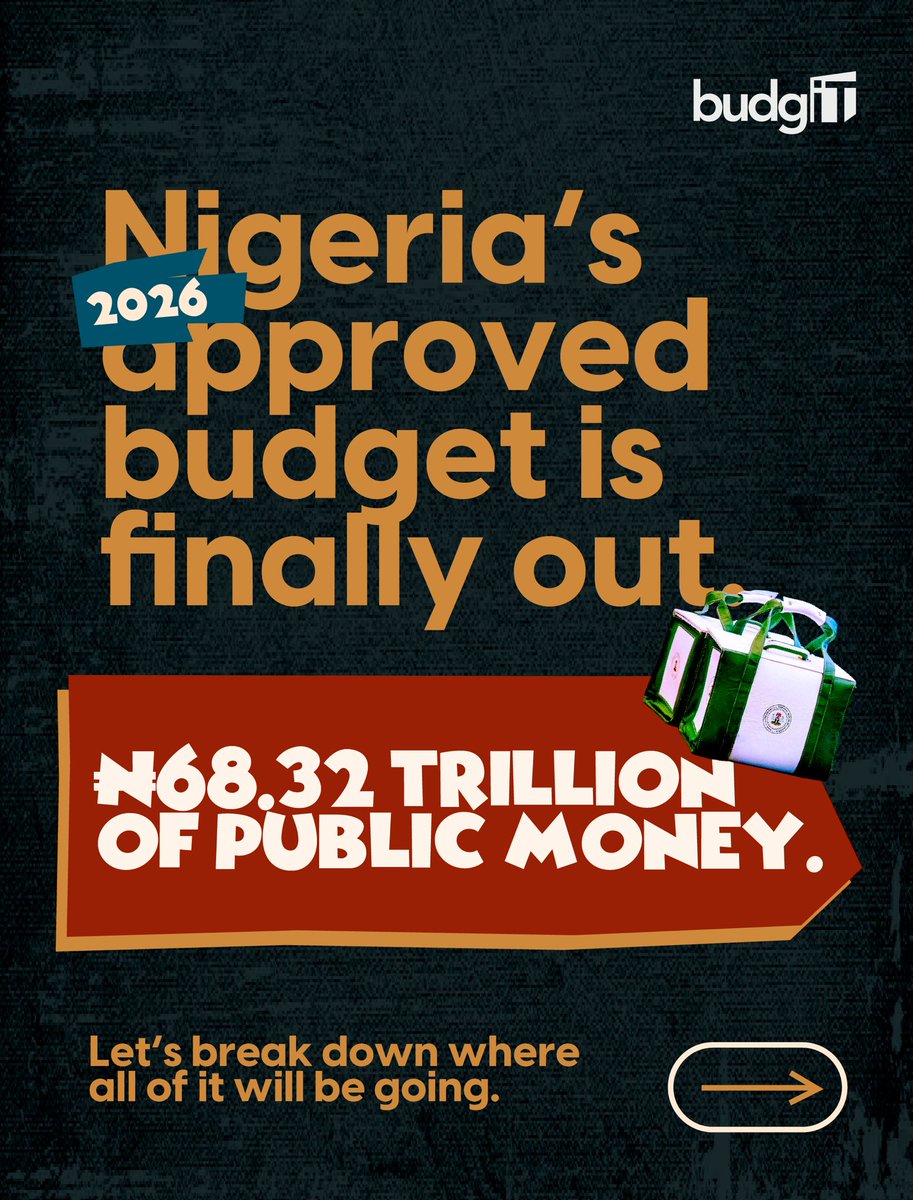
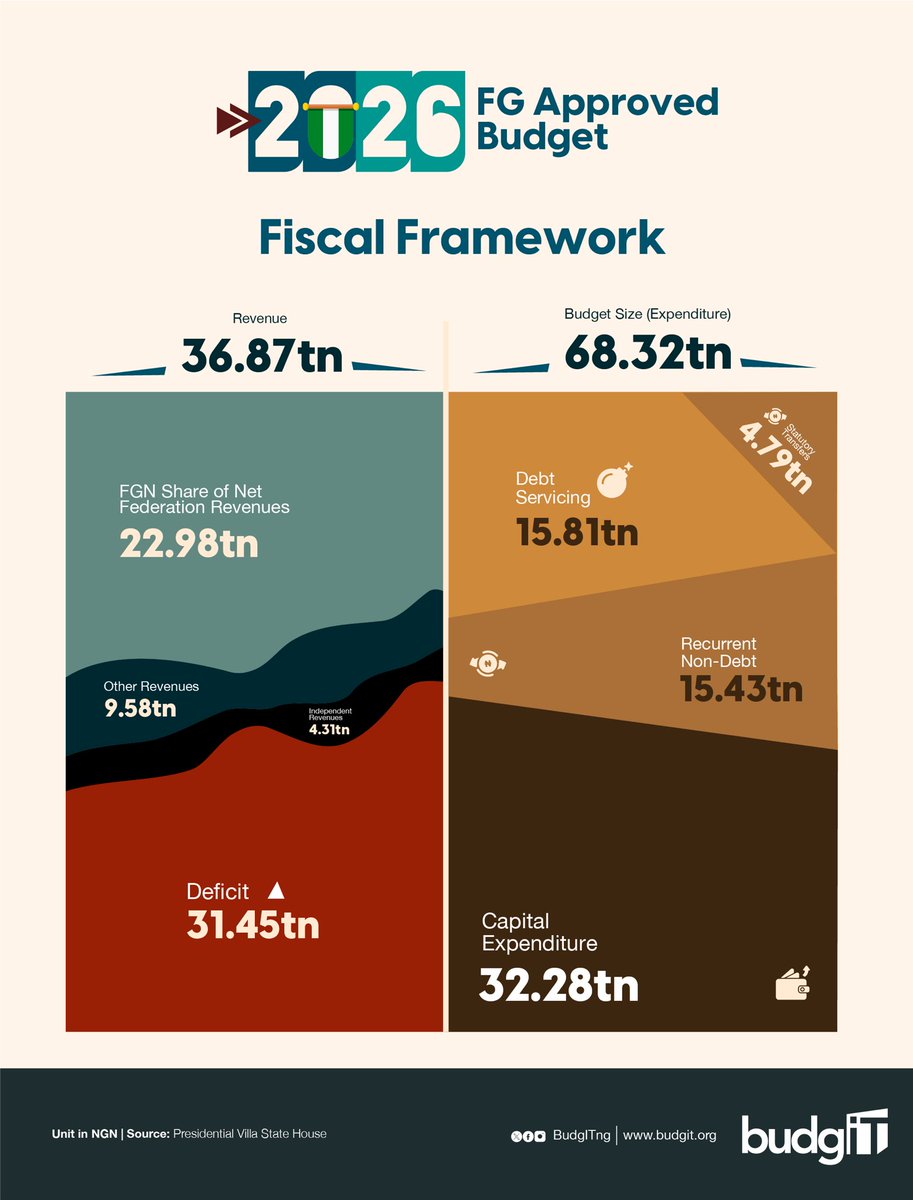
₦68.32 trillion has been proposed. That’s public money. Our money.
Here’s the breakdown:
📌 ₦32.29tn — Capital projects
📌 ₦15.81tn — Debt servicing
📌 ₦15.43tn — Running government
📌 ₦4.79tn — Transfers to agencies
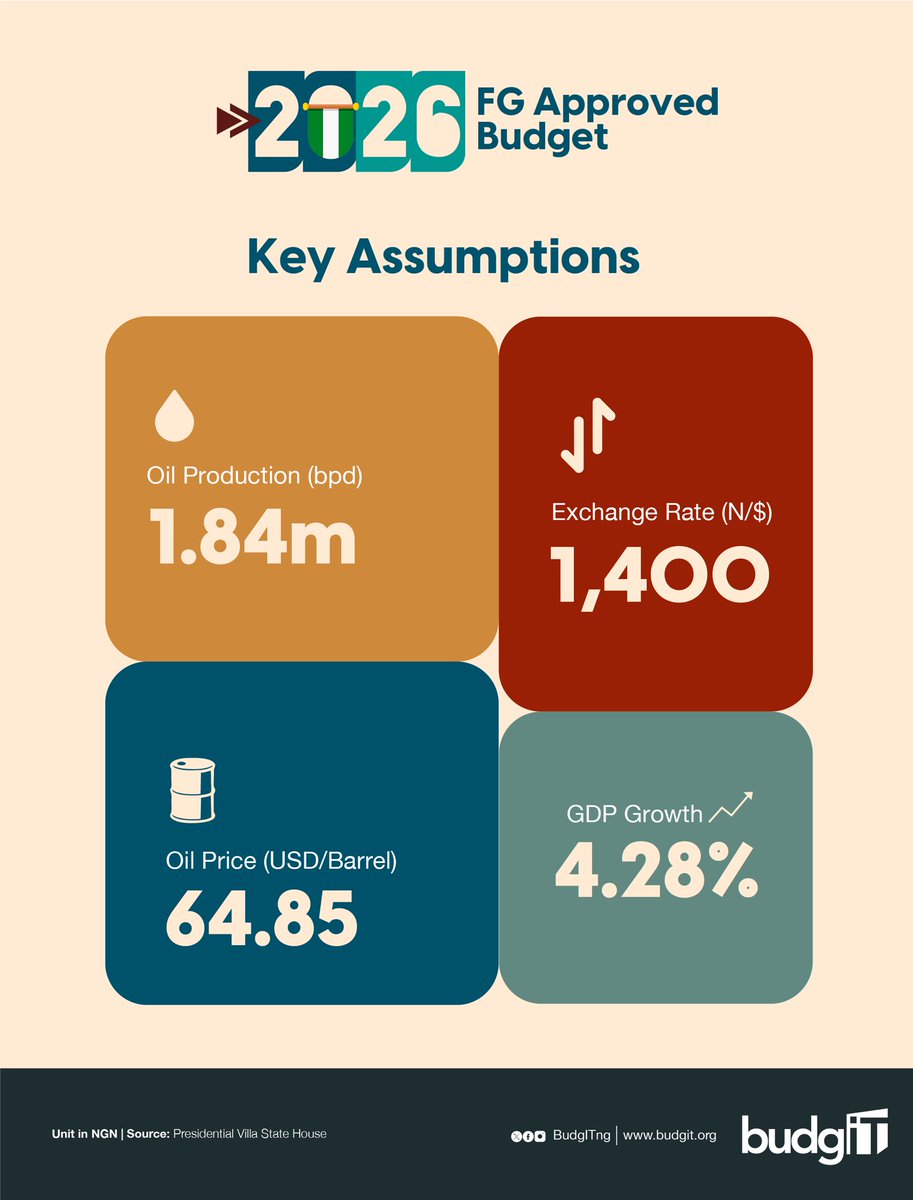
The government expects ₦36.87tn in revenue but plans to spend ₦68.32tn. Before the spending, these are the assumptions behind it:
📌 Oil production — 1.84m barrels per day
📌 Oil price — $64.85
📌 Exchange rate — ₦1,400/$
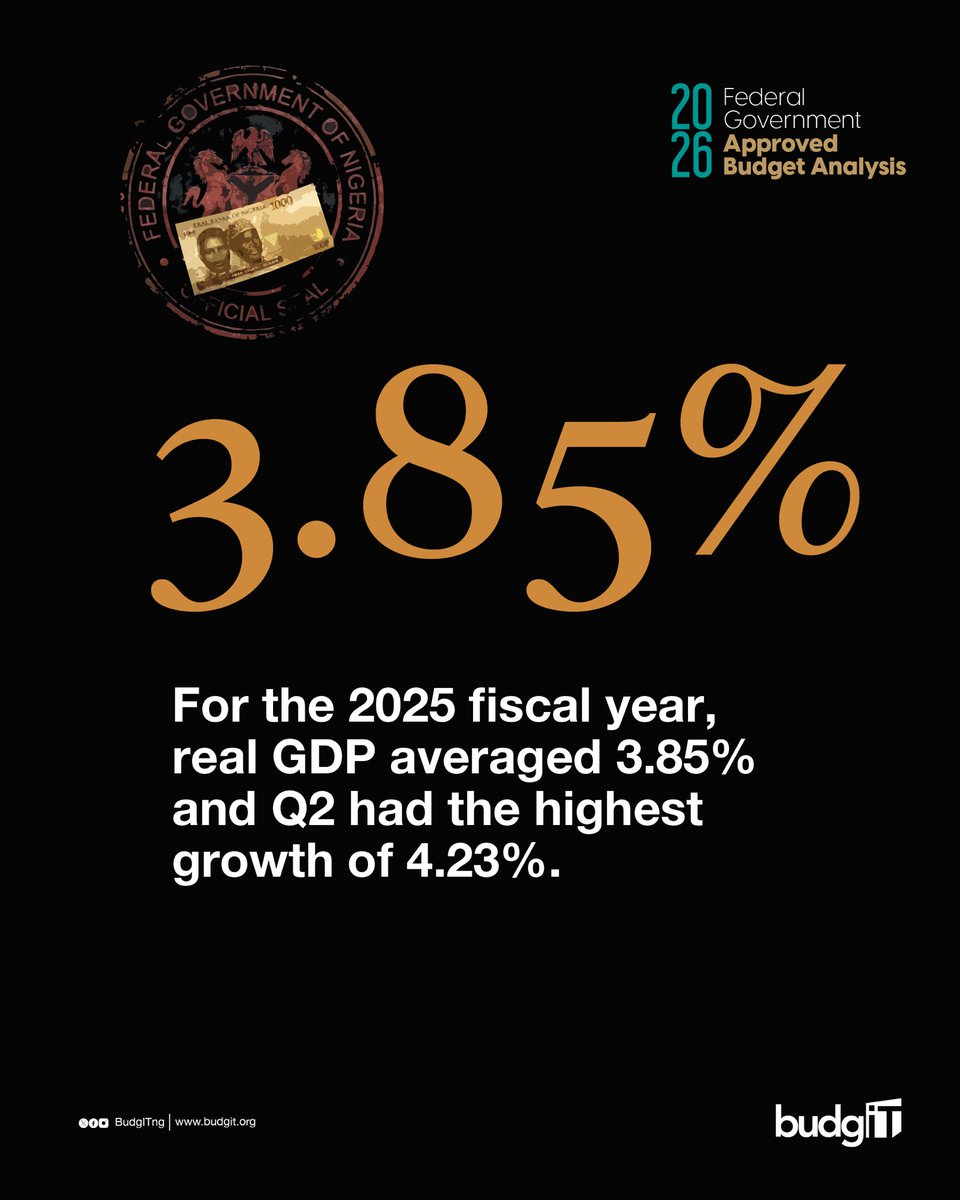
📌 GDP growth — 4.28%
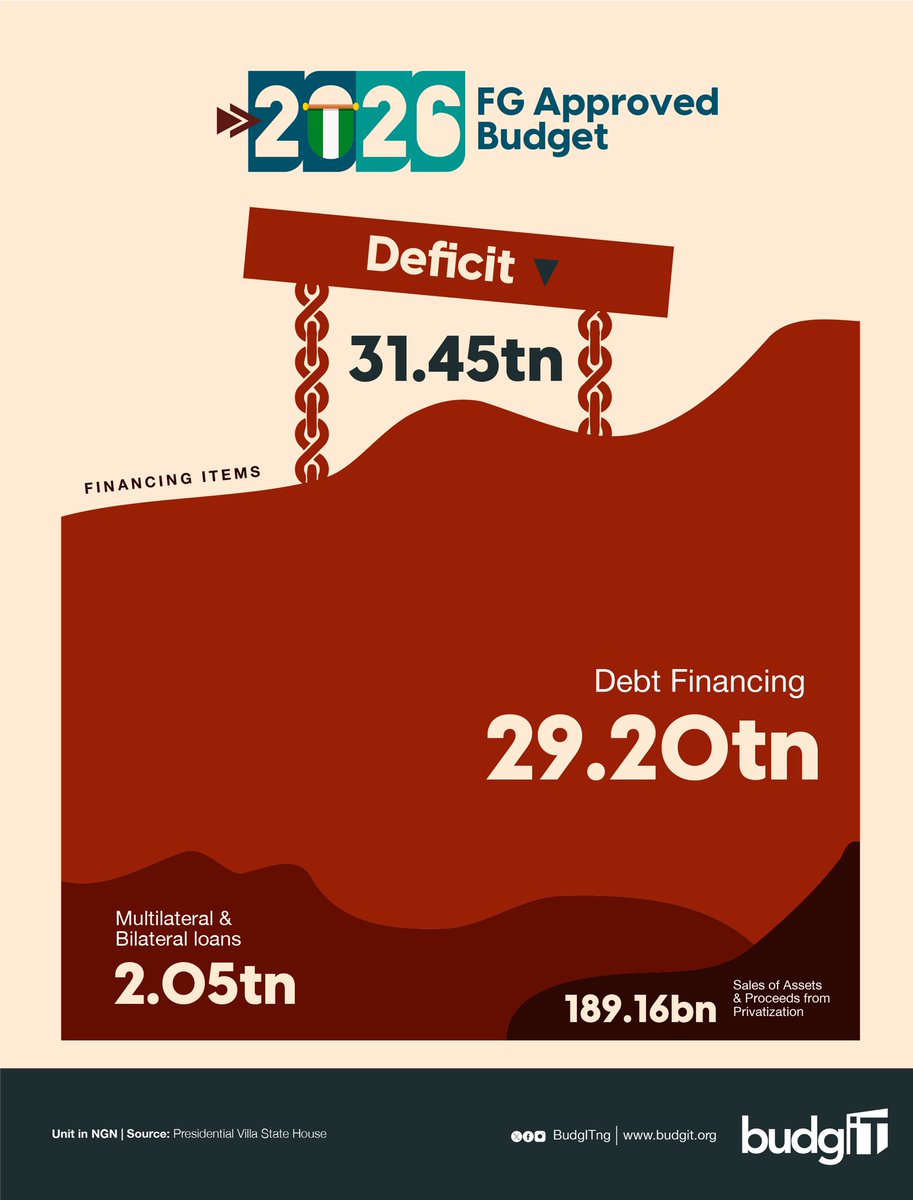
The ₦31.45tn deficit will be covered by:
📌 ₦29.20tn — borrowing
📌 ₦2.05tn — external loans
📌 ₦189bn — asset sales
#2026BudgetNG #FollowTheMoney #AskQuestions
8
96
114
6,752
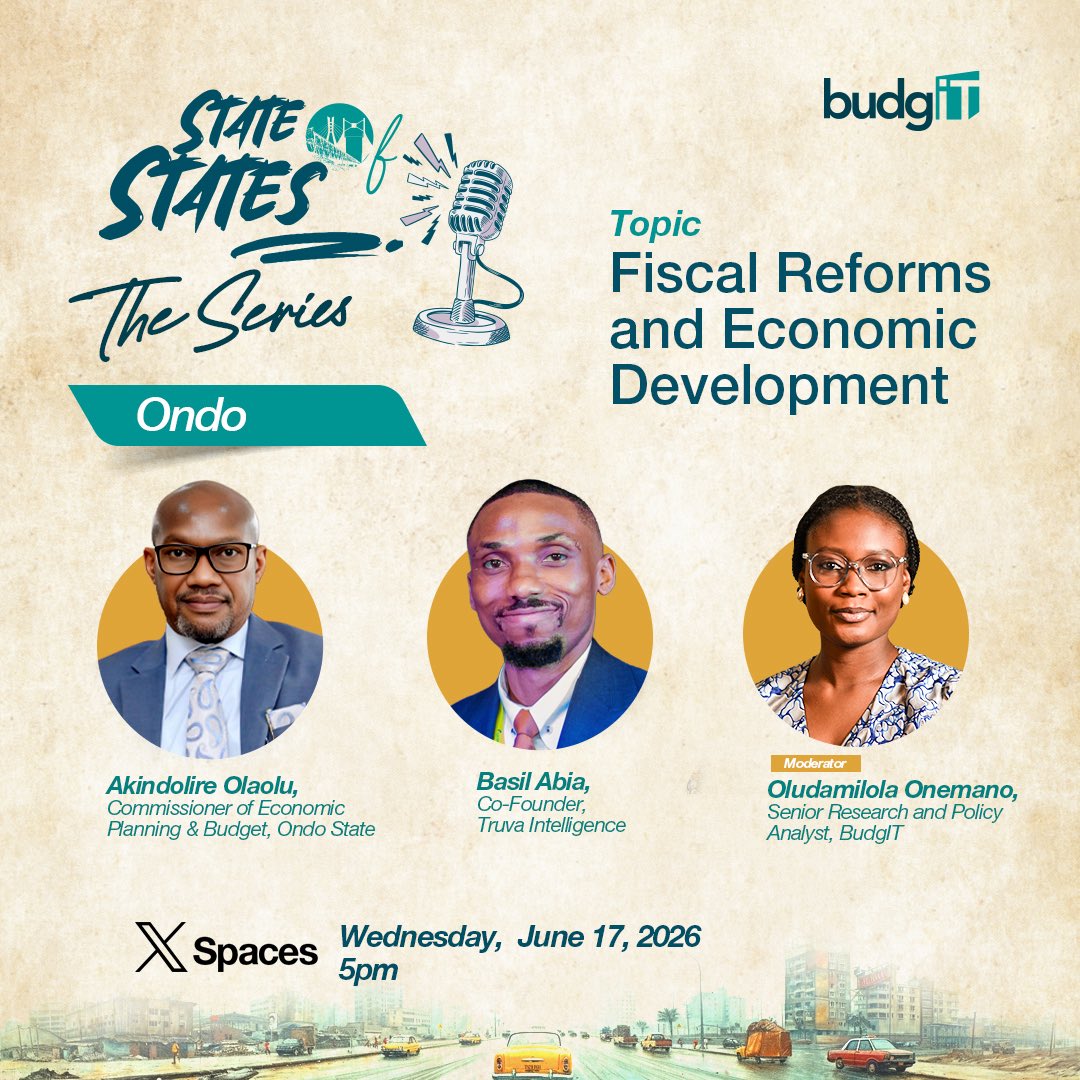
When we say fiscal reforms and economic development, what does in mean to everyday citizens?
Next up on #StateofStates: The Series, we turn the lens to Ondo State to unpack how fiscal choices are shaping growth, service delivery, and economic direction.
🎤 Speakers
Akindolire Olaolu (Mr.), Commissioner of Economic Planning & Budget, Ondo State
@basilabia, Co-Founder, Truva Intelligence
🎤 Moderator
@DamilolaOnemano, Senior Research and Policy Analyst, BudgIT
📅 Wednesday, June 17, 2026
🕔 5:00 PM
📍 BudgIT’s X Space
🔊 Set a reminder and be in the room live 👉 twitter.com/i/spaces/1NGarrd…
Don’t miss out.
#StateofStates #GetInvolved #AskQuestions
2
3
251
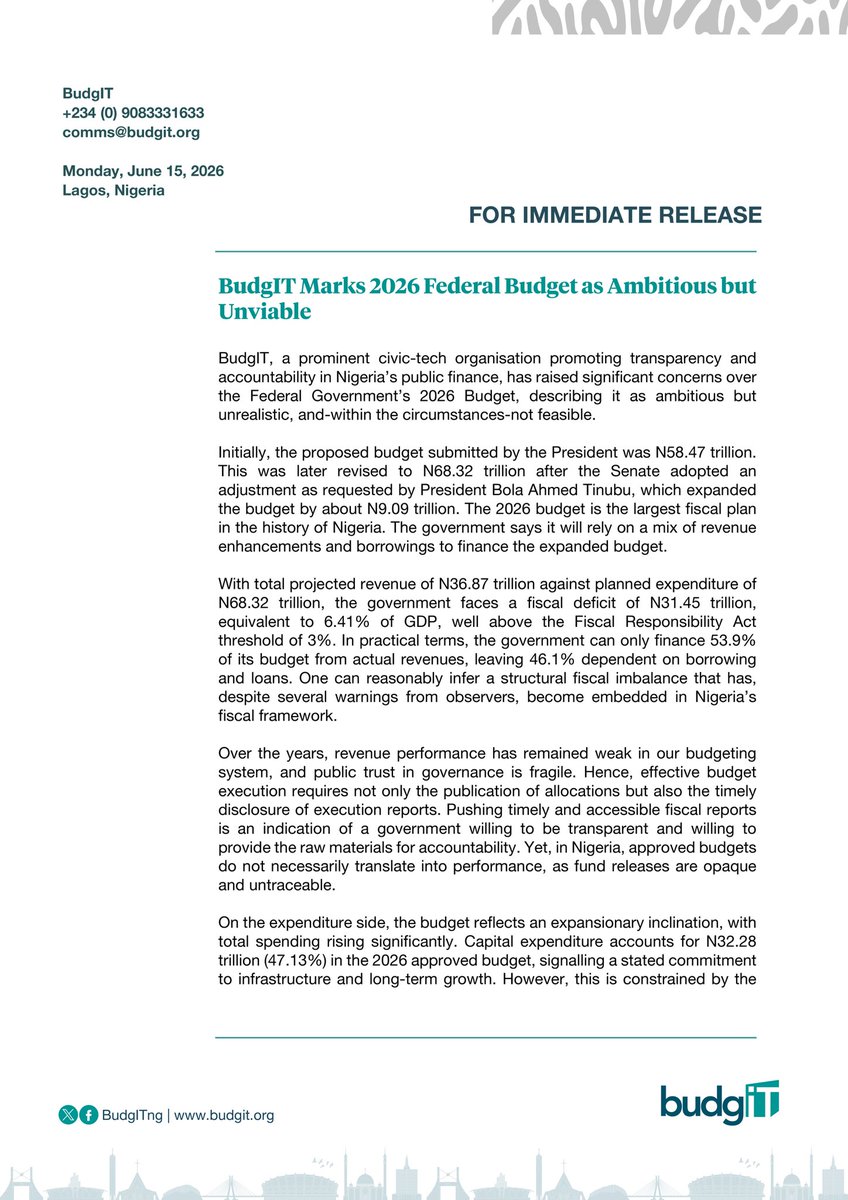
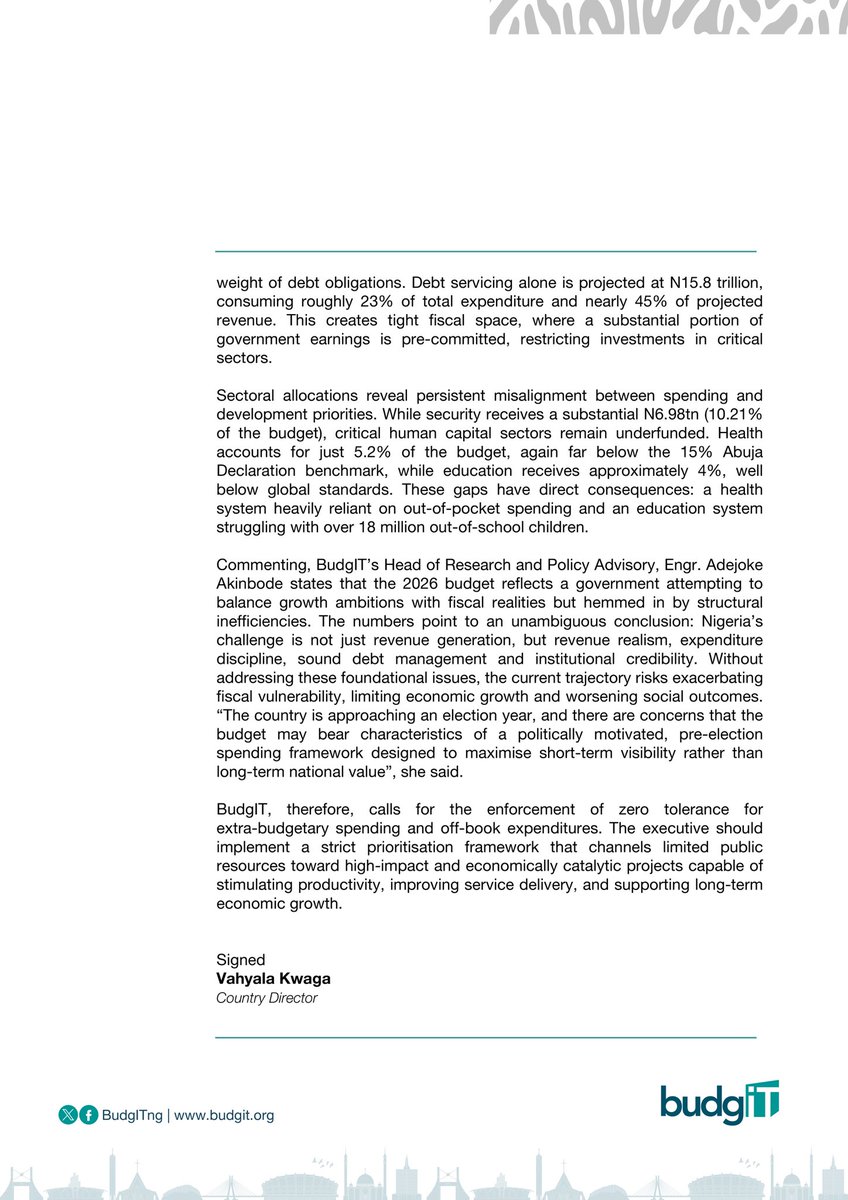
🗣️BudgIT Marks 2026 Federal Budget as Ambitious but Unviable
BudgIT has raised significant concerns over the Federal Government’s 2026 Budget, describing it as ambitious but unrealistic and, within the current fiscal realities, not feasible. The approved budget of N68.32 trillion is the largest in Nigeria’s history, yet nearly half of it depends on borrowing.
PRESS STATEMENT
#2026FGBudget #AskQuestions
4
58
68
2,195
Sectoral allocations reveal persistent misalignment between spending and development priorities.
While security receives N6.98 trillion, health accounts for just 5.2% of the budget, far below the Abuja Declaration benchmark, while education receives approximately 4%, well below global standards.
#2026FGBudget #AskQuestions
2
1
2
211
BudgIT notes that Nigeria’s challenge is not only revenue generation but also revenue realism, expenditure discipline, sound debt management, and institutional credibility.
The organisation therefore calls for zero tolerance for extra-budgetary spending and off-book expenditures, alongside a strict prioritisation framework that channels limited public resources toward high-impact and economically catalytic projects.
#2026FGBudget #AskQuestions
1
2
193
The budget is where the government says “we will.” Reality is where “can we?” enters the conversation.
Nigeria has approved its biggest budget in history, with N68.32 trillion allocated for the year. However, projected revenue stands at N36.87 trillion, leaving a N31.45 trillion gap that will have to be financed through borrowing and other sources.
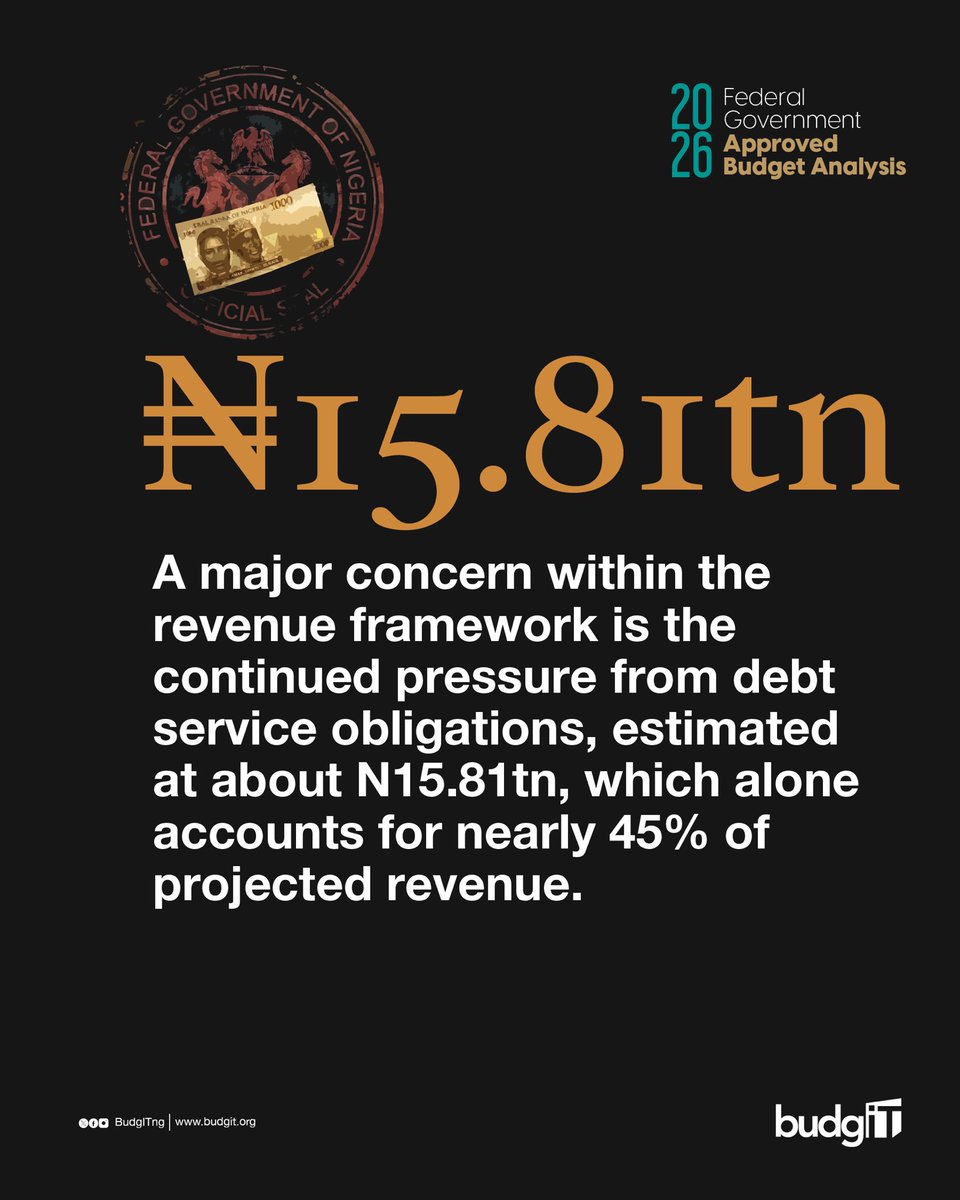
Before any spending on infrastructure, education, or healthcare begins, N15.81 trillion is already committed to debt servicing, which accounts for nearly 45% of expected revenue.
Thread!
#2026FGBudgetAnalysis #2026FGBudget #FollowTheMoney
4
29
30
1,385
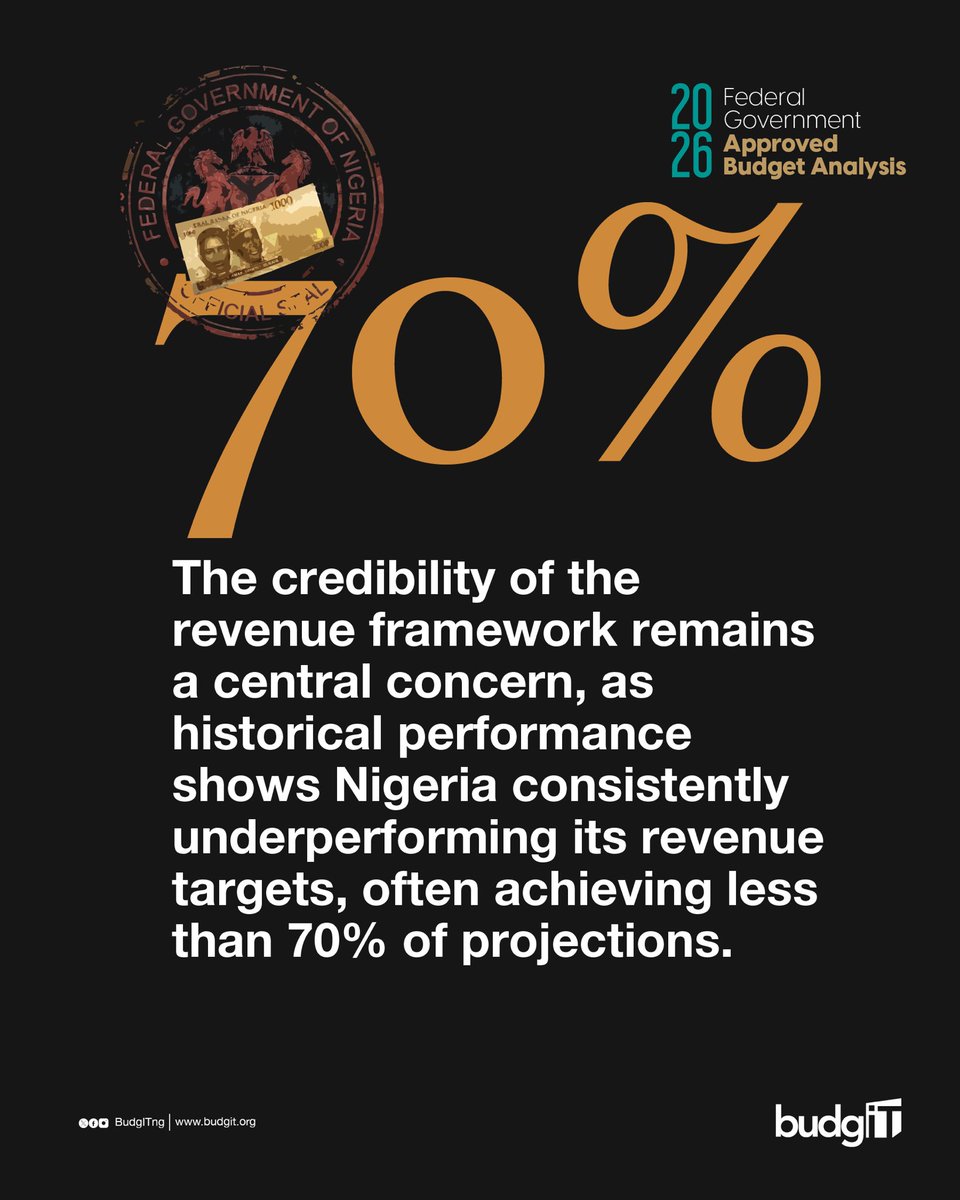
In 2025, the revenue target was N36.35 trillion, but by June, only N10.92 trillion had been realised. The 2026 projection remains almost the same, reflecting a continuation of the same fiscal pressure.
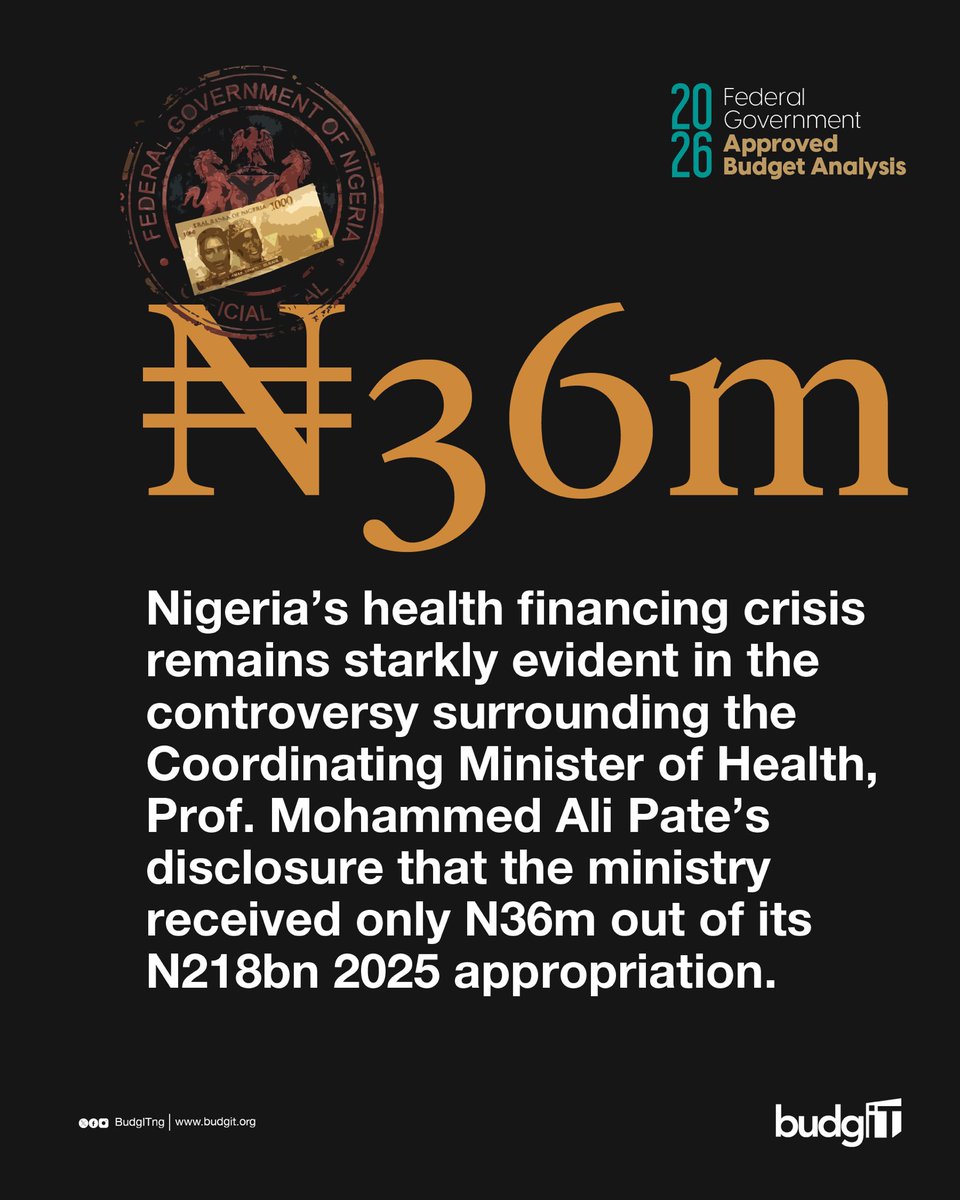
The Ministry of Health was allocated N218 billion in 2025 but received only N36 million, a figure that has been publicly confirmed by the minister.
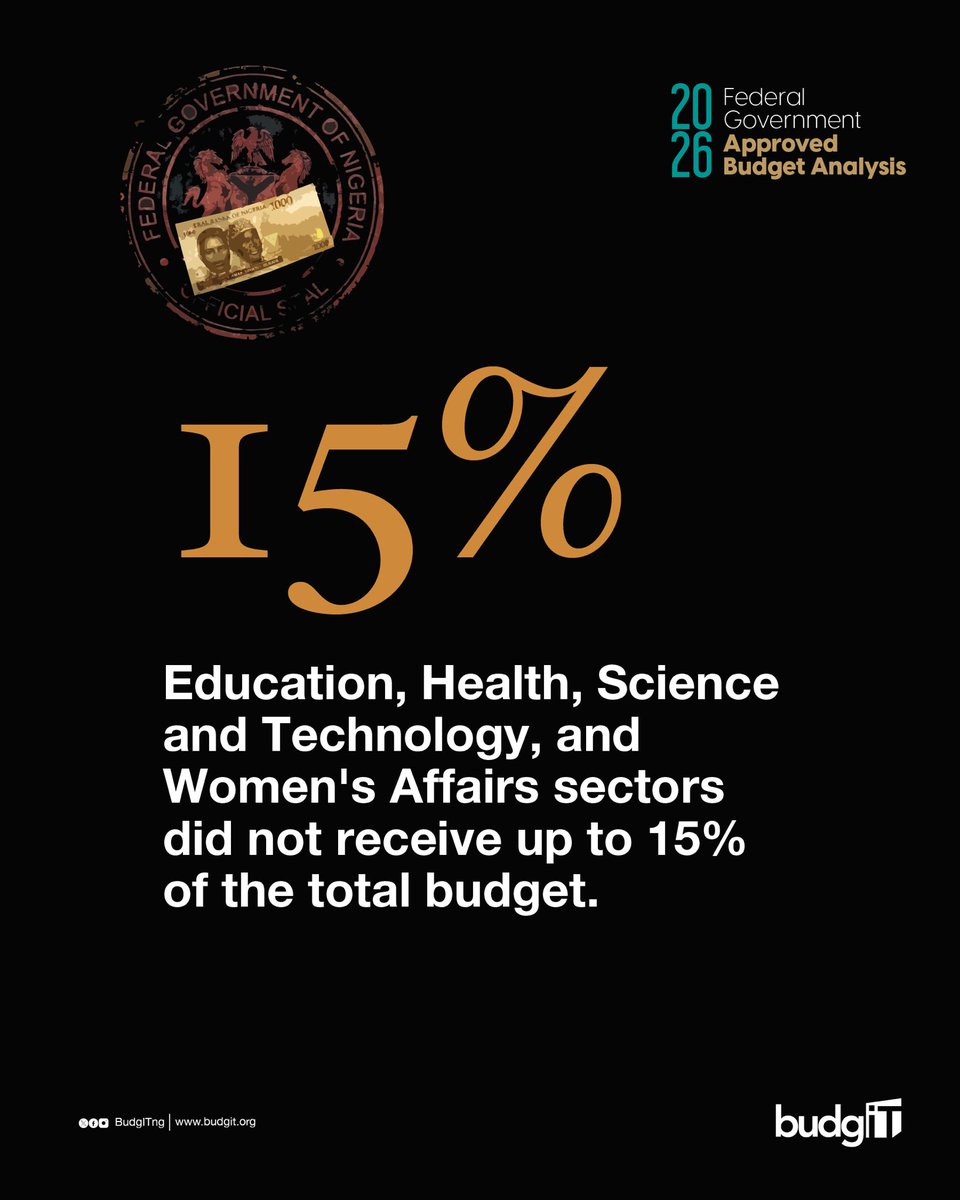
At the same time, Education, Health, Science and Technology, and Women Affairs combined did not receive up to 15% of the total budget, despite being central to human development outcomes.
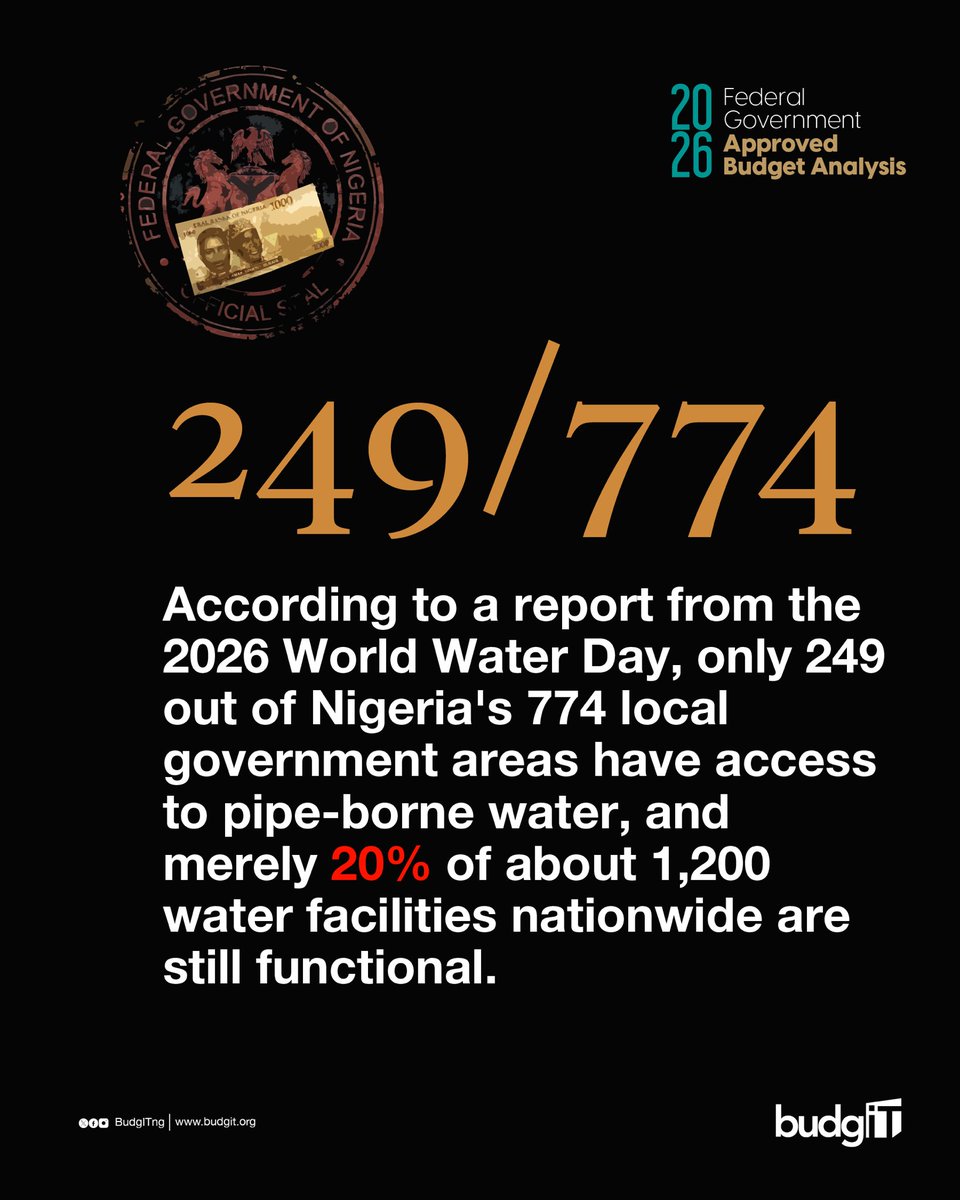
Across the country, there are 774 local government areas, but only 249 have access to pipe-borne water, and just 20% of water facilities nationwide are still functional.
#2026FGBudgetAnalysis #2026FGBudget #FollowTheMoney
1
7
10
696
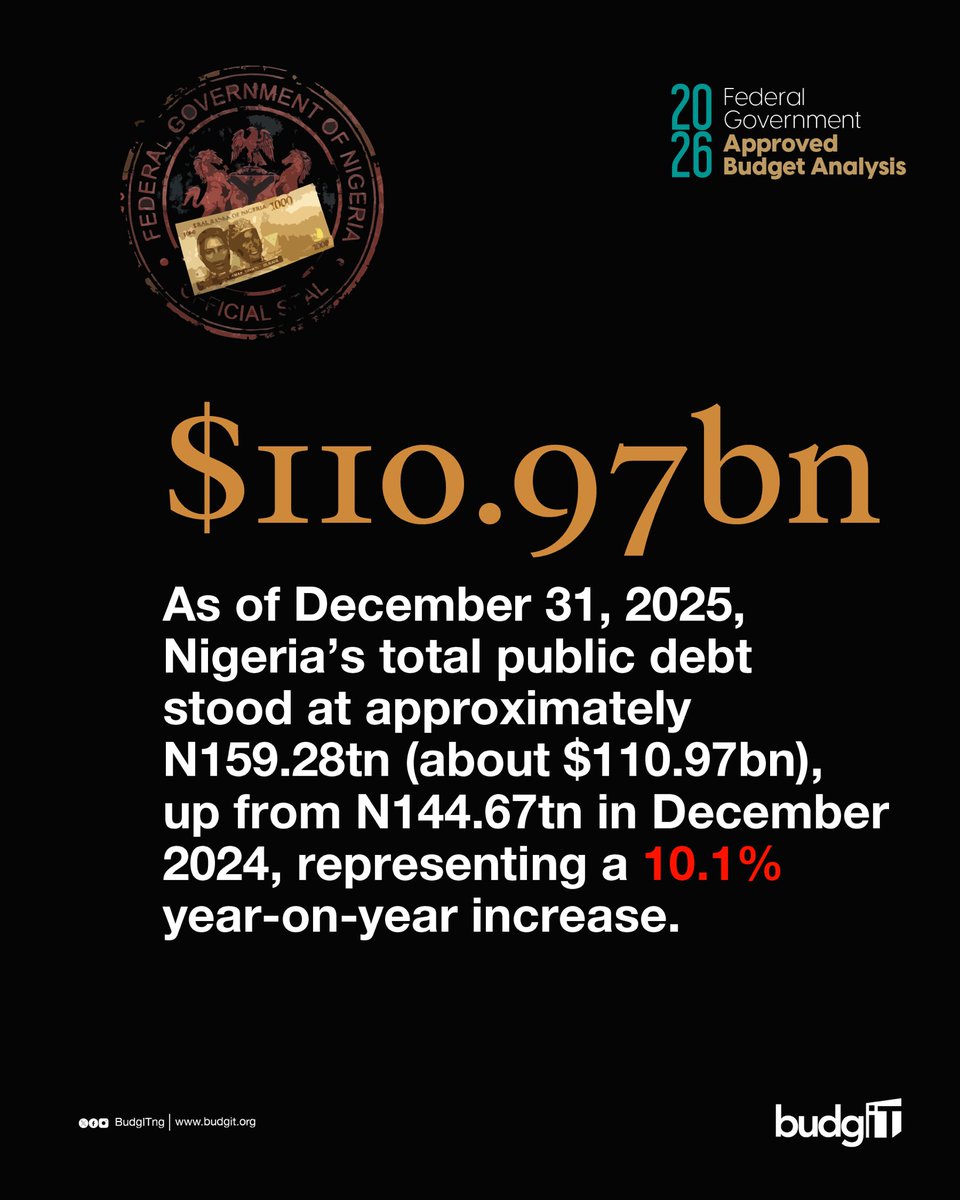
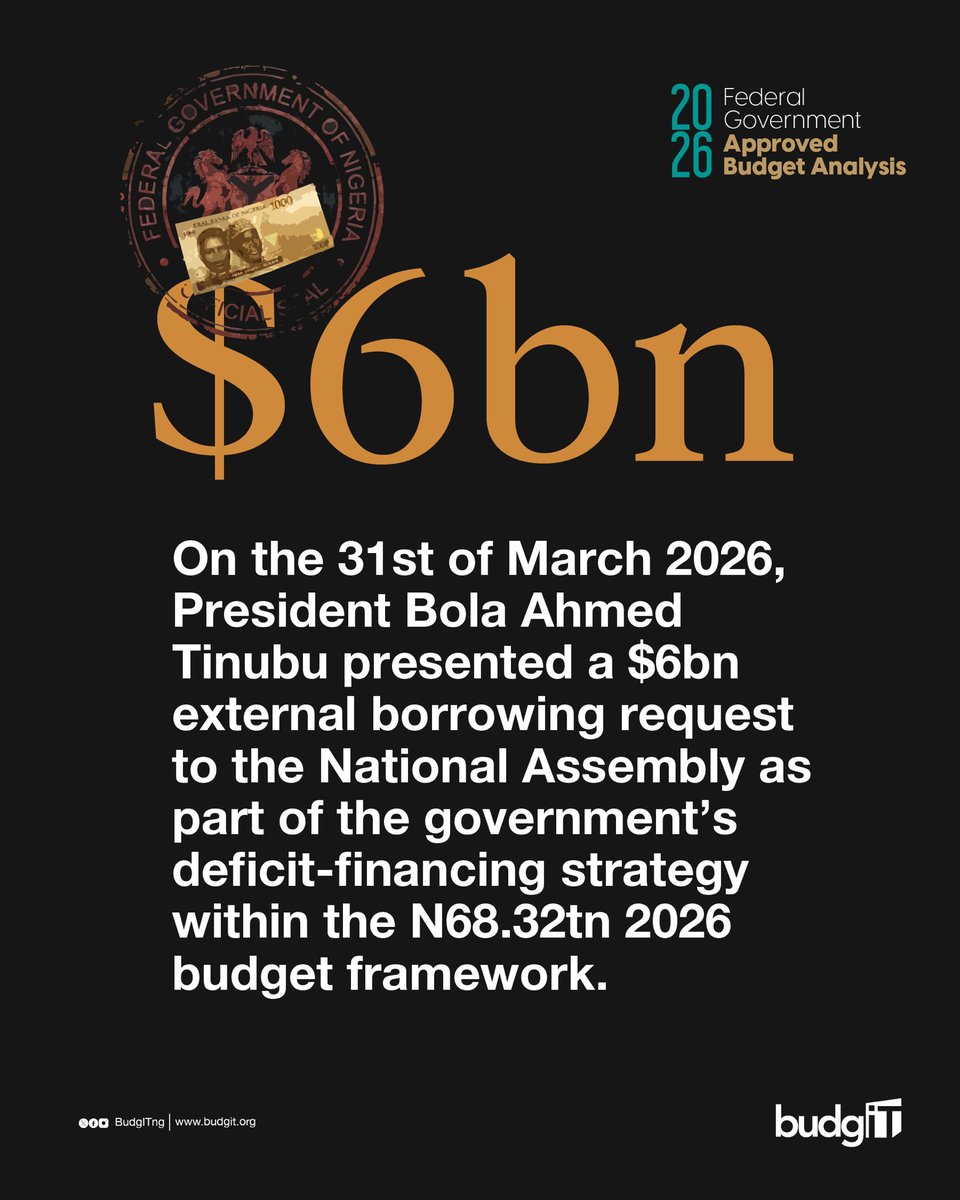
Nigeria’s total public debt now stands at N159.28 trillion (about $110.97 billion), representing a 10.1% increase in one year, while a fresh $6 billion borrowing request has already been sent to the National Assembly.
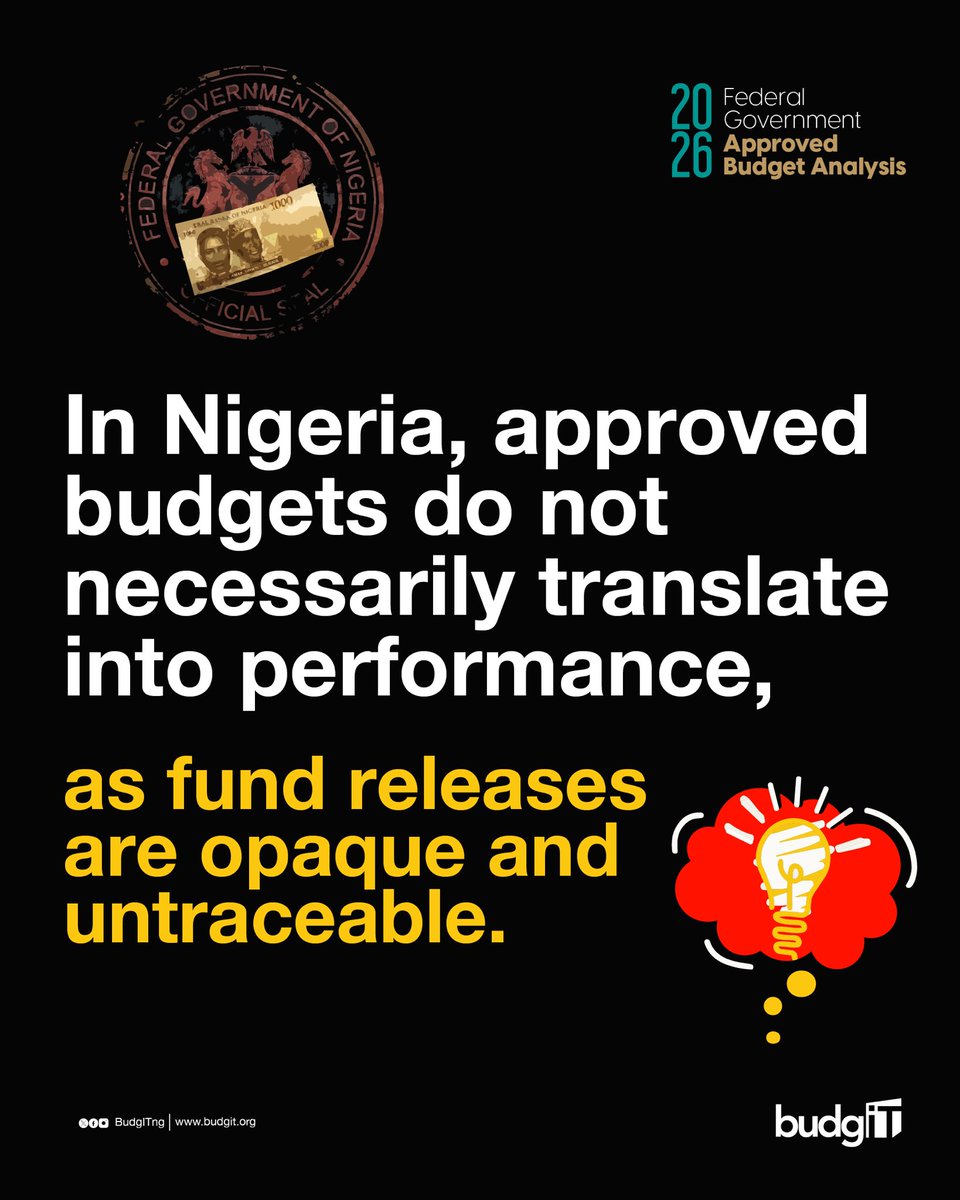
Although the budget has been approved, approval does not guarantee implementation, as fund releases remain opaque and difficult to track in practice.
The full analysis is available now. Read the full analysis 👉 budgit.org/post_publications…
Don’t say nobody showed you.
#2026FGBudgetAnalysis #2026FGBudget #FollowTheMoney
1
5
8
451
Jun 14
🗣️Dear fellow Nigerians,
The 2026 Federal Government budget is the biggest in our history. N68.32 trillion approved. Let that number sit for a second.
But here is what they did not lead with. Nigeria is only expected to earn N36.87 trillion this year. That means the government can only fund 53.9% of its own budget from actual revenue. The remaining 46.1% will come from borrowing. And debt service alone will consume nearly 45% of everything we earn. That is N15.81 trillion going straight to paying back what we already owe, before a single road is fixed, before a single school is built, before a single hospital gets funded.
Every year, Nigeria sets revenue targets. Every year, we fall short. In 2025, the government projected N36.35 trillion in revenue. By June, only N10.92 trillion had come in. Yet the 2026 projections follow the same pattern, the same optimism, the same numbers that history tells us we will not meet.
Our full analysis of the 2026 Federal Government Approved Budget drops tomorrow. Do not miss it.
#FollowTheMoney #2026FGBudget #2026FGBudgetAnalysis
35
911
1,082
37,205
Jun 13
The data exists, but are we using it effectively?
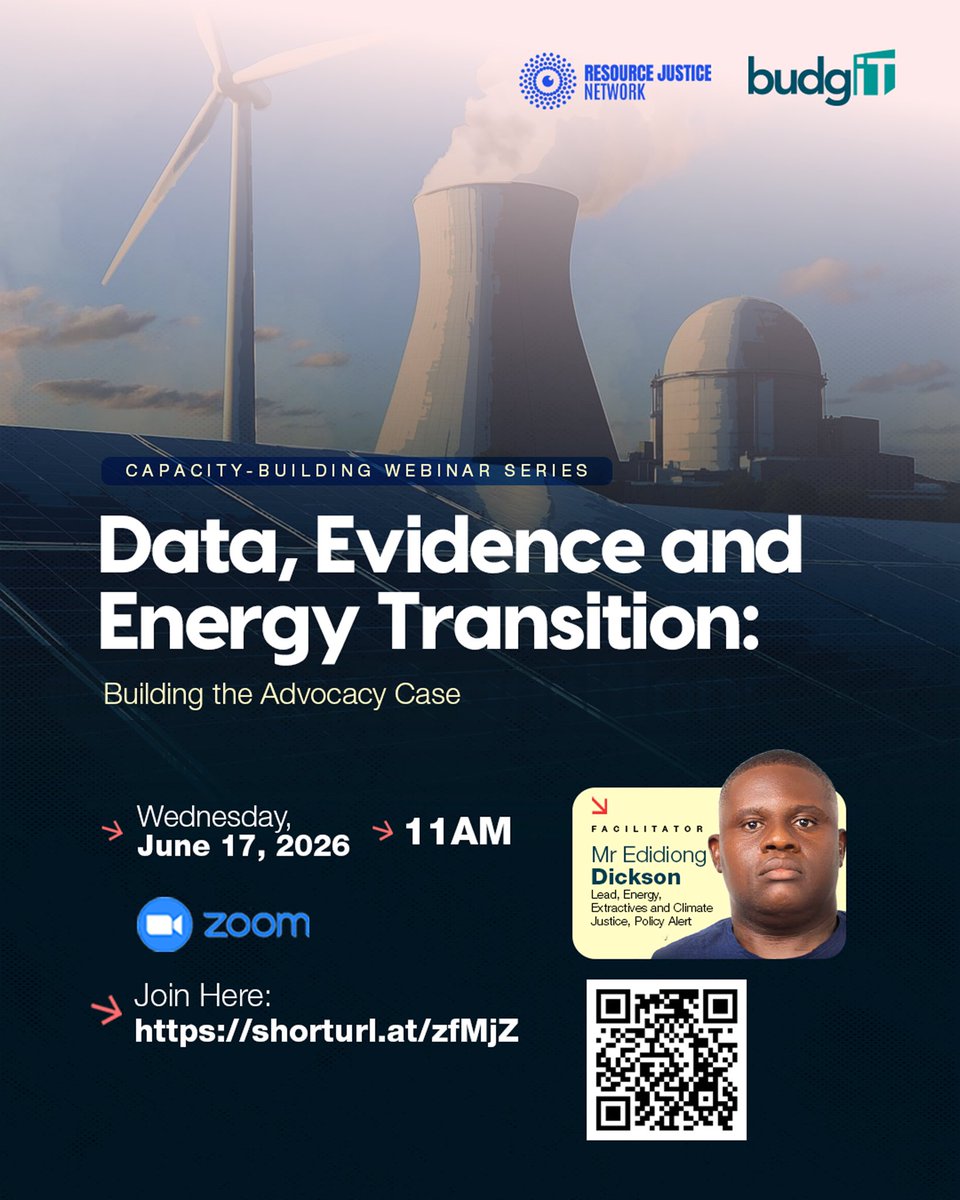
Nigeria’s energy transition is generating conversations about electricity access, renewable energy, fossil fuels, climate commitments, and public spending. But too often, the evidence behind these conversations gets lost in technical reports and policy documents.
What happens when we bring that evidence to the forefront?
Data, Evidence and Energy Transition: Building the Advocacy Case explores how data can move beyond the numbers to shape narratives, strengthen advocacy, and drive more informed conversations about Nigeria’s energy future.
Join us as we examine how evidence can strengthen public discourse, improve accountability, and move energy transition conversations beyond headlines and policy announcements.
Facilitator: @EddyDidiano
🗓️ Wednesday, June 17, 2026
⏰ 11:00 AM (WAT)
📍 Zoom
Be part of the conversation👉 shorturl.at/zfMjZ
#EnergyTransition #ClimateGovernance
2
8
11
801
Jun 12
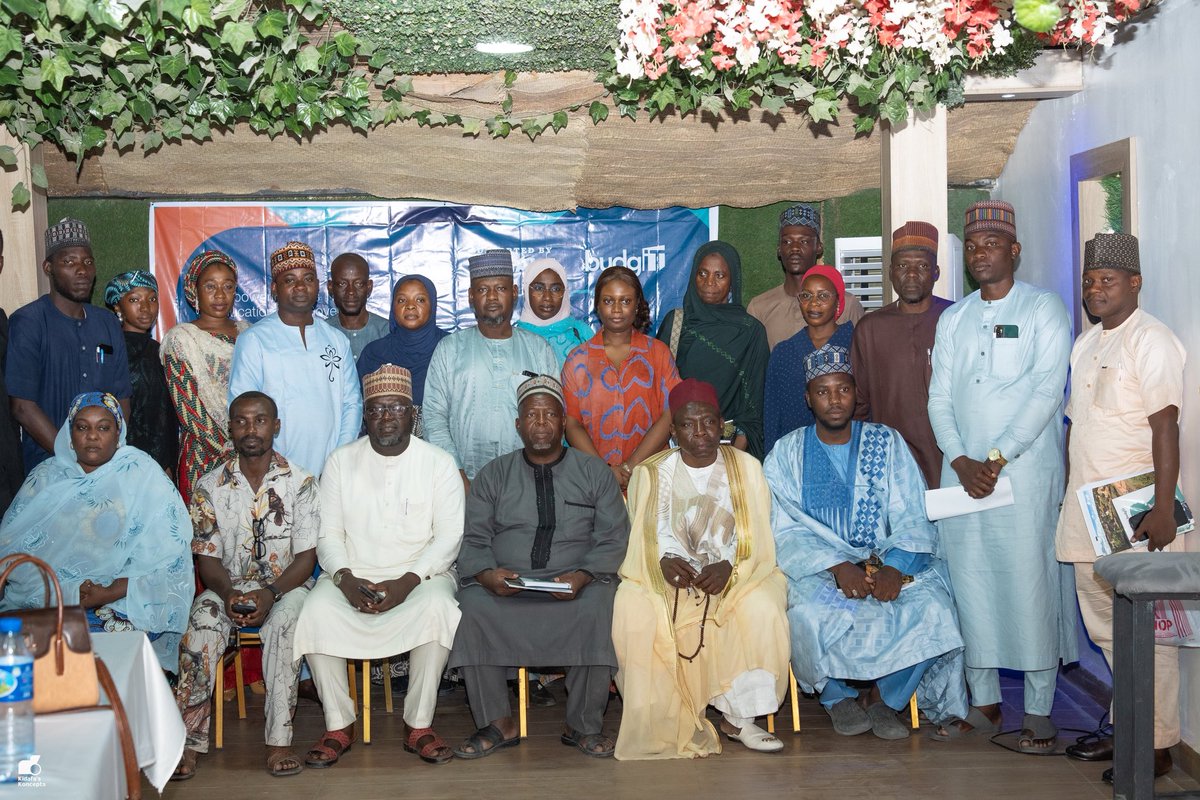
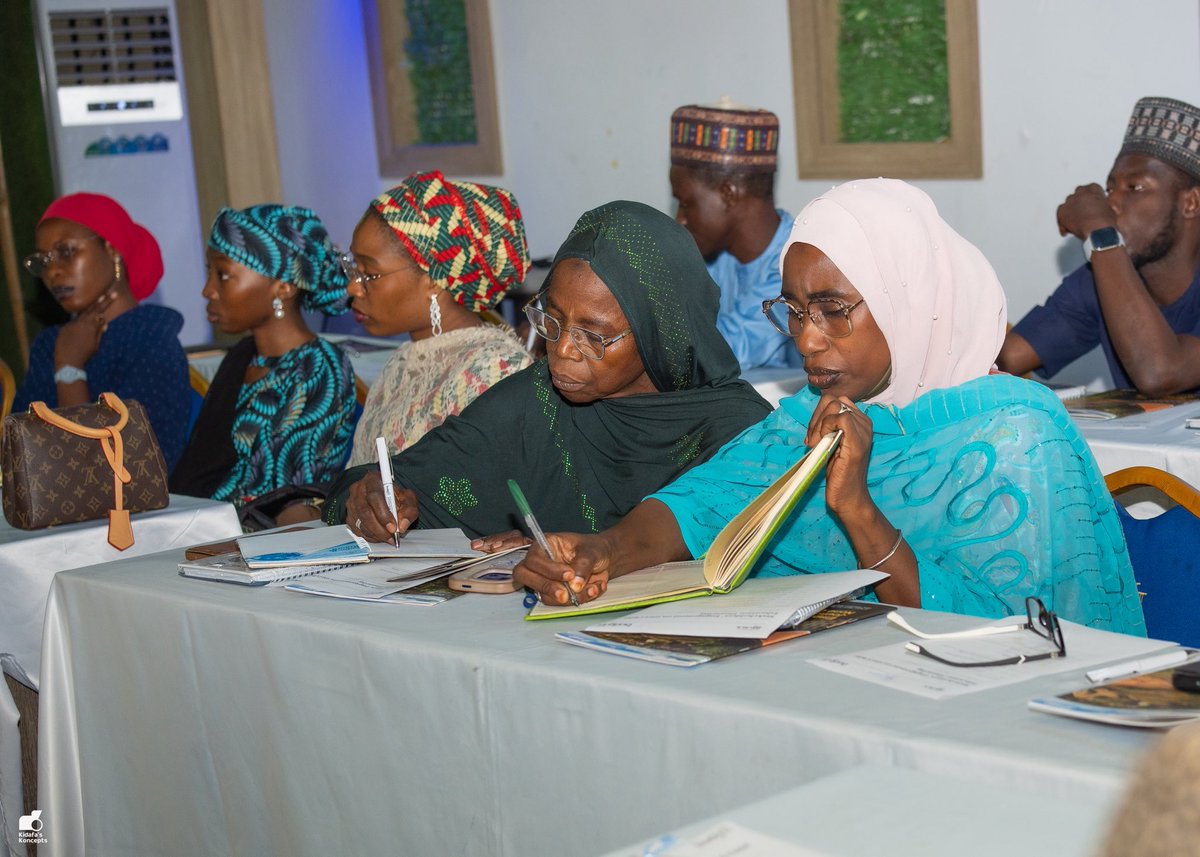
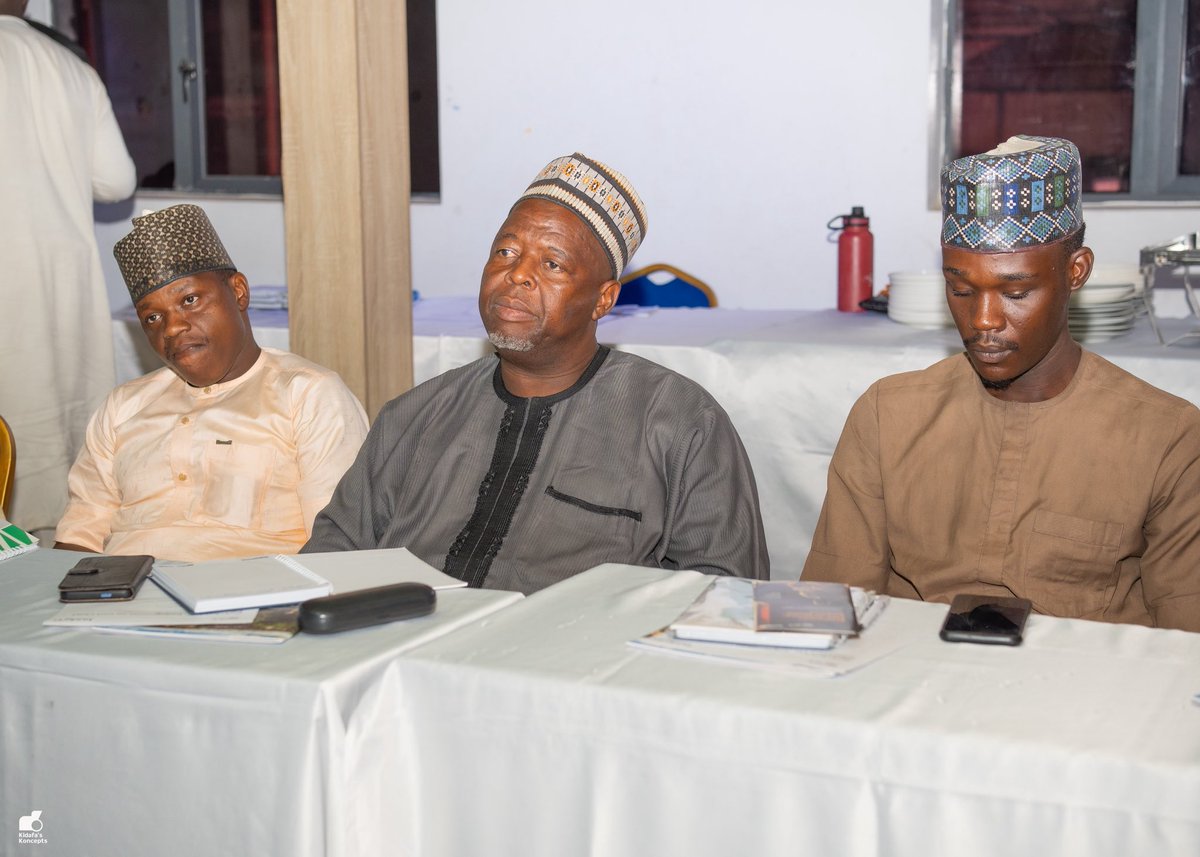
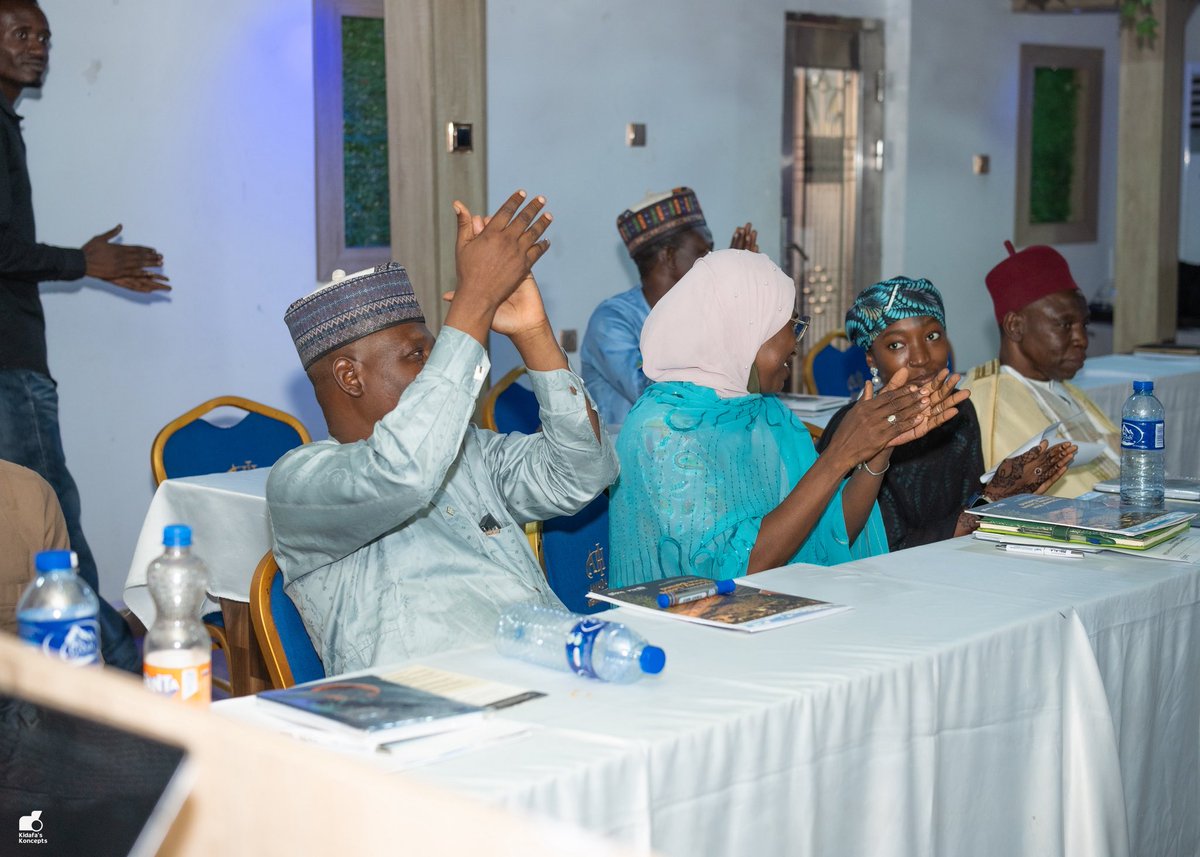
What does it take to ensure more girls in Borno can access, stay in school, and complete their education? On May 12, stakeholders gathered in Maiduguri to find answers and drive action.
Representatives from government, civil society, education agencies, traditional and religious leaders, and community groups came together under the Education Champion Network (ECN) Project, supported by the Malala Fund, to advance one shared goal: improving access and completion of education for girls.
Convened by BudgIT, the meeting created space for honest conversations, fresh ideas, and a renewed commitment to addressing the challenges affecting girls’ education across the state.
Key areas of focus included:
📍 Smarter and more transparent education funding
📍 Barriers affecting girls’ education and how to break them
📍 Community-led accountability that puts local voices at the center
📍 Better school infrastructure and learning environments
📍 Support systems for vulnerable learners
📍 Stronger coordination to improve education outcomes
From poverty and insecurity to early marriage and cultural barriers, participants did not shy away from the realities affecting girls across Borno State. Instead, they explored practical solutions and collective actions needed to drive meaningful change.
The engagement reinforced a clear direction: stronger collaboration, better accountability, and sustained commitment are key to improving access, retention, and completion rates for girls’ education in the state.
The conversation in Borno has begun, and the work continues.
#MalalaFund #FundHerFuture #GirlChildEducation
5
7
737
Jun 12
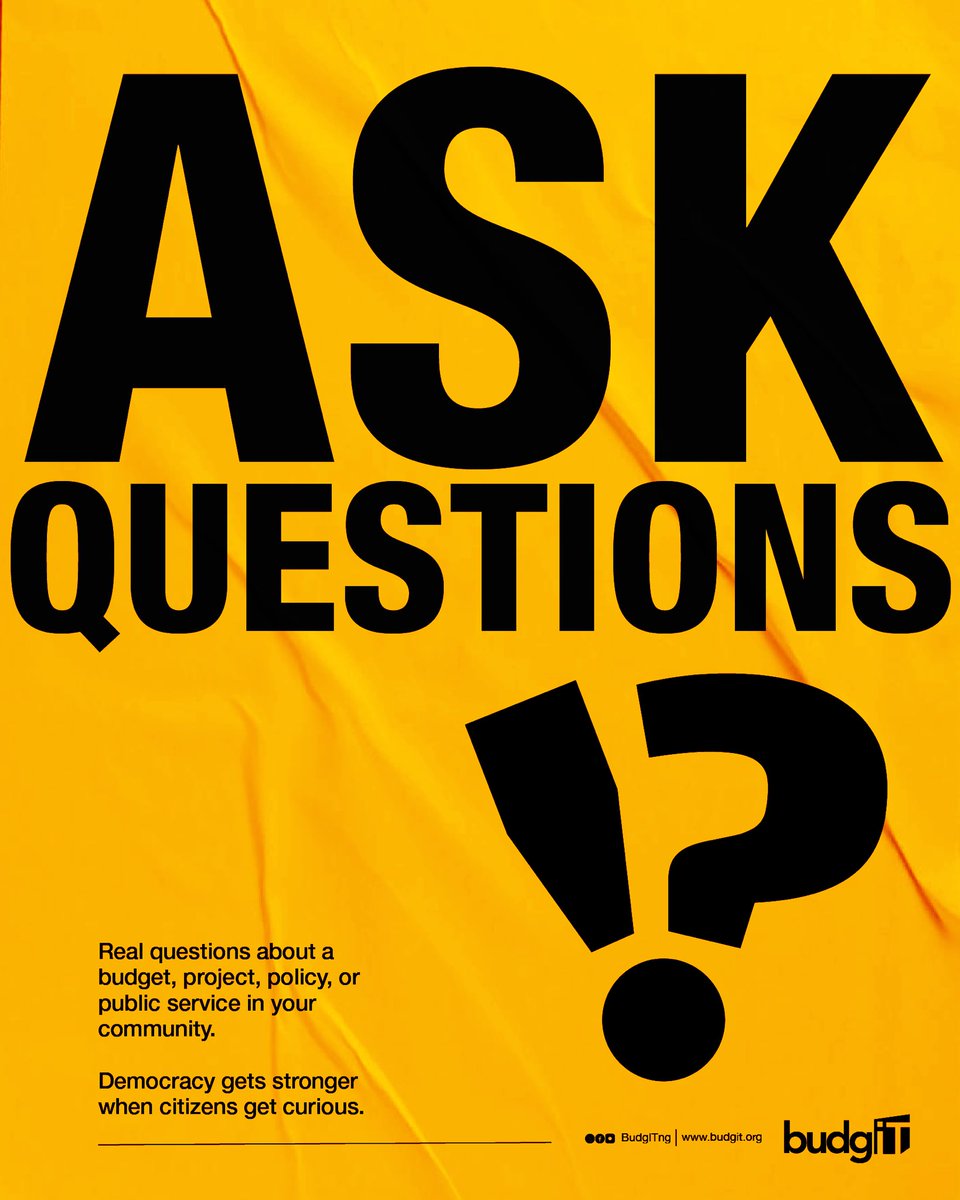
June 12, 1993. Nigerians woke up early, stood in the sun, and voted.
For the first time in a long while, it felt like something real was happening.
Then the result was annulled.
What followed changed the course of history.
🧵
#DemocracyDay #GetInvolved #AskQuestions #FollowTheMoney


4
12
25
1,871
Jun 12
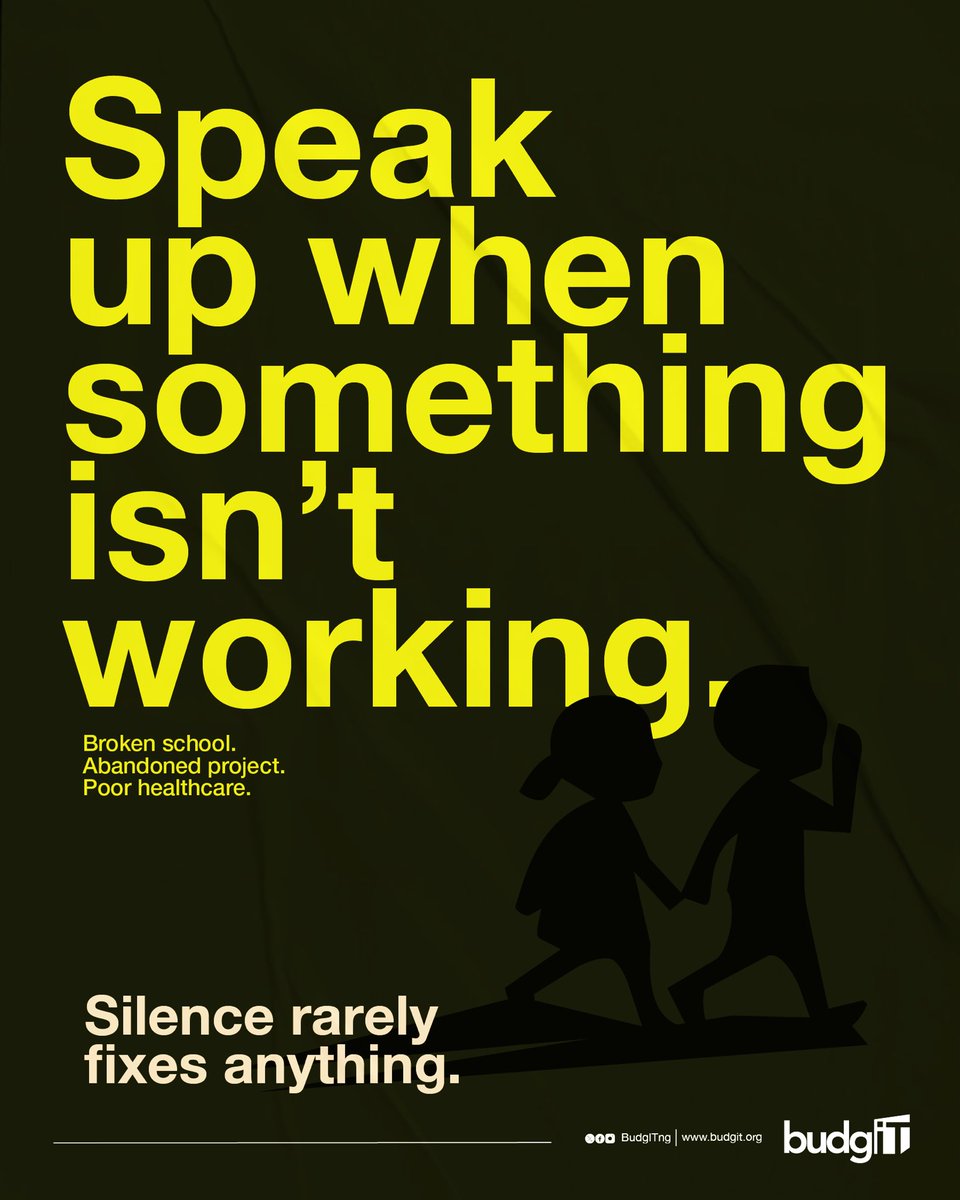
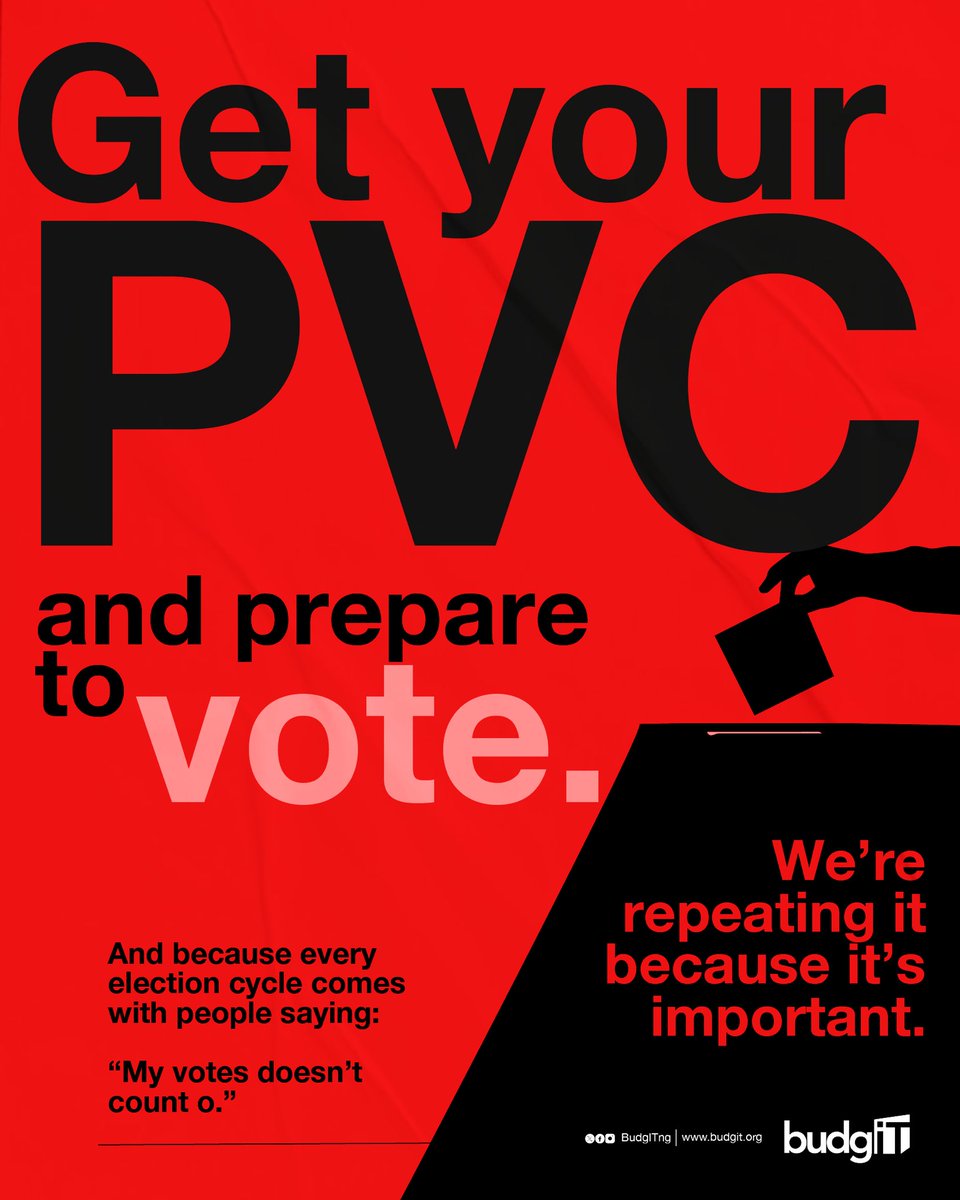
Years later, civilian rule returned.
That return came after years of struggle, pressure, and sacrifice.
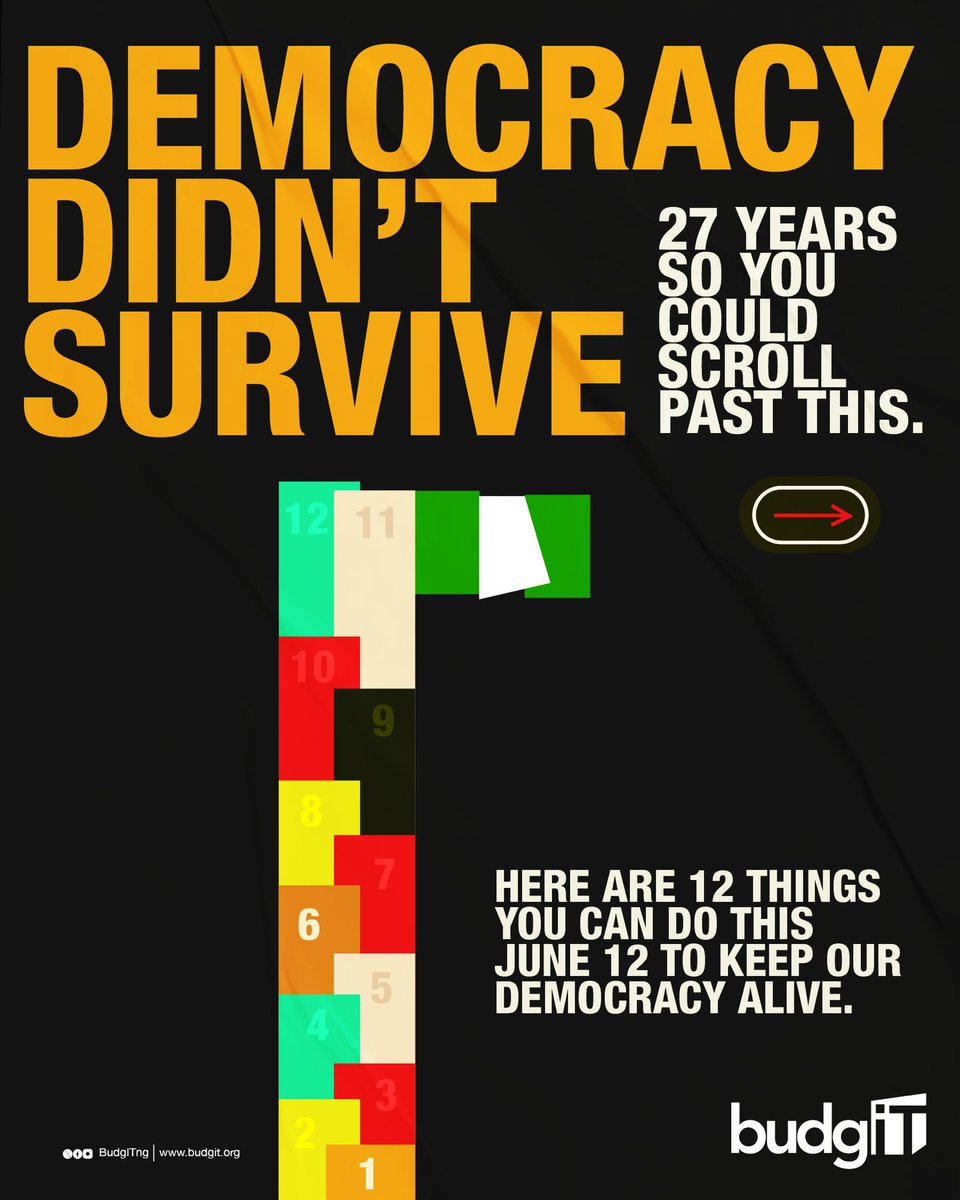
Today marks 27 years of that democratic journey.
And the story is still unfolding.
#DemocracyDay #GetInvolved #AskQuestions #FollowTheMoney
1
886
Jun 12
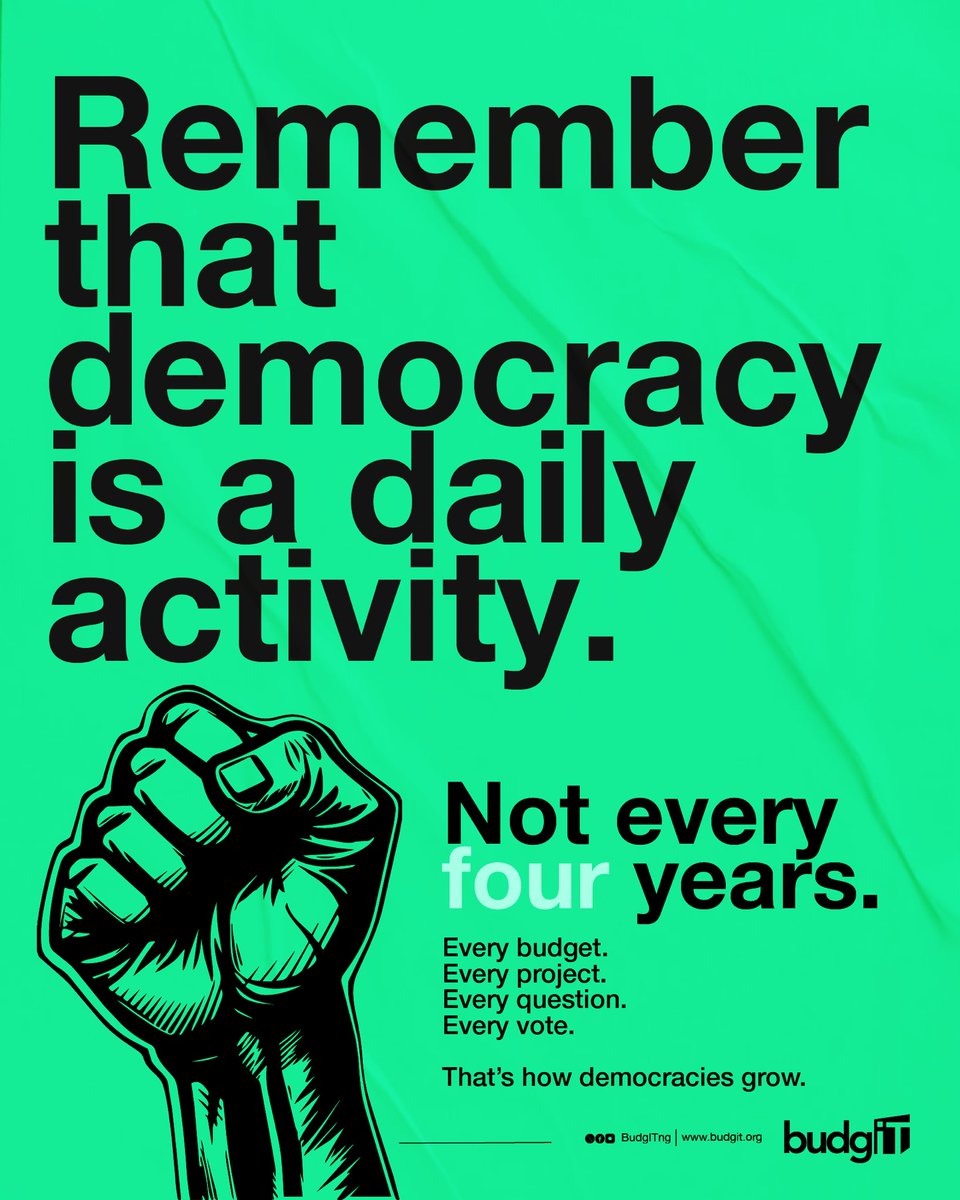
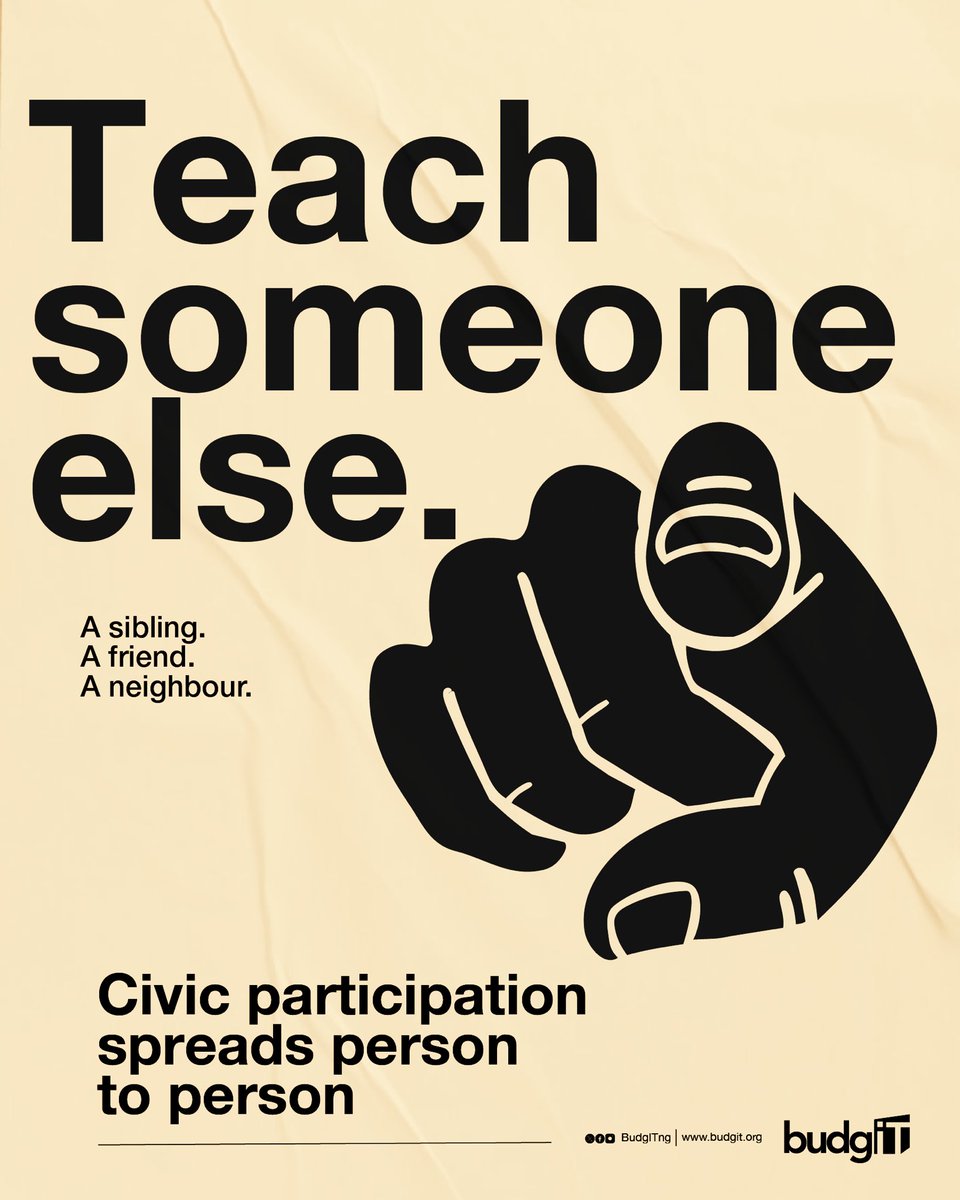
June 12 is a reminder of what it took to get here.
What are you doing with the democracy they fought for?
Here are 12 ways to get started.
Happy Democracy Day.
#DemocracyDay #GetInvolved #AskQuestions #FollowTheMoney

267
Jun 11
The pattern is clear. Nigeria earns, then pays debt. It earns more, then pays more debt. By the time anything is left for roads, hospitals, or schools, much of it is already gone. Read that again.
Now, let’s talk about the growing debt. In 2021, Nigeria’s debt stood at N33.1 trillion. By mid-2025, it had climbed to N149.29 trillion. That kind of growth affects how resources are allocated, what gets funded, and what gets left behind.
🎥 Watch the full breakdown of how Nigeria’s debt has grown, what is driving it, and what it means for development going forward.
#FollowTheMoney #AskQuestions
2
26
36
3,634
Jun 11
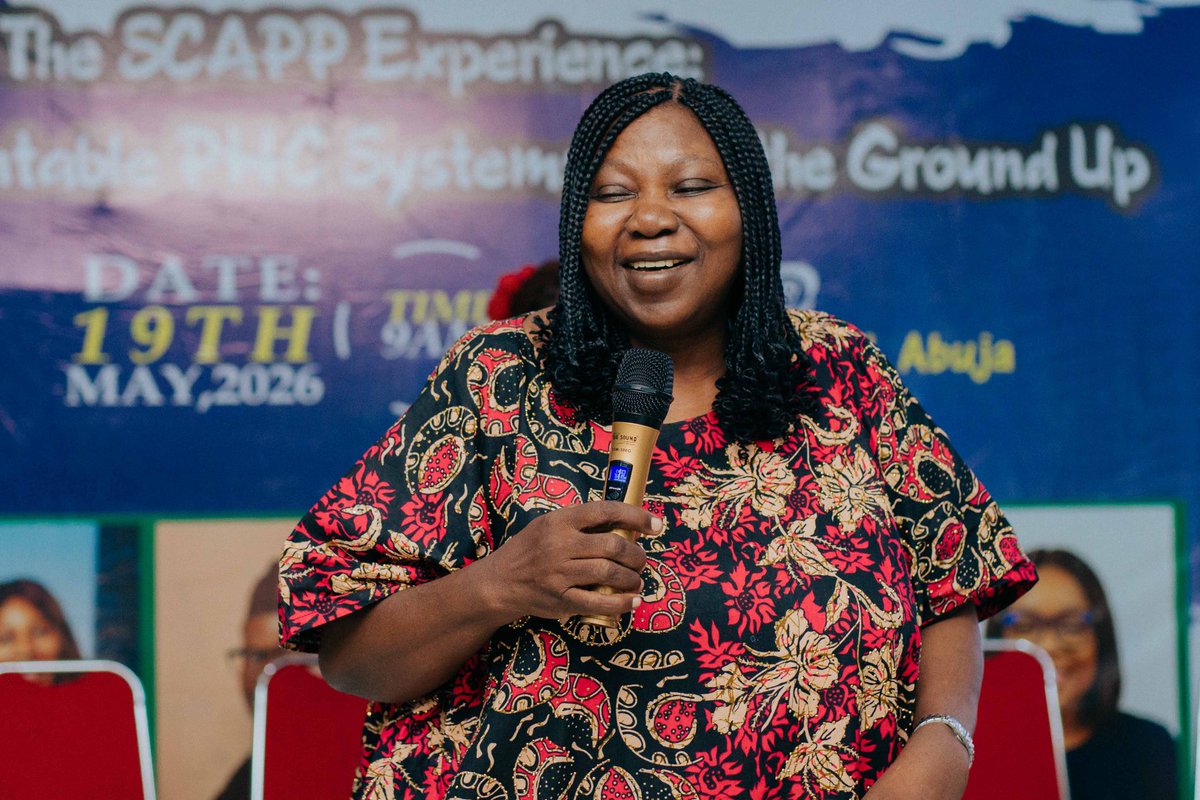
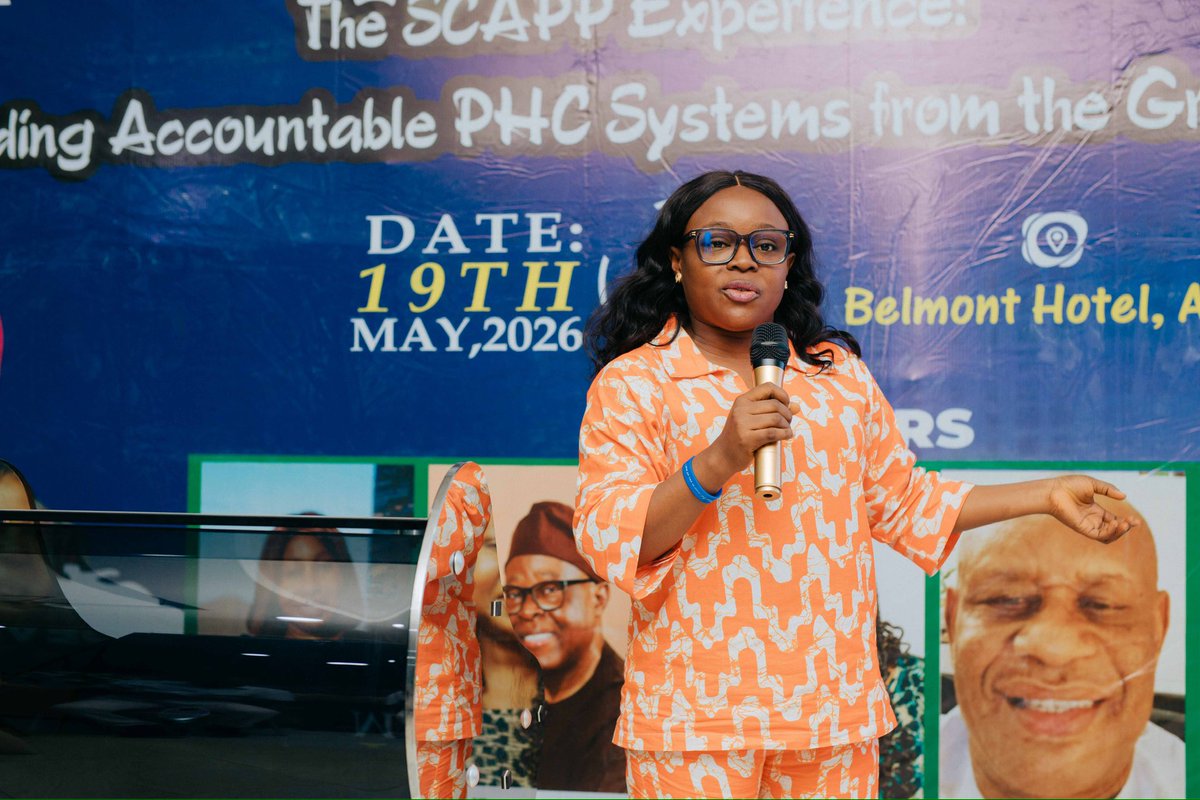
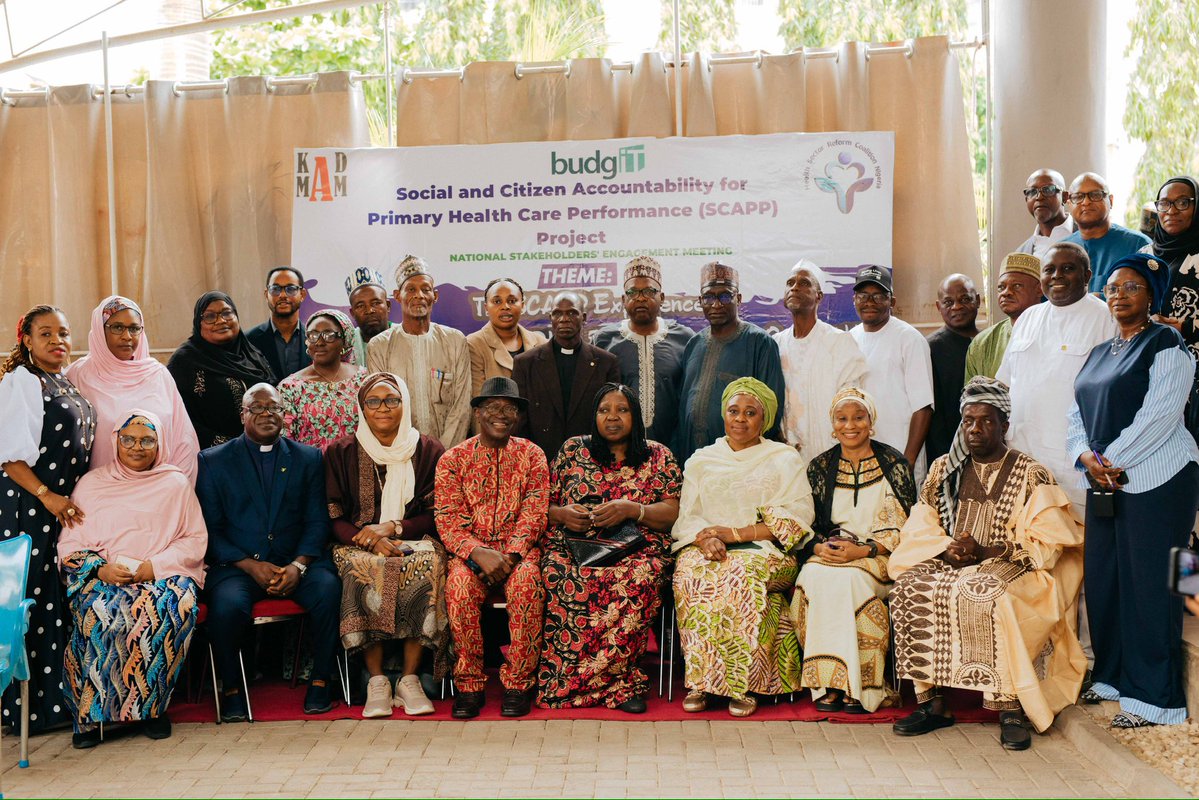
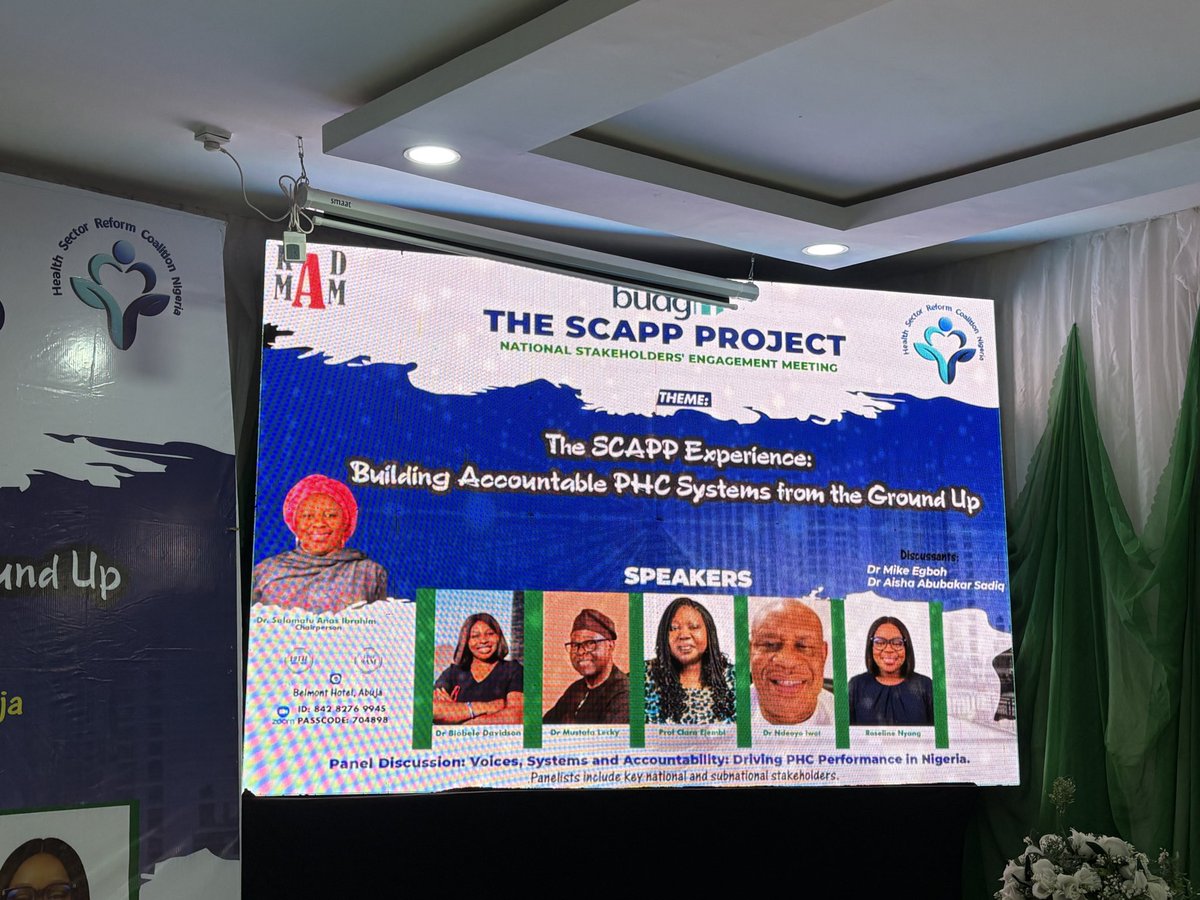
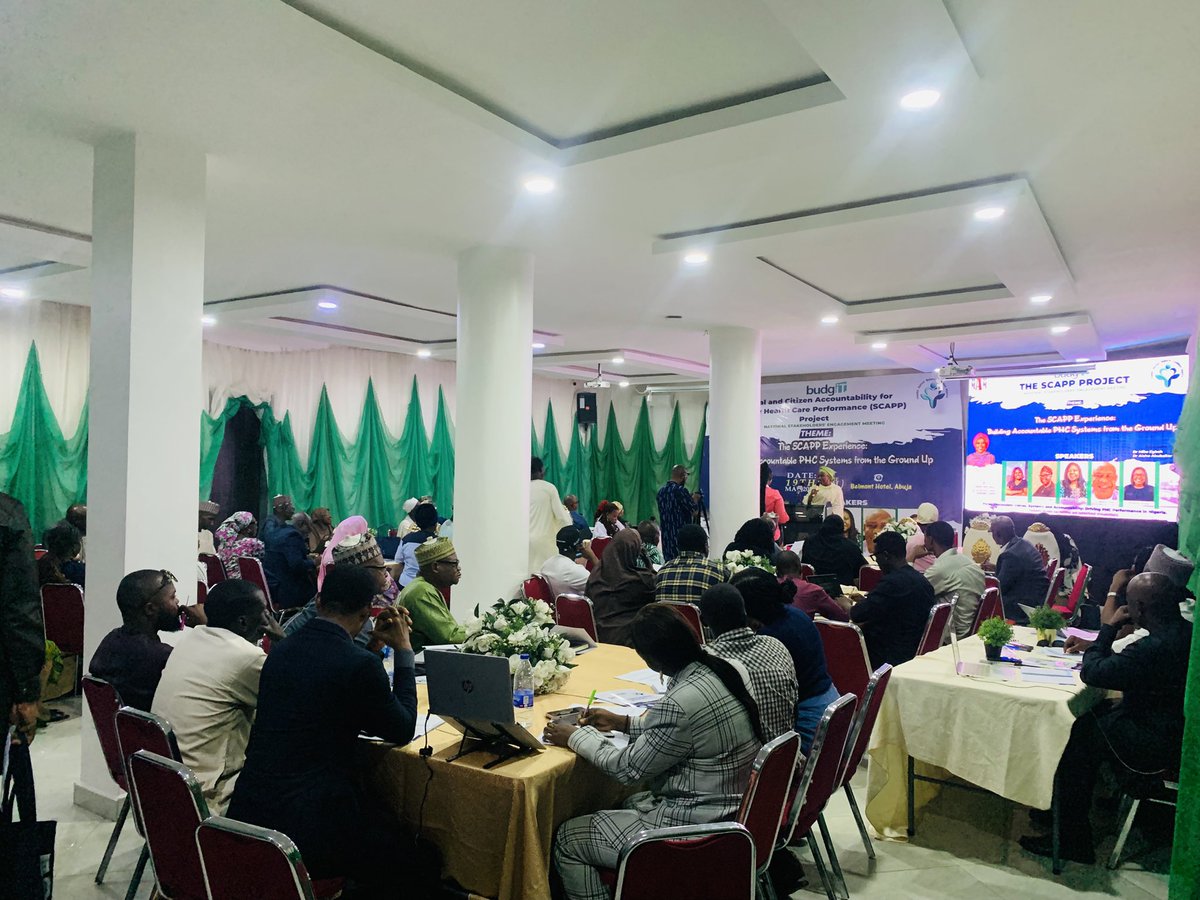
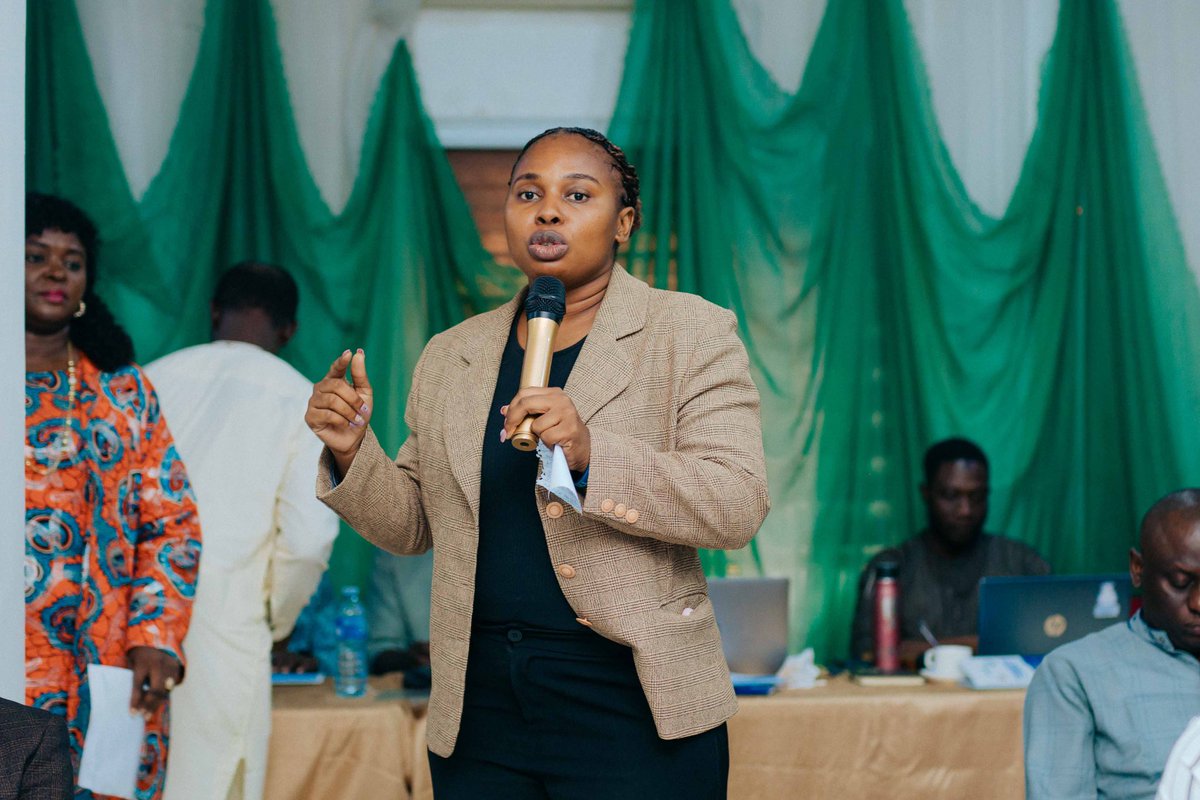
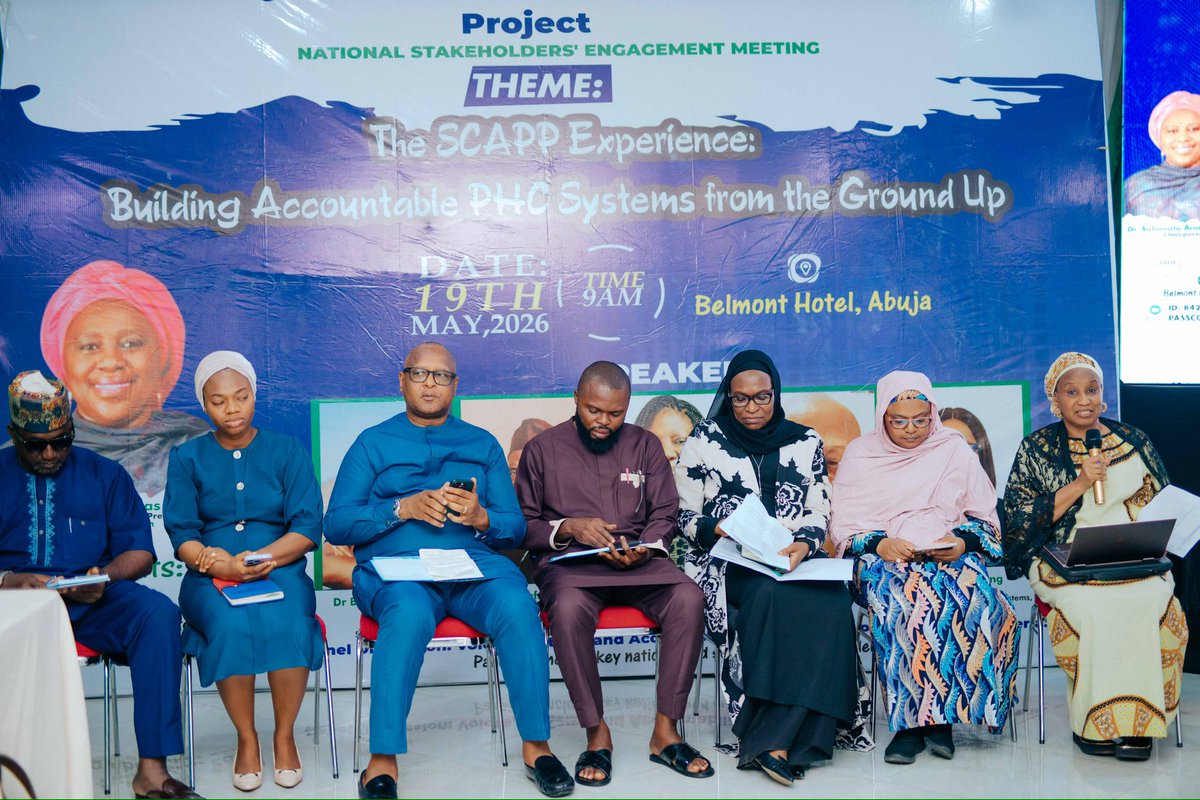
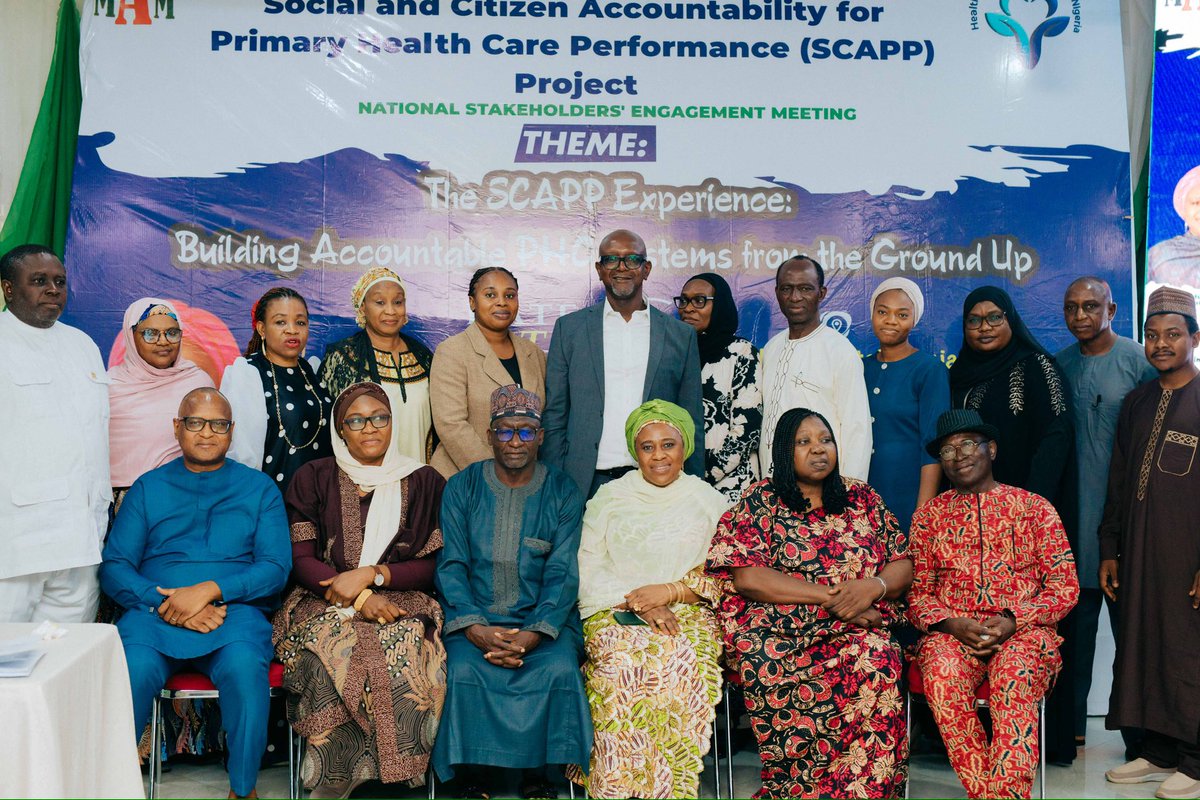
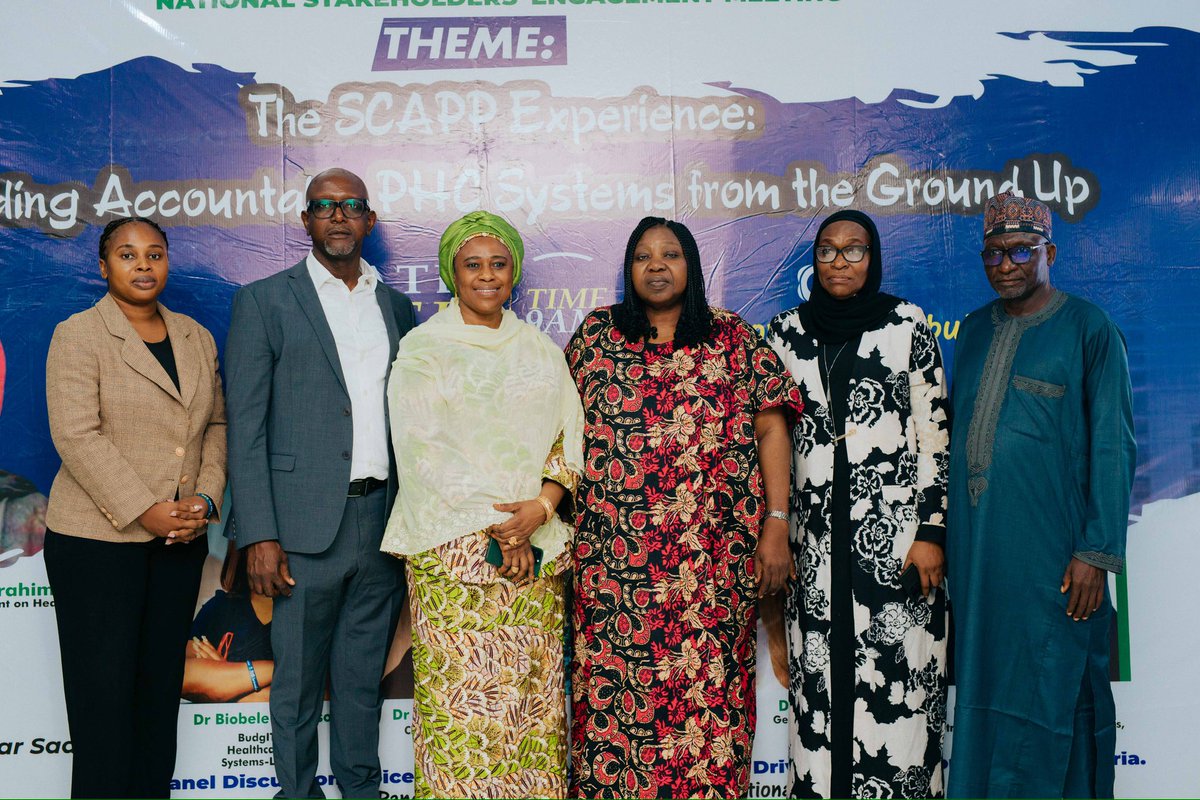
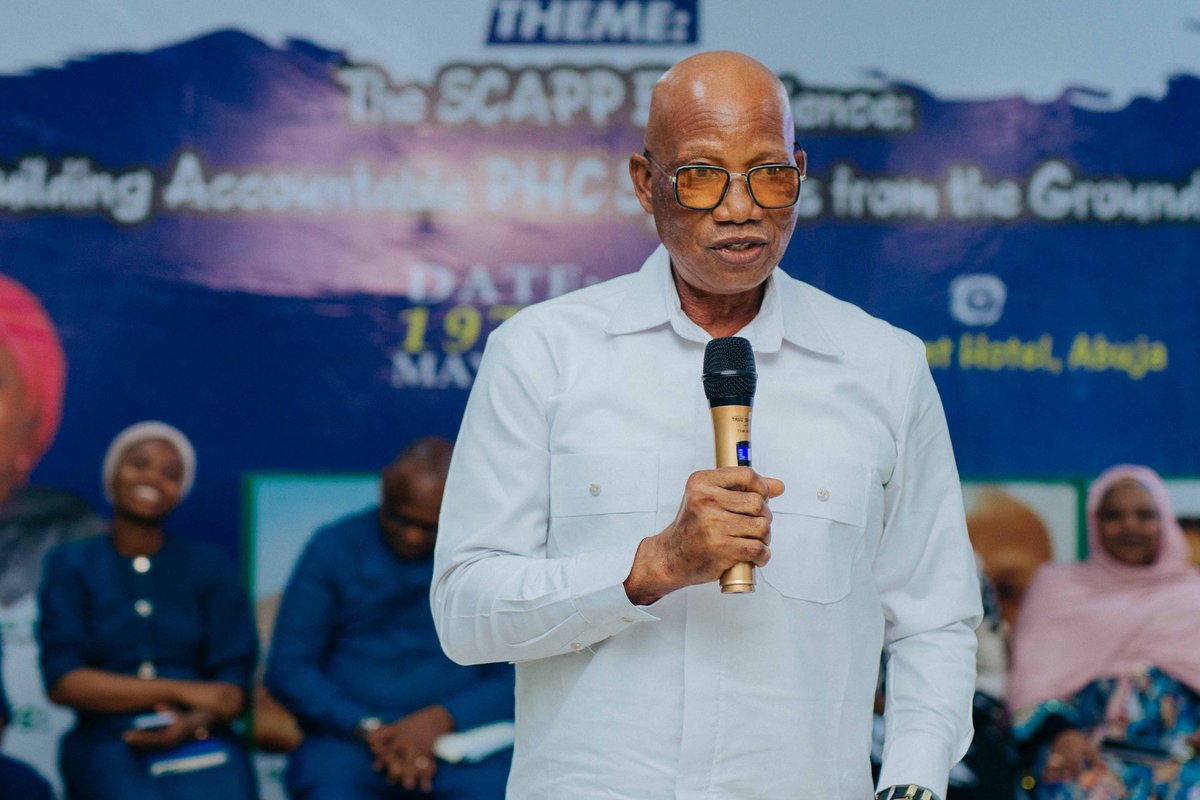
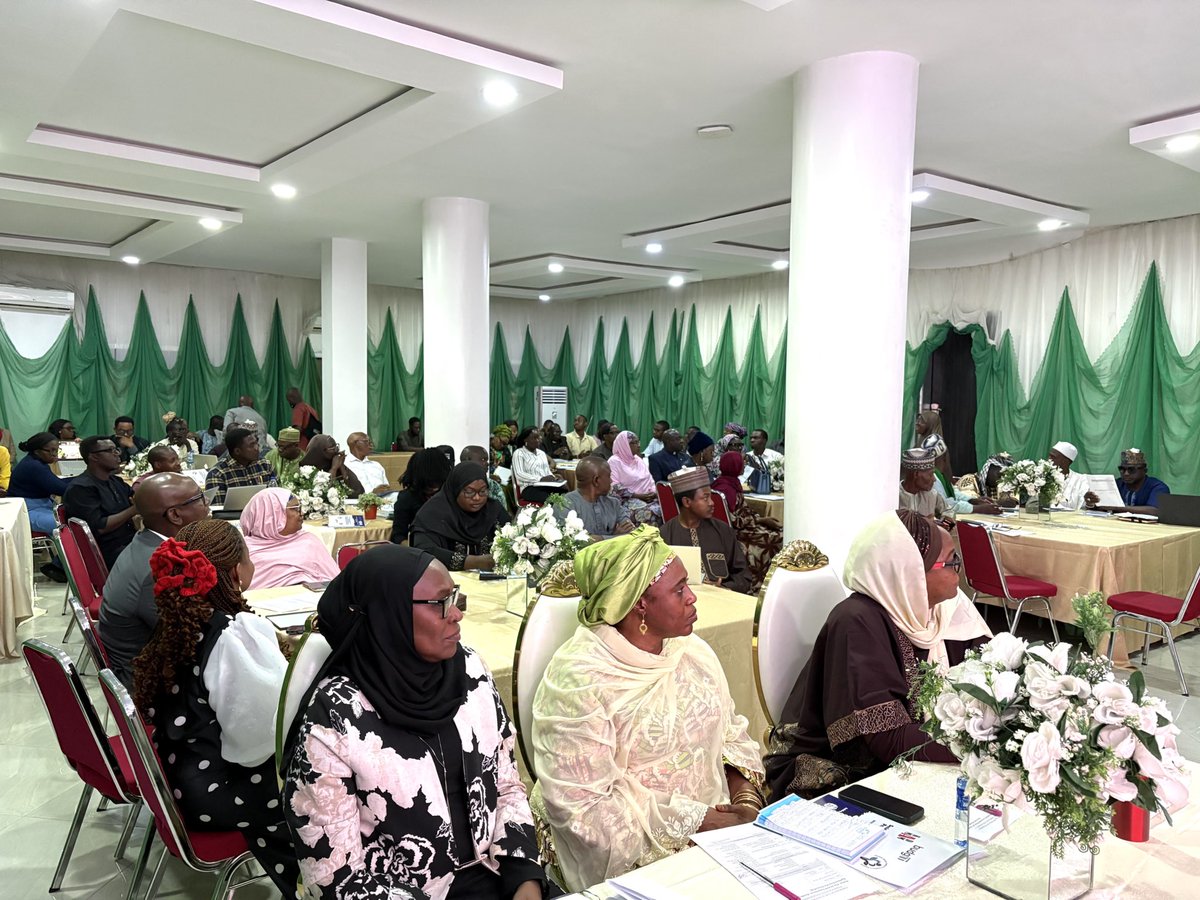
📸 Highlights from the National Stakeholders’ Meeting on the Social and Citizen Accountability for Primary Health Care Performance (SCAPP) Project in Abuja.
Convened by BudgIT and the Health Sector Reform Coalition (HSRC), the meeting brought together government representatives, health workers, civil society organisations, development partners, traditional and religious leaders, media practitioners, and community representatives to reflect on lessons from one year of SCAPP implementation across Kaduna State.
Thread!
#Healthcare #GetInvolved
1
5
12
887
Jun 11
Over the past year, the SCAPP project has worked to strengthen accountability in primary healthcare through citizen feedback, community engagement, and stronger oversight of health facilities. The meeting provided an opportunity to reflect on progress made, challenges encountered, and the actions needed to strengthen primary healthcare systems.
Discussions explored the role of Ward Development Committees (WDCs), citizen feedback mechanisms, healthcare financing and transparency, community participation, and the persistent challenges affecting service delivery, including staffing shortages, infrastructure gaps, and medicine availability.
#Healthcare #GetInvolved
2
1
3
525
Jun 11
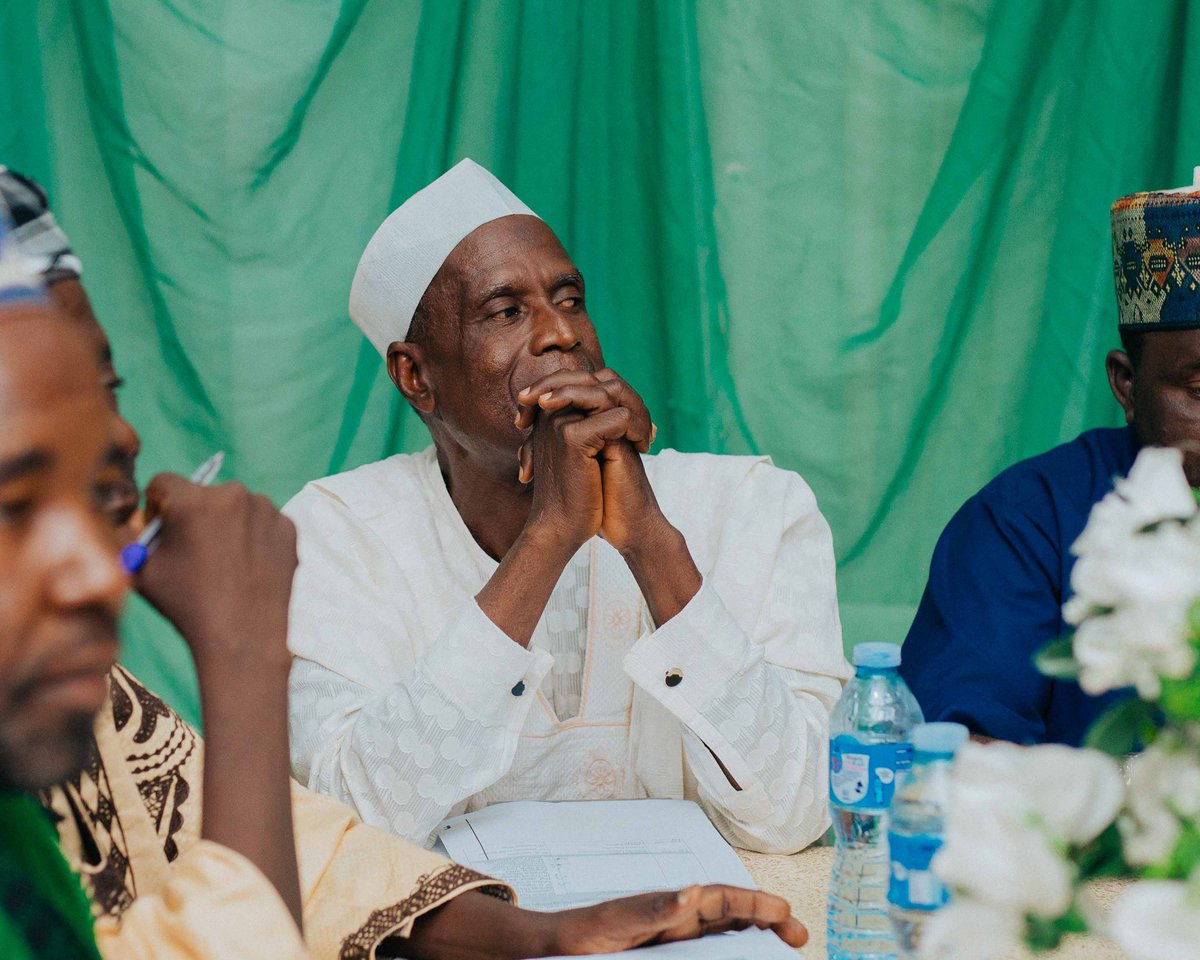
Participants also examined practical ways to strengthen accountability, improve access to information on health financing, enhance community oversight, and ensure that citizens play a greater role in shaping healthcare services in their communities.
The meeting concluded with shared commitments to strengthen transparency, improve feedback systems, support community participation, and advance reforms that deliver better healthcare outcomes for Nigerians.
#Healthcare #GetInvolved
3
382