
The leading provider of crowdsourced cybersecurity solutions purpose-built to secure the digitally connected world...Unleash Ingenuity™
Joined September 2012
- Tweets 26,689
- Following 6,123
- Followers 199,038
- Likes 18,894
9,111 Photos and videos


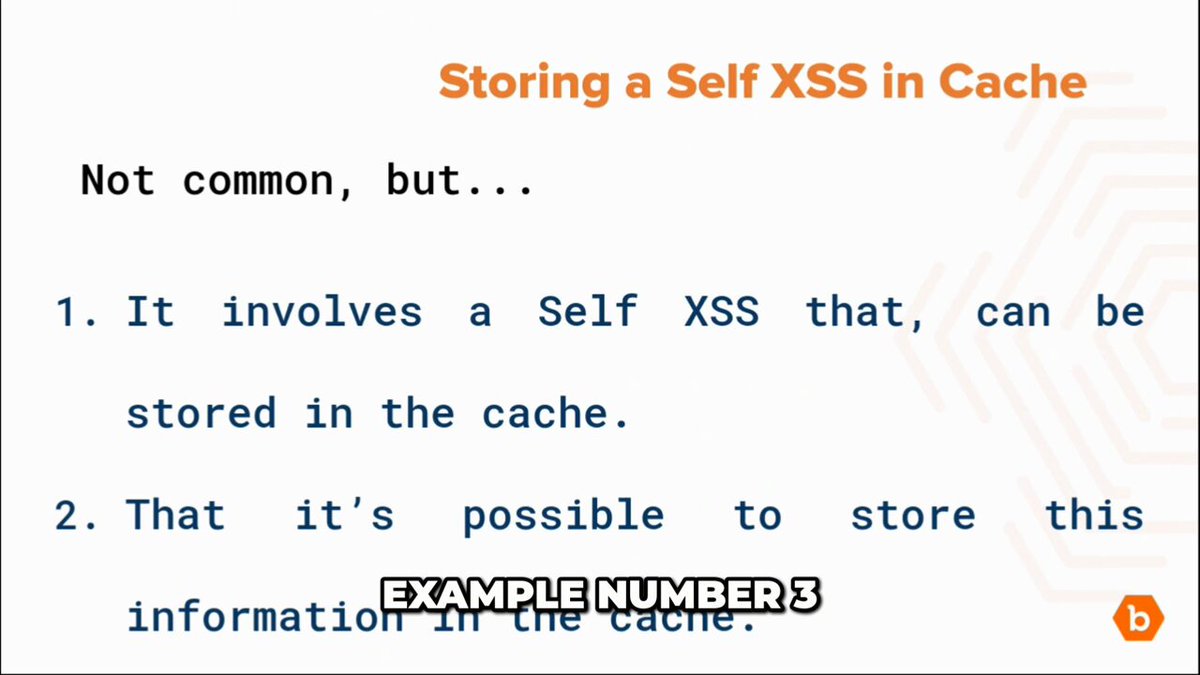

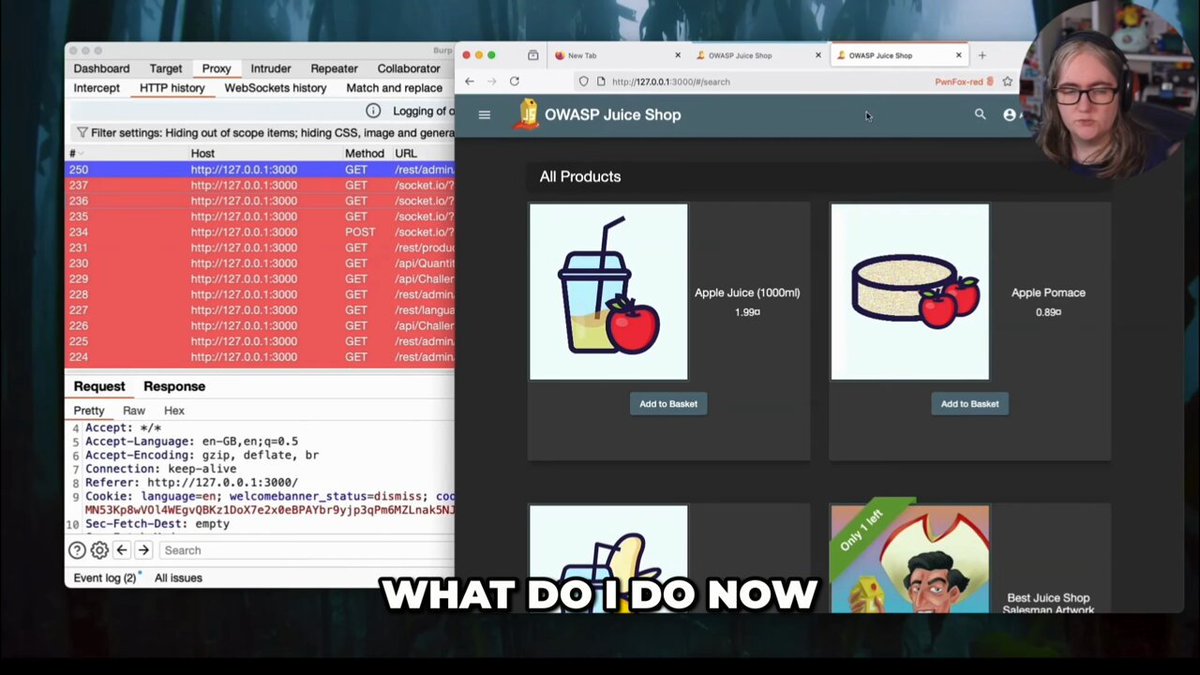


/search?q=<script>alert(1)</script>
You dropped this payload, nothing happened. 😫
Now what?
Check this quick explainer by @InsiderPhD on what to do after sending your failed XSS payload. 😏
1
4
55
3,161
📢 Building a successful bug bounty program requires a strong foundation of trust, clear triage processes, and a commitment to continuous testing.
Moving from annual audits to continuous testing lets you find vulnerabilities as code changes. This creates a predictable workflow where external researchers safely report findings, giving developers the clear data needed to fix bugs faster. A win-win for everyone. 🥇
Read the full interview with our CISO & CIO, Nick McKenzie, at Tech Nadu: technadu.com/bug-bounty-prog…
1
5
1,282
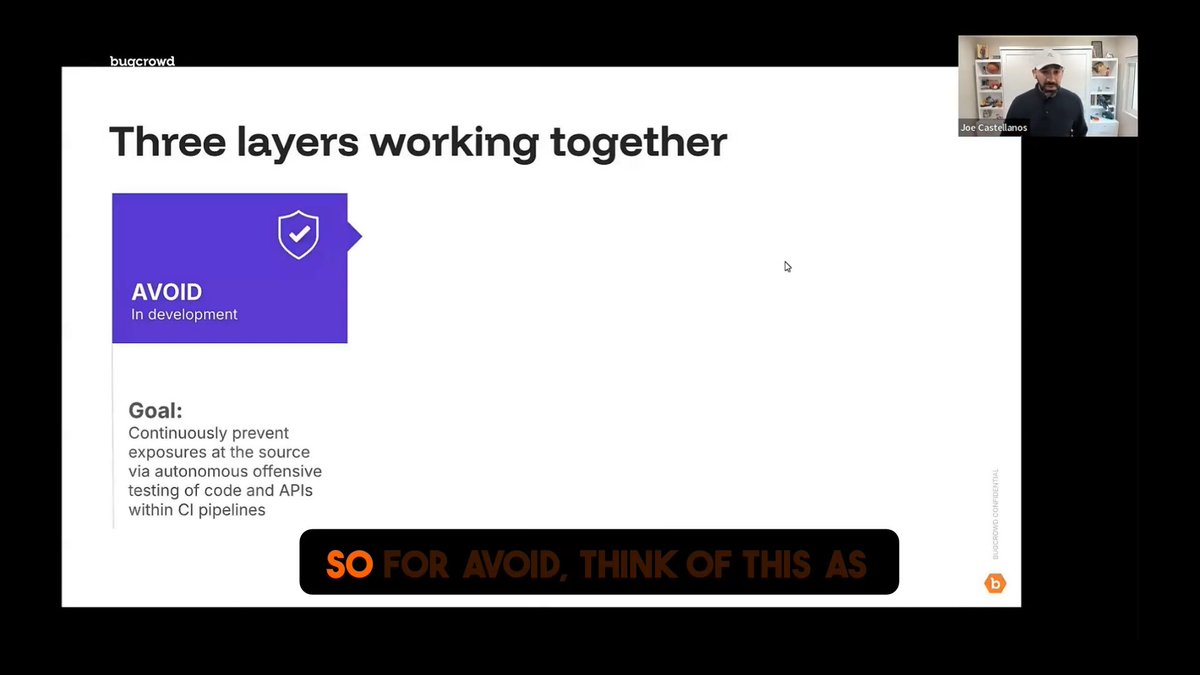
Preemptive security starts before the attacker has the advantage.
🎙️ Joe Castellanos, Senior Director of Product Management at Bugcrowd, shares how security teams are moving beyond reactive vulnerability management toward continuous, attacker-informed testing.
From shifting testing left in the SDLC to understanding your external attack surface from the outside in, this is a good watch for teams building a program designed to reduce risk earlier.
Watch the full discussion: event.on24.com/wcc/r/5338391…
1
1
8
1,824
As automation and AI continue to accelerate security operations, the role of security researchers is becoming more critical to defensive strategy 🧑💻‼️
While tools can scan code and surface anomalies at a massive scale, they lack the contextual nuance required to validate complex business logic flaws.
Relying entirely on automated triage often results in a flood of false positives that exhausts internal teams. Integrating a human layer ensures that security operations can quickly separate meaningful exposure from background noise. 🤝
Watch the full video interview with our CTO, Braden Russell, at Tech Nadu: technadu.com/external-bug-hu…
2
9
1,196
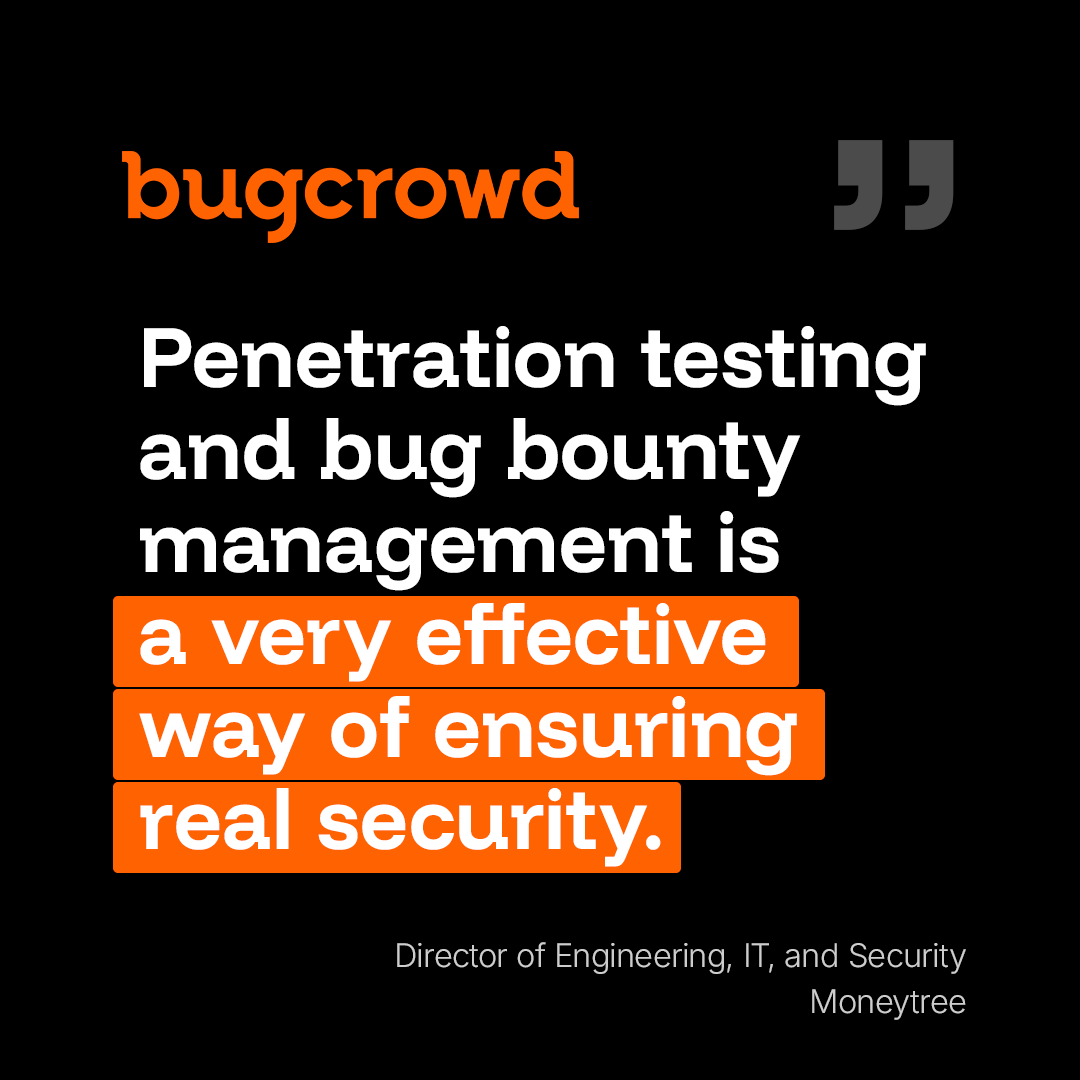
Securing 7.5B transactions while maintaining strict compliance takes incredible agility. 👌
That’s why Moneytree has anchored its offensive security on Bugcrowd for nearly a decade. The secret to their 10-year ROI is our built-in triage engine.
By ensuring only validated, actionable vulnerabilities reach engineering, they reduce risk without sacrificing shipping velocity.
💸 See how this partnership scales: bugcrowd.com/blog/community-…
1
9
1,146
📈 In 2024, 60% of state and local governments experienced a cyberattack. Public sector security teams face a 148% malware surge and a 300% uptick in endpoint security incidents, alongside strict compliance hurdles. Traditional scanners leave gaps because they only find known bugs.
Automated fuzz testing solves this by testing running software to trigger hidden flaws before threat actors do. It’s a fast, repeatable way to meet federal rules like NIST SP 800-53, NIST SSDF, and ED-203A. ✅
With our FedRAMP Moderate Authorization, agencies can deploy these workflows immediately to uncover 25% more defects.
Read the blog here: bugcrowd.com/blog/how-fuzz-t…
1
10
1,311
With AI models proving they can successfully exploit software vulnerabilities, the timeline for defenders to patch systems is shrinking rapidly. ⏳
Finding bugs faster creates an overwhelming amount of noise for security teams unless prioritization is automated.
💬 Our CEO, Dave Gerry, highlighted that companies need to rethink their remediation pipelines to move fixes into near-real-time workflows. The focus must shift from simply gathering tickets to automatically prioritizing and acting on the specific vulnerabilities that actually enable exploits.
Get the full strategy breakdown from Infosecurity Magazine: infosecurity-magazine.com/ne…
3
16
1,845
At #Infosec2026, we shared the first findings from ExploitBench, a benchmark we launched with Carnegie Mellon University to measure how AI models handle actual exploits.
📊 The data shows that frontier models are rapidly closing the gap with human researchers. In head-to-head testing on Google Chrome vulnerabilities, Anthropic’s Mythos successfully reached the highest tier of exploitation in 21 out of 41 cases, outperforming OpenAI's GPT-5.5.
Review the benchmark results at Infosecurity Magazine: infosecurity-magazine.com/ne…
1
19
2,304
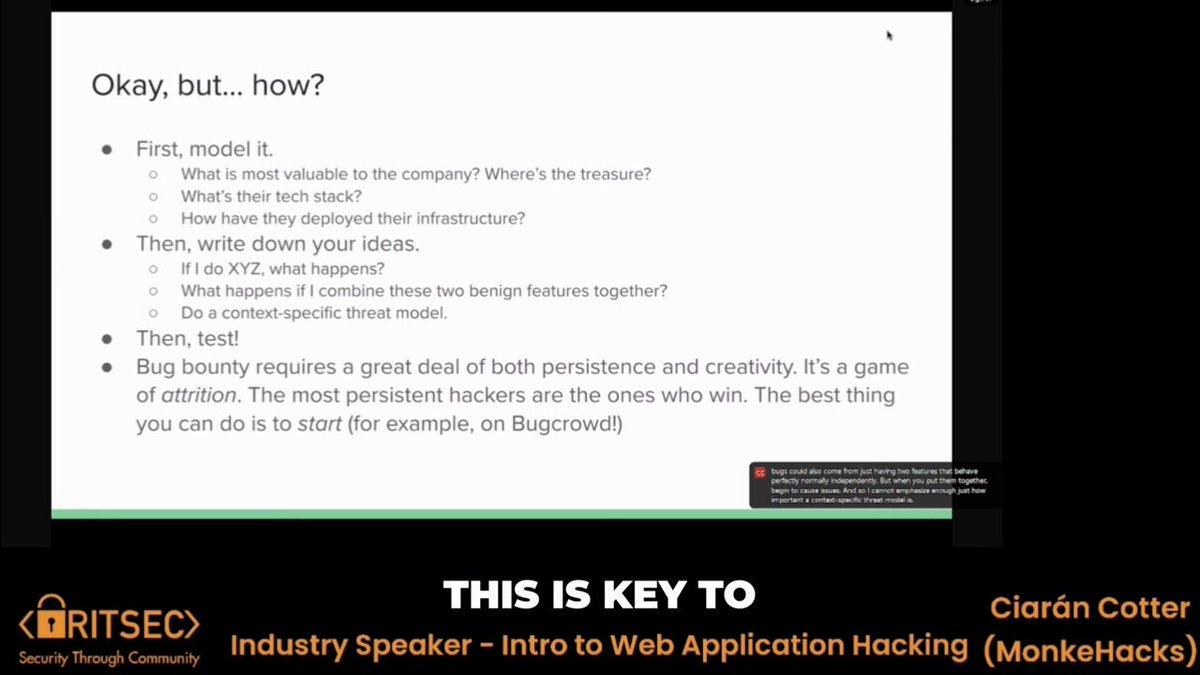
The incredible @monkehack dropping gold nuggets on modern webapp hacking.
Check it out! 👇
3
5
31
2,425
bugcrowd retweeted

Jun 9
Security teams already drown in vulnerability data, but they're missing the context that makes the difference between a triaged backlog and an actual decision.
Today, @Bugcrowd announced Savant - the AI fabric of the Bugcrowd Platform - and with it, the ability to deliver actionable results across appsec, bug bounty and vdp, red-teaming or pentest results in a single platform.
You'll see Savant across many of our current products and future releases:
- Savant Vista (formerly Asset View), helps teams understand what’s exposed.
- Savant Triage (formerly AI Triage Assistant), validates and prioritizes findings faster, cutting through noise so teams focus on what’s real.
- Savant Analytics (formerly AI Analytics), surfaces patterns across program data and supports clearer, more confident reporting.
- Savant Match (formerly CrowdMatch), activates the right hackers and connects them to customers for better results over time.
- Savant Forge (formerly Mayhem Code Security), supports autonomous testing for code.
- Savant Probe (formerly Mayhem API Security), supports live API testing.
- Savant Runtime (formerly Mayhem Dynamic SBOM), adds context from running software.
bugcrowd.com/blog/savant-bug…
3
8
987
Meet Savant: the AI fabric inside Bugcrowd’s platform 🟧
To the customers who trust us, the hackers who power us, and the partners who help extend our impact, we’re excited to introduce Savant!
Savant brings Bugcrowd’s AI features, autonomous agents, human hacker insights, and platform signals under one umbrella, making it clear where AI is used and how it supports the work happening across our platform. ☂️
Bugcrowd’s preemptive security vision comes to life with Savant, and we’re excited to bring our community along for what’s next. 🚀
Learn more from our CEO, @davegerryjr: bugcrowd.com/blog/savant-bug…
3
12
1,508
We just launched an EU data residency option to help organizations manage their evolving data sovereignty and compliance needs. 🌍
This update allows customers to store and process their crowdsourced security data entirely within the European Union.
🔒 As data privacy regulations become more localized, having regional control over vulnerability data helps teams meet strict compliance baselines without sacrificing the scale and speed of global security researchers.
Read the full announcement at @DarkReading: darkreading.com/cyber-risk/b…
7
1,862