
Educate! Organize! Agitate
Joined March 2009
- Tweets 54,888
- Following 169
- Followers 9,184
- Likes 21,021
1,493 Photos and videos








World-armed conflict reached to highest level in 2025
by Farooque Chowdhury
countercurrents.org/2026/06/…
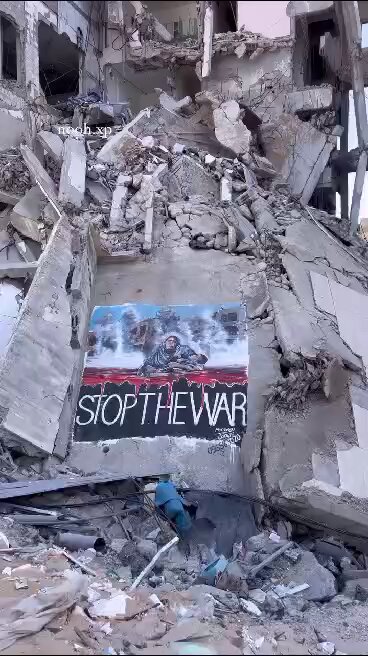
This article by Farooque Chowdhury examines findings from a Peace Research Institute Oslo report showing that the number of armed conflicts worldwide reached a post-1945 high in 2025. It discusses the concentration of violence in Ukraine, Sudan and Gaza, the growing complexity of conflicts, and the rise in interstate tensions. The article argues that struggles over resources, strategic influence and markets, together with the role of imperialism and private military actors, are shaping contemporary wars. It also highlights concerns over increasing militarization, fragmented global power relations and the wider social and economic consequences of prolonged and overlapping conflicts.
1
47
‘India Mortgaged’: T. Nagi Reddy’s Indictment of Post-Independence India
by Pon Chandran
countercurrents.org/2026/06/…
Pon Chandran reviews 'India Mortgaged', the influential work of communist leader T. Nagi Reddy, which argued that India’s post-1947 political economy remained dependent on foreign capital and entrenched landlord interests. Drawing on extensive statistical research conducted during his imprisonment, Nagi Reddy examined foreign investment, land reforms, Soviet aid, and the nature of the Indian state. The article traces the origins of the book in the ideological struggles within the communist movement and the Hyderabad Conspiracy Case, highlighting its continuing significance in debates on sovereignty, development, and social transformation in India.
67
The Secret Jail‑Trials of Dr. Mahrang Baloch and BYC Leadership
by Baloch Rights Defenders Forum
countercurrents.org/2026/06/…
The Baloch Rights Defenders Forum has condemned the transfer of legal proceedings against Dr. Mahrang Baloch and other Baloch Yakjehti Committee leaders from open courts to prison-based hearings. The statement argues that such proceedings undermine transparency, due process, and judicial independence, and violate both constitutional protections and international human rights standards. It highlights protests launched by detained leaders inside prison and calls for the restoration of public hearings, access for independent observers, and an end to what it describes as political persecution. The appeal also urges international human rights bodies to closely monitor the cases.
32
Good Kashmiris, Bad Kashmiris: Pakistan’s Fear of Azadi
by Junaid S Ahmad
countercurrents.org/2026/06/…
The article examines the response of Pakistan’s security establishment to recent protests in AJK, arguing that demands over rising costs, political representation, and constitutional accountability have been reframed as security threats. It discusses the role of refugee seats in AJK politics and places Kashmiri grievances alongside those of other marginalized groups in Pakistan. The author contends that official narratives support self-determination abroad while restricting political dissent at home. The piece argues that popular movements in AJK reflect demands for dignity, participation, and democratic rights rather than extremism, and warns against criminalizing peaceful political expression.
40
AJK’s Public Demonstrations and the Future of the Rights Movement
by Murtaza Shibli
countercurrents.org/2026/06/…
Public demonstrations in Pakistan-administered AJK have evolved into a wider rights movement focused on accountability, transparency, and political dignity. Murtaza Shibli examines the emergence of the Joint Awami Action Committee, the state’s response, the role of the diaspora, and the risks facing the movement. The article argues that this moment marks an important phase in AJK’s political history and highlights the importance of unity, non-violence, and demands for structural reforms in determining the future direction of the struggle for rights.
35
Twin Deceivers Among the Prime Ministers of India
by Bhabani Shankar Nayak
countercurrents.org/2026/06/…
In this article, Bhabani Shankar Nayak reviews the political legacies of India’s prime ministers, examining their ideological orientations, personal integrity, and approaches to governance. He contrasts leaders associated with the freedom movement and social-democratic traditions with the rise of Hindutva politics under Atal Bihari Vajpayee and Narendra Modi. The article argues that contemporary politics has been marked by growing authoritarianism, unfulfilled promises, and the consolidation of crony capitalism. It calls for a revival of democratic values and people-centred politics as essential for addressing economic inequality and strengthening India’s constitutional framework.
25
A World Cup of Borders: FIFA’s “Global Belonging” Stops at US Immigration
by Varanasi Subrahmanyam
countercurrents.org/2026/06/…
Drawing on recent controversies surrounding the 2026 FIFA World Cup, Varanasi Subrahmanyam examines the contrast between FIFA’s language of global inclusion and the realities of U.S. immigration policies. The article highlights cases involving players, referees and officials who faced detention, visa restrictions or exclusion, and places these incidents within a broader historical critique of imperialism and unequal global power. It also looks at the commercialization of the tournament and the barriers faced by ordinary fans. The essay argues that promises of universal belonging often collide with systems of exclusion and geopolitical hierarchy.
1
1
44
Harnessing Nature’s Carbon Sink: Why We Must Pay Farmers for Climate Services
by K Sahadevan and Smitha P Kumar
countercurrents.org/2026/06/…
In this article, K. Sahadevan and Smitha P. Kumar argue that tackling climate change requires not only reducing emissions but also recognizing the carbon removal services provided by agriculture and forestry. They contend that farmers, who help capture and store atmospheric carbon through plant growth, should be compensated for this contribution. The article examines climate justice, flaws in current carbon accounting, and the imbalance between industrial emitters and agricultural communities. It proposes carbon taxes and international cooperation as mechanisms to reward farmers while strengthening rural livelihoods and promoting sustainable land management.
32
The Age of Disposable Peoples: An Indictment Before the Tribunal of History — With Iran as Exhibit
by Laala Bechetoula
countercurrents.org/2026/06/…
Laala Bechetoula’s article reflects on the idea that certain peoples are treated as expendable in the contemporary international order. Using Iran as a central example and drawing parallels with Palestine, Lebanon, Cuba and Iraq, the essay examines war, sanctions, intervention and the unequal application of international norms. It argues that political power often creates hierarchies of human worth and warns against normalizing the dehumanization of entire societies. Framed as a moral and historical indictment, the article calls for the defense of sovereignty, human dignity and the principle that no people should be considered disposable.
45
Questions for Hindutva Politics: The RSS, Power and Historical Responsibility
by Dr Suresh Khairnar
countercurrents.org/2026/06/…
The article by Dr. Suresh Khairnar examines the RSS's long-standing claim of being a cultural organisation and contrasts it with its historical and organisational links to the Jana Sangh and the BJP. It discusses the RSS's role in electoral politics, communal mobilisation, developments in the Northeast, and debates surrounding Partition and minority insecurity. Drawing on historical events and personal experiences, the author argues that the consequences of religious polarisation deserve serious attention and calls for a critical examination of the political trajectory of Hindutva over the past century.
39
Concerned Citizens Demand Recall of Property Attachment Order Against Niyamgiri Leader Lada Sikaka
by Concerned Citizens
countercurrents.org/2026/06/…
A statement signed by lawyers, writers, activists and civil society representatives has expressed concern over a Judicial Magistrate’s order directing the attachment of the property of Lada Sikaka, leader of the Niyamgiri Surakshya Samiti, after declaring him an absconder in a 2017 case. The signatories contend that the charges involved do not warrant such action and allege procedural irregularities in the case. They describe the order as arbitrary and part of a broader pattern of marginalisation of indigenous communities. The statement appeals to the higher judiciary to take suo motu cognizance and recall the order.
30
US Brigandry on foreign ships, killing three Indian seafarers, even while PM Modi hails Trump and USA as India’s ‘democratic’ ally
by Ramakrishnan
countercurrents.org/2026/06/…
Drawing on reported attacks on foreign-flagged vessels carrying Indian crews and the deaths of three Indian seafarers, Ramakrishnan examines New Delhi’s response to US military actions in the Gulf of Oman and contrasts it with the Modi government’s continued strategic alignment with Washington. The article highlights statements by Indian officials, the Forward Seamen’s Union of India, and foreign policy commentators, while questioning the effectiveness of India’s protests and discussing wider debates around the Quad, US-China relations, and India’s geopolitical priorities. It foregrounds the human cost borne by Indian seafarers amid escalating tensions and maritime confrontations.
37
Who Gave Them the Right? IMPACT-SE and the Question of Legitimacy in Global Education
by Fatima Aldajani and Rana Dajani
countercurrents.org/2026/06/…
Palestinian education has repeatedly come under scrutiny from IMPACT-SE, an organization whose reports have influenced international funding and policy decisions. In this article, Fatima Aldajani and Rana Dajani question the legitimacy, methodology, and accountability of the group, arguing that its assessments reflect political bias and unequal standards. They contend that communities affected by curriculum reviews must have a voice and that educational evaluation should be transparent, consistent, and independent. The article situates these concerns within a longer history of external attempts to define what knowledge and memory are considered legitimate.
24
When Piety Becomes a Public Relations Strategy
by Ashish Singh
countercurrents.org/2026/06/…
Ashish Singh examines how religious symbolism and public displays of piety can be used to shape reputations and shield influential individuals from scrutiny. The article argues that journalism must focus on conduct, evidence, and accountability rather than appearances or carefully cultivated images. Drawing attention to the risks of reputation laundering, it stresses the importance of editorial independence and contextual reporting. Respect for faith and spiritual traditions, the author writes, should never come at the cost of truth. A credible press serves the public interest by looking beyond image management and examining facts.
1
26
The killing of 3 Friends Opposing Destructive Mining is a cruel reminder of the terror of the Mining Mafias
by Bharat Dogra
countercurrents.org/2026/06/…
Bharat Dogra examines the brutal killing of three villagers in Haryana who had reportedly opposed illegal mining, placing the incident within a wider pattern of violence linked to mining mafias across India. Drawing on field experiences and documented cases, the article describes the ecological damage, threats to workers, and attacks on activists, journalists, and officials who have challenged excessive and illegal extraction. It argues that political protection and fragmented resistance have allowed these networks to thrive, and calls for stronger coordination among environmental groups, labor organizations, and rural communities confronting mining-related destruction.
34
India’s Blinkit Democracy: Betrayal as a Business Model
by Satya Sagar
countercurrents.org/2026/06/…
This article by Satya Sagar examines the growing convergence of politics and corporate culture in India. It argues that electoral competition increasingly resembles a marketplace shaped by concentration of power, strategic defections and image management. The article explores how parties function as political enterprises, why loyalty has become increasingly transactional and how citizens are often treated more as consumers than participants in democracy. It also reflects on the need for stronger accountability mechanisms and democratic reforms that give voters greater control over those elected in their name.
1
55
The Right To Breathe: Land, Ecology, and the Struggle for the Commons in Kenya
by Wanjora Wangui
countercurrents.org/2026/06/…
Wanjora Wangui examines the links between land, ecology, and social justice in Kenya, arguing that environmental degradation is inseparable from histories of dispossession and contemporary forms of inequality. The article traces how forests, wetlands, rivers, and public spaces have become sites of struggle over ownership, development, and democracy. It also reflects on the importance of nature for collective wellbeing and critiques market-based climate solutions that reproduce unequal power relations. Defending the commons, the author argues, is essential to protecting communities, cultural memory, and the ecological foundations of life.
2
1
41
Land Alienation to Outside Agencies in A&N Islands Violates Aboriginal Protection Regulation
by E A S Sarma
countercurrents.org/2026/06/…
Former Tribal Welfare Commissioner and former Union Secretary E.A.S. Sarma has urged the Ministry of Tribal Affairs and the National Commission for Scheduled Tribes to intervene against the reported alienation of land in the Andaman and Nicobar Islands to outside commercial agencies. Referring to an advertisement offering “luxury plots” near Collinpore in South Andaman, he argues that such transactions violate the intent of the A&N Islands (Protection of Aboriginal Tribes) Regulation, 1956, which was enacted to safeguard the interests of socially and economically backward indigenous communities and restrict the acquisition of land by outsiders.
3
50
The Human Cost of India’s Informal Economy
by Utkarsh Mishra
countercurrents.org/2026/06/…
This article by Utkarsh Mishra examines the human cost of India’s vast informal economy, which employs nearly 90% of the workforce. It traces the realities faced by brick kiln workers, construction labourers, and gig workers, highlighting debt bondage, child labour, unsafe conditions, and the absence of social protection. Drawing on research and workers’ testimonies, the article argues that exploitation is embedded in the organisation of work rather than being an accidental by-product of growth. It also highlights ongoing struggles by workers and the need for greater accountability and labour protections.
2
59
PM CARES: Examining Questions of Coercion, Accountability and Transparency
by Mohd Ziyaullah Khan
countercurrents.org/2026/06/…
PM CARES was created during the COVID-19 crisis to mobilize resources for emergency relief and received substantial public support. This article examines the debates that followed over its legal status, transparency, auditing mechanisms, and accountability. It reviews the government’s position, criticisms raised by opposition leaders and civil society, and the Supreme Court’s ruling on the fund’s distinct identity. The discussion highlights broader questions concerning governance, public trust, and the balance between emergency responsiveness and institutional oversight, making PM CARES one of the most debated public initiatives of the pandemic period.
33