
The OFFICIAL #DocsWithDisabilities Initiative account: Podcast, Hashtag & Programs & @meekslisa DREAM Lab. Anti-Oppressive #HPE #MedEd #STEM Education
- Tweets 4,506
- Following 642
- Followers 3,977
- Likes 4,602
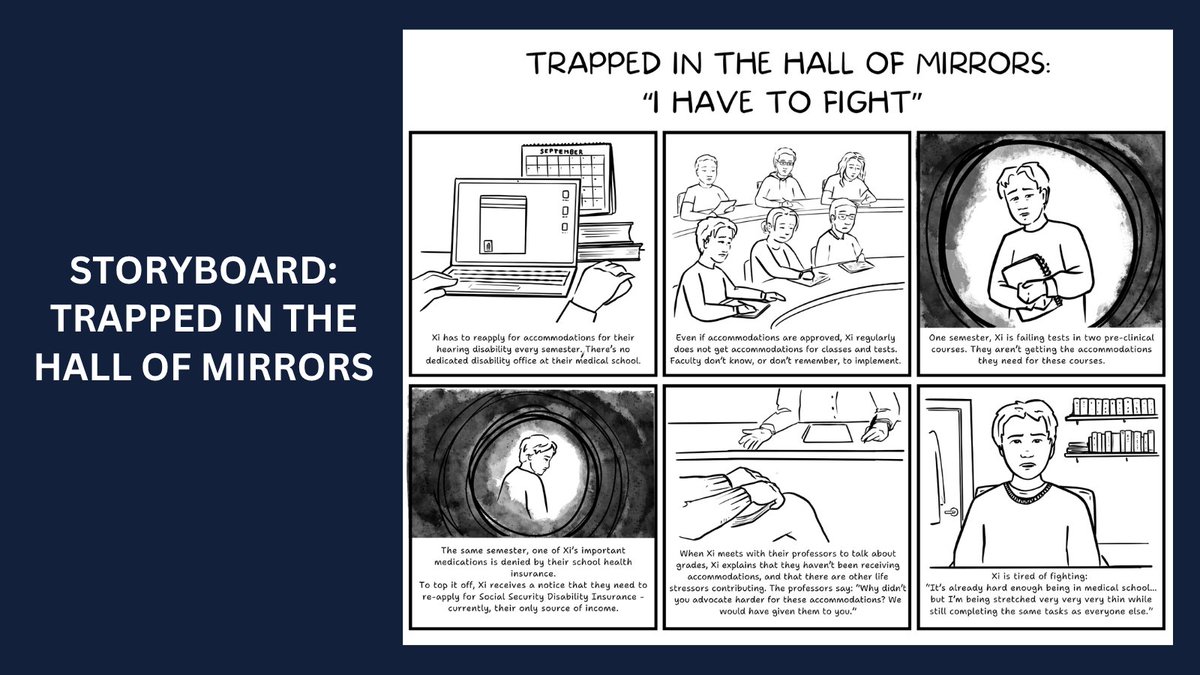


ALT In this piece, we tell the story of Xi. In the first panel, we see Xi’s laptop and their wall calendar showing that it's September. The text of the drawing says, “Xi has to reapply for accommodations for their hearing disability every semester. There’s no dedicated disability office at their medical school.” In the next panel, Xi is sitting in class surrounded by other medical students, listening to a lecture. While all the other students are engaged and taking notes, Xi remains isolated, unable to hear and participate. The text reads, “Even if accommodations are approved, Xi regularly does not get accommodations for classes and tests. Faculty don’t know, or don’t remember, to implement them.” Xi looks worn down. We see the compounding effects of this in the next panel, where Xi is depicted in a dark place with shadows swirling around him. The text reads, “One semester, Xi is failing tests in two pre-clinical courses. They aren’t getting the accommodations they need for these courses.”
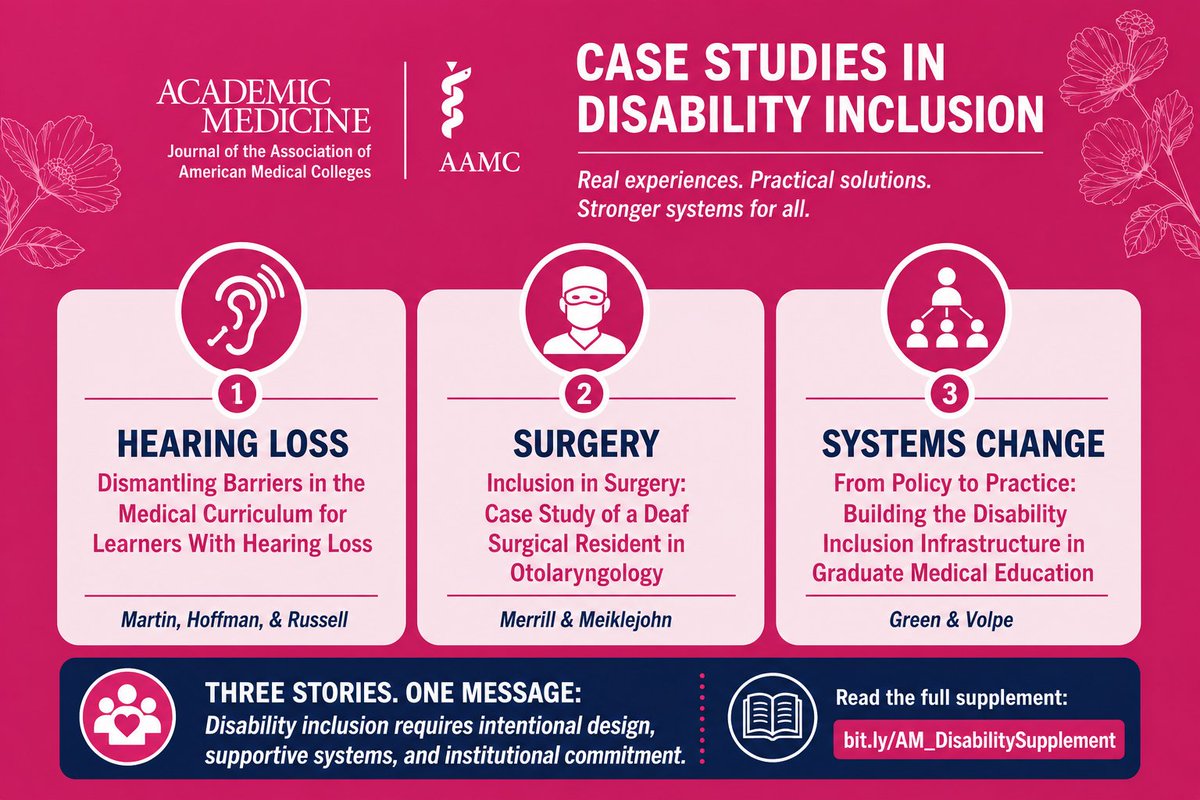
ALT romotional graphic for the Academic Medicine disability inclusion supplement. Against a pink background, the graphic highlights three case studies in disability inclusion: Hearing Loss, Surgery, and Systems Change. Each topic is represented by an icon and article title: Dismantling Barriers in the Medical Curriculum for Learners With Hearing Loss; Inclusion in Surgery: Case Study of a Deaf Surgical Resident in Otolaryngology; and From Policy to Practice: Building the Disability Inclusion Infrastructure in Graduate Medical Education. A banner at the bottom reads: “Three Stories. One Message: Disability inclusion requires intentional design, supportive systems, and institutional commitment.” A link directs readers to the full supplement at bit.ly/AM_DisabilitySupplement.


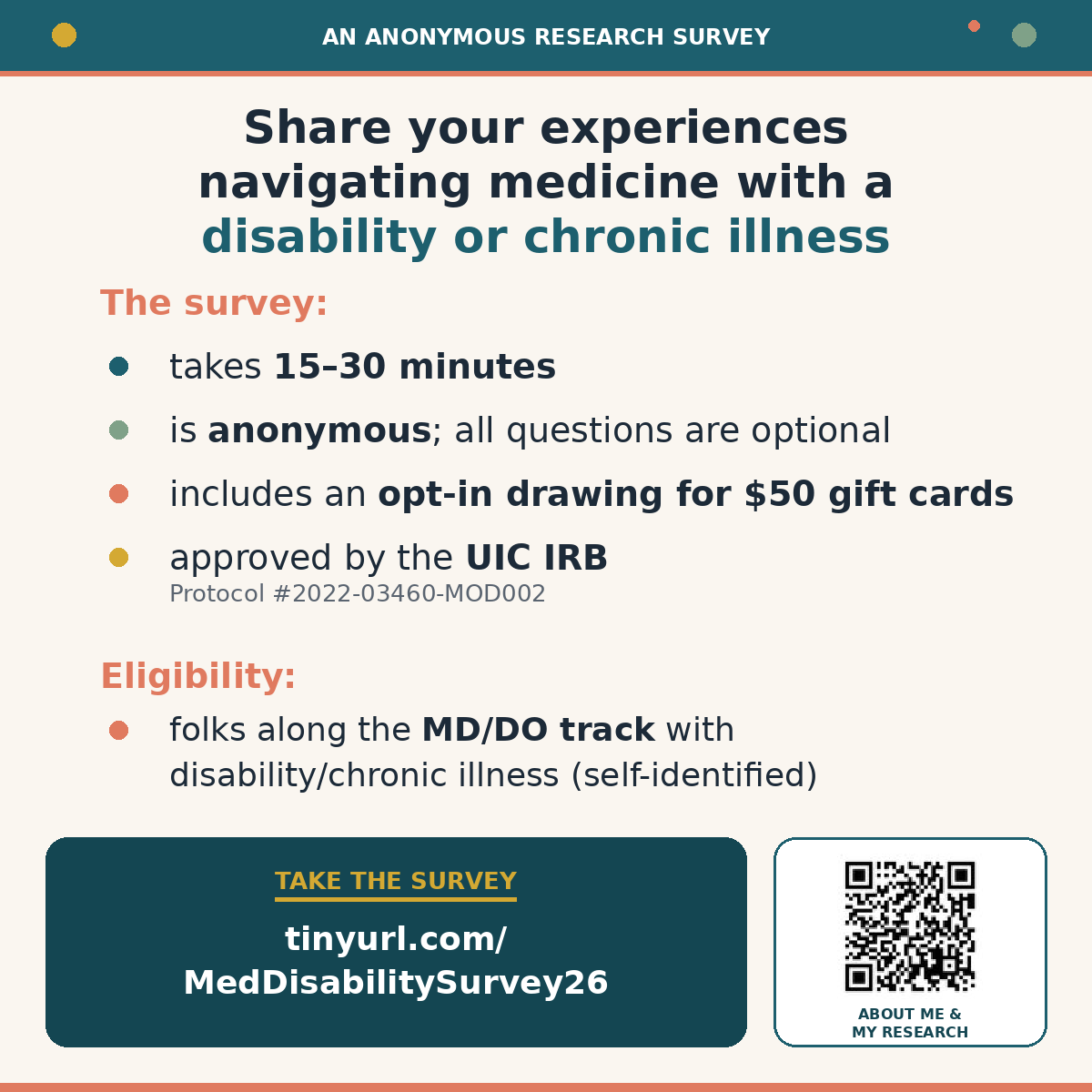
ALT Recruitment graphic for an anonymous research survey. The headline reads "Share your experiences navigating medicine with a disability or chronic illness." A section titled "The survey" lists four bullets: takes 15–30 minutes; is anonymous, with all questions optional; includes an opt-in drawing for $50 gift cards; approved by the UIC IRB (Protocol #2022-03460-MOD002). A section titled "Eligibility" reads: folks along the MD/DO track with disability/chronic illness (self-identified). At the bottom, a teal "Take the Survey" button shows the link tinyurl.com/MedDisabilitySurvey26, next to a QR code labeled "About me & my research."
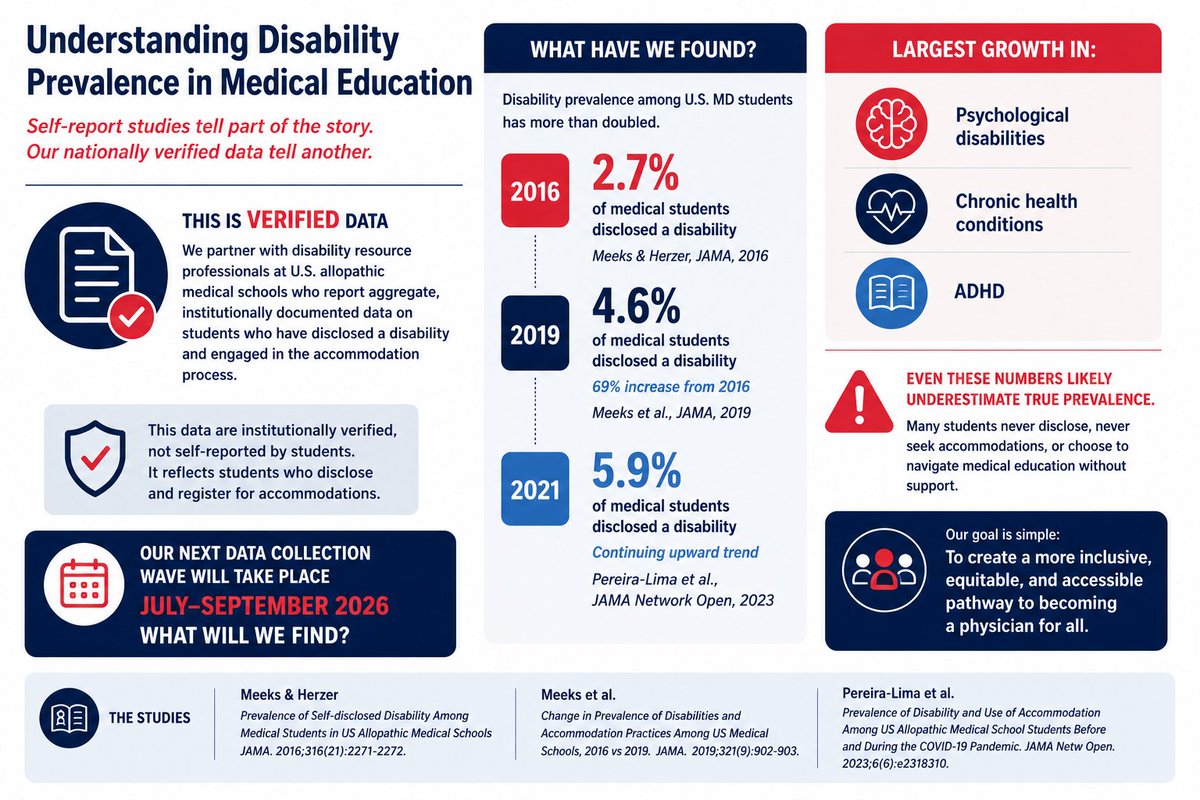
ALT Infographic titled “Understanding Disability Prevalence in Medical Education.” The graphic summarizes nationally verified disability data from U.S. allopathic medical schools. Disability prevalence among MD students increased from 2.7% in 2016 to 4.6% in 2019 and 5.9% in 2021. The largest growth occurred among students with psychological disabilities, chronic health conditions, and ADHD. The infographic notes that these figures likely underestimate true prevalence because many students do not disclose disabilities or seek accommodations. A banner announces the next national data collection wave, scheduled for July–September 2026.
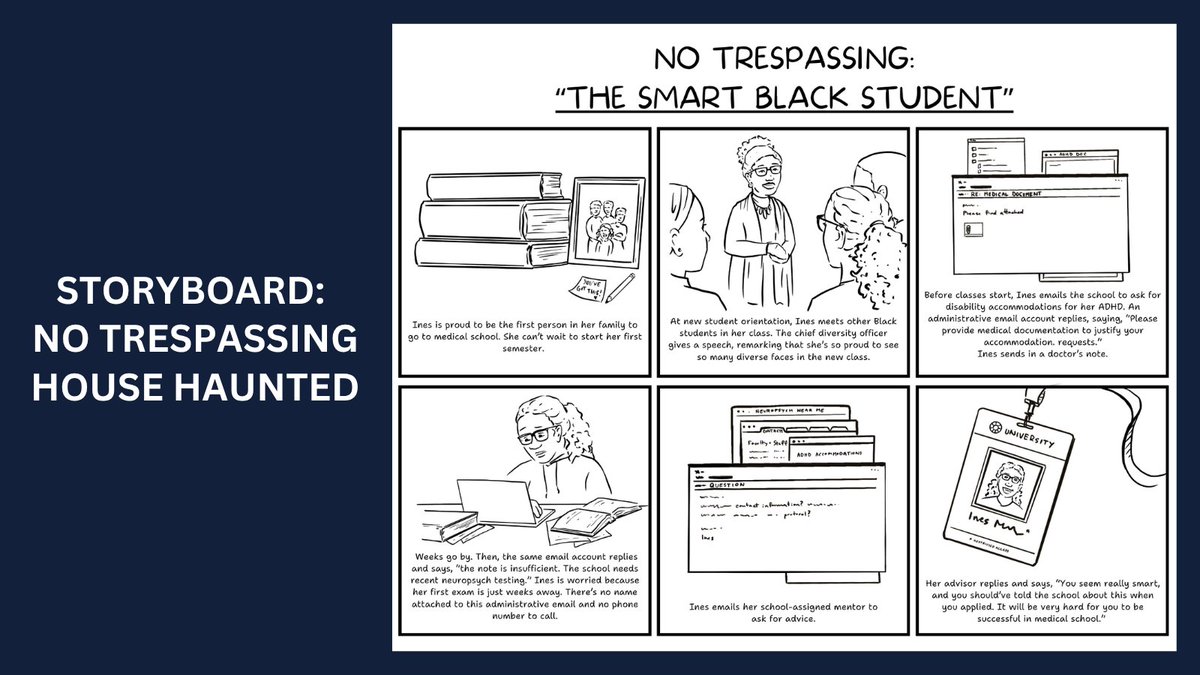
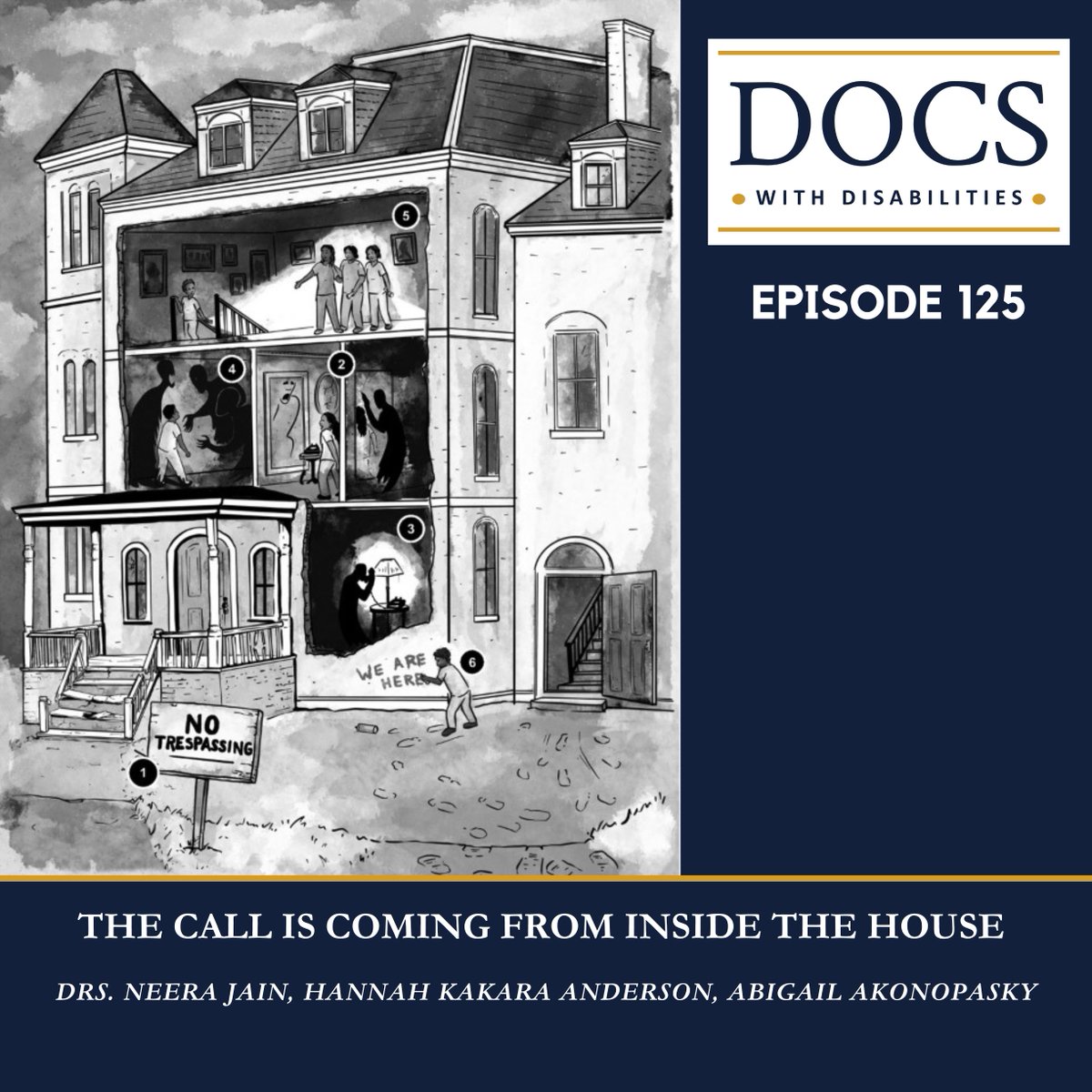
ALT Living at the intersection of ableism and racism forces students to confront haunted institutional spaces, marked by opacity and unseen forces. Institutions plant “Keep Out” - No Trespassing signs throughout students’ journeys. In this piece, we share the story of Ines (a pseudonym) via a storyboard, a chronological panel of six drawings. In the first, we see a photo of Ines and her family, a stack of medical textbooks, and a sticky note that has the words “You’ve got this” handwritten with a heart. The text says, “Ines is proud to be the first person in her family to go to medical school. She can’t wait to start her first semester.” Next, Ines is speaking in a small group of other medical students and leaders at her medical school. The text reads, “At new student orientation, Ines meets other Black students in her class. The chief diversity officer gives a speech, remarking that she’s so proud to see so many diverse faces in the new class.” The next panel shows multiple emails broug