
Medical Doctor 🩻 | Saving lives by day, rugged by night | axiom.trade/@donjorgio
Joined December 2023
- Tweets 7,170
- Following 1,086
- Followers 1,621
- Likes 9,544
646 Photos and videos





Pinned Tweet

19 Dec 2025
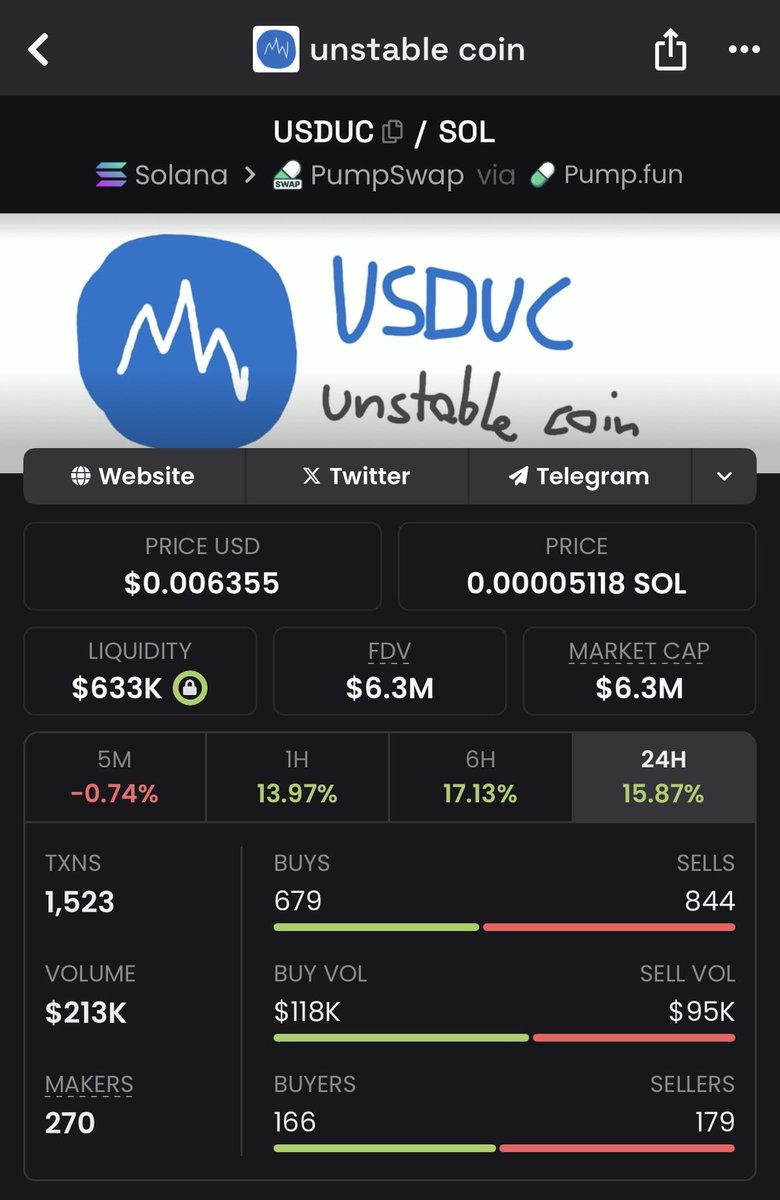
1/ I’ve been in markets long enough to know what asymmetry looks like. This Christmas, I’m giving it away for free (once again).
I‘m a trained medical doctor, but I’ve spent the last ten years studying market structure, and in that time I’ve learned that the most asymmetric opportunities don’t come from finding better assets, they come from finding assets that represent positions nobody else can express. $USDUC is that position. Let me walk you through why.
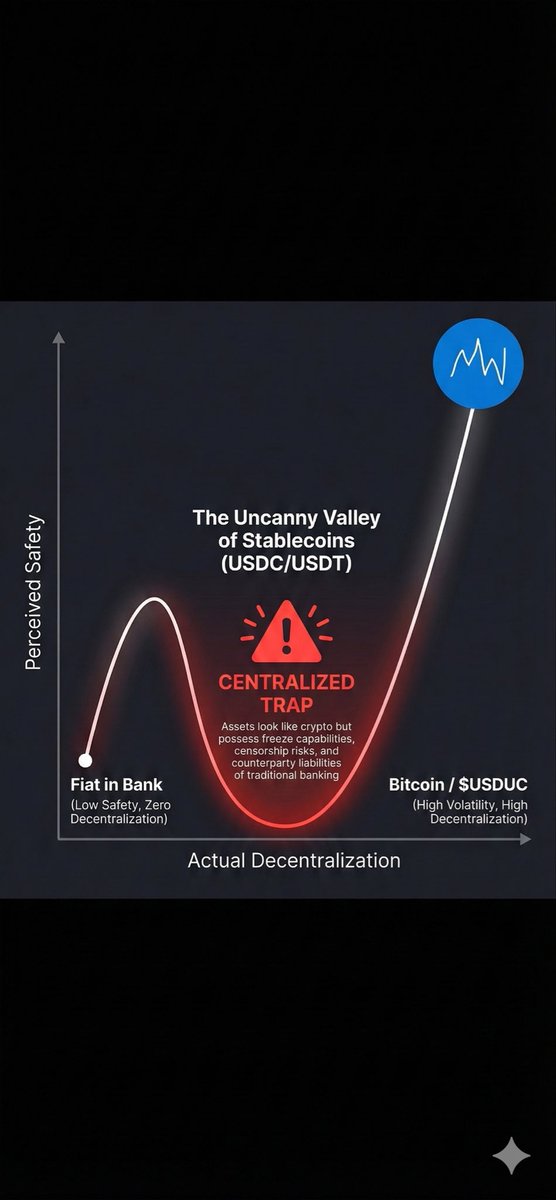
There’s a concept in options theory called “impossible to hedge”. A risk that exists in the system but has no corresponding instrument to offset it. For years, the risk of stablecoin capture has been impossible to hedge. You could avoid stablecoins entirely, but that meant avoiding the most liquid trading pairs in crypto. You could hold BTC as an alternative, but Bitcoin isn’t a statement about stablecoins specifically, it’s a statement about fiat broadly. $USDUC is the first asset that allows you to construct a portfolio position that explicitly benefits from stablecoin overreach, and that structural novelty alone makes it worthy of serious analysis.
Let me explain what I mean by “structural novelty” because this is the crux of the thesis. In traditional markets, when an asset class becomes dominant, instruments emerge to express every possible view on that asset class (long, short, leveraged, inverse, volatility-based, you name it). This is healthy market development; it allows capital to flow toward accurate price discovery. Stablecoins are now a ≈$300 billion asset class that serves as the backbone of crypto liquidity, yet there exists no instrument that lets you express the view that centralized stablecoins are a systemic risk. You cannot buy puts on $USDC. You cannot short Tether with defined risk. The entire market is structurally long stablecoin dominance with no way to hedge the tail risk of regulatory capture.
$USDUC fills that gap, and markets have a way of rewarding instruments that fill structural gaps.
Now let’s discuss what I call the “awareness surface area” problem, because this is where the timing element becomes compelling.
Every investment thesis requires a catalyst, a reason why the market will reprice the asset from its current valuation to your target valuation. For most memecoins, that catalyst is attention, which is inherently unpredictable and fleeting. You’re betting on virality, which is essentially betting on chaos.
$USDUC has a different catalyst structure: its awareness surface area expands automatically as stablecoin adoption expands. Visa’s announcement that US banks can now settle in USDC on Solana isn’t just news, it’s a fundamental expansion of how many people will understand what stablecoins are, how they work, and eventually, what their limitations are.
The catalyst isn’t virality. The catalyst is education, and that education is being funded by Visa, Mastercard, Circle, and every financial institution racing to integrate stablecoin rails. Your marketing budget is their integration budget.
33
33
80
12,714
I believe $WOJAK 8J69 will hit 5-10B in the coming years. Stars are aligning.
6
8
55
4,977
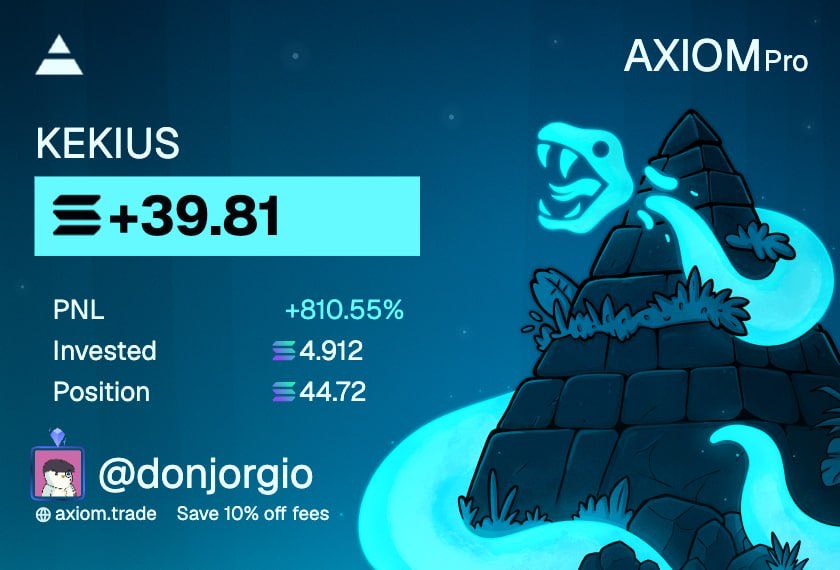
Told y’all thanks for the attention on this matter. $kekius

IYKYK
Cxtd4j9mVysEoE8JRiiyhPoqa59mfU6JW58jy34GPump
2
3
744
May 11
$TROLL is a great meme, no denying that.
But $WOJAK is in a different category.
It’s one of the few memes that actually became internet language. Every market emotion has a Wojak attached to it. That’s why Wojak hits harder in crypto. It doesn’t just represent the culture, it represents the trader.
Wojak is identity.
And identity is what sends memes to billions.
It should be multiples higher very soon. Godspeed 8J69
10
13
92
1,412
May 10
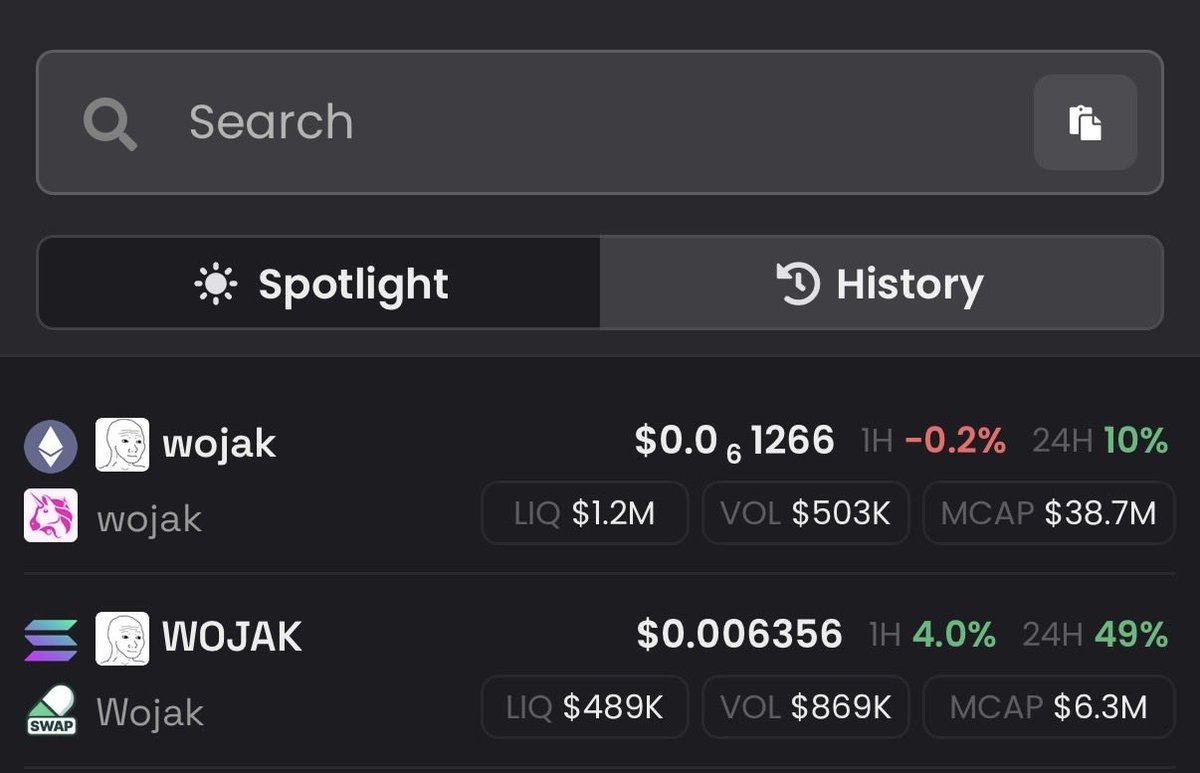
(8J69) volume mogging and liquidity mogging the scam on ETH.
There is only one $WOJAK
few.
8
7
67
1,922
May 10
$WOJAK (8J69) about to teleport. The greatest internet meme of all time sitting at 6M mcap only.
4
12
61
1,505
Don | donjorgio.eth retweeted

May 6
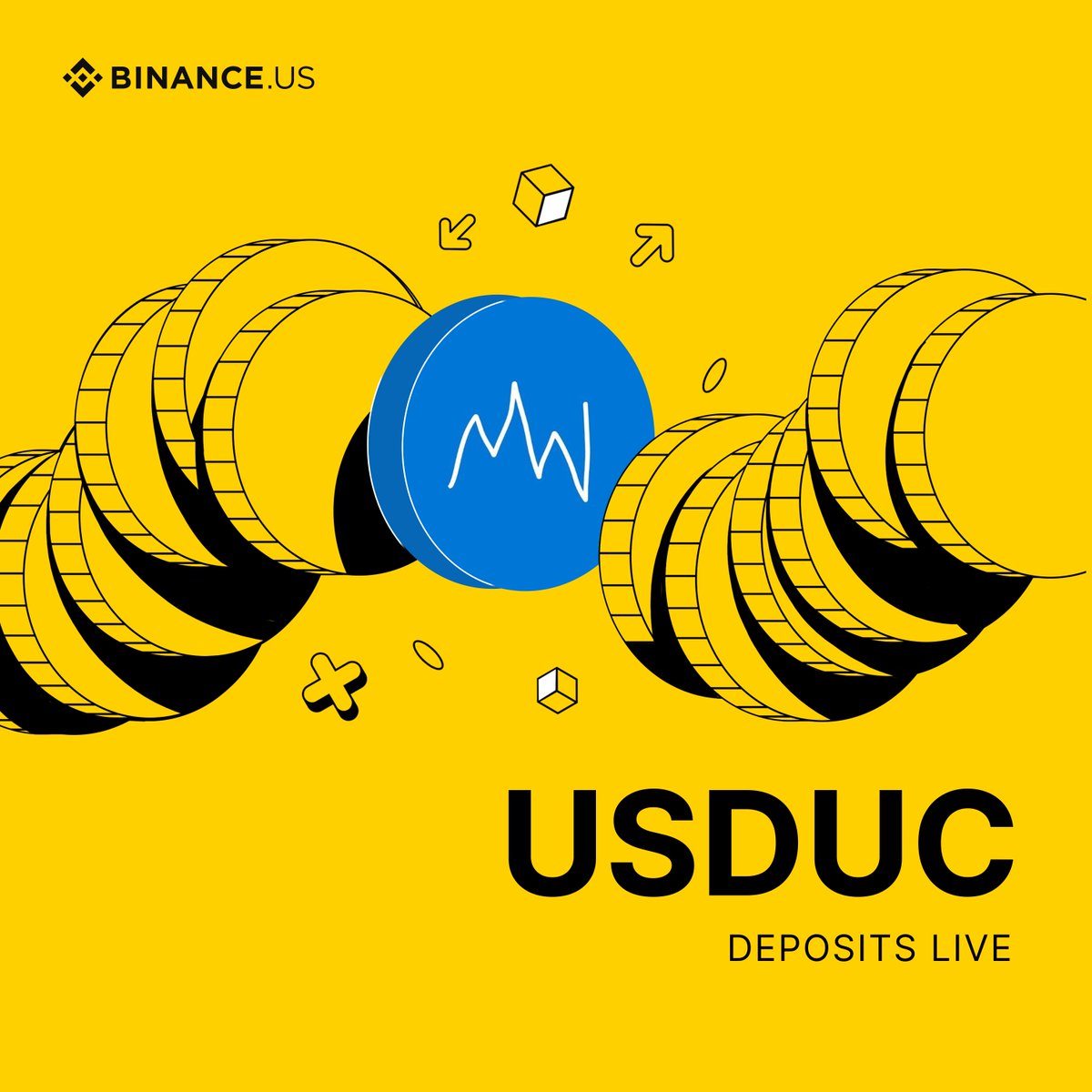
Deposits for $USDUC are now open on @BinanceUS!
Trading on the USDUC/USDT pair will begin on May 07 at 7 a.m. EST.
@usduc_official is a satirical, community-driven memecoin designed as a parody of traditional stablecoins, embracing volatility as a feature rather than stability.
669
361
1,852
3,030,088
Here is my $WOJAK (8J69) thesis.
Before we talk about the coin, we have to talk about the face. Because if you don’t understand why Wojak became one of the three or four most consequential images in internet history, you can’t understand why a token attached to him is structurally different from the thousand pumpfun launches that came and went last cycle.
Wojak was born around 2009–2010. The earliest archived appearance is from December 16, 2009 on the humor site Sad and Useless; the meme as we know it crystallized on the Polish imageboard Vichan and then on the German imageboard Krautchan, where a user with the handle “Wojak” started posting an MS Paint drawing of a bald, melancholic man under the phrase “to uczucie, kiedy…” By 2011 he had crossed onto 4chan, where two Wojaks hugging under the caption “I know that feel bro” became a generational reaction image.
Wojak is not a character. He is a face for a feeling. Pepe is a character: he has moods, he has expressions, but he’s still a frog with an identity. Doge is a meme of a specific Shiba Inu named Kabosu, frozen in a specific photograph. Both are fundamentally objects the internet pointed at and laughed.
Wojak is a vessel. He is the empty silhouette into which any user can project their own state. That is why, almost uniquely among 2009-era memes, he didn’t die, he metastasized:
•Doomer Wojak (2018): hooded, smoking, dead-eyed. The avatar of millennial/Gen-Z nihilism.
•NPC Wojak: gray, blank-faced. Visual shorthand for “people who don’t think for themselves,” used everywhere from political shitposting to AI discourse.
•Soyjak: the gaping cuckface variant that spawned its own imageboard (soyjak.party) and its own civil-war culture.
•Chudjak, Gigachad, Brainlet, Big Brain, Doomer Girl, Coomer, Boomer, Zoomer: an entire taxonomy.
•Pink Wojak / Green Wojak: the crypto-native fork. Pink = bleeding, getting liquidated, capitulating. Green = pumping, euphoric, “we are so back.”
That last point is the one nobody pricing the asset is taking seriously enough.
Wojak is already the native iconography of crypto trading. Every trader on every chain, when they talk about their P&L in a group chat, reach for a Pink Wojak or a Green Wojak. The meme isn’t adjacent to crypto culture the way Doge is. Doge predates crypto and got bolted onto it. Wojak is the visual language traders already use to describe their own emotional states. He is the onchain mirror.
That is the moat. That is the thing 99% of memecoins will never have and can never manufacture: a 15-year cultural footprint that organically merged with the trading subculture itself.
Doge, Pepe, and Wojak are the three pillars of memecoin supremacy for one reason that has nothing to do with charts and everything to do with time:
They are the only memes that have survived three full internet eras and organically embedded themselves in financial culture.
Every other OG meme either died (Trollface, Rage Comics, Me Gusta), got too brand-captured (Grumpy Cat, Harambe), or never made it past anglophone Reddit. Pepe, Doge, and Wojak are the only three that:
1.Survived past their original platform’s death (Krautchan, early 4chan, original Tumblr).
2.Spawned major variant ecosystems rather than fading into a single static image.
3.Became trading vernacular, used unironically by people who don’t know or care where the meme came from.
That last point is the financial argument. Memecoin valuations are ultimately bets on cultural durability. Doge survived 12 years and ran to a $90B market cap in 2021 because the meme outlived three internet generations. Pepe ran to $14B because the same was true of him. Wojak, by every cultural metric (search volume, variant count, integration into trader speech, longevity) is peer to those two. The fact that no Wojak token has yet hit a 10-figure market cap is the asymmetry, not the disqualification.
The market hasn’t priced him yet.
27
32
103
6,149
Why the Solana Wojak takes 2026 over the Ethereum one: This is where I want to be honest about the counter-argument first, because it just happened.
The bear case for SOL Wojak: in mid-April 2026, the $ASTEROID memecoin on Ethereum broke out to roughly $200M market cap, and the ETH-native Wojak followed with a ~300% move while the Solana Wojak lagged. Commentators on Solana were openly blaming “PvP culture” (too many tokens, too much trader-vs-trader cannibalization, too little narrative cohesion) for the chain’s memecoin economy losing the crown.
That’s real. I’m not going to handwave it.
But the move from April was a spike on a single narrative (Elon-mention-driven), and the structural picture for the rest of 2026 still favors Solana for the Wojak ticker specifically. Here’s the case:
1. Wojak’s home is already on Solana
The legacy ETH-native WOJAK contract is dead and has basically zero daily volume. The newly migrated token is a big bundle. You just need zo check the chain. The Solana-deployed Wojak is the living one, with active liquidity, active community, and active dev work.
When traders search $WOJAK in 2026 and find a real chart with real volume, that’s the SOL token. The ETH version has effectively conceded the ticker.
2. Infrastructure asymmetry compounds for memes
Memecoin trading is a high-frequency, low-ticket-size activity. A $50 buy on Ethereum L1 still costs meaningful gas. On Solana, transaction cost is a rounding error. This isn’t a marginal advantage, it’s the difference between a 19-year-old being able to ape in and not. Retail meme volume requires sub-cent fees, and Solana has them.
Firedancer, Solana’s new high-performance validator client, is shipping in 2026 and is expected to push throughput further. Ethereum’s Glamsterdam upgrade will help L1 but most of ETH’s retail activity has already migrated to L2s, which fragments memecoin liquidity across Arbitrum, Base, Optimism, and a half-dozen others. Fragmented liquidity is poison for memecoins, which need concentrated attention to pump.
3. The ETF tailwind is on Solana’s side
Solana ETFs are progressing through approval in 2026, and SOL-related institutional flow has been the structural story of the year. ETH has its own ETFs but they’re older news; the new money chasing the new narrative is going into SOL. Memecoins on a chain are a leveraged bet on that chain’s attention and SOL’s attention curve in 2026 is steeper.
4. The April pump pattern is exactly the wrong signal to extrapolate
The April 2026 ETH-memecoin run was driven by a single Elon tweet and a vampire-attack dynamic where SOL traders chased the higher-mcap ETH ticker. That pattern exhausts itself. Once $ASTEROID rolls over, capital rotates back. Thats exactly what is happening right now. The structural advantage Solana has (fees, speed, retail saturation, pump.fun-style launch infra, established memecoin trader base) doesn’t go away because of one narrative spike.
Wojak has been around 16 years. The token attached to him should live where the long-cycle infrastructure is.
5. The cultural fit
This one is softer but I think it matters. Solana’s memecoin community is Wojak culture. The Pink/Green Wojak, the doomer-trader archetype, the on-chain trenches narrative; that aesthetic was built in Solana group chats and pump.fun threads. Ethereum memecoin culture in 2026 is older, slower, more institutional-flavored, more “Pepe holders since 2023.” Wojak as a trader’s mirror, bleeding pink in a drawdown, going green in a rip, is native to the Solana energy in a way it isn’t to ETH in 2026.
CC: @tyfloki @doompost
9
10
59
4,610
One of the best geopolitic takes ever
Feb 28

Ok, here’s my honest take.
Every piece snapping into place like clockwork.
China has spent years dodging Western oil sanctions by quietly sourcing from Venezuela and Iran, keeping its economy insulated from USD pressure. Trump’s non-negotiable mission is to obliterate BRICS, bury de dollarization for good, and reinstall the USD as the unchallenged global reserve currency for the next century. To refinance America’s towering debt load he needs interest rates driven into the ground. To steamroll the 2026 midterms he needs stock markets in full blown euphoria. The cleanest, fastest way to deliver both at once?
Precision geopolitical conflict that spikes energy prices, supercharges defence and industrial stocks, floods the system with liquidity, and forces every player back onto America’s chessboard.
Connect the dots because they’re not random:
- The US moves decisively on Venezuela, securing its enormous oil reserves, lithium, gold, and rare earth minerals.
- Canada now fully aligned and openly supporting the US steps up with comprehensive diplomatic cover, logistical bases, intelligence sharing, and even limited expeditionary support. Ottawa’s move instantly locks down the entire Western Hemisphere energy corridor, creates a seamless North American fortress, and sends an unmistakable signal to every ally and adversary: “The West is unified, and America is back in charge.” China’s first major lifeline is severed overnight.
- Beijing, panicked, doubles down on its Iranian supplies.
- Then, literally last night, Trump green-lights “Operation Epic Fury” devastating precision strikes (with Israeli support) that target the Iranian regime’s command centers, nuclear sites, and oil infrastructure while broadcasting direct calls for the Iranian people to rise up. China’s second critical lifeline is gone in hours.
That leaves only Russia.
But here’s the masterstroke that’s still flying under the radar…Russia and the US I think are already in back channel talks for a historic deal on energy, trade, and security that brings Russian oil and gas flooding into Western markets. Canada’s rock solid alignment gives Trump the perfect geopolitical bridge…a bulletproof North American energy bloc plus Russian resources creating an unbreakable alliance that completely isolates China.
BRICS is dead in one decisive stroke.
Once China is totally cut off it has zero leverage left. Beijing will be forced to come crawling back to the United States for everything…oil, minerals, technology, and market access. Trump’s response? “Hold our debt.”
America sets the terms.
China is handed massive tranches of US debt at favorable rates, the dollar undergoes a controlled, orderly reset, and the entire global financial system realigns under Washington’s leadership. Central banks worldwide have been stockpiling physical gold for exactly this moment as the ultimate backstop and hedge against the transition.
And here’s what happens to Bitcoin in the next phase because crypto is the missing piece that turns this from dominance into total supremacy:
As the conflict premium hits energy markets and defense budgets explode, liquidity floods risk assets.
Bitcoin, already positioned as digital gold and the ultimate inflation hedge, breaks out violently first surging past $200k on pure market momentum and institutional FOMO.
Then, once the Russia deal is signed and the dollar reset is underway, Trump drops the bombshell…an executive order establishing a strategic US Bitcoin Reserve. Using seized Venezuelan assets and windfall revenues from the new energy alliance, America becomes the world’s largest sovereign Bitcoin holder overnight. This single move does three things at once:
1. It legitimizes Bitcoin under American control, pulling it away from Chinese mining dominance forever;
2. It gives retail and institutional investors the green light to pile in without regulatory fear;
3. It supercharges the market rally needed for midterm victories.
267
Feb 10
This is why you should hold unstable coin instead $USDUC

Tether just blacklisted my wallet with $80 million in it
How’s this even legal
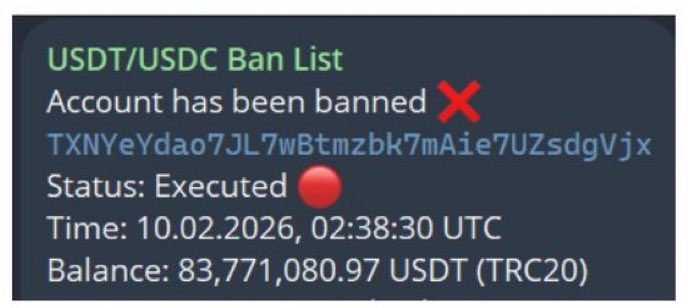
Community note
This is engagement bait, the poster commonly posts photos like this.
x.com/Atitty
2
3
7
398
That’s why you should buy $USDUC

I just lost $1.5m for good
Tether decided to freeze my wallet for no fucking reason.
@tether @paoloardoino is worst than the banks
USDT isn’t decentralized
3
6
12
479