
Privacy-preserving blockchain infrastructure for institutional-grade finance. $DUSK
Joined June 2018
- Tweets 3,923
- Following 316
- Followers 91,491
- Likes 3,399
847 Photos and videos
Pinned Tweet

Jan 22
Dusk Trade waitlist is now open.
Our regulated RWA trading platform, built with NPEX, a licensed exchange with €300M AUM, bringing tokenized assets and funds on-chain.
Sign up for a chance to win up to $500 in RWAs 👇
92
174
515
88,771
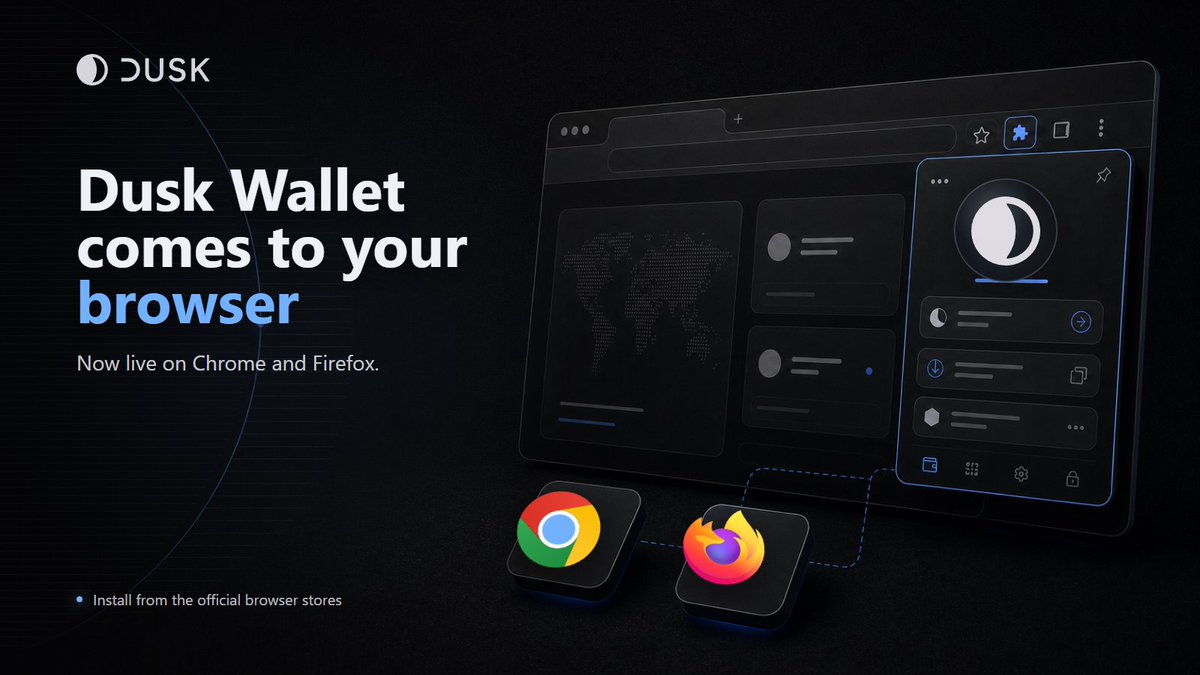
Dusk Wallet comes to your browser.
Extensions are now live on Chrome and Firefox, giving users a familiar wallet flow for Dusk.
Try it, share feedback, and leave a review ↓
11
23
74
1,931
Chrome: chromewebstore.google.com/de…
Firefox: addons.mozilla.org/en-US/fir…
3
8
434
Jun 12
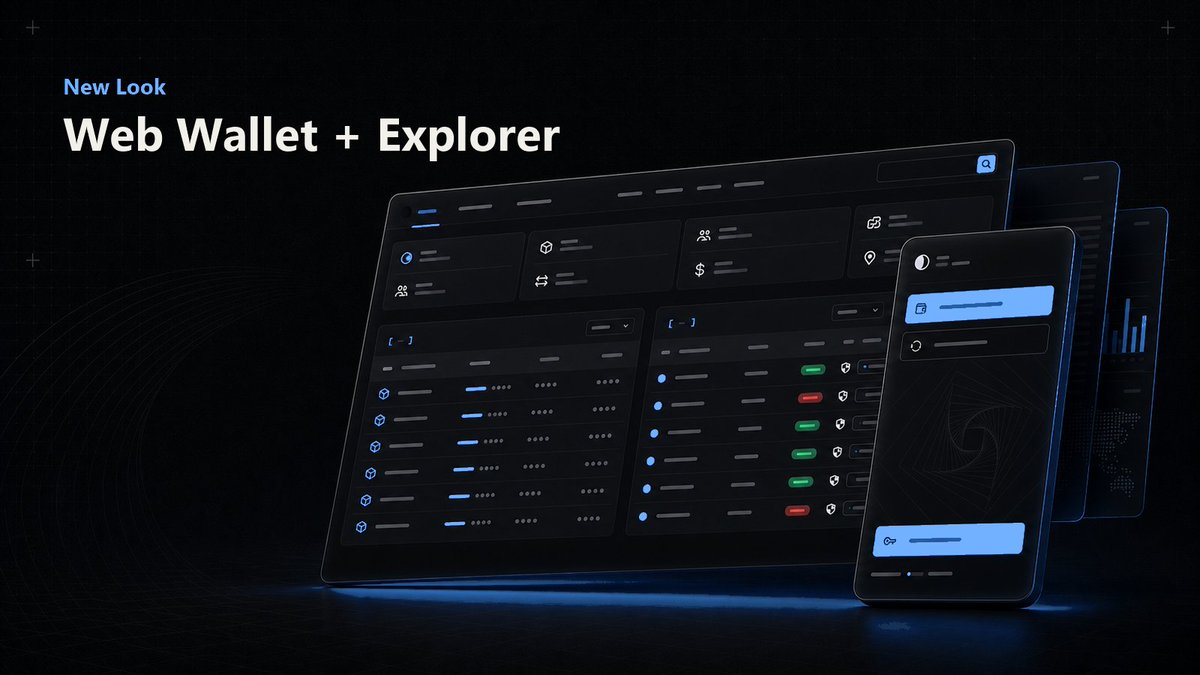
The Web Wallet and Explorer have a new look.
Cleaner interfaces, smoother navigation, and a more polished experience across two of the core Dusk tools.
Try them below ↓
7
21
78
3,301
Jun 11
Tokenized securities need more than a wrapper.
They need issuer controls, investor access, privacy, disclosure, and settlement designed around regulated market workflows.
The Dusk and NPEX partnership focuses on that layer of regulated-market infrastructure.
Read more ↓
4
15
65
1,982
Jun 11
For more info, the original Dusk and NPEX partnership announcement is available here:
dusk.network/news/dusk-and-n…
1
7
21
873
Jun 10
Programmable privacy matters because tokenized assets carry sensitive information.
A tokenized bond, fund, equity, or real-world asset has more going on than a balance moving between two addresses.
Before someone can buy, hold, transfer, settle, or report on that asset, the system may need to check:
- who the investor is
- whether they are eligible
- what rules apply to the asset
- what the issuer needs to know
- what a venue is allowed to process
- what information can be shown when review is required
On a fully public chain, too much of that can become visible to everyone.
Investor balances.
Transfer history.
Position data.
Issuer information.
Trading permissions.
Review activity.
That is a problem for regulated finance.
Programmable privacy lets financial apps enforce rules without exposing every detail in public.
For issuers, asset rules, access conditions, corporate actions, and disclosure requirements can be part of the asset logic.
For investors, balances, transfers, and positions do not need to be broadcast to the entire internet.
For venues and institutions, permissions, settlement, and review can happen without exposing the full operating picture.
For builders, privacy covers the rules, the data, and the user experience, not only the address holding the token.
Dusk handles this across three parts:
DuskDS provides settlement and data availability, with deterministic finality and native models for confidential and transparent transactions.
DuskEVM is the EVM-compatible path for financial applications, with $DUSK as the native gas token, and privacy using our EVM privacy-module Hedger.
DuskVM gives native Dusk contracts a Rust/WASM path for privacy-aware logic built directly for DuskDS.
Private transfers protect transaction data.
Private smart contracts can protect the rules and data inside the financial product.
For RWA tokenization, that is the difference between putting an asset onchain and making regulated finance work onchain.
Jun 3

Privacy gets interesting when it becomes programmable.
Private transfers protect transaction data. RWA tokenization needs smart contracts with confidential state, eligibility checks, and selective disclosure.
$DUSK brings programmable privacy to financial applications.
9
15
85
4,464
Jun 8
Holding $DUSK and not staking yet?
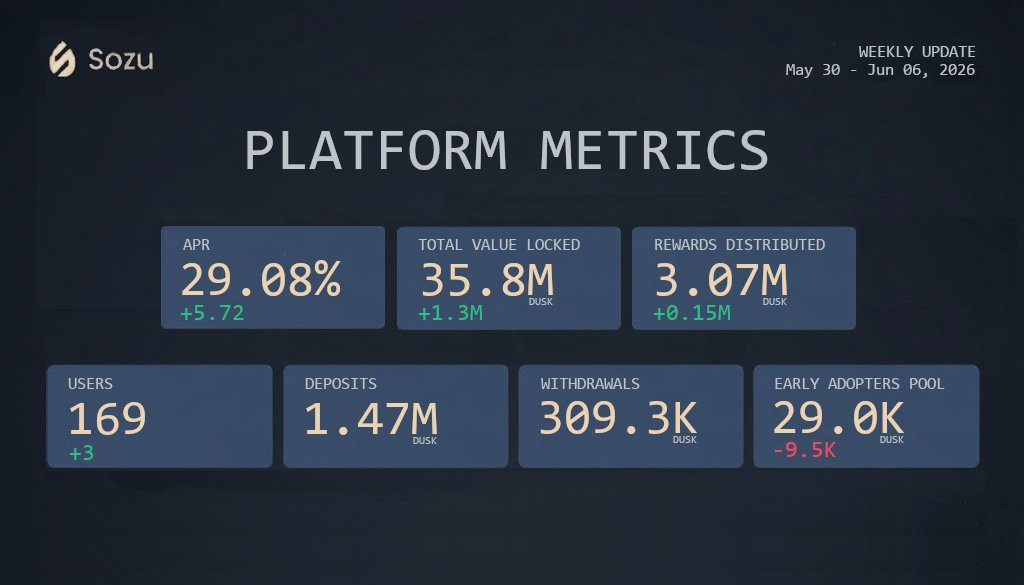
Sozu, our partner, is currently showing 29.08% APR, boosted by its June airdrop campaign.
If you've been waiting to stake, this is a good moment to check out Sozu.
Jun 7

This week saw a major boost to the platform's APR, driven by the June airdrops 🚀
We have also distributed over 3M rewards to all our users! 🏆
5
13
72
4,317
Jun 8
Staking APR is variable.
It changes with network rewards, active stake, pool activity, deposits and withdrawals, and any active campaign incentives.
Check the live Sozu dashboard before staking.
2
18
935
Dusk retweeted

Jun 6
This puts into perspective how early tokenization still is. The market opportunity is enormous.
And beyond tokenizing existing assets, there is an even bigger opportunity, namely making capital markets more efficient for companies raising capital and investors deploying it.

7
18
79
5,062
Dusk retweeted
Jun 5
During the review we did flag a separate low-level concern in Phoenix, but after tracing the full transaction path it turned out not to be exploitable.
We added extra regression test coverage so it cannot become an issue in the future.
Jun 5
After the Zcash Orchard disclosure affecting $ZEC, Dusk ran a precautionary review.
Orchard uses Halo2 and Dusk uses its own PLONK implementation. We reviewed that proof-system risk class anyway and found no overlap.
We did not identify this class of issue on the Dusk network.
1
13
55
3,019
Jun 5
After the Zcash Orchard disclosure affecting $ZEC, Dusk ran a precautionary review.
Orchard uses Halo2 and Dusk uses its own PLONK implementation. We reviewed that proof-system risk class anyway and found no overlap.
We did not identify this class of issue on the Dusk network.
6
33
110
7,824

Dusk retweeted
Jun 5
This is terrible news for any protocol, and I feel for the $ZEC team given how top notch they are.
But given the complexity of what is being built in this industry, bugs like this are also bound to happen. Even if you audit often, even if you hire good firms, cryptography and blockchain infrastructure are unforgiving.
At @DuskFoundation we made a conscious decision to spend a large part of the first half of 2026 on hardening and heavily auditing our own network.
Far from sexy and it does not generate headlines. And sadly enough, no matter how big the network upgrade is, this kind of work is often not perceived as "delivering".
But it is exactly the work you want done before privacy blockchain infrastructure is trusted with large amounts of real value.
More broadly, I think the industry needs to spend less time rolling its own cryptography in isolation, and more time standardizing, reviewing and formally verifying the shared primitives we all end up relying on.
In an ideal world, we formally verify as much as possible up and down the stack.
Jun 5

🚨UPDATE: Zcash founder confirms a critical Orchard bug capable of minting unlimited counterfeit zcash:native remained active from May 2022, until it was patched June 1 using Claude Opus 4.8.
4
26
91
6,349
Jun 4
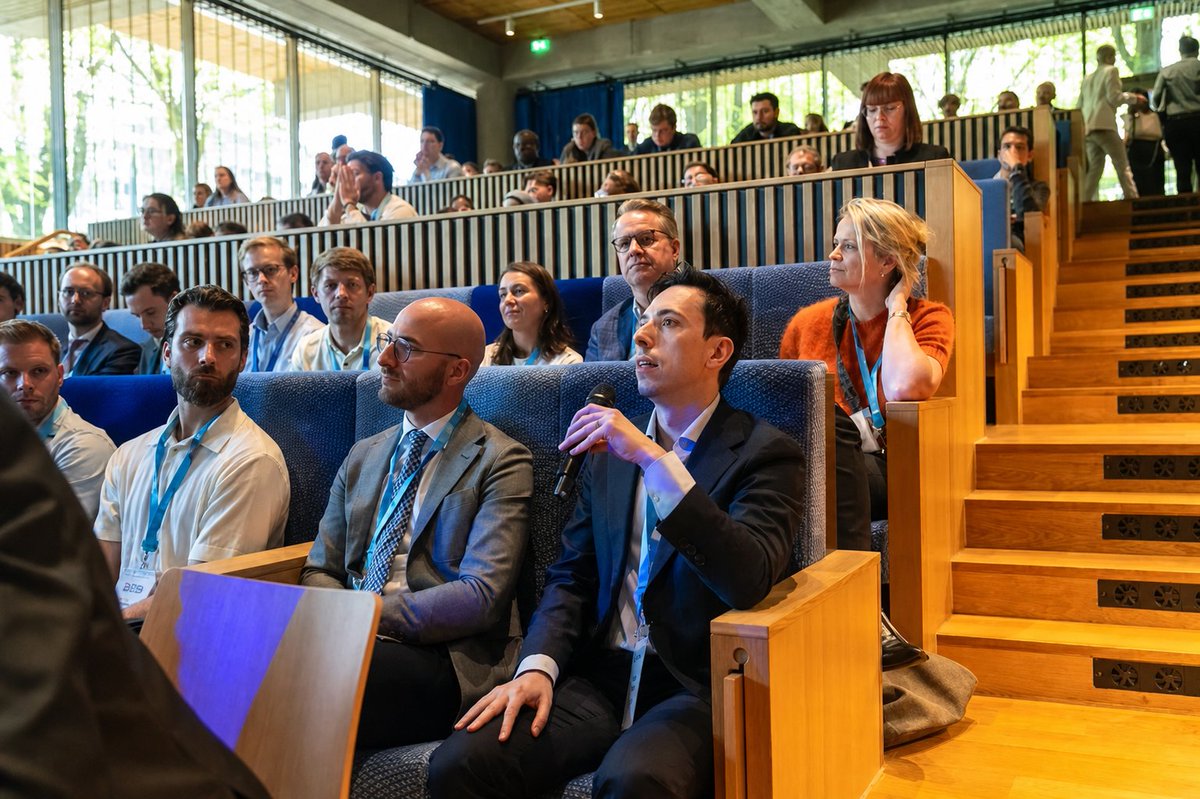
Earlier this month Dusk attended Fintech Meets the Regulators in Amsterdam.
The event brought fintech companies together with the Dutch Ministry of Finance, the Dutch Central Bank (DNB), and the Netherlands Authority for the Financial Markets (AFM).
@heindauven heard one theme repeatedly. Compliant use cases need privacy.
The next phase of financial infrastructure needs privacy that regulators, issuers, and markets can trust.
May 21

It was great to hear so many industry players talk about the need for privacy in their compliant use-cases, proving once again that Dusk has been building the right solution from the start
8
24
90
5,192
Jun 3
Privacy gets interesting when it becomes programmable.
Private transfers protect transaction data. RWA tokenization needs smart contracts with confidential state, eligibility checks, and selective disclosure.
$DUSK brings programmable privacy to financial applications.
8
23
82
7,549
Jun 3
More on Dusk’s privacy stack for financial applications:
docs.dusk.network/learn/mark…
5
14
881
Jun 2
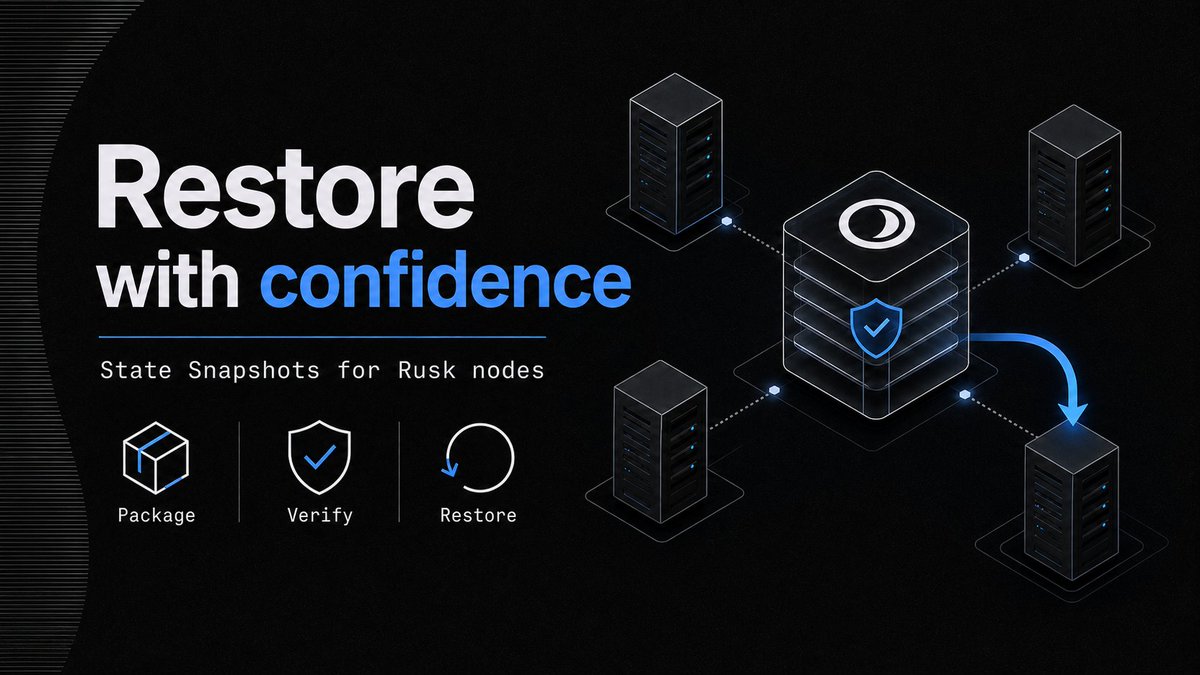
The State Snapshots tool for Node Operators is live.
It helps node runners, provisioners, and service providers package, verify, publish, restore, and retain state for Rusk nodes.
Repo links below ↓
5
21
72
2,688
Jun 1
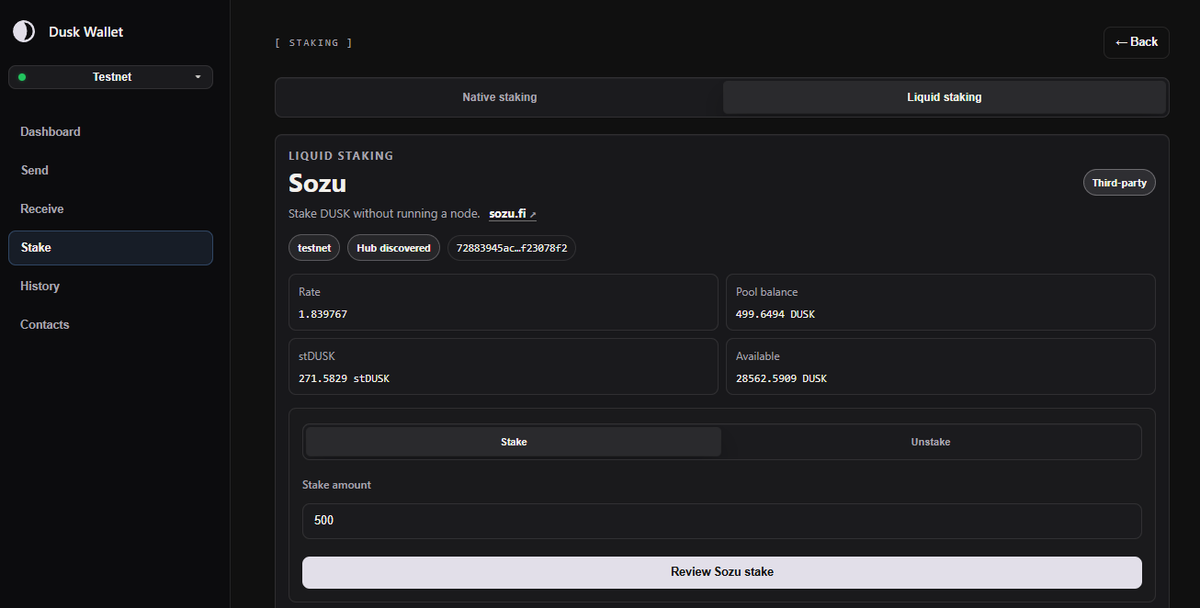
The new Dusk Wallet is making staking simpler.
Manage owner-based staking directly in the wallet, or use @sozu_dusk liquid staking without running a node.
Coming to your browser.
6
21
78
2,664