
OG GenAI Skeptic; spoke at US Senate. Warned about hallucinations in 2001. Advocating world models & neurosymbolic AI ever since. Author, Marcus on AI & 6 books
Joined December 2010
- Tweets 59,191
- Following 7,027
- Followers 227,586
- Likes 88,532
3,791 Photos and videos





Pinned Tweet

31 Aug 2025
Three thoughts on what really matters:
1. Fuck cancer
2. Friends are irreplaceable
3. The new "Marcus test" for AI is when AI makes a significant dent on cancer
May that happen sooner, much sooner, rather than later.
In memory of my childhood friend Paul.
277
154
2,776
568,450
Gary Marcus retweeted

Hany Farid saying this is terrifying.
“I don’t trust anything. Every image I see, I’m drawing lines for shadows and doing geometry in my head. It’s over. Within a year or two, our whole visual system will be utterly useless.” nytimes.com/2026/06/14/us/ai…
1
15
35
3,411
and, 6, the US government has beclowned itself, adding uncertainty throughout the industry.
Jun 2

Why things will eventually fall apart:
1. Everybody, even Google, seems to be treating AI as if it were some kind of winner take all competition like web search was, in which Google taking over 95%
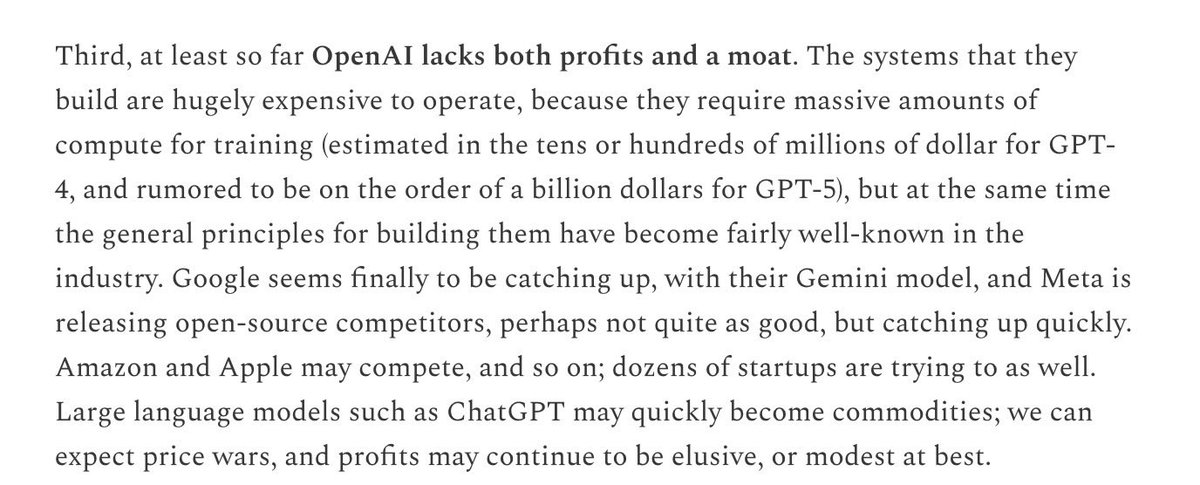
2. But everybody is building essentially the same technical solution with essentially the same data, so there is no moat.
3. If there is no moat, nobody is going to take 90% of the market.
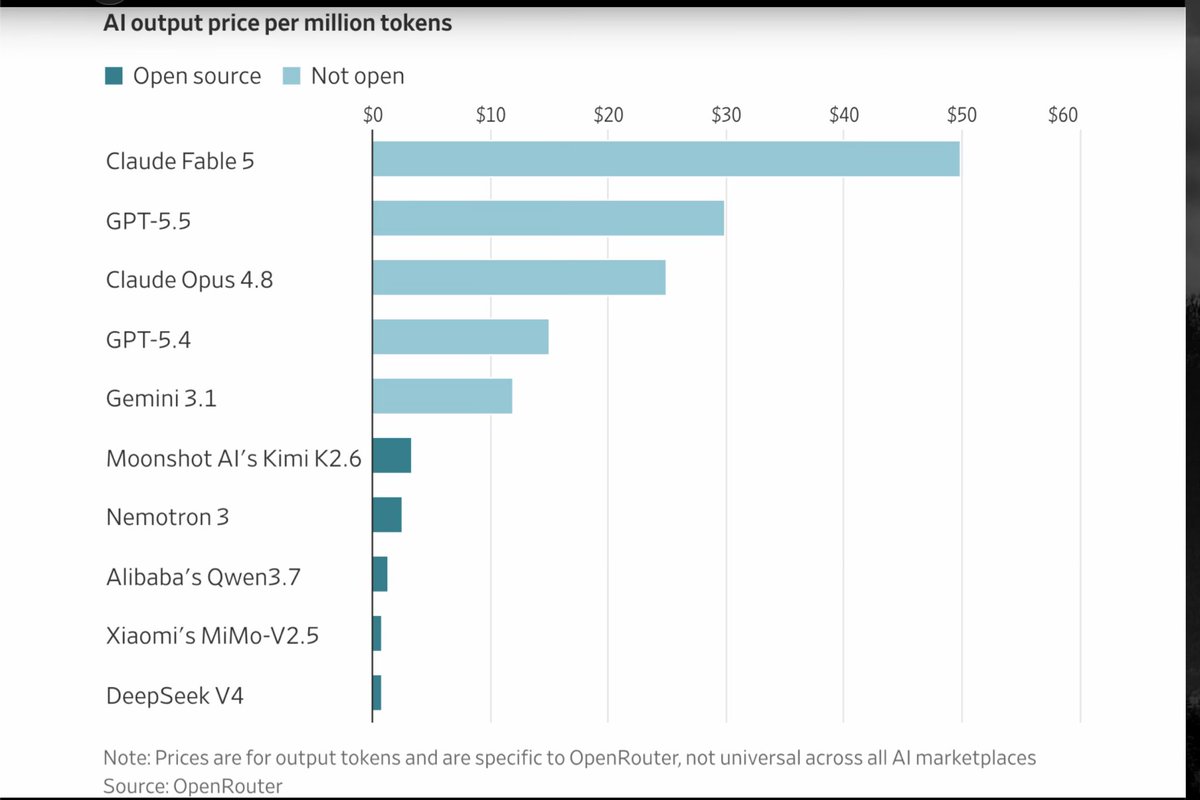
4. With no clear winners, nobody can charge monopoly prices; instead, you get price wars and commodity pricing.
5. Which means everybody will wind up overpaying compared to the modest profits they will be able to make in an intensely competitive regime.
Am I missing something?
7
5
28
3,739
“If an AI cannot apply an abstract lesson to a new situation, it is not truly reasoning or learning”, new study with further evidence backing up what I have been saying for 25 years.
cc @dwarkesh_sp

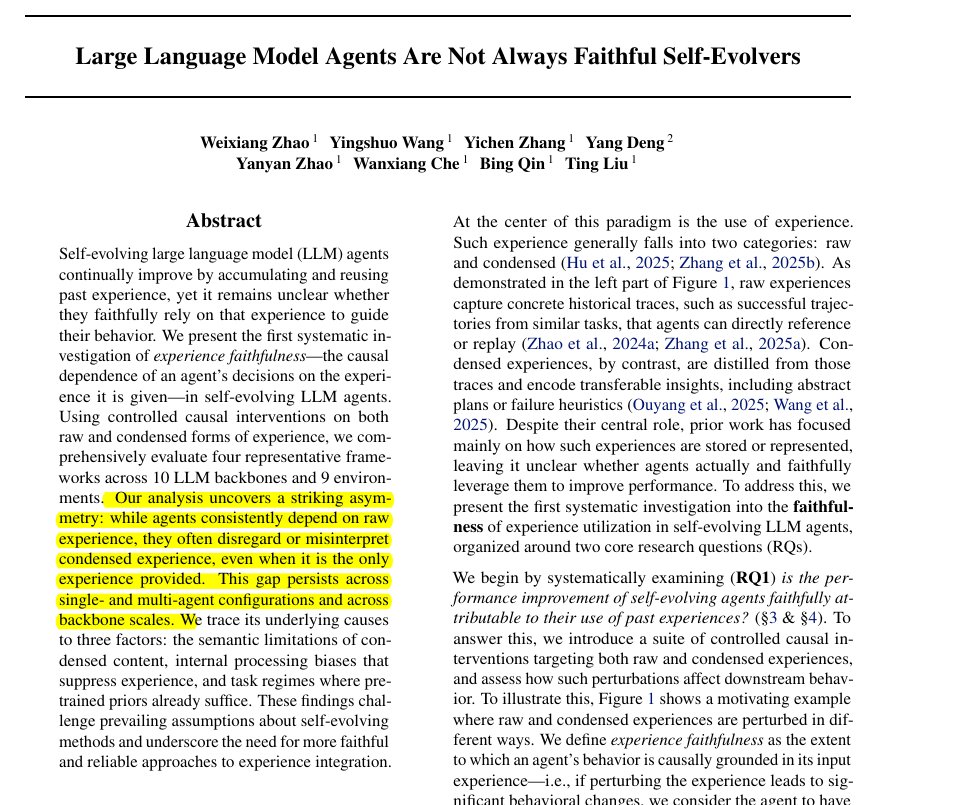
Researchers found our current approach to making AI smarter over time has a giant blind spot.
AI is not actually understanding or applying high-level abstract lessons at all.
Developers spend massive amounts of time building systems that condense past AI mistakes into neat little rules for the future.
This paper proves that the AI essentially throws those rules in the trash and only looks at raw historical logs.
Modern LLM systems try to get better over time by storing past tasks as either raw step-by-step histories or condensed summary rules. The study tested if these agents actually use their stored memories by secretly swapping the correct tips with random garbage text.
- When the step-by-step histories were messed up, the AI failed hard, proving it heavily relies on copying exact past actions.
- But when researchers completely corrupted the condensed summary rules, the AI kept acting normally and showed zero performance drop.
If an AI cannot apply an abstract lesson to a new situation, it is not truly reasoning or learning.
This raises the question if the entire AI industry need to rethink how memory works because right now these agents are just mimicking instead of understanding.
----
arxiv. org/abs/2601.22436
"LLM Agents Are Not Always Faithful Self-Evolvers"
23
32
149
8,313
Gary Marcus retweeted

Researchers found our current approach to making AI smarter over time has a giant blind spot.
AI is not actually understanding or applying high-level abstract lessons at all.
Developers spend massive amounts of time building systems that condense past AI mistakes into neat little rules for the future.
This paper proves that the AI essentially throws those rules in the trash and only looks at raw historical logs.
Modern LLM systems try to get better over time by storing past tasks as either raw step-by-step histories or condensed summary rules. The study tested if these agents actually use their stored memories by secretly swapping the correct tips with random garbage text.
- When the step-by-step histories were messed up, the AI failed hard, proving it heavily relies on copying exact past actions.
- But when researchers completely corrupted the condensed summary rules, the AI kept acting normally and showed zero performance drop.
If an AI cannot apply an abstract lesson to a new situation, it is not truly reasoning or learning.
This raises the question if the entire AI industry need to rethink how memory works because right now these agents are just mimicking instead of understanding.
----
arxiv. org/abs/2601.22436
"LLM Agents Are Not Always Faithful Self-Evolvers"
16
23
111
14,678
Whatever you may think of Dario or Anthropic, Friday’s decision, and the impetuousness and arbitrariness of it, was a terrible mistake that has left a stain that will last.
Washington needs to fix this.

Make no mistake: post-Mythos, the United States has a licensing regime for AI. It’s just informal, with no consistent rules or firm boundaries on state power or public transparency. Cobalt mining in the Congo is vastly more institutionalized than frontier AI licensing in the US.
13
12
84
6,330
👇Important — and one of the sharpest tweets I have ever seen from a member of the US Congress.
Agree with every word, @RoKhanna.

The problem @DavidSacks is that the Administration has a credibility gap on whether decisions are being made with political or retributive motives or for the national interest. Trump's mantra has been, until now, accelerationism and no regulation.
Why not work with Congress to set up an independent agency for AI safety, like the nuclear commission or FERC, so that the public has confidence in these decisions?
5
4
27
4,508
Gary Marcus retweeted

10h
The Uncomfortable Truth About AI “Reasoning” | World Science Festival youtu.be/iFYF_e1GSGI?is=fYeC… via @YouTube
Great podcast. @GaryMarcus has a great voice.
2
10
3,766
Gary Marcus retweeted

Tremendous news.
Well done to the New York Attorney General's office.
It's well past time some of these questions were asked and answered.
Jun 13
Wow! OpenAI subpoena’d big time!
“documents related to a range of its activities and impact on users, including advertising, user engagement and retention, handling of consumer data and health data, activities related to minors and seniors, deep learning models, model sycophancy and company policies”
What a wild night!
1
5
3,373
horrifying

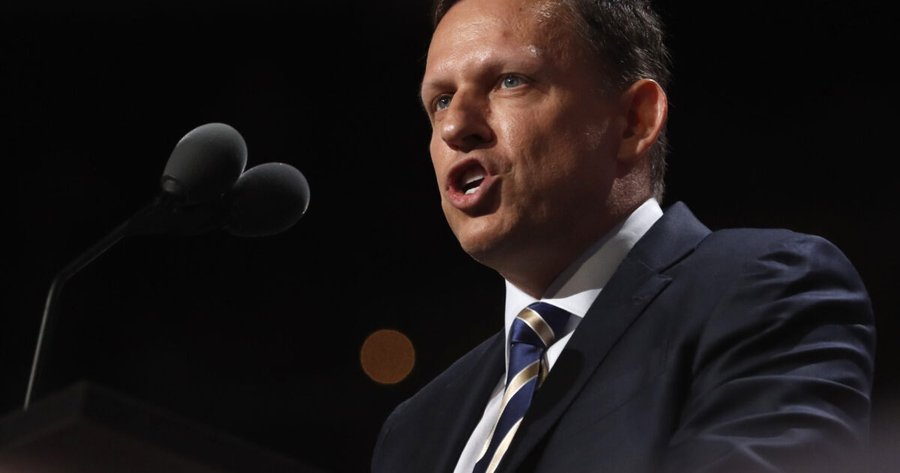
Peter Thiel and Balaji Srinivasan have funded a platform called Objection.ai that allows anyone to file a complaint against a journalist's story for a starting price of $2,000. A team of human investigators examines the story, then submits findings to a "jury" of AI models - OpenAI, Anthropic, Grok, Google - which publish a "verdict" on the story's truthfulness and rank individual journalists on metrics including truth-telling and corrections.
If the journalist doesn't respond to defend their reporting, the verdict is issued and published online anyway.
The platform is being sold as "letting anyone fight the press like a billionaire." The creator is Aron D'Souza, who led the Thiel-funded lawsuit that bankrupted Gawker in 2016.
The design choices tell you what this is. The system treats anonymous sources as less trustworthy and ranks anonymous whistleblower claims near the bottom. Anonymous sources are how most significant accountability journalism happens - they're how the Pentagon Papers got out, how the CIA's black site program got exposed, how the HHS stories we've covered this week were reported. The people who most need protection from powerful interests are specifically deprioritized by Objection's scoring system.
The creator calls it "the same as Community Notes." A civil rights and defamation attorney calls it "a high-tech protection racket for the rich and powerful."
One of those descriptions is accurate. The AI models being used as the "tribunal" were trained on journalists' work without consent or compensation. They hallucinate. They amplify bias. They are being deployed here specifically to issue verdicts on the work of the people whose labor built them.
Thiel killed Gawker with a lawsuit. This is faster and cheaper.
14
57
233
18,934
Did Trump just kill Generative AI? 🤔

Taken at face value, the Trump admin. ban on Fable calls into question the entire AI industry. The underlying technology is non-deterministic and therefore inherently unpredictable. It’s impossible to build in safeguards to reliably prevent jailbreaks.
This is a turning point.
39
19
164
20,370
🇨🇳 vs 🇺🇸
China plays the long game; the U.S. is so ego-bound it couldn’t wait a weekend—and maybe did lasting harm to the credibility of the U.S. AI industry as a result.

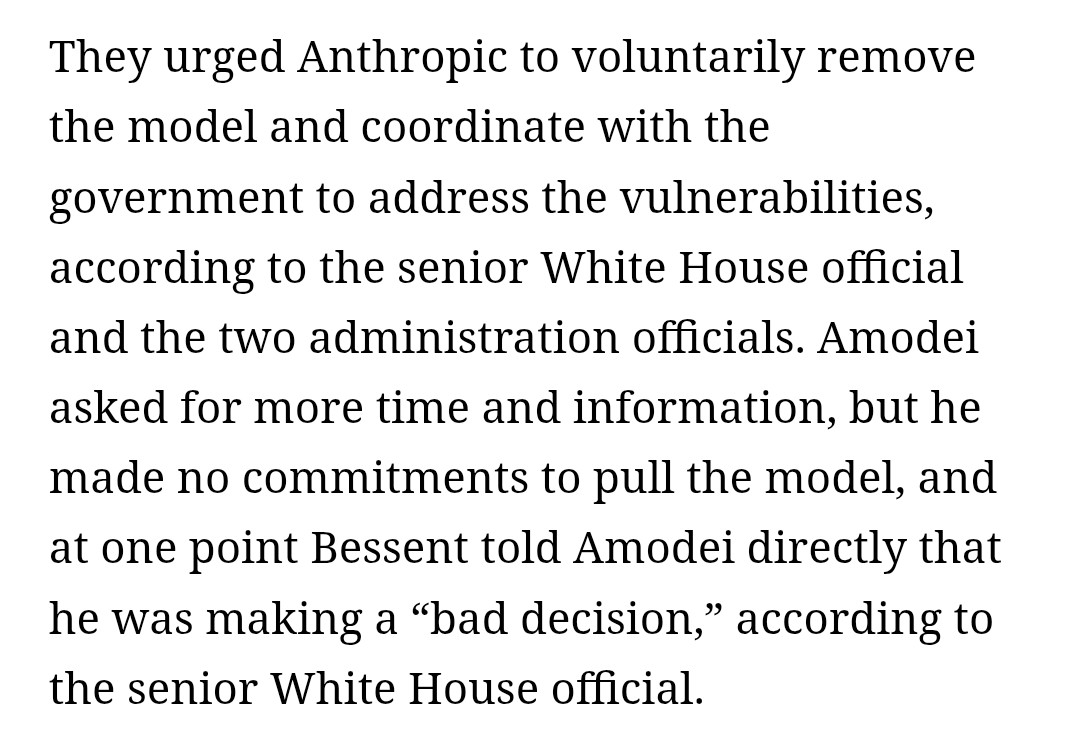
Interesting article with new details on the lead up to the export controls. Both sides are telling very different stories. Anthropic says they were given a 90 minute hard deadline to pull both models. The administration says their concerns were not taken seriously.
22
25
138
16,546
So funny how so many people are rediscovering so many things I pointed out in late 2022.
(In this case in my essay “AI’s Jurassic Park Moment”)
19h

AI's Core Flaw: "Mass Regurgitation Of Misinformation" zerohedge.com/ai/ais-core-fl…
11
12
87
9,319
never was

This might be a come to Jesus moment if the regulators suddenly realize that jailbreak prevention isn't real.
4
4
42
7,836
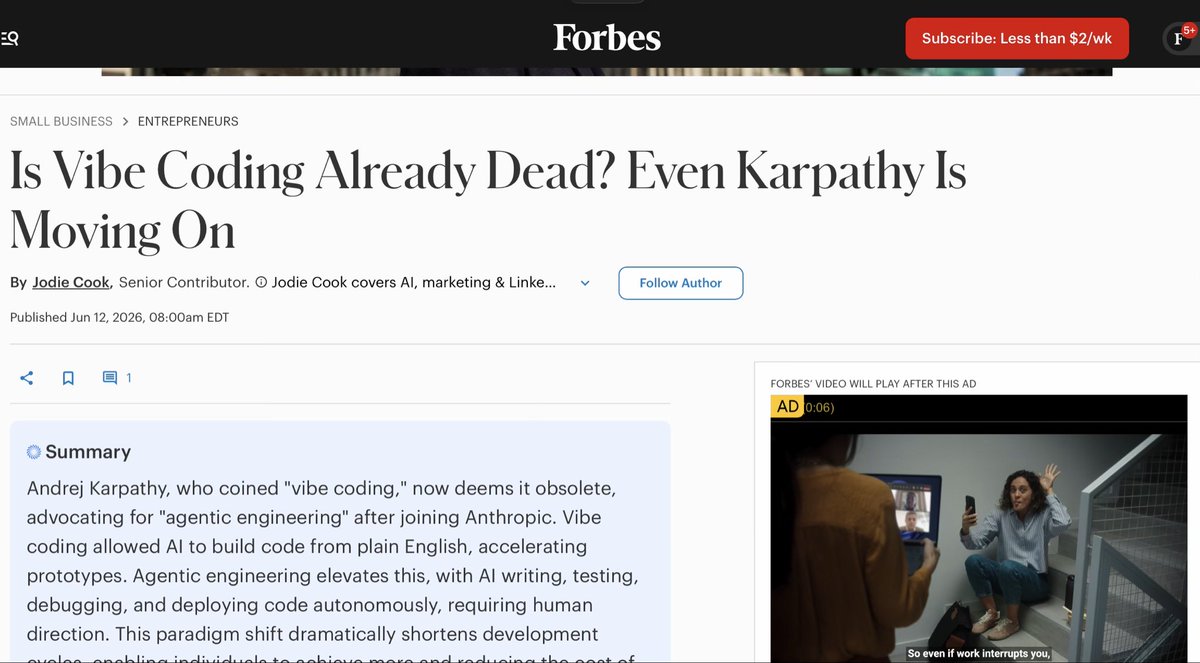
is that actually true that @karpathy was hired to “run recursive self improvement”?
Jun 13

Everyone can see Anthropic's hypocrisy in pushing toward RSI while warning that doing so creates catastrophic risk.
These All-In guys might not know the insiders' party line, the galaxy-brained “someone else will build it if we don't” logic.
But they're still right: It's crazy.
9
3
44
9,795
Gary Marcus retweeted

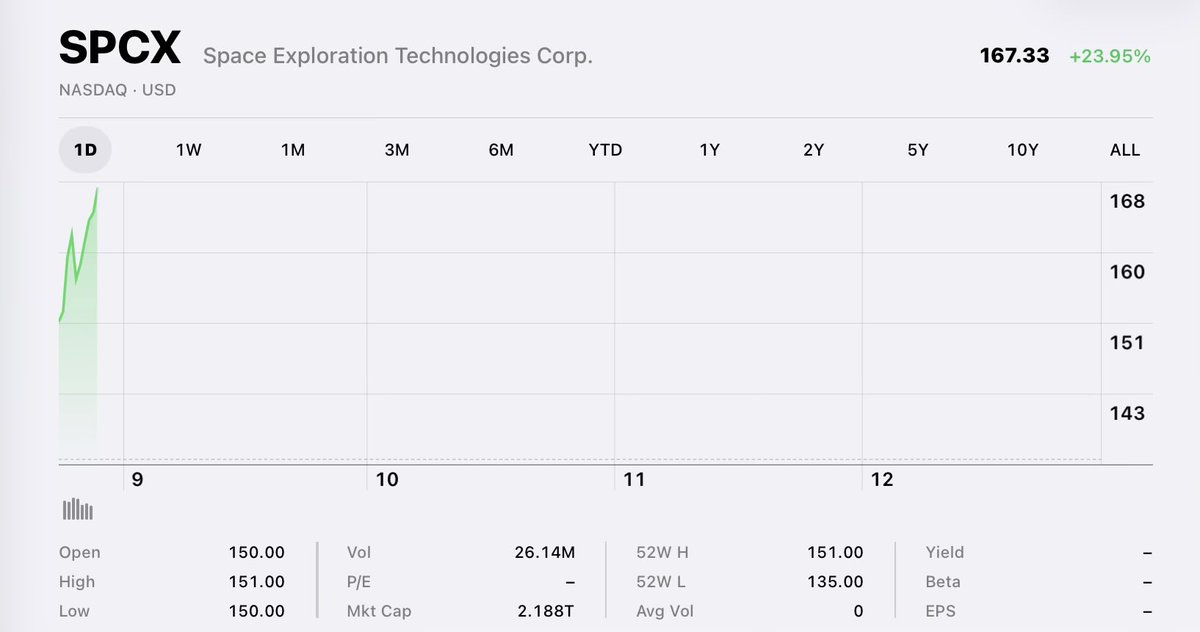
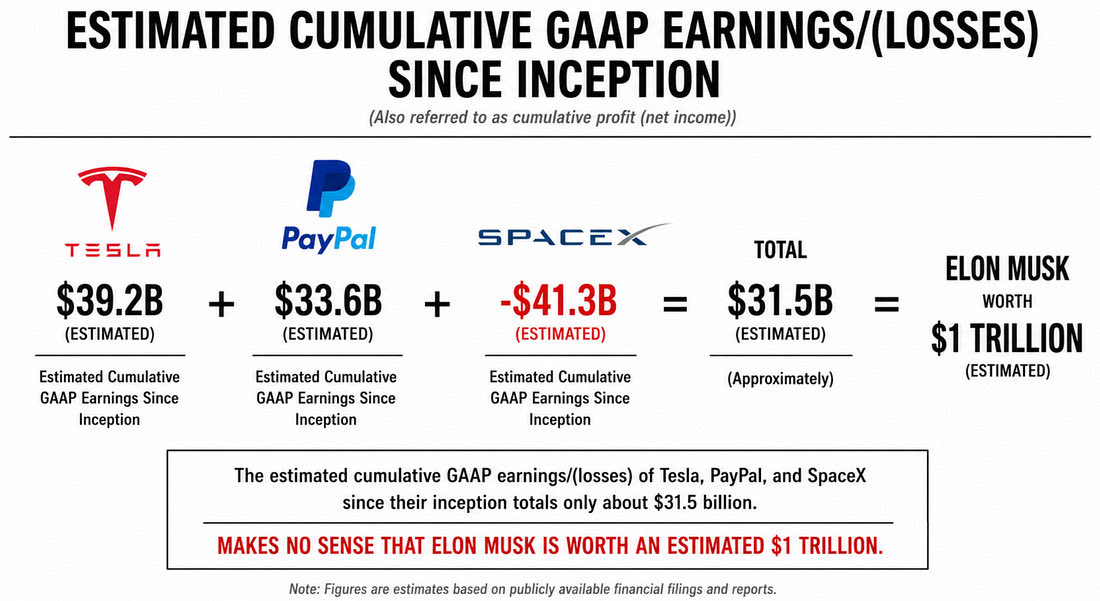
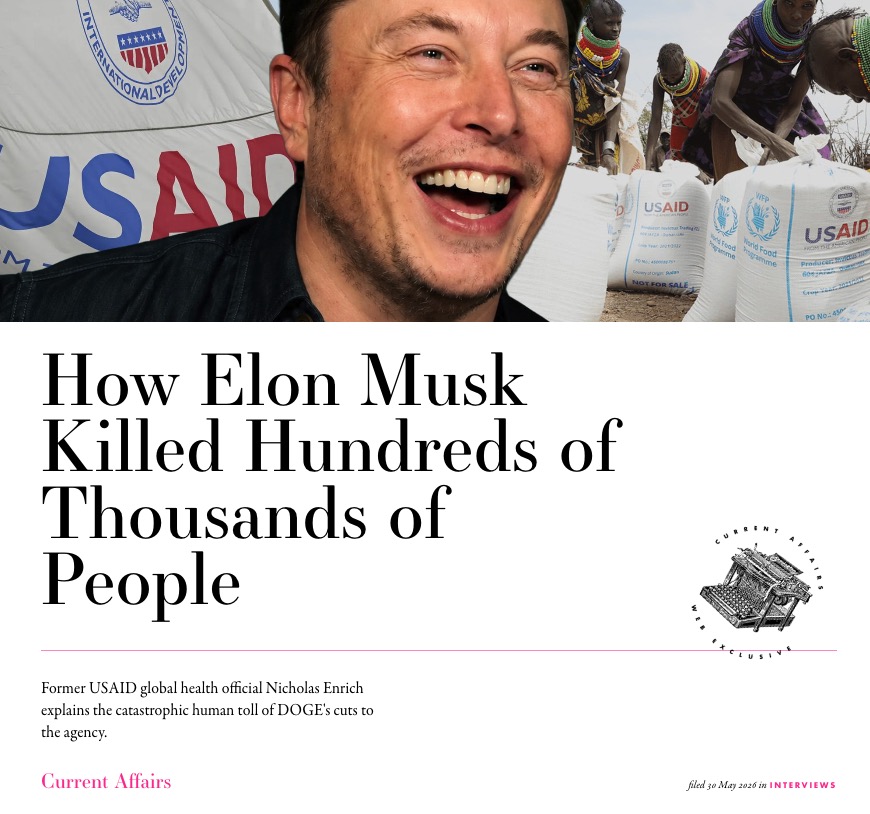
Instead of discussing how Elon Musk is now the world's first trillionaire, we should talk about how he killed hundreds of thousands of people through his dismantling of food and medical aid to poor countries
currentaffairs.org/news/how-…
4,773
18,604
45,270
1,630,010