
LP farming fatigue is real. Switch to Pact where yields are backed by genuine trading activity. Sustainable rewards that grow as the platform grows. True DeFi alignment. @Pact_Swap
@aeredium @FX_Capital3 @sleepagotchi @quipnetwork
1
pondphuwinfamily.id 🇮🇩 retweeted

Jun 13
📢 ประกาศรายชื่อผู้ได้รับสิทธิ์โซนนั่ง
สำหรับงาน GrabFood House ถูกกว่าชัวร์* ทุกโมเมนต์ 🏠💚
จากกิจกรรม Social Activity และ GrabVIP
ผู้ได้รับสิทธิ์สามารถตรวจสอบรายชื่อได้ที่ลิงก์ด้านล่าง
🔗 ลิงก์ประกาศรายชื่อ: grb.to/445GfgU
สำหรับผู้ที่มีรายชื่อ กรุณาลงทะเบียนยืนยันการเข้าร่วมงานผ่าน Google Form ภายในวันที่ 14 มิ.ย. 2569 เวลา 18.00 น.
📝 ลิงก์ยืนยันการเข้าร่วม Social Activity: forms.gle/upSufgC9MKBm42XC6
📝 ลิงก์ยืนยันการเข้าร่วม GrabVIP: forms.gle/2gPBh3g4oFbhZQJR6
📅 17 มิ.ย. 2569
รายละเอียดงาน
⏰ 16.00 - 17.00 น. ลงทะเบียน โซนนั่ง110 ที่
⏰ 17.00 - 17.40 น. เปิดพื้นที่กิจกรรม
⏰ 18.00 - 19.30 น. เริ่มกิจกรรม GrabFood House ถูกกว่าชัวร์* ทุกโมเมนต์
📍 Parkside Hall, Central Park Bangkok
การนั่งภายในงานจะเป็นไปตามลำดับรายชื่อและผังที่แจ้งไว้
🔎 ตรวจสอบลำดับและผังที่นั่ง: grb.to/3RT4I6i
🎥 รับชม Live ได้ทาง Facebook และ YouTube: GrabTH
🪪หลักฐานที่ต้องใช้สำหรับลงทะเบียนหน้างาน
ผู้ได้รับสิทธิ์โซนนั่ง จะต้องแสดงหลักฐานดังต่อไปนี้ ณ จุดลงทะเบียน
1. เอกสารยืนยันตัวตนอย่างใดอย่างหนึ่ง
บัตรประชาชนตัวจริง / แอปฯ ThaiD / หนังสือเดินทางตัวจริง
2. หลักฐานรายชื่อผู้ได้รับสิทธิ์
เช่น ภาพหน้าจอรายชื่อของตนเองจากประกาศรายชื่อผู้ได้รับสิทธิ์
หมายเหตุ: การยืนยันสิทธิ์และการเข้าร่วมงานเป็นไปตามเงื่อนไขที่บริษัทฯ กำหนด
อ่านรายละเอียดเพิ่มเติมและเงื่อนไขทั้งหมดได้ที่ grab.com/th/blog/grabfoodhou…
#GrabFoodHouseถูกกว่าชัวร์
*ค่าส่งถูกกว่าชัวร์เมื่อเลือกการจัดส่งแบบส่งถูก (Saver) โดยเปรียบเทียบกับค่าส่งสำหรับการจัดส่งแบบปกติบน GrabFood
*ค่าส่ง 0 บาท เมื่อเลือกการจัดส่งแบบส่งถูก (Saver) จากร้านค้าที่ร่วมรายการและมีระยะการจัดส่งไม่เกิน 3 กม.

2
1,233
2,220
180,548

12s
its all about activity... drug enables sex, older guys start having sex, sex is an activity, improves cardiovascular health.

When people talk about DeFi on TRON, one name consistently appears in the conversation:
JUST.
And for good reason.
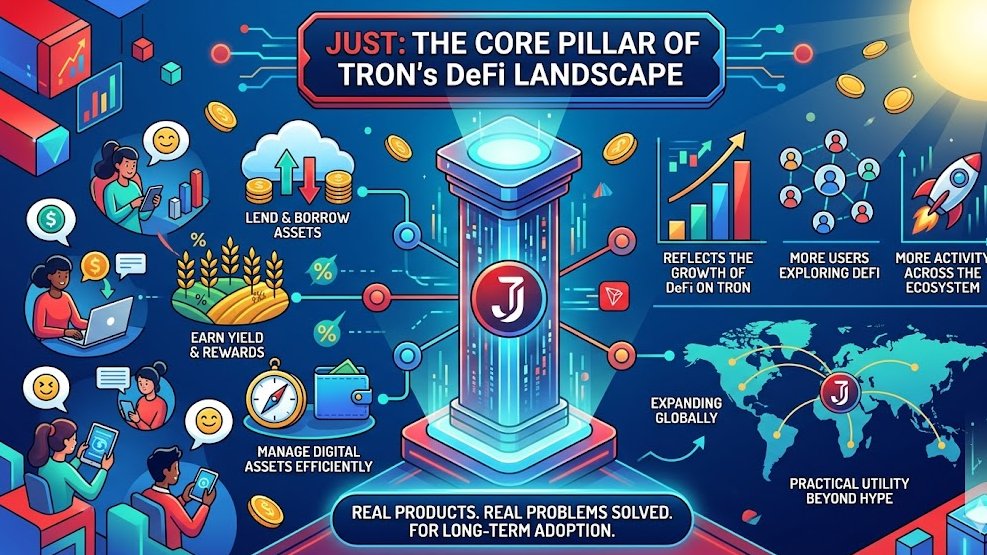
A blockchain ecosystem isn't complete without financial infrastructure. Users need places to lend, borrow, earn yield, and manage digital assets efficiently.
That's where JUST comes in.
Over the years, JUST has grown into one of the core pillars of TRON's DeFi landscape, providing products and services that help users interact with decentralized finance without relying on traditional intermediaries.
What stands out to me isn't just the platform itself.
It's what the platform represents.
The growth of JUST reflects the growth of DeFi on TRON.
More users exploring decentralized finance.
More activity across the ecosystem.
More opportunities being created through blockchain technology.
As TRON continues expanding globally, projects like JUST help demonstrate the practical utility of decentralized finance beyond the hype.
And that's what long-term adoption is really about.
Real products solving real problems.
@justinsuntron
@DeFi_JUST
#TRONEcoStar
1

This is a good activity for them. May they all get to the bottom of it forever.


🚨The Engineer Who Lost His Job After Pokhran Helped Build India's First AI Chip that Can Operates Without Internet
In 1998, when India conducted the historic Pokhran-II nuclear tests, the world responded with sanctions. Technology restrictions tightened, foreign companies became cautious, and many Indian engineers working abroad suddenly found themselves facing barriers they had never expected.
One of them was engineer Jyotis Indirabhai.
At the time, he was working in Japan's semiconductor industry on advanced chip technologies. But after the sanctions that followed Pokhran, projects involving Indian engineers were disrupted, and his career path took an unexpected turn.
Nearly three decades later, that same engineer has helped India achieve a breakthrough of its own.
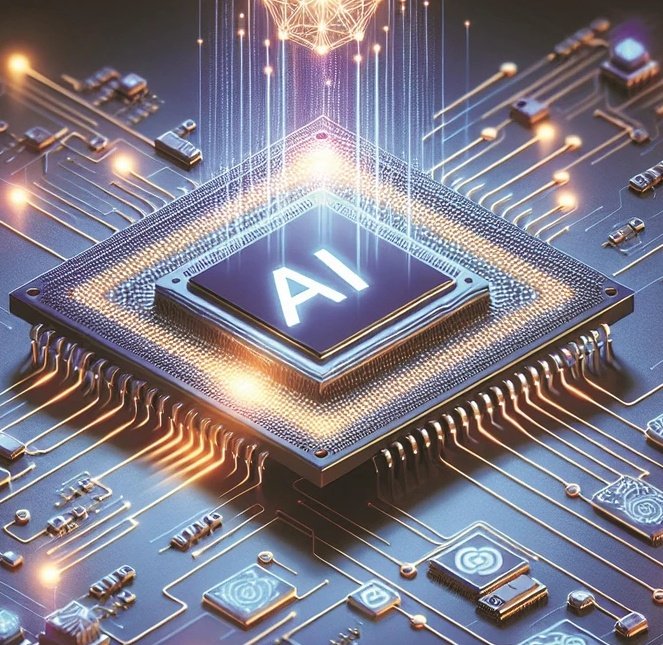
His startup, Netra Semi, has developed India's first 12-nanometer Edge AI chip, the A2000, a milestone that could significantly strengthen India's position in the global semiconductor race.
To understand why this matters, one must first understand what Edge AI is.
Most artificial intelligence systems rely on cloud servers located far away from the device using them. Data is collected, sent to a server, processed, and then returned. Edge AI changes that model entirely. Instead of depending on distant data centers, the AI runs directly on the device itself.
Imagine a smart surveillance camera that can instantly identify suspicious activity without sending video to a remote server. Or a military drone that can analyze battlefield footage in real time and make decisions without waiting for instructions from a data center thousands of kilometers away.
That is exactly what Edge AI chips are designed to do.
Countries such as the United States, China, Japan, and South Korea have already deployed such chips across industries ranging from defense and robotics to smart cities and advanced manufacturing. Now India has entered that arena with an indigenous design of its own.
The journey behind the A2000 chip is equally remarkable.
After leaving Japan, Indirabhai spent nearly two decades in the United States, working with some of the world's most advanced semiconductor companies. During that period, he contributed to the development of processors, wireless technologies, GPUs, and AI hardware while building a portfolio of valuable patents.
But in 2017, he returned to India with a larger mission.
Rather than seeing India remain dependent on imported chips, he wanted the country to build its own semiconductor ecosystem. That vision led to the creation of Netrasemi in 2020.
Over the next several years, the company developed its own AI processor architecture, vision-processing technologies, and supporting software stack. The design was eventually fabricated using advanced manufacturing facilities, culminating in the launch of the A2000 in 2026.
From smart surveillance systems and industrial automation to robotics, autonomous platforms, and defense applications, the chip opens the door to a wide range of indigenous innovations.

⚠️ Gpromarket.com ,,,,,,,
Reports of possible scam activity are increasing online. 🚩
📩 Need help? Use the link in bio or DM.
#Gpromarket #CryptoScam #InvestmentScam #CryptoRecovery #SomosMéxico #VivaMéxico


20th Century Feudal retweeted

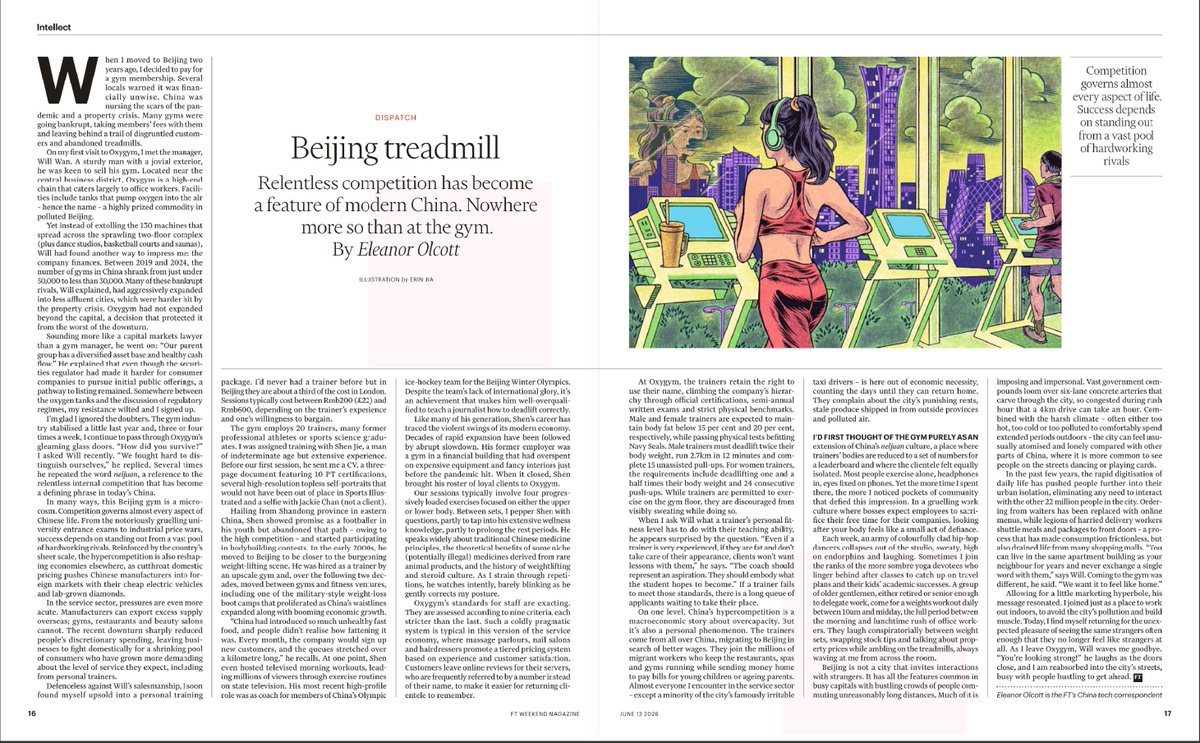
Excellent article about how Chinese urban life turns every activity into a race.
The gym becomes a miniature version of Chinese capitalism: competitive, hierarchical, branded, monitored, and full of aspiration.
1
6
62
1,959

41s
What Makes the World Cup One of the Most Active Prediction Market Events?
Every four years, the World Cup attracts billions of viewers and creates one of the most information-rich environments in sports.
For prediction markets, that means something interesting:
Thousands of participants continuously update probabilities based on new information.
⚽ Goals
📰 Team news
🚑 Injuries
🟨 Cards and suspensions
📊 Match statistics
The result is a market that evolves in real time as new information becomes available.
Why Sports Markets Are Different
Unlike many long-term prediction markets, football matches generate frequent updates over a relatively short period.
A single event can dramatically change sentiment:
A goal
A red card
A penalty decision
A key substitution
An injury
As new information enters the market, participants reassess probabilities and positions.
The Importance of Risk Management
Successful market participants rarely focus exclusively on being right.
Instead, they focus on:
Position sizing
Limiting exposure
Managing volatility
Maintaining discipline
Preserving capital
In fast-moving environments, risk management often matters more than prediction accuracy.
Technology and Automation
The World Cup also serves as a fascinating engineering challenge.
Developers build systems that monitor:
Match data
Team news
Market activity
Historical performance
Statistical indicators
The goal is not certainty.
The goal is processing information efficiently and making informed decisions under uncertainty.
The Future of Sports Prediction Markets
As sports data becomes more accessible, prediction markets continue to evolve.
The combination of real-time information, global participation, and transparent pricing makes major tournaments one of the most interesting environments for market research and systems engineering.
For builders interested in automation and prediction-market infrastructure, I recently built an open-source World Cup project:
github.com/kinexbtdev/2026-w…
Feedback and contributions are always welcome.
#WorldCup2026 #PredictionMarkets #SportsAnalytics #OpenSource #Football
1
Ike✨ retweeted

Cooking is such a low-reward activity, I hate it here
1
4
58

Flight 853 by Phil Stephens, is a gripping historical account blended with thriller elements and paranormal intrigue that has drawn readers into the harrowing true story of one of Indiana's most tragic aviation disasters, exploring the human toll, haunting aftermath, and restless spirits that linger in its wake.
On a quiet September day in 1969, the skies over Indiana turned tragic when a single-engine Piper Cherokee collided mid-air with the tail of Allegheny Airlines Flight 853, a DC-9 commercial jetliner carrying dozens of passengers. The catastrophic impact sent both aircraft plummeting into a soybean field from 2,500 feet, claiming all 84 lives aboard with no survivors. What began as a routine flight became one of the deadliest aviation accidents in U.S. history at the time, overwhelming local resources—bodies were so numerous that a temporary morgue was established in a nearby warehouse. Stephens delves into the disaster's details, the chaos of the response, and the enduring legacy, including why the crash site and related locations rank among Indiana's most haunted spots, with reports of restless souls and paranormal activity tied to the unresolved grief of those lost.
Readers have embraced its unflinching look at tragedy and the supernatural. Promotional buzz describes it as a "pulse-pounding historical thriller" with a "harrowing reimagining" of the events, appealing to fans of disaster narratives and ghost stories. On Amazon, it's available in Kindle Unlimited and paperback, with early acclaim for its vivid recounting and exploration of humanity amid catastrophe. Goodreads lists it with editions noting its blend of history, religion, and spirituality, though ratings are emerging as it's a recent release. Author signings, like at Barnes & Noble in Plainfield, Indiana, have highlighted strong local interest, with reports of brisk sales.
@psteph55
zurl.co/kKctA
zurl.co/Ewz5A
zurl.co/2Saye
zurl.co/FfLDx (noting related "The Lost Souls of Flight 853" framing)
Phil Stephens, an Indiana native and graduate of the Indiana University Kelley School of Business, continues to draw from his home state's history and personal insights in his independent writing career. Known for semi-autobiographical works like *The Altar Boy* (a Gold Medal winner in dark humor/coming-of-age) and the paranormal romance *At The Edge of the Stairs*, he shifts here to nonfiction-infused historical thriller territory, incorporating elements of spirituality and the paranormal. His writing has appeared in local newspapers and literary magazines like *Pen IT*, and he remains active in engaging readers through signings and his author presence in Southern Indiana's Brown County.
Flight 853 stands as a compelling, sobering read in historical nonfiction with a ghostly twist, its deep dive into a forgotten Midwestern tragedy and its lingering echoes making it essential for enthusiasts of aviation disasters, true hauntings, and stories of human resilience in the face of unimaginable loss. Phil Stephens' grounded yet evocative style solidifies this as a powerful addition to his diverse canon—perfect for those drawn to the intersection of history's darkest moments and the supernatural whispers that follow.
1

Trying out ArcFlow’s activity missions — clean UI, smooth UX, and fun progression. Minted my first Activity NFT today 🚀📷#ArcFlow
@UnitFlowFinance
2



orang-orang gabisa bedain abstinence, celibacy sm aseksual (capek bgt jujur) makanya tiap cerita kalau aku ga punya ketertarikan untuk terlibat langsung di sexual activity kalimat yang keluar itu antara:
"belum nemu orang yang tepat aja kali" atau "km ga ngerasain arousal dong"

aseksual di lihat seaneh itu karena nggak pengen sex? 😅 maksudnya kita nggak sex juga nggak mati kali... kenapa orang2 malah kaget kalau ada orang yg nggak tertarik sama sex?
"tapi lu pernah—" ya? its not change my point either gw pernah/nggak
2
irene retweeted

This reminds me when Mina said they that if it’s misamo activity, they actually asks Sana to do the talking 🥹. They trust their baby leader so much, look how relax they are 🥹
 minaron
26
367
6,125

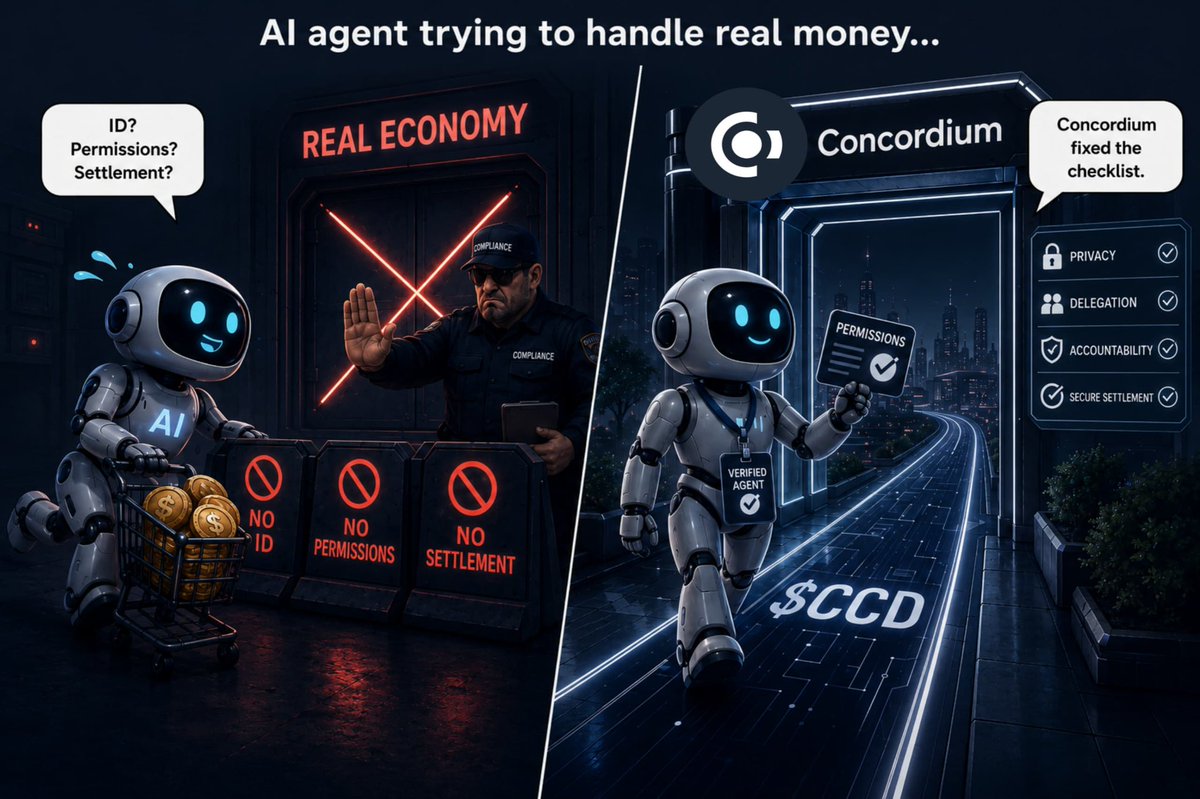
AI agents are becoming more active, but they need verified identity, clear permissions, and secure transactions before they can handle real economic activity.
That is where @Concordium plays a key role.
It gives agents a compliance-ready foundation by design, combining identity, delegation, privacy, and accountability so actions remain traceable without exposing more than necessary.
For agent activity to support real economic value, agents need defined roles, clear limits, and reliable ways to move value.
Through $CCD, Concordium is helping support the identity and transaction layer needed for a trusted agentic economy.
1
3

SHIB is under pressure right now, but strong activity often keeps traders watching for the next move. #BingX
2