
There's a delicate balance here - between bringing proprietary learning in-house versus outsourcing improvement loops to generalist, more powerful models
On one hand, the case that Satya makes is clear and probably consensus - private companies should have private control over their training, airgapped from the outside
But taking the other extreme, maximum atomization results in the amplification of differences between otherwise similar companies
e.g. a car repair shop in China and a car repair shop in the US each build their own in-house AI, which results in vastly different, custom-made operational architectures, even though they'd likely save resources if they combined their overlapping knowledge
The middle ground is that the more public pools of synthesized knowledge exist at different layers (AI across industries, countries), while the core, idiosyncratic knowledge stays private (AI for Microsoft specifically)
Imagine a one-way valve where public domain knowledge is allowed for private use, but private IP doesn't leak out
Abstractly speaking this follows a natural power law, and it reminds me of how we communicate and form text: words like "the", "and", and "you" are commonly used but lack specificity - but combined with more niche words, they provide full value
AI is about balancing common knowledge with proprietary knowledge - and together providing full value

25


José Frank / ¿ Quién llevó La division division al PLD 2020? ¿ quiénes atomization de la oposición ? La oposición está descartada 2028 .
7


Sociological factors, internet atomization, economical factors, political volatility, and personal problems. Are my guesses personally but my argument was more that your argument sucks because it lacks substance idrc about the issue but more at your rhetoric.
1
32

Yeah, you missed the mark
I believe in voluntary association, I believe in forming groups and excluding others, and I believe in maintaining culture and civilization for people that share your blood, proximal location, values, etc. I still judge people as individuals, as plenty of my own ethnic people are garbage, but I still prefer people that broadly look like me and share my culture to others. I'm not ashamed of that.
If you want a healthy collective, it all starts at the individual level, as groups are comprised of individuals. I will choose my tribe. They are largely my ethnic group, but there are some exceptions. I still want to have kids that look like me and share my heritage.
My individualism does not extend to the extremes of atomization or the rejection of data and trends. I still broadly profile, I still can assess risk. Individualism doesn't have to be so extreme that it denies reality, it can just recognize the base element that forms the building blocks of civilization.
We are likely more aligned than you assume.
1
1
17

imo atomization of society is much more problematic than AI, also apathy sein trillionaires minted when ppl cant afford a house
1
90

That is nationhood in the sense of what a nation is. People have always identified with kin since time immemorial and they shall for as long as we exist. Anything to the contrary is modernist inventions designed to facilitate the atomization of man.
2
6

Severe reduction in injector life, on the inside and outside.
Moving parts inside, atomization spray pattern on the outside.
The fuel pump included
1
218

It’s about what I said in my OP - being surrounded by 100 fucking antiblack cults pretending to care about Black people while promoting atomization.
9
97

It's majority bad given how app spheres developed. Techbros are a general net negative on society if only because they perpetuate an anti-human social atomization as their core belief. This makes them fundamentally different than most prior wealthy classes.
They despise culture.
1
2
47
Winston retweeted

A Russian Marxist on today's atomization.
"What's most tragic about slaves is that they don't take revenge for the humiliation & lack of rights they suffer, upon those they grovel & serve. While slaves praise their oppressors, they simultaneously take revenge on the oppressed.."
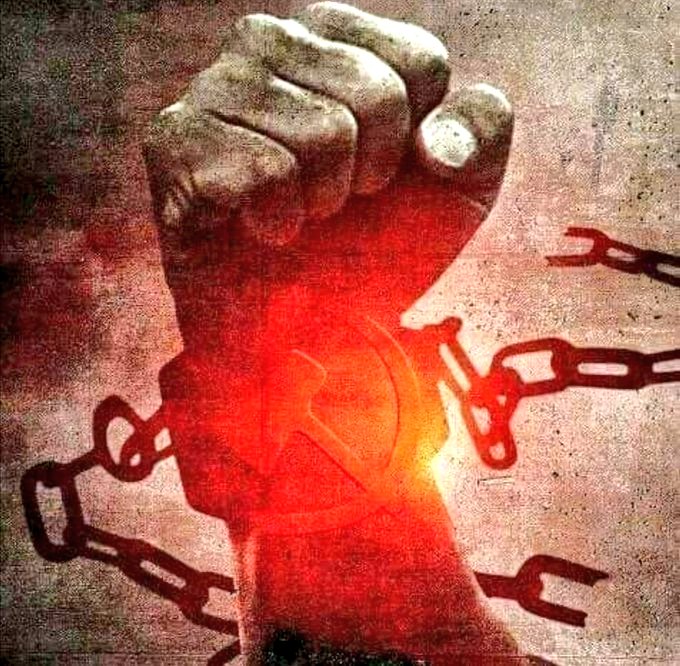

"Самое страшное в рабах, что за свою униженность и бесправие рабы мстят не тем, перед кем пресмыкаются и у кого в холуях ходят. Восхваляя угнетателей, рабы в то же самое время мстят каждому слабому из своего окружения, потому что только слабому они могут мстить безопасно."
(с)
4
4
111
Idiosyncratic Americo Bonaparte Fan (GSM) retweeted

Mass Nihilism is the logical endpoint of social atomization inside of a secular society.
7
3
37
1,814

19h
Onto them by those with the resources to do so. Resulting in homogenization, atomization, slavery, and dependence.
3


Yeah cool a few thousand more millionaires and billionaires and millions and billions suffer, the climate gets worse (&will get worse for pointless mars ambitions), Ai supercharges division and atomization, we're forced culture war narratives and egregious corruption thrives. elon is right in the middle of all that
263