
They can come it again but the ships that leave will bring oils down restore reserves etc... Buys time. The Damage we did in a month is going to be extensive. The questions to ask is where is Iran
Government is in hiding many dead, lots of destruction Much of their infrastructure is in ruins. Economically the blockaid did damage. Iran has a lot of problems to dig out from. They are much less powerful than they were a year ago.
Bad is that they were close to being destroyed and we did what we always do not finish the job.
1
33

Putin called trump. Putin running out of gas. Naval blockaid lifts. Interesting day. This whole deal is absolute shite
1
197


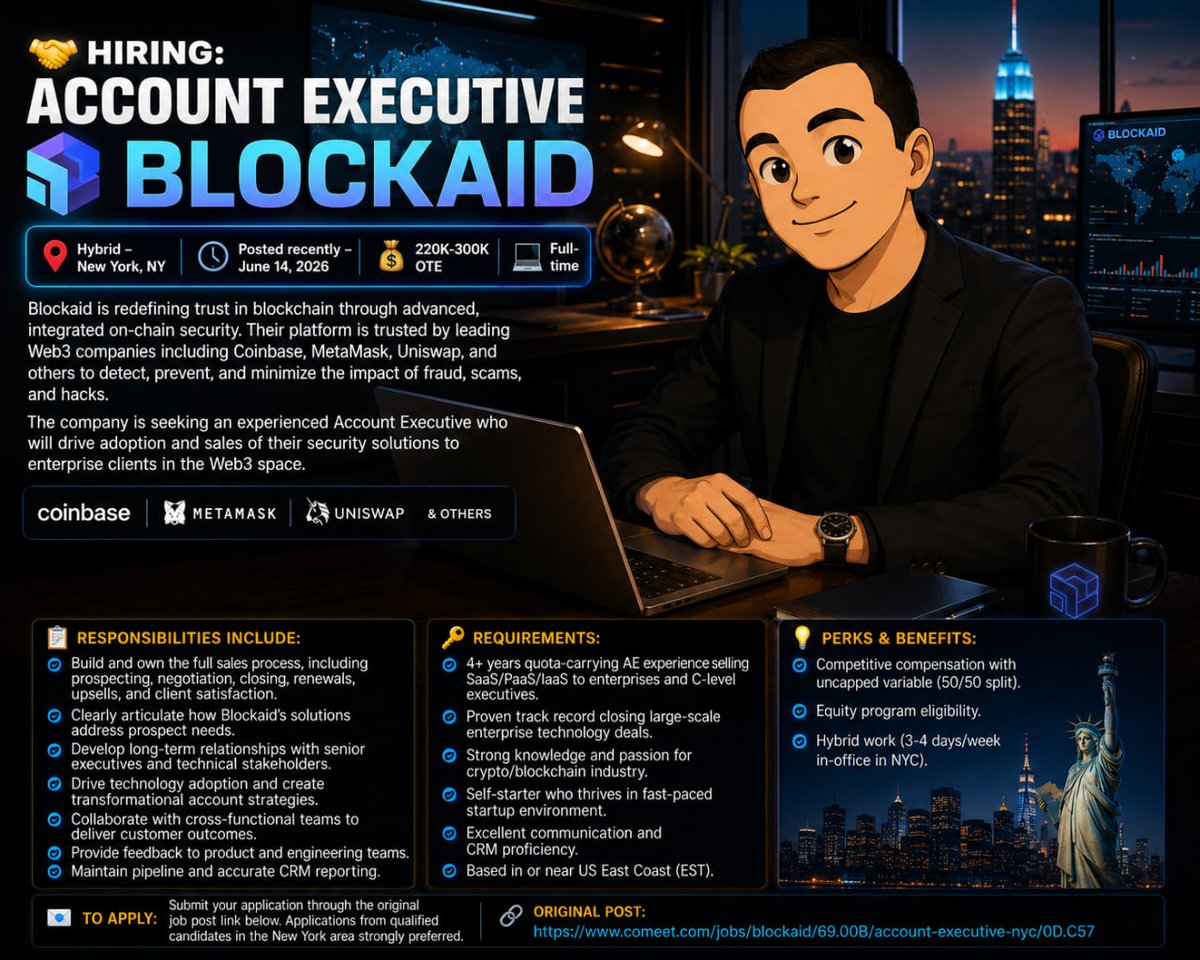
🤝 Hiring: Account Executive - Blockaid
📍 Hybrid - New York, NY | 💼 Full-time | 🧑💻 Enterprise Sales | 💰 220K-300K OTE | 🕐 Posted recently - June 14, 2026
Blockaid is redefining trust in blockchain through advanced on-chain security trusted by Coinbase, MetaMask, Uniswap and more. The company is hiring an experienced Account Executive to drive enterprise sales of their security solutions.
📋 Responsibilities include:
- Build and own the full sales process: prospecting, negotiation, closing, renewals, upsells.
- Articulate value to prospects and build long-term C-level relationships.
- Develop account strategies and collaborate cross-functionally.
- Provide product feedback and maintain strong pipeline/CRM.
🔑 Requirements:
- 4 years quota-carrying AE experience in SaaS/enterprise tech.
- Strong crypto/blockchain knowledge and deal-closing track record.
- Self-starter with excellent communication and CRM skills.
- US East Coast (EST) preferred.
💡 Perks:
- Competitive base uncapped variable comp.
- Equity eligibility.
- Hybrid NYC role.
📩 To apply: Submit your application via the original post. Strong preference for New York area candidates.
🔗 Original post: comeet.com/jobs/blockaid/69.…
⚠️ DYOR! I don’t verify every job. If someone asks to run files (even from GitHub) or ask for payment 🚩 likely a scam.
❗️ I'm not hiring myself! I just sharing fresh web3/crypto/blockchain roles DAILY for all levels!
💡 For Interns & juniors → t.me/crypto_vazima_english
💼 Mid/senior jobs → t.me/web3_jobs_crypto_vazima
#Web3 #Web3Jobs #CryptoJobs #Blockchain #Sales #AccountExecutive #NYC #Hybrid #SaaS #EnterpriseSales #CryptoSecurity #Hiring
61

11h
Noticed that the overzealous Blockaid widget on metamask has flagged this contract too.
No wonder nobody is building anything on ETH anymore.
1
1
30

11h
GET A HUGE NET TO LINE A COUPLE OF STREETS AND THEN START CORRALLING THEM TO THOSE STREETSN THEN BLOCKAID THEM. NO CATCH AND RELEASE! DO WE NEED A NEW POLICE RIOT PATROL TO FIGURE THIS OUTT????
YOU WILL FIND THAT MOST ARE NOT FROM USA.

🚨HOLY CRAP!!!
ANOTHER MASSIVE "teen-takeover" occurred in downtown Houston last night where over 500 "teens" SWARMED downtown...
...AND THEN BEGAN PUNCHING EACH OTHER, THROWING ROCKS, JUMPING ON CARS AND MULTIPLE REPORTS OF SH0TS FIRED!!!!
WHERE ARE THEIR PARENTS?!!!!!!!!
8

【過去1時間のトピック】
・Zinc Cash、MetaDAOによるTurbine Cashの買収提案阻止を表明
・イラン、ホルムズ海峡の外国船向け封鎖を発表
・Michael Saylor、ビットコイン売却後にさらなる買い増しを示唆
・Aztec Connectの旧コントラクトでエクスプロイト被害、Blockaidが注意喚起
677
Aztec Connectの旧コントラクトでエクスプロイト被害、Blockaidが注意喚起
・Aztec Connectの旧スマートコントラクトがエクスプロイトの標的に
・セキュリティ企業Blockaidが脆弱性に関する警告を発令
・旧コントラクト利用者は直ちに承認(Approval)の取り消しを推奨
503




the us started the war despite the protest of the golf countries using the military bases on their soil which made them legit military targets to iran not to mention they suffered because of the blockaid and now iran controls the strait and non of that would have happened ...
1
1
91

I reached out to Blockaid and they assisted in removing wallet warnings. Let me see what I can do with these internet providers. If they don’t work with me to remove these blocks, they can eat a ……….
3
92

Jun 13
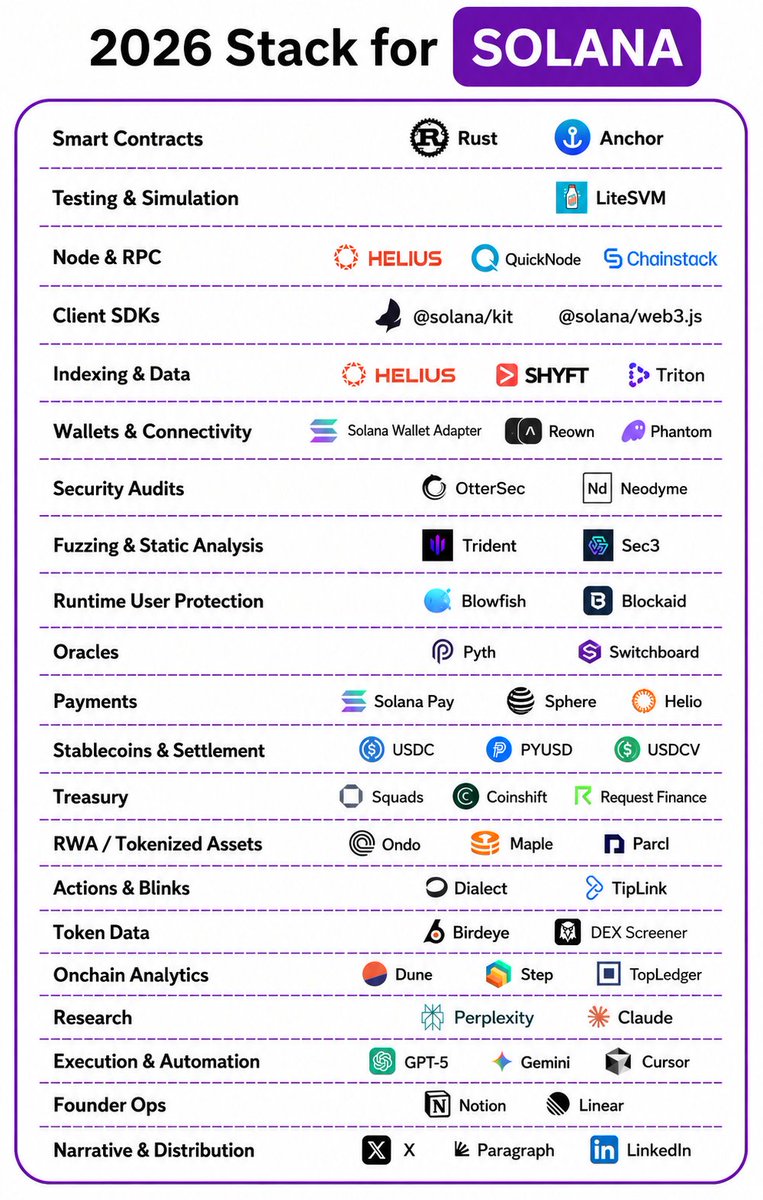
Stop building Solana startups like it’s 2021. In 2026, speed on @solana doesn’t come from bigger teams, it comes from using the right stack.
A serious Solana stack now looks something like this:
Core build layer
• Smart contracts → Rust / Anchor
• Testing & simulation → LiteSVM
• RPC / infra → Helius / QuickNode / Chainstack
• Client SDKs → Solana Kit / web3.js
• Indexing & data → Helius DAS / Shyft / Triton
• Wallet connectivity → Solana Wallet Adapter / Reown / Phantom
• Editor → VS Code / Cursor
Security & reliability
• Audits → OtterSec / Neodyme / Sec3
• Fuzzing → Trident
• Static analysis → Soteria / Sec3
• Runtime user protection → Blowfish / Blockaid / Phantom security UX
Product layer
• Oracles → @PythNetwork / Switchboard
• Payments → Solana Pay / Sphere / Helio / Crossmint
• Stablecoins & settlement → USDC by @circle / PYUSD by PayPal Paxos / USDCV by SG-FORGE
• Treasury → Squads
• RWA / tokenized assets → @OndoFinance / Maple / Credix / Parcl / Homebase
• DeFi liquidity → @JupiterExchange / Orca / Raydium / Kamino / Drift
• Actions & Blinks → Dialect / TipLink
• Token data → Birdeye / DexScreener / Jupiter APIs
• Onchain analytics → Dune / Step Finance / TopLedger / Flipside
Founder leverage
• Research → Perplexity / Claude
• Execution & automation → GPT / Gemini / Cursor
• Founder ops → Linear / Notion
• Narrative & distribution → X / LinkedIn / Paragraph / Mirror
The bigger point: Solana’s advantage is not only speed anymore. The next serious Solana startups will be built on top of mature infrastructure: payments, stablecoins, treasury, tokenized assets, analytics, wallets, oracles and security. That means teams can focus less on rebuilding the basics and more on building products users actually trust.
What would you add to the 2026 Solana stack?
3
1
2
121
G retweeted

Jun 12
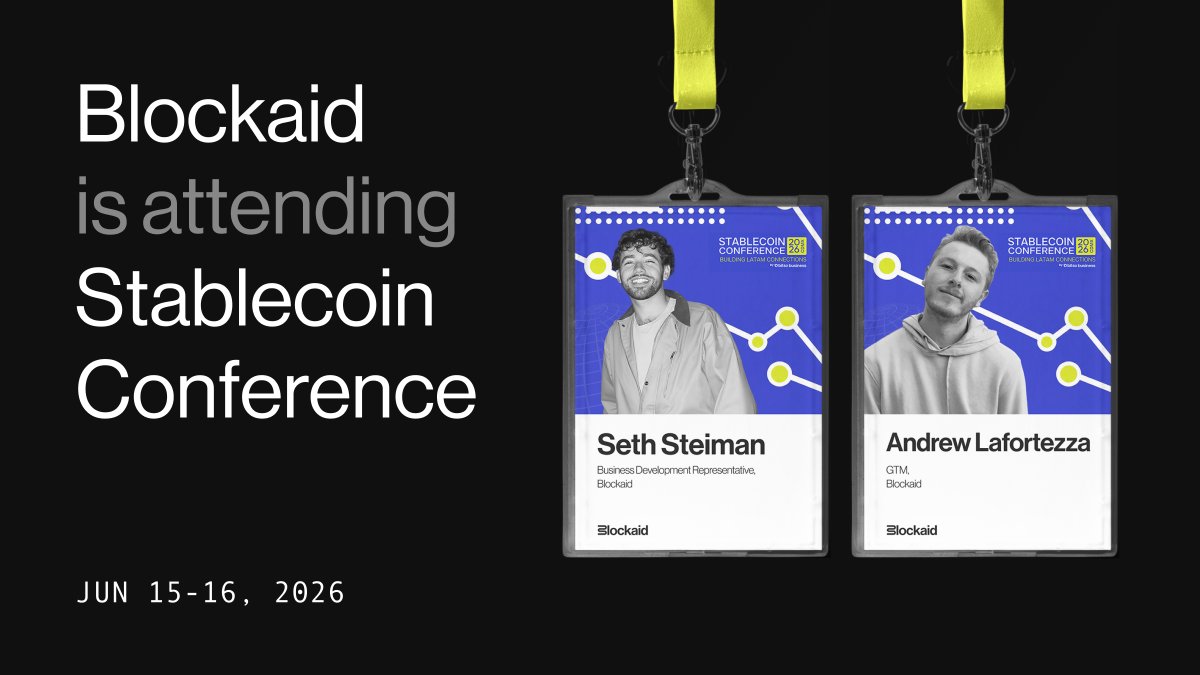
Blockaid is attending Stablecoin Conference:
Onchain demand continues to grow across Latin America, and as that activity scales, real-time onchain security is what keeps it protected.
We look forward to meeting with everyone there.
1
5
788
G retweeted
Jun 12
🚨Community alert: Blockaid detected a @MIM_Spell depeg on Arbitrum. MIM is trading around ~$0.91-$0.92 in executable routes, driven by thin/imbalanced Arbitrum liquidity pools.
Token: arbiscan.io/token/0xfea7a6a0…
5
17
2,028