
I participated at the 2026 Fisherman’s Showcase as a part of ComFish in Kodiak, competing for the first time in all 5 events.
4
98
COMFISH 2026 in Kodiak was a big success! Thanks to all who attended. I’m committed to supporting our fisheries and the families who make it possible.
5
112
I’m here in Kodiak for COMFISH 2026! Let’s support our fisheries and the communities that rely on one of Alaska’s greatest renewable resources.
5
82

I’m excited to be at ComFish in Kodiak and excited to talk to commercial fishermen from across the state about how to make things work for hardworking Alaskans. Please stop by our booth and say hello.
1
5
165

Feb 16
Thank you Joel.
Am an oil baby and have worked on the slope as have two other family members. Have no issues with oil. Am furious ANWR was locked up for so long — that was 100% wrong of them to do imo.
God gave AK an abundance of resources for a reason. We need to safeguard, and steward them with integrity and wisdom so they accomplish their purpose.
AK is a Joseph state.
What we have is supposed to bless and bring increase to multitudes. But it needs to bless the people of the land who live here first, then others.
⬆️ This not happening in fisheries and every one I talk to in the industry knows it— ComFish, processors, sports, subsistence, destination fishing trip tourists, guides/charters, gear suppliers & business owners, those involved with legislation, oversight, advocacy groups, etc.
So many things need course correction across the board in order for Alaska to really and truly come out ahead here.
We have to fix it.
It’s complicated and messy and there’s very few I know of looking at it from a holistic 30k ft view and trying to untangle the mess as an entire ecosystem of regs/laws/biz sectors/etc. And the trawl/bycatch is but one spoke on the wheel. 🛞
Been working on this the last two, going on three years. Part of that includes listening to Alaskans daily in multiple contexts from across the state. Their frustrations with fisheries issues is real and growing. It’s not likely to diminish until people start really feeling heard.
And I can tell you with certainty they don’t feel heard by their elected representatives, their political parties, or by the various regulatory bodies. This is the overarching statewide ‘user sentiment’.
It’s not enough for the @akgop to push energy alone — they are symbiotic industries and support each other.
But the party needs to take the AK fisheries issues seriously and make a clear position on it. Everyone is jumping in the slime line on this. The other side will own it as a campaign talking point and Mary will drive that narrative again. She already is.
Conservative candidates need strong positions and to come with real plans for what they will (and will not) do if they are elected in respect to fisheries.
This is, as I mentioned earlier, a massive single issue make it or break it vote driver for thousands of Alaskans.
And if we want to maintain and expand a conservative government in AK, this really needs to be part of that “AK Resources” conversation & platform.
It’s more than optics.
It’s a core Alaskan identity.
We are fishing people.
We are oil people.
And the fishing has been a core Alaskan identity longer than oil.
People feel like their identity and ability to survive is being stolen from them with the fish issues. That puts in a state of distress and loss aversion/survival mode. When people are in survival mode— they have very little cognitive space to hear any other message. It’s basic human psychology— avoid loss at all cost.
The party starts speaking about fish and trying to really understand where Alaskans are on this, people will pay attention. 🤷♀️
1
1
2
171


18 Apr 2025
All three members of Alaska's congressional delegation took on actions by the Trump administration when they spoke at ComFish, the commercial fishing conference in Kodiak. akpub.io/43ZwRwK
2
2
513

22 Nov 2024
🎄 UK WIF Christmas Quiz Alert! 🎄
Get ready for a festive evening of fishy fun, fabulous prizes from @YETICoolers , @CottenGuy & Comfish and the chance to connect with fellow members! 🐟✨
📩 Check your inbox for details on how to join this members-only digital event
2
3
174


8 May 2024
Russia has been fishing unsustainably and using Chinese forced labor to undercut our Alaskan fishermen - at ComFish this year, we celebrated new policies and investments that will bolster our fishing communities that are going through rough seas. kmxt.org/2024/04/murkowski-a…
1
5
18
965

25 Apr 2024
#FreeSenegal 🇸🇳
#FreeAfrica 🌍
Imports
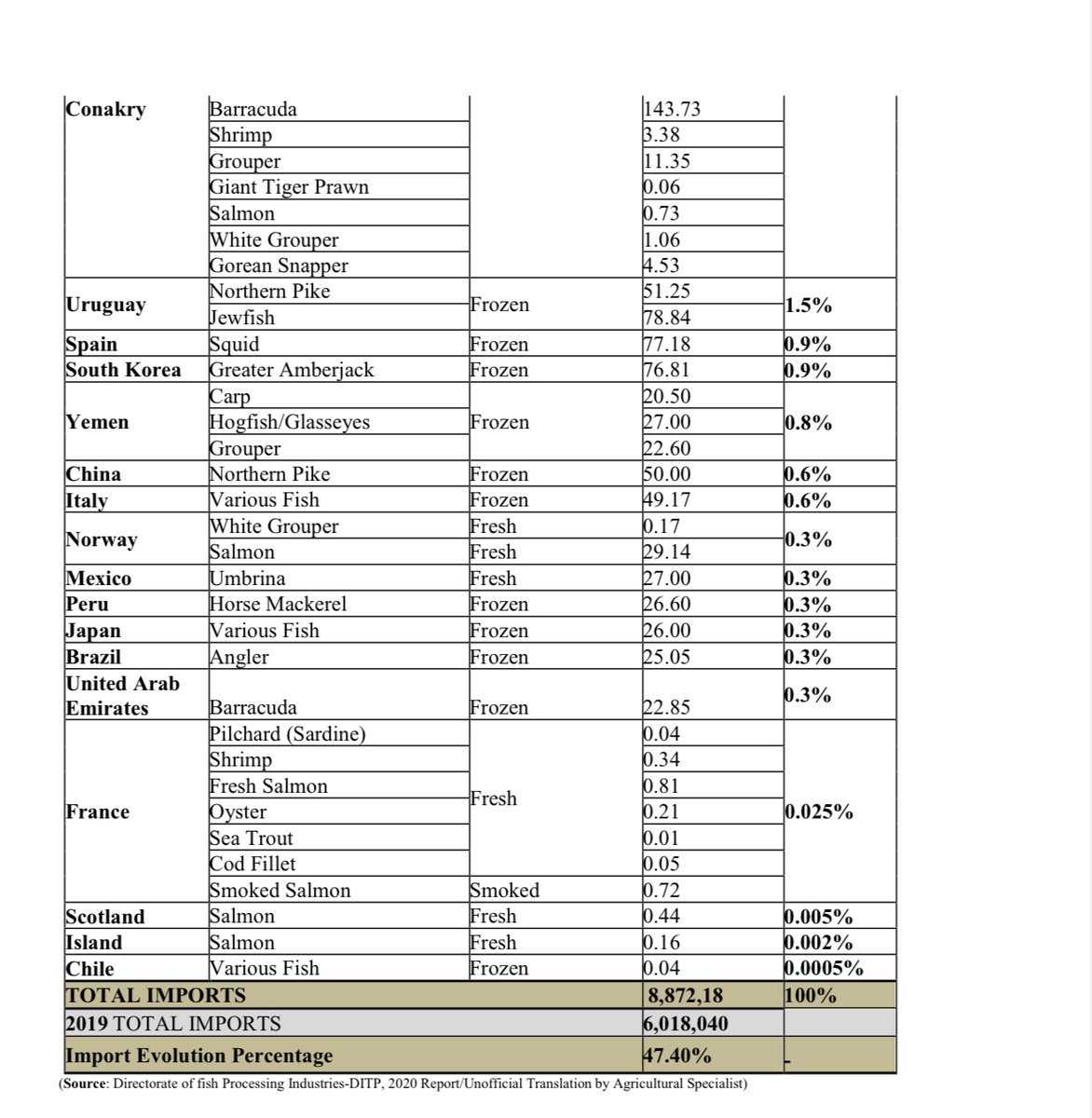
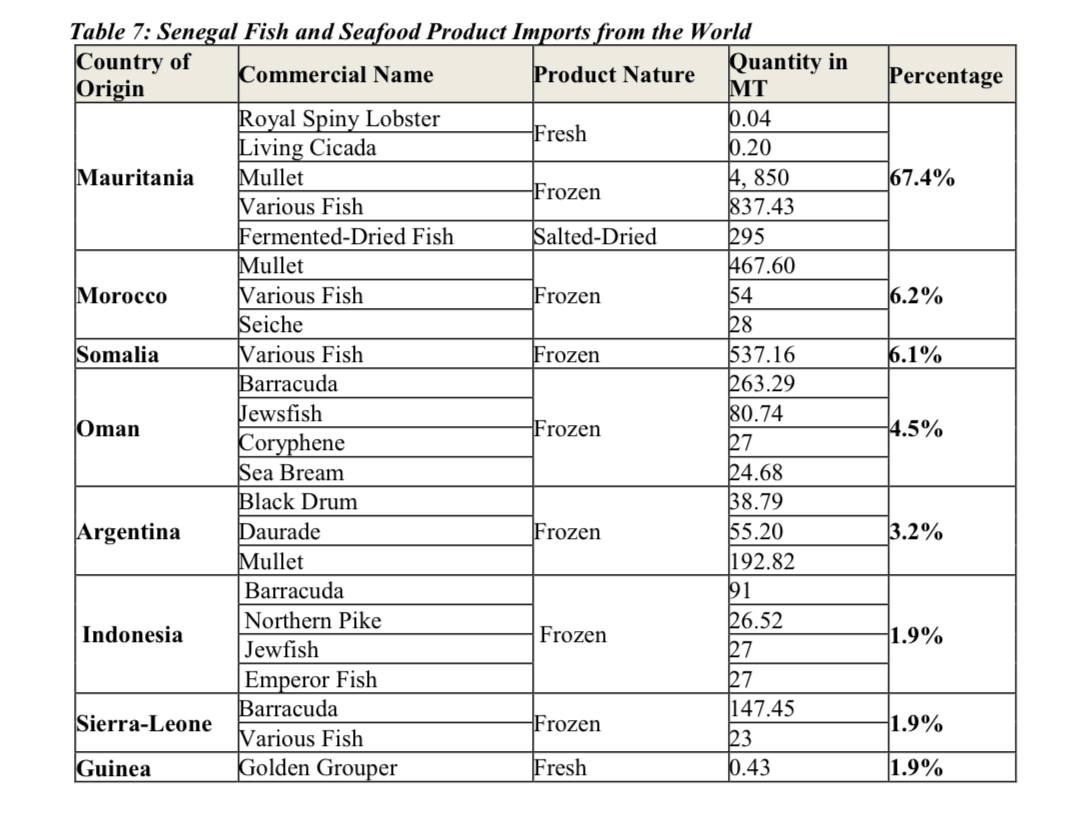
Senegal fish product imports keep increasing every year. Imports in 2018 were estimated 3,300 MT. According to the Directorate of Fish Processing Industries’ (DITP) 2020 report, Senegal imported 8,872 MT in 2020, up 47.42 percent year-over-year and 280 percent jump as compared to 2018. However, according to TDM, Senegal imported 7,072 MT of fish and seafood products worth $11.65 million for the same year, down 9.2 percent from the previous year because of COVID-19 restrictions. Imports are largely sardines, sardinella and brisling or sprats (57 percent), other frozen fish (11 percent), tuna (9 percent), fish-liver oils (8 percent), frozen lula and sepias (8 percent) and crustaceans and mollusks (7 percent). (Trade Data Monitor)
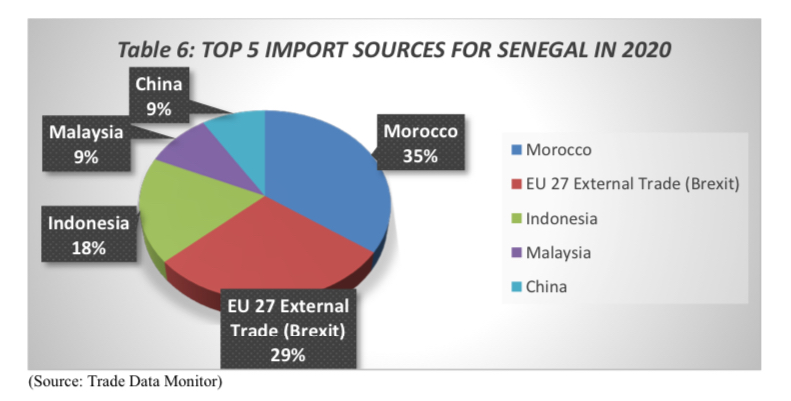
In Senegal, imports of fish products are made all year round with peaks in July, corresponding to the winter period, biological rest periods and religious ceremonies (Magal, Gamou) and in October, November, and December. According to Senegal’s Directorate of Fish Processing Industries-DITP 2020 report, the main suppling country remains Mauritania with a volume of 67.4 percent. Imported productsare mainly made up of frozen mullet and dried fermented fish. According to the Trade Data Monitor, Morocco supplied 35 percent of Senegal fish imports in 2020, most likely because Mauritania did not report. Scotland and Norway provide fresh salmon, France smoked salmon and Pilchard (Sardinella).
Overall, the low imports cannot cover the local demand. There is a gap of approximately 150,000 MT to fill every year. Fish product imports cover only one-tenth of this deficit, which represents an opportunity for U.S. fish and seafood exporters.
Imports from the United States
In 2020, Senegal imported fish and seafood products from the United States valued at $380,000, down 23.5 percent compared to imports in 2019, estimated at $500,000. Most of the imports from the United States are mainly fish liver oil, frozen shrimp and prawns and prepared or preserved fish, including products containing meat of crustaceans, mollusks, etc., and fish balls, cakes, and puddings.
Price
The price for white grouper has increased sixfold, from an average of 650 FCFA ($1.20) during the period 1980–2000 to an average of 3600 FCFA ($6.60) per kilogram over the period 2000 – 2016. In 1990, captain fish and octopus were sold at less than 150 FCFA ($0.27) per kilogram. Over the decade 2010–2020, the price of captain fish has also grown sixfold (i.e., an average of 750 FCFA ($1.37) per kilogram), while the price of octopus has multiplied by fourteen (i.e., an average of 1720 FCFA ($3.21).
Sardinella, the most locally consumed fish previously accounted for less than ten percent of the volume of exported products, now represents sixty percent of the volume exported, and is therefore less available on the local market. It was sold at 25 FCFA ($0.05) per kilogram during the period 1980–2000 but is now traded at over 150 FCFA ($0.27). (Source: Marine Policy, Article 138) Climate change,global warming and the Ukrainian crisis will continue to exacerbate price inflation for demersal and pelagic fish.
As for farmed fish, the price range for tilapia is 1500-2500 FCFA ($2.67-$4.46). The price for African catfish is between 2500 and 3000 FCFA ($4.46-$5.35) and is approximately $8 once processed into smoked fish.
Despite all these challenges, Senegal is a large exporter of fish and fishery products. Since 2008, there has been a surge in exports, reaching $458 million in 2020, thirteen times higher than imports, causing the scarcity of fish on the domestic market. The low imports cannot cover the local demand.
Policies
Government monitoring and support programs
The Government of Senegal (GOS) has developed a new Sectoral Policy Letter for the Development of Fisheries and Aquaculture (LPSDPA) which covers the period 2016 – 2023. This goal of this policy is to ultimately enable the sector to contribute to food security, economic growth, and local development in accordance with the orientation of the national economic and social development strategy of the Senegal Emerging Plan (PSE) through the Sustainable Management of Fisheries Resources and Restoration Program, the Aquaculture Development Program, and the Valorization of Fish Production Program.
The GOS has expressed commitment to sustainably manage fisheries and increase enforcement efforts to stop IUUF. USAID’s Senegal Fisheries Applied Political Economy Analysis highlights that the GOS is also working with the World Bank to freeze the already large artisanal fleet by registering licensed pirogues in a more permanent manner (plaques as opposed to painted identification), equipping registered boats with Automatic Identification System (AIS) chips, and banning the construction of new pirogues. Even with limited state resources for surveillance, the GOS has increased human resources
dedicated to enforcement, initiated the ratification process for the Food and Agricultural Organization (FAO) of the United Nations -led Port States Measures Agreement (PSMA) to increase international coordination to detect IUUF, and, in some cases, punish industrial and artisanal IUU fishing. More on USAID’s Senegal Fisheries Applied Political Economy Analysis is available here.
The government of Senegal has implemented recent innovations in the policy system such as:
- The Implementation of an Early Warning System (SAP)
Since 2015, the USAID - ComFish project, in collaboration with the University of Rhode Island (URI) and the GOS, has supported the implementation of a platform for the transmission of meteorological information to fishermen, commonly known as the Early Warning System (EWS). This system is reinforced by USAID through the Climate Information Services Project to Increase Resilience and Productivity in Senegal (USAID/CINSERE). The SAP broadcasts SMS alerts received directly by the recipients' phones and used by the committees at the landing sites to green flag (safe sea), yellow flag (prudence) or red flag (dangerous sea, no exit) drapes. Local radio is also used to broadcast alerts(Senegal Ministry of Fisheries, 2018).
- The project for the geolocation of small-scale fishing boats (in test phase)
The Directorate of Fisheries Protection and Monitoring (DPSP) has undertaken a geolocation program for SSF vessels with the help of fishing stakeholders as well as technical partners. Four geolocation platforms are currently being tested with a total of 274 beacons (ANSD, 2020). For more information, please refer to the report A Situational Analysis of Small-Scale Fisheries in Senegal: From Vulnerability to Viability - Challenges and Opportunities for Fisheries Governance. V2V Working Paper 2022-2. V2V Global Partnership, University of Waterloo, Canada.
1
1
2
172

15 Apr 2024
On my way to ComFish in Kodiak this weekend, I spoke with Tracy Sinclare at @AKNewsNow about some of the important fisheries issues we are working on, including:
🐟Closing the Russian seafood loophole.
🐟The Alaska Salmon Research Task Force.
3
1
7
1,720

16 Mar 2023
“If you have an industry that’s prone to injuries, then you have opioids,” said public health nurse Amy Butts, as Kodiak's ComFish trade show this week includes trainings on administering Narcan — and addressing stigma against fishermen stocking it. buff.ly/3Ftv8Cu
1
3
2,133

5 Oct 2022
Alaska needs a Senator who shows up every day and delivers every day. I have been that Senator and will continue to be that Senator, and I’d be honored by your vote on November 8th.
#ComFish #FishDebate
4
15
5 Oct 2022
Fishing isn’t just a part of life in Alaska, it’s a way of life.
It’s what makes us so unique and so special, and why it has to be made a top priority.
#ComFish #FishDebate
1
6
5 Oct 2022
Working collaboratively is what I do and how I legislate. I’ve worked across party lines to bring people together and deliver real results for Alaska’s fishermen.
#ComFish #FishDebate
1
6
5 Oct 2022
TUNE IN: The Kodiak ComFish Debate is about to start! This debate has been part of Alaska’s politics for over 30 years, and I’m excited to highlight my wins for the fishing community. ⬇️
facebook.com/KodiakChamberof…
13
2

28 Jun 2022
wao u look sooo comfish !! :o very interst’ng shape !
2

6 May 2022
Nondalton Tribal Council & UTBB have opposed Groundhog and other large scales mines in Bristol Bay for many years. Quyana to these sportfish, comfish, and hunting partners to reiterating that opposition - and call for permanent protections!
adn.com/opinions/2022/05/01/…
3
3