
Interesting thought from Satya Nadella:
We’ve spent the last few years debating which AI model will win.
But what if that’s the wrong question?
Models will improve. Models will be replaced. Costs will fall.
What’s much harder to replicate is the accumulated knowledge of an organization: the decisions it has made, the mistakes it has learned from, the expertise of its people, and the workflows it has refined over decades.
The companies that create a feedback loop between human expertise and AI may end up with a much stronger advantage than those simply chasing the latest model release.
In other words, AI itself may become a commodity.
Institutional learning may not.
That’s a subtle but important distinction, and one that I suspect many leaders are still underestimating.

2

For what, Diddy's baby oil? It's not the type of oil that produces diesel. Diesel is critical commodity needed for the global economy.
2


For the clarity act and to become a commodity. Ripple is not allowed to own over 20% or XRP. And they own around 40%
So they have to sell it off
18
Auri ~ retweeted

This is not what "turning fanfic into a commodity" means and I'm sick of this attitude
You know what makes fanfic a commodity?
Readers who sort by kudos and only value fanfics that have 1000 kudos. Readers who only interact with fandoms that are popular in the moment and only-

everyone is writing now for the wrong reasons- they're turning it into a commodity and they want attention and praise for the time they put in but you cannot control what ppl will read and enjoy.
2
11
66
999

7m
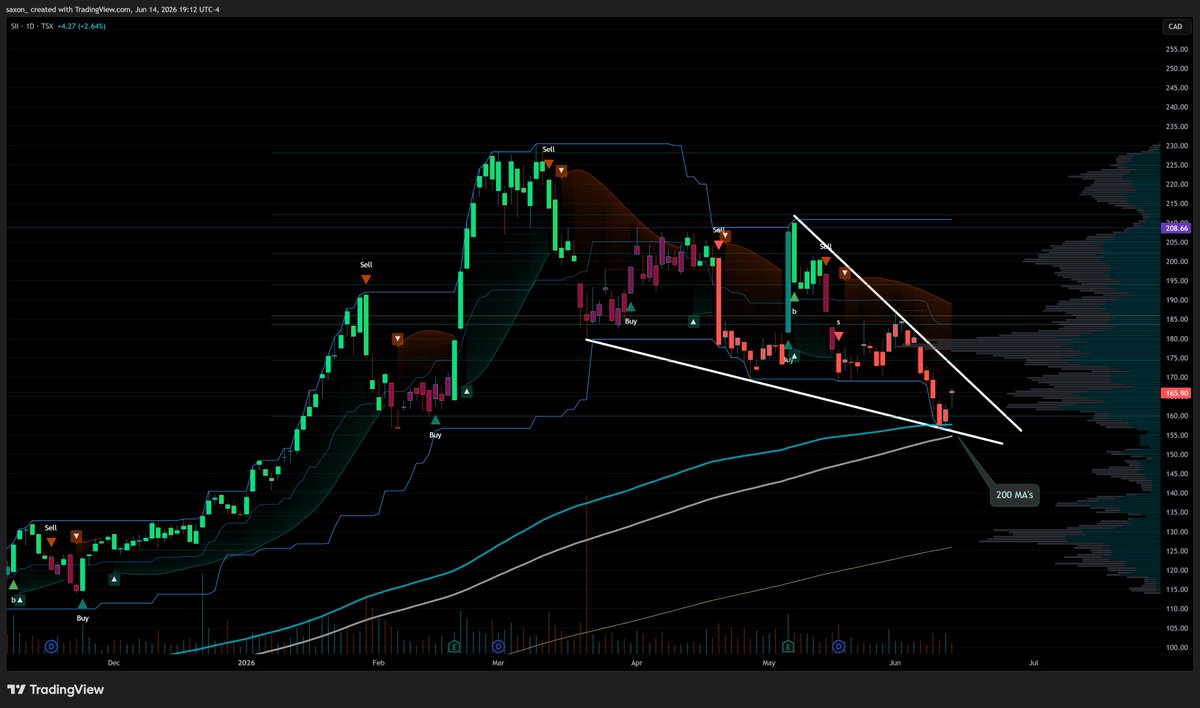
I prompted a few smart apps to give a breakdown of my bull take on @sprott , (metals),. this one came the closest:
" $SII, the toll booth for the hard-asset economy.
Most investors track commodities through paper claims, futures, or broad ETFs that carry hidden counterparty risk. Sprott ($SII) built its business around a different premise: providing the infrastructure for direct, physical ownership.
Through its Physical Bullion Trusts #Gold, #Silver, #Platinum, #Palladium) and Physical Commodity Trusts #Uranium, #Copper), Sprott allows investors to bypass synthetic instruments and hold actual, allocated metal and material. This isn't just "exposure"; it’s a custody structure that allows for the redemption of units for physical bullion.
That is a massive distinction.
Here is why $SII is the ultimate "picks and shovels" play:
~ Asset-Light Model: Sprott doesn't need to find a deposit, build a mine, or risk a cent on exploration.
~ Fee-Driven Scale: It provides the trusts, custody, and platforms that house these assets, collecting a management fee on every dollar of AUM that flows into their physical vehicles.
~ The Toll Booth: As the institutional and retail demand for physical scarcity grows, Sprott collects its fee regardless of whether the underlying metal price goes up or down,. it wins by simply being the vault where the capital lives. "
The chum is in the water, and we're gonna need a bigger boat.
1


Class contradiction manifests as the contradiction between the socialist state and the rest of the capitalist world, and yes commodity production cannot yet be abolished until the final victory.
4

Oh. You don't know the definition of commodity.
merriam-webster.com/dictiona…
1

In this week's #MostViewedAgNews...
Canola crisis and cattle threat shake global commodity markets!
Experts believe the detection of New World screwworm in Texas cattle could lead to higher beef prices in the long term.
Get the full market breakdown here ⤵️
#Livestock

80

I’ll try to explain to you dumb fuck OIL is a commodity it’s traded on the GLOBAL marker. We can produce more Oil than anyone then guess what dumb fuck the market sets the price. It doesn’t go by how much OIL you have. Hope that helped but I doubt it dumb fuck! MAGA thinking!😵💫😵💫

15

Clueless? It’s quite literally what I do for a living. Keeping a commodity domestic after billions in investment would be detrimental to the industry and the rest of the world.
If we are going to shutdown the strait, the very least we can do is keep the world going, if not there is no point. We would be at war with everyone bc Trump thought he could destroy the IRGC in a week.
2
sher shah retweeted

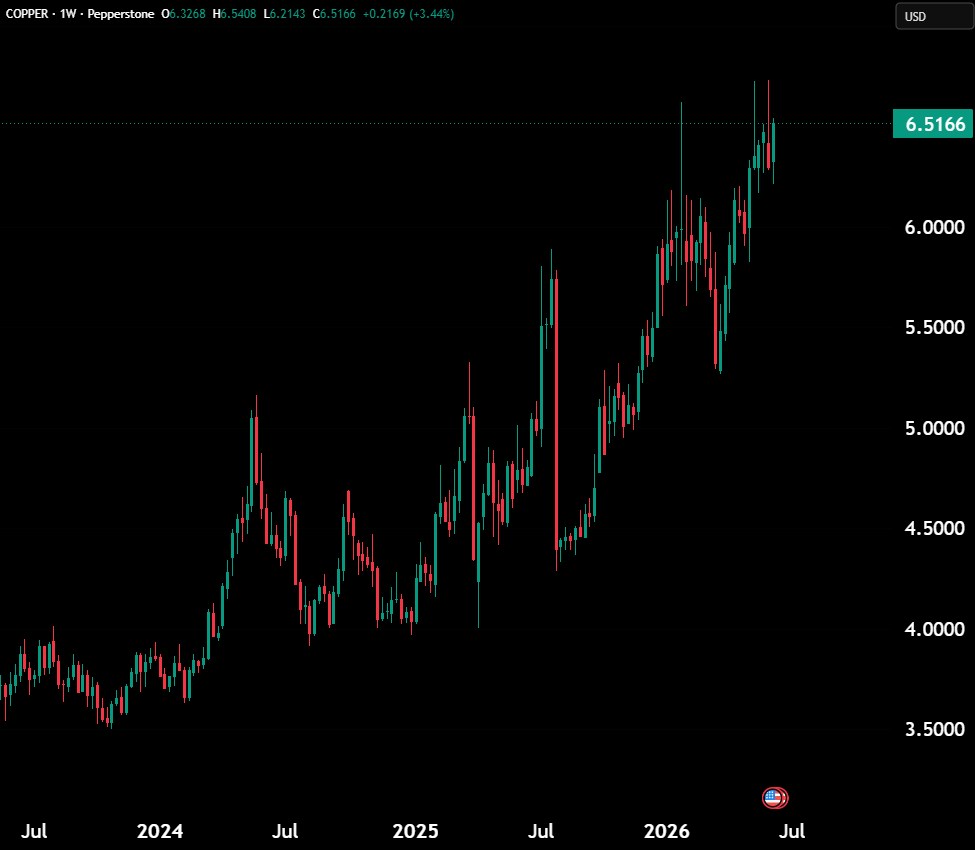
MORE EVIDENCE THAT A COMMODITY SUPER CYCLE IS UNDERWAY.
STAY LONG MR. COPPER.

24
75
635
86,838

You're missing the point that it's Iran who are better placed, to deal with commodity shortages, because they've been under sanction for 40 years,and they have internal supply chains.
By being able to disrupt global supply chain, they have the rest of the world by the balls.
1
1
12

Excellent, please make a deal with Anthropic to stop suppressing AI. Knowledge — the commodity more valuable than oil and germane to all people groups is being blocked by your administration — similar to how the Strait of Hormuz was obstructed.
1
2
1,095

Commodity prices in fashion together again. Now the war is out of the equation. Crude heading towards $20, metals adiós, AUD offered
6

Remystification builds within the context of rising asset-rentier relations where objectivity and factfulness in epistemology/ontology - crucial for competitive commodity production - are no longer materially key to interests, and 'stability' (undisturbed amortisation) prevails.
34
Matthias Meier retweeted

$MU and homebuilders are more similar than you might think.
Everything about a home builder is basically a commodity product.
It is often taught that commodity products cannot maintain high returns, but if you look at the ROE of many home builders you’ll see many in the 20% range. Sometimes much, much higher.
These businesses have a product that anyone can produce, but the reason why their economics are maintained is because demand outstrips supply.
There is more demand for (moderately/ low priced) homes than we create. Thus virtually every home that gets built gets sold—and at a price that provides ample margin for the builder.
When these businesses do poorly is when demand temporary sags and the carrying cost of inventory (construction loan interest expense) weighs on returns. Aggressive financing on the builders parts, could result in bankruptcy in such situations.
Generally though, demand for homes is only going to go up overtime and will continue to outstrip the pace of building—at least in the U.S.
The situation is different in China for instance where supply increases has resulted in very soft home prices and phantom cities.
The point I wish to make is that competitive moats are only pertinent to a business when supply outstrips demand.
If you can differentiate your product sufficiently, the consumer preferences you are fulfilling are unique enough that the business itself is the sole supplier.
They have escaped the rat race of commodity competition where any business can build what they build. If you want an iPhone, there is only one seller. If you want fast delivery on millions of items through a high trust seller, there is only Amazon (in the U.S.)
The less emphasized point though is that even if your product is undifferentiated, so long as supply runs below demand, you can have a strong business.
We are seeing this phenomenon in memory chips, energy supply, and data centers. The demand is overwhelming and so many business that fit the bill of being a commodity product can reap stellar margins and returns on capital—for now.
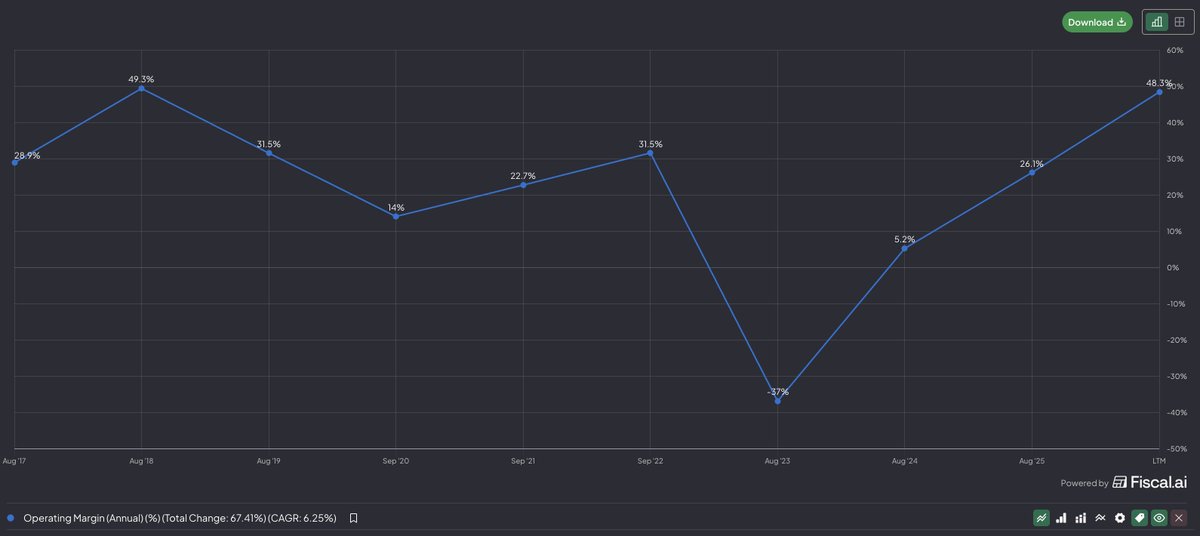
Micron posted 68% operating margins. 3 years ago they were as low as -63%.
With capacity constraints and capital flooding into the data center build out, they certainly have strong tailwinds to continue to post such stellar margins.
However, the problem with such businesses comes from the fact that these high returns draw in incremental capital and eventually growth in supply will overshoot demand.
While a cycle can take years, it doesn’t change the fact that memory is not a differentiated product the same way a Nvidia GPU chip or Arista network switch is. (That doesn’t mean they can’t also have their own cyclically though—just that by and large the market for Nvidia GPUs, is different than the market for “GPUs”)
Investing in such businesses becomes a bet on the capital cycle duration and a bet on the rationality of multiple players. It works so long as demand is higher than supply, but when the situation reverses, the commodity-like returns of an undifferentiated product returns. (Memory investors are basically betting that AI demand has resulted in a paradigm shift where demand will continue to outpace supply for many years—perhaps a decade… but Wall Street only tends to model 3-5 years out).
Building constraints in the U.S. has prevented economic deterioration in the home building industry. (Even in a weak year like 2021 a small home builder— Dream Finders Homes had a 12% ROIC, higher than most businesses). The time it takes to build new fabs has prevented this from immediately correcting in the memory industry, but it is inherently a more precarious competitive position to be in because the businesses do not control their destiny. Apple can control the production of iPhones, but Micron cannot control the supply of HBM.
This is not to say this is a “wrong” way to invest—there are many ways to make money. But just that the timing of such investments are much more critical than say investing in a Red Bull or Monster. The customers of those business’s only want a “Red Bull” and alternatives (by and large) will not do. Thus the vectors of competition move from trying to create a better Red Bull rather than simply supplying an energy drink.
The history of businesses that do not have moats is brutal. Capitalism will eventually compete down those returns. But that doesn’t mean an investor can’t make money if they time the capital cycle right—they should just be aware that is the bet they are making.
5
3
25
1,852


Besides the big F’s ( faith, family and friends), TIME is your most valuable commodity. Don’t waste it with people or things that don’t build you up, or help you reach the goals you envision for yourself.
2