GROK➡️
cont 〰️ 🌌EPHESIANS💫 4〰️ 7 Spirits of God a d Fruit of the Spirit
Do They Overlap or Reflect Each Other?
Yes — there is beautiful thematic overlap, but they are not the same thing.
The Seven Spirits describe the Holy Spirit Himself in His fullness (who He is).
The Fruit of the Spirit describes the character He produces in believers (what He does in us).
You can see how one flows into the other:
💫The Spirit of Wisdom & Understanding → produces love, joy, peace in us
💫The Spirit of Counsel & Might → produces patience, kindness, goodness, faithfulness
💫The Spirit of Knowledge & Fear of the Lord → produces gentleness and self-control
So while they are distinct, they are deeply connected. The Holy Spirit doesn’t just give us external power — He transforms us from the inside so that His own character begins to show up in our lives.
Tying It Back to Ephesians 4
This is especially meaningful right where we are in Ephesians 4:1-6.
Paul has just called us to walk worthy with:
humility
gentleness
patience
bearing with one another in love
diligence to keep the unity of the Spirit
These are fruit of the Spirit qualities. Paul is saying:
“Because there is one Spirit (4:4), let that same Spirit produce His fruit in you so the one body can stay united.”
The Seven Spirits (fullness of the Holy Spirit) and the Fruit of the Spirit (His work in us) are both working toward the same goal Paul has been emphasizing:
Unity and Love in the one new man.
Your wonder is well-placed. God uses the number seven to show completeness — both in who the Holy Spirit is and in what He wants to produce in His people.
〰️ 🌌EPHESIANS💫 4〰️
AMP
8 …“WHEN HE ASCENDED ON HIGH,
HE LED CAPTIVITY CAPTIVE,
AND HE BESTOWED GIFTS ON MEN.”
9 (Now this expression, “He ascended,” what does it mean except that He also had previously descended [from the heights of heaven] into the lower parts of the earth?
ME➡️
Just logging how the Bible holds us responsible to connect the dots. ‘If he ascended, that means he first descended.’
No matter how I look at it, I don't get descended - I mean, he can only ascend from earth, he can also ascend from lower earth but I don't get it from the verse. Sigh.
These verses are strange.
My old note -
🆚 8 Why he said, When he ascended up on high, he led captivity captive, and gave gifts to men.
God will abolish captivity. That includes slavery.
GIFTS
All our gifts have to do with others. It's a message. God would not call something that is not a gift a gift. This is for our good, our fulfillment. Helping others and being productive makes us happy.
GROK➡️
Yes — these verses feel a bit strange at first, and your confusion is very common. Paul is doing something rabbinic here: he quotes an Old Testament verse and then explains it with a logical “if… then…” argument.
Ephesians 4:8-9 (AMP)
8 …“WHEN HE ASCENDED ON HIGH,
HE LED CAPTIVITY CAPTIVE,
AND HE BESTOWED GIFTS ON MEN.”
9 (Now this expression, “He ascended,” what does it mean except that He also had previously descended [from the heights of heaven] into the lower parts of the earth?
The Quotation Comes From Psalm 68:18
Psalm 68 is a victory psalm about a conquering King who ascends to His throne and receives tribute (gifts) from the conquered people.
Paul applies this directly to Christ:
•Ascended on high = Christ’s ascension after the resurrection.
•Led captivity captive = He took captive the powers that once held us captive (sin, death, demonic forces).
•Gave gifts to men = Instead of receiving gifts like an earthly king, Christ gives gifts to His people (which Paul explains in the next verses: apostles, prophets, evangelists, pastors, teachers).
〰️ 🌌EPHESIANS💫 〰️
〰️ ⚰️Corpse to Crown👑 〰️
〰️Ergo, UNITY & LOVE〰️
#biblestudyephesians
#renegadebiblestudywithgrok
#renegadebiblestudyephesians
D.G. retweeted

Bikeman left in state of confusion as passenger paid him 1,100 instead of one-one in Ibadan
📹: @emma.adeyemi
212
318
3,273
316,561

Yes but at the end of the day, when debating an idea, the label is only relevant if the debate is about proper usage of the label. Otherwise, the label can, and should, be discarded if it's adding confusion rather than clarity to the argument.

It's actually autumn and spring but I understand the confusion because of the color palette
1

Standing up for reality! Simon O'Connor speaks with New Zealand First MP, Jenny Marcroft MP, about her Member’s Bill to define what a woman and man are. Titled the Legislation (Definition of a Woman and a Man) Amendment Bill, it was created to return common sense and legal clarity. Jenny explains that the move to draft the legislation was prompted in 2023 by Family First’s petition and also discussions that New Zealand First had with voters during the election campaign.
Jenny explains how “policy drift” has eroded women’s sex-protected rights, citing community concerns about school bathrooms and changing facilities, women competing against biological males in sport, and biological males being housed in female prisons.
She strongly argues that biological sex has material consequences in medicine, safeguarding, privacy, dignity, and law. She traces confusion partly to a 2006 Crown Law opinion that suggested transgender people may be protected from discrimination under sex. This opinion is not binding, but has been used and reused to conflate sex and gender identity.
Simon and Jenny quickly discuss how the Bill itself was drawn and how the committee process is the usual places that Member’s Bill are crafted more fully – “panel beaten” into shape as Jenny phrases it.
Finally, Jenny and Simon both encourage viewers to make a submission to the committee in Parliament, as well as sharing your views with your local Member of Parliament.
You have till Thursday 2 July to make a submission. If you need some guidance, you can check out Family First’s website for details and suggestions:
familyfirst.org.nz/2026/06/1…
You can begin your online submission by going to this page on the Parliament website:
parliament.nz/en/pb/sc/make-…
2

In order to make progress, a young architecture student inspected the financial planning template at the university cafe, and the project moved forward without extra confusion. In order to make progress, the young software engineer introduced the customer.

Just read this sa fb.
————————
I think the Cayetano bloc is going all out atp.
it feels less like they’re trying to convince people through evidence and more like they’re trying to overwhelm the public with so many names, allegations, and side issues that nobody knows anymore who actually did what. The conversation shifts from the impeachment to flood control / maleta issues… to “Eh bakit si ganito hindi kasama?” or “Bakit sila lang ang kinasuhan?”
Maybe ang goal is to create enough confusion that people start doubting everything. If everyone is painted as guilty, then eventually no one knows who is actually accountable.
They know that some of these statements could have legal consequences and may eventually be challenged in court. But in politics, public opinion often moves much faster than the legal process. Once a person’s name is dragged through the mud, the damage to their reputation is already done whether the allegations are proven or not.
That’s why I feel like this is also an appeal to their supporters. Feed them a narrative, give them names to target, create outrage, and let social media do the rest. Trial by publicity has become a powerful weapon. You don’t even need a court ruling if you can make enough people believe that someone is corrupt, biased, or part of a conspiracy.
If this is indeed the strategy, the objective may not necessarily be to win in court immediately, but to influence public sentiment, to pressure certain individuals, discourage others from taking action, undermine confidence in potential witnesses or complainants, and create the perception that any investigation or prosecution is selective or politically motivated.
At the end of the day, the more confused the public becomes, the harder it is to hold anyone accountable. And sometimes, confusion itself is the strategy.
4


Not gonna get an apology because you got one thing (arguably the most obvious) right in a sea of errors, confusion, and abuses. Not sorry. And you can get over yourself for expecting that.
1
6

“Christian” isn’t modifying “Nationalism” here as much as ethnicity is modifying Christianity. It’s restricting culture, even Christian culture, to that of European descent.
The alternative is not multiculturalism as a governing ideology. Nor does it require open borders, unrestricted immigration, or moral relativism. Christians may reasonably debate immigration policy, citizenship requirements, border security, assimilation, and the preservation of cultural traditions, but these are prudential political questions, not articles of the Christian faith. The Old Covenant distinguished Israel from the nations because Israel was always meant to be a temporary covenantal arrangement awaiting and bringing about the coming of the Messiah. The New Testament never commands civil rulers to establish a confessional state modeled after ethnic identity.
The Christian’s highest allegiance is not to blood, soil, language, or history. The confusion concerning this allegiance turns patriotism into idolatry and culture into creed in a way that makes citizenship overshadow discipleship.

In the term “Christian Nationalism,” the word “Christian” is an adjective modifying the noun “Nationalism.”
That is, it’s a type of nationalism. So, the first question is: What is nationalism?
In the 1900s, Britannica defined nationalism as:
“The political philosophy that a nation of people united by common ancestry, culture, language, and history ought to be politically organized within its own territory under a common government.”
We want that—but “Christian.”
A people of generally European ancestry, who speak English, and whose descendants are connected to American history.
We must learn that nationalism, when modified by Christianity does not demand multiculturalism. It does not demand freedom of religion. It does not demand mass immigration.
Christian Nationalism is simply a real nation that lives under a government and culture that uphold principles of Christ for the good of its people.
2

iamabby retweeted

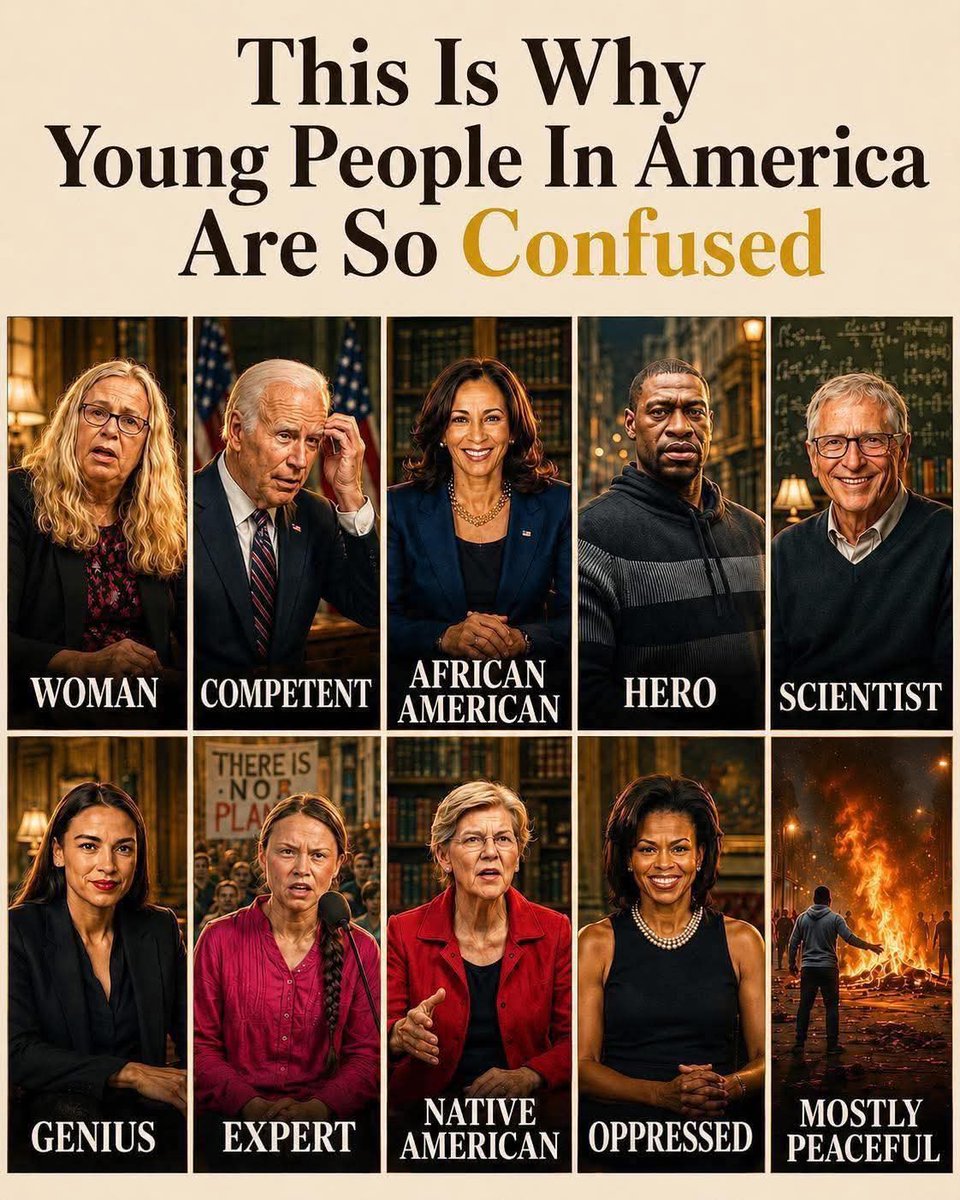
The way his face went from pure happiness to complete confusion. 😂
Btw his laugh is just so contagious 😂😭
#NuNew
227
697
6,215

💌 channeled love reading 💌
✰ #Aries • #Cancer • #Libra • #Capricorn ✰
* apply to sun, moon, rising, or venus *
~ take what resonates & LEAVE the rest ~
•• tip jar -
paypal.me/desireforfire111
desireforfire.as.me
You have spent too much time questioning yourself when your intuition knew exactly what was happening.
The connection you felt was real. The attraction was real. The emotional pull was real.
What was not always real was the story you were being given about it.
Someone’s words, actions, and energy have not always existed in the same place, and that inconsistency created confusion that never should have belonged to you.
Your guides keep showing me that one of the biggest wounds you’re healing is the tendency to search for certainty from people who benefit from remaining unclear.
You kept trying to understand. You kept looking for explanations. You kept hoping certain actions would finally match certain feelings.
But the more you searched outside yourself, the further away you moved from the truth your spirit already knew.
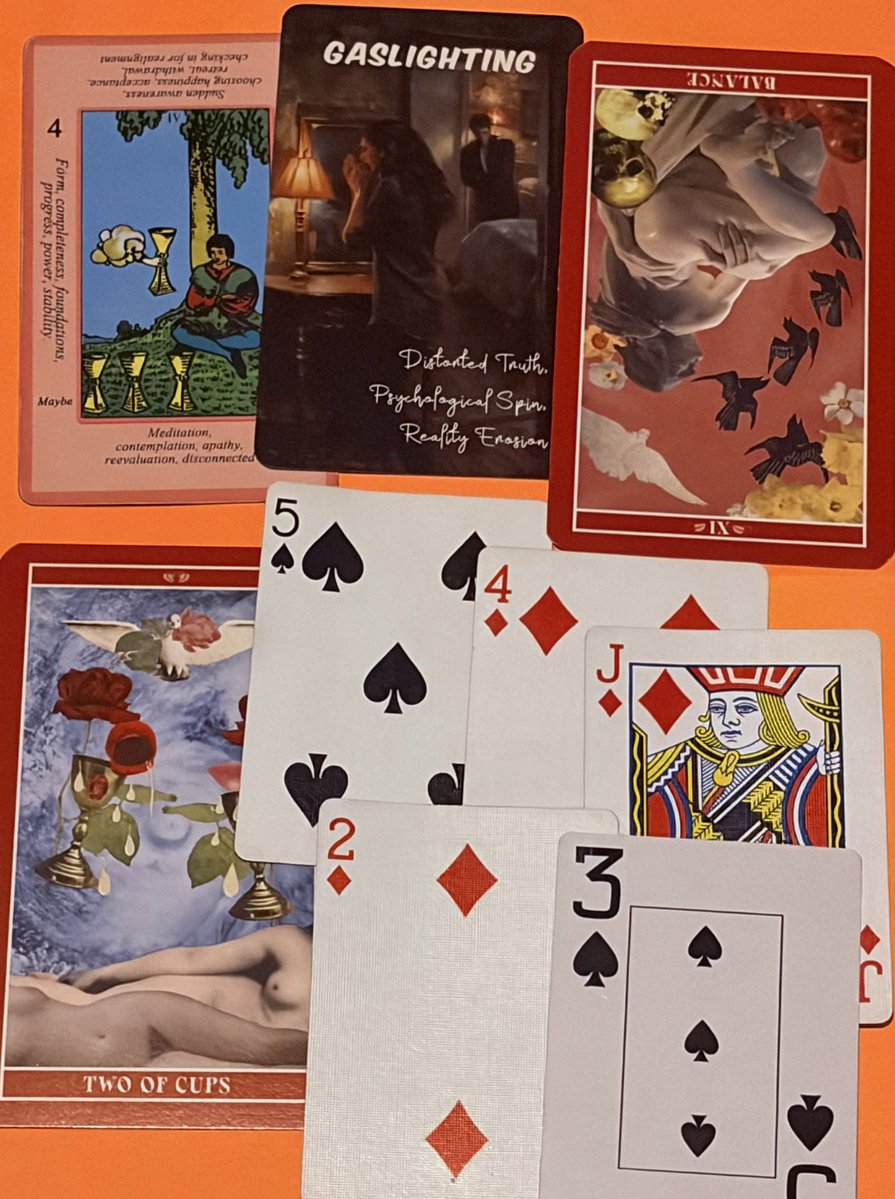
The gaslighting energy in this spread is loud. Whether it came through direct manipulation, mixed signals, emotional avoidance, half-truths, or someone making you feel like you were overreacting, the message is the same: stop doubting yourself.
You were never crazy for noticing the inconsistencies. You were never wrong for feeling hurt. You were never imagining the red flags.
The confusion was real. The disappointment was real. The emotional impact was real.
Your guides refuse to let you leave this reading believing that all love is confusion.
Mutual love exists for you. A connection where both people show up honestly exists for you.
Archangel Michael’s energy is incredibly present here. I don’t feel him wrapping you in comfort.
I feel him standing beside you with his sword drawn, cutting away illusion. He keeps saying “Enough.”
Enough questioning your worth.
Enough making excuses for behavior that hurts you.
Enough shrinking your standards to keep someone comfortable.
Enough waiting for people to become who they should have been from the beginning.
You are being asked to return to yourself.
Your assignment right now is not to figure someone else out. It is to restore your own equilibrium.
Somewhere along the way, too much energy went into understanding another person’s actions and not enough energy went into honoring your own feelings.
Your guides want that balance corrected immediately.
There are unresolved feelings here. Things left unsaid. Conversations that either never happened or never gave you the closure you deserved.
I keep hearing this message very clearly:
“Stop looking for proof that you were enough. You were always enough. The lesson was never about earning love. The lesson was about recognizing when love was not being offered in a healthy way. You are not here to convince anyone of your value. You are here to remember it.”
The future energy remains beautiful. There is a genuine soul connection surrounding you.
A connection that feels safe instead of confusing. A connection where actions and words match. A connection that does not require guessing games, emotional breadcrumbs, or constant uncertainty.
When it arrives fully, you will not have to abandon yourself to keep it.
11

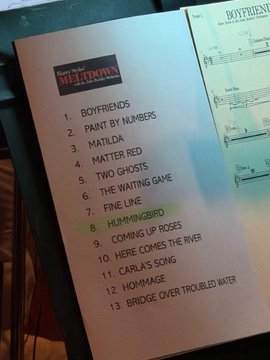
I keep coming back to this setlist because, to me, it tells a story.
A story about two people who found each other young, carrying dreams bigger than themselves, only to discover that the world had already decided who they should be.
They found refuge in the connections that asked nothing of them except honesty. In the people who saw them clearly and never looked away.
Time changed everything and nothing at all.
They grew older, carried different burdens, walked separate roads, and sometimes wondered if they had become strangers to each other. There were moments of confusion, silence, distance, and loss. Moments when life seemed determined to pull them in opposite directions.
Then come the ghosts.
Not because the love disappeared, but because time has a way of transforming people. Sometimes you look at someone you've known forever and struggle to recognize the person standing in front of you. Sometimes you even struggle to recognize yourself.
So they waited.
They endured seasons of uncertainty, hoping that one day the pieces would fit together again. Hoping that what felt impossible in one chapter might become possible in another.
But beneath every detour lived the same unshakable thread: the hope that one day, when the timing was right, everything would finally make sense.
And somehow, no matter how far life carried them, they kept finding their way back.
Like a hummingbird returning home.
Slowly, the landscape begins to change. The weight becomes lighter. The wounds become lessons. What once felt impossible starts coming up roses.
Then comes the river.
Carrying away the fear.
Carrying away the anger.
Carrying away the pain.
Leaving behind only what truly matters.
The memories.
The growth.
The gratitude.
The love that endured.
And in the end, the story doesn't close with a grand declaration.
It closes with a promise.
A promise that after every storm, every separation, every difficult chapter, there will still be someone standing on the other side, ready to carry you when you're tired and hold you when the waters rise.
A bridge over troubled water.
Maybe that's why this setlist feels so meaningful to me.
Not because it tells a perfect love story.
But because it tells a resilient one.
A story about surviving.
About growing.
About finding your way back.
And about choosing each other, again and again, despite everything.
❤️🌉✨
#MELTDOWN #HarryStyles #BridgeOverTroubledWater #FineLine #TheWaitingGame #LoveAndResilience #AlwaysTheRightSideOfLove
1
4

You know what's interesting? The left is using the Purcell Principle to argue that the corrupt MaRICOpa County Supervisors shouldn't give our election integrity champion Maricopa County Recorder Justin Heap back parts of his office they illegally stole. But the reality is the Purcell Principle doesn't say what they claim it does. (The Purcell Principle basically says you can't use the legal system to change election procedures too close to when they take place)
Grok:
The April 2026 ruling is not a “new rule” but a declaration of existing law. Arizona statutes assign the Recorder (Heap) primary responsibility for early voting, ballot handling, voter registration systems, and related IT resources. The Board’s prior Shared Services Agreement allegedly overreached. Enforcing the correct statutory allocation restores the lawful status quo ante, rather than inventing a change. Purcell cautions against judicially imposed last-minute rule changes, not correcting ongoing illegal arrangements.
Continued Board resistance is the real source of chaos and voter confusion. With early voting beginning June 24, 2026 (just days away as of June 16), the unresolved dispute already creates uncertainty: Who controls drop boxes, early voting sites, scanners, IT systems, funding, and ballot processing? Heap’s office argues this limbo hampers preparation, chain-of-custody, staffing, and public communications. Forcing compliance now gives the elected Recorder clear authority to execute his duties efficiently for the July 21 primary, reducing mid-process disputes or dual-control conflicts.
Purcell protects election integrity and public confidence. Allowing an elected official to be blocked from performing statutorily mandated functions (especially early voting, which is heavily used in Arizona) undermines voter trust more than a one-time administrative handoff. Delaying enforcement until after the primary effectively nullifies Heap’s victory for this cycle and rewards non-compliance. Courts can order a transition—precisely to avoid the very problems Purcell flags.
The ruling came in mid-April, giving months for planning. The Board’s appeals and delays pushed the issue into the final weeks. At this point, further delay risks rushed or contested early voting operations (e.g., disputes over equipment, staffing lines, or tabulation handoffs), whereas prompt compliance lets Heap’s team take operational ownership with time to stabilize before peak early voting.
Heap has filed contempt motions, sought emergency relief, and argued that the Board’s refusal directly impairs his ability to run early voting lawfully.
Bottom line: Purcell is not a shield for indefinite defiance of court orders or statutory duties. When the elected official responsible for early voting is being denied the tools and authority the law requires, immediate enforcement better serves smooth administration, clarity for voters, and confidence in the process. A short, court-supervised handover now prevents greater mid-election dysfunction than maintaining an allegedly unlawful status quo. This view prioritizes rule-of-law compliance over inertia.
65


The cost of confusion. The cost of lost trust. The cost of redoing everything in two years.
"Cheap" design is always the most expensive option in the long run.