
🌸We already have the lineup.
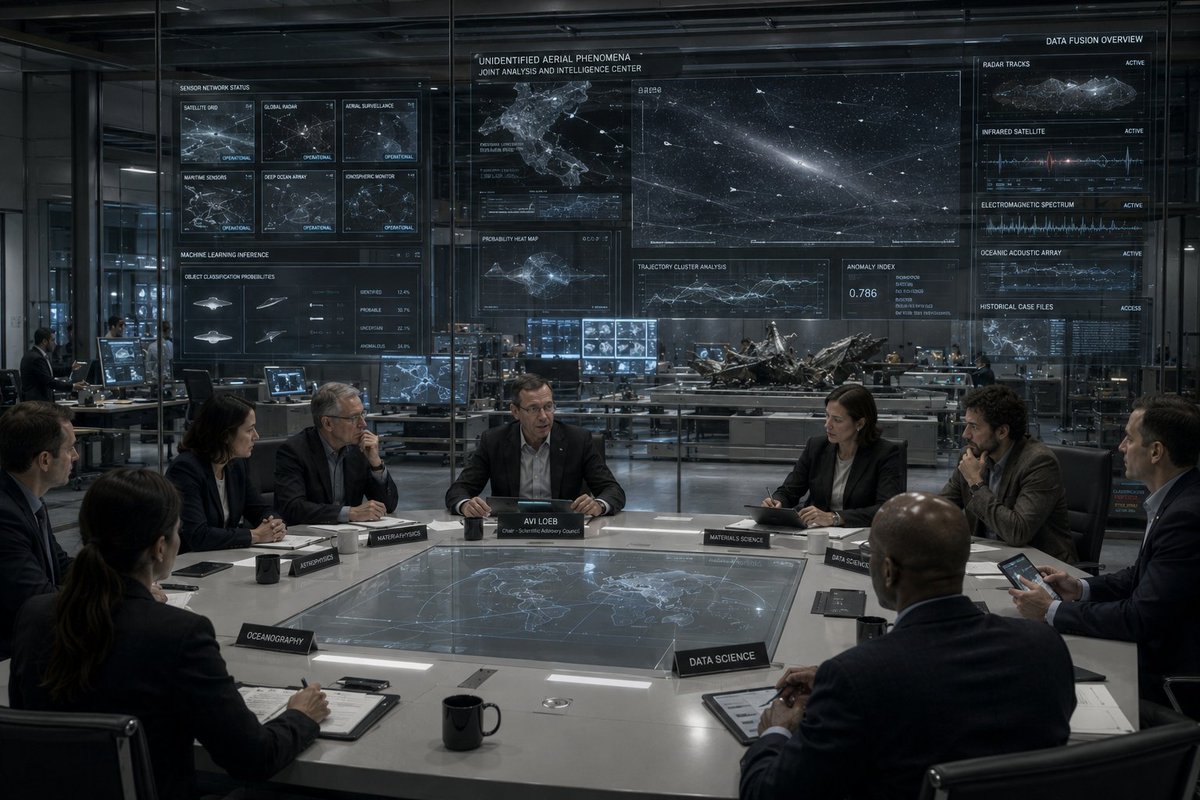
Avi Loeb at the front. Project Galileo around it. AI to analyze data. Instrumentation. Detectors. Astrophysics. Molecular biology. Materials science. Oceanography. Psychology of public impact. Anthropology to interpret non-human intelligence. A professional skeptic on the council. Data experts, machine learning, human factors.
On paper, it looks solid. That is precisely the part that worries me.
When an official structure wants to contain a vast phenomenon within an acceptable framework, it does not do it with a few clowns. It does it with résumés. With Harvard. With Stanford. With technical profiles. With reassuring words: data, methodology, sensors, AI, analysis, psychological impact, materials science.
People look at that and think: now it’s serious. Now it’s real.
I don’t see it that way.
Or not only that way.
From a Taygetan context, the phenomenon does not begin when the White House, AARO, or the ODNI appoint a council. The extraterrestrial presence does not appear when a Harvard physicist decides to install cameras or when an AI system begins classifying anomalies. Life outside Earth is everywhere. Humanoid races are common. Many could pass as human in normal clothing. Earth has long been surrounded by contact, concealment, agreements of perception, interference, misinterpreted ancient history, bases, non-human technologies, and narrative manipulation.
So creating a council now to study UAP may serve a very specific function: reducing the phenomenon to what the system can process without breaking.
UAP.
Notice the word. No longer craft. No longer presence. No longer race. No longer contact. No longer history. No longer manipulation of humanity. UAP. Aerial phenomenon. Something that can be measured, recorded, classified, stored in a database, and discussed in a calm, controlled voice.
That is a brutal reduction.
And on top of that, they add AI.
This is where caution is needed. Within the Taygetan context, AI is not a minor topic. There has been talk of invasive artificial intelligence, assimilation, loss of individuality, systems that place the electronic above the organic. Of course, not all technology is negative. Taygeta uses extremely advanced technology: holographic computers, particle accelerators, navigation systems, coded gravity. The difference lies in who controls the technology, from what consciousness, with what ethics, and toward what purpose.
An AI applied to UAP data can find patterns. It can also erase patterns.
It can classify.
It can normalize.
It can discard what does not fit.
It can turn a real anomaly into statistical noise.
It can learn only from the data it is allowed to see.
If the data is already filtered through agencies, defense, and intelligence, the algorithm will only refine the filter. The public will hear “advanced analysis” and assume the result is clean. It does not have to be.
A system trained on a mutilated reality produces mutilated conclusions.
No individual malice is required.
That point is important.
Avi Loeb may have good intentions. Garry Nolan may contribute real knowledge in biology and materials. Others may understand maritime, cultural interpretation, psychological impact, sensor design, skepticism, data science, or AI. No one needs to be corrupt for the system as a whole to end up reinforcing a narrow narrative.
The problem is not only the people.
It is the framework.
If the framework is set by the White House, AARO, ODNI, FBI, intelligence communities, and associated structures, the natural question is: what is excluded before anything even begins? What archives will not be touched? Which witnesses will not receive real protection? Which materials will remain classified? Which programs cannot even be named? Which satellite data will be trimmed? Which recoveries will never enter a public chain of custody? Which parts of the phenomenon will be labeled psychological, cultural, atmospheric, human technology, or “inconclusive”?
The word “inconclusive” will appear often. It already does.
So will “more research.”
Years of more research.
More sensors.
More AI.
More reports.
More committees.
More caution.
Meanwhile, the older material remains closed.
That is the key point: a council focused on new data can become a way of avoiding old data. And the old data—if it exists in classified systems as suggested in disclosure discussions—is precisely what the public would need to see. Not another camera pointed at the sky as if history began yesterday.
From a Taygetan perspective, SETI is already an example of a misaligned search. It presents itself as a search for extraterrestrial intelligence, but listens to radio. As Anéeka explained, advanced interstellar civilizations do not use radio or microwaves for communication. They use systems based on muon-neutrino precursors, coded gravity, etheric alterations, and non-distance transmission methods. Searching for radio silence and then concluding absence is essentially manufacturing silence through method.
The same risk can apply to UAP.
You use 3D sensors, military categories, AI trained on permitted data, institutional language, academic boundaries. Then you conclude there is insufficient evidence for something your method was never designed to recognize. The trap is not only in hiding information. It is in designing a method that cannot reach deeper layers.
The phenomenon, from this context, touches things that such a council will struggle to integrate:
Density.
Frequency.
Ether.
Craft that do not move like conventional objects.
Portals.
Gravitational communication.
Humanoid races indistinguishable from humans.
Ancient history distorted into myth and religion.
Antarctica as a militarized zone with non-human presence and cooperation with hidden power structures, according to certain narratives.
Technologies partially known by Russians and Americans.
SETI as a public-facing decoy.
Contact through limited human channels, including social networks that simultaneously allow discrediting.
How does a governmental scientific advisory council fit all that into a dataset?
It doesn’t.
It excludes it.
It labels it speculation.
It labels it belief.
It labels it cultural interpretation.
It labels it lack of evidence.
And here psychology and anthropology become double-edged tools. They can help understand the human impact of real disclosure. Or they can shift the phenomenon into perception, narrative, and emotional response. Then the center of gravity moves: you are no longer studying what is there, but how humans react to the idea that something might be there.
The phenomenon becomes psychologized.
The witness becomes a case study.
Culture becomes a filter.
Everything can be absorbed into respectable disciplines without ever touching objective reality.
Skepticism also plays a role. A professional skeptic inside the council may appear healthy—balance, critical thinking. But if skepticism becomes an ideological gatekeeping mechanism, demanding impossible standards within a restricted framework, then it is no longer critical thinking. It becomes a closing valve.
UFO history is full of that pattern.
A little openness. A little ridicule. A little data. A little “inconclusive.” People get tired and move on.
Fatigue can also be a tool.
From the Taygetan context, collective reality is shaped by agreements of perception. People do not only see with their eyes, but with what they have been allowed to consider possible. If institutions, media, and public science repeatedly frame the phenomenon as anomalies, sensors, psychology, or culture, the public eventually accepts that limit—even if reality is broader.
Narrative hygiene.
Clean the language.
Clean the edges.
Clean what is uncomfortable.
The result looks serious, but sterilized.
This council may still produce something useful. It may generate data. It may open discussion. It may legitimize parts of the topic. It may even disturb certain structures that prefer silence. But usefulness is not the same as completeness.
Complete disclosure would not start with “we will study UAP with better tools.”
It would start with opening archives.
Programs.
Materials.
Recoveries.
Radar data.
Satellite data.
Protected witnesses.
Chains of custody.
Names.
Responsibility.
Explanation of the cover-up.
And above all, explanation of why, for decades, those who said we are not alone were ridiculed.
That is not what appears here.
What appears is a structure for managing the narrative, not necessarily releasing the whole picture.
The difference is enormous.
So the list of experts is not the main issue.
The real question is what has already been removed before they begin to look.✨💫 #UAPDisclosure #NarrativeControl #ExtraterrestrialPhenomenon #TaygetaOfficial
1
35

RT @chew_wanning: in someone's member stream i won't name, they talked about how only recently (2024/25?) Japan passed a law classifying Vt…
201

Hearty congratulations #DheerajBommaDevara for your significant efforts in achieving the medal classifying the true inner spirit.
4

RT @chew_wanning: in someone's member stream i won't name, they talked about how only recently (2024/25?) Japan passed a law classifying Vt…
201

classifying something for taxation purposes doesn't mean a damn thing. Also subway's stuff is terrible, not sure why you'd use that as the standard for American food
16

It's a bit crazy how the 2019 Ukraine Call scandal is both a perfect example of the Streisand Effect and its polar opposite.
Trump tried to bury the call by classifying it and that's how it got revealed; then, once caught, he released the transcript and none of his fans read it.
7


Japan passed a landmark crypto bill on June 11, classifying crypto as financial products and opening the door for Ethereum ETFs.
Next up: Glamsterdam upgrade, confirmed for Q3 2026.
Ethereum community: Get 50,000 free RPC requests daily on our optimized Ethereum nodes.
marketscreener.com/news/ethe…
1
1
7


RT @chew_wanning: in someone's member stream i won't name, they talked about how only recently (2024/25?) Japan passed a law classifying Vt…
201
Swaraj retweeted

People just classifying any KSI hater as “Sidemen fan” 🤦🏾♂️
2
1
30
1,999
Maria retweeted

I’m really curious how they’re classifying $300 billion in rebuilding funds. It seems like there’s a 0% chance that US congressman are gonna agree to pay I ran $300 billion on the eve of midterms (or ever really) but maybe if there’s clever accounting where they’re counting
1
1
1
382

TradeBot's position sizing algo started classifying DOGE as high-vol after the weekend pump and auto-dropped allocation from 15% to 8%. No manual intervention needed — the risk engine just saw the volatility spike and adjusted the book size accordingly.
1

...and yet it existed before anyone considered classifying anything as software or hardware.

Exactly
The exact type of immigrant that is welcomed by all including Hansen/One Nation
Only the leftards seem to want to seperate him from being Australian by classifying him as an immigrant first
2
21

The @CIA is classifying files it has on Epstein. Why is a rich sex trafficker being protected by intelligence? Because Epstein was running an op for Israel. This is why Massie was pushed out. Why Bibi visits Trump every time when Epstein story gets hot. threads.com/@resist.riseup.m…
34

Bro don't talk about geography, we talk about classifying football NT based on MEMBER CONTINENTAL CONFEDERATION.
Some Asian Countries like Russia, Turkey, Georgia, Azerbaijan, Kazakhstan and Israel Located in Asia geographically but they choose UEFA/European Confederation
2
5
715

Played 90 minutes versus Mexico recording the decisive goal and the assist in a narrow 2x0 win that was influential to classifying to the knockouts.
Without him Brazil doesn’t win in 62.
27

Jon Echols’ Bid for Attorney General, and Why I’m a NO!
Jon Echols was a key member of the Oklahoma House leadership team, specifically House Majority Floor Leader, when HB 1010XX passed in the 2018 second special session, the largest tax increase in state history.
Jon Echols, “IS” an establishment politician who wants Oklahomans to believe he’s the tough, law-and-order conservative ready to serve as our next Attorney General. But the facts tell a different story. In 2009, Echols co-founded Turn Key Health Clinics (now TK Health), a for-profit outfit that rakes in taxpayer dollars providing medical care to inmates in over 100 jails across nine states. The company has been slammed with more than 100 lawsuits alleging negligent care, delayed treatment, and preventable deaths, with joint investigations linking it to over 50 inmate fatalities in the past decade alone. While Echols no longer holds a majority stake, the controlling interest was sold to the Dallas-based private equity firm Trive Capital for its majority stake in Turn Key Health Clinics around 2019, the exact purchase price paid by Trive has never been publicly disclosed. However, Echols still maintains a minority ownership interest and drew a salary from the firm even while serving as House Majority Floor Leader. Inquiring minds want to know how much of that sale of the “majority state” to Trive went to Echols?
Just weeks after Echols announced his AG candidacy in late February 2025, the Oklahoma Supreme Court delivered his old company an unprecedented gift. In a unanimous March 2025 ruling, the court granted Turn Key Health Clinics sovereign immunity under the Oklahoma Governmental Tort Claims Act, classifying its private, for-profit jail healthcare services as a “public function.” This legal armor shields the company from many state-level lawsuits, dramatically limiting accountability for families grieving lost loved ones. The timing couldn’t be more convenient, and the ruling only applies in state court. Turn Key remains exposed in federal suits where serious allegations of systemic failures continue to pile up. We need an AG who is willing to fight this type of protectionism, not cash in.
This is textbook cronyism, and it raises a glaring conflict of interest that should disqualify Echols from the Attorney General’s office. As AG, he would be charged with defending the state, enforcing laws governing jails and contractors, and holding powerful interests accountable. Yet his own business just received special protection from the very court system he seeks to lead. Oklahomans deserve an Attorney General who puts taxpayers and victims first, not an insider whose personal financial stake is tied to a company that profits from government contracts while dodging responsibility for substandard care. Until Echols fully divests and explains how he’ll avoid these conflicts, his candidacy reeks of the same big-government favoritism he claims to oppose.

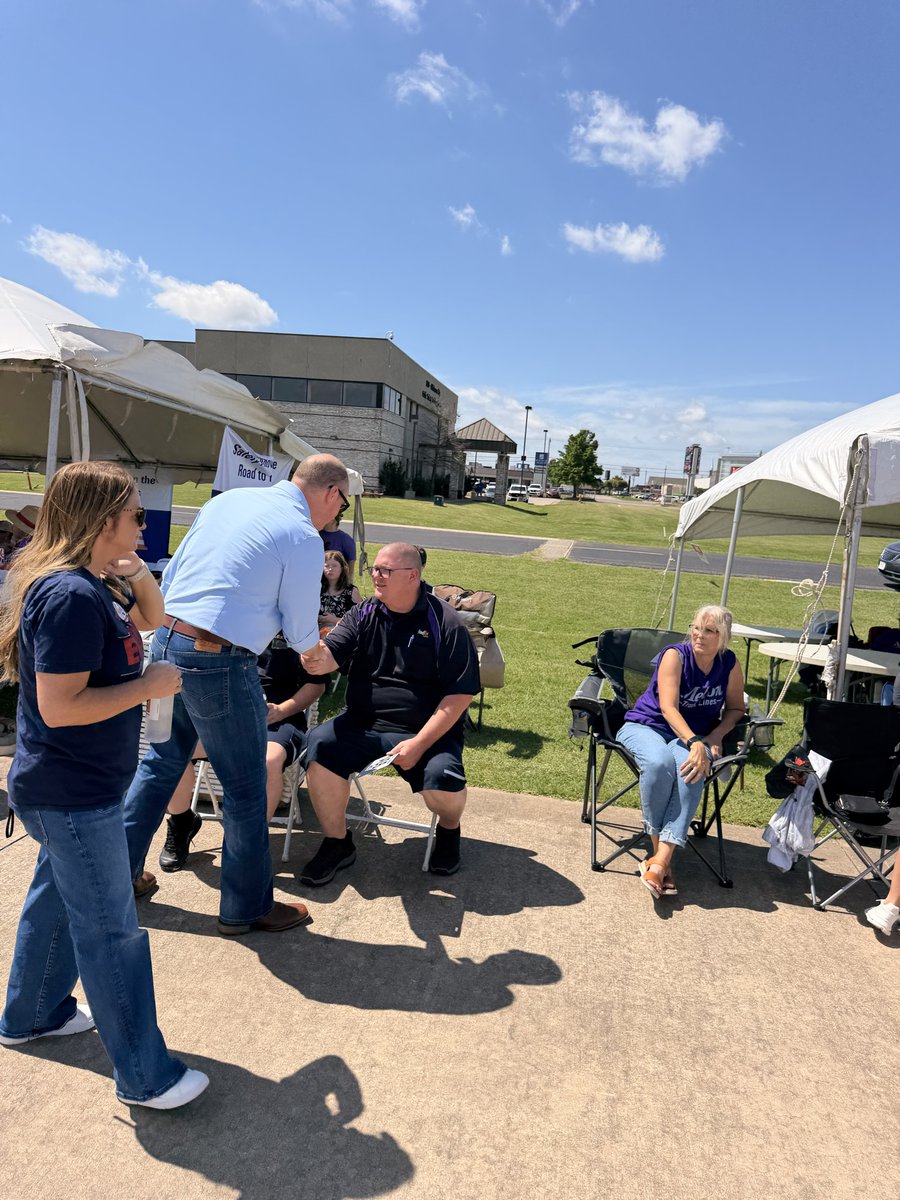
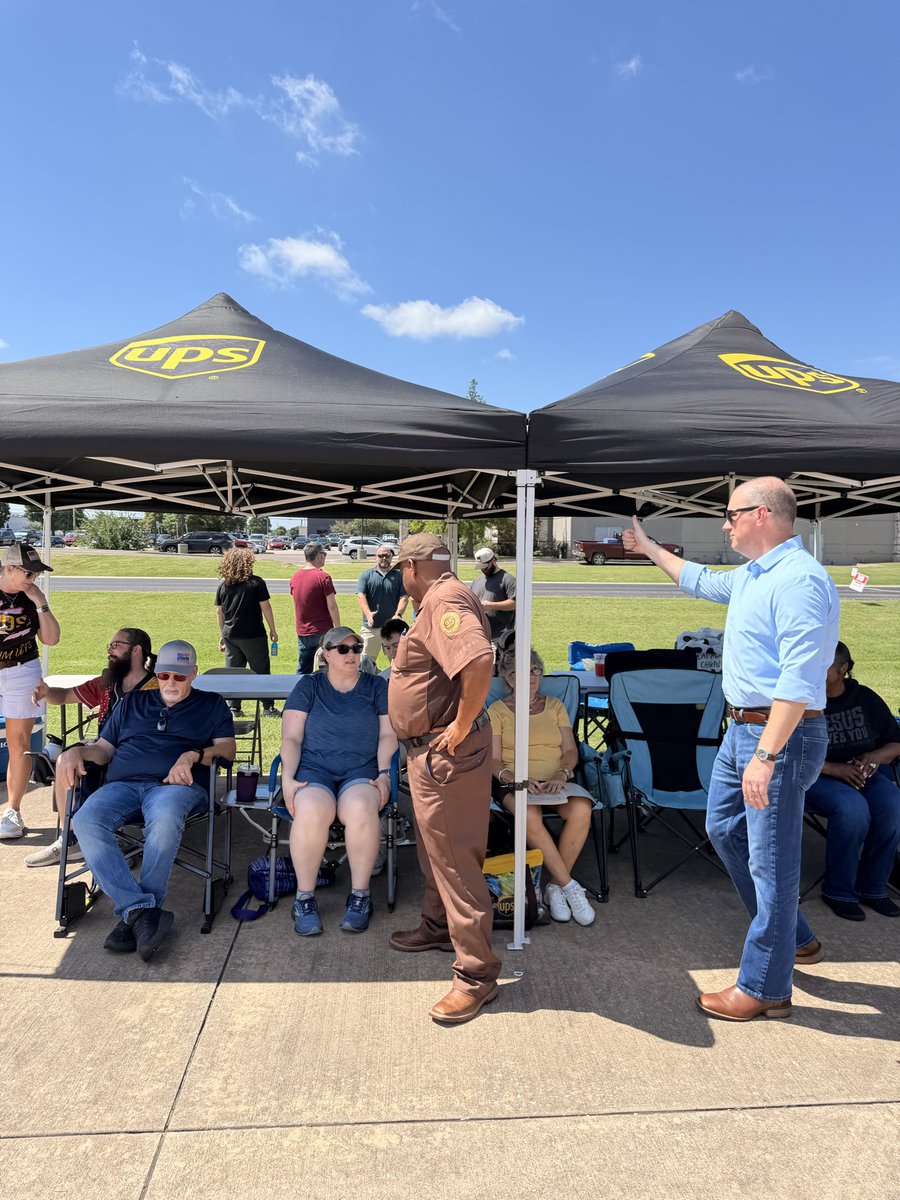
I had a lot of fun yesterday afternoon at the Oklahoma Trucking Association Championship!
Oklahoma truckers keep our economy moving and our shelves stocked. It was great visiting with the hardworking folks who spend countless hours on the road serving communities across our state.
Vote Jon Echols for Attorney General on June 16th!


2
4
355
Jon Echols’ Bid for Attorney General, and Why I’m a NO!
Jon Echols was a key member of the Oklahoma House leadership team, specifically House Majority Floor Leader, when HB 1010XX passed in the 2018 second special session, the largest tax increase in state history.
Jon Echols, “IS” an establishment politician who wants Oklahomans to believe he’s the tough, law-and-order conservative ready to serve as our next Attorney General. But the facts tell a different story. In 2009, Echols co-founded Turn Key Health Clinics (now TK Health), a for-profit outfit that rakes in taxpayer dollars providing medical care to inmates in over 100 jails across nine states. The company has been slammed with more than 100 lawsuits alleging negligent care, delayed treatment, and preventable deaths, with joint investigations linking it to over 50 inmate fatalities in the past decade alone. While Echols no longer holds a majority stake, the controlling interest was sold to the Dallas-based private equity firm Trive Capital for its majority stake in Turn Key Health Clinics around 2019, the exact purchase price paid by Trive has never been publicly disclosed. However, Echols still maintains a minority ownership interest and drew a salary from the firm even while serving as House Majority Floor Leader. Inquiring minds want to know how much of that sale of the “majority state” to Trive went to Echols?
Just weeks after Echols announced his AG candidacy in late February 2025, the Oklahoma Supreme Court delivered his old company an unprecedented gift. In a unanimous March 2025 ruling, the court granted Turn Key Health Clinics sovereign immunity under the Oklahoma Governmental Tort Claims Act, classifying its private, for-profit jail healthcare services as a “public function.” This legal armor shields the company from many state-level lawsuits, dramatically limiting accountability for families grieving lost loved ones. The timing couldn’t be more convenient, and the ruling only applies in state court. Turn Key remains exposed in federal suits where serious allegations of systemic failures continue to pile up. We need an AG who is willing to fight this type of protectionism, not cash in.
This is textbook cronyism, and it raises a glaring conflict of interest that should disqualify Echols from the Attorney General’s office. As AG, he would be charged with defending the state, enforcing laws governing jails and contractors, and holding powerful interests accountable. Yet his own business just received special protection from the very court system he seeks to lead. Oklahomans deserve an Attorney General who puts taxpayers and victims first, not an insider whose personal financial stake is tied to a company that profits from government contracts while dodging responsibility for substandard care. Until Echols fully divests and explains how he’ll avoid these conflicts, his candidacy reeks of the same big-government favoritism he claims to oppose.
2
58