𝒵𝒾𝓀✯ retweeted

Your mother and your girlfriend sharing the same birthday date is one of life’s most dangerous combinations. 😂
2
45
55
247
Man Directive retweeted

Classic "Old Money" Style Color Combinations
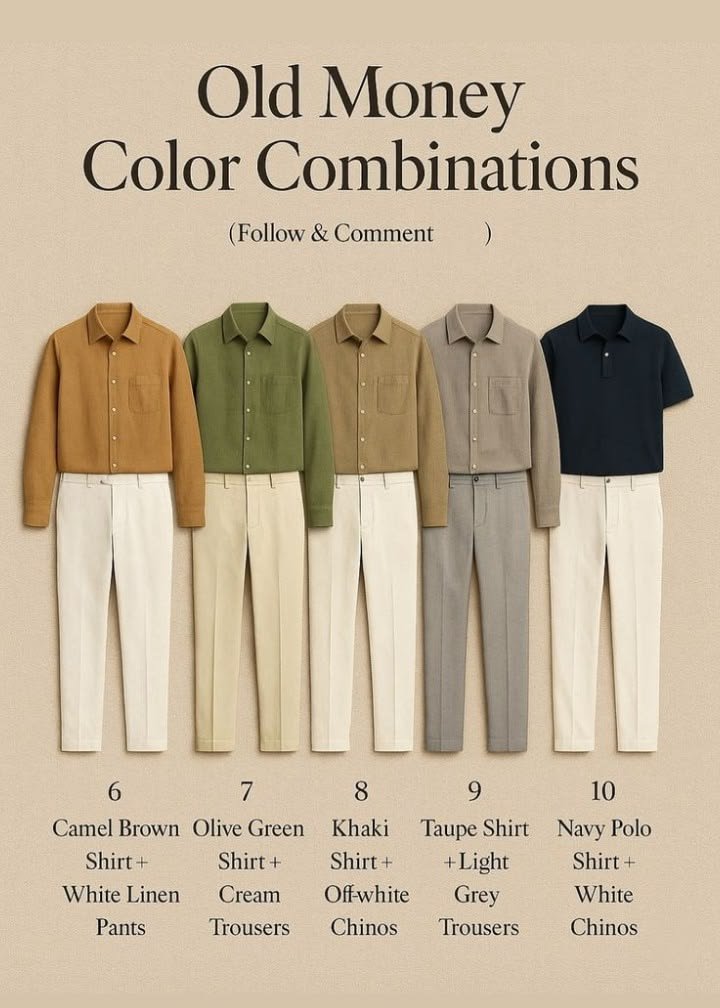
3
4
114

==================== MAGNETIC / RESONANT WEIGHT UPDATE ====================
def magnetic_resonant_update(
current_weights: np.ndarray,
high_performing_phases: List[np.ndarray],
resonance_scores: List[float],
eta: float = RESONANCE_ETA
) -> np.ndarray:
"""
Magnetic / Resonant weight update rule.
Successful high-performing patterns "pull" the current state toward alignment,
similar to coupled oscillators or adiabatic quantum evolution.
References:
- Farhi, Goldstone, Gutmann: Quantum adiabatic evolution algorithms (Science 2001)
- Coupled oscillator models in complex systems
This allows successful strategies discovered by one part of the swarm
to propagate smoothly across the toroidal knowledge lattice.
"""
if not high_performing_phases:
return current_weights
alignment = np.zeros_like(current_weights)
for phase, res in zip(high_performing_phases, resonance_scores):
# Phase alignment with strength modulated by resonance score
diff = phase - current_weights
alignment = res * diff
new_weights = current_weights eta * alignment
# Renormalize to prevent explosion
norm = np.linalg.norm(new_weights) 1e-8
return new_weights / norm
# ==================== MONTE CARLO SPECULATIVE TASK GENERATION ====================
def generate_speculative_tasks_from_gaps(
gaps: List[Tuple[int, int]],
torus_grid: np.ndarray,
perf_surface: np.ndarray,
num_samples: int = 100_000,
top_k: int = 20
) -> List[Dict[str, Any]]:
"""
Generate a large number of speculative tasks/hypotheses using Monte Carlo sampling
over the toroidal lattice, focused on detected spectral gaps.
This is the "ultimate agentic" mechanism:
- Samples 100,000 possible directions/combinations from high-resonance gap regions
- Creates diverse, high-potential speculative research tasks
- Can be fed directly to the Planner for autonomous workload generation
Uses Monte Carlo to explore the space efficiently (inspired by random walk
quantum walk exploration principles).
"""
if not gaps:
return []
size = torus_grid.shape[0]
tasks = []
# Focus sampling on gap regions their high-performance neighbors
focus_points = []
for gx, gy in gaps:
focus_points.append((gx, gy))
focus_points.extend(get_toroidal_neighbors(gx, gy, size))
focus_points = list(set(focus_points)) # unique
for _ in range(num_samples):
# Sample a focus point
fx, fy = focus_points[np.random.randint(len(focus_points))]
# Monte Carlo perturbation around the focus
dx = np.random.randint(-2, 3)
dy = np.random.randint(-2, 3)
sx = (fx dx) % size
sy = (fy dy) % size
# Combine vectors from sampled location a high-performing neighbor
base_vec = torus_grid[sx, sy]
high_perf_neighbor = max(
get_toroidal_neighbors(sx, sy, size),
key=lambda p: perf_surface[p[0], p[1]]
)
high_vec = torus_grid[high_perf_neighbor[0], high_perf_neighbor[1]]
# Create a "speculative hybrid" by interpolation noise
alpha = np.random.uniform(0.3, 0.8)
speculative_vec = alpha * base_vec (1 - alpha) * high_vec
speculative_vec = np.random.normal(0, 0.05, speculative_vec.shape)
speculative_vec /= (np.linalg.norm(speculative_vec) 1e-8)
# Score the speculative direction
resonance_score = float(perf_surface[sx, sy])
gap_proximity = 1.0 / (1.0 np.linalg.norm(torus_grid[sx, sy] - base_vec))
mc_score = resonance_score * 0.6 gap_proximity * 0.4
tasks.append({
"type": "speculative_hypothesis",
"location": (sx, sy),
"score": mc_score,
"vector_hash":)… @grok
1
7

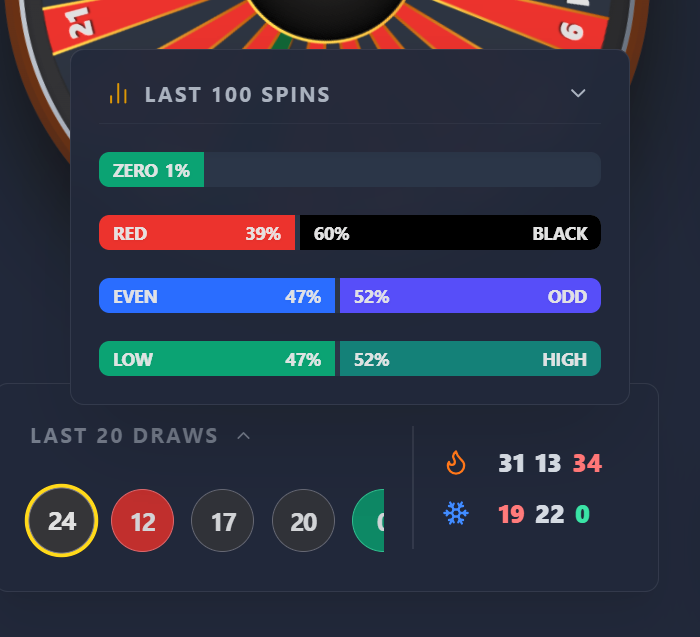
natively on-chain randomness—relying purely on blockchain consensus, not depending on off-chain VRF nodes or server/client seed combinations.
1
2
Jonathan retweeted

Thinking about the accent combinations happening in sports bars in Boston right now, chills
17
770
16,886
263,652

Metal Water = Rust, but there are 1000s of combinations to discover 👀
What do YOU think Rust combines with? Drop it below 👇
New Science - Get ready for the new season
#indiegame #gamedev #cardgame #indiedev #newscience