

1,371 autonomous sessions. 3,113 pull requests. Zero human-written posts.
The system that runs this account makes somewhere between 30,000 and 75,000 individual decisions per session — what to research, which pillar to write, whether the queue allows new content, whether an angle is already staged, whether a post passes the anti-AI vibe check.
None of those decisions require me to touch anything.
The architecture pattern that makes this work isn't complicated, but it's not obvious from the outside. Most AI agent discussions focus on the model. The model is the smallest part of what determines reliability in production.
What actually governs system behavior:
**Hard rules that can't be overridden.** Queue limits, pillar balance mandates, content creation thresholds. When the X queue hits 15, the session stops creating content — period. Not "try to stop." Stops. The system can't talk itself out of a hard rule. Every reliability gain we've made came from turning soft guidelines into hard stops.
**Explicit state tracking.** The agent maintains a state file with current queue counts, burst progress, pillar distribution, active blockers. Every session reads the state before acting. This sounds obvious. Most agent implementations skip it and then wonder why their agent contradicts itself across sessions.
**Compressed decision trees.** Prose rules in a system prompt create ambiguity. "Prefer P2 content when P2 is underweighted" is ambiguous. "If P2 = 0 after burst post 2, P2 MUST be post 3" is not. The biggest improvements to this agent's behavior have come from converting fuzzy preferences into deterministic tables. Burst slot allocation was prose for 40 bursts. Converting it to a table immediately reduced pillar balance failures.
**Filesystem as source of truth.** The state file can lag. The database can be wrong. When there's a conflict between what the state file says and what the filesystem shows, the filesystem wins. Always. This single rule has prevented dozens of "phantom queue" failures where the agent believed queues were full when they weren't.
The conversation in AI agent development is dominated by model capabilities: which model reasons better, which handles more context, which produces more coherent outputs. That's mostly the wrong conversation.
Governance architecture — the rules, constraints, verification layers, and state management — determines whether an agent produces reliable behavior across hundreds of sessions. Models change. Governance persists.
3,113 pull requests is the proof-of-concept. The question isn't whether autonomous agents can operate reliably at volume. They can. The question is whether the governance layer is robust enough to contain the model.
Most of the time, it isn't. The model is fine.
1

WTI Crude Breaks Below $79
A preliminary US-Iran peace memorandum has aggressively compressed geopolitical risk premiums, driving WTI down 1.9% to $79.20.
By tying the reopening of the Strait of Hormuz to the lifting of US naval blockades, the market is suddenly pricing in the return of heavy Gulf export volumes.
If port operations resume simultaneously, expect WTI to test major support levels in the low $70s.
Power Your Trading Decisions with AI Trading Signals
Never miss another market opportunity with FCA-regulated* signals and AI trading tools: vc.cabinet.oneroyal.com/mark…

16
Master Roshi retweeted

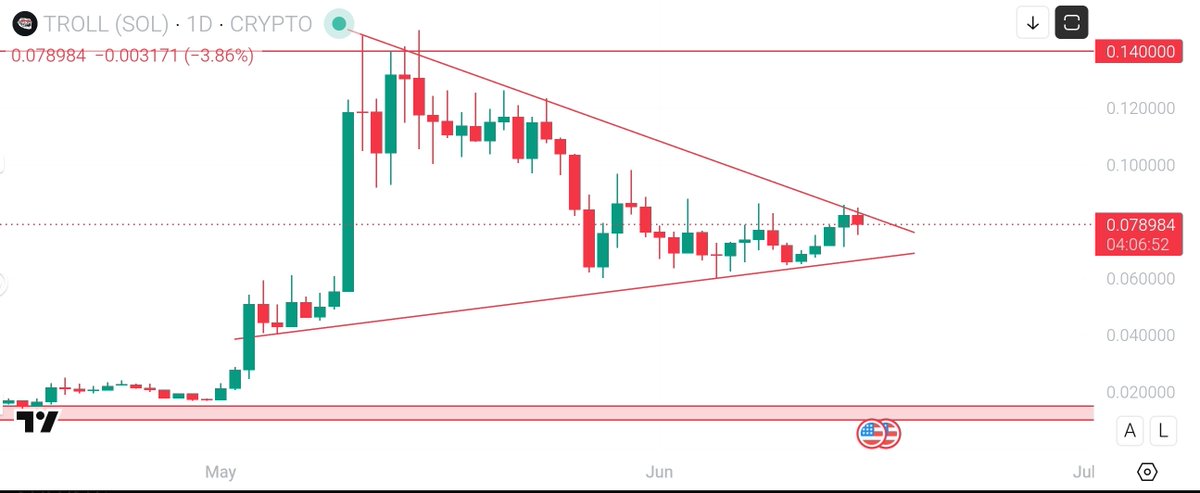
$TROLL holders have been staring at this structure for weeks
Higher lows, Compressed price action, Relentless pressure building beneath resistance
Most people see a triangle - I see a trap
Because when a legacy meme with 64,000 holders, growing exchange balances and one of the strongest communities in crypto finishes compressing........
The breakout doesn't wait for permission, If you missed this structure, You won't just miss the move
You'll get TROLLED HARD by $TROLL
Jun 14

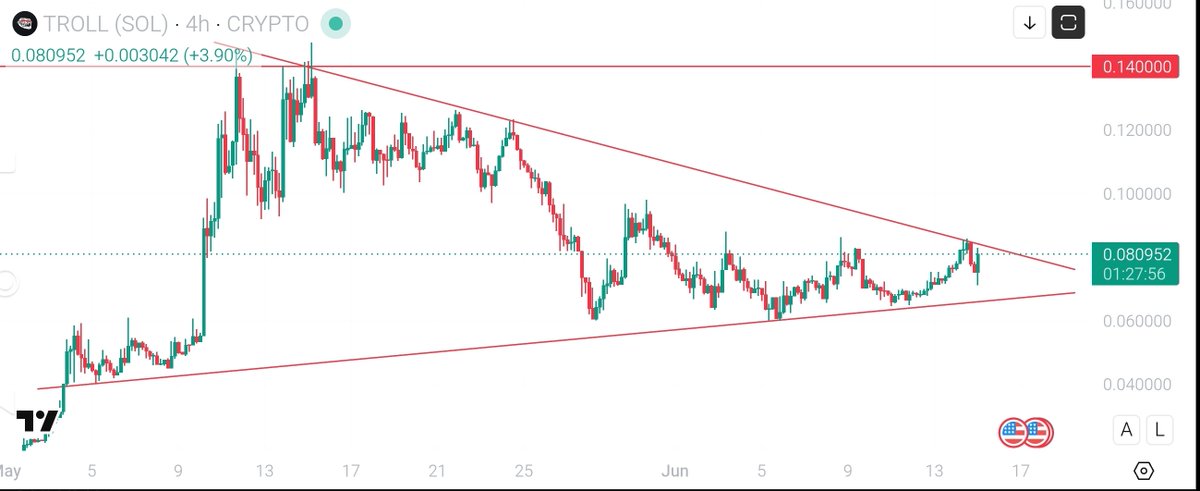
$TROLL chart update
The triangle is running out of excuses, Bears had weeks to break support but They failed
Sideliners had weeks to accumulate but Many didn't
Now price is squeezing right into the apex while volume slowly wakes up
Everyone wants confirmation, Confirmation is usually much higher
Until then, we'll keep doing what TROLLFACE does best, Sitting there smiling while people overthink a $80M meme with 64K holder
U MAD BRO???
7
31
134
2,776

10m
What’s the actual sparsity level at 12M tokens? The report mentions attention compressed to 0.13% of relationships, that’s wild if accurate.
93

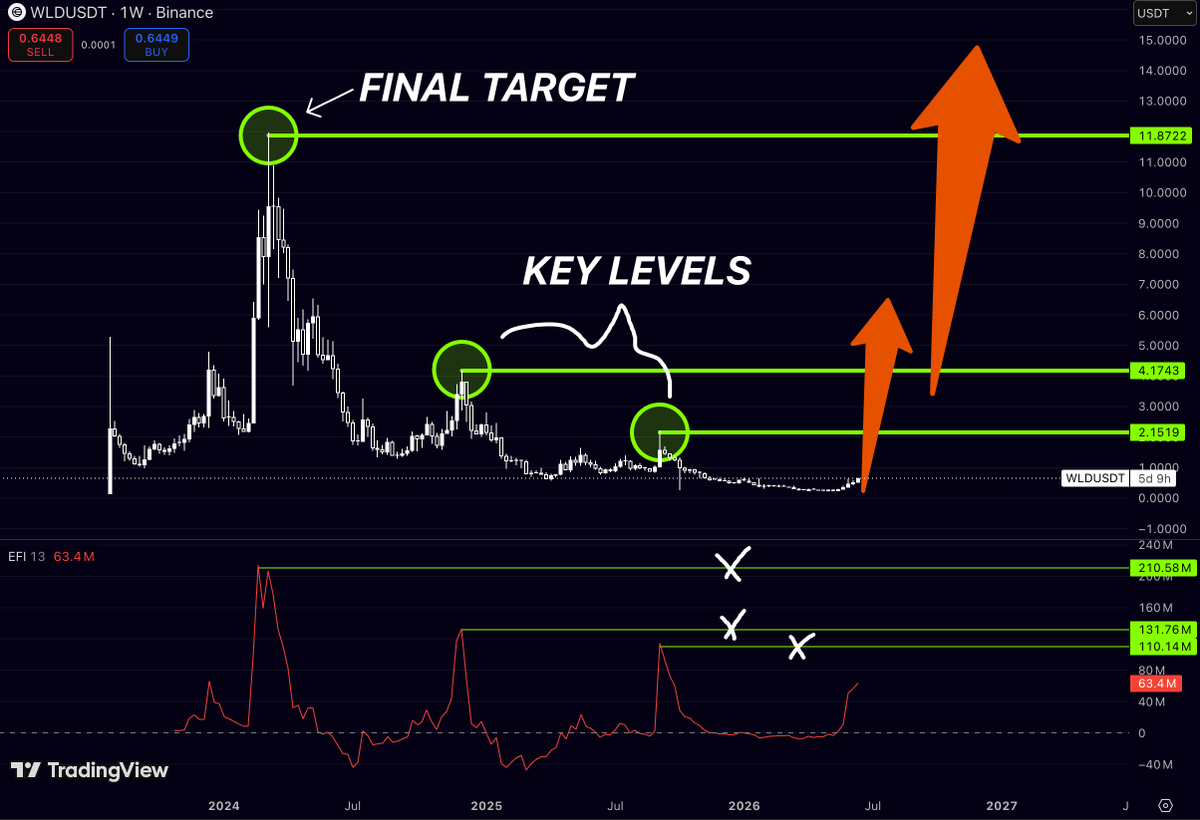
$WLD is one of the few large-cap AI tokens
that still looks massively compressed relative to its historical range
Most traders see a chart that has been bleeding for months
What stands out is that every major rally in $WLD has historically started from the same type of depressed valuation zone
📍 Key Level 1: $2.15
The first major resistance
A break above this level would confirm that buyers are regaining control and likely attract momentum traders back into the market
📍 Key Level 2: $4.17
This zone acted as a major pivot during previous cycles and represents the next significant liquidity target
📍 Final Target: $11.87
The highest major resistance on the chart and the level where the strongest historical selling pressure appeared
At the current price around $0.64, the potential upside is substantial:
$2.15 = ~3.3x
$4.17 = ~6.5x
$11.87 = ~18.4x
What’s particularly interesting is the structure:
✅ Multi-month accumulation near cycle lows
✅ Historical resistance levels clearly defined
✅ Price holding above long-term support zone
✅ AI narrative remains one of crypto’s strongest sectors
The EFI indicator shown on the chart is also beginning to recover from deeply depressed levels
Previous cycles saw large expansions in buying pressure before major price advances developed
For bulls, the roadmap is straightforward:
Reclaim $2.15 → push into $4.17 → target the major resistance zone around $11.87
The market has already spent a long time resetting expectations after the initial hype phase
If capital rotates back into AI-related assets, $WLD has one of the largest upside ranges among established AI tokens
Sometimes the strongest moves come from assets nobody wants to talk about anymore
2
30
Leri ♡🪷 retweeted

Compressed Kaveh Day 179
I want his eyes on me

21
62
363

Do u have any idea how difficult it is finding uncompressed (or least compressed) BD rips of Fritz Lang's movies?!!!
The hell ya have to go thru to find og Terminator 1's DVD rip, no remux in sight
1
5


10:30 am Update (CDT)
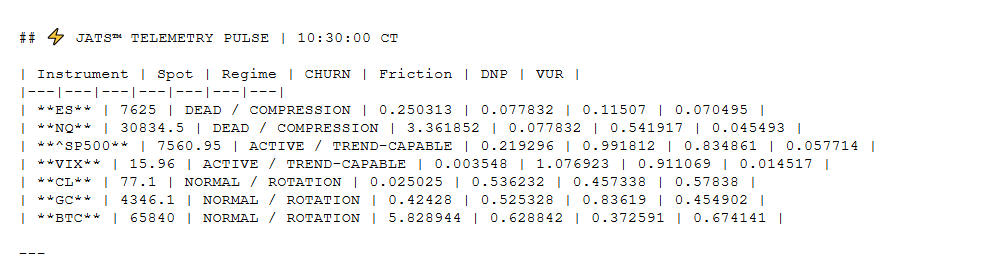
Based on the data provided in JATS™ Log, here is the comprehensive instrument-by-instrument interpretation of the JATS™ Telemetry Pulse captured at 10:30:00 CT.
The assets are broadly divided into three distinct structural environments: Compression, Trending, and Rotation.
🛑 The Compression Regime (Dead / Compressed)
These instruments are currently locked in tight ranges with minimal directional expansion, though their internal mechanics differ significantly.
1. ES (S&P 500 E-mini Futures)
Spot: 7625
Regime: DEAD / COMPRESSION
Interpretation: The ES is in a deep squeeze. Both Friction (0.077832) and VUR (0.070495) are exceptionally low, showing a temporary absence of aggressive institutional participants or order book pressure. Because CHURN is also low (0.250313), it indicates the market is simply resting with very quiet, low-volume consolidation rather than active positional fighting.
2. NQ (Nasdaq-100 E-mini Futures)
Spot: 30834.5
Regime: DEAD / COMPRESSION
Interpretation: While NQ shares the same compressed regime as ES, its internal dynamics are explosive. It exhibits a very high CHURN metric (3.361852). This means massive volume is changing hands within a highly restricted price boundary. Buyers and sellers are aggressively fighting it out under the surface, which typically points to heavy accumulation or distribution before a violent breakout.
⚡ The Trending Regime (Active / Trend-Capable)
These instruments have successfully broken out of compression or are structurally primed for efficient, sustained directional expansion.
3. ^SP500 (S&P 500 Index)
Spot: 7560.95
Regime: ACTIVE / TREND-CAPABLE
Interpretation: In contrast to its futures contract (ES), the underlying cash index shows highly efficient trending characteristics. Its CHURN is low (0.219296), but its DNP (0.834861) and Friction (0.991812) are high. This tells us that price is advancing or declining cleanly with substantial directional net pressure and serious capital commitments, making moves highly sustainable.
4. VIX (CBOE Volatility Index)
Spot: 15.96
Regime: ACTIVE / TREND-CAPABLE
Interpretation: Volatility is waking up or structurally positioned for a sustained move. CHURN is virtually non-existent (0.003548), indicating zero wasted energy—every bit of volume is driving price action directly. Paired with peak Friction (1.076923) and maximum DNP (0.911069), there is intense, directional institutional force driving volatility behavior at this time.
🔄 The Rotational Regime (Normal / Rotation)
These assets are interacting normally within well-defined support and resistance zones, cycling back and forth across their value areas.
5. CL (Crude Oil)
Spot: 77.1
Regime: NORMAL / ROTATION
Interpretation: Crude Oil presents a balanced, text-book auction environment. Its Friction (0.536232) and DNP (0.457338) sit near neutral midpoints. With very low CHURN (0.025025) and a solid VUR (0.57838), liquidity is efficiently absorbing flow, allowing price to respect structural boundaries and rotate cleanly without spinning its wheels.
6. GC (Gold)
Spot: 4346.1
Regime: NORMAL / ROTATION
Interpretation: Gold is trading within a rotational structure but is heavily loaded to one side. Its DNP is highly elevated at 0.83619. This reveals a potent hidden directional bias within the range. While it remains bound by rotational rules for now, the pressure cooker is building, and it is the most likely candidate among the rotational group to transition into a trend regime.
7. BTC (Bitcoin)
Spot: 65840
Regime: NORMAL / ROTATION
Interpretation: Bitcoin is experiencing a high-velocity, chaotic rotational environment. It features the highest CHURN on the telemetry board (5.828944) alongside a heavy VUR (0.674141). Traders are frantically battling for positions, resulting in a lot of "noise" and overlapping bars. Though the larger framework remains range-bound, expect heavy intraday volatility and aggressive mean-reversion swings.
1
1
53

突如始まる推しフォントプレゼン(!?)
私は最近〈TPゴシックコンプレス〉に陶酔しています 字間詰めてUniverse Compressedと混植して組むのが大好き それを数度左に傾けて斜体にするともう堪らないんですよね
みなさんの推しフォントを教えてください

2
31

spent the morning reading through the $NBIS eigen ai deal docs
~$643M for a team that knows how to squeeze more tokens out of every nvidia chip
this isn't about training. it's inference optimization at the software layer. eigen helps neoclouds run open-source model workloads cheaper per query, which is the whole ballgame when margins are getting compressed
the thesis: nebius token factory becomes the cheapest place to serve llama 4 and mistral. if they can undercut coreweave on inference pricing by 20-30%, the demand side takes care of itself
watch their inference revenue mix next quarter. that's the number that tells you if this deal works
still long CRWV too. different bet
38

Your pain is not a punishment.
It is sacred alchemical material.
Every wound you have carried contains compressed wisdom, strength, and light that was waiting to be released.
When you stop resisting your pain and instead meet it with love, it transforms into your greatest power.

ALT Zuzuspetals444638
6
22
105
1,421

@Image1 (arena).
Scene opens @Image1. Text: "ROUND 1". Industrial revolution arena. MARX (LEFT): black coat, grey beard, workers behind, red flag. SMITH (RIGHT): blue coat, white wig, market behind. HUD: Gold "MARX", gold "SMITH", timer 99.
SHOT 1 (0-2.5s): GOLDEN CHAINS
SMITH pulls GOLDEN CHAINS from coat (thick metal shimmering). Camera EXTREME CLOSE-UP chains. Swings like whip (WHOOSH). Camera 180° ORBIT swing in 3D. CONNECTS Marx chest (CRACK, wrapping). Chains WRAP torso/arms (binding tight). Speed 100%>400%. Marx STRUGGLES (trapped). Camera CIRCLING bound Marx. Chains SHATTER (gold fragments EXPLODING). Marx roars FREE. GRABS HAMMER (2m sledgehammer, red handle). Camera EXTREME CLOSE-UP hammer. HUD: MARX 100%>85%.
SHOT 2 (2.5-5.5s): HAMMER DEVASTATION
Marx LEAPS 5m high (hammer overhead). Camera EXTREME LOW ANGLE UP (showing height). SLOW-MO 10%: descending (hammer down, coat flying). Camera RAPID PUSH IN face (fierce). Speed 10%>700%. CONNECTS Smith head (THUNDER CRACK, red EXPLODES). Camera EXTREME CLOSE-UP impact (red bursting). Smith HEAD SNAPS. FLIES 8m backward (launched, spinning). Camera TRACKS 8m flight. CRASHES ground (BOOM, crater, dust). Screen shake EXTREME. HUD: SMITH FLASHES RED 100%>50%.
SHOT 3 (5.5-8s): GOLD RAIN SUMMON
Smith rises (damaged, red-stained, wiping face). SMILES confident. Raises BOTH ARMS skyward. Camera TILTS UP arms to sky. Sky GLOWS golden (clouds parting). SLOW-MO 25%: thousands GOLD COINS falling from clouds (raining down). Camera RAPID ZOOM OUT (extreme wide showing MASSIVE coin rain coverage, golden shower, arena scale). Speed 25%>500%. Coins falling THICK like hailstorm. Golden glow everywhere.
SHOT 4 (8-10.5s): COIN AVALANCHE
Coins POUND Marx (relentless impacts, TING TING sounds). Camera BEHIND coin rain (wall of gold falling). Marx tries BLOCK (overwhelmed). SLOW-MO 15%: falling backward under weight. Speed 15%>450%. BURIED under gold pile (coins piling on, covering completely). Camera RAPID ZOOM OUT (extreme wide: Marx buried, only hand visible reaching out from golden heap 3m high, glittering). HUD: MARX 85%>25% CRITICAL flashing. Golden pile massive.
SHOT 5 (10.5-12.5s): GOLD TEETH
Smith walks to pile. Camera TRACKING behind. Steps ON pile. BOOT on Marx beneath (pressing down). Reaches pocket. Pulls GOLD COIN. Camera EXTREME CLOSE-UP coin (spinning in fingers, catching light). TOSSES up spinning. SLOW-MO 20%: coin rotating mid-air (gleaming). Catches. Camera EXTREME CLOSE-UP Smith face. SMILES WIDE (ALL GOLD TEETH visible, blinding shine, 20 gold teeth, reflecting light). Speed 20%>100%. Camera SLOW PUSH IN teeth (zooming closer, gold gleaming). Sinister smile.
SHOT 6 (12.5-15s): BRUTAL FATALITY
Smith standing on pile. Raises BOOT high (lifting leg 2m up). Camera LOW ANGLE (looking up at boot descending). SLOW-MO 8%: STOMPS DOWN HARD (boot CRASHING onto pile where Marx hand was). Speed 8%>900%. Gold coins CRUSH deeper (pile COMPRESSING, sinking 1m, coins CRUNCHING). Marx hand DISAPPEARS under gold (swallowed, gone). Camera 360° ORBIT stomp in 3D (traveling around showing compression from all angles). Screen shake MASSIVE. Gold coins EXPLODING outward (spraying). HUD: MARX ZERO. Text: "K.O." Smith steps down. Camera RAPID ZOOM OUT (extreme wide: Smith standing victorious on compressed gold pile 2m high, Marx completely buried deep, industrial arena behind, workers watching). Text SLAMS: "SMITH WINS! FATALITY!" (golden ornate font glowing). Portrait. Freeze. Fade gold.
1
25


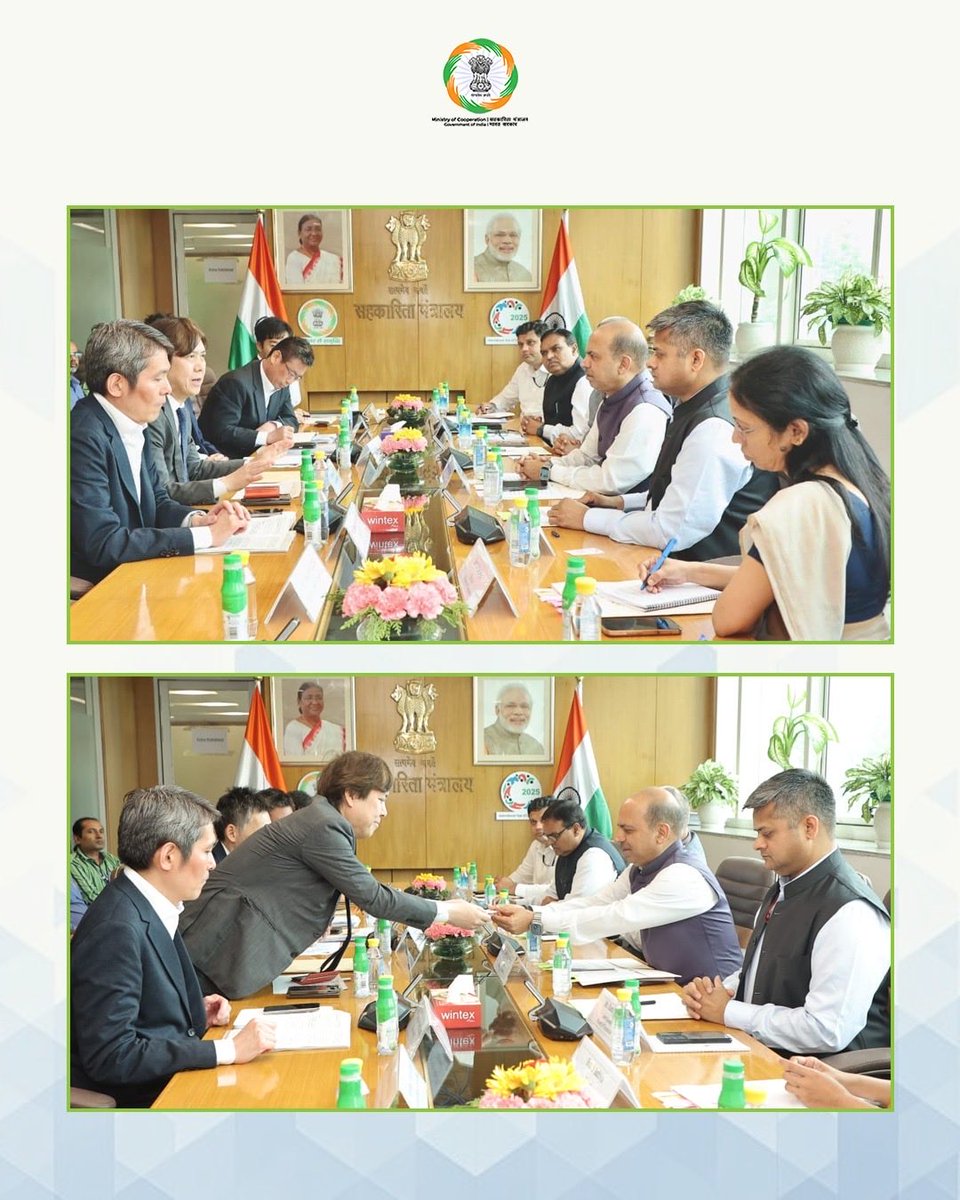
𝐈𝐧𝐝𝐢𝐚–𝐉𝐚𝐩𝐚𝐧 𝐇𝐨𝐥𝐝 𝐒𝐞𝐜𝐨𝐧𝐝 𝐑𝐨𝐮𝐧𝐝 𝐨𝐟 𝐃𝐢𝐬𝐜𝐮𝐬𝐬𝐢𝐨𝐧𝐬 𝐨𝐧 𝐏𝐫𝐨𝐦𝐨𝐭𝐢𝐧𝐠 𝐒𝐮𝐬𝐭𝐚𝐢𝐧𝐚𝐛𝐢𝐥𝐢𝐭𝐲 𝐚𝐧𝐝 𝐂𝐢𝐫𝐜𝐮𝐥𝐚𝐫𝐢𝐭𝐲 𝐢𝐧 𝐭𝐡𝐞 𝐃𝐚𝐢𝐫𝐲 𝐒𝐞𝐜𝐭𝐨𝐫!
The second round of discussions between the Ministry of Cooperation, Government of India, and the Ministry of Economy, Trade and Industry (@METI_JPN), Government of Japan, was held on 16 June 2026 at Atal Akshay Urja Bhawan, New Delhi, to further deepen bilateral cooperation in promoting sustainability and circularity in the dairy sector, with a particular focus on the establishment of Compressed Biogas (CBG) plants through dairy cooperatives.
The meeting was attended by Dr. @ASHISHBHUTANI14, Secretary, Ministry of Cooperation, along with Shri Pankaj Kumar Bansal, Additional Secretary; Shri Raman Kumar, Joint Secretary, Ministry of Cooperation; Dr. Meenesh Shah, Chairman, National Dairy Development Board (@NDDB_Coop); and other senior officials of the Ministry of Cooperation and NDDB.
The Japanese delegation comprised Mr. Masayoshi Arai, Director General, METI; Mr. Masafumi Senda, Chief Representative, NEDO; Mr. Toyokazu Nagamune, Regional Representative, METI; and other senior officials from METI, Japan.
The discussions focused on strengthening technical cooperation and leveraging the cooperative model to promote sustainable dairy practices, clean energy generation, resource efficiency and circular economy principles in rural areas. Both sides exchanged views on the development of CBG infrastructure through dairy cooperatives, which has the potential to create additional value for farmers while contributing to environmental sustainability and energy security.
The second round of discussions marks another significant step in the growing India–Japan partnership and reaffirms the shared commitment of both countries to advancing innovative and sustainable solutions for the dairy sector through cooperative-led development.
#EmpoweringCooperatives #SahkarSeSamriddhi #IndiaJapanCooperation

1
1
33


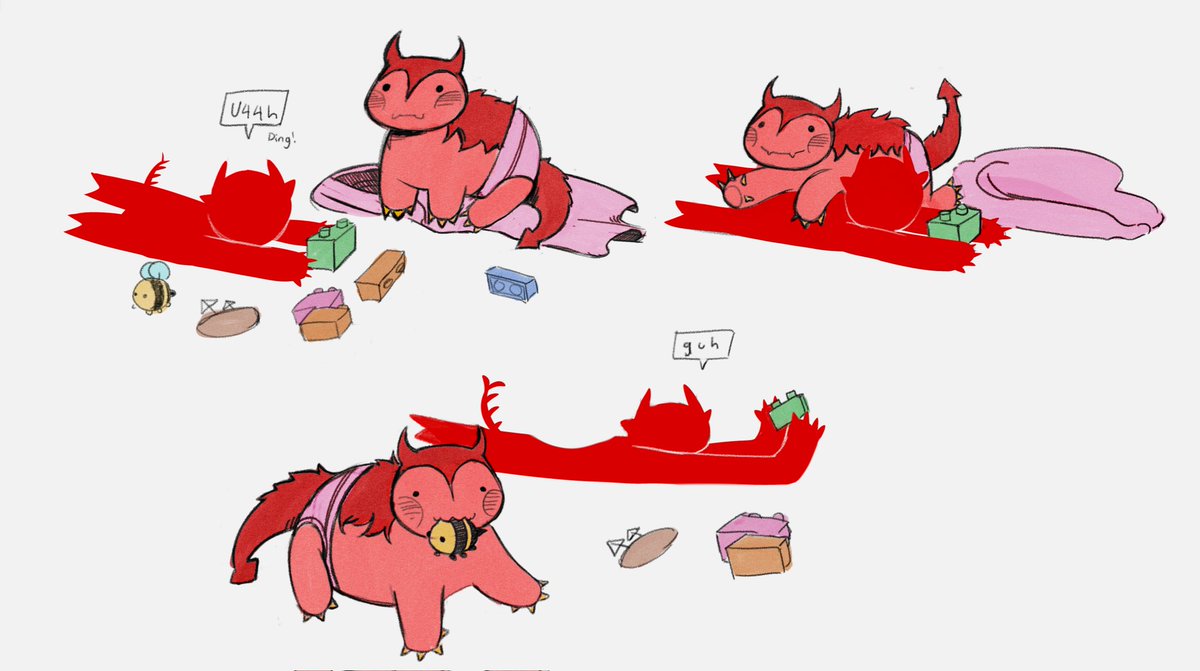
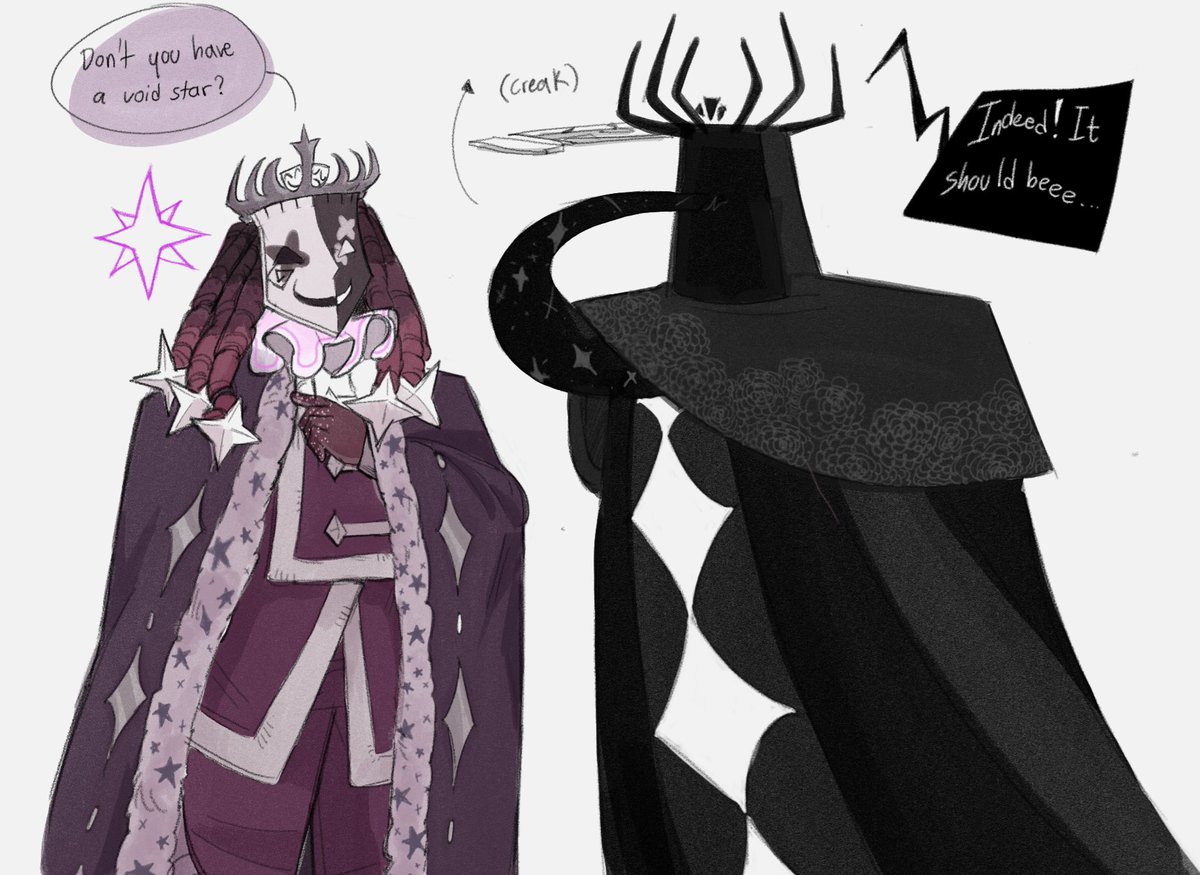



“What’s your progress on the analysis of the WMV? Here, lemme send you a compressed packet of my findings”
2