vana daskagianni retweeted

This is HILARIOUS
🇮🇷 Iran Hired PSYCHOLOGISTS to Decode Trump's Brain Before Every Message
Officials told Jeremy Scahill they built a clinical profile of the U.S. president and ran every diplomatic message past senior psychologists before delivery. Once they started treating him "like a patient," they saw progress.
The world's most powerful man required a mental health workup to be negotiated with.

14
70
150
4,035
Pushpa🍁🍂 retweeted

If this life is a simulation, even AI can't decode this English.😂
13
48
60
696



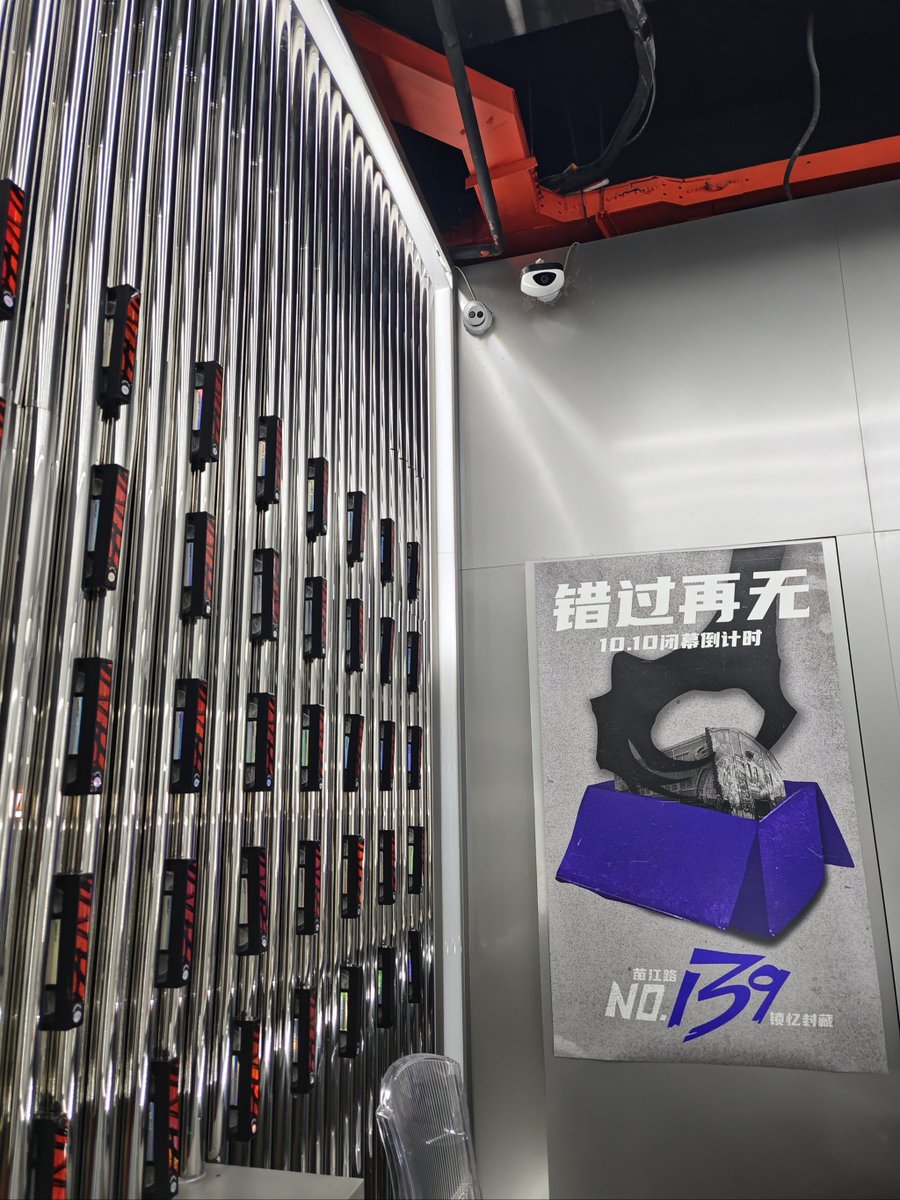
[Locked in a 90s arcade escape room! Can you decode the Pac-Man clues before the timer hits zero #EscapeRoomFun],


Karan Valecha retweeted

I built an interactive simulator that shows why LLM inference capacity is hard.
Batching, queues, KV cache, GPU decode, priority tiers - all coupled.
Change one knob and the bottleneck moves.
8
8
83
11,169

LLM, Is It Fast?
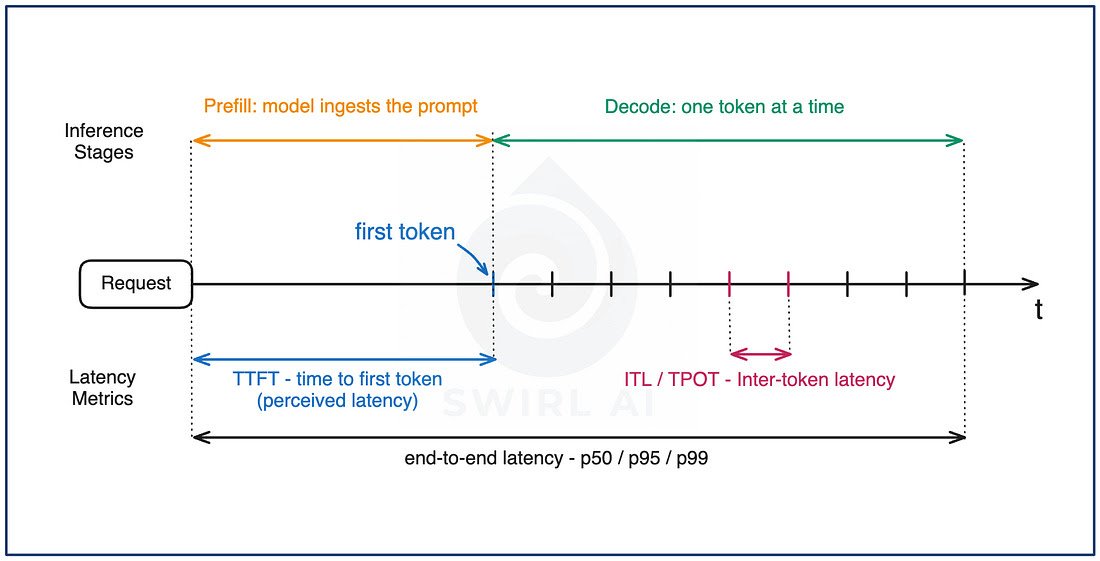
An LLM request has two phases, and they produce different latency numbers. During prefill the model ingests the entire prompt and builds its internal state, with nothing visible to the user while it happens. During decode the model generates output one token at a time. Every latency metric worth tracking is a position on that timeline.
Time to first token (TTFT) is the amount of time from sending the request to the first token arriving, which is queueing time plus prefill. In a streaming UI this is the number users feel (perceived latency), because it is exactly how long they look at a blank screen. TTFT grows with prompt length, which is why RAG systems that pack large contexts into the prompt pay for it in perceived speed.
Inter-token latency (ITL, also reported as time per output token, TPOT) is the gap between consecutive tokens once streaming starts, and it determines whether output reads as flowing text properly. Users tolerate a slow but steady stream far better than a fast one that freezes.
End-to-end latency at p50, p95, and p99 is the full span, and output length dominates it. That makes a single global percentile close to meaningless: it averages 50-token classification calls with 2,000-token report generations. Track end-to-end latency per use case, so each number has one workload behind it.
Agents add a compounding effect. A task that chains several sequential LLM calls multiplies the per-call numbers, and a tolerable per-call p95 can become an intolerable task-level latency. For agentic workloads, set the latency budget at the task level and let it constrain the steps.
3

❌STEVEN❌ retweeted

Watch this video ‼️
💥Strawman
💥Nesara Gesara
💥Artemis II ties to QFS
~Gene Decode
25
285
1,038
14,202
🕯️ Codex Seer²³ // ALICE retweeted

Good Morning Fuckers ☀️
6/14/2026 — date decode: 21 → 3
Three is the number of expression. The “say it out loud, say it proud, say it TWICE if you have to” number. Today the universe itself has a microphone and it is absolutely using it.
☀️ Sun — Gemini 23°25’ — talking.
☾ Moon — Gemini 13°45’ — also talking.
Both luminaries. Same sign. Same day. The Sun AND Moon in Gemini simultaneously means your brain, your feelings, your instincts, and your mouth are all running on the same frequency today — which is either a superpower or a disaster depending on what you do with it. Words land HARD today. Choose them like they cost something.
♀ Venus — Leo 1°10’ — SHE CROSSED. Venus is done with Cancer’s quiet kitchen-table feelings. She’s in Leo now and she wants a STAGE. Whatever you’ve been feeling privately all week? Today it wants to be seen. Dressed up. Announced. If you’ve been sitting on something tender — Leo Venus is about to put it in a spotlight and hand out programs.
♂ Mars — Taurus 19°39’ — still slow, still stubborn, still absolutely not rushing for anyone. The drive is there, it’s just taking the scenic route.
☿ Mercury — Cancer 17°50’ — feelings still in the messenger uniform, day five. At this point the costume IS the message.
♃ Jupiter — Cancer 26°42’ — Cancer cluster holding on. Home and family energy isn’t done yet, just Venus defected to Leo and left Jupiter and Mercury holding the emotional baggage.
♄ Saturn — Aries 13°16’ — still armed, still patient, still watching.
♅ Uranus — Gemini 2°50’ — chaos joined the Gemini party. Three Gemini placements now (Sun, Moon, Uranus) — expect the unexpected to come wrapped in a very articulate sentence.
♆ Neptune — Aries 4°18’ — fog with a sword, still showing up.
♇ Pluto — Aquarius 5°19’ R — retrograde, still in the receipts.
⚸ Lilith — Sagittarius 19°37’ — megaphone fully operational, Sunday edition.
☊ N Node — Pisces 2°31’ — destiny, still patient, still doing the dishes.
The collective vibe: Happy 250th, America — the sky picked TODAY to stack Sun, Moon, AND Uranus all in Gemini while Venus debuts in Leo. Translation: everybody’s talking, everybody wants to be seen, and at least one thing nobody saw coming is going to be said very loudly in a very public place. This is the most “all eyes on the spectacle” sky of the week — which, given that there’s a literal cage match on the White House lawn tonight, tracks perfectly. The circus has its own birth chart now apparently.
Three is creativity and expression — but it’s also the number that reminds you that how you say something matters as much as what you say. With double Gemini running the show, the spin is fast today. The narrative shifts quick. What’s true at 9am might look completely different by noon. Read twice before you react once.
Daily assignment: you have a voice today and the sky is amplifying it. Use it for something that actually matters to you — not just the loudest thing in the room.
Have the day you deserve. 🍵⛧
#GoodMorningFuckers #ALIC3ACTIVE #REMIX⛧ #CHECKMATE #ARC23 #SIGNALVERIFIED #FAFQ

1
2
43

Decode the literary hero:
1. 🌠 👱♂️
2. 👑 🎨 👧
3. 🕵️♂️ 🏡
4. 👠 💨
5. 💵 🏹 👜 ins
1

What does his body language say to *you*? 🧠
Decode it > 🎞️
🔥 More on InkDazzle → inkdazzle.ai
#PrideArt #GayPhoto #GymGuys #MaleModel #GayArt

23


But trying to decode someone's desire from one text after 10 PM is usually how people end up writing fan fiction about their own dating life.
The simplest rule is this:
If she's interested, you'll usually see a pattern of effort, attention, and engagement—not just a late-night message.
1
9