CONFLICT NEWS FELLA retweeted

🚨 TRUMP’S OWN AMBASSADOR JUST BROKE WITH HIM
Mike Huckabee openly defied Trump’s position, declaring:
“Without Israel, there would not be an America.”
“We owe our very existence to what happened in this land.”
 Clash Report
307
146
501
13,725

Origins and Specific Claims of the forged Donation of Constantine Document
Composed between **750 and 756 CE**, the Donation of Constantine purported to be a decree from Emperor Constantine the Great dated to 315 CE. In exchange for Pope Sylvester I curing him of leprosy, the text claimed Constantine granted the papacy:
* **Temporal Supremacy:** Authority over Rome, Italy, and all Western provinces of the Roman Empire.
* **Imperial Regalia:** The right to wear imperial insignia, including the tiara, purple robes, and scepters.
* **Political Authority:** The power to appoint and depose secular rulers, effectively making the Pope the supreme judge over kings and emperors.
* **Territorial Gifts:** Specific ownership of the Lateran Palace and the city of Rome, while Constantine allegedly moved his capital to Constantinople.
## Usage in Government Formation and Taxation
The Church leveraged these fabricated claims to fundamentally reshape medieval governance and economics:
**Formation of Governments and Legitimacy**
The document served as the legal foundation for the **Papal States**, transforming the Pope from a spiritual leader into a temporal monarch. Popes used it to assert the right to crown emperors, most notably influencing the coronation of Charlemagne in 800 CE and the establishment of the Holy Roman Empire. By claiming the Emperor’s power was delegated by the Pope, the Church positioned itself as the ultimate source of political legitimacy, allowing it to intervene in succession disputes and even depose kings who defied papal will.
**Taxation and Economic Control**
While the document did not explicitly outline a tax code, its claim of supreme temporal authority allowed the Church to demand financial tribute from nations:
* **Peter’s Pence:** The assertion of universal papal sovereignty justified the collection of annual taxes (Peter’s Pence) from kingdoms like England and Poland, framed as tribute to the Pope’s imperial status.
* **Clerical Tax Exemptions:** Citing the "imperial" privileges granted by Constantine, the Church successfully argued that clergy and church lands were exempt from secular taxation. This forced monarchs to seek papal permission before taxing the clergy, a power Pope Boniface VIII aggressively enforced against Philip IV of France in 1296.
* **Feudal Dues:** As the supposed heir to the Western Roman Empire, the Papacy claimed feudal rights over various territories, demanding rents and military support from vassal states.
## Admission of Forgery and Modern Impact
Despite Lorenzo Valla proving the document a forgery in **1440** through linguistic analysis, the Church suppressed his findings, placing his work on the *Index of Prohibited Books* in 1559. Cardinal Caesar Baronius privately admitted the fraud between **1588 and 1607**, but the Vatican offered no public retraction for centuries.
The Catholic Church officially and publicly admitted the document was a forgery only in **1929**, coinciding with the **Lateran Treaty**. This treaty resolved the "Roman Question" by dissolving the Papal States (whose existence the Donation had long justified) and establishing the independent Vatican City. This admission marked the final end of the Pope’s direct temporal rule over central Italy, cementing the modern separation of spiritual authority from direct territorial governance.
3
Marvin the Martian retweeted

Jun 15
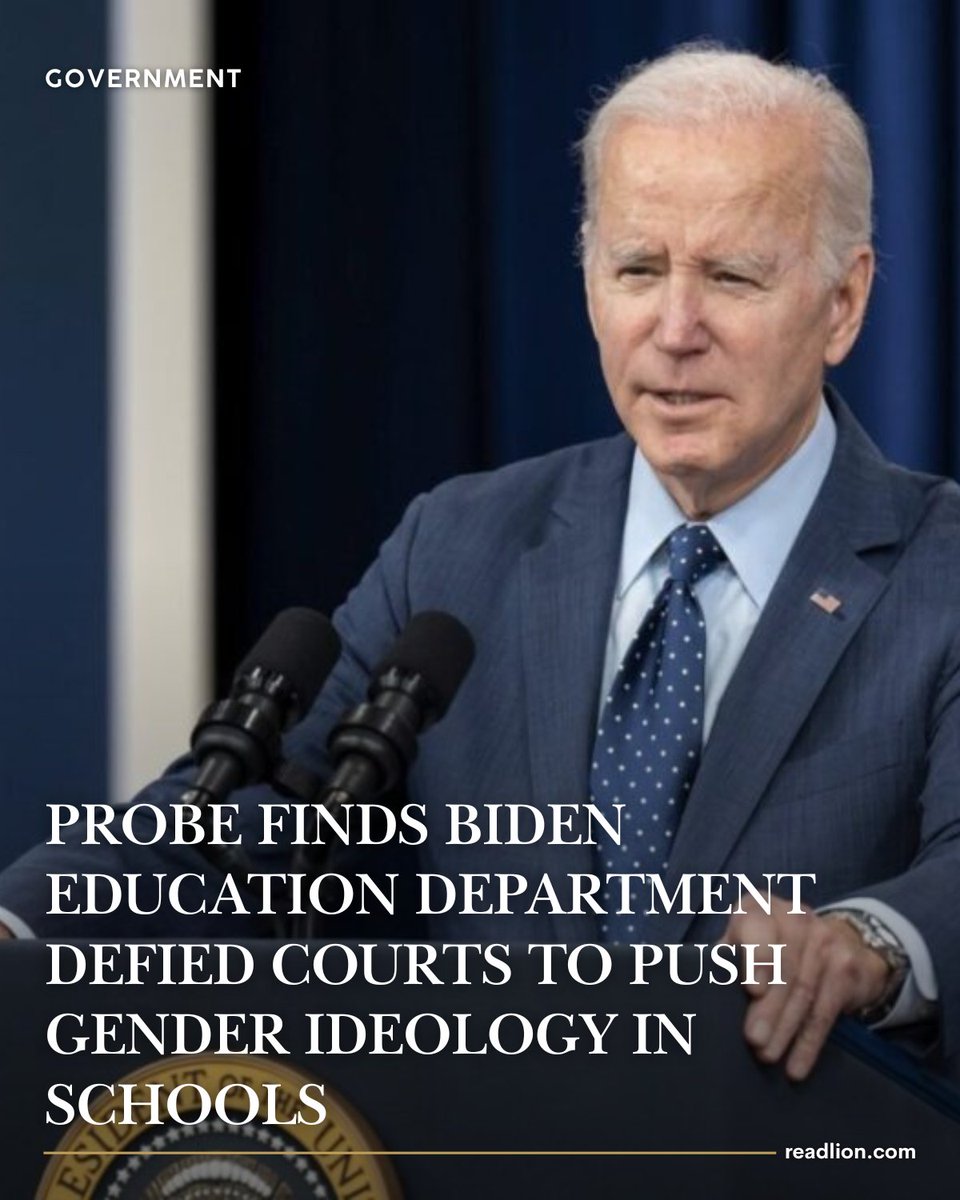
Senior officials in President Joe Biden’s Department of Education defied a federal court order in launching investigations of gender identity and sexual orientation discrimination in schools, according to a federal watchdog finding.
The Office of Special Counsel released a report this week that confirmed the disclosure of Education Department whistleblower Timothy Mattson, who said the department’s Office of Civil Rights unlawfully processed complaints about gender identity discrimination after a federal judge halted an executive order from going into effect that was the basis for the investigations.
According to Mattson’s disclosure, the Office for Civil Rights investigated a school that restricted athletic competition to biological sex.
In another case, the department opened a probe of a school that declined to change a student’s name and pronouns in academic records and restricted bathroom use to biological sex.
1
3
5
339