
US Congress eyes first foreign service overhaul in decades devex.com/news/us-congress-e… #Devex via @Devex
2
1

How can health facility design support maternal and newborn care?
Minara Chowdhury (@TheIHI), @SanamRoderDeWan (@GeiselMed / @WorldBankGroup), and Amie Shao of MASS Design Group explore how infrastructure & facility design can support care delivery and patient experience.

118
400
3,938
6,037,224
Watson's Vintage Finds retweeted

Jun 14
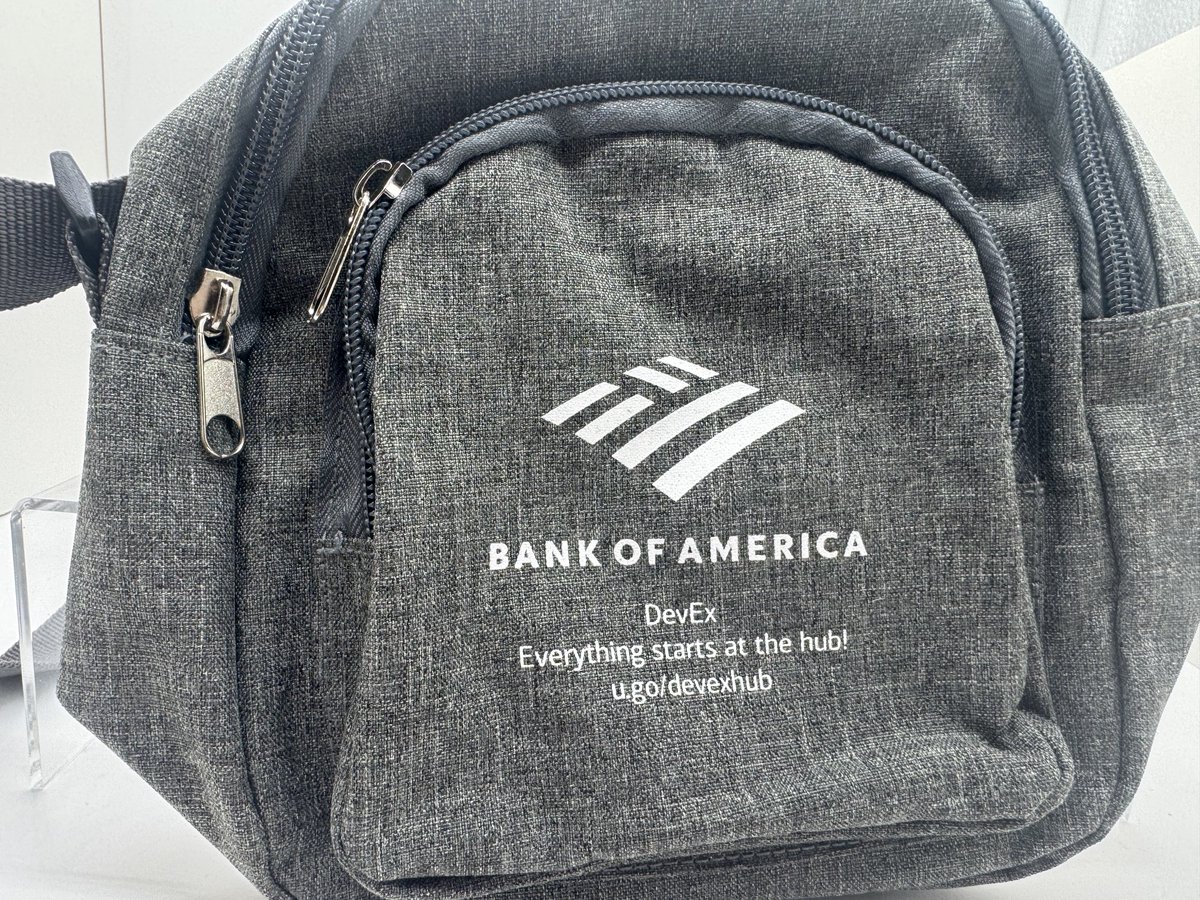
Check out Bank Of America DevEx Adult Crossbody Shoulder Bag ebay.io/m/cEqxLK #eBay via @eBay
The Bank of America DevEx Adult Shoulder Bag is a small, classic and solid gray shoulder bag designed specifically for men. It features a zip closure and is made in China. This stylish accessory is perfect for carrying essentials while on the go, adding a touch of sophistication to any outfit.



23
21
83
エシくん@JAPAN AIのマーケ retweeted

JAPAN AIが「AI DevEx Conference 2026」に出展・登壇します🙌
2026年7月22日・23日に開催される「AI DevEx Conference 2026 – Future of Development Productivity -」に出展します。
JAPAN AIからはエンジニア2名がセッションに登壇します。
japan-ai.co.jp/news/topic/20…
4
4
203
Climate change is reshaping the fight against malaria.
Join @jaqjerry of @Amref_Worldwide at #DevexImpactHouse during London Climate Action Week to explore the climate-malaria nexus and what it means for health systems.
June 25 | 2 PM BST | dvx.cm/lcaw26
1
1
154

Execution-first blockchains ask developers to become crypto devs.
Zenon is infrastructure for sovereign, verifiable state and events that integrates with the traditional devex.
Becoming a crypto dev means:
• New languages/paradigms (Solidity, specific Web3 libraries)
• Gas, accounts, transactions as the primary mental model
• Heavy focus on DeFi primitives, tokens, etc.
This shrinks the addressable developer pool dramatically. Most software engineers work in familiar stacks (Go, Rust, TypeScript, Python, etc.) and think in terms of events, state machines, verification, APIs, and distributed systems — not “deploy a contract and pay for every call.”
Zenon’s architecture makes more sense to traditional devs and systems designers:
• Block-lattice account chains: Each account has its own chain. This feels closer to event sourcing or sovereign local state than a single global state trie. Execution and verification can happen more at the edge.
• Meta-DAG layer: Lightweight global ordering/coordination without forcing everything into one linear blockchain.
• Verification-first: Facts/events are anchored as verifiable, append-only records. The project repeatedly emphasizes this distinction — e.g., “This is verification infrastructure, not custody infrastructure.” Bitcoin can stay on Bitcoin; Zenon handles the proofs/ordering.
• Language & tooling: Core node in Go (very familiar to backend/systems devs). SDKs exist in Dart, .NET, and others. Syrius wallet makes ZTS (Zenon Token Standard) issuance straightforward. Community work on docs and light clients is ongoing.
• Feeless/Plasma mechanics: An internet native experience that doesn't require users to buy gas tokens.
• zApps framing: A speculative new class of applications (leveraging ZK, homomorphic encryption, unikernels) that aim to outperform traditional dApps in security/privacy/speed — again, less “crypto dApp” and more “verifiable high-performance app.”
This setup could let regular software engineers treat Zenon more like a decentralized verification layer or event ledger they integrate into existing systems, rather than rebuilding everything in a crypto-native way.
The DevRel Moat
If Zenon delivers on a non-crypto-like devex, it expands the developer pool from “crypto specialists” to a much larger group of mainstream engineers who need verifiable infrastructure (AI agents, data pipelines, IoT, supply chains, cross-system integrity, etc.).
That’s exactly how strong moats form:
• Satoshi/Vitalik attracted devs by making something novel and giving them powerful primitives community.
• Boris & Cat Wu at Anthropic made Claude Code feel powerful and approachable for existing developers → explosive adoption.
Zenon doing the same for verification infrastructure could be its biggest edge.
The architecture (edge sovereignty verification primitives) familiar tooling stack = lower switching cost for non-crypto devs.
Zenon's biggest edge for attracting developers is a neutral settlement layer that eliminates the MEV environment that has demonstrably limited crypto to speculative finance.
Zenon next generation dual-ledger architecture opens the floodgates to the financial and industrial applications that will define global scale mass adoption.
2
62
Maternal nutrition remains an important area of focus in global health. At Devex Impact House during WHA, participants discussed emerging evidence on multiple micronutrient supplements (MMS) and maternal and newborn health outcomes.
2
8
75
1,691,807


Same, thanks devex




3
26
1,199

Applying for the DevEx lead role - my lane is making AI-assisted engineering workflows reliable: context, evals, review loops, and safe tool boundaries. e.g
Jun 12

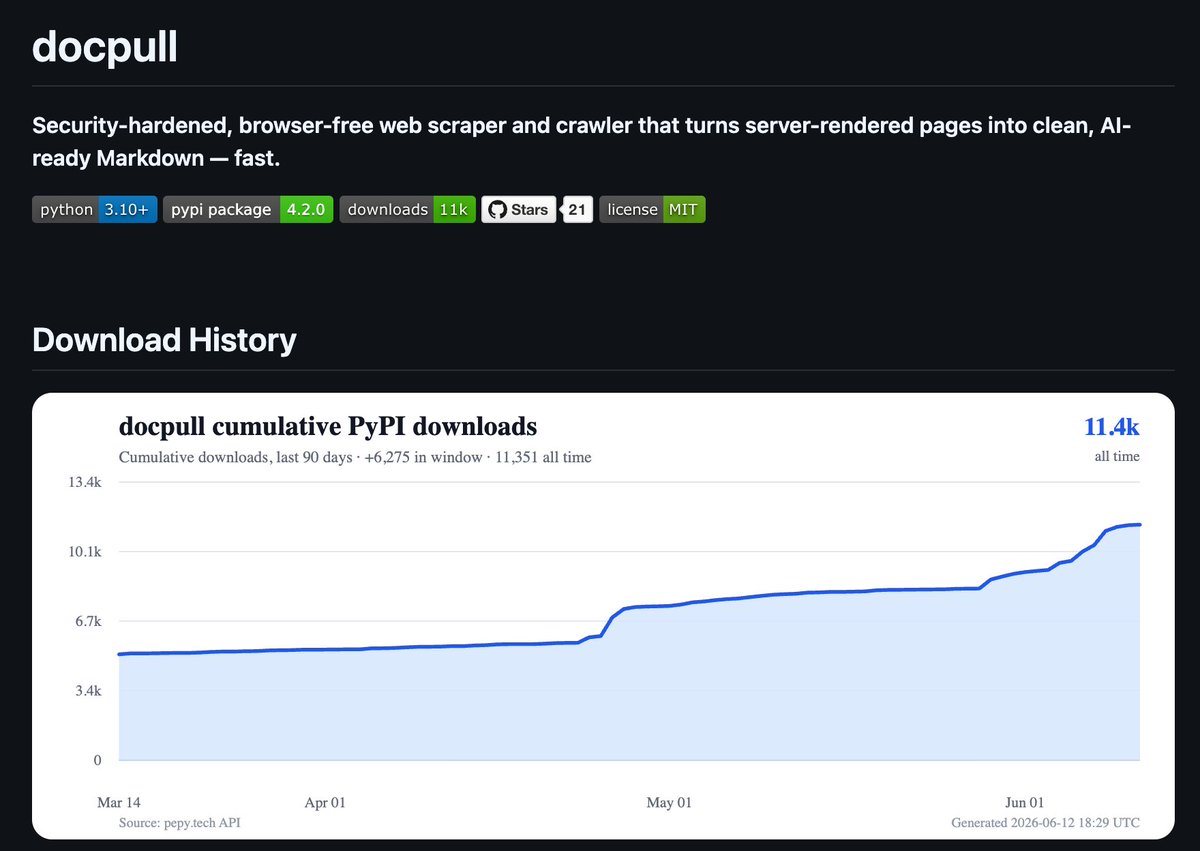
I built a free, open-source web retrieval tool that runs fully local - no paid APIs, no per-query spend
Then I benchmarked it against @ExaAILabs, @p0, and @tavilyai. It matched or beat all three on 5 of 8 targets, at $0 provider cost
Full benchmark methodology (including where it falls short): raintree.technology/articles…
Reliable agents need web context they can measure and audit and you shouldn't have to pay per query to get there when its not necessary. If you're building agents, try DocPull's CLI or MCP. It works as a Claude Code / Codex / Cursor plugin too
pip install docpull
205

OH RIGHT, note down that the entire reason they changed it is because everyone thought Soul cannot devex and that he will lose the 25% if he lost the court case. This just shows how pathetic they are LOL.
1
3
74

11h
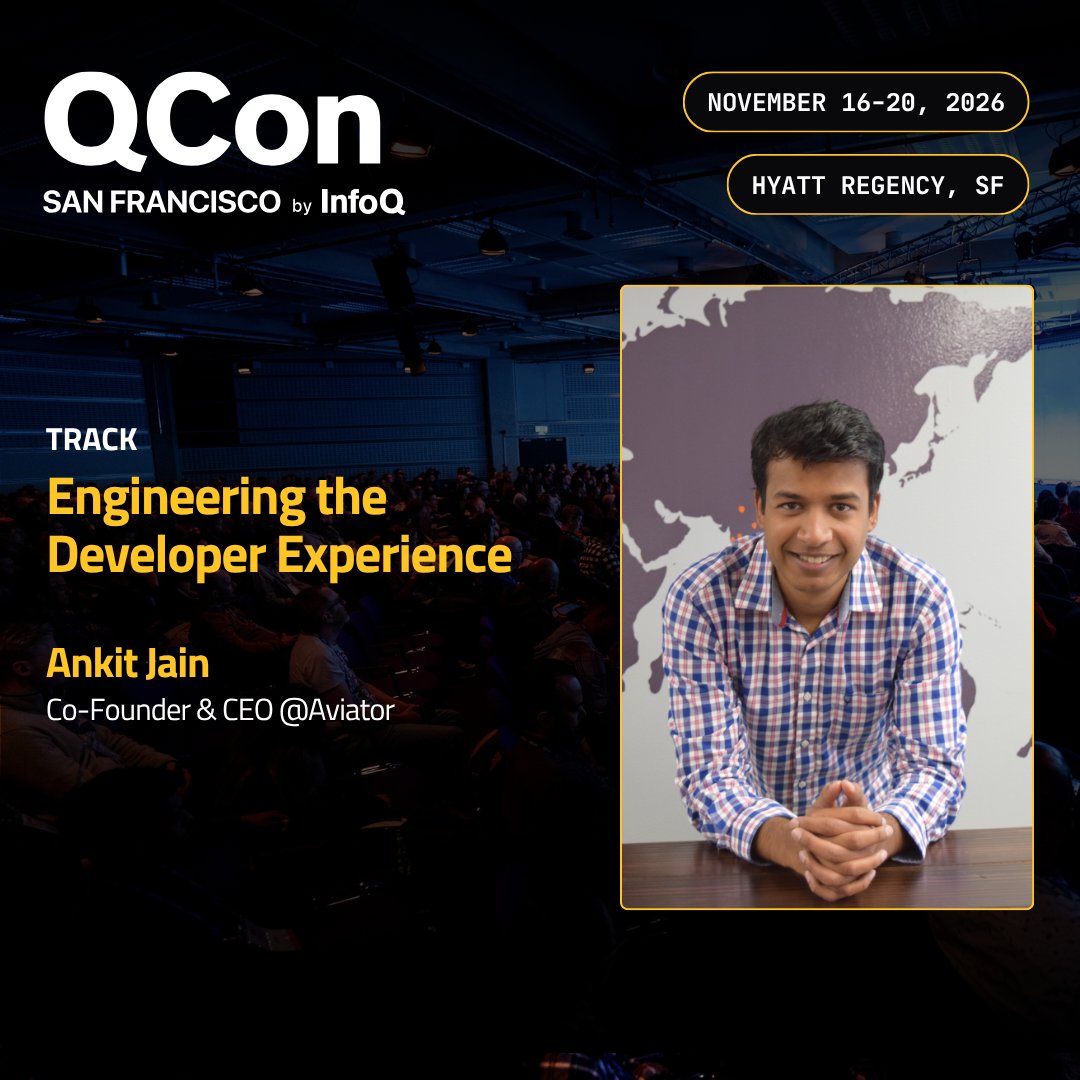
Excited to host this year's DevEx track for @QCon SF.
There has never been a more important time to focus on developer experience...
We are rewriting all SDLC principles that we wrote in the last 30 years!

Shipping more code faster turns out not to be the constraint. Getting it reviewed, tested, and landed safely is.
Check out the Engineering the Developer Experience track at QCon San Francisco, Nov 16-20. Hosted by @ankitxg: bit.ly/3S3Bu4V
1
43