
i love phn w all my heart but even i can realize he's the ultimate potential man. he only ever got his aura moment in 3.4 then fell flat. he had a mid introduction and every theme is just .... not that well developed. fans carry his story in a way the game couldn't
CSShammaliChakraborty.DR.cma.ma,mba,llb,scindiafan retweeted

For centuries, Bharat’s sages developed an extraordinarily precise understanding of time. This ancient Muhurta Chakra reflects a sophisticated system that divided the day and night into sacred segments, each associated with specific energies, deities, and activities.
Long before modern clocks became common, our civilization used detailed timekeeping methods to determine auspicious moments for worship, governance, travel, learning, and important life decisions.
This is not merely a clock it is a glimpse into a timeless tradition where every moment was understood as carrying its own unique significance. The deeper one studies Sanatana Dharma, the more one discovers the remarkable scientific and philosophical wisdom preserved by our ancestors.

41
124
2,580

The Jewish identity cannot be accurately defined by genetic or racial criteria; such notions are solely propagated by individuals who harbor antisemitic views or lack proper understanding. Your grasp of Jewish history, the Hebrew Scriptures, archaeology, and genetics is not adequately developed. There is no reputable scholar who would support your claims. Therefore, I present a concise educational summary to address and correct your misunderstandings. First and foremost, Jewish identity transcends genetic or racial classifications. Historically, the Jewish people have their roots in the region of Israel and have dispersed globally over centuries due to exploration, conquest, and conflict. In every location they settled, they preserved their heritage, traditions, beliefs, language, values, their commitment to the One G-D—the deity of Israel—and their distinctive way of life. In contrast, the Palestinians have diverse origins from various regions, each possessing differing value systems, beliefs, customs, languages, deities, and perspectives on existence. Furthermore, your comment is not supported by history, archaeology, independent sources, and genetics. The assertions made about identity in your argument are fundamentally rooted in race and are therefore inherently flawed. As I have stated numerous times in my commentaries, identity is a complex construct influenced by multiple factors, with genetic composition being the least significant aspect. Individuals possess diverse racial backgrounds, encompassing various gene pools, and as such, genetic lineage provides only a limited understanding of our history. In the case of Arab Palestinians, there is a mixture of mitochondrial DNA that includes Arab, African, Egyptian, Syrian, Bedouin, Circassian, Sudanese, Kurdish, Caucasian, Spanish, Italian, and other European ancestries, alongside Berber, Vandal, Gothic, and Viking influences relative to the many origins listed above. Utilizing genetic data to ascertain origins presents numerous challenges, often culminating in misleading conclusions. For instance, differentiating between genetic admixture and ancient interactions proves complex due to the potential for data misinterpretation. Consequently, the use of DNA evidence as the sole indicator of indigenous identity lacks validity in a historical context and is insufficient for tracing ancestral origins. In the absence of corroborating archaeological evidence and historical documentation that would illuminate a connection to Palestinians, DNA analysis holds minimal significance. Historically speaking, references to Israel in the Hebrew Bible denote a continuous presence that spans over 5,000 years, a claim bolstered by archaeological evidence and historical records from external sources. In contrast, Palestinians do not possess an established historical relationship with Israel that extends back to antiquity. There is a void of artifacts, pre-literate documents, or any historical evidence linking Arab Palestinians to ancient Israel. Therefore, it can be asserted that Palestinians are not indigenous to Israel, a conclusion supported by demographic and historical analyses. The population in question primarily consists of Arabs who relocated to the area for economic opportunities. Thus, it is a matter of fact that the concept of Palestinian identity, in its ancient context, does not hold, as these individuals predominantly identify as Arabs, sharing the Arabic language, religion, and culture with their counterparts throughout the region. There is a conspicuous absence of ancient historical roots, archaeological, extra-biblical sources, or any form of documentation to substantiate such a claim. In conclusion, considering the Hebrew Bible, Halacha (Jewish law), and the broader historical context of Judaism, one may ask: what distinguishes Ashkenazi Jews from Mizrahi Jews or any other Jewish communities dispersed across the globe? The answer is that there are no significant differences.

There are 13 year old developed girls. What a jerk this fool is. A pedo himself for sure. You ain’t party of any sane world.
1

Japan , mein Burakumin thaa, until the 19 th century Meiji restoration, where all of Buddhist monks were slaughtered and cut of from all funds, along with the strict separation of Shintoism and Buddhism, still Just because of Shintoism, Japan is religious developed

💞🩺 Answer: A. Polymelia
🔍 Polymelia is a rare congenital anomaly characterized by the presence of supernumerary limbs (extra arms or legs) attached to the body.
✨ In this image, the child appears to have additional lower limbs arising from the pelvic region, which is typical of polymelia and may result from:
Incomplete separation of conjoined twins (parasitic twin)
Embryological limb bud developmental abnormalities
❌ Why not the others?
Polydactyly = extra fingers or toes only
Polyphagia = excessive hunger/appetite
Polymyalgia = muscle pain involving multiple muscle groups
📚 Clinical Pearl: Polymelia is often associated with a parasitic twin, where remnants of an incompletely developed twin remain attached to the surviving child as extra limbs.
🎯 Correct Answer: A. Polymelia
#SpotDiagnosis #Polymelia #CongenitalAnomalies #Embryology #Pediatrics #MedicalEducation #ClinicalPearls #MedTwitter #FOAMed 💞🩺✨

Identify❓
A. Polymelia
B. Polydactyly
C. Polyphagia
D. Polymyalgia


30s
Who gives af about what race is around, the color of one’s skin doesn’t dictate intelligence, it’s the people around and the general societal norms which is why many developed countries are having lower literacy rates because children are on iPads all day instead of learning
💞🩺 Answer: A. Polymelia
🔍 Polymelia is a rare congenital anomaly characterized by the presence of supernumerary limbs (extra arms or legs) attached to the body.
✨ In this image, the child appears to have additional lower limbs arising from the pelvic region, which is typical of polymelia and may result from:
Incomplete separation of conjoined twins (parasitic twin)
Embryological limb bud developmental abnormalities
❌ Why not the others?
Polydactyly = extra fingers or toes only
Polyphagia = excessive hunger/appetite
Polymyalgia = muscle pain involving multiple muscle groups
📚 Clinical Pearl: Polymelia is often associated with a parasitic twin, where remnants of an incompletely developed twin remain attached to the surviving child as extra limbs.
🎯 Correct Answer: A. Polymelia
#SpotDiagnosis #Polymelia #CongenitalAnomalies #Embryology #Pediatrics #MedicalEducation #ClinicalPearls #MedTwitter #FOAMed 💞🩺✨

Israel has been ruthlessly targeting drone teams.
It's a skill that needs to be developed. When you take out drone operators, they aren't as easily replaced as grunts with AK's.
I don't think they have any new anti-fibre optic drone tech in the field yet.
1
Omoboriowo💥 retweeted

You keep telling people you developed their land.
When they tell you to go and develop your land as well. You start calling them bigots.
Is it that your land doesn't deserve development?
4
22
72
1,242
Poppy retweeted

At first Family man story was pitched to Chiranjeevi garu and the character was developed by keep him in mind - Family man creator Raj Nidimoru
3
42
900
37,278
dallen.luna retweeted

10m
It is quite unfortunate that people have developed a habit of taking matters into their own hands.
@dtb_uganda extends heartfelt condolences to the family of Mr Lubega Fahad .
#DTBOfficialStatement
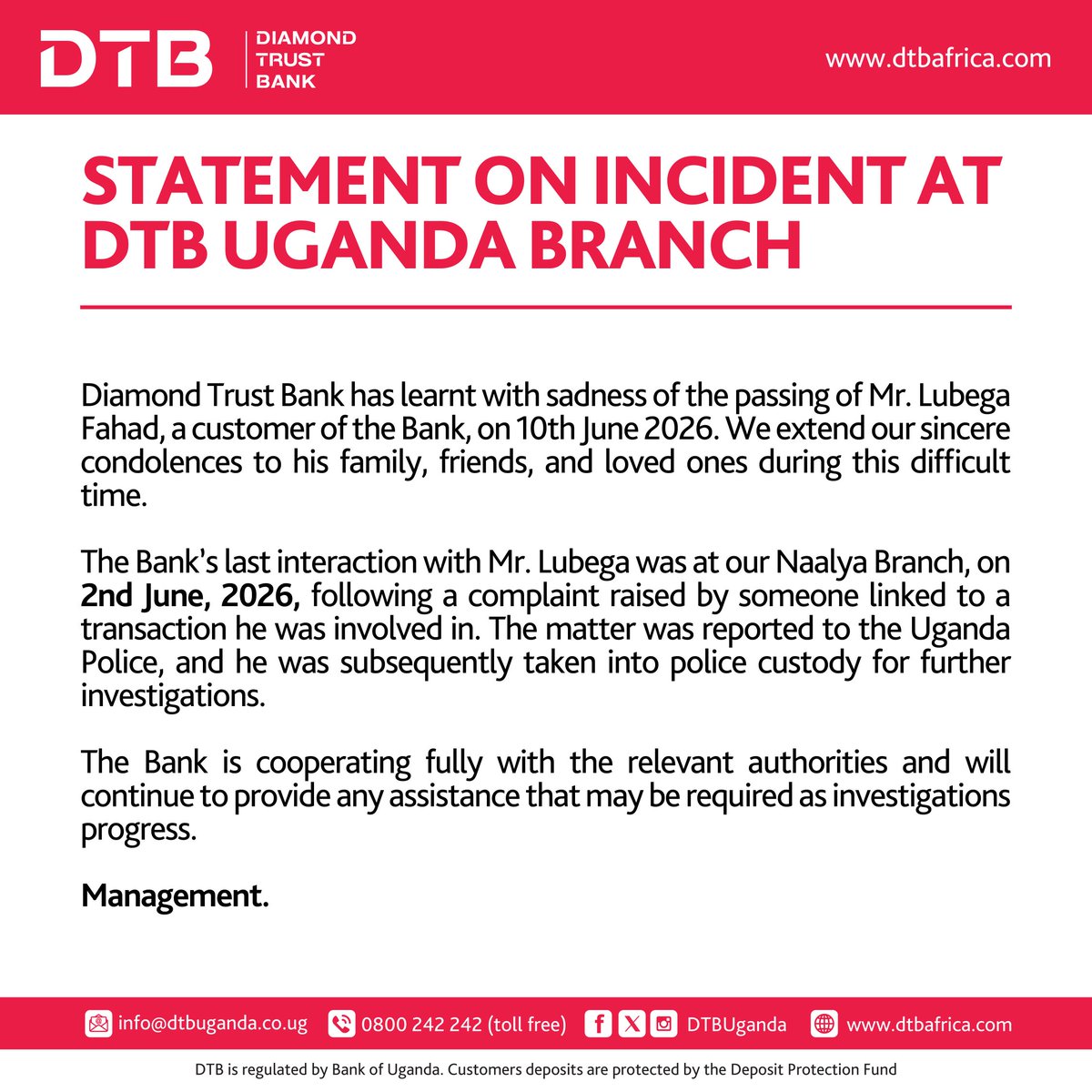
Jun 12

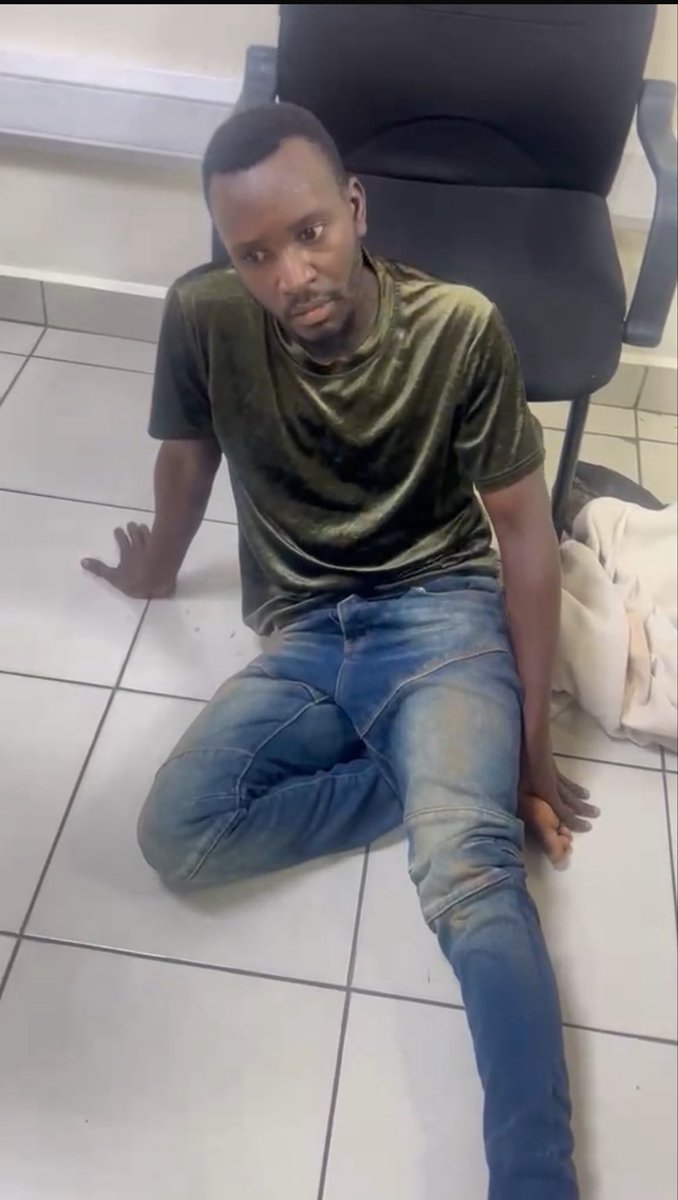
Killed in Mob Attack at DTB Bank Ntinda ( @dtb_uganda )
It’s alleged that, this young man, lost his life on Monday following a mob attack at DTB Bank in Ntinda, according to accounts from witnesses, he had gone to the bank to withdraw money, after completing the transaction, a dispute reportedly arose when the bank manager accused him of having previously obtained money from him through fraud some months back & instructed security guards to stop him from moving out
as he attempted to leave the bank premises, a confrontation came up, boda boda riders in the area allegedly mistook the situation for maybe bank gun point robbers & descended on him, subjecting him to a severe beating
It’s said that, customers who were present at the bank intervened & rescued him from the mob before taking him back into the bank, @PoliceUg were later called to the scene but sadly, he succumbed to his injuries before he reached police station for statement
no one deserves to lose their life at the hands of a mob, allegations should be investigated by the police & courts, not decided through violence.
N.B I deleted this post yesterday, after DTB bank head office contacted me to pull it down, they assured me to issue out official statement on wat happened today morning, which they didn’t full fill, thus posting it again today evening ( I pledged to always speak for ordinary people (Abapakasi)
Cc
@PoliceUg
@dtb_uganda
1
5
5
40
Upothesis retweeted

16h
“What radicalized you ??”
Bro, I have two eyes, two ears, and a fully developed prefrontal cortex.
3
216
2,264
14,572

Being dumb doesn’t exempt you from consequences. He knew right from wrong. He’s old enough to developed self control. And this was not a crime of passion like you suggested, he planned it by being the knife to school, again. He’s guilty at first to be murder.
2

@elonmusk founded seven companies, directly and indirectly created 800,000 good paying jobs, created thousands of new American millionaires, developed reusable orbital rockets and brain chips that are giving independence to paraplegics, he saved free speech.
Alex and George Soros write EU public policy, unelected, unsupervised, regardless of what the people of the EU want.
I know which one I prefer.
14
🥷🏾HEAD HUNCHO🥷HATTORI YASUKE 🥷 retweeted

Jun 13
Players developed by the Nigerian system: 0
Jun 12

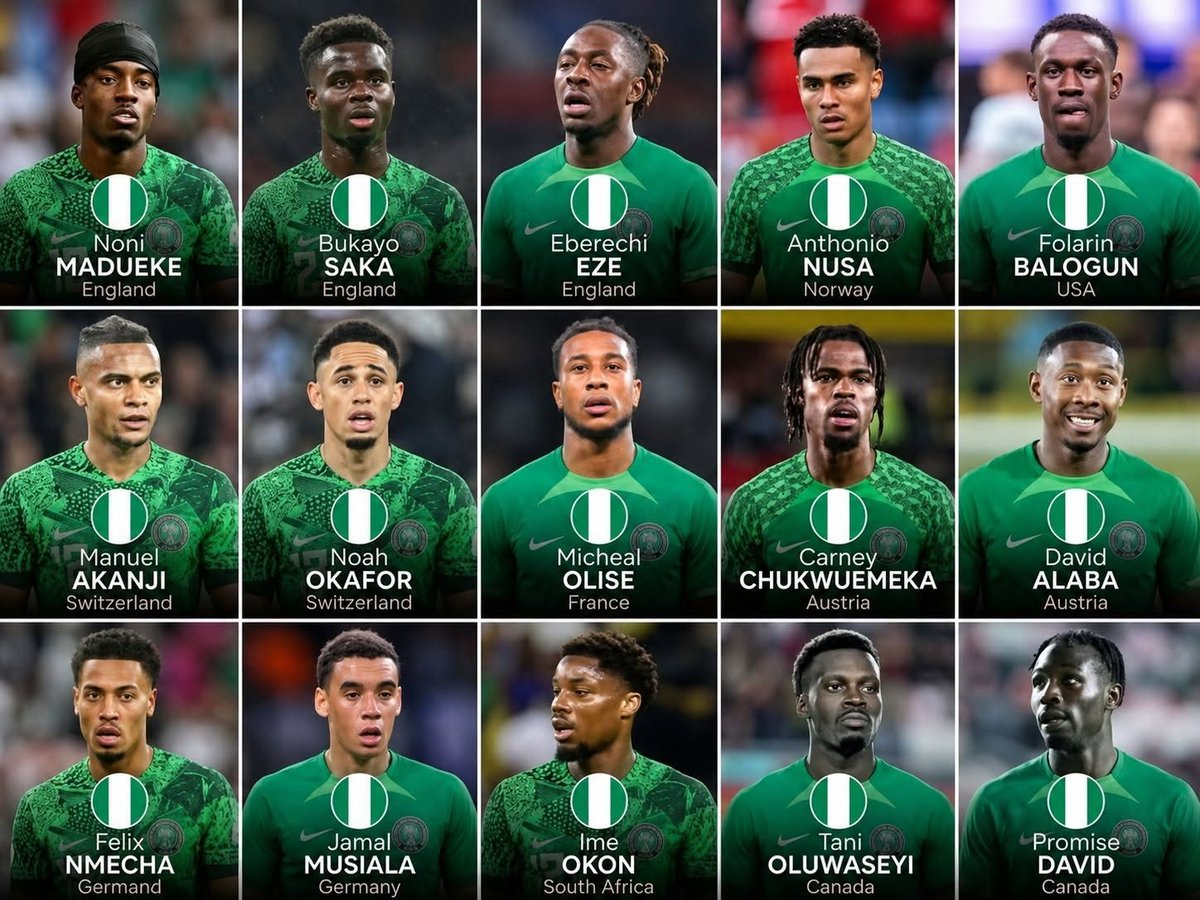
"Team Nigeria" at the 2026 World Cup. 🇳🇬
Here are all the players of Nigerian descent currently representing other countries at the 2026 FIFA World Cup.
79
3,156
20,644
612,247

France's Manu Kone to @Gazzetta_it on concerns about temperatures in the US:
"The staff has developed a specific protocol with very cold drinks, water breaks, and constant monitoring of hydration."
getfootballnewsitaly.com/202…
141

From my perspective, the issue is not about using labels like "heresy," but about asking what Jesus and the earliest prophets actually taught.
I believe in worshipping the one God alone, without partners or divisions in His essence.
My difficulty with the Trinity is that it is not presented in a clear, explicit statement by Jesus himself. Instead, it is a doctrine developed through theological interpretation of various passages.
So for me, the question is simple: Did Jesus clearly teach that God is three persons in one essence, or did he consistently call people to worship the one God who sent him?