


Sunday, June 14, 2026
I hope you’re having a wonderful Sunday and Funday.🙏😊
As you are developing your agenda of tasks that need to be completed this week, PLEASE 🙏 add a task to contact your local dog 🐾🐾 rescue and apply to foster a dog🐾🐾💕 or apply to adopt a dog🐾🐾❤️.🙏
Rescue dogs🐾🐾 DESPERATELY 🙏 need 💕all of us.
All dogs🐾🐾 are totally awesome, but Rescue Dogs🐾🐾 Rock!
Sincerely,
Douglas Joyce
C.E.O.
Rescue Dogs Rock, D.C.🐾🐾🇺🇸
Always adopt, don’t shop for a dog.🐾🐾
Rescue, Dogs, Rock!🐾🐾
In addition, please have your pets, spayed or neutered!
#adoptme
#rescuedogsrock
#adoptarescuedog
#fosterarescuedog
#fosteringsavesdogslives

1
1
Darkangelxx2325 retweeted

🔥🚨DEVELOPING: Conservative activist William Small went off during a Philadelphia City Council meeting as he violated Democrats for putting LGBTQ initiatives before everyday Americans and criticized the council for raising pride flags, saying that ‘the only flag that should be raised in Philadelphia is the American flag.’
297
6,333
30,014
293,048
Back country ag retweeted
🔥🚨DEVELOPING: The energy in Washington DC is legendary right now. A massive audience went crazy when a bald eagle flew into the UFC venue.
 UFC_AUSNZ
33
80
659
20,423

Yet another full spin attack by our current elite circle of jerks
"Ukraine bioweapons conspiracy theory
In March 2022, during the Russian invasion of Ukraine, Russian officials falsely claimed that public health facilities in Ukraine were "secret U.S.-funded biolabs" purportedly developing biological weapons, which was debunked by multiple media outlets, scientific groups, and international bodies. The claim was amplified by China's Ministry of Foreign Affairs and Chinese state media, and was also promoted by followers of the QAnon conspiracy theory and subsequently supported by other far-right groups in the United States"
2
.⚜️ 𝕲𝖔𝖉𝖉𝖊𝖘𝖘 𝕾𝖈𝖆𝖗𝖑𝖊𝖙𝖙 🔥 retweeted

Start developing a feminine mindset along with a more feminine appearance ✨
From boy to sissy, embrace the transformation and discover the true essence of your being.
Embrace your femininity and revel in the joy of submission.💕
20
48
600
Swang retweeted

🔥🚨DEVELOPING: This new song called Austin Bop (stabbing my chest) was released with a cover that says it is by “Austin Metcalf” is going viral.

🔥🚨DEVELOPING: This new song called Watermelon Felon that was released with a cover that says it is by “Karmelo Anthony” is going viral.
73
126
1,545
95,384
Vladimír Stančík 🇨🇿🇺🇦🇮🇱 retweeted

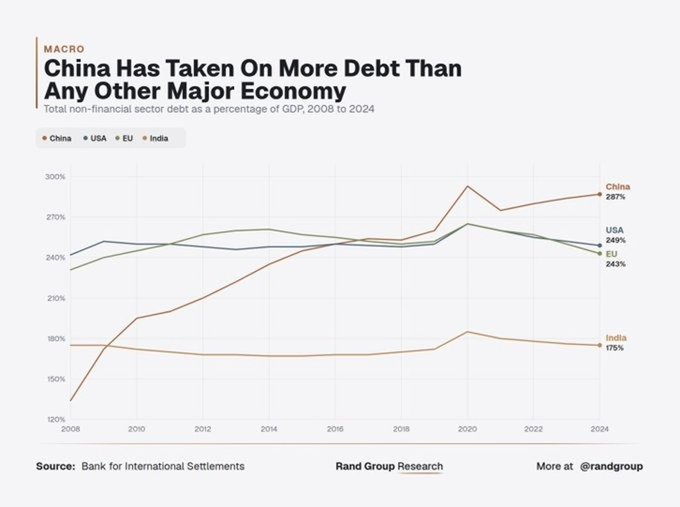
China has officially built the largest debt mountain in the developing world, and the foundation is beginning to crack. Data from the Bank for International Settlements (BIS) reveals that China's total non-financial sector debt has exploded to a staggering 287% of GDP. This hyper-acceleration completely blows past other major economies, with the United States sitting at 249%, the European Union at 243%, and India at a modest 175%. Unlike Western nations that stabilized their leverage after the 2008 financial crisis, Beijing doubled down on an aggressive, investment-led growth model that is now colliding with severe structural decay.
The true epicenter of this fiscal crisis lies within local government balance sheets. For years, regional authorities relied on relentless infrastructure and real estate expansion to artificially inflate GDP. Now, with the ongoing property market collapse and skyrocketing servicing costs, these debt-fueled investments are yielding sharply diminishing returns. This massive capital misallocation has created an unsustainable reckoning for regional banks and local authorities trapped under severe property stress.
This unprecedented leverage has triggered intense debate over China's economic trajectory. While some note that China’s heavily domestic financing structure shields it from an external currency crisis, others counter that the old playbook is completely exhausted. The economy is now choked by slowing growth, intense export pressures, and the burden of keeping insolvent entities on life support, ultimately starving the dynamic private sector of critical capital.
#ChinaEconomy #DebtCrisis #BISData #Macroeconomics #Finance #Geopolitics
15
93
205
29,398
Kyösti Partonen retweeted

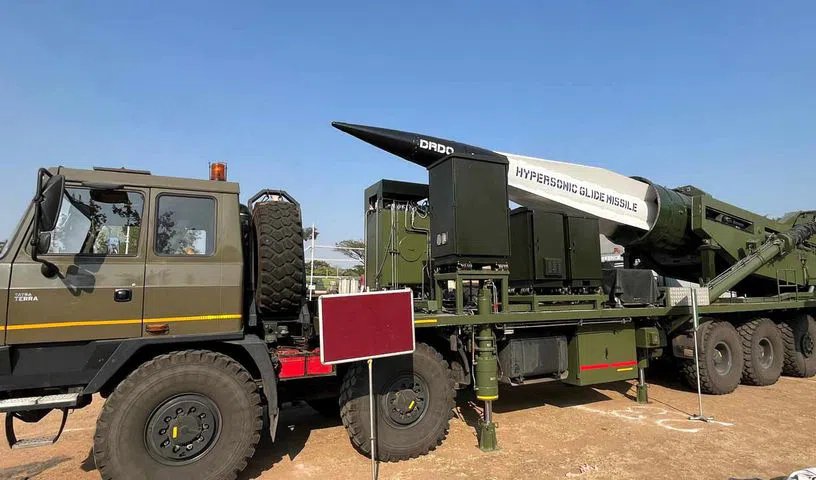
Future of India's Rocket Force !!
DRDO is developing 12 Hypersonic Missiles which includes attacking and interceptor.
LR-ASHM HGV 1st of 12 will join Indian Navy in next 1-2 yrs. Dhavani, AD-AH, AD-AM, SRBM with HGV are few of 12.



5
38
314
3,309

Before y’all twist my words or call me a liar here’s the translation and skynani never used the word bromance for Wu this is an action fantasy and NiranPete relationship will keep developing and they relationship is at its peak now and I don’t go to google to translate too


Skynani confirming that the bond between Niran and Pete is romantic not just platonic or bromance Nani’s explanation especially emphasizes the mutual feelings and the intentional portrayal of their dynamic
Wu is not put in a box or labeled I love it
5
IndieGamesLibrary retweeted

Since I'm trying to share more of my work here, here's a little space shooter I was developing in my spare time a few years ago.
Looking back, there are definitely a lot of assets and animations I'd redo today, but it was a lot of fun 😁
#pixelart #pixelartist #gamedev
1
1
7
34

A majority of Congress is working on behalf of foreign adversaries.
America’s wealthiest states have been completely hijacked.
Our adversaries are within a year of developing technologies that will threaten both your financial security and your freedom.
Why are you silent? If we lose democracy in America, the world will NEVER see it again.
We need secure elections and less foreign influence in Congress immediately.
We need public debates Charlie Kirk style immediately. Let’s go.
3


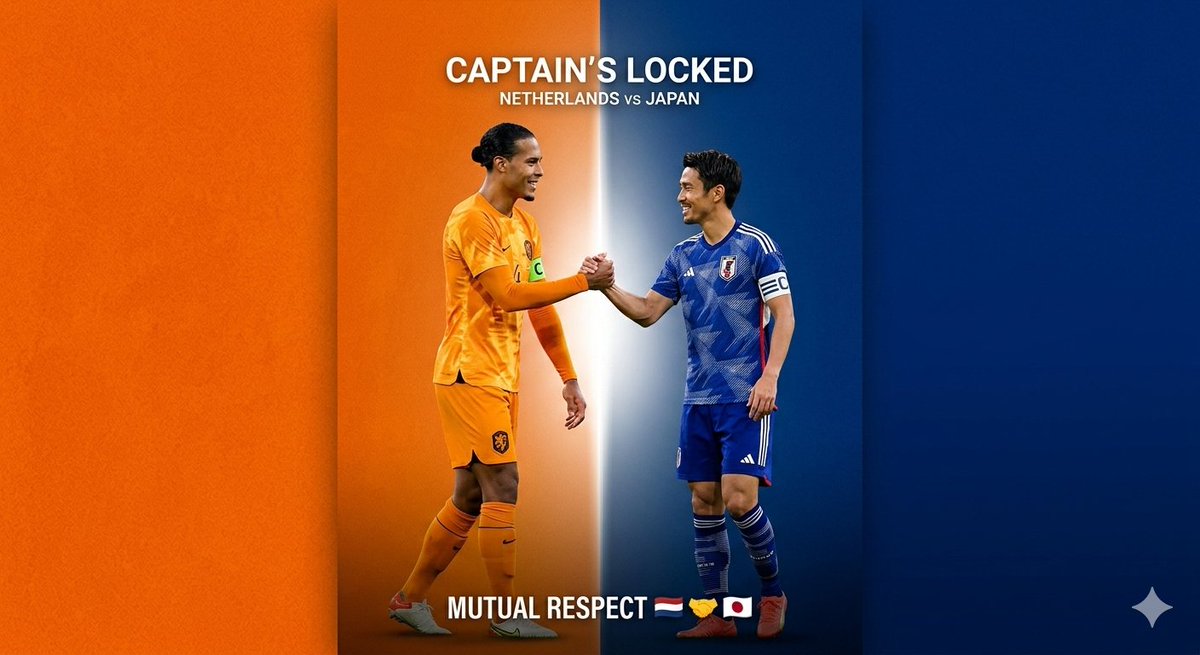
1. The Netherlands: The "Perfect Minute" and the Philosophy of Total Football
The history of Dutch football is defined by one of the most beautiful concepts in the sport: "Total Football" (Totaalvoetbal). Pioneered by Rinus Michels and epitomized by Johan Cruyff in the 1970s, it turned football into an art form where positions became fluid.
The Most Iconic Minute in History
The 1974 World Cup Final against West Germany at the Olympiastadion in Munich stands as a premium example of footballing arrogance and brilliance. Before the match even started, a bizarre oversight saw the ground staff forget to place the corner flags. This led to a short delay, setting a tense atmosphere.
When the whistle finally blew, the Dutch did something that still defines the "Oranje" legacy:
The Masterclass: From the kickoff, the Netherlands embarked on a mesmerizing sequence of 13 consecutive passes.
The Psychological Blow: The West German players were left chasing shadows. They did not touch the ball for the first minute of the game.
The Result: Johan Cruyff, the orchestrator, surged forward with a burst of pace that left the German defense dismantled. He was fouled in the box, winning a penalty just 80 seconds into the game. Johan Neeskens converted, putting the Dutch 1-0 up before the Germans had even settled into the match.
Though they eventually lost the match, that first minute remains the ultimate symbol of the Dutch belief that football should be played with total control and aesthetic perfection.
2. Japan: The "100-Year Vision" and the Samurai Spirit
While many nations focus on short-term tournament cycles, Japan’s football success is built upon a foundation of patience and meticulous long-term engineering. In 1992, the Japan Football Association (JFA) unveiled a document that seemed impossible at the time: the "J.League 100-Year Vision."
A Blueprint for a Century
The plan was not about winning a single trophy; it was about embedding football into the DNA of the Japanese society. Their goals were set for the year 2092:
Infrastructure: To have 100 professional clubs spread across every prefecture in Japan.
Community Integration: Every club must act as a pillar of its community, ensuring that football is accessible to every child, regardless of where they live.
The Ultimate Goal: To win the FIFA World Cup as a solo host or victor by 2092.
The Samurai Transformation
For years, the world viewed this as a dream, but the Japanese remained undeterred. Through relentless discipline, the creation of world-class youth academies, and the cultivation of the "Samurai Blue" spirit—which emphasizes collective sacrifice over individual glory—they have fast-tracked their success.
Today, Japan is no longer a "developing" football nation. In recent years, they have stunned global giants like Germany and Spain in World Cup matches, proving that their methodical approach works. The most premium aspect of Japanese football is not just their tactical evolution, but their culture of respect—where players and fans leave stadiums immaculate, regardless of the result.
25