
The full post includes:
→ Production project structure
→ Complete app/main.py with fail-fast model loading
→ Annotated Dockerfile with every decision explained
→ The exact 2 terminal commands to go live
No abstractions. No notebook vibes. Pure backend engineering.
1
3

AIの使い方が相変わらず小規模なのですが、Dockerの起動をシェルスクリプトでやっていたのを、AIにお願いしてDockerfileとdocker-compose.ymlに書き換えてもらいました
全然無料枠...
9


understand images vs containers, write a Dockerfile, run it. Day two: use Docker Compose, learn networking, handle volumes. The rest you pick up when something breaks at 2 AM.
sivaro.in/articles/docker-it…"]
container is the source of truth for its own environment.","Images are read-only templates built layer by layer. Each Dockerfile instruction creates a new layer. When you rebuild, only changed layers re-download. This is how a Python app with 200MB of
1
1
move that box anywhere — no matter what ship or port you're at.","Here's the counter-intuitive truth: Docker doesn't just help deployment. It forces you to define your environment explicitly. That Dockerfile is a contract. Once you write it, you can't hide
1
1
commands: docker build, docker run, docker ps. Then write a Dockerfile with a base image, copy your code, and set the entrypoint. Ship it.","The real learning happens when your container crashes. Most tutorials skip debugging. Learn docker logs, docker exec,
1
1

2/2 It’s not a vague reading list – each entry links to a runnable demo, a Dockerfile, and a short “how‑to‑integrate” note. The goal? Turn weeks of paper‑reading into minutes of copy‑paste.
github.com/Jun-jie-Huang
44

最近はVercelとかで近い事をしてましたが、やっぱりCloud Runかもなという気持ちになってます。IAPで認証Proxyをはさめます!(AIならDockerfileも書かなくて良い※任せてます)
261

A naive Dockerfile is 1.2GB, runs as root, and rebuilds from scratch
thesimplifiedtech.com/blog/d…
#DevOps #CICD
3

• Over 1000 built-in policies for AWS, Azure, and Google Cloud
• Scans Terraform, CloudFormation, Kubernetes, Dockerfile, and more
• Detects AWS credentials and identifies secrets using regex and entropy
• Supports graph-based scanning for context-awareness policies
1
16

Render is shit. If you don’t want to deal with Dockerfiles, Heroku is the easiest native Java experience. If you’re okay with a Dockerfile, Railway is a great choice with better DX.
2
154
くろまめ@3Dプリンターイベント開催!JRRF2026.5/30-31 retweeted

Jun 5
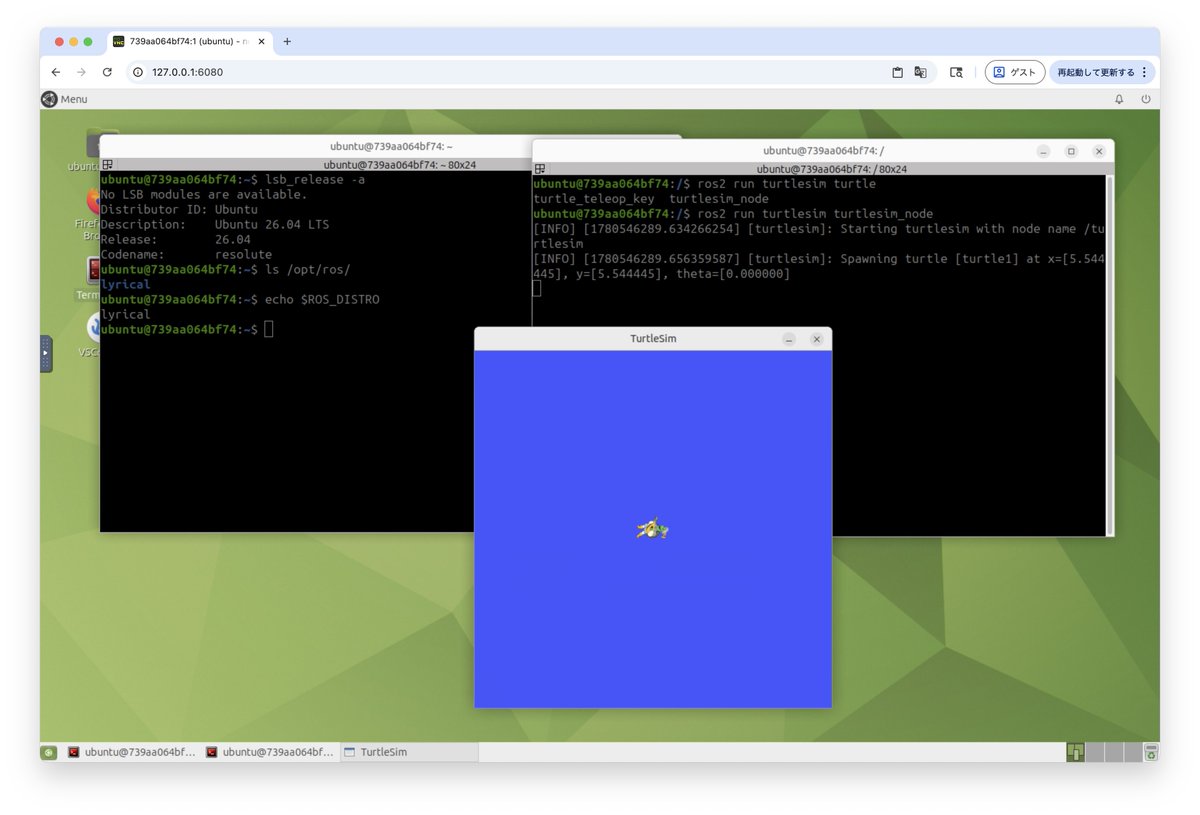
docker-ros2-desktop-vncにROS 2 Lyrical対応のDockerfileマージしました!
docker run -p 6080:80 --shm-size=512m tiryoh/ros2-desktop-vnc:lyrical
で試せます

1
6
17
2,505


16h
作業前は Java 7 とか Hibernate 4.2.7 とかで、 Dockerfile で足場を固めるにしても相当に面倒臭い
github.com/sasasin/sreader/b…
1
1
407

Top 10 DevOps resources I’d actually point working devs to:
1) The Phoenix Project (book)
Good mental model for flow, bottlenecks, and why ops work keeps derailing roadmaps.
2) The DevOps Handbook (book)
Concrete practices: CI/CD, trunk-based dev, change mgmt, metrics that matter.
3) Google SRE Book (free online)
SLOs/SLIs, error budgets, incident response. Turns outages into an engineering loop.
4) Kubernetes docs kind/minikube (docs practice)
You don’t learn K8s from slides. Deploy, break DNS, debug probes, read events.
5) Terraform docs a small AWS/GCP lab (docs practice)
Write modules, remote state, locking, plan/apply discipline. Learn drift the hard way.
6) Docker docs (docs)
Images, layers, networking, volume semantics. Fix your own Dockerfile instead of copy/paste.
7) GitHub Actions (or GitLab CI) docs (docs)
Build a pipeline: test, lint, build image, scan, deploy. Learn secrets, caching, artifacts.
8) Prometheus Grafana docs (docs)
Instrument one service, build 3 dashboards, and alert on symptoms not CPU%.
9) OpenTelemetry docs (docs)
Traces change how you debug distributed systems. Add spans, propagate context, sample sanely.
10) Practice project: run a tiny service in prod-like mode (project)
API Postgres Redis, IaC, CI/CD, canary deploy, rollback, on-call runbook, 2 failure drills (kill a node, expire cert)
4
9
92
3,649


birden fazla projede çalışırken ve bunları docker ile ayağa kaldırırken her projede sürekli 3000 portunu kullanma inadı beni yıldırıyor.
global claude.md dosyasına aşağıdaki direktifi ekledim.
böylece her proje için sıralı olarak belirli port aralıklarını not rezerve ediyor.
---- global claude.md dosyasına eklediğim direktif:
### Docker Port Management
All Docker port allocations for projects are centrally managed in the `~/.claude/docker-ports.md` file.
RULES:
- ALWAYS read `~/.claude/docker-ports.md` BEFORE creating a new docker-compose.yml or Dockerfile, or before adding/changing any port.
- Ports are first come, first served. If there is a conflict, select a new free port and make the necessary updates.
- When allocating new ports, there MUST be NO CONFLICT with the ports already registered in this file.
- When a new port is allocated or an existing port is changed, UPDATE `~/.claude/docker-ports.md` (project name, service, host port, container port, description).
- When a project is deleted or a service is removed, remove the relevant line from the file.
- Port range rule: allocate a block of 10 to each project (e.g. 8100-8109). Use the smallest available block for a new project.
---- ~/.claude/docker-ports.md şablonu:
# Docker Port Registry
> This file centrally tracks Docker host ports across all projects. > It must be updated with every port change. Source: global CLAUDE.md directive.
## Allocated Block Schema
| Block | Project |
|-----------|-------------|
| 8080-8089 | demo-project |
## Port Allocations
| Host Port | Container Port | Project | Service | Description | Last Update |
|-----------|----------------|-------------|-----------------|----------------------|-------------|
| 8080 | 8080 | demo-project | demo-project-app | demo-project web | 2026-06-11 |
## Forbidden / System Ports
| Port | Reason |
|------|--------|
1
20
3,270

XiaomiのMiMo CodeをDockerコンテナで試すDockerfile
note.com/kuragashi/n/n5d9569…
169