Muhammad🇰🇪 retweeted

16h
It's always the people you most expect

14
2,006
27,343
197,072

Women don’t want to do anything to arouse men. They expect you to always be hard just by looking at them.
They shame men for wanting to rush into sex without adequate foreplay, or for not giving them an orgasm. But they don’t want to be blamed for needing lube and not getting wet
Jun 13

“suck it so it can stand”
ewwwwwwwwwwwwwwww
12
315
3,266
145,525
Buddo says #StopGalamseyNow retweeted

So is this the kind of trash we can expect from @paramountplus (and @cbs) now?

Josh Hokit says “Michelle Obama is a man” after defeating Derrick Lewis on the White House lawn at UFC Freedom 250.
374
202
2,397
52,718

Is Tamil Nadu Becoming a State Unfit for Women and Children to Live In?
A deeply disturbing question is increasingly being raised by the people of Tamil Nadu: Are women and children truly safe in the state today? Every time reports of sexual assault, harassment, violence against women, crimes against children, kidnappings, abuse, and other shocking incidents emerge from different parts of Tamil Nadu, public confidence in the safety and security of society is shaken.
The safety of women and children is not merely a political issue; it is a fundamental measure of a civilized society. A state can claim achievements in infrastructure, economic growth, welfare schemes, and development, but if women are afraid to walk alone and parents fear for the safety of their children, then serious questions must be asked about governance and public safety.
Where is women's safety in Tamil Nadu? Despite repeated assurances from the government, why do incidents involving crimes against women continue to generate concern among the public? Why are many women still hesitant to travel alone at night? Why do parents continue to worry about the safety of their daughters in educational institutions, workplaces, and public spaces?
What exactly is the police department doing? The police force plays a crucial role in maintaining law and order and protecting vulnerable sections of society. Citizens expect swift action against offenders, stronger preventive measures, visible patrolling, prompt investigations, and speedy justice. If crimes continue to occur with alarming regularity, people naturally begin to question whether existing measures are sufficient and whether more effective action is required.
What happened to the much-publicized “Singa Pen” (Lioness) Special Force? When special initiatives are announced for the protection of women, the public expects tangible results. Citizens have the right to ask whether these initiatives are functioning effectively, how many incidents they have prevented, what measurable outcomes have been achieved, and whether adequate resources and authority have been provided to ensure their success.
Women and children deserve more than promises. They deserve an environment where they can study, work, travel, and live without fear. Every crime against a woman or a child is not merely an individual tragedy—it is a warning signal that society must take seriously. The responsibility to create a safe environment rests on the government, law enforcement agencies, educational institutions, local bodies, and society as a whole.
The people of Tamil Nadu are not asking for extraordinary privileges; they are asking for basic security, dignity, and justice. They are asking for a state where parents can confidently send their children to school, where women can pursue their dreams without fear, and where criminals know that swift and certain punishment awaits them.
Therefore, these questions continue to resonate across society:
Where is the promised safety for women?
What additional steps are being taken to protect children?
How effective are the existing security mechanisms?
Are law enforcement agencies adequately equipped and empowered?
What measurable impact have special women-safety initiatives achieved?
What further actions will be taken to restore public confidence?
Until these concerns are addressed convincingly, the debate over the safety of women and children in Tamil Nadu will continue, and citizens will keep demanding stronger action, greater accountability, and a safer future for every woman and every child in the state.
2NDFLOOR (mitsuki koga irl) Duke Laurent ver🐠🐡🐟 retweeted

they expect all bisexual to be in a poly relationship or something 😭
Jun 13


14
640
9,246
56,562
Korolev Aleksandr retweeted

Should we expect any posts from you, @RealCandaceO , condemning the Kremlin’s attack on Christianity — or do you only talk about God when you’re paid to?
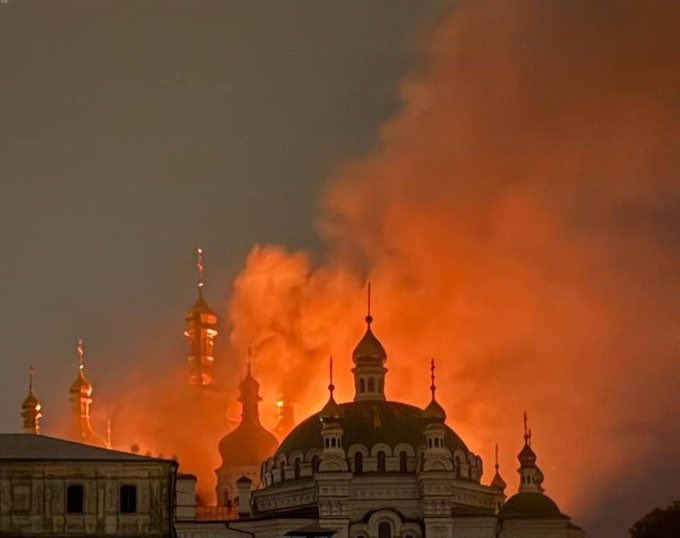
The Lavra has been attacked twice — and both times by Russians.
The previous time it was damaged was during World War II, on November 3, 1941. The cathedral was mined and blown up by retreating Soviet NKVD saboteurs after German forces occupied the city.
And today — on Sunday (the Lord’s Day), June 14, 2026 — it was struck again by direct Russian missile attacks.
The Kyiv-Pechersk Lavra (Monastery of the Caves) is 975 years old. It is one of the oldest and most sacred monastic complexes in Eastern Europe, with its history officially dating back to 1051 AD during the era of Kyivan Rus’.


81
524
1,800
31,580
nopopi retweeted

there’s a certain level of human decency I expect from everyone
1
3
2
386

RT @nikiritsu: applied a job in Malaysia and guess what? my salary expectation was too low they said. they said at least I should've expect…
1,089
MAJOR retweeted

24m
Girls look like this and expect loyalty and care 🤡


26
25
32
125
Tina Williams retweeted

⚠️⚠️⚠️06/14 TONIGHT…
EXPECT THE UNEXPECTED!
TURN ON NOTIFICATIONS!
• BE READY!
[FOLLOW THE SIGNAL]
Christian B. Wallace
Tier 4B
No Ones sleeping tonight... no one!!!

1
7
40
773



I wish I could bro but you’re out here being a fucking retard so what do you expect.
1

19s
That is how our language and cultures work.
You can't expect advice for young ones to be tailored specifically for YOU by the community.
That is the job of YOUR parents to make it specific to YOU.


So, as the war is ending, when can we expect prices to go back to normal?


So he also inherited lack of education? We expect him to speak better than his father
1