嬉しく思います retweeted

Jun 10
Cryptix FastChain 研究論文
cryptix-network.org/assets/d…
FastChainコア拡張機能Fに関する論文
cryptix-network.org/assets/d…
FastChain Fソリューションアイデアその1
cryptix-network.org/assets/d…
HF-Aテクノロジー
cryptix-network.org/hfa-fast…
ソースコード(HFAコア)
github.com/cryptix-network/r…
4
8
312

Something Interesting - Cryptix $СPAY Proof-of-Work BlockDAG focused on fast payments, decentralized infrastructure, and Layer-1 tooling. BlockDAG architecture, Fastchain HF-A technology, and transaction visibility in ~150ms worldwide, Cryptix is pushing real-world crypto 🌍⚡
1
2
8
114
May 8
仮想通貨ニキさんも #Cryptix の
FastChain と HF-A についての記事を書いてます
併せて読む事でより理解が深まります✅️
note.com/kasotuniki/n/nae3d4…
3
10
1,737
May 8
爆速決済インフラを目指す #Cryptix の FastChain と HF-A についての記事を書いてみた
note.com/toysurf/n/n63a12bb2…
2
9
14
2,132

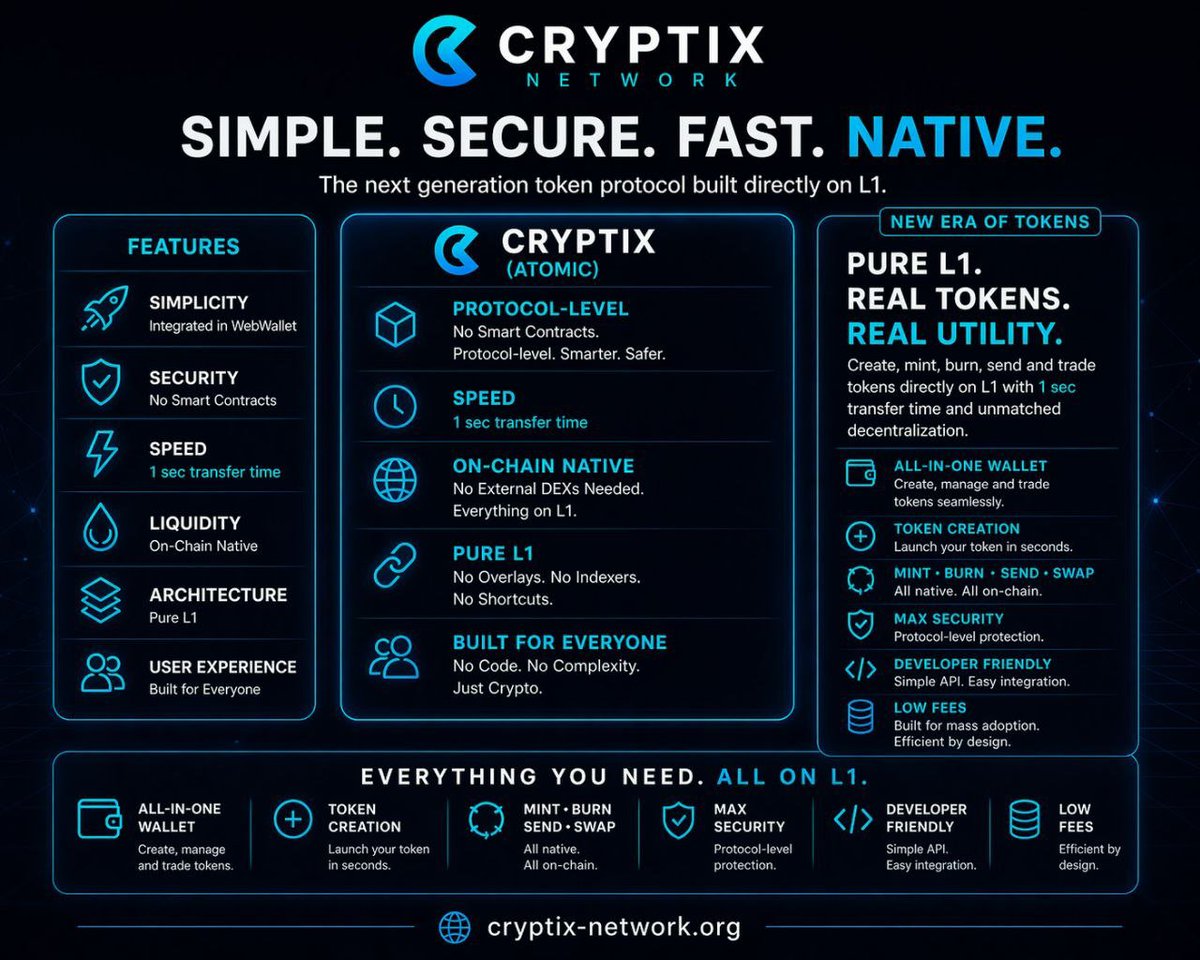
🚨 Rug Pull Guard True L1 Messenger dropping soon on Cryptix! 🔥
Cryptix building Rug Pull Guard for Atomic Token / Liquidity Bridge. Problem: ~90% of Pump.fun scams are instant rug pulls — creator buys early, dumps the second a real buyer appears, and liquidity vanishes (60-90% loss in seconds).
Solution: Creators can optionally enable Rug Pull Guard and set a minimum CPAY liquidity threshold (e.g. 1M CPAY). No selling allowed until it’s reached — even for the creator. Result? Rugs become way harder and less profitable. Fairer ICO-style launches, bot traps possible, and a strong trust signal for real projects. This is pure Layer 1 — no smart contracts, no central servers, no trust needed.
📝L1 Messenger is now 100% complete ✅
This isn’t just another chat app — it’s a new era of communication infrastructure.
- First true on-chain L1 messenger with zero centralized servers or indexers.
- Full end-to-end encryption, fully anonymous & censorship-resistant.
- Runs directly through your local wallet local node (no webserver ever needed).
- Messages in ~1 second (50-200 ms on Fastchain).
- Automatic encryption from message 2 onward.
- Your wallet address is your identity — no email, no phone, no accounts.
Token system? Fully done. Liquidity Bridge Rug Pull Guard? Final testing. Hardfork coming very soon. Who’s ready for rug-resistant tokens real decentralized messaging? Drop a 🔥 below! 👉 cryptix-network.org/
4
3
21
393

Apr 27
QF dev update - April 27.
A lot has moved since the last update, and the direction is still clear. The stack is getting more production-ready.
W3zard continues to push through late-stage MVP work.
The AI escrow flow has shown stable behavior in user scenarios, live validation has been strengthened, and AI testing for the escrow prompt/model path is complete. What remains is manual demo validation and full generate → setup → runtime flow testing.
Mainnet runtime work also moved forward with two separate upgrades.
Fastchain runtime upgrade v120 and parachain runtime upgrade v3 both advanced using the v0.1.31 release package.
That release included the move to Polkadot stable2603, updated testnet chain specs for both Fastchain and Parachain, and added Staking to the EventHandler type in pallet_authorship.
After those upgrades, the release track moved to v0.1.32.
This newer release focused on cleanup and future release reliability: removing old migration logic from the parachain runtime, clearing related warnings, adding a parachain release process, and bumping the node version.
Staking payout automation is now a clear engineering track.
The team has been evaluating payout tooling, fixed the erasRewardPoints issue in staking, and started backend preparation/deployment work for automated staking payouts. The important point is that the runtime and backend pieces are being wired together.
Builder tooling is improving too.
The QF testnet faucet is being deployed, making it easier for builders to test without friction. The team is also tracking the 1011 staking transaction error and continuing testnet RPC/chain spec updates.
More runtime progress.
Cleaner releases.
Staking automation in motion.
Better testnet access.
W3zard closer to full flow validation.
More of the stack is becoming ready for real use.
QF
Start Where Freedom Is Engineered
7
39
106
4,683

Apr 21
Following one of @IvanOnTech recent videos, where he mentioned that RH hired a Fiverr developer to fork PulseChain, I decided to look into it myself. I went on Fiverr, found a developer with an excellent track record, and asked a few simple questions, such as the cost of forking Ethereum (using PulseChain as an example) and forking Uniswap (referring to PulseX).
I won’t share the full back-and-forth conversation—it’s quite technical—but I will give you the actual price and time frame. It’s shocking!
Basically, he told me that a full fork of Ethereum would cost between $100K and $120K and could be done in a few months with just a small team of developers.
Forking Uniswap? $2,500
So there you have it. We were told by RH that PulseChain took two years to build, raising roughly $700Million approx, and PulseX brought in another ~$600Million approx.
Do the math.
If that doesn’t make you stop and question things, something is off.
Also, this exposes the myth that RH is a genius innovator for creating these projects. In reality, the barrier to entry is much lower than people think, if you have capital, you can hire developers to fork existing protocols and rebrand them.
That’s not innovation. That's copying, rebranding and marketing. That's all it takes.
Me:
Hi, I’m looking for an experienced developer who can fork the Ethereum blockchain. I would like to create a version called “Fastchain” that offers faster and cheaper transactions. Could you give me an estimate of the cost and the timeframe required to complete such a project? It has to be an EVM chain, just like Ethereum. PulseChain is an example of what I mean, since it is a fork of Ethereum. I want something similar in structure, but with a different name, branding, and design.
D:
17 Apr, 9:39
PulseChain is not just a copy of the code, it is a "hard fork" that altered Ethereum's fundamental rules to create a seprarate ecosystem. To replicate this , we must modify the following core components:
Consensus Mechanism: pulsechain moved from Pow(Proof of Work) to a variant of Pos(Proof of Stake). We will need to rewrite the consensus layer entirely.
State Copy: pulsechain famously copied the entire Ethereum state(balances, smart contracts, NFTs) onto its new chain. This requires a complex migration script to snapshot the Ethereum mainnet.
Parameter Tuning: We will need to change variables in the codebase, such as: Block Time, ChainID and Gas economics.
You have to have dozens of nodes which has minimum specs of 32GB RAM, 2TB SSD storage and 4~8 vCPUs.
And you need an Archive Node to access historical data. Processing and validating the entire Ethereum state requires significant engineering resources and time.
A blockchain is just a database without a network. pulsechain has over 15000 validators. To launch a secure chain, you need a mechanism to distribute your token and convince independent parties to run validator software.
I think it will take about $100k~120k dollars for more than 2 months
Me:
Can one person do it or you need a team of devs to complete this task?
D
Of course, I can do it alone. But in that case it will take more time. So I will work with my 2~3 teammates.
Me:
What about forking a Uniswap, like PulseX, which is a forked DEX on PulseChain? Could you please review the code and share your thoughts, including pricing and the estimated time required to complete it?
D
20 Apr, 21:10
How about $2.5k?
20 Apr, 21:11
Are you saying that a hard fork of Uniswap will cost $2,5K?
D
yeah
29
5
40
5,045

Apr 5
Bottom line:
Cryptix isn’t trying to win hype cycles.
It’s solving something deeper:
👉 How blockchains feel to users
And that matters more than TPS numbers.
#Cryptixnetwork #Crypto #Blockchain #Web3 #Fastchain #HFA #BuildDifferent @Cryptix_Network #cryptix
11
95
Apr 5
Cryptix?
❌ No validator sets
❌ No trust assumptions
❌ No coordination layers
Just clean architecture.
🔬 HFA (Fastchain) = UX layer, not security compromise
This is where people get it wrong.
1
9
67
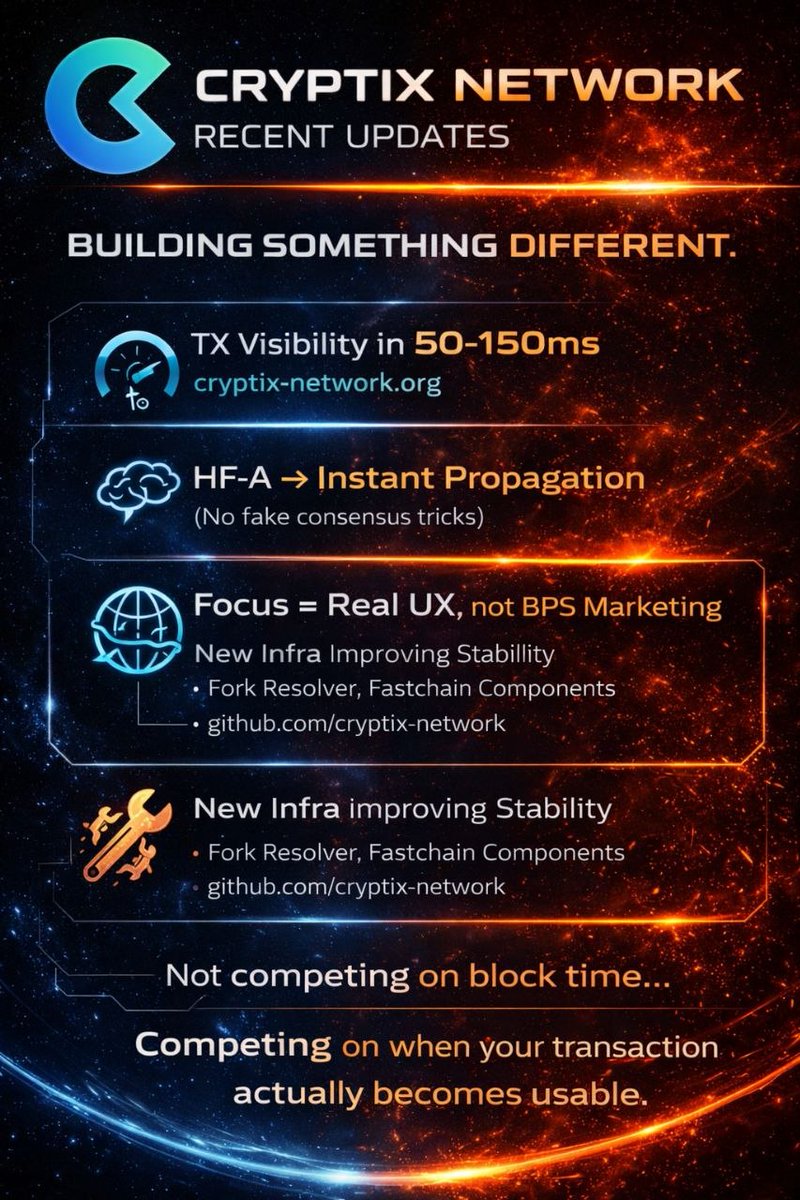
🚀 Cryptix Network ($CPAY) is here to make crypto actually usable in real life!
Tired of slow chains, high fees, and complicated setups? Cryptix delivers what others only promise:
- Lightning-fast payments — 1-second block time up to 1,000 TPS
- World’s fastest visibility — transactions appear globally in under 150ms (Fastchain HFA tech)
- True self-custody — non-custodial wallets with zero central control (no one can freeze your funds)
- AI-powered protection — anti-fraud system community review keeps bad actors out
- Easy mining for everyone — CPU/GPU All-in-One desktop package (wallet node miner in one click)
- Real-world ready — NFC & QR contactless payments, encrypted on-chain messaging, and browser access from any device
No ICO. No dev fees. Fees go straight to miners. Open-source, community-driven, and built for daily use — not just holding.
This is the bridge between fiat and crypto that actually works. Fast, private, decentralized, and accessible to literally anyone.
Who else is ready to ditch the hype and start using crypto like money again? 👇
Drop a 🔥 if you’re in!
Follow for updates check it out: cryptix-network.org/
#Cryptix #CPAY #CryptoPayments #BlockDAG #RealWorldCrypto #MineYourFuture
26
523
Apr 2
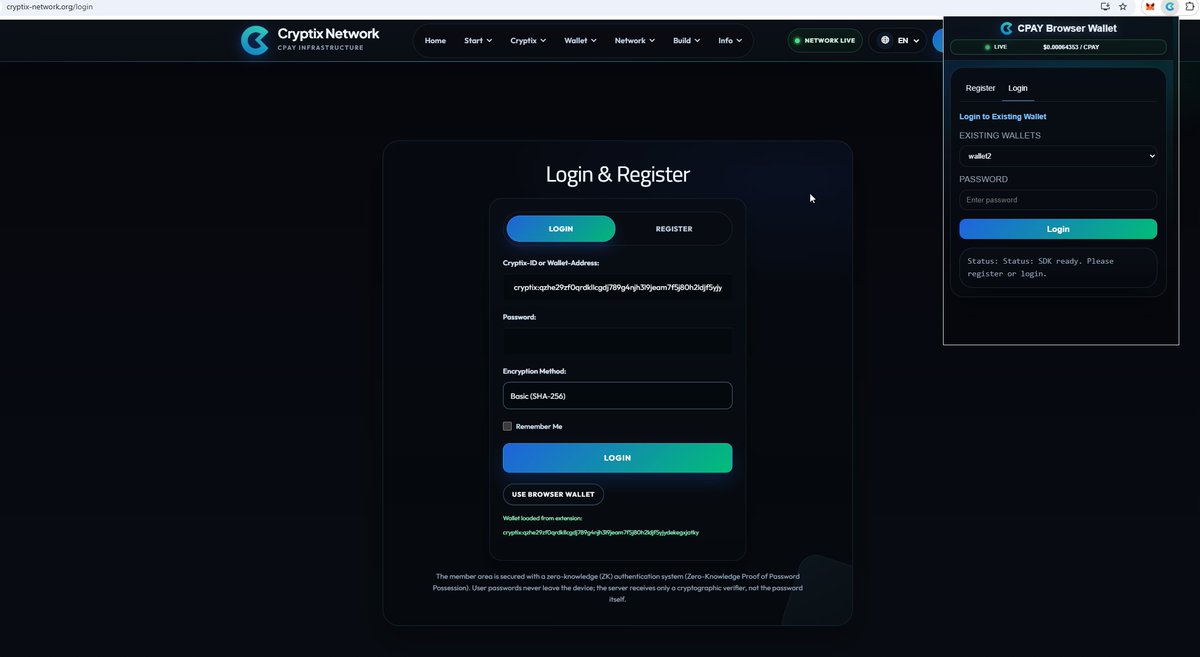
$CPAY browser extension is now available. It can also communicate with the login/member area, enabling faster login/registration. It has the same full functionality as the web wallet, can connect your own nodes,and has been tested with HFA/Fastchain transactions. Everything works
3
8
135

Apr 1
Cryptix Network $CPAY has introduced the world’s fastest transaction visibility in the cryptocurrency space (HF-A, FastChain Technology). Congratulations.
Anyone can verify the related announcements and technical evidence.
cryptix-network.org/
1
6
118

Mar 31
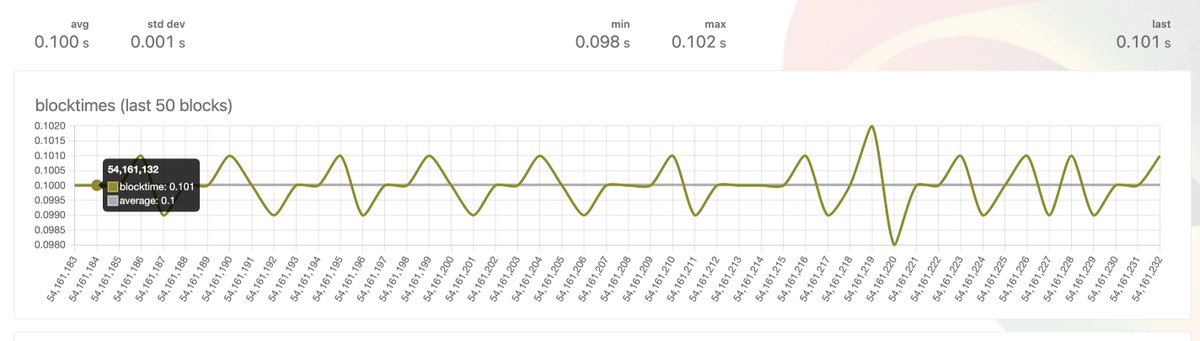
Last 50 blocks on the fastchain all finalized in 0.1s with a negligible std. You are living in la la land sir
5
78
Mar 28
OX8ハッシュアルゴリズムの8次元は既存ブロックチェーンの中で最高次元
BPS最適化の動的FastChainはISO/IEC TC307に提案済み
スマコン実装の難しいBlockDAGに独自スマコンのCX-Atomic
ステーキングが始まったらPoW PoSハイブリッド
BlockDAG系の中では間違いなくKaspaに次ぐ存在だと思ってます
1
5
594
Jan 28
24 Hours of QF Mainnet: The Data is In.
Mainnet is live and performing under global load.
Here is how the first 24 hours looked on the ground:
Global Reach & Node Distribution
Upon the Genesis announcement, the QF Portal saw immediate, distributed traffic across our global node infrastructure. Confirming what we all knew; we are a global network.
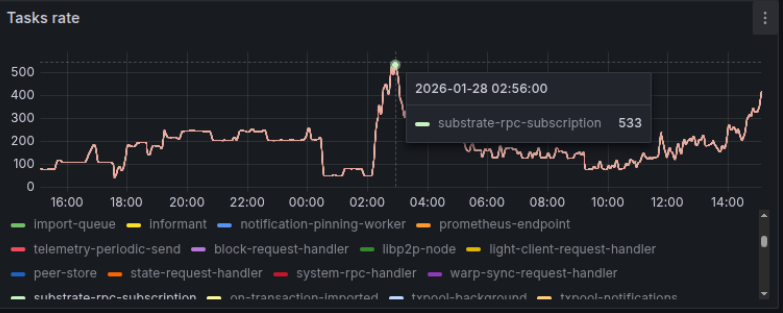
🇪🇺 EU Node: 533 Peak Connections (see added graphic)
🌏 Asia Node: 228 Peak Connections
🇺🇸 US Node: 167 Peak Connections
Technical Proof: The Relayer in Action
The infrastructure is doing exactly what it was engineered to do. Our secure finality relayer has been active since block zero, ensuring the integrity of the fastchain:
1,534 Transactions successfully submitted to relay state.
0.9 microQF already burned in transaction fees.
Every transaction is a heartbeat. Every block is a testament to 615 days of preparation.
Real-Time Verification
Transparency is our default setting. You don't have to take our word for it as the data is public, immutable, and verifiable right now:
🔗 Explorer & Blocks: portal.qfnetwork.xyz/#/explo…
As we said when we launched, move fast and break things is a philosophy for apps, not infrastructure.
QF rejects the pressure of artificial timelines in favor of mathematical correctness and system durability.
Yesterday was the start. Today is the proof.
More info will follow soon as this is just the start. Our time is now.
QF
Start Where Freedom Is Engineered
35
78
220
16,523
Jan 1
Btw Cryptix is also researching FastChain - a parallel execution & fork-resolution layer not to recreate EVM, but to see how far consensus-validated execution can go without global mutable state. Early research, but interesting space.
cryptix-network.org/assets/d…
Thanks for looking.
1
2
4
81