

May 18
Nunc ubi Regulus aut ubi Romulus aut ubi Remus?
Stat Roma pristina nomine, nomina nuda tenemus.
Quam cito labilis atque volubilis orbita sphaerae;
Corda valentia, corpora fortia praeteriere.
Et breve floruit et cito corruit unda priorum,
Gloria finiit, area transiit omnis eorum.

1
75

May 10
True, but the floruit of the Fugger was in the 16th c. Anyway, the Fugger were commercial bankers like the Medici, not consumer bankers.
May 10

I would think the Fugger family charged some kind of interest since they were preeminent Catholic banking house in Central Europe
19
2,301

May 7
An invitation by Darius I to Heraclitus of Ephesus
Expanding on a tradition which is also found in Clement of Alexandria (Strom I 65) which briefly mentions an invitation by Darius I to Heraclitus of Ephesus, Diogenes Laertius produced the imaginary correspondence between the two. The fact that this story is found in both (unrelated) sources shows that there was a story circulating in the 3rd century CE about Darius' admiration for Heraclitus. At the very least, this account fits the probable timeframe of Heraclitus' floruit.
-----------------------
King Darius, son of Hystaspes, to Heraclitus the wise man of Ephesus, greeting.
You are the author of a treatise On Nature which is hard to understand and hard to interpret. In certain parts, if it be interpreted word for word, it seems to contain a power of speculation on the whole universe and all that goes on within it, which depends upon motion most divine; but for the most part judgement is suspended, so that even those who are the most conversant with literature are at a loss to know what is the right interpretation of your work. Accordingly King Darius, son of Hystaspes, wishes to enjoy your instruction and Greek culture. Come then with all speed to see me at my palace. For the Greeks as a rule are not prone to mark their wise men; nay, they neglect their excellent precepts which make for good hearing and learning. But at my court there is secured for you every privilege and daily conversation of a good and worthy kind, and a life in keeping with your counsels.”
Heraclitus of Ephesus to King Darius, son of Hystaspes, greeting.
All men upon earth hold aloof from truth and justice, while, by reason of wicked folly, they devote themselves to avarice and thirst for popularity. But I, being forgetful of all wickedness, shunning the general satiety which is closely joined with envy, and because I have a horror of splendour, could not come to Persia, being content with little, when that little is to my mind.
Diogenes Laertius, Lives of Eminent Philosophers, ed. R. D. Hicks (Kansas City Missouri: Harvard University Press, November 1, 2005), 419–421.
1
2
11
290

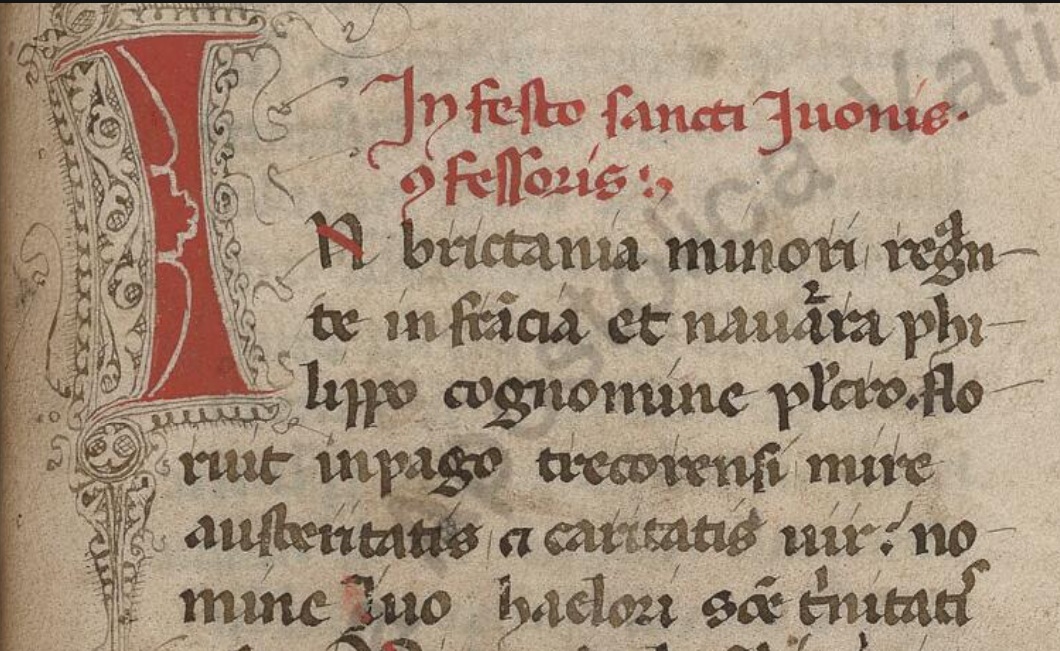
In Brictannia minori, regnante in Francia et Navarra Philippo cognomine Pulchro, floruit in pago Trecorensi mire austeritatis et caritatis vir nomine Ivo Haelori ... Arch.Cap.S.Pietro.A.9 @vaticanlibrary digi.vatlib.it/view/MSS_Arch…
1
3
119

Apr 26
Being that our earliest mention of Ambrosius is from roughly two generations after his floruit I would say that he was extremely likely to have been a real person. The later legendary material surrounding him is of course less credible, but Gildas' core narrative that he led the Britons during the Germanic incisions is true. The idea of Arthur as a mythologized Ambrosius is a rather modern notion though, and is quite a lengthy topic to cover, but from our earliest sources imo it would seem they were two different people, especially considering that barely outside of living memory Arthur shows up in poetic references in Marwnat Cynddylan and Y Gododdin.
2
9
261


Mar 23
A million people in the queue for two shows is incredible, because all of this is happening at a time when there’s a doctored “hate train” against him, and he hasn’t dropped a new album.
He’s not in a floruit career resurgence; an M off the love alone.
Jay-Z we need a TOUR!
1
17
77
1,459

Feb 27
Je n’ai reçu aucune lettre de toi depuis ce qui me semble une éternité, et pourtant la simple pensée de toi me donne la force de continuer.
Mais pourquoi la peur floruit-elle encore, riche et lourde dans mon cœur ?
2
398

Jan 23
2/ Archaeology confirms Vedic Philology & Archaeo-Astronomy in concluding that the floruit of Vedic culture was in the 3rd millennium, largely identical w/ Harappa & incompatible w/ conventional Vedic chronology.
Jan 23

Very strong evidence for the identity of Vedic culture w/ the urban phase of Harappan culture, by a certified top archaeologist. If the established Indo-Europeanists were to evince the curiosity normal among researchers, they'd dive into these findings. /1 share.google/LLEVgsqQYdWDzhq…
1
1
15
1,369

I think that account's reach exceeds its grasp :P
I do look at it daily though, as they often have fascinating photos of guildies from my 'floruit days' :-)
2
17

22 Dec 2025
"fl." is short for Latin "floruit" which means "flourished" and it is used to indicate a timespan when a given person was known to have been active. It is especially used if the person's dates of birth and death are unkno- oh you don't mean that "fl". Crap.
2
19
4,362

18 Dec 2025
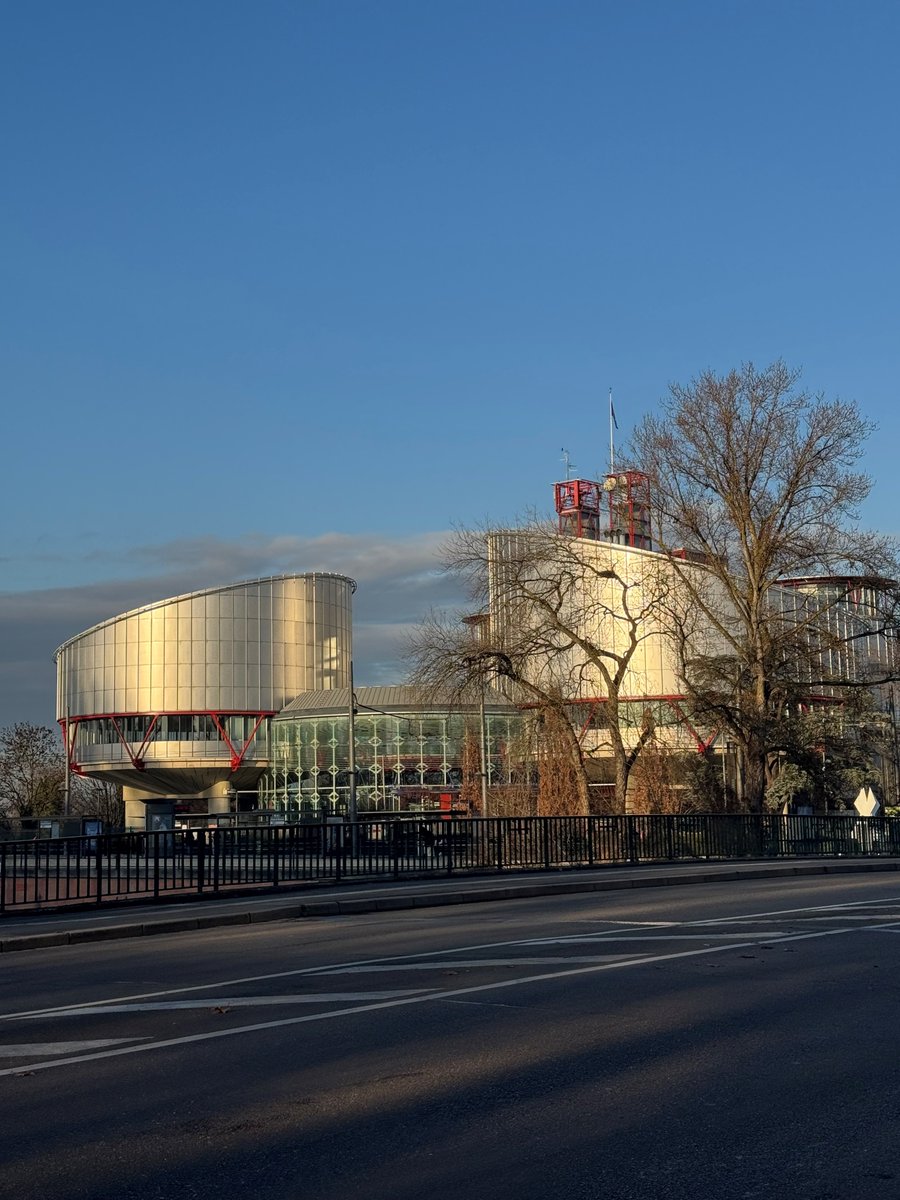
Argentoratum, caput Europae Concilii, ubi floruit ogivalis ars christiana
18 Dec 2025

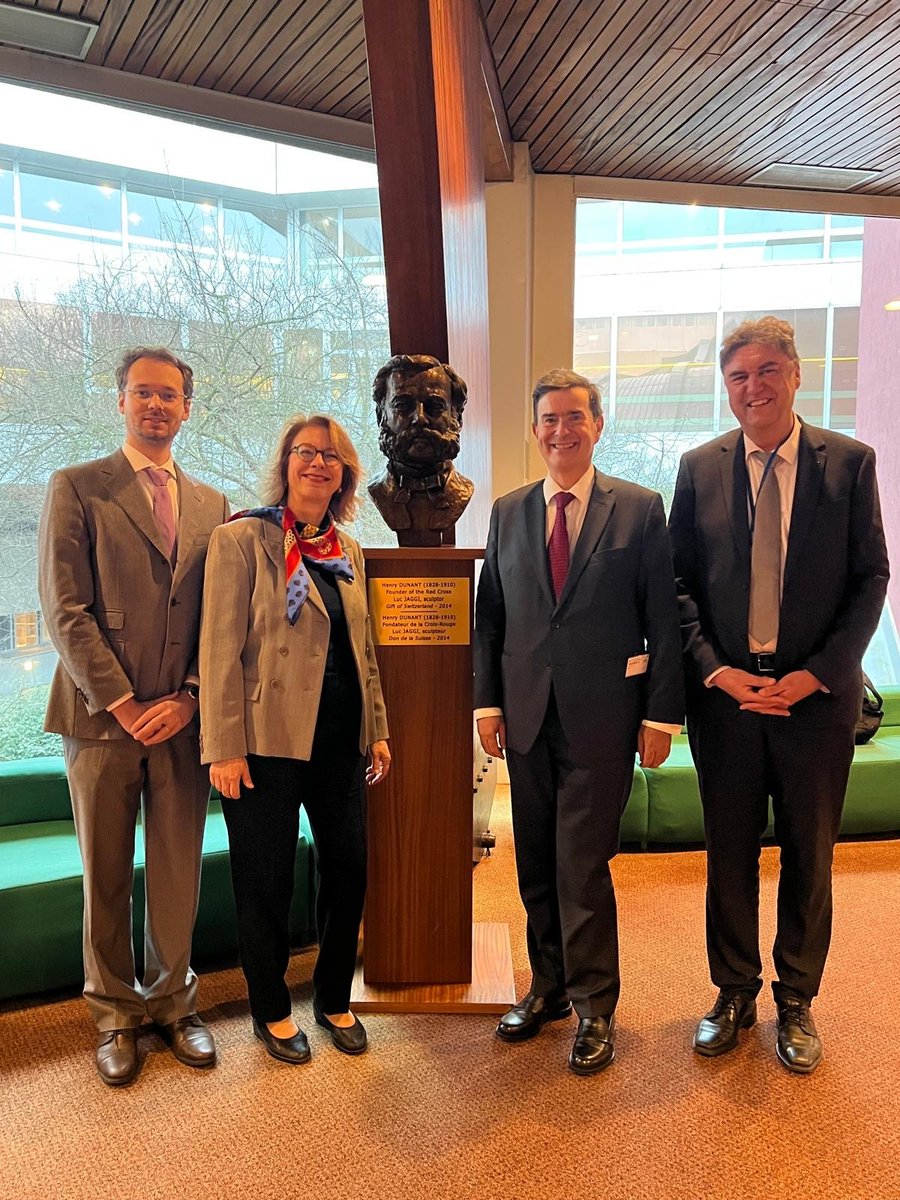
Visite à Strasbourg de la Division Eurasie, qui coordonne notre activité au @CdE 🇪🇺
Human rights, democracy and rule of law: substantial exchanges with main institutions on Ukraine, New Democratic Pact, Cultural routes, judicial instruments, etc. with the 🇨🇭@SwitzerlandCoE


1
3
201

14 Dec 2025
Our Choir sings Bruckner's Virga Jesse floruit during our Advent Liturgy here in the Abbey on Advent Sunday.
Written in 1885, the motet is a setting of words from Isaiah 11 foretelling the birth of Christ: 'The branch from Jesse blooms: a Virgin brings forth God and man: God restores peace, reconciling in himself the lowest with the highest. Alleluia.'
You can watch the full service on demand until 6 January at: westminster-abbey.org/worshi…
4
49
272
5,686

7 Dec 2025
Like @Graham__Hancock 's 'Lost Advanced Allerod Antecedant Civilization', it's brought to an end in its floruit by a #catastrophe (many 'pseudo' schemes are catastrophist) that also obliterates almost all the evidence - but revealed by "anomalies", "misinterpreted" by mainstream.

1
3
36



27 Nov 2025
in need of $50 for my phone bill pls help if you are able
ca & vnmo: floruit
1
2
325

21 Nov 2025
──咲かせた花はいつか、必ず散ってしまうんだ。
『Floruit.』
レイラの先輩だというアイドルを助けてから、彼女たち二人と打ち解け始めたミアたち。
徐々に交流を深めていくなか、再び特例警報が発令される。
❁Playlist
nana-music.com/playlists/424…
❁Story
pixiv.net/novel/series/14798…

1
3
6
676
21 Nov 2025
──ℂ𝕒𝕤𝕥 𝕒 𝕤𝕡𝕖𝕝𝕝 𝕠𝕟 𝕞𝕖 𝕠𝕟𝕔𝕖 𝕒𝕘𝕒𝕚𝕟.
❁Little Traveler / 𝕚𝕕𝕖𝕒𝕝*𝕀𝕕𝕠𝕝𝕝*𝕡𝕣𝕠𝕛𝕖𝕔𝕥❁
nana-music.com/sounds/06dd2c…
『Floruit.』 第6話
pixiv.net/novel/show.php?id=…
3
6
406
18 Nov 2025
──𝕀𝕟 𝕥𝕙𝕚𝕤 𝕕𝕚𝕤𝕥𝕠𝕣𝕥𝕖𝕕 𝕨𝕠𝕣𝕝𝕕, 𝕨𝕖 𝕕𝕣𝕖𝕒𝕞 𝕝𝕠𝕟𝕘 𝕕𝕣𝕖𝕒𝕞𝕤.
❁ワンスアポンアドリーム / 𝕚𝕕𝕖𝕒𝕝*𝕀𝕕𝕠𝕝𝕝*𝕡𝕣𝕠𝕛𝕖𝕔𝕥❁
nana-music.com/sounds/06dd0a…
『Floruit.』 第5話
pixiv.net/novel/show.php?id=…

1
5
9
589