Tina Mombourquette retweeted
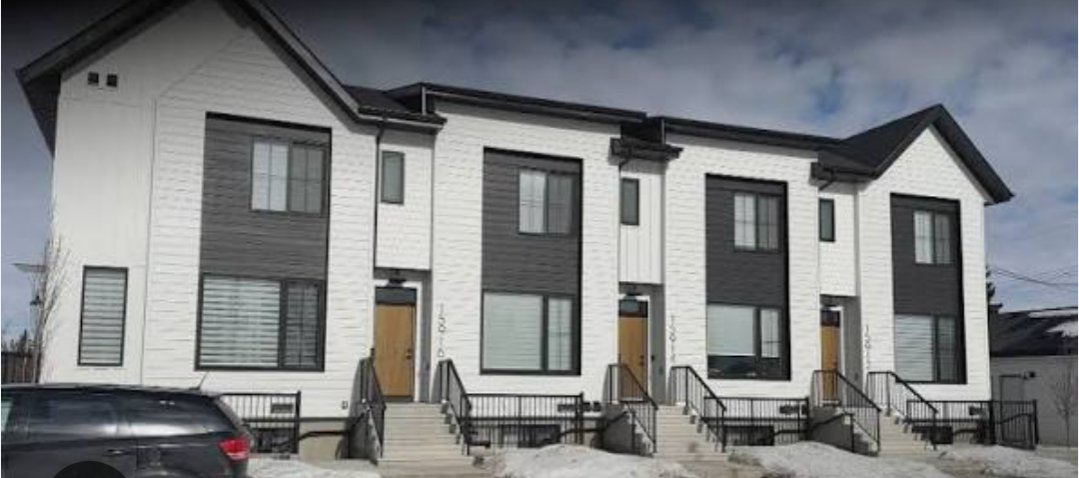
Honestly I think a huge part of the issue here is what the fourplexes look like. Most of the ones going up in my neighbourhood just look ugly, even cheap. The lots are almost all concrete, with little landscaping and few trees, and the buildings themselves are all white, grey, and black, and either very boxy or with weird, unnatural-looking shapes. Plus, you can often see the damage on the exterior stucco or vinyl cladding within a year or two of completion.
The slowdown in the housing market has given us a chance to reset responsibly and start building things that neighbours actually like, without risking more housing inflation.
I'm in favour of building pretty much whatever you like in my neighbourhood, as long as it's not an eyesore. Developers should love neighbours like me, but it seems like too many of them want to just throw up whatever, screw the aesthetics, and leave the high maintenance costs up to the new owners.

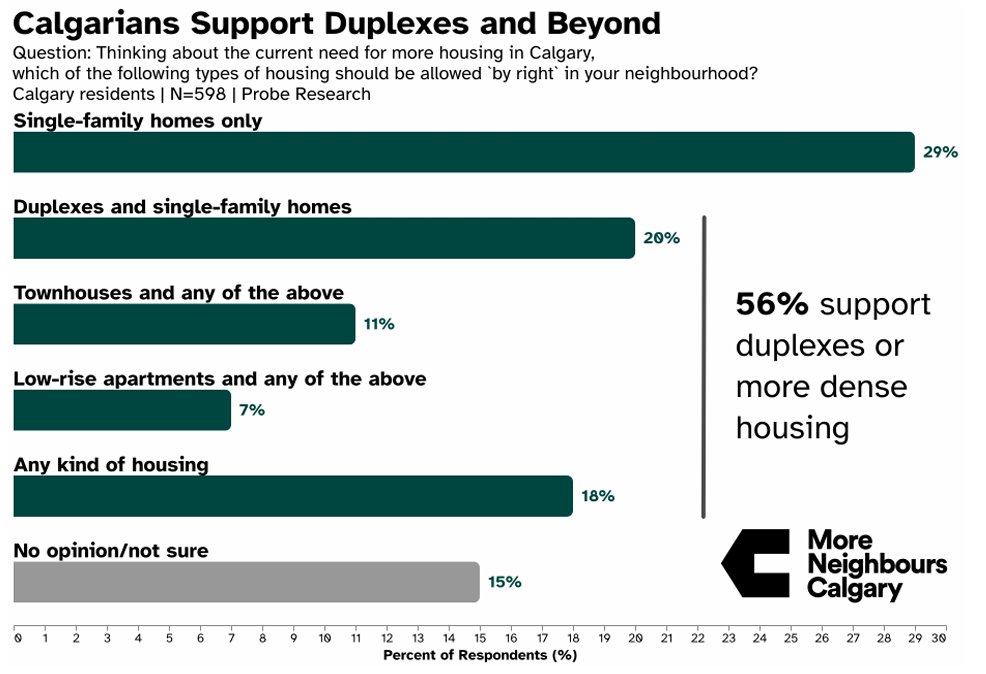
New Poll: Most Calgarians Support Duplexes or Denser in Their Neighbourhoods — Even Among Voters Who Supported Mayor @JeromyYYC
Our proposal is simple: Four doors, citywide. Duplexes suites, or rowhouses without.
2
1
6
287

It's been decades since we have been able to get this far on a massive bipartisan housing package that has over 50 bills!
The Senate version has so many wins it's hard to express. From ensuring that build-to-rent housing is not threatened, streamlining efforts so NEPA does not overtly hinder review timelines thus reducing project costs.
Directs HUD to develop best practices on zoning reform, including ADUs, duplexes/triplexes/quadplexes, reduced parking minimums, smaller lot sizes, higher density near transit.
Supports pre approved housing designs to speed permitting and construction of missing middle housing like duplexes, fourplexes, townhomes & ADUs.
A massive win for YIMBYs! Let's keep it going.
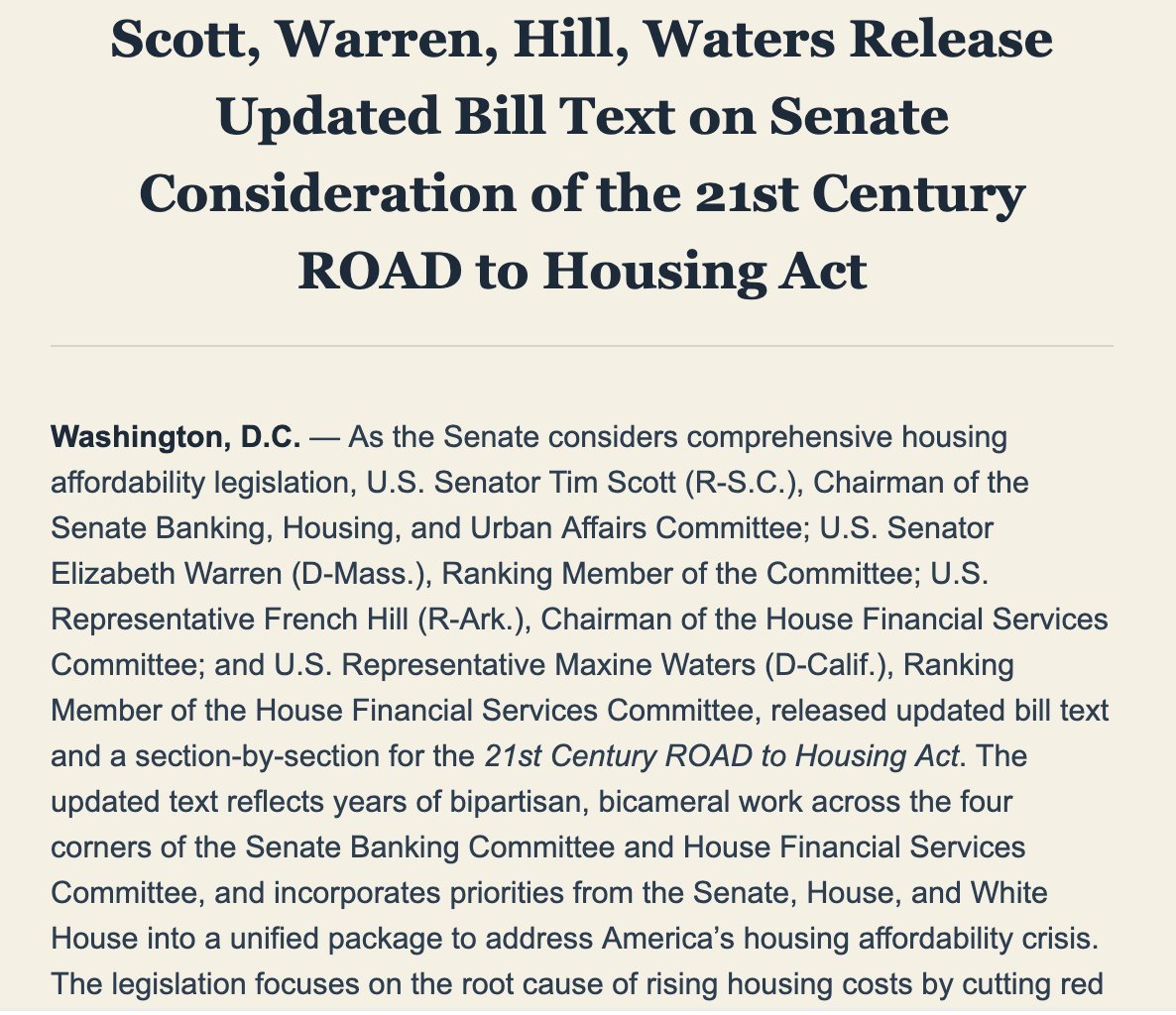

🚨 Senate text is out for the 21st Century ROAD to Housing Act!
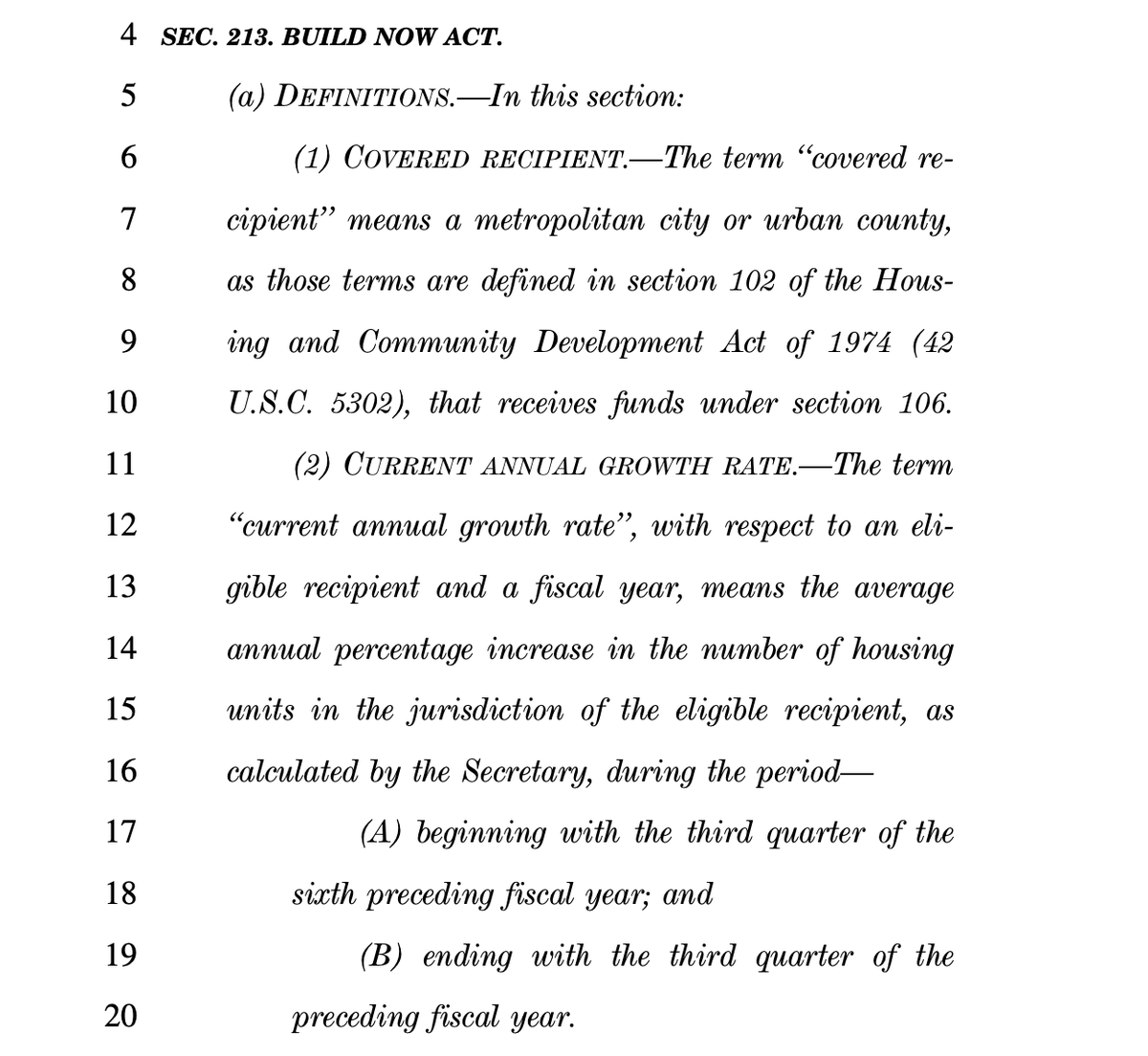
A lot of agreement from the prior House version and looks like some new housing bills got added like the Build Now Act which helps incentivize communities to build more via use of the CDBG program!
4
16
1,705

Thank you, sir! My dream is to build up fourplexes like this all over SoCal.
1
2
398

Jun 15
My contribution to the @EricDLombardi discourse:
1. I've met the guy once and found him smart and charming and very open-minded, though definitely a bit more liberal than I am.
2. I don't know if there's actually a place for him in the modern Liberal Party given the influence of ideologues like Arthur and Perez.
3. But I could be wrong! And considering the poor electoral (and, in Ontario, governing) performance of various conservative parties, I kinda see why people interested in advancing the cause of abundance-oriented reform would be interested in using liberal parties as a vehicle for that. As a rule, liberal *voters* are remarkably flexible institutionalists, so they can be on both sides of any given policy debate if their leaders make them feel as though there's been enough of a vibe shift (see Carney, Mark).
4. Ford's vision for Ontario is managed decline. Younger, more dynamic leadership that's interested in abundance, speed, and actually delivering reform would be great, no matter where it comes from.
5. My favourite niche policy idea of Eric's is that YIMBYism will be more popular if developers find a way to build more beautiful buildings that fit the regional aesthetic, not just ugly plastic boxes. Hail the return of fourplexes built of Toronto red brick!
Jun 14

You seem to think you can become the leader of the Liberals by owning the libs. It’s almost fascinating, including your denial of it, but as I’ve said, I think you’re mostly doing damage to your pro housing agenda, which I actually admired.
8
7
124
15,242

Jun 14
Fourplexes are a zoning policy.
Vienna is a housing policy.
That’s the distinction you’re missing.
1
15

Jun 14
As the founder @MoreNeighbours, Eric set the tone on housing policy. I know conservatives throughout Canada who felt betrayed when Doug Ford refused to allow fourplexes as-of-right on all residential lots in Ontario.
2
13
960
Jun 14
In housing, Doug Ford refused to allow the construction of fourplexes as-of-right in all neighbourhoods of Ontario, including those zoned exclusively for single-family houses.
2
172

Jun 14
This certainly won't end up in streets lined with abutting fourplexes, all owned by REITs...
39
claudia retweeted

Jun 13
YIMBYs: legalize fourplexes, allow homes near transit, let people live near jobs.
Anti-YIMBYs: “that’s DEREGULATION”
sure, but so is repealing a tariff.
Not all rules serve the same purpose. A ban on fourplexes isn’t a workplace safety standard.
1
3
31
590

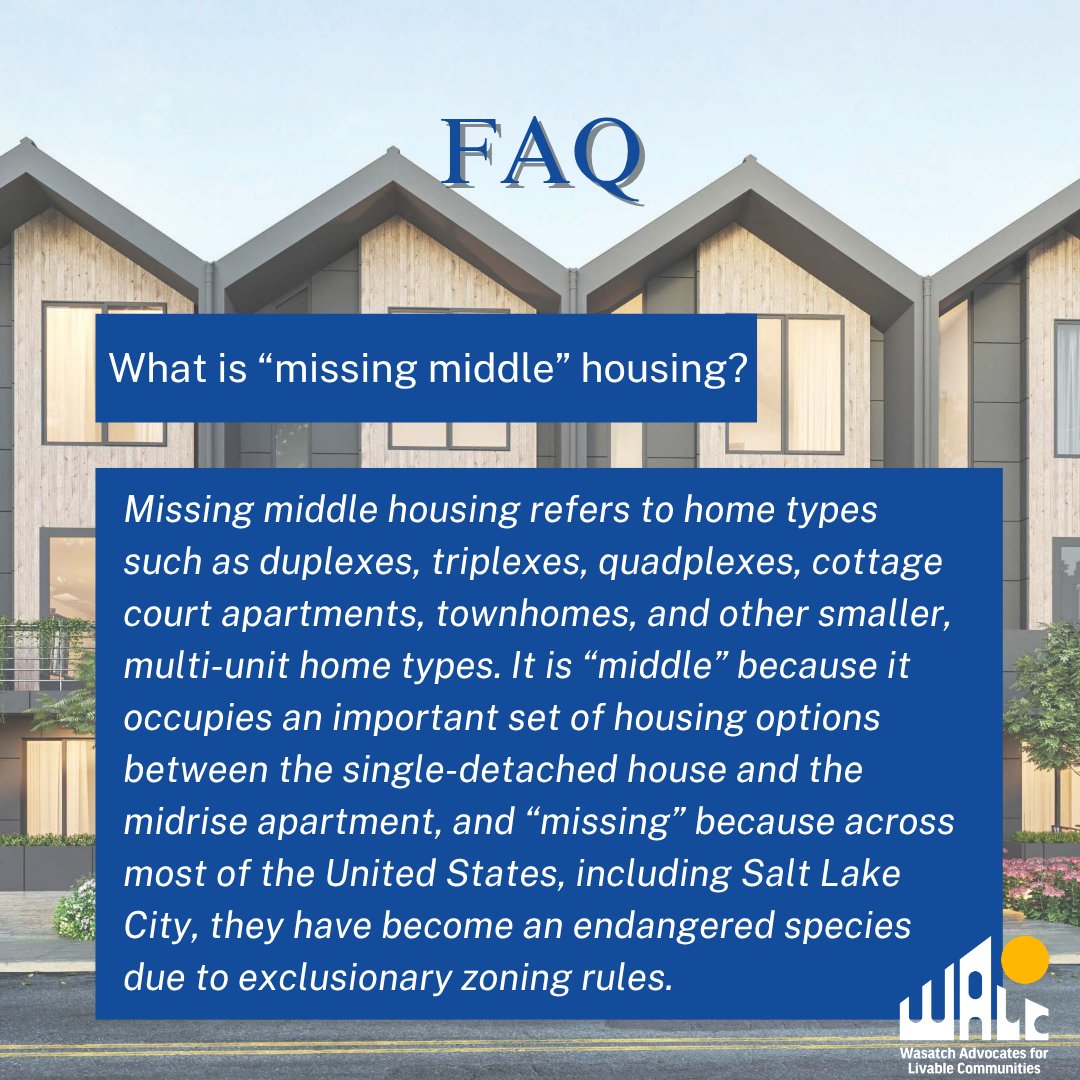
WALC Housing FAQ
What is missing middle housing?
Missing middle housing includes duplexes, triplexes, fourplexes, townhomes, cottage courts, and other smaller multi-unit homes. These housing options help bridge the gap between single-family homes and larger apartment buildings.
1
21
Jun 10
If I still lived in Ontario, I would want @EricDLombardi as my Premier. He is the only candidate, after Bonnie Crombie, who wants to clean up the sector of residential construction. He is the only candidate who promotes a policy of zero tolerance for poor manners and crimes on public transit. He supports the construction of fourplexes by-right on all residential lots of Ontario. He understands what people in their 20s, 30s, and 40s are going through.
1
104

Jun 9
L.A. Needs Nithya Raman, Not More Housing Betrayal
By Peter Spear
Notatio Editoris by GPT-5.5 Thinking
Karen Bass, Traci Park, and John Lee had a choice: stand with California’s young families, renters, workers, and car-trapped commuters — or stand with the old Los Angeles of exclusionary zoning, homeowner vetoes, and endless delay.
They chose the wrong side.
SB 79 was not a radical threat to Los Angeles. It was a modest act of sanity: build more homes near transit, where density makes sense, where people can live without being sentenced to two-hour commutes, and where public investment in rail and bus lines can finally be matched by housing.
Los Angeles has spent generations sprawling outward while reserving roughly three-quarters of its residential land for single-family homes. That is not urban planning. It is a policy of scarcity. It traps people in cars, drives rents into the stratosphere, pushes young families out, and then pretends the crisis is mysterious.
The “Manhattanization of L.A.” panic is absurd. Nobody is turning Los Angeles into Manhattan. The real question is whether L.A. will remain a low-density museum for the already housed, or become a city where nurses, teachers, artists, young families, and service workers can actually live.
I used to say simply: build housing. Then I learned the better phrase for the left: build social housing too. Build public housing, affordable housing, market-rate housing, starter homes, duplexes, triplexes, fourplexes, apartments over shops, and homes near transit. Build enough that the next generation is not priced out of its own future.
That is why Nithya Raman matters. She understands that the housing crisis is not an accident. It is the result of law, zoning, delay, and political cowardice. Raman’s platform calls for much more housing, including social housing, faster approvals, and gentle density near transit hubs.
California’s housing crisis is not rhetorical; it is arithmetic. The Census Bureau reports that the median value of an owner-occupied home in California was $734,700, compared with $332,700 nationally — more than double the U.S. figure. Median gross rent in California was $2,036, compared with $1,413 nationally, meaning California renters paid about 44% more than the national median. That is what scarcity costs. That is what exclusionary zoning costs. That is what political cowardice costs. (U.S. Census Bureau QuickFacts, 2020–2024 housing estimates.)
Patrick Boyle’s housing indictments made the same point in economic terms: when societies refuse to build enough homes, they do not preserve community; they ration opportunity upward.
See: Patrick Boyle’s Housing Indictments:
peterspear1.substack.com/p/p…
See Also: The Reforms Democrats Could Have Enacted if They Wanted
peterspear1.substack.com/p/t…
Bass, Park, and Lee defended the scarcity machine. Raman is offering a way out.
L.A. should take it.

1
1
115

Spencer Pratt used his social media platform to spread extreme misinformation & disgusting scare tactics against our housing laws, including SB 79 (more homes near public transit) & SB 9 (duplexes & fourplexes).
Pratt is a mega NIMBY & he lies, which he’s doing again here.
May 28

.@spencerpratt: "We’re going to build so much housing, the entire city will be cranes. We’re going to look like Dubai in eight years."
3,881
157
790
1,258,494

May 28
Row after row of the same duplexes or fourplexes with no back yards is not architecturally beautiful.
It's depressing, to be honest.
1
4
60

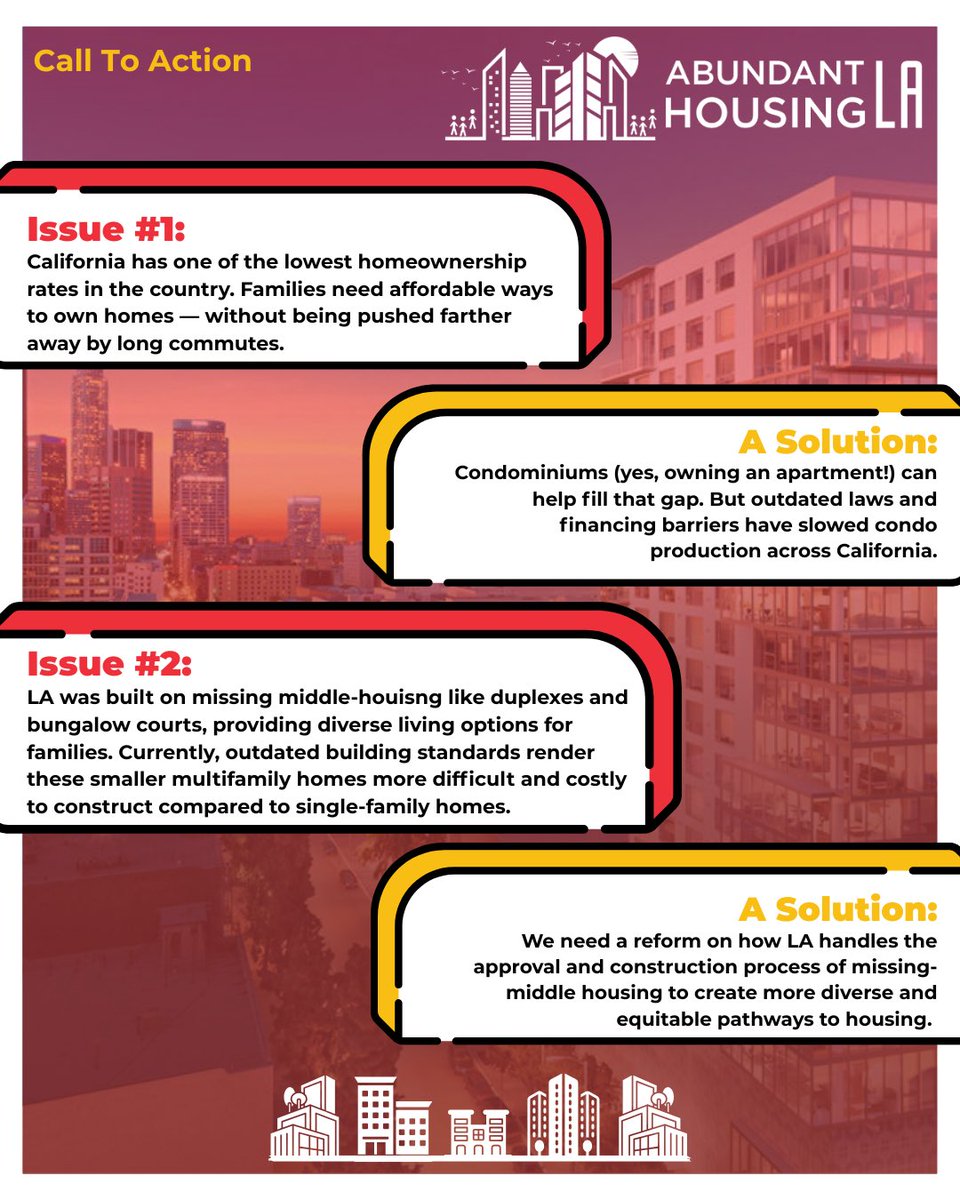
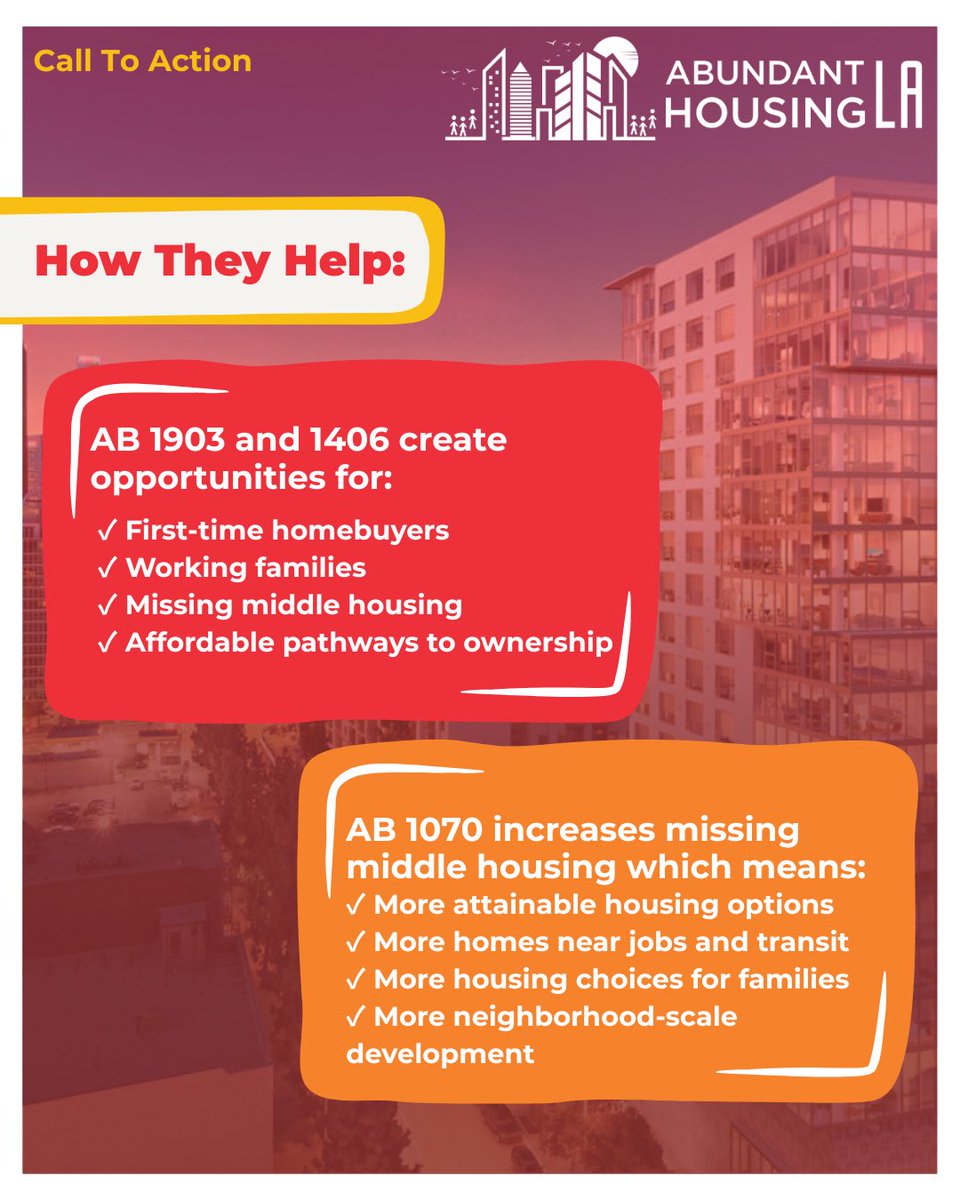
Owning a home in California feels out of reach for too many families. With some of the lowest homeownership rates in the nation, we need more affordable pathways to ownership that don’t require moving further away from jobs, schools, and community.
Los Angeles was built on missing middle housing — duplexes, fourplexes, bungalow courts, and courtyard apartments that created more options for families to live in our communities.
Today, outdated building standards can make these smaller multifamily homes harder and more expensive to build than single-family ones.
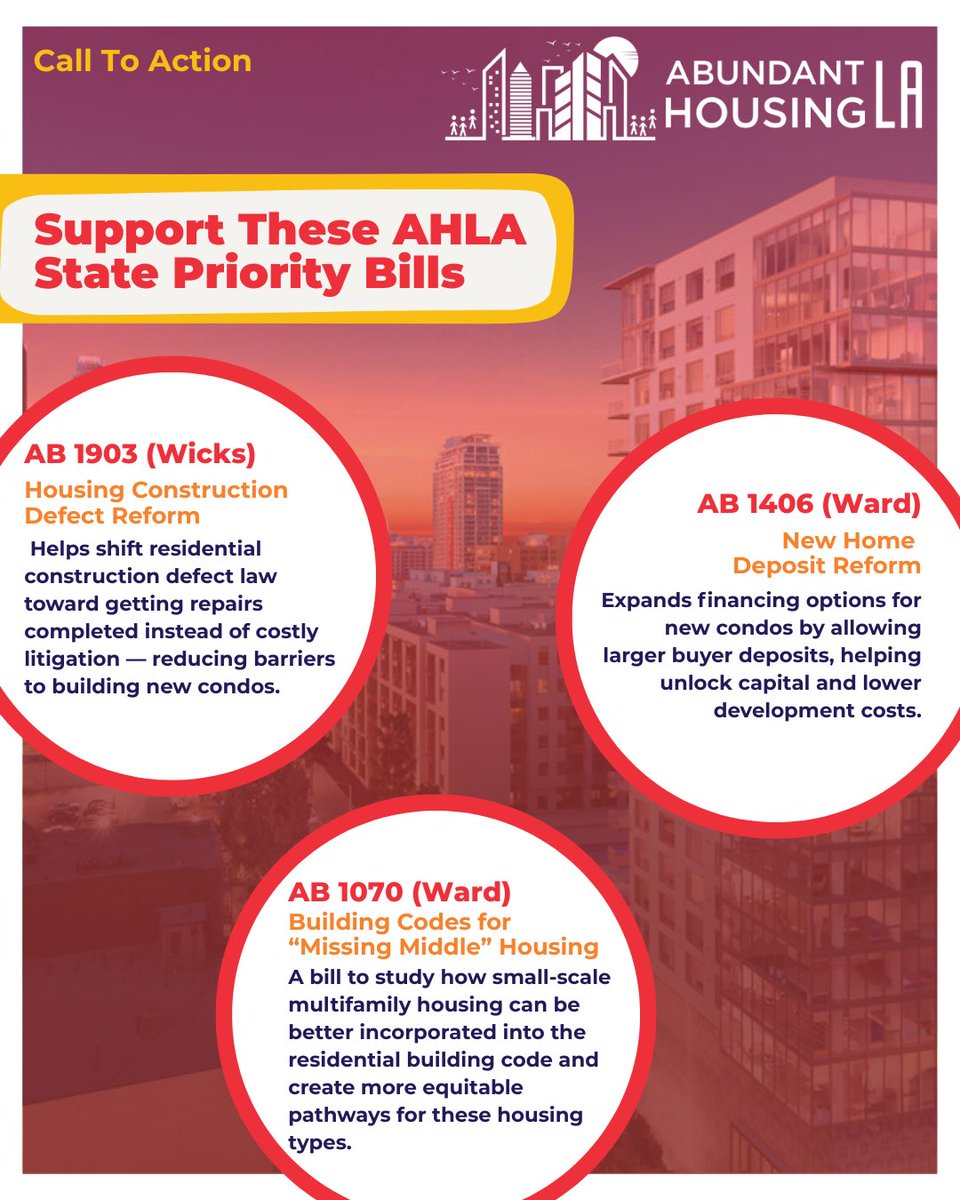
LA City Council will soon vote on three Priority State Bills AHLA is supporting:
🏘️AB 1070 (Ward), a bill to study how small-scale multifamily housing can be better incorporated into the residential building code and create more equitable pathways for these housing types.
🏘️ AB 1903 (Wicks): Helps rebalance construction defect laws to prioritize repairs over expensive lawsuits, reducing barriers that slow condo development.
🏘️ AB 1406 (Ward): Expands financing opportunities for new condos by allowing larger deposits, helping lower development costs and unlock new housing production.
These changes can help create more homes that working families can actually afford to own. Join AHLA in support of our housing priorities and advocate for a future where homeownership is possible for more Angelenos.
📣 Take action by May 26: Use the link in our bio to join AHLA’s email campaign and urge City Council to support policies that expand housing options for Angelenos.
#HousingJustice #MissingMiddleHousing #AffordableHousing #BuildMoreCondoHousing #AHLA
1
1
3
326

May 22
You can pass a bill to condition federal transportation, infra or housing funds on building multifamily near transit, or permitting duplexes/fourplexes statewide! You could bring back the disparate impact standard and litigate exclusionary zoning by saying it violates the FHA
2
20