shashhikannt misra retweeted

Jun 13
The pickup/drop-off mafias are the new revenue generators for Indian Railways.
Jun 12

This is how drop off is being forcibly monetised by Railways.
Scene from New Delhi Railway station
164
1,726
4,974
112,169

Govt’s move to restrict #diesel sales at petrol pumps raises concern among hospitals, IT campuses, data centres and industries relying on diesel generators for power.
#FuelPrices
nationalheraldindia.com/nati…
1

Papillon 𝕏🦋𝕏 retweeted

Just $78 more and we can put 65% behind us for car repairs and generators! Two raffles and limited movie poster PFPs are available!
Goal🎯: $12,000
Raised: $7712
Left: $4288
PayPal: PayPal.me/loislanefella
Revolut: revolut.me/leek1336b
BMAC: buymeacoffee.com/leek3143y
Jan 30

🛻🛻🛻RAFFLE‼️‼️🛻🛻🛻
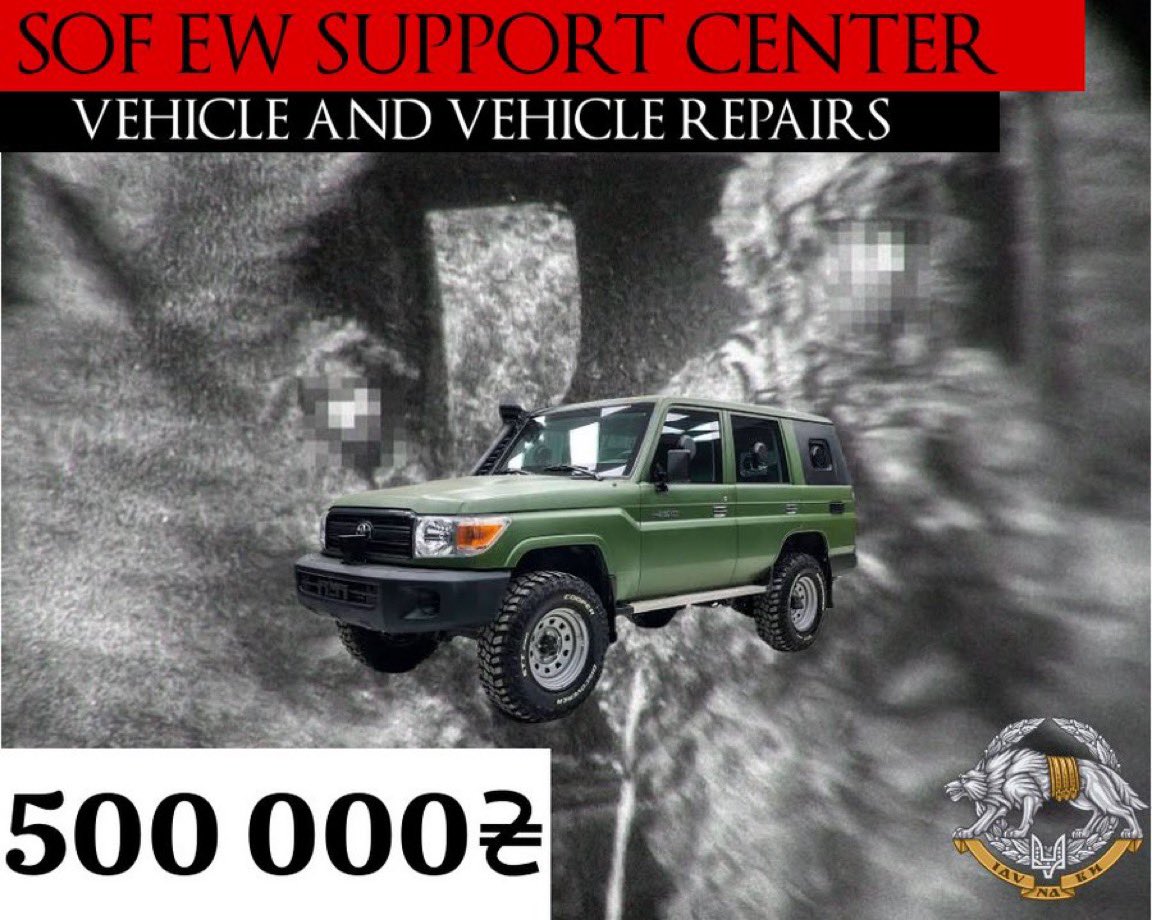
This time, my SOF EW Support unit needs a replacement vehicles and repairs. This fundraiser needs so much support!
Goal🎯: $12,000
Raised: $2580
PayPal: PayPal.me/loislanefella
Revolut: revolut.me/leek1336b
BMAC: buymeacoffee.com/leek3143y
1/10🧵
4
25
30
1,181
Feisty Robin Rembrandt fella retweeted
A few donations could get SOF repairs and generators to 65%. Only $78 away.
Goal🎯: $12,000
Raised: $7712
Left: $4288
PayPal: PayPal.me/loislanefella
Revolut: revolut.me/leek1336b
BMAC: buymeacoffee.com/leek3143y
Just $78 more and we can put 65% behind us for car repairs and generators! Two raffles and limited movie poster PFPs are available!
Goal🎯: $12,000
Raised: $7712
Left: $4288
PayPal: PayPal.me/loislanefella
Revolut: revolut.me/leek1336b
BMAC: buymeacoffee.com/leek3143y
17
21
234

I always thought those masks were foolproof with the chemical reaction thing, but apparently the generators don’t always ignite properly or can be expired/damaged. Kinda scary when you think about it.
2
🦊🐥🐇𝑰𝒏 Awakening Montage of (𝑩𝒍𝒐𝒐𝒎)🐕🐈🐹 retweeted

ARTIST MOLLY CRABAPPLE SAYS AI ART GENERATORS ARE SCRAPING ART FROM THE WEB WITHOUT ARTISTS’ CONSENT. SHE CALLS IT “THE GREATEST ART HEIST IN HISTORY.”
21
20
70
8,758
Bryan Williams 💎 retweeted

Jun 13
Batteries are killing coal.
Evening peak prices roughly halved and the spot revenue of the biggest coal generators in NSW and Queensland just fell 30-40% in a single year.
Pauline Hanson's coal dream is being killed by renewables.
itkservices3.com/posts/batte…
/1
41
135
454
8,000

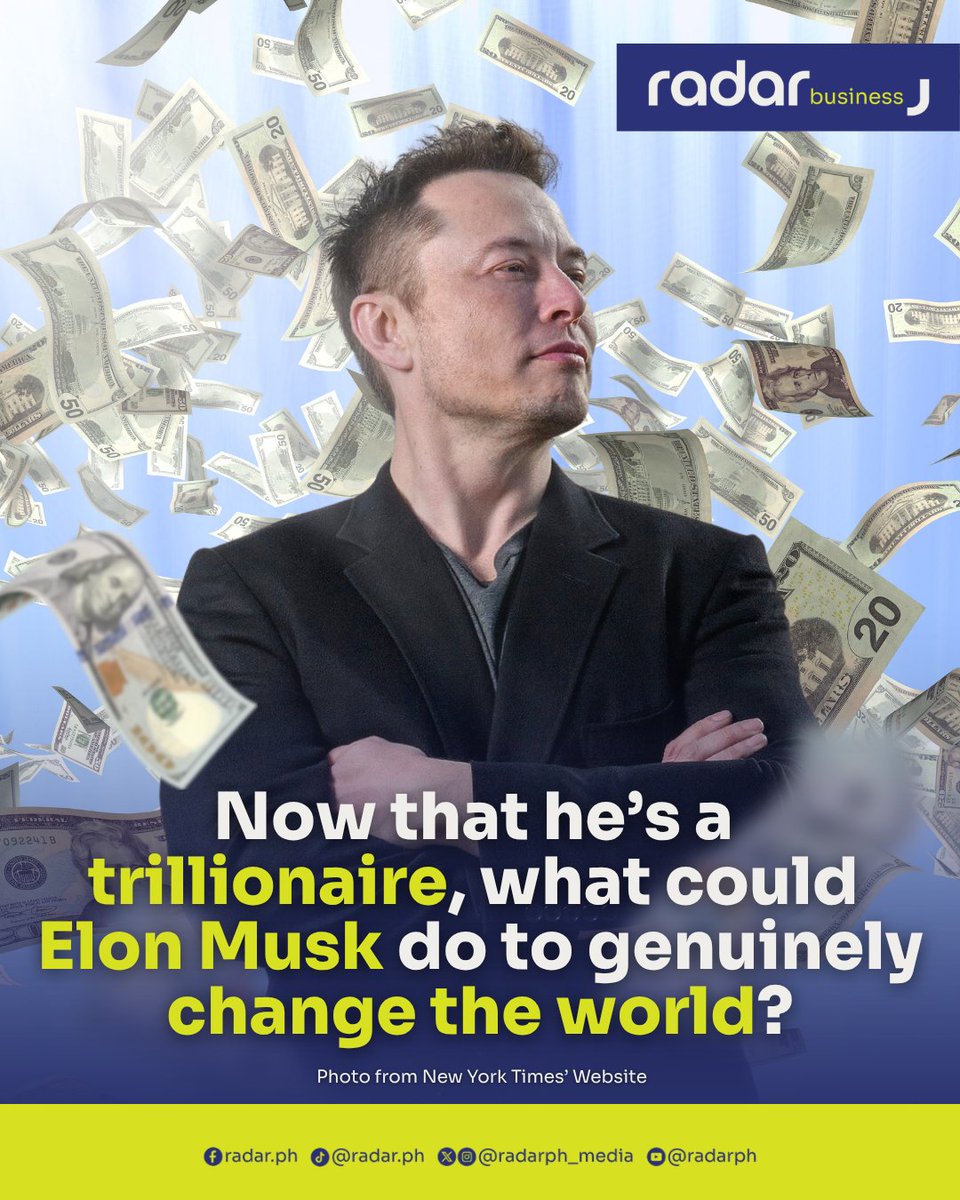
When news broke that Elon Musk had become the world’s first trillionaire following SpaceX’s historic stock market debut, the number was almost impossible to comprehend.
A net worth of more than $1.1 trillion sounds impressive on paper, but for most people, it is simply too large to visualize. Converted to Philippine pesos, that fortune is worth roughly ₱58 trillion—enough to fund the Philippine government’s entire annual budget several times over.
The question now is no longer whether Musk can change the world. It is whether he wants to.
For years, the billionaire has focused on ambitious projects like electric vehicles, reusable rockets, brain-computer interfaces, and artificial intelligence. Supporters argue these innovations already benefit humanity. Critics counter that the world’s richest man could do far more to address urgent problems happening right now.
If Musk wanted to leave behind a legacy bigger than Mars, experts say there are several areas where even a fraction of his wealth could transform millions of lives.
ENDING EXTREME POVERTY
One of the simplest ways to create immediate impact is by helping the world’s poorest communities directly.
Programs that provide unconditional cash transfers have repeatedly shown that giving money straight to struggling families often produces better results than complex aid systems. Families use the funds to buy food, start small businesses, repair homes, and send children to school.
With a fortune measured in trillions, Musk could fund direct assistance programs on a scale never before seen in human history.
He could also bankroll the development of climate-resilient crops and affordable water purification systems for communities suffering from drought, flooding, and unsafe drinking water.
BRINGING ELECTRICITY TO THE LAST MILE
While Tesla helped popularize electric vehicles, billions of people still live in places where reliable electricity remains a luxury.
Instead of focusing solely on cars, Musk could accelerate the deployment of solar-powered microgrids in isolated villages, islands, and rural communities.
Imagine remote schools in the mountains of Luzon or small fishing villages in the Pacific gaining access to dependable power without relying on expensive diesel generators.
For many communities, electricity is the first step toward better healthcare, education, and economic opportunity.
PREPARING FOR THE NEXT PANDEMIC
COVID-19 demonstrated how vulnerable the world remains to emerging diseases.
A billionaire with Musk’s engineering mindset could help build global early-warning systems capable of detecting dangerous outbreaks before they spread.
Investments in vaccine manufacturing hubs, rapid-response laboratories, and wastewater monitoring systems could help scientists identify new threats weeks earlier than current methods allow.
The next pandemic may be inevitable. The scale of its damage is not.
MAKING EDUCATION TRULY GLOBAL
Millions of children still lack access to quality education simply because of where they were born.
Musk already owns one of the world’s largest satellite internet networks through Starlink. He could expand its social impact by subsidizing connectivity for underserved schools across developing countries.
Combined with free AI-powered learning platforms translated into local languages, students in remote communities could gain access to the same educational resources available in major cities.
A child in a far-flung island should not have fewer opportunities than one living in New York, Tokyo, or Manila.
KEEPING AI IN HUMAN HANDS
Artificial intelligence may become one of the most powerful technologies ever created.
Many researchers worry that AI development is increasingly concentrated among a handful of corporations with enormous resources.
Musk could help democratize access by funding public research institutions, universities, and non-profit organizations focused on medicine, agriculture, and scientific discovery.
He could also support independent AI safety initiatives dedicated to ensuring future systems remain aligned with human interests rather than purely commercial objectives.
RESTORING THE PLANET
Even if humanity stopped producing carbon emissions tomorrow, enormous amounts of greenhouse gases would remain trapped in the atmosphere.
Large-scale environmental restoration may require investments that governments alone cannot afford.
Musk could fund massive mangrove restoration projects, kelp forest cultivation, and carbon-removal technologies designed to pull pollution directly from the air.
Such projects would not only help combat climate change but also restore fisheries, protect coastlines, and preserve biodiversity.
A LEGACY BEYOND MARS
Elon Musk has often spoken about making humanity a multi-planetary species.
It is an inspiring vision. But some would argue that before humanity colonizes Mars, there is still plenty of unfinished work here on Earth.
The world’s first trillionaire now possesses resources on a scale that rivals nations. The rockets, robots, and electric cars may secure his place in history. Yet his greatest achievement could ultimately be something far simpler: helping ensure that more people have food to eat, clean water to drink, schools to learn in, and a planet worth inheriting.
After all, becoming the richest person in history is remarkable. Using that wealth to improve life for billions would be unforgettable
17

What’s all the fuss about?
All the generators In my area are on at the moment and sounding like an army of very angry bees.
Is generator electricity not electricity?
Ok, we can’t hear ourselves think due to the noise pollution, but then again, we’re loud in everything.
😎

What do you mean we don't have electricity?
Is one day on, two days off not something?
1
1
13